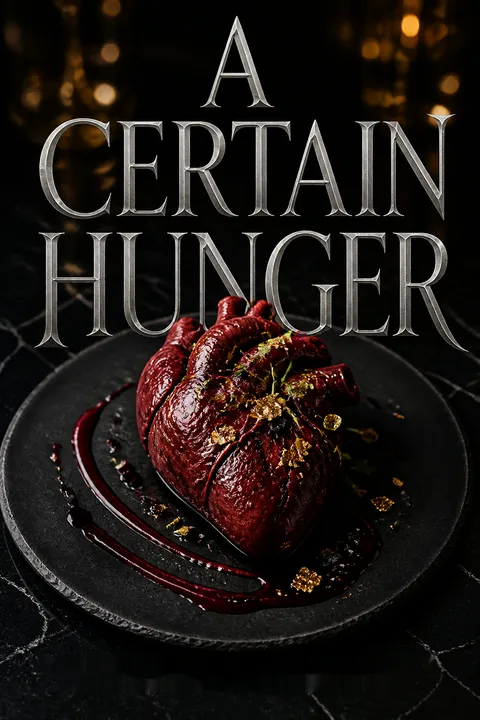


Plot Summary
The Fire Island Feast
In 2013, food critic Dorothy Daniels meets Casimir, a wealthy young Russian, at a New York hotel bar. Their flirtation becomes a weeks-long affair, then a weekend at a borrowed Fire Island house. After cooking duck and sleeping with him, Dorothy takes an ice pick from the room and repeatedly drives it into Casimir, stopping him when he reaches for his phone.
She checks his pulse, cleans the house, and sets fire to the body and her evidence. The remote house burns while she walks along the shore and later returns to her friends’ home. Dorothy admits the killing to the reader but offers no clear motive. Casimir, unlike her other lovers, was someone she barely knew.
The opening makes Dorothy’s appetite inseparable from her composure: she plans a meal, has sex, kills, and cleans with the same controlled attention. But Casimir’s death unsettles the pattern she will later construct around her other victims. He has no deep shared history with her, so his murder cannot be explained as a twisted form of intimacy. The first-person confession gives readers access to the act while withholding a stable motive, establishing a narrator who is candid about events but not necessarily capable of understanding herself.
A Girl Practices Power
In prison, Dorothy remembers imagining a grand dinner at age twelve, with her future lovers seated around a table beneath pointed chairs while she presides. Her mother’s carefully made meals had ruled the family home, while Dorothy’s father worked long hours and had affairs.
As a teenager, Dorothy rebelled through fast food and learned how girls could use appearance to attract attention. At Pennistone College, she slept with many men and researched their secrets, keeping compromising information as protection rather than relying on trust.
She also writes about recognizing that she lacks ordinary remorse and enjoys manipulating people. In Bedford Hills, she trades on that reputation to deter other inmates and to hold the attention of psychology students.
Dorothy’s childhood fantasy already joins hospitality to domination: she imagines feeding men while arranging them as captives. Her mother models care through cooking, but Dorothy experiences that care as control and seeks a different kind of power in appetite, sexuality, and information. The secrets she collects function as armor in a world where she expects men to exploit women. Prison later supplies a stage for the same performance, as she shapes researchers’ expectations of her. Her self-knowledge is real, but it is also a tool she uses to manage other people.
Marco’s Hidden Name
While studying in Siena in 1983, Dorothy begins a relationship with Marco, an Italian graduate who is charming, sensual, and evasive about his future. A man who follows her from class eventually forces his way into her room and rapes her; Dorothy gets medical tests, tells no one, and sees him no more. Later, Marco’s refusal to take her to Rome prompts Dorothy to search his belongings.
She finds a business card and then a hidden passport: Marco is really Davide Iachino, a Jewish butcher from Rome expected to join his family’s business. She keeps the discovery to herself. After college, she visits him in his shop and resumes their affair, which continues intermittently for decades, even as Marco marries and builds a meat empire.
Marco’s secret gives Dorothy what she habitually seeks: not simply access to a lover, but leverage through knowledge. Yet she does not use the discovery to expose or control him immediately. Their long affair depends on concealment, distance, and scheduled returns, which preserve desire by preventing ordinary domestic life. The rape in Siena offers a stark counterpoint to Dorothy’s cultivated confidence: she can recognize violence as it happens and still choose silence. The episode does not explain her later violence, but it shows how she treats danger as something to study and privately absorb.
Joanne Returns as Emma
At Pennistone, Dorothy’s roommate Joanne Correa is a shy, frilly-dressed girl whose manner irritates her; after Dorothy crosses boundaries in their shared room, Joanne moves elsewhere. In 1986, Dorothy sees her again in Cambridge, now using the name Tender deBris and leading a feminist protest from a bulldozer. Dorothy bails her out, then tracks her down.
They reconnect over drinks and become close. After a panic attack, Tender leaves public performance, works from home as a phone-sex operator, and turns to painting. As Emma Absinthe, she builds a successful career through self-portraits that recast herself as historical men. Her agoraphobia confines her, but her art and business grow beyond her apartment.
Dorothy and Emma’s friendship begins not in mutual tenderness but in recognition across radical self-invention. Dorothy once treated Joanne as an object of contempt; years later, Emma’s audacity attracts her. Emma’s retreat from the public world is not simple passivity: she designs a life in which voice, image, money, and other people come to her. Their bond offers Dorothy a rare relationship not organized around sex or professional advantage, although its durability rests on both women’s guardedness. Emma becomes important precisely because she can see Dorothy without demanding that she become conventional.
A Mother’s Last Harvest
In 1988, Dorothy’s parents gather their children and reveal that her mother has terminal lung cancer. The woman who once gardened, baked, and filled the family home with food gradually stops cooking and tending her plants. Dorothy returns from Boston to help during hospice, then watches her mother die just before Halloween. Her mother’s lesson that appearance can serve as protection stays with her.
After the funeral, Dorothy moves to New York with part of her inheritance and resumes journalism. In 1990, after a witty remark about a restaurant dish catches Andrew Gotien’s attention, he offers her a food-critic job at his new magazine, Noir. Dorothy accepts a career that turns her appetite and her writing into a livelihood.
The dying garden gives visible form to a family’s inability to preserve what once seemed inexhaustible. Dorothy’s mother made nourishment an act of competence and authority; illness strips away that identity before death ends it. Dorothy’s return to work does not resolve her grief, but it redirects her toward food as both subject and instrument. The mother’s advice about beauty as armor also connects domestic femininity to Dorothy’s professional disguise. Her career begins through a sexualized social world, yet she converts that access into authorship and authority.
Giovanni’s Roadside Liver
In 2000, Dorothy travels to Piedmont to report on truffle hunting with her lover Giovanni, a strict vegan given to mystical explanations. After a disappointing hunt and a quarrel, Giovanni steps out of their car to inspect a bump in the road. Dorothy tries to drive away, turns back, and accidentally strikes him. He is impaled on a guardrail, badly injured and dying.
Instead of calling for help, Dorothy removes his liver with a small knife, then tells police she left after a fight and assumed he had gone elsewhere. Back home, she cooks the liver as pâté and eats it. The police accept her account. The killing began as an accident; the decision to take and consume part of Giovanni’s body did not.
Giovanni’s death marks the point where Dorothy’s appetite crosses from metaphor into material action. She does not set out to kill him, but she converts an emergency into an opportunity and then constructs a plausible account for the authorities. Her choice to eat the liver is deliberate, less an act of survival than a private claim over a lover whose body has become available. The sequence also teaches her that consequence can be managed through performance. A false story, delivered with practiced grief, makes the violence appear to belong to circumstance rather than choice.
The Empire State Refusal
In 2004, Dorothy runs into Alex Konings, a former Pennistone editor, after colliding with him on a Manhattan street. They begin dating, take their time before having sex, and build a relationship unlike her earlier affairs. Dorothy discovers she loves him through an ordinary impulse: she buys him egg coddlers because she knows he likes them.
Alex brings her into his life and proposes at the Empire State Building in 2007. Dorothy imagines the shared years he offers, but also sees herself becoming a kinder person she does not want to inhabit. She declines and leaves him on the observation deck. A year later, lonely despite preferring solitude, she looks up Andrew, her former lover and first employer.
Alex unsettles Dorothy not by threatening her freedom but by making durable intimacy imaginable. The egg coddlers reveal a form of generosity she has not practiced before: a gift with no strategy attached. His proposal makes the cost of love concrete, because accepting him would require more than affection; it would require a sustained revision of self. Dorothy rejects that revision, then discovers that independence does not protect her from loneliness. Her later return to Andrew is shaped by this refusal, as she seeks familiar desire without the vulnerability Alex made possible.
Andrew’s Rump Roast
After Dorothy finds Andrew living in Brooklyn, the former magazine publisher welcomes her back into his life. Their old sexual ease returns, and Andrew recounts his failed marriage to Dorothy’s former assistant and his limited time with their twins.
Dorothy studies his routine and finances, then prepares a methodical killing. She drugs him, disables the gas detector, extinguishes the pilot lights, and leaves him to die of carbon monoxide poisoning.
The next day she opens the windows, takes meat from his buttocks, releases his dachshunds near the body, and removes traces linking her to the house. She roasts the meat and serves it with vegetables and sauce. Andrew’s death goes undetermined, and Dorothy experiences the murder as a carefully completed work.
Andrew is both a person from Dorothy’s professional origin story and a body she chooses to turn into food. The murder’s planning distinguishes it from Giovanni’s accidental death: Dorothy now anticipates evidence, timing, and the behavior of witnesses. Her culinary skill converts violence into a private ritual of authorship, while the dogs help obscure what she has done. The act also exposes the gap between mastery and attachment. Dorothy enjoys the success of the plan, yet the man she liked is permanently unavailable, and she cannot share the satisfaction of her own achievement.
Gil’s Tongue at Sea
Later in 2008, Eat & Drink dismisses Dorothy during a recession, ending an eleven-year professional relationship. She drinks, bakes banana bread, and fantasizes about ruining the magazine until Emma urges her to return to writing. In June 2009, Dorothy sails with Gil Ramsey, the magazine’s former publisher and her lover.
She gives him a fig dessert despite his allergy, then pushes him overboard as his throat closes. When he clings to the boat, she cuts off a finger to make him let go. She retrieves his swollen tongue for a recipe, but mistakes in her plan force her to stay overnight and call the Coast Guard the next morning. His body is later found and the death is treated as drowning; Dorothy cooks and eats the tongue.
Dorothy turns professional humiliation into violence against the person nearest to her, and she later recognizes Gil as collateral damage rather than the source of her anger. The episode’s botched logistics puncture her self-image as an impeccable planner: the body is difficult to handle, the tongue is swollen, and the boat’s tracking system threatens her cover. Yet she survives the immediate risk through improvisation and luck. Her retrospective admission matters because it identifies a motive less grand than appetite or art: she wanted power over a hurt she could not otherwise control.
Marco’s Butcher Shop
In 2011, Marco insists he will remain faithful to his wife, so Dorothy secures a magazine assignment to report on his growing organic meat business. She follows him from cattle farms to slaughterhouses, studying the rituals and anatomy of slaughter while hoping he will change his mind.
Marco keeps their relationship professional for days, then gives in at their final meeting in his Rome butcher shop. Dorothy restrains him, accepts his sexual surrender, and cuts his throat.
She hangs and partially butchers the body, removes his brisket and stomach, and paints blood symbols on the walls to suggest occult killers. After freezing the meat, she leaves for Orvieto and stages a drunken night as an alibi. Police verify her story; she eats the brisket but finds the stomach inedible.
Marco’s murder is Dorothy’s most deliberate fusion of desire, expertise, and performance. She studies his business as a journalist while privately learning how to process a human body, allowing professional access to support a concealed plan. His last-minute surrender does not undo her decision; by then, she has treated his repeated refusals and condescension as grounds for death. The butcher shop makes the violence legible as both intimate and industrial. Dorothy imitates a system that turns living animals into products, while the staged occult scene reveals her faith that people will mistake theatrical signs for truth.
Wasserman Finds the Receipt
After Casimir’s burned body is found, Suffolk County detective Kiandra Wasserman questions Dorothy about their affair and her Fire Island weekend. Dorothy conceals their trip together and insists she was elsewhere.
When Wasserman asks where she buys meat, Dorothy answers with the name of a butcher shop, not realizing a receipt from that shop survived in the burned house. As the investigation continues, Dorothy grows convinced Emma has told police about Casimir.
She drinks heavily, arms herself with a cleaver, and breaks into Emma’s apartment, demanding to know what Emma disclosed. Emma is not in bed; pillows form a decoy beneath the covers. Police arrive after the building’s silent alarm sounds, and Dorothy is arrested for attacking her friend’s bed with the cleaver.
Wasserman’s investigation turns Dorothy’s long-practiced habits of concealment against her. The question about meat appears casual, but her answer gives the detective a thread that a surviving receipt will tighten. Dorothy cannot tolerate uncertainty about Emma, because the friendship is the one relationship she treats as more than an exchange. Rather than ask Emma directly, she converts suspicion into an armed break-in. That choice supplies the police with stronger evidence than the original murder investigation had produced, making Dorothy’s fear self-fulfilling.
The Receipt and the Stand
At the Suffolk County trial, prosecutors use the butcher-shop receipt recovered from the burned house to place Dorothy near the Fire Island crime. It is circumstantial, but it joins her affair with Casimir and the evidence from her break-in at Emma’s apartment. Emma takes the stand before a packed courtroom and says Dorothy told her that a lover had died on Fire Island, while denying that Dorothy shared the murder details.
Dorothy cannot tell whether Emma is protecting her or shaping her testimony for the court. The jury convicts Dorothy of second-degree murder, assault, arson, and related offenses. The judge sentences her to life plus twenty years. Before going to prison, Dorothy chooses roast duck for her final meal.
The trial makes ordinary evidence more decisive than Dorothy’s elaborate criminal imaginings. A receipt survives because she discards it without thought, while the attack on Emma converts private paranoia into public proof of instability and danger. Emma’s testimony does not give Dorothy the certainty she wants; it preserves an ambiguity that their friendship has always contained. The verdict therefore rests on both material traces and relational damage. Dorothy’s final duck meal is not a reconciliation with the past, but a deliberate act of choice before prison removes nearly every choice from her daily life.
Emma’s Violet Letter
In Bedford Hills, Dorothy works in the library, attends group therapy, and tries to understand what she has done to Emma. For months, she refuses Emma’s letters. Then she opens one and learns that she had told Emma everything about Casimir, but Emma never informed the police.
The disclosure confirms that Dorothy’s suspicion was wrong, though her attack on Emma was real. In a therapy session, Dorothy struggles to explain why she forgives a betrayal that may never have happened; another inmate points out that she must instead forgive herself.
Dorothy continues writing her account, determined not to disappear into prison anonymity. Her last reflections hold together confinement, aging, friendship, and the legacy she is making through the story itself.
Emma’s letter corrects the factual story while leaving its emotional damage intact. Dorothy’s imagined betrayal did not occur, but her fear was powerful enough to make her attack the person she most valued. The letter offers devotion without absolution: Emma remains connected to Dorothy, yet neither friendship nor forgiveness can erase the violence. Group therapy presses Dorothy toward responsibility, though she resists its neat moral language. Writing becomes her remaining means of control, not because it redeems her, but because it lets her decide how her life will be remembered.
Analysis
A Certain Hunger makes food criticism the instrument through which Dorothy turns private sensation into public authority. She can name textures, judge technique, and expose pretension; she also uses the same expertise to arrange bodies as ingredients. This is not simply a shock device. It tests the boundary modern diners prefer to keep intact between a finished dish and the animal labor, killing, and processing behind it. Dorothy refuses that distance, but her refusal does not make her ethically perceptive. She can describe harm without feeling accountable for it.
Her crimes also develop through different forms of agency. Giovanni’s death begins accidentally, Andrew’s is carefully planned, Gil’s grows from professional humiliation, and Marco’s is folded into years of desire and resentment. The variations prevent a simple account of Dorothy as either compulsive monster or calculating mastermind. She understands her actions intellectually, yet repeatedly mistakes control for freedom and attention for intimacy. Casimir matters because his murder does not fit the histories she uses to make the others legible.
The novel’s first-person form complicates every judgment. Dorothy is unusually frank about violence, but frankness is not the same as reliability: she edits, performs, and sometimes misreads the people closest to her. Emma’s letter exposes the cost of that misreading. Dorothy’s paranoia injures the one friendship she claims as genuine, and prison cannot restore it to its earlier state. The memoir becomes her final attempt at authorship, a way to determine how she is seen when she can no longer control where she goes. It offers no repentance that cancels harm. Instead, it asks whether a person can tell the truth about herself while still using truth as another form of power.
Review Summary
A Certain Hunger receives mixed reviews, with ratings ranging from 1 to 5 stars. Many readers praise its dark humor, feminist themes, and provocative exploration of cannibalism. They appreciate the protagonist's unapologetic nature and the author's writing style. However, some find it overwritten, boring, or problematic in its handling of sensitive topics. Critics note its graphic content and polarizing narrator. The book is often compared to American Psycho and described as a pulpy, satirical take on female rage and empowerment.
People Also Read









Characters
Dorothy Daniels
Food critic turned killerDorothy is a celebrated food writer whose appetite for sensory pleasure is matched by a need to control how others see her. She uses beauty, sexual confidence, research, and carefully managed identities as forms of protection. Her narration is witty and observant, but her fluency can also disguise uncertainty, especially when she interprets other people’s motives. She resists conventional dependence and is disturbed by the possibility that love might change her. Cooking gives her craft and authority; writing gives her a way to shape the record of her life. Her self-awareness is sharp, yet insight does not reliably lead her to restraint or accountability.
Emma Absinthe
Reclusive artist and friendEmma is Dorothy’s college roommate, later a famous painter who builds an artistic career while rarely leaving her home. Her panic disorder shapes her life, but it does not diminish her ambition or business instincts. Through phone work, painting, assistants, and remote communication, she creates a world that answers to her own needs. She and Dorothy share a history of reinvention and a wary, unusually durable intimacy. Emma can be theatrical in public and private, yet her friendship with Dorothy carries genuine loyalty. She represents a form of independence that does not depend on physical mobility or conventional approval.
Alex Konings
Engineer and unexpected loveAlex is a former college newspaper editor who becomes a structural engineer, designing the unseen foundations that support skyscrapers. He is earnest without being naïve, intellectually curious, and capable of offering affection without turning it into a bargain. His relationship with Dorothy is the first in which she considers ordinary shared life rather than a temporary arrangement. He admires buildings for their histories and hidden structures, a perspective that contrasts with Dorothy’s focus on surfaces and appetites. Alex’s steadiness does not make him dull; it makes him a challenge to Dorothy’s belief that closeness must cost her independence.
Marco
Lover and butcher heirMarco is an Italian graduate whom Dorothy meets in Siena and sees on and off for decades. Charming, sensual, and often evasive, he initially hides his Jewish identity and his family’s butcher business while living as a carefree young man. Later, he becomes an ambitious producer of carefully raised meat and takes pride in the moral and ritual dimensions of his work. His divided life joins appetite to obligation: he seeks pleasure beyond his marriage while also embracing family, faith, and business. Dorothy knows him through repeated reunions, but their long history does not make their loyalties simple.
Andrew Gotien
Publisher and former loverAndrew is a wealthy, polished magazine publisher who recognizes Dorothy’s gift for describing food and hires her for Noir. Their relationship mixes sex, professional opportunity, and the easy entitlement of the New York media world. He is ambitious and socially assured, though his later life is less glamorous than the image he once projected. Andrew’s career changes help define Dorothy’s rise as a critic and later provide a link to the professional world she cannot leave behind.
Gil Ramsey
Publisher and generous loverGil is a successful magazine publisher with a warm manner, a large appetite, and an accommodating approach to sex and relationships. He supports Dorothy’s writing at Eat & Drink and shares her interest in food, though he does not possess her critical intensity. His affection is steady rather than dramatic, making him an unusual presence among Dorothy’s lovers. He values pleasure and company, and tends to accept the many parts of himself without the conflict that troubles others.
Giovanni Traverso
Mystical vegan loverGiovanni is a thin, charismatic Italian man Dorothy meets while traveling. He is a committed vegan and a mystic who trusts intuition over language, a habit that often frustrates Dorothy’s journalist’s mind. Their relationship moves between intense attraction and irritation. Giovanni’s spiritual certainty provides a sharp contrast to Dorothy’s material focus on food, bodies, and evidence.
Casimir Bezrukov
A brief, fateful affairCasimir is a wealthy young Russian man Dorothy meets in a hotel bar. Elegant and self-assured, he approaches her with a clumsy confidence that becomes a short, intense sexual relationship. He knows Dorothy through an assumed identity and does not share the long history that defines her other significant lovers. His limited place in her life makes their connection difficult for Dorothy to explain, even to herself.
Kiandra Wasserman
Tenacious Suffolk detectiveWasserman is the Suffolk County detective who questions Dorothy about Casimir’s death. She is observant, persistent, and willing to pursue small inconsistencies rather than accept an easy account. Dorothy initially underestimates her, judging her through imagined stereotypes before recognizing her discipline and intelligence. Wasserman’s methodical attention to evidence contrasts with Dorothy’s confidence in disguise and performance.
Dorothy’s mother
Keeper of the family kitchenDorothy’s mother is a formidable home cook and gardener who expresses care through making, preserving, and serving food. Her cultivated French manner and red lipstick help her maintain authority within the family. She expects excellence and teaches Dorothy that appearance can function as protection. Her illness exposes the limits of her control and leaves Dorothy with both culinary memories and a complicated inheritance.
Dorothy’s father
Absent-minded family providerDorothy’s father is a gifted advertising writer whose long workdays and discreet affairs make him a distant presence at home. He provides his children with privilege and education, but his marriage to Dorothy’s mother remains a tense, enduring arrangement. His quiet guilt and difficulty watching his wife decline reveal a softer vulnerability than his polished public manner suggests.
Margaret Lately
Dorothy’s defense attorneyMargaret, known as Maggie, is Dorothy’s ebullient attorney during the investigation and trial. She is sociable, confident, and experienced in the public spectacle surrounding a notorious case. Her companionship gives Dorothy a practical ally during a lonely legal process, although the relationship remains bounded by professional duty.
Chloe James
The editor who fires DorothyChloe is an editor at Eat & Drink who informs Dorothy that the magazine is changing its business model and can no longer keep her on staff. She is visibly uncomfortable with the decision, but she delivers it. Her announcement becomes the immediate professional humiliation Dorothy struggles to manage.
Plot Devices
The prison memoir
Rearranges the confessionDorothy tells her story from prison, moving between the Casimir case, her earlier life, and the deaths of her former lovers. Her commentary on food, writing, and human behavior interrupts the action and gives her control over pacing and emphasis. The structure lets readers understand how she presents herself before they can fully test her account. It also turns narration into a practical act: Dorothy writes so she will not vanish into the anonymity of a life sentence.
Food and butchery
Makes appetite materialRecipes, restaurant criticism, and the mechanics of slaughter shape how Dorothy understands pleasure and bodies. Her knowledge of ingredients and preparation is both a professional skill and, in several crimes, a means of handling human remains. The device binds the book’s sensual descriptions to its violence, while exposing the distance between a polished meal and the labor or death that produced it. Food is not merely a symbol for desire; it is the medium through which Dorothy acts on desire.
Aliases and research
Disguises the selfDorothy adopts false names, changes her appearance, and gathers private information about people around her. These habits grow from her belief that knowledge offers better protection than trust. As a food critic, disguise helps her remain unrecognized; in her private life, it allows her to control what lovers know about her. The device also creates a gap between the woman others encounter and the narrator describing her actions.
The surviving receipt
Turns debris into evidenceA receipt from Dorothy’s butcher survives the fire at the Fire Island house, despite her confidence that she has removed the traces connecting her to the scene. Detective Wasserman uses it alongside Dorothy’s own answer about where she buys meat. The small piece of paper gives the trial a concrete link that the damaged body and disputed fire investigation cannot supply. It turns an ordinary purchase into evidence and shows how a minor oversight can defeat elaborate planning.
FAQ
Synopsis & Basic Details
What is A Certain Hunger about?
- Darkly comedic thriller: The novel follows Dorothy Daniels, a food critic with a secret cannibalistic appetite, as she navigates her career, relationships, and increasingly violent desires.
- Exploration of appetite: It delves into the nature of hunger, both literal and metaphorical, exploring the boundaries of desire, control, and morality.
- Dual life narrative: The story juxtaposes Dorothy's sophisticated public persona with her shocking private life, creating a complex and unsettling character study.
Why should I read A Certain Hunger?
- Unconventional protagonist: Dorothy is a compelling and morally ambiguous character, offering a unique perspective on desire, power, and transgression.
- Provocative themes: The novel tackles taboo subjects with dark humor and sharp social commentary, challenging readers to confront their own boundaries.
- Stylish and unsettling: Summers' writing is both elegant and disturbing, creating a reading experience that is both intellectually stimulating and viscerally engaging.
What is the background of A Certain Hunger?
- Contemporary setting: The novel is set in the modern world, primarily in New York City and various locations in Italy, reflecting a culture obsessed with food and status.
- Cultural commentary: It critiques the food industry, the art world, and the media, exposing the superficiality and hypocrisy that often lie beneath the surface of these institutions.
- Psychological exploration: The story delves into the mind of a psychopath, examining the roots of her desires and the consequences of her actions.
What are the most memorable quotes in A Certain Hunger?
- "One learns so much about a person when one merely wants to fuck him.": This quote encapsulates Dorothy's transactional view of relationships and her ability to extract information from her lovers.
- "Love is the languid sigh of death, and no one will ever convince me otherwise.": This quote reveals Dorothy's cynical and fatalistic view of love, linking it to decay and mortality.
- "I am a psychopath—and whatever their reasoning and whatever their diagnoses, the eager psychology and criminal justice students are right to study me. And if they're wrong, I still enjoy their attention, and I'll do what I must to encourage it.": This quote highlights Dorothy's self-awareness and her manipulative nature, as she embraces her psychopathic identity.
What writing style, narrative choices, and literary techniques does Chelsea G. Summers use?
- First-person perspective: The novel is narrated by Dorothy, providing an intimate and unreliable view of her thoughts, feelings, and actions.
- Sharp, witty prose: Summers employs a sophisticated and often darkly humorous writing style, blending elegant descriptions with shocking revelations.
- Non-linear structure: The narrative jumps between past and present, creating a fragmented and unsettling reading experience that mirrors Dorothy's fractured psyche.
Hidden Details & Subtle Connections
What are some minor details that add significant meaning?
- The Corpse Reviver #2: Dorothy's drink of choice, a cocktail designed as a hangover cure, foreshadows her own attempts to revive herself through increasingly extreme acts.
- The mention of "Gigi": The reference to the film "Gigi" when describing Casimir's upbringing hints at a superficial elegance masking a darker, more manipulative nature.
- The recurring motif of food: Seemingly casual descriptions of meals and ingredients often foreshadow future events or reveal deeper aspects of Dorothy's character.
What are some subtle foreshadowing and callbacks?
- The description of the hotel bar: The initial description of the hotel bar as a place of "class privilege, desperation, and hope" foreshadows the complex and often contradictory nature of Dorothy's relationships.
- The mention of the room service waiter: The seemingly inconsequential detail of the room service waiter who remembers Dorothy's face foreshadows his later testimony in court.
- The recurring theme of blood: The repeated descriptions of blood, often in culinary terms, foreshadow Dorothy's increasingly violent actions and her cannibalistic tendencies.
What are some unexpected character connections?
- Emma and Dorothy's shared history: The depth of their friendship, despite their contrasting personalities, reveals a complex bond that is both supportive and destructive.
- The connection between lovers and victims: The recurring pattern of Dorothy's relationships, where lovers become victims, highlights her predatory nature and her inability to form genuine connections.
- The parallel between food and violence: The constant juxtaposition of culinary descriptions with violent acts reveals the interconnectedness of Dorothy's desires and her destructive impulses.
Who are the most significant supporting characters?
- Emma Absinthe: As Dorothy's closest friend, Emma serves as a foil, highlighting Dorothy's isolation and her inability to form genuine connections.
- Detective Kiandra Wasserman: As the relentless investigator, Wasserman represents the forces of justice and the consequences of Dorothy's actions.
- Marco: As a former lover and victim, Marco embodies Dorothy's complex relationship with her past and her inability to escape her destructive patterns.
Psychological, Emotional, & Relational Analysis
What are some unspoken motivations of the characters?
- Dorothy's need for control: Beneath her sophisticated exterior, Dorothy is driven by a deep-seated need to control her environment and the people around her.
- Casimir's desire for validation: Casimir's attraction to Dorothy stems from a need for validation and a desire to be seen as a challenge, revealing his own insecurities.
- Emma's fear of the outside world: Emma's agoraphobia is not merely a physical limitation but a reflection of her deep-seated fear of vulnerability and connection.
What psychological complexities do the characters exhibit?
- Dorothy's psychopathy: Dorothy's lack of remorse, her manipulative nature, and her inability to form genuine emotional connections are hallmarks of her psychopathic personality.
- Emma's agoraphobia: Emma's reclusiveness and her reliance on technology reveal a complex psychological state rooted in fear and anxiety.
- Marco's internal conflict: Marco's struggle between his religious identity and his desires highlights the internal conflicts that drive his actions and ultimately lead to his demise.
What are the major emotional turning points?
- Dorothy's mother's death: The death of Dorothy's mother, a figure of both admiration and resentment, marks a turning point in her life, freeing her from the constraints of her upbringing.
- Dorothy's firing from Eat & Drink: The loss of her job triggers a period of instability and self-reflection, leading her to re-evaluate her identity and her place in the world.
- Dorothy's betrayal by Emma: The perceived betrayal by her closest friend leads to a violent act, revealing the depth of her emotional turmoil and her inability to cope with loss.
How do relationship dynamics evolve?
- From passion to predation: Dorothy's relationships often begin with intense passion but quickly devolve into power struggles and acts of violence.
- From friendship to betrayal: The bond between Dorothy and Emma, initially strong and supportive, is ultimately tested by suspicion and violence.
- From control to chaos: Dorothy's attempts to control her relationships and her environment ultimately lead to chaos and self-destruction.
Interpretation & Debate
Which parts of the story remain ambiguous or open-ended?
- Dorothy's true motivations: The novel leaves open the question of whether Dorothy's actions are driven by a genuine desire for power or a deeper, more complex psychological need.
- The nature of love: The novel challenges conventional notions of love, leaving readers to question whether genuine connection is possible for someone like Dorothy.
- The role of fate: The extent to which Dorothy's actions are predetermined by her nature or shaped by her choices remains ambiguous, inviting debate about free will and determinism.
What are some debatable, controversial scenes or moments in A Certain Hunger?
- The graphic descriptions of violence: The novel's explicit depictions of violence, particularly the cannibalistic acts, are likely to provoke strong reactions and raise questions about the limits of artistic expression.
- Dorothy's lack of remorse: Dorothy's unapologetic nature and her lack of empathy for her victims challenge readers to confront their own moral compass.
- The portrayal of female psychopathy: The novel's depiction of a female psychopath subverts traditional gender roles and raises questions about the nature of female violence.
A Certain Hunger Ending Explained: How It Ends & What It Means
- Dorothy's imprisonment: The novel ends with Dorothy in prison, accepting her fate but still defiant and unrepentant, highlighting the cyclical nature of her destructive behavior.
- The power of storytelling: Dorothy's narrative, told from prison, reveals her desire to control her own story and to shape her legacy, even in confinement.
- The ambiguity of justice: The ending leaves readers to question whether justice has truly been served, as Dorothy's story continues to resonate beyond the confines of the courtroom.
Download PDF
Download EPUB
.epub digital book format is ideal for reading ebooks on phones, tablets, and e-readers.








