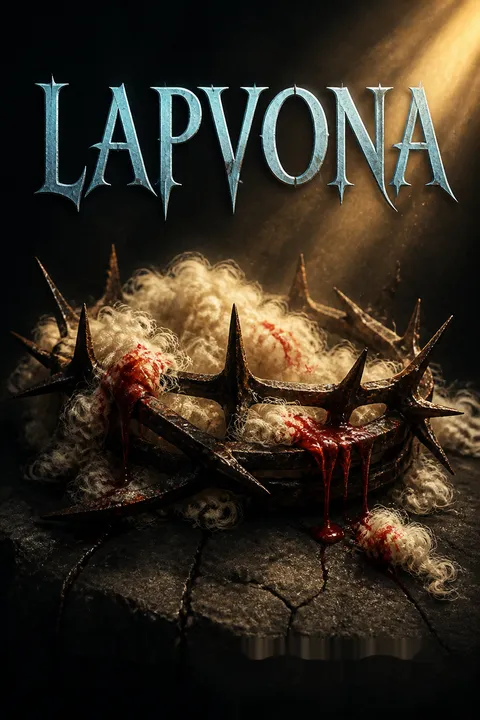


Plot Summary
Mercy in the Pillory
On Easter, bandits raid Lapvona, killing villagers and leaving one attacker with a broken foot. While the townspeople torment the prisoner, thirteen-year-old Marek approaches him, prays, and kisses him, believing compassion will earn God’s favor. The bandit is hanged and disemboweled before the crowd, and Marek recoils from the spectacle.
At home, his father, Jude, insists the dead will vanish into heaven or rot in hell, turning faith into another threat. Jude also beats Marek for breaking a water bucket, then comforts him afterward with a familiar story about Marek’s mother dying to save him. The boy welcomes even the beating because suffering seems to make him more worthy of love.
Marek’s piety is not simply devotion. It is a survival strategy built by a child who has learned to turn pain into evidence that he matters. His kiss of the bandit briefly refuses the village’s easy division between the innocent and the damned, but he interprets the act through the same punitive religious logic that governs Jude’s home. The bandit’s public execution and Marek’s private beating establish a world where authority calls violence moral, while the vulnerable must invent meaning from whatever tenderness they can find.
The Cliffside Rock
After a beating leaves him bruised, Marek meets Jacob, the privileged son of Lapvona’s lord, Villiam. Their friendship mixes Jacob’s teasing with Marek’s knowledge of the countryside, but Jacob’s easy confidence sharpens Marek’s envy. Marek leads him up a mountain with a story about rare birds, then throws a heart-shaped rock when Jacob complains that there are no nests.
Jacob dodges the stone, slips in his slick new shoes, and falls onto a ledge below. Marek hears him call for help and stays frozen until the cries stop. He returns to his father and blames a supernatural wind, hoping Jude will protect him. The lie cannot hold: Jacob’s body is still on the mountain.
The fall grows from a small act of deliberate cruelty rather than a grand plan, which makes Marek’s guilt harder for him to organize. He has spent years treating pain as a currency that buys affection; here, he makes another person pay. Yet he immediately reaches for the same supernatural explanations that have shaped his childhood, recasting his choice as fate. Jacob’s shoes matter because privilege does not merely surround him, it changes how he moves through the world, until a luxury meant to distinguish him helps bring him down.
A Son for a Corpse
On the climb back to the ledge, Jude tells Marek that the lord is his distant cousin and reveals a family prophecy about three deadly winds. The story draws Marek into confessing that he threw the rock. Jude does not kill him; instead, he carries Jacob’s broken body to Villiam’s manor, hoping blood ties will soften the lord’s response.
Villiam recognizes Jude as family, then treats the crisis like a transaction: he takes Marek as his son and lets Jude carry Jacob away. Jude leaves without looking back, telling himself Marek was never truly his. Marek enters the manor abandoned by one father and claimed by another, with Jacob’s death concealed beneath an absurd exchange.
The exchange exposes kinship as a system of ownership rather than care. Jude’s appeal to shared ancestry does not bring him closer to Villiam; it gives Villiam a convenient way to dispose of the crisis. Marek is transferred like property, yet the transaction also frees him from the immediate violence of the pasture. Villiam’s refusal to grieve normally is not resilience. It is a failure to acknowledge another person’s reality, a habit that lets him absorb catastrophe into entertainment and control.
The Manor Has Water
At the manor, Marek gains clean clothes, servants, plentiful food, and a room filled with Jacob’s stuffed animals. Villiam calls him a son but turns his discomfort into amusement, especially by making him eat meat he has been raised to reject. As drought empties the streams and kills Jude’s lambs, Marek sees the manor’s gardens remain green.
One night he follows Villiam and Father Barnabas to a hidden reservoir, where they swim and discuss the drought as a useful story for the villagers. Meltwater has been diverted to protect the estate. Downhill, the starving villagers crowd the lake, while Jude refuses to slaughter his lambs and loses them anyway. Marek understands the disparity but is still more wounded by exclusion than by injustice.
The reservoir makes inequality physically legible: the lord’s comfort is not a blessing untouched by the famine but its concealed cause. Yet Marek does not respond with political clarity. He has been trained to measure his worth through another person’s attention, so Villiam’s feasts and teasing can feel more important than the villagers’ suffering. The manor reproduces the emotional structure of Jude’s cottage at a grander scale: a powerful man sets the terms, and a dependent child learns to adapt. Abundance changes Marek’s circumstances before it changes his sense of what he deserves.
The Body in the Grave
Near death from hunger, Jude finds the blind villager Klim dead by the lake and carries him away to keep the others from eating him. At Ina’s cabin, the starving old nurse demands food, so Jude cuts Klim’s body apart and eats with her. Later he carries the remains to his cottage, where Marek, returned from the manor, mistakes the torso for Jude’s.
Marek buries it in the grave he believes holds his mother, convinced he has reunited his parents. Meanwhile, Agata, the woman Jude has falsely claimed died in childbirth, has escaped the abbey. Jude encounters her in the woods and rapes her, though hunger and delirium let him treat the assault as a dream. Agata reaches the manor pregnant, carrying the truth Jude buried.
The corpse’s changing identity reveals how readily each character sees what their private story requires. Jude turns hunger into permission to consume another human being; Marek turns an unrecognizable torso into a father he can finally honor. Agata’s return breaks open Jude’s invented history: the mother Marek mourns was not dead, and Jude’s account of her sacrifice has concealed coercion and abandonment. The novel makes bodily need inseparable from power. Hunger, nursing, sex, and burial are intimate acts, but in Lapvona intimacy repeatedly becomes a means of possession.
A Mother at the Table
Villiam sends his horseman, Luka, to fetch a singer, but the trip is a trap arranged with the bandits. Dibra, Villiam’s wife and Jacob’s mother, rides after Luka when he fails to return, and her horse comes back mutilated and riderless. At a manor feast, the mute, red-haired Agata saves Villiam from choking by striking his back.
Marek recognizes her resemblance to his imagined mother, and the servants understand the connection too. He seeks her out, but she offers neither the affection he craves nor an account of her years away. Agata’s history is harsher than Jude’s version: she was a child when her own brother raped her, and later Jude took her in and abused her. Marek is her son, but not Jude’s.
Agata’s return does not restore the maternal refuge Marek has imagined. She survives by withholding attachment, while Marek mistakes physical proximity for the beginning of love. The revelation of his parentage also unsettles the family categories that have governed his life: Jude raised him but was not his biological father, while Agata is both his mother and a source of rejection. Meanwhile, the loss of Luka and Dibra shows that the manor’s violence reaches beyond the village. Villiam’s apparent frivolity is compatible with lethal calculation because he treats other lives as pieces in a private game.
The Rain and the Reckoning
When the drought finally breaks, heavy rain floods Lapvona, then restores its fields and streams. Villiam sends food to the survivors and adds its cost to their future taxes, presenting extraction as generosity.
The village resumes work, but Grigor, an elder whose grandchildren were killed in the Easter raid, refuses the comforting explanation that God caused the famine. He visits Ina, who has replaced her ruined eyes with those taken from Dibra’s horse, and learns that Villiam diverted the mountain water into his private reservoir.
Grigor’s certainty shifts: the priest’s claims about the Devil no longer explain what he saw. He grows close to Ina and questions the duties that once organized his life, while most neighbors accept relief and avoid asking what it cost.
Rain restores crops, not moral clarity. Villiam’s relief supplies let the regime convert its own hoarding into a display of benevolence, while the taxes ensure that survivors will pay for being rescued. Grigor’s resistance begins with a practical question about water, not an abstract rejection of faith. His relationship with Ina offers a form of attention outside the village’s machinery of labor and confession. Her altered sight literalizes the book’s concern with perception: seeing more is not automatically seeing truly, but refusing a convenient story can begin to change what a person is able to see.
The Virgin Wedding
Villiam decides that Agata’s pregnancy is a miraculous virgin birth and marries her to claim the unborn child as a new Christ. He imagines pilgrims, wealth, and fame, while Father Barnabas helps sell the story to villagers hungry for deliverance. Marek, furious that the marriage will take his mother farther from him, throws a stone at Agata during the wedding procession.
She falls but survives, and Ina recognizes her as the girl she once tried to help. The crowd touches Agata’s belly as if blessing itself. By winter, Villiam appoints Jude to work at the manor stables. Jude accepts the post but keeps his distance from Marek, who still wants a family from people unable or unwilling to give him one.
Villiam’s religious opportunism transforms Agata’s pregnancy into an economic and political asset. The crowd’s reverence is not merely foolishness; it is a response to years of suffering and a wish for rescue that the ruling class can exploit. Marek’s stone repeats the violence that killed Jacob, now directed at the mother whose recognition he cannot secure. The wound does not prevent the wedding, just as his anger cannot make Agata belong to him. Jude’s return to the manor places the fractured family within one estate, but shared space does not produce reconciliation.
The Burning Manger
As the promised birth draws nearer, Villiam becomes anxious about appearing worthy of his sacred role. He confines Agata with Ina and hires Jude as stableman, while Marek clings to Villiam’s attention and fears losing it to the baby. At Christmas, Villiam asks the boy to play Mary in a stable nativity scene. Marek refuses.
From the shadows, Jude offers himself for the part; a gust scatters the torch’s flame onto the hay, and the manger catches fire. The fire damages the stable but spares the animals. Villiam avoids blame by telling the village guests that a horseman caused the blaze, and they promise not to contradict him. The promised holy tableau ends in smoke, frightened guests, and another manufactured account.
The burning manger collapses the distance between religious ceremony and the violence it is meant to conceal. Marek’s refusal is one of his rare moments of sound judgment: the role would make him perform a family he does not possess. Jude’s interruption can be read as defiance, but it also repeats the pattern of making events legible only through supernatural suggestion. Villiam again controls the aftermath by scripting what witnesses may say. The villagers’ silence is not simple belief. It is the learned caution of people who know the cost of contradicting power.
Poison at Christmas
At a Christmas feast, Grigor challenges Villiam’s wealth and asks whether he withheld the water during the drought. Villiam refuses to answer. The guests leave without the truth being acknowledged, while Marek defends the lord and calls the villagers ungrateful. That night, Father Barnabas, unnerved by visions of a supernatural hunt, hides a bottle of poison sent by Dibra’s brother, Ivan.
Lispeth brings the wine upstairs; Villiam drinks from it, and Lispeth dies after tasting a drop. Barnabas finds them dead, retreats in terror, and hangs himself, mistaking a draft at his door for the Devil’s arrival. Marek wakes to an estate emptied of its lord, its priest, and the servant who had spent the year resenting him.
The deaths arrive through mundane handling of a bottle and a frightened man’s interpretation of a draft, not through a clear act of divine judgment. That ambiguity matters: the characters have spent the novel assigning supernatural causes to suffering, while power and accident do the work in front of them. Grigor names Villiam’s theft but cannot make the room respond. Marek, by defending the lord, shows how dependence can turn a victim into a guardian of the system that shelters him. The manor’s authority disappears abruptly, leaving no moral order to replace it.
The Lord and the Baby
By spring, Ivan’s agents manage the estate and Marek is lord, but his new authority cannot make Jude acknowledge him. Jude refuses the lambs Marek buys for him and buries Villiam in a shallow grave, leaving animals to uncover the body. Agata dies after giving birth; Ina nurses the newborn and keeps it close. Marek discovers his mother’s corpse and the child in the same room.
He takes the baby, slips out of the manor, and climbs toward the cliff where Jacob fell. There he finds Jacob’s scattered bones and holds the infant in the sunlight, imagining that death could be followed by resurrection. The story ends with Marek speaking of the baby’s future among the birds, without showing whether he will let it live.
Marek inherits the title that once made Villiam powerful, yet the inheritance offers no repair for the relationships that formed him. Jude remains emotionally absent; Agata is beyond reach; the baby becomes both a person and a vessel for Marek’s fantasies of salvation. His climb returns him to the site where he first chose violence, now carrying someone more helpless than Jacob. The ending withholds the decisive action, forcing the reader to confront Marek’s capacity for harm without reducing him to a settled verdict. His language of ascent may be hope, threat, or both.
Analysis
Lapvona imagines a society in which power works by taking ordinary needs and giving them a sacred explanation. Villiam diverts water, sells the harvest, and then lets Father Barnabas describe the resulting hunger as a trial sent by God. Jude likewise converts abuse into discipline, and Marek learns to read injury as proof that he is loved. These are not identical forms of oppression, but they share a psychological mechanism: suffering becomes easier to endure when someone else controls its meaning.
The novel’s bodies resist that control. Marek’s crooked frame is treated as evidence of shame, then as a source of pity; Agata’s silence is made to signify holiness or passivity; Ina’s altered eyes give her a changed relation to the world rather than clear omniscience. Hunger, lactation, sex, and death are never abstract. They are material conditions through which characters depend on or dominate one another. The story repeatedly asks whether care can exist without ownership, and offers no easy example. Jude tends lambs but harms Marek. Ina sustains children but can be calculating. Marek longs to nurture and also carries a history of violence.
The ending brings the book’s central danger into a single image: Marek climbs back toward the cliff where Jacob died, carrying a newborn. His inheritance has given him authority, not emotional repair, and the child has become a screen for his longing for redemption. The unresolved final gesture refuses to convert suffering into a lesson or violence into destiny. It leaves the reader with the uncomfortable recognition that a person shaped by cruelty may still choose what happens next, even when he has learned to call that choice fate.
Review Summary
Lapvona receives mixed reviews, with an average rating of 3.54/5. Readers find it grotesque, disturbing, and thought-provoking. Many praise Moshfegh's unique style and exploration of themes like religion, power, and human nature. However, some criticize its excessive vulgarity and lack of deeper meaning. The medieval setting and dark, fairy-tale-like atmosphere are noted. While some consider it Moshfegh's best work, others find it disappointing. The book's polarizing nature is evident, with readers either captivated or repulsed by its content.
People Also Read




Characters
Marek
The suffering heirMarek is a physically disabled, lonely boy raised by Jude in poverty and taught to believe that pain earns divine favor. His instinctive tenderness toward the condemned clashes with the violence he endures and sometimes inflicts. He watches other people for signs that he might be wanted, then reshapes himself to suit whoever offers food, praise, or shelter. His vivid imagination gives him a private language for grief, but it also lets him turn guilt into prophecy and wishful thinking into certainty. Marek’s central need is not simply comfort. He wants someone to confirm that his existence is a gift rather than a burden.
Jude
The lamb herderJude is a solitary shepherd who measures himself through hard work, religious penance, and devotion to his lambs. His tenderness toward animals exists beside a capacity for cruelty toward people, especially Marek. He clings to a story of being a wronged, grieving father because it makes his life feel morally coherent. Poverty and loss have not made him humble so much as suspicious of anyone who might expose his self-deception. Jude’s habits reveal the book’s uneasy distinction between care and possession: he can nurture what depends on him while insisting that another person’s dependence gives him the right to control them.
Agata
The silenced motherAgata is a mute woman whose past has been shaped by sexual violence, forced dependence, and confinement. She speaks through gestures and choices, often withholding the tenderness other characters demand from her. Her silence is not innocence or mystery; it is a condition imposed by injury and then misread by people who want to use her. She has learned to endure by reducing what others can take from her, though even that strategy cannot guarantee freedom. Agata’s refusal to perform ideal motherhood unsettles Marek’s longing and Villiam’s religious fantasy, making her a person rather than the symbol each man wants her to become.
Ina
The blindwise healerIna is an ancient, blind medicine woman and former wet nurse who survives by studying plants, bodies, and the sounds of the natural world. After the village abandons her as a girl, she builds a life beyond its rules, though she later returns because her milk can save starving infants. Her bond with Marek offers him a kind of bodily comfort without the stable security he craves. Ina is neither a saint nor a simple witch. She can be generous, manipulative, practical, and strange at once, and her long life has made her skeptical of human claims to virtue.
Villiam
The lord of LapvonaVilliam governs through guards, a compliant priest, staged violence, and a performance of whimsical good humor. He avoids discomfort by turning other people’s fear and grief into entertainment, while his appetite for company and luxury disguises a deep dependence on constant attention. Villiam is not a conventional tyrant who needs to shout; his power is more effective because he can treat cruelty as a joke and make others help carry it out. He regards people, animals, and religious stories as material for his own amusement or advantage, rarely considering the inner life of those who serve him.
Grigor
The grieving elderGrigor is an older villager whose grandchildren are killed in the Easter raid. His grief first hardens into anger and suspicion, then makes him question the explanations that once sustained his obedience. He is attentive to practical details, such as where food and water come from, and that habit helps him resist the priest’s convenient religious stories. His developing bond with Ina loosens his attachment to labor, family expectations, and the need to appear righteous. Grigor remains imperfect and sometimes bewildered, but he becomes willing to name what others prefer to leave unspoken.
Jacob
The lord’s sonJacob is Villiam’s confident, wealthy son, a hunter fascinated by animals and exploration. He treats Marek as a companion but also exploits the imbalance between them, knowing Marek is easier to lead. His privilege makes him restless rather than grateful; he dreams of escaping the role his inheritance has prepared for him. His closeness with Lispeth hints at a capacity for tenderness that he rarely displays openly.
Lispeth
The guarded attendantLispeth is a young servant assigned to care for Marek at the manor. She remembers Jacob with deep longing and directs much of her resentment toward the boy who has taken his place. Her strict self-denial gives her a private sense of virtue, but it also narrows her capacity to respond compassionately to Marek. She performs her duties efficiently while guarding her inner life from the lord’s humiliations and everyone else’s demands.
Dibra
The displaced ladyDibra is Villiam’s wife, Jacob’s mother, and a woman married for political advantage. She lives with more independence than her husband expects, maintaining a passionate attachment to Luka while grieving the distance in her marriage. Jacob’s death leaves her with little reason to keep playing the role of contented lady. Her frankness and emotional pride make her difficult to control, even as the estate’s rules limit the choices available to her.
Luka
The devoted horsemanLuka is the manor’s horseman and Dibra’s long-standing lover. He is reserved, observant, and more emotionally committed than the cautious Dibra, carrying a private grief over the son he cannot publicly claim. His knowledge of horses gives him a life grounded in care and routine, while his hidden family ties place him under the same system he serves.
Father Barnabas
The lord’s priestFather Barnabas is a poorly formed priest who uses religious authority to relay Villiam’s wishes and keep villagers compliant. He lacks deep conviction but enjoys the status his office gives him. His flexible piety lets him excuse the lord’s excesses while presenting hardship as divine instruction. As pressure mounts, the stories he has used to manage others begin to shape his own fears.
Ivan
The northern powerIvan is Dibra’s powerful brother and Villiam’s political rival. Though largely absent from Lapvona, his influence shapes tariffs, marriage alliances, and the dangers surrounding the manor. His money and authority reach the story through messengers and gifts, making him a distant presence whose intentions remain difficult to read.
Klarek
The lord’s enforcerKlarek is Villiam’s head guardsman, responsible for enforcing orders and maintaining the appearance of security. His steady obedience helps convert the lord’s whims into consequences for the villagers.
Petra
Marek’s attendantPetra is a servant who treats Marek with more patience than Lispeth does. Her practical kindness offers small relief without pretending she can solve his grief.
Erno
The worried accountantErno manages Villiam’s accounts and recognizes the strain created by the lord’s spending and political debts. His warnings show that even the estate’s own officials can see its finances are being mismanaged.
Plot Devices
The hidden reservoir
Makes theft visibleThe reservoir stores mountain water diverted from the streams that should supply Lapvona. Its existence explains why the manor remains green while the village suffers drought. Marek sees Villiam and Father Barnabas swimming there, and Grigor later learns that the famine’s apparent supernatural cause was engineered by human choice. The reservoir turns an environmental catastrophe into evidence of political extraction.
Religious folklore
Turns suffering into obedienceJude, Father Barnabas, and the villagers use stories about heaven, hell, sin, and divine punishment to explain violence and deprivation. The beliefs do not operate as one consistent theology. They are shaped by whoever needs comfort, control, or a reason to endure. Marek treats pain as proof of goodness, while Barnabas invents explanations that protect Villiam. The gap between doctrine and conduct exposes how belief can be used both to survive and to rule.
Birdsong and animal life
Offers another witnessIna understands birds as guides and informants, and animals repeatedly complicate human claims about beauty, innocence, and ownership. Marek sees birds as links between earth and heaven; Jacob kills and mounts them; Jude loves lambs while participating in violence against people. Animal life does not provide a simple moral alternative, but it lets the narrative register events beyond the human characters’ self-serving accounts.
False parentage
Destabilizes family rolesJude’s fabricated story about Agata’s death lets him present himself as a bereaved father and Marek as the child of a sacrifice. Agata’s return reveals that the story conceals her survival and the coercion that shaped Marek’s birth. Villiam’s exchange of sons further treats parenthood as a transferable possession. The device makes biological descent, caregiving, and ownership repeatedly conflict, without allowing any one of them to guarantee love.
The poison wine
Ends the manor’s old orderA bottle sent by Ivan enters the manor during Christmas, when Villiam, Barnabas, and the guests are already unsettled by the supposed messianic pregnancy. The wine kills Villiam and Lispeth, while Barnabas’s interpretation of a draft as a supernatural threat leads him to take his own life. The deaths remove the ruling circle without a battle or a clear act of justice, leaving Marek to inherit power without guidance.
Download PDF
Download EPUB
.epub digital book format is ideal for reading ebooks on phones, tablets, and e-readers.








