

Plot Summary
The White Fox Arrives
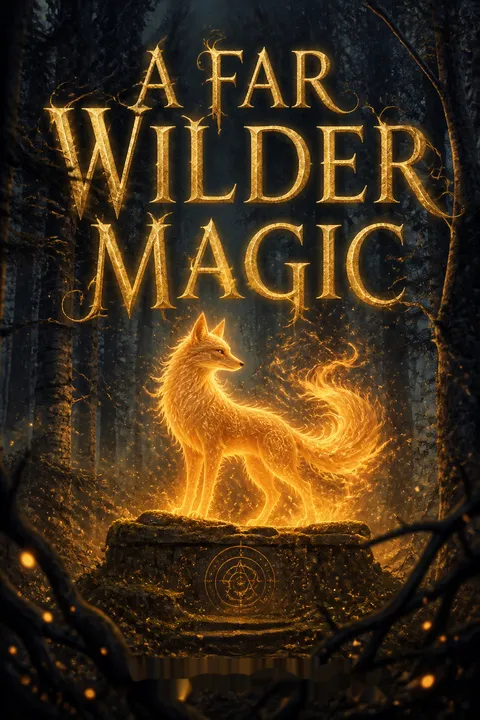
Seventeen-year-old Margaret Welty is keeping her family’s decaying manor afloat while her mother, Evelyn, has been away for three months. One cold evening, Margaret sees the hala, an ancient white fox revered by some and feared by others, emerge from the woods. Its appearance means Wickdon will host the Halfmoon Hunt, a national contest in which hunters and alchemists pursue the creature.
Margaret first thinks of the danger, then of the prize: Evelyn wants the hala for her research into the philosopher’s stone. Margaret hopes winning might finally bring her mother home. She has no partner, money, or desire to use alchemy, and the memory of Evelyn’s disastrous experiments makes the prospect feel less like a dream than a threat.
The fox arrives in a life already organized around absence. Margaret turns the hunt into a possible bargain with Evelyn: if she delivers what her mother wants, perhaps she can recover the family she remembers. That hope explains why the contest matters beyond money or recognition. Her reluctance toward alchemy is equally concrete: she associates it with the night her mother was injured and the tenderness drained from their home. Her first response to the hala therefore holds two impulses at once, fear of repeating the past and a desperate wish to repair it.
A Stranger at Welty Manor
Weston Winters arrives from Dunway with three suitcases and one last hope: an apprenticeship with Evelyn, the only alchemist who might still take him. He wants a political career so he can improve conditions for families like his own, but repeated academic failures and anti-Banvish prejudice have shut him out elsewhere.
Evelyn is gone, and her daughter Margaret first sends him away. He returns the next morning, is bowled over by her coonhound Trouble, then shows her a photograph of his close-knit family and explains why he needs the chance.
Margaret lets him stay until Evelyn returns, though she warns that her mother may dismiss him. Sharing the neglected manor gives Wes a roof and Margaret temporary help, while neither knows whether the arrangement can last.
Both young people arrive carrying different forms of scarcity. Wes lacks money, credentials, and confidence that institutions will judge him fairly; Margaret has shelter and land, but little affection or help. His photograph changes her decision because it makes his need legible without turning him into a plea for pity. Their bargain is practical, yet it also begins to unsettle their defenses: Wes cannot charm Margaret into trust, and Margaret cannot entirely ignore the family loyalty that drives him.
Wickdon Picks Its Heroes
At the hunt’s opening gathering, Margaret listens as Mrs. Wreford explains the contest and its reward, then faces Jaime Harrington, the mayor’s son. Jaime mocks her Yu’adir heritage and implies that the hunt belongs to people like him, not her. Wes intervenes, provoking Jaime, while Margaret resents his gallantry even as she notices he has faced prejudice himself.
She admits that she would enter if she had the means and a trustworthy alchemist. Wes offers to take on her chores so she can earn the fee and train. She accepts the help but keeps her deeper purpose to herself: she wants the hala for Evelyn, and she is not yet ready to trust Wes with the truth.
Jaime turns the contest into a test of belonging. His insults make clear that Wickdon’s resistance to Margaret is not simply personal; he treats her ancestry as proof that she has no claim to public honor. Wes’s intervention gives her a glimpse of solidarity, but it also threatens her preferred strategy of staying unnoticed. Her agreement to let him help is a small, consequential departure from self-sufficiency. She accepts practical support while still withholding emotional dependence, a compromise that lets her approach the hunt without admitting how much she wants it.
A Maul Too Heavy
Trying to make himself useful, Wes attempts to enchant Margaret’s maul with a rough, improvised transmutation. The result is so heavy that neither of them can lift it, and Margaret rebukes him for experimenting without understanding the chemistry. She still lets him inside, but the failure sharpens his fear that he is a poor alchemist as well as a poor student.
Later, he walks to town to call his family and lies to his mother, Aoife, that Evelyn has accepted him. Meanwhile, Margaret sells pelts to save the entry fee and trains alone. Wes’s awkward attempt at alchemy and his lie do not solve their problems, but both expose the pressure they conceal: he fears disappointing his family, and she fears needing anyone.
The heavy maul gives physical form to Wes’s central problem: effort without the right method can make matters worse. His impulse is to act first and understand later, while Margaret’s instinct is to distrust anything she cannot control. His call home shows the cost of his buoyant performance, since he protects Aoife from worry by extending a false success. Margaret’s independent work is not mere stubbornness either. It is a practiced defense against disappointment, one that keeps her functioning but leaves her isolated.
Blood Across the Farm
A gunshot draws Margaret, Wes, Jaime, and Jaime’s friend Zach Mattis into the woods, where they find Halanan’s farm devastated. The hala has killed the pony Sugarlump and several cows, leaving alchemical ash and blood across the pasture. When the fox appears, Jaime wants to chase it, and Margaret sends Trouble after its trail.
She fires at the creature but hits the tree instead. The miss does not weaken her resolve. In front of Jaime, she announces that she will register for the hunt. The farm’s losses make the danger immediate, while her decision turns a private wish into a public challenge. She now needs an alchemist she can trust, not merely a way to pay the fee.
The dead animals strip away the comforting distance between legend and event. The hala is no longer a symbol to be debated at a pub; it has damaged the livelihood of people Margaret knows. Her failed shot matters because she acts despite having no assurance of success. Announcing her intention before Jaime transforms the decision into an assertion of rightful presence. She is not claiming the hunt is harmless or that she has no fear. She is refusing to let Jaime’s prejudice decide which risks she is permitted to take.
The Last Train Back
Just as Wes begins to settle into the manor, Mark Halanan brings news from the inn: Aoife has injured her hand at work and may need surgery. Wes calls home and hears from his sister Madeline that the family needs him to return; unable to promise when he can help, he agrees to leave for Dunway.
Margaret asks him to partner with her in the hunt, explaining that winning could secure both Evelyn’s attention and Wes’s apprenticeship, but he refuses to abandon his family. After he goes, Margaret registers on her own, discovers his address on the water-smeared note he left, and takes the train to Dunway. Her journey turns her unspoken need into a direct request.
Wes’s departure is not a simple retreat from ambition. Faced with his mother’s injury and years of family strain, he chooses an immediate obligation over a speculative future. Margaret understands the choice, but the loss forces her to recognize how much she had begun to rely on him. Traveling to Dunway reverses their first encounter: this time she crosses the distance and asks for what she wants without disguising it as a chore. Her decision marks a shift from waiting for Evelyn to return toward taking action for herself.
Blood Registers Them
Margaret reaches Wes’s crowded Dunway apartment and offers him the hunt’s prize money, enough to help pay for Aoife’s surgery. He agrees after his family hears the truth at dinner. Madeline accuses him of choosing his own dream over theirs, while Aoife fears for his soul and safety; Wes insists that entering is his decision and promises to come home if he fails.
Margaret explains that she needs an alchemist and intends to win, not simply to help his career. On the train back, they speak more honestly about their ambitions and fears. At the pub, they complete registration with a ritual sacrifice of Wes’s blood and Margaret’s hair, binding their names to the contest.
The registration ritual makes their alliance bodily and public. Neither can pretend the other is merely a convenient partner after placing blood and hair together in the contest’s alchemical bowl. The Winters family argument also clarifies the different meanings of risk: Aoife sees danger to her son, Mad sees another promise that could leave her carrying the family, and Wes sees a rare chance to alter their circumstances. Margaret’s offer is generous, but it also asks Wes to carry a danger she cannot face alone.
Inside Evelyn's Laboratory
Back at Welty Manor, Margaret gives Wes the key to Evelyn’s laboratory so he can prepare for the hunt. Crossing the threshold triggers one of her episodes: the sight of a bloodstain and the smell of alchemy return her to a frightening night from childhood. Wes steadies her without demanding an explanation, and she leaves him to work.
As he struggles with the equipment and textbooks, Margaret realizes he has trouble reading unfamiliar material, a difficulty his former teachers mistook for laziness. She offers to read the alchemy text aloud. Listening helps him grasp the purification process and begin to improve his experiments. The lab becomes both a dangerous memory for Margaret and a place where she can choose to help someone learn.
The laboratory is more than a room; it is the site where Margaret’s childhood understanding of safety broke. Giving Wes access therefore constitutes trust before she can fully name it. His learning difficulty becomes visible through behavior rather than a diagnostic label: he loses his place, strains over words, and benefits from hearing the text. Margaret’s offer to read changes their working relationship. Instead of measuring him by the failures of institutional schooling, she helps him find a method that suits his mind.
A Bullet of Light
At Wickdon’s alchemy exposition, Wes faces experienced, well-funded competitors and doubts that his modest equipment can impress the judges. A fellow competitor, Judith Harlan, encourages him to trust the intuitive part of alchemy rather than repeat calculations indefinitely.
Wes concentrates, completes his transmutation, and produces a shining essence that gives his bullet enough force to ignite a distant target. The judges award him 117 points, above the score Margaret believes they need for first flight.
His success does not erase his academic struggles or guarantee victory, but it proves that he can produce original work under pressure. For Margaret, watching his invention succeed makes alchemy look briefly like a tool rather than only a source of harm.
Wes’s success depends on a kind of knowledge that his previous teachers did not know how to assess. Calculation matters, but so do intuition, experimentation, and the ability to trust his own attention. Harlan’s advice helps him stop treating every error as evidence of incapacity. The score gives the pair a concrete advantage, yet its emotional force lies elsewhere: Margaret sees him succeed in the very field she fears. Her response does not settle the moral question of alchemy; it makes that question harder to answer simplistically.
Jaime's Perfect Shots
During the shooting competition, Margaret hits her targets and advances, while Jaime suddenly shoots with a precision far beyond his known ability. Annette Wallace gives Wes alchemized liquor, and, drunk, he recognizes that Jaime’s rifle has been altered. He secretly uses a transmutation to spoil the weapon before Jaime’s next shot, which sails harmlessly into the water.
Margaret wins her round and secures their place in the first flight. Outside the contest, Jaime threatens them and insults Margaret’s heritage; Wes punches him, earning a swollen hand and a warning from Margaret that his recklessness could disqualify them. That night she tells Wes she is Yu’adir. He accepts her without hesitation.
The contest tests more than aim. Jaime uses illicit advantage while claiming the authority of tradition, and Wes’s intervention exposes the double standard without making him blameless. His drunken sabotage succeeds, but his later punch risks the very opportunity he is trying to defend. Margaret’s disclosure of her ancestry follows that public conflict because she needs to know whether Wes’s solidarity survives personal knowledge. His acceptance gives her relief, yet the scene also shows that trust grows through specific choices, not through declarations alone.
The Cave Turns Red
After the competition, Margaret and Mrs. Wreford find Zach Mattis gravely wounded in the sea cave where Wickdon’s young people drink. The hala has attacked him, leaving a burned, alchemical wound as the tide rises around them. Jaime admits that his careless plan helped put Zach in danger and begs Margaret to forgive him, but she cannot offer absolution while she is struggling to stay present.
She waits with Zach until help arrives, then spends the night at Mrs. Wreford’s apartment. Wes comes looking for her and remains nearby. Zach survives, but the attack proves that the hala is now willing to harm people, not only livestock. The hunt’s approaching climax has become a human emergency.
Zach’s injury disrupts the hunters’ story that the hala’s destruction is merely a thrilling spectacle. Margaret’s dissociation returns in the cave, where rising seawater and blood recall her childhood trauma. Her inability to comfort Jaime is not a simple refusal of forgiveness; she is still trying to remain anchored in her own body. Mrs. Wreford’s care offers a contrast to the manor’s emotional isolation. The episode demonstrates that community can mean practical shelter and warmth, even when Margaret cannot yet accept its affection easily.
The Lab Is Ransacked
While Wes is alone at the manor, Annette visits him and tries to draw him into a private encounter. He stops when he realizes his feelings are elsewhere. Annette leaves him locked in his room, and Jaime uses the opening to wreck Evelyn’s laboratory. He smashes the equipment, tears up Wes’s notes and prototypes, and scrawls slurs targeting both Wes’s Banvish identity and Margaret’s Yu’adir heritage.
Margaret returns to find the damage. Wes apologizes, but she refuses to let him take responsibility for Jaime’s choices. With only days before the hunt, they begin cleaning the lab and rebuilding the work they can remember. Their preparations are damaged, not ended.
The attack joins private intimacy to public prejudice. Annette’s uncertainty and desire to escape Wickdon do not prevent her from helping Jaime isolate Wes; her vulnerability has been shaped by the same social pressure that harms Margaret. The slurs make clear that the sabotage is not only personal retaliation but an attempt to deny the pair a place in the contest. Wes’s first response is guilt, while Margaret insists on locating responsibility where it belongs. Their decision to rebuild becomes a refusal to let intimidation define the limit of their effort.
Trouble Takes the Bite
As Wes reconstructs his experiments, he finds the encoded instructions for the transmutation that can kill the hala. Margaret recognizes the symbols as part of Evelyn’s forbidden research and panics, telling him to stop. She explains that she once found her mother bleeding after a failed experiment and fled into the woods before Wes can make her feel safe.
There, the hala attacks. Margaret fires repeatedly, but the creature bites Trouble and vanishes. She finds her hound alive but badly wounded, with silver liquid leaking from the bite. Wes follows her into the clearing and helps her face what he has uncovered. The attack forces them to confront both the creature’s danger and the reason Margaret fears the research.
Margaret’s flight is a survival response, not a rejection of Wes’s efforts. The formula reactivates the memory she has spent years controlling through chores and emotional numbness. The hala’s attack makes the danger physical and immediate, but Trouble’s survival also leaves room for care rather than pure catastrophe. When Wes follows, he does not demand that she suppress her fear. Their relationship shifts because he asks to understand what happened, while she begins to trust him with the memory she has treated as unspeakable.
The Stone's Terrible Promise
In the woods, Margaret explains that Evelyn’s work concerns the philosopher’s stone, a legendary substance that could create matter from nothing and perhaps restore the dead. After Margaret’s brother David died, Evelyn pursued the stone in hopes of bringing him back. The experiment that injured her produced something Margaret could not understand, and its memory still triggers her episodes.
Wes realizes the danger comes not from alchemy alone but from Evelyn’s obsession and the choices she made. He promises not to pursue the magnum opus for its own sake. Margaret then chooses to trust him with the fuller truth of her mother’s work, accepting that they need a way to kill the hala before it harms anyone else.
The revelation reframes Evelyn’s ambition as grief converted into an impossible project. Her research promises not only power but reversal, the undoing of a loss no family can bear to accept. Margaret has protected her mother by treating the experiment as an external corruption, but Wes’s distinction between a tool and a choice complicates that account. His promise matters because it does not demand that Margaret forgive Evelyn or stop fearing alchemy. It offers a boundary: knowledge may be used to prevent harm without becoming an excuse to pursue godlike control.
The Cipher Beneath the Desk
Margaret retrieves Evelyn’s hidden journal, and she and Wes decode its instructions using a Yu’adir cipher. The completed formula explains how to kill a demiurge. Wes paints the transmutation onto a hunting knife, and they burn their working notes so the dangerous knowledge cannot circulate. Before they can leave for the hunt, Evelyn returns and finds them together.
She rejects Wes as a student, threatens his future, and orders him from the manor. Margaret initially stands beside her mother rather than following him. Wes departs without the apprenticeship he came for, while the knife and their fragile partnership remain the only things carrying their plan forward.
The cipher makes cultural knowledge indispensable to the technical plot: Wes can read patterns, but Margaret supplies the language that unlocks the journal. Their collaboration is therefore not a transfer from expert to assistant; each has a capacity the other lacks. Burning the notes signals their attempt to limit the reach of dangerous research. Evelyn’s return then reintroduces the authority that has shaped Margaret’s life. Wes loses his hoped-for mentor, and Margaret must decide whether loyalty to her mother still requires her to accept neglect.
Margaret Leaves the Manor
Wes returns to Dunway, where his mother and sisters listen as he admits his failure and heartbreak. Madeline challenges him to stop treating rejection as final and return to the girl he loves. At Welty Manor, Margaret confronts Evelyn about years of loneliness and refuses to replace Wes as her hunt partner.
She packs her belongings, takes Trouble and Shimmer, and leaves. On the road, she finds Wes coming back for her. He offers a future beyond the manor, and she chooses to go with him. The Winters family welcomes her into their crowded inn rooms, where Aoife, Madeline, Christine, Colleen, and Edie make space for her as one of their own.
The two departures answer one another. Wes’s family urges him to act rather than accept heartbreak as proof that he is unworthy; Margaret finally stops mistaking endurance for love. Leaving the manor does not mean she has ceased caring for Evelyn. It means she no longer treats her mother’s needs as the only legitimate reason to live. The Winters household offers a concrete alternative to the Welty home: noisy, imperfect, and shared. Margaret’s first experience of belonging outside her family begins through ordinary welcome.
A Night Before the Hunt
The Winters siblings welcome Margaret, and Madeline gives her approval after she promises to help Wes pursue his ambitions. At the final festival, Jaime threatens Wes, but Margaret stays beside him; they dance before the night ends. Before dawn, Wes finds Margaret swimming in the sea, and they finally confess their love through their closeness.
Later, Evelyn approaches Margaret at the inn and asks her to surrender the hala so she can finish the stone. She warns that Wes may be tempted by its power. Margaret goes to the hunt still uncertain, but she refuses to make her decision for fear alone. As the hounds are released, she and Wes ride together into the fields.
The night’s intimacy does not erase the conflict ahead; it gives Margaret a relationship she can lose, which makes the coming choice more frightening. Evelyn’s warning is powerful because it echoes Margaret’s own fear that love will turn into another abandonment or obsession. Wes and Margaret do not secure certainty before the hunt. Instead, they accept uncertainty with each other. The released hounds convert that emotional commitment into action: they enter a contest where family loyalty, inherited prejudice, and the possibility of power will be tested at once.
The Hala Falls
The hunt drives Wes and Margaret through the woods behind the hounds and Trouble. Jaime ignores the contest to attack them, forcing Wes over a ravine during their struggle. Margaret catches up and holds Jaime at gunpoint, but the hala interrupts before he can shoot her.
The fox bites Jaime, and Margaret wounds it with the specially prepared knife. She then follows its blood trail, shoots it from a tree, and lets Trouble and Jaime’s hound hold it down. Wes arrives injured and battered.
Margaret points her rifle at him, afraid the philosopher’s stone will claim him as it claimed Evelyn. He answers by offering to abandon the prize rather than risk becoming what she fears. She chooses to trust him, and he activates the knife’s transmutation, killing the hala beneath the full moon.
The climax makes the central moral choice inseparable from physical danger. Jaime’s assault reveals that human prejudice can be as lethal as the supernatural creature he claims to oppose. Wes saves Jaime after the hala wounds him, refusing to use his new alchemical power as revenge. Margaret’s raised rifle is not distrust without cause; it is an attempt to prevent a repetition of her mother’s obsession. When she lowers it, she does not acquire certainty. She chooses trust as a risk worth taking, and Wes’s restraint gives that choice evidence.
Ashes Against the Sea
The winners return to Wickdon and receive the traditional anointing with the hala’s silver blood. Margaret then goes back to Welty Manor with Wes. Evelyn offers him a career and asks for the fox, but Margaret refuses.
She learns that her father had wanted to take her with him; Evelyn threatened him away, rather than letting him return. Margaret leaves the manor with Wes, carrying grief but no longer waiting for her mother to change.
The town awards Wes the prize money for Aoife’s surgery, and Judith Harlan offers to help him pursue an apprenticeship and political ambitions. At the shore, Wes burns the hala’s remains instead of making the philosopher’s stone. Margaret watches the ashes go, choosing a future neither of them can fully predict.
The ending resolves the opening bargain by refusing its premise. Margaret once believed that winning the hala could buy Evelyn’s return; she now understands that no prize can make a parent present or restore the family as it was. The revelation about her father changes the meaning of his absence without repairing it. Wes receives material help for his family and a credible path toward his ambitions, while the creature’s remains are destroyed to prevent the stone’s creation. Their future remains uncertain, but uncertainty is no longer synonymous with abandonment.
Analysis
A Far Wilder Magic makes its romance inseparable from competing ideas of responsibility. Margaret believes survival means limiting desire: maintain the manor, wait for Evelyn, and never need more than she can protect. Wes believes ambition can become a public good, but his instinct to intervene sometimes turns into reckless self-display. Their partnership tests both convictions. Margaret has to discover that accepting help is not the same as surrendering agency; Wes has to recognize that good intentions do not automatically make his actions harmless.
The novel also treats prejudice as material rather than abstract. Jaime’s hostility determines who is presumed worthy of the hunt, while the Winters family’s poverty shapes how much Wes can risk. The contest turns these exclusions into spectacle, asking who gets to embody the nation’s idea of a hero. Margaret and Wes do not defeat that system simply by winning, but their presence makes its assumptions harder to preserve.
Alchemy supplies the story’s most intimate metaphor because it promises that matter can be dismantled and remade. Evelyn’s grief turns that promise toward reversal, as if sufficient knowledge could restore what death has taken. The novel refuses the fantasy that love can repair every loss. Margaret cannot recover her childhood family, and the philosopher’s stone cannot guarantee that a recreated past would be a living one. Her eventual choice is not forgetfulness or forgiveness on demand. It is to stop organizing her life around another person’s return.
The ending offers no perfect cure for grief, inequality, or fear. Instead, it makes a smaller and more persuasive claim: people can build safety through shared decisions, accountability, and care that does not demand self-erasure. Wes’s political ambition remains unfinished, Margaret’s future remains open, and the world beyond Wickdon is still uncertain. For the first time, uncertainty is not only something to endure. It is a space they choose to enter together.
Review Summary
A Far Wilder Magic received mostly positive reviews, with readers praising the atmospheric writing, character development, and slow-burn romance between Margaret and Wes. Many appreciated the exploration of themes like prejudice, family dynamics, and self-discovery. Some critics found the pacing slow and the hunt underdeveloped. While the book resonated deeply with many readers, others struggled to connect with the characters or setting. Overall, it's a character-driven fantasy romance that appeals to those who enjoy intimate, emotional stories with magical elements.
People Also Read



Characters
Margaret Welty
Guarded country sharpshooterMargaret is a practical, self-reliant seventeen-year-old who keeps Welty Manor functioning while her mother pursues research. She is a skilled shot and hunter, more comfortable with animals and tools than with people who might pity or judge her. Her Yu’adir heritage shapes how Wickdon treats her, while her father’s faith remains a quiet part of her inner life. Margaret’s reserve is not a lack of feeling; it is a strategy developed amid family loss, her mother’s emotional absence, and the fear of alchemy. She longs for safety and attachment but distrusts the cost of wanting either. Her relationship with Wes tests whether she can ask for help without surrendering her independence.
Weston Winters
Charming reform-minded alchemistWes is an ambitious young alchemist from Dunway’s Fifth Ward and the son of Banvish immigrants. He hopes to enter politics and challenge the structures that keep poor families and religious minorities at a disadvantage. Quick with humor and charm, he uses performance to hide academic struggles, grief over his father, and fear that he has disappointed his family. He has a strong instinct to defend people who are targeted, but that instinct can turn reckless when pride and anger take over. His partnership with Margaret gives him someone who sees beyond the polished persona and expects him to be honest about his motives as well as his feelings.
Evelyn Welty
Brilliant, absent alchemistEvelyn is a renowned alchemist and Margaret’s mother. Intelligent, disciplined, and fiercely private, she has devoted herself to research that most scholars dismiss or fear. Margaret remembers both a playful, attentive parent and a distant woman absorbed by work, leaving her daughter to interpret love through rare tenderness and old memories. Evelyn’s ambitions grow from family grief, but her determination can make other people’s needs seem secondary. She is influential in the alchemical world and guarded about the knowledge she has gathered, especially when she believes others might misuse it.
Trouble
Stubborn hunting houndTrouble is Margaret’s aging coonhound and closest companion. A capable tracker with oversized ears and an independent streak, he follows scents with more conviction than he follows commands. Margaret’s affection for him is direct and unembarrassed, and his steady presence offers comfort when she retreats from human company. He becomes part of the partnership between Margaret and Wes, though his loyalty remains firmly rooted in the life he shares with Margaret.
Jaime Harrington
Entitled local rivalJaime is the mayor’s son, a wealthy young hunter who expects Wickdon’s traditions to affirm his status. He is charming when it serves him and cruel when he feels challenged, especially toward people whose ancestry he regards as unworthy. His attachment to Annette and his friendship with Zach complicate his public swagger, but do not excuse his bigotry. Jaime represents a version of patriotism built on exclusion and inherited privilege.
Zach Mattis
Jaime's loyal hunting friendZach is a large, hesitant young man who follows Jaime’s lead and participates in the hunt. His dependence on Jaime makes him seem more comfortable obeying than choosing for himself. He is not as openly hostile as his friend, but he joins in the social world that keeps Margaret at its margins. His presence exposes the difference between deliberate cruelty and the quieter harm of going along with it.
Mrs. Wreford
Blunt Wickdon protectorMrs. Wreford owns the Blind Fox pub and serves as one of Margaret’s few dependable sources of care. She is direct, skeptical of Evelyn, and willing to confront young people when she thinks they are in danger. Her concern can feel intrusive to Margaret, who dislikes being treated as someone to rescue, but Mrs. Wreford offers concrete help rather than empty reassurance. She understands that protection sometimes means making room for someone to decide for herself.
Mark Halanan
Kind Wickdon farmerMark Halanan is a local farmer who treats Margaret with warmth and practical generosity. He gives Wes a ride to Welty Manor and offers Margaret work that allows her to accept help without feeling wholly indebted. His care for the people and animals around him gives the hunt’s destruction a local, human cost. He is among the few townspeople who do not make Margaret’s heritage a reason to exclude her.
Annette Wallace
Sheltered innkeeper's daughterAnnette is a polished young woman from Wickdon’s wealthy Wallace family, raised within a social circle dominated by Jaime. She dreams of seeing life beyond the town but fears the consequences of breaking with the people she knows. Her attraction to Wes is tangled with that longing for escape. Annette is capable of kindness and remorse, yet her fear of social isolation can make her complicit in harm.
Aoife Winters
Worried, loving motherAoife is Wes’s Banvish mother, a hardworking woman who holds her family together through money troubles and shared rituals. She worries about Wes’s safety and his religious conscience, but also understands that ambition is part of how he hopes to help them. Her tenderness is expressed through food, touch, and persistent concern. She wants her son to thrive without losing the family bonds that have sustained them.
Madeline Winters
Wes's burdened elder sisterMadeline, usually called Mad, is the oldest Winters daughter. She works hard and carries an adult share of responsibility after her father’s death, which leaves her impatient with Wes’s repeated risks and optimistic promises. Her bluntness can sound like contempt, but beneath it is fierce loyalty and fatigue. Mad wants her brother to grow up without mistaking his dreams for a substitute for helping the family in the present.
Christine Winters
Teasing, dependable sisterChristine is one of Wes’s older sisters, quick-witted and playful, with a sharp eye for family tensions. She helps keep the crowded Winters household lively and often needles Wes when he takes himself too seriously. Her humor can disguise how closely she watches those she loves. She is protective of her family, though she prefers affection to arrive with a joke attached.
Colleen Winters
Curious younger sisterColleen is Wes’s bright, talkative teenage sister. She is inquisitive, affectionate, and quick to tease him, but she also notices more than he assumes. Her warmth reminds Wes of the family life he misses while away. Colleen’s confidence makes her a lively presence in the household and an honest counterweight to the older siblings’ grievances.
Edie Winters
Youngest family anchorEdie is Wes’s youngest sister, a small child who clings to him and asks direct questions. Her affection is uncomplicated, and her presence recalls the playful bond Wes has with his family. She brings levity to tense moments without understanding all the adult worries around her.
Judith Harlan
Encouraging young alchemistJudith is a young alchemist from Dunway who recognizes Wes’s potential at the exposition. She offers practical encouragement rather than treating his uncertainty as proof of incompetence. Her own background gives her sympathy for students who lack money and established connections.
Margaret's father
Gentle Yu'adir parentMargaret’s father is a Yu’adir man whose faith and warmth remain present in her memories. He taught her that alchemy could be a way of understanding the world and that care for others was a moral responsibility. His absence leaves Margaret with fragments of songs, stories, and family rituals that shape her understanding of belonging.
David Welty
Beloved Welty brotherDavid is Margaret’s brother, remembered through childhood scenes of family outings and small shared pleasures. His place in the Welty family continues to shape Margaret’s memories of home and Evelyn’s research. He represents the closeness Margaret longs to recover.
The hala
Ancient white demiurgeThe hala is an ancient, fox-shaped demiurge that appears along New Albion’s coast each autumn. Its presence brings ecological ruin and a public hunt that draws wealthy competitors, religious authorities, and spectators. Different traditions describe it as a demon, a divine being, or a bearer of sacred knowledge. Its unnerving attention and power make it difficult to understand as simply animal or monster.
Plot Devices
The Halfmoon Hunt
Public contest, private stakesThe annual hunt gives the novel its deadline and draws Wickdon’s private conflicts into public view. Teams pair an alchemist with a hunter, compete in preliminary events, and chase the hala under the Cold Moon. Their placement determines how close they can ride to the hounds, while the winner receives prize money and the creature’s remains. The event promises glory but is shaped by class and religious prejudice. For Margaret and Wes, entering is a practical gamble for their families and a challenge to the narrow definition of who may represent New Albion.
Alchemical Transmutation
Matter becomes moral pressureAlchemy breaks matter into an essential substance and uses that essence to alter or rebuild objects. Its three broad stages are decomposition, purification, and reconstitution. Wes’s uncertain experiments produce both comic failures and the inventive ammunition needed for the hunt. More than a magic system, alchemy creates a recurring ethical question: whether power serves care, ambition, or control. Margaret’s fear of it comes from witnessing the damage Evelyn’s research caused, while Wes initially sees it as a route to political influence and social change.
The Philosopher's Stone
Grief seeks impossible reversalThe philosopher’s stone is the aim of Evelyn’s secret research. Alchemists believe it could grant immortality and create matter from nothing, while Evelyn hopes it might reverse a devastating family loss. The stone ties the hunt’s prize to the novel’s deepest conflict: whether a person can use knowledge to repair grief without being consumed by the desire to undo it. Its promise also tempts Wes with an immense power he must decide how to handle.
The Encoded Journals
Knowledge requires shared trustEvelyn’s books and hidden journal preserve the method for confronting the hala, but she has encoded their instructions to restrict access. Wes can identify patterns and work through alchemical systems; Margaret recognizes the Yu’adir language that completes the key. Their different abilities make the deciphering a joint act rather than a solitary breakthrough. The journals connect the technical challenge of the hunt with the emotional question of whether dangerous knowledge should be passed on, withheld, or destroyed.
The Ouroboros
Creation entwined with destructionThe serpent devouring its tail recurs in Evelyn’s research, the transmutation designs, and the images associated with the hala. It represents a cycle in which creation and destruction cannot be cleanly separated. The symbol helps identify the magnum opus as a process that promises transformation but may also reproduce the same harm that prompted it. Its repeated appearance invites Margaret and Wes to question whether making something new is always worth the cost of what must be destroyed.
About the Author


Download PDF
Download EPUB
.epub digital book format is ideal for reading ebooks on phones, tablets, and e-readers.








