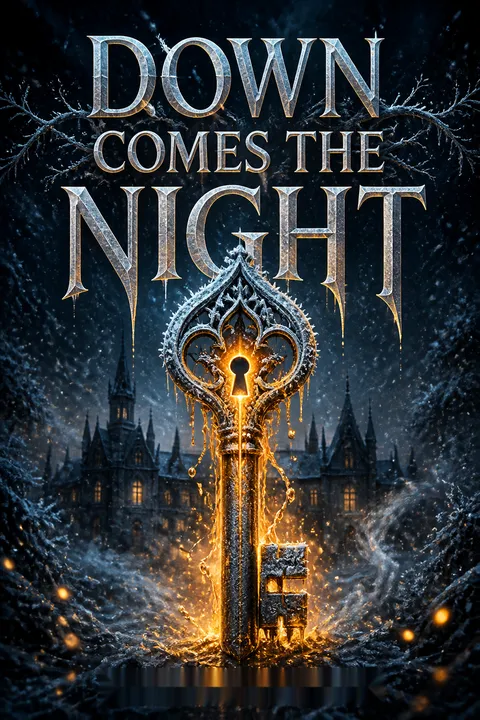


Plot Summary
The Notebook of Names
During a winter patrol near the Vesrian border, Wren Southerland, a gifted healer in the Queen’s Guard, watches Major Una Dryden hold a wounded boy for questioning. The boy’s notebook lists soldiers who have patrolled the area, including Sergeant Jacob Byers, Wren’s missing friend.
Una sees the names as evidence of a planned abduction, while Wren cannot ignore the boy’s broken arm. She unlocks his manacle and heals him. He repays her by striking her, duplicating himself with magic, and escaping. Wren is left chained to a tree, ashamed that her mercy cost Una the only lead in their search for Byers and the other vanished guardsmen.
The opening makes Wren’s compassion both a practiced skill and a liability in a military culture built around obedience. Her choice is not abstract kindness: she heals a prisoner whose notebook implicates him, and he uses the trust she offers to escape. The consequence sharpens her conflict. Wren wants to protect the vulnerable, but she also fears losing her place in the Guard, the institution that lets her feel useful. Byers’s name in the notebook ties private grief to a widening political danger before Wren understands how those two crises will converge.
The Queen’s Paper Judgment
When Una finds Wren, she admits she returned to check on her instead of pursuing the escaping boy. Their anger gives way to worry over Byers, whom Una blames herself for losing. At the North Tower, Queen Isabel questions Una about the escape. Una takes responsibility, but Wren cannot let her commander risk demotion for an act Wren chose.
She confesses that she released and healed the prisoner. Isabel calls her a liability, suspends her, removes her from Una’s command, and orders her back to the Order of the Maiden, the abbey where Wren was raised. Una visits Wren that evening, offers comfort awkwardly, and leaves on a new mission, while Wren is sent back to the life she once escaped.
The hearing turns loyalty into a test with no clean answer. Una protects Wren by claiming the failure, while Wren protects Una by telling the truth, sacrificing the very position that gives her independence. Isabel’s judgment is especially damaging because it confirms Wren’s oldest fear: that her value depends on being useful and controlled. Una’s concern complicates the punishment, but neither woman can speak plainly about their attachment. Their care exists in gestures and self-sacrifice, which makes the looming separation feel both intimate and unresolved.
A Letter from Cernos
At the abbey, Wren resumes exhausting medical work among the poor and injured, feeling that each ordinary treatment leaves the missing soldiers beyond her reach. Mother Heloise, her former teacher, warns her against a red-sealed letter from Lord Alistair Lowry, a celebrated Cernosian noble. Lowry asks Wren to treat a gravely ill servant and hints that he can help her return to public life.
He also proposes opening talks between Cernos and Danu, whose armistice with Vesria is under strain. On her way to seek an audience with Isabel, Wren sees that Hal Cavendish, Vesria’s feared young commander, has also disappeared. Una returns from her mission with the queen’s decision to abandon the investigation.
The letter offers Wren an exit from helplessness by combining medical purpose with political leverage. Its appeal is psychological as much as practical: Lowry recognizes her expertise at the moment Isabel has dismissed it. Heloise’s warning introduces the cost of acting on hope, while the news of Hal’s disappearance enlarges the crisis beyond Danu. The queen’s decision to stop searching leaves Wren with no sanctioned path to Byers. Her next choice will be shaped by the conviction that doing nothing is itself a betrayal.
The Queen Burns Hope
Wren brings Lowry’s proposal to Isabel, hoping the queen will welcome contact with Cernos and reconsider her suspension. Isabel dismisses Lowry as a fool, rejects the offer of an alliance, and burns the letter. She assigns Wren to serve as a medic in the dangerous mines, making clear that her return to the Guard is not under consideration.
The only thing Wren saves is the letter’s return address. Rather than accept the post or submit to the magical severance that would end her ability to heal, she writes to Lowry and accepts his offer without permission. She plans to cure the servant, secure an alliance, and force Isabel to recognize her worth.
Isabel converts Wren’s attempt at diplomacy into another verdict on her character, treating a useful initiative as proof of recklessness. The threatened severance makes the choice existential: obedience could preserve Wren’s magic while stripping away the life she built around it. Her secret acceptance is therefore both a political gamble and an effort to recover agency. Yet she still imagines success as a way to win Isabel’s approval. Wren defies the queen, but has not escaped the queen’s judgment as the measure of her own worth.
A Farewell in Snow
Wren packs her medical supplies and slips out of the abbey to meet Lowry’s carriage. Una intercepts her on the snowy road and urges her to return, promising she will pursue the missing soldiers and restore Wren’s post. Wren refuses to wait through another mission that might cost Una her life.
When Una threatens to arrest her, Wren uses her healing magic to disrupt Una’s nervous system and knock her unconscious. She leaves Una at the abbey gate, then continues to the carriage alone, carrying guilt alongside her determination. The act gets Wren out of Danu, but it breaks the trust between the two women and turns her departure into desertion.
Wren’s escape exposes the difference between choosing independence and acting freely. She makes the decision herself, yet fear and attachment drive her to use the very magic meant to heal as a weapon against Una. The moment is a rupture in their relationship because Wren does not simply reject an order; she physically silences the person whose protection has helped define her life. Her guilt shows that the act has not made her hard. It has only made her responsible for a harm she chose in the name of preventing another loss.
Colwick Hall’s Locked Door
On the mountain road, Wren stops at the Guiding Light Inn and secretly takes a sample of the rare, dangerous plant called goddessblood from its garden. The innkeeper reacts with fear, but offers no explanation. At Colwick Hall, Lowry greets Wren in a near-empty, deteriorating mansion and explains that an illness has killed much of his household.
He gives her a contract restricting her movements, including a ban on the east wing, which he says is unsafe after a staircase collapse. The house’s strange rules and the innkeeper’s alarm unsettle Wren, but she needs shelter and a chance to work. She follows Lowry’s instructions to the sickroom, expecting to meet a servant named Henry.
The early clues make the setting feel less like a refuge than a controlled environment. The innkeeper’s response to the plant, Lowry’s restrictions, and the abandoned east wing each create suspicion without yet explaining its source. Wren notices danger but also has powerful incentives to minimize it: she needs the job to regain standing, and her professional identity depends on believing she can solve the illness. Her contract formalizes an imbalance of power. She has crossed a border seeking freedom, only to sign away much of her movement inside a stranger’s house.
The Reaper in Bed
The patient beneath the sickroom canopy is not a servant but Hal Cavendish, the missing Vesrian commander whose power once made him a battlefield terror. When Hal wakes, he assumes Wren has come to kill him and attacks her. She disables his injured leg with magic, then learns he has information about the vanished soldiers.
He offers to answer her questions if she diagnoses and treats his illness. Wren agrees, both to keep him alive and to get a lead on Byers. During her examination, she finds severe damage to Hal’s eyes and failing organs, but no clear disease. Their first bargain is wary and transactional, with each aware the other could become a threat.
The revelation collapses Wren’s medical assignment into her political crisis. Hal is at once a patient, a feared enemy, and a possible source of information, so Wren cannot keep her professional role separate from her personal history of war. His attack confirms that fear has made him expect violence even from a healer. Their bargain gives each a reason to cooperate without requiring trust. It also begins the novel’s central ethical pressure: Wren must decide what care means when the person needing it has caused immense harm.
Blood Beneath the Microscope
Wren’s healing magic cannot explain why Hal worsens after each treatment, so she draws blood and examines it through her medical instruments. The sample contains plant alkaloids, not the signs of an infection. Wren realizes the household illness is poison.
She questions Hannah, the surviving house attendant, and learns that the staff rotated meals, while Hal had arrived only weeks earlier asking about Lowry’s guests and visitors. Searching Lowry’s collection and working from the goddessblood sample she took at the inn, Wren begins testing possible remedies. Lowry blocks her request to go into town for supplies, leaving her dependent on the books and materials inside Colwick Hall.
This discovery shifts the mystery from unexplained illness to deliberate harm, but Wren’s scientific method does not instantly make her safe. The poison’s source is still unclear, and Lowry’s control over her movement limits the investigation. Her habit of combining magic with empirical study becomes a form of resistance: she trusts observable evidence when authority and appearances contradict each other. Hannah’s testimony also broadens the stakes beyond military strategy. The household’s suffering is not collateral illness; someone has made ordinary staff part of an experiment.
An Antidote and an Alliance
After testing the plant sample against Hal’s blood, Wren identifies goddessblood as the poison and develops an antidote. Hal survives the treatment, and their guarded routine begins to soften as Wren hears how he left Vesria after his superiors dismissed his concerns about missing soldiers.
He believes the disappearances are connected to Cernos and suspects Lowry, whose property includes the inn and whose behavior around the east wing has drawn notice. Hal admits he no longer wants another war and intends to answer for his own wartime killings, but first he must find the missing people. Wren chooses to help him investigate, even though she is still a deserter and working with him risks treason.
The cure produces a reversal: Wren no longer has to keep Hal alive merely to extract information, yet she chooses to remain involved. Her choice is grounded in converging aims, not sudden absolution. Hal’s remorse does not erase what he has done, but it makes his present intentions legible to her. The shift also challenges Wren’s habit of treating compassion as a professional reflex she should suppress. She becomes an investigator by accepting responsibility for what she now knows, despite the personal cost.
The Passage Behind the Tapestry
Wren and Hal slip through the forbidden east wing after midnight and find a concealed floor hatch leading underground. A tunnel ends at an iron-reinforced door they cannot open. Before they can search further, the Queen’s Guard arrives at Colwick Hall. Wren recognizes Una among them and hides below with Hal while Hannah distracts the visitors.
Once the Guard leaves, Wren realizes the search has made staying too dangerous. She and Hal plan to return to the nearby inn, where Hal had found shipping records linking the property to Colwick Hall. Wren does not yet know that the military is looking for her as a deserter, not merely questioning Lowry.
The passage makes the house’s secrecy physical: the forbidden wing conceals a route, but the locked door withholds the answer. The arrival of the Guard brings Wren’s two forms of danger together, her illegal departure from Danu and the investigation into Lowry. Hiding beside Hal forces a brief dependence that neither can resolve with words. Their escape is not a victory, only a change of terrain. The failed entry establishes why later evidence must be earned through another route rather than supplied by a convenient discovery.
The Sledside Betrayal
Before the journey to the inn, Wren secretly puts a sedative in Hal’s tea, intending to take him back to Danu as a captive and win the queen’s favor. Hal detects the betrayal, but the drug takes effect before he can stop her. On the mountain route, the hired driver reveals a wanted notice and steers them toward the authorities.
Wren knocks him unconscious, loses control of the sled, and tumbles into the snow with Hal. When she wakes, Hal is gone and her supplies are missing. Injured and freezing, she nearly gives up, but Hal finds her through their lingering magical bond and carries her to the Guiding Light Inn. His return saves her, though it does not restore her trust.
Wren’s betrayal is an attempt to convert intimacy into leverage before she can be hurt by it. She treats Hal as an asset because that seems safer than admitting how much she has come to care about him. The failed escape exposes the flaw in that calculation: the driver’s bounty makes her own plan vulnerable, while the storm makes survival depend on the person she drugged. Hal’s return is not forgiveness, but it complicates Wren’s belief that he is governed only by strategy or self-interest.
The Boy at the Inn
At the inn, Wren finds Will, the same boy she and Una captured in Danu. He tries to flee, but Hal calms him and learns that Lowry pressured Will’s family to record Danubian patrol routes and the kinds of magic soldiers used. Will reveals that Lowry owns the inn, then shows them shipping crates addressed to Colwick Hall.
The boxes contain goddessblood. The missing soldiers were not random targets: Lowry’s requests focused on mages. Wren and Hal now have a shipment trail and a witness, but Hal warns that neither is enough to prove what happened inside the estate. They return to Colwick Hall, knowing they need a victim or a stronger piece of evidence.
Will’s testimony links the poison, the border patrols, and Lowry’s property into one chain of causation. The discovery answers why soldiers’ magical abilities mattered, but it still falls short of legal proof. That distinction keeps the investigation from resolving too easily and forces Wren to confront the limits of evidence gathered outside institutions. Hal’s patience with Will also contrasts with Wren’s earlier threat, showing how their different experiences of power shape their approach to frightened people.
A Masked Ball, a Broken Trust
Back at Colwick Hall, Wren learns that the Guard has left and that Lowry is preparing a grand Midwinter ball. Lowry welcomes her and Hal back, but his fury at their unexplained absence slips through his polished manners. Wren and Hal attend masked, intending to take the key to the hidden passage.
When Una arrives with the Guard, Wren tells her that Lowry is behind the disappearances and asks her to investigate. Una doubts the charge, fears Wren’s evidence will destroy a possible alliance, and refuses to help. Wren’s plea turns into a bitter argument over their friendship and Wren’s desertion. She leaves Una with the guests and returns to the ball, where Lowry’s key remains the only way forward.
The ballroom turns political performance into an obstacle: Lowry’s hospitality gives him public legitimacy, while Wren’s accusation sounds implausible without proof. Una’s refusal is not simple malice; she is protecting a diplomatic opening and trying to keep Wren from further danger. But her judgment repeats the pattern that has hurt them both, treating Wren’s emotion as evidence against her. The old friendship is now strained by competing forms of loyalty, to each other, to the crown, and to the truth neither can yet demonstrate.
Byers Beneath Colwick Hall
Wren drugs Lowry’s wine at the ball and takes the key from his neck. She and Hal enter the hidden rooms, where Wren finds Jacob Byers’s body and confirms he died from goddessblood poisoning. Lowry’s notebooks show that he tested the poison on servants, then studied the soldiers’ marrow and magical anatomy.
Wren realizes he wants Hal’s eyes, whose magic he hopes to transplant into himself. When they emerge, Lowry confronts them. Hal uses his dangerous gaze to incapacitate him, then surrenders to the arriving Guard and claims responsibility to protect Wren. At the North Tower, Isabel admits she knew about Lowry’s plan and accepted the deaths as a way to provoke war with Vesria.
Byers’s body ends Wren’s uncertainty but gives her no comfort; knowledge arrives as a grief she can no longer defer. The notebooks reveal that Lowry’s violence is not random cruelty but a project to acquire magical power, making scientific language part of his self-justification. Hal’s surrender protects Wren at the cost of his own freedom, echoing her earlier decision to sacrifice trust for safety. Isabel’s admission then widens the crime from one man’s experiment to a state-sanctioned calculation in which lives are treated as expendable.
The Trial’s Staged Justice
At the palace, Isabel refuses Wren’s evidence and proceeds with Hal’s public trial. She sentences him to hang for war crimes and the attack on Lowry. As a supposed act of restitution, she grants Lowry the right to take Hal’s eyes, exactly the magic he wants. Wren sees that the trial is not an attempt to establish truth but a spectacle meant to serve the queen’s plans.
Una, who once trusted Isabel’s judgment, is shaken by the revealed bargain. Afterward, Una acknowledges that she failed to believe Wren, apologizes, and agrees to help free Hal. They use Una’s rank and Wren’s medical authority to get past the guards at the North Tower and remove Hal from his cell before the execution.
The trial makes the institutions of justice mirror the violence they claim to punish. Isabel uses legal ceremony to disguise a political exchange, while the crowd’s appetite for spectacle turns Hal’s suffering into public entertainment. Wren’s evidence cannot matter because the queen has already chosen the story she wants the country to believe. Una’s change of allegiance begins when she recognizes that obedience has made her complicit. Her apology does not erase their conflict, but it gives them a basis for action built on trust rather than rank.
The Abbey Becomes a Refuge
Wren, Una, and Hal escape the Tower and seek shelter at the Order of the Maiden. Mother Heloise is horrified to see the feared Vesrian commander at her gate, but Wren explains Lowry’s experiments and Isabel’s complicity. Heloise lets them inside and gives them until the following evening to leave.
Wren and Una reconcile more fully, acknowledging the fear and hurt behind their past choices. They agree to take Hal toward the Vesrian border, where he can ask his government to restrain its forces. Before they can depart, a Guard squad surrounds the abbey. Una fights to protect the others, Hal uses his magic to disable an attacker, and Wren is anesthetized and captured.
The abbey changes from the place Wren feared returning to into a temporary sanctuary, suggesting that belonging can be rebuilt through chosen acts of care. Heloise’s welcome is conditional, but it creates enough space for Wren and Una to repair their bond and form a practical plan. The arrest shows how little that private reconciliation can protect them from political power. Hal’s use of magic is again dangerous, but now directed toward defense, complicating the simple division between a feared ability and the person who wields it.
A Choice at the Table
Lowry brings Wren to a surgical room in the Tower, where Hal is restrained for the eye transplant and Una is bound nearby. When Una challenges the queen, Lowry cuts her throat and demands that Wren operate. Wren believes her healing magic has been exhausted, but she summons enough to close Una’s wound.
Isabel, faced with the harm she has helped enable, also uses her healing gift to stabilize Una. Wren attacks Lowry with a scalpel before he can take Hal’s eyes. The struggle frees Hal, but Lowry escapes through the Tower’s route to the sea. Wren follows him alone, driven by anger and the need to stop him before he can hurt anyone else.
The crisis forces Wren to reject the false choice Lowry has imposed between Una and Hal. Her magic returns not as effortless proof of worth but as a costly act of care. Isabel’s intervention matters because it exposes the humanity she had hidden beneath royal duty, though it cannot undo her complicity. Wren’s immediate pursuit of Lowry shows that moral restraint is not passivity: she has chosen not to let him dictate the terms of her response, even while she remains vulnerable to anger.
Mercy at the Waterline
At the docks, Lowry shoots Wren’s arm and tries to use her as a hostage. Wren wounds him with Hal’s knife, then injects the antidote rather than letting him die. Lowry stabs her in the stomach, but Hal arrives and kills him with his magic before he can drag her into the sea.
Isabel heals Wren, and Parliament later clears Wren and Una; Hal is sent back to Vesria rather than pardoned. As Wren recovers, Isabel offers her a diplomatic post, while Una supports her decision to accept. Wren races to the station and reaches Hal before his train leaves. She tells him she will go to Vesria with him, choosing a future of diplomacy, repair, and love.
Wren’s decision to antidote Lowry gives the book’s argument about mercy its hardest test: she does not forgive him, but refuses to make killing him the only imaginable justice. Hal’s intervention prevents that restraint from becoming another sacrifice of the vulnerable. The resolution does not erase the political damage or absolve Hal’s history; Parliament still withholds a pardon, and his return depends on diplomacy. Wren’s choice to go with him reframes usefulness as a relationship she can choose, rather than a credential she must earn from a hostile authority.
Analysis
Down Comes the Night treats empathy not as an uncomplicated virtue but as a capacity that can be manipulated, punished, and still remain necessary. Wren’s first act of mercy lets the captured boy escape, giving Una and the queen a practical reason to distrust her. Later, Wren’s care for Hal repeatedly endangers her ambitions, yet the same care makes cooperation possible between people trained to regard each other as enemies. The novel refuses to confuse compassion with innocence: Wren’s decisions include deception, violence, and self-interest. What changes is her willingness to recognize those motives without surrendering her capacity to care.
The political conflict grows from a shared structure of grievance. Danu and Vesria each teach their people to interpret historical injury as a debt requiring repayment. Isabel accepts Lowry’s scheme because she believes controlled violence can secure a final victory; Lowry claims that coercion will bring technological progress and peace. Both mistake domination for repair. Their schemes also turn bodies into resources, whether soldiers are poisoned for their magic or Hal’s eyes are treated as property to be transferred. Wren’s medical attention offers a counterpractice: it begins with the particular person in front of her rather than an abstract national ledger.
Hal’s remorse is meaningful but not exonerating. He intends to change his country and answer for wartime crimes, while the book leaves the question of justice alive beyond the romance. His return to Vesria is conditional, not a pardon. Wren’s choice to accompany him likewise extends the resolution into political work rather than ending conflict through love alone. The final movement from military healer to diplomatic representative suggests that repair requires institutions and relationships capable of surviving disagreement. Wren becomes stronger not by feeling less, but by treating feeling as information and responsibility, rather than proof that she is weak.
Review Summary
Down Comes the Night received mixed reviews, with an average rating of 3.78 out of 5. Many readers enjoyed the atmospheric gothic fantasy setting, enemies-to-lovers romance, and themes of compassion and forgiveness. The bisexual representation and character development were praised. However, some found the pacing slow, worldbuilding lacking, and plot predictable. Critics noted that the book didn't fully deliver on its gothic promises and felt more like a typical YA fantasy. Despite these criticisms, many readers found the story compelling and appreciated the author's writing style.
People Also Read

Characters
Wren Southerland
Empathic combat healerWren is a royal bastard raised in an abbey and trained as a healer in Danu’s military. Her magic lets her mend bodies, but her ability to feel other people’s suffering makes military detachment difficult. She is clever, scientifically curious, and unusually skilled at combining medical research with healing magic. Much of her ambition grows from a childhood spent believing that being useful is the only way to be valued. She loves her closest friend, Una, and respects the chain of command, but neither loyalty nor rank can silence her conscience. Wren’s volatility can lead her into reckless choices, yet it also makes her attentive to people whom power treats as disposable.
Hal Cavendish
The feared Vesrian commanderHal is a young Vesrian soldier whose inherited magic made him one of the most feared figures in the war. He has been trained to observe, endure, and conceal his feelings, habits that make him appear colder than he is. His identity is bound to the role others assigned him: family representative, weapon, and prospective political leader. Beneath that discipline is a man burdened by what he has done and uncertain whether remorse can lead to repair. He is wary of kindness because dependence feels dangerous, but he listens closely and takes responsibility seriously. His guardedness and Wren’s openness create both friction and a rare space for mutual honesty.
Una Dryden
The duty-bound commanderUna is a respected officer in Danu’s Queen’s Guard and Wren’s oldest military friend. She is disciplined, decisive, and protective of the soldiers under her command, carrying responsibility as if every subordinate’s safety were hers alone. Her sense of justice is strong, but she often expresses care through orders and practical acts rather than emotional openness. The war has taught her to treat vulnerability as a risk, particularly where her feelings for Wren are concerned. Una’s loyalty to the queen gives her purpose and status, yet it can make her slow to question the authority she serves. Her sternness conceals both grief and a deep capacity for devotion.
Isabel
The isolated Paper QueenIsabel rules Danu from the North Tower, where she surrounds herself with reports, clocks, and carefully controlled routines. Wren’s aunt is elegant, politically calculating, and deeply conscious of the legacy left by earlier queens. The armistice with Vesria has made her vulnerable to accusations of weakness, and she responds by guarding her authority with unusual severity. Isabel’s distance from ordinary people is not merely a political posture; it reflects a loneliness she has hardened into policy. Her relationship with Wren is shaped by family grief and unspoken resentment, while her confidence in Una comes from recognizing a similar commitment to order.
Alistair Lowry
The theatrical Cernosian hostAlistair is a wealthy Cernosian noble known for extravagant parties, vivid clothes, and a reputation for frivolity. At Colwick Hall, he presents himself as a gracious host distressed by illness and death in his household. His charm is restless and performative, shifting quickly between humor, anxiety, and intensity. He wants to matter in a world where Cernosian wealth and technology have not secured the influence he believes his country deserves. His fascination with science and war sits uneasily beside his social persona, making him difficult to read. He is skilled at identifying other people’s unmet needs and offering precisely the recognition they crave.
Hannah
The steadfast house attendantHannah grew up among the servants of Colwick Hall and has known the Lowry family since childhood. When illness decimates the household, she takes on responsibilities far beyond her former place in the staff. Practical and observant, she is initially wary of Wren but warms to her when Wren treats her as someone capable of learning medicine. Hannah’s grief is complicated by the fact that the dead were not simply employees but friends and family. She wants to be useful without surrendering her own judgment, and her hope for the remaining household makes her both a source of information and a moral presence.
Mother Heloise
The stern abbey mentorMother Heloise educated Wren at the Order of the Maiden, teaching her medicine and the demanding discipline of healing magic. Stern, exacting, and economical with affection, she can make Wren feel like an apprentice again with a single look. Her training gave Wren the scientific and surgical knowledge that distinguishes her from other healers. Heloise’s care is expressed through hard truths rather than comfort, and her warnings often reflect a clear-eyed understanding of political danger. Though she values the Order’s traditions, she recognizes that Wren must make her own judgments beyond its walls.
Jacob Byers
Wren’s missing fellow medicJacob Byers is a sergeant in Wren and Una’s unit and one of Wren’s closest friends. He is sociable, irreverent, and full of small enthusiasms that make military routines feel less grim. His friendship with Wren is grounded in familiar rituals, shared work, and teasing that gives them relief from the war. He is proud of his family and brings a warmth that contrasts with Una’s restraint and Wren’s anxious self-scrutiny. Byers’s disappearance gives the investigation its personal urgency and leaves both women carrying unanswered questions.
Will
The borderland messengerWill is a young boy from a family dependent on the Guiding Light Inn. His speed and magical ability make him useful to adults who ask him to cross borders and gather information. He is frightened of losing his family’s livelihood and learns to comply with people who hold power over them. His capture by Wren and Una places him at the center of the first clue to the missing soldiers, while his fear shows how easily adults turn children into instruments of political schemes.
Plot Devices
The Healing Touch and fola
Magic with bodily stakesIn Danu and Vesria, magic works through fola, channels of energy within the body. Wren uses hers to repair injuries, assess internal damage, and perform difficult medical procedures. Other magical abilities differ by family, including Hal’s power to affect a person through his gaze. Magic is not an unlimited solution: overuse can damage the healer, and Wren’s surgical choices carry physical risks. The system ties power to biology rather than divine favor, allowing the story’s characters to disagree about religion while confronting the same material consequences.
The healing bond
A tether between enemiesRepeatedly using her magic on Hal leaves some of Wren’s energy within his cells, creating a temporary connection between them. They can sense one another’s physical state through it, and the bond helps Hal find Wren in the blizzard after their sled crashes. It also makes their proximity emotionally difficult to ignore. The connection is not a substitute for trust: it can reveal pain or fear, but it cannot determine what either character will choose. Its eventual weakening reflects the body’s recovery and the characters’ need to decide what they want beyond magical compulsion.
Goddessblood poison
A botanical trail to murderGoddessblood is a rare Cernosian plant whose poison damages organs and can incapacitate a victim. Its presence in the inn’s garden and in Hal’s blood links the illness at Colwick Hall to a deliberate act rather than a natural outbreak. Wren uses her medical training and laboratory tests to identify the toxin and develop an antidote. The poison also gives the mystery an evidentiary path: samples, symptoms, and shipping records can be compared against the victims. Its name carries religious associations, but its power in the plot comes from its measurable physical effects.
Colwick’s hidden passage
A locked route to evidenceA tapestry in Colwick Hall conceals a hatch and staircase leading to Lowry’s underground rooms. Wren senses distress near the east wing, while Hal notices the hollow floor tile that reveals the entrance. The passage explains how Lowry can keep his work and victims out of sight, but the locked inner door delays their investigation. A key worn by Lowry later gives Wren and Hal access to the evidence. The hidden space shifts the gothic mansion from unsettling backdrop into a literal structure for secrecy, surveillance, and concealed violence.
The Threefold Law
Revenge made doctrineDanu’s religious inheritance teaches that harm should be repaid three times over. The law shapes public memory of the centuries-long conflict with Vesria and supports demands for retaliation after each new injury. Characters encounter it not only as theology but as a political habit: grief becomes a reason to inflict further grief. Wren’s refusal to kill Lowry does not erase the crimes or offer easy forgiveness. Instead, it challenges the idea that justice must repeat the violence it condemns. The doctrine helps explain why a fragile armistice can collapse so quickly into calls for war.
About the Author



Download PDF
Download EPUB
.epub digital book format is ideal for reading ebooks on phones, tablets, and e-readers.








