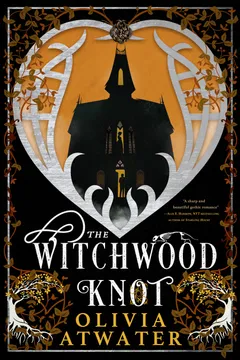


Plot Summary
The Butler Who Vanished
Winifred Hall1 arrives at Witchwood Manor to work for the elderly Lady Longfell,5 partly for the promised pay and partly to investigate the estate’s strange history. A sharp-tongued butler,2 Mr Quincy,2 lets her in, then vanishes; the cook6 confirms the house has had no butler for weeks. Winnie1 recognizes the iron horseshoe over the kitchen door as a sign of faerie trouble, but refuses to leave.
In the attic, Lady Longfell5 explains that the manor’s haunting has driven servants away and asks Winnie1 to keep her grandson3 Robert3 safe. Winnie’s1 card reading places the boy,3 his grandmother,5 and a mysterious servant2 in a tangle of imprisonment and danger. She agrees, knowing the task involves magic she cannot yet understand.
Winnie’s arrival sets up a conflict between social role and actual purpose. The household calls her a governess, but she has come as an investigator, and her refusal to retreat from the first warnings shows how experience has made caution different from fear. Her cards do not give her a neat prophecy; they offer a pattern of entanglement that she must interpret through action. The manor’s absent staff also turns domestic service into a measure of danger: those with the least power are the first to flee, while Winnie accepts responsibility because she has learned that survival sometimes requires entering the place others escape.
Robert Gives Away His Name
Robert3 arrives with his father’s4 valet, while Lord Longfell4 chooses to stay at the gamekeeper’s lodge rather than under his own roof. The twelve-year-old3 resents Winnie’s1 authority and slips away before she can teach him about faeries.
Following him into the Witchwood, Winnie1 falls down a riverbank and finds Robert3 laughing from a tree. Lord Longfell4 arrives, orders his son3 to retrieve her belongings, and escorts them back, displaying a concern that makes Winnie1 wary.
She learns that Quincy2 tricked Robert into giving his full name and thereby bound his speech. Winnie1 offers him mistletoe for protection and begins teaching him faerie rules. Robert3 bargains for her help avoiding Eton, giving them a fragile alliance built on mutual need rather than affection.
Robert’s mistake is not simply childish disobedience. He uses the only leverage he can imagine, his name and his refusal of school, because adults keep deciding his future without asking what he fears. Winnie recognizes his distress but initially treats him as a problem to manage, repeating the very pattern of control he resents. Her lessons begin to change that relationship: protection becomes something she must teach rather than impose. Lord Longfell’s polished concern is unsettling because it places authority and menace in the same gesture, preparing Winnie to distrust appearances without yet knowing the full reason.
The House Behind Sleep
That night, Winnie,1 Robert,3 and the exhausted cook6 wake within the Witchwood Knot, a warped counterpart of the manor where black trees replace oak and the mirrors show the ordinary house beyond. Cook6 explains that villagers once left offerings for the woodland faeries, until Lord Longfell4 forced them to cut down the trees for timber.
A magician’s intervention trapped the faeries inside the manor, though iron has not kept them out. In the conservatory, Winnie1 finds Quincy2 among a crowd of faeries and wagers a card game for answers.
Her win reveals his plan to drive Lady Longfell5 and the servants out, which would loosen the Knot. A strange eye card hints that something buried and ancient is dreaming below them. Winnie1 also admits she is a magician, making Quincy2 study her more carefully.
The Knot transforms the manor’s architecture into evidence: the house is not merely haunted but built around a concealed act of violence. Cook’s memories complicate the idea of a simple human-versus-faerie conflict, since the villagers fear the forest but are also coerced into destroying it. Winnie’s card game shows her preferred method of resistance: she studies rules, makes a wager, and extracts information without pretending the opponent is harmless. The eye card adds a deeper threat that neither human custom nor ordinary faerie etiquette can explain. Knowledge here is not mastery; it is a temporary advantage in a system whose history has been deliberately obscured.
The Sleepless King Below
While Winnie1 sleeps, her necromancer sister Bellamira8 enters the dream by placing her frail body near death. She identifies the Fomóraiġ as deathless beings whose magic feeds on blood and iron, then suspects one has been awakened beneath the Witchwood.
Winnie1 descends into the Knot’s revels, where the faeries are celebrating an expected death. Lady Mourningwood11 appears and declares that the curse will persist while any Longfell remains. She tries to trap Winnie1 with the name Winifred Hall, but the false name protects her.
Winnie1 wakes to learn that Lady Longfell5 died overnight. The revelation shifts her task: Robert3 is not merely at risk from the manor’s tricks. His family’s bloodline is bound to the prison, and the faeries’ liberation may demand his life.
Bellamira’s visit makes private family intimacy part of the supernatural plot: Winnie’s sisters can reach her, but their help carries physical risk. The Fomóraiġ revelation changes the scale of the danger from a local haunting to an ancient power that may explain the wider disappearance of faeries. Lady Mourningwood’s failed curse also establishes names as both weapons and shields, while showing Winnie’s protective use of deception. The dowager’s death makes the prophecy immediate. Winnie’s role is no longer to investigate a strange house at a safe distance; she must decide how much responsibility she will accept for a child whose very ancestry sustains the trap.
A Fetch in Robert's Bed
After the funeral preparations begin, Winnie1 discovers the mistletoe locket on Lady Longfell’s5 body and finds a wooden duplicate occupying Robert’s3 bed. The fetch has a fragment of the boy’s3 soul and remembers their lessons, but it cannot say where he is.
Winnie1 understands that Quincy2 took the real Robert3 while she was distracted by grief and sleep. Though furious at the boy3 for surrendering his protection, she remembers his desperate wish to save his grandmother5 and refuses to blame him.
She summons Quincy2 by playing the requiem he once taught the Hollow Lady. When he appears, Winnie1 calls in the favor she won at cards: he must guide her to Lady Mourningwood11 and bring her and Robert3 back. Quincy2 warns that the journey is perilous, but accepts the terms.
The fetch makes absence tangible. It is not an empty disguise but a being with a soul fragment, memories, and a fear of solitude, forcing Winnie to confront the human cost of treating people as interchangeable roles. Her anger yields to recognition that Robert’s bargain came from grief, not mere defiance. The requiem becomes more than a musical motif: it is a means of reaching Quincy through a history Winnie does not yet understand. By claiming her favor, Winnie chooses a concrete rescue over the broader investigation she originally came to conduct. Her promise to the dowager now has a price, and she knowingly accepts it.
Bayonets in the Labyrinth
Quincy2 leads Winnie1 into the Knot’s shifting underground passages, where toy soldiers with screaming faces march toward them. Oliver,10 Winnie’s1 dead cat familiar, expands into a monstrous hunter and tears through the wooden attackers.
When a bayonet pins Quincy2 through the shoulder, Winnie1 cuts the weapon with her faerie-made silver knife and drags him clear. A second soldier drives its bayonet through Winnie’s1 chest. Quincy2 destroys the attackers with blood-fed rot magic, but Winnie’s1 dream ends as she dies in his arms.
She wakes in her own bed, then finds Quincy2 still bleeding in the conservatory. He explains that the Fomóraiġ cannot die, though they can be injured, and admits he stayed in the maze despite having no obligation to protect her. Winnie1 withdraws her trust, shaken by his choice to let her suffer.
The attack makes the story’s moral categories physically unstable. Quincy can be wounded, Winnie can die in dreams, and Oliver’s apparent smallness conceals formidable power. Each character’s survival depends on another’s intervention, but help does not erase betrayal: Quincy’s presence beside Winnie at the end cannot undo his decision not to prevent her injury. His immortality is revealed as a condition of repeated suffering rather than invulnerability. Winnie’s response matters because she does not convert his vulnerability into instant absolution. Trust, like magic, has consequences; it must be given, withdrawn, and potentially earned again.
The Dowager's Black Ring
Winnie1 burns the toy soldiers in her bedroom fireplace, unknowingly weakening the Knot’s hold on their trapped spirits. With Cook6 playing the pianoforte to guide them, she and Quincy2 return through the maze and reach the attic, where Lady Longfell’s5 apparition waits beside a disturbing post-mortem portrait.
Winnie1 uses her cards to understand the ghost’s frantic signs. The Queen and King of Spades point toward the dowager’s5 death and a dishonest man; the corpse’s blackened thumb directs Winnie1 to the wooden-and-iron ring her son4 gave her.
Quincy2 confirms that the ring consumes Longfell blood to sustain the Knot. The dowager5 might have lived had she left the manor, but that escape would have released the faeries. Winnie1 now knows the curse’s machinery and the cost hidden inside its supposed protection.
The scene turns divination into a form of care. Winnie cannot perform necromancy, but she attends to the ghost’s confusion and builds meaning through patient interpretation rather than command. The ring’s dual materials embody the false promise at the heart of the manor: iron appears to repel faeries, while the wood binds the family to the forest it helped destroy. Quincy’s explanation offers no clean rescue, only a choice between the dowager’s survival and the prison’s collapse. The truth deepens Winnie’s anger while narrowing her options. Her task is no longer to expose a curse from outside; she must decide how to dismantle a system that has made protection indistinguishable from harm.
The Girl Who Summoned Winter
As she struggles with Lord Longfell’s4 possessive attention, Winnie’s1 memories return to her childhood in a London workhouse. The master singled out the pretty, polite child for gifts and affection, then used those favors to demand kisses she did not want.
When he punished her for resisting, Winnie1 removed the iron horseshoe above his office and summoned the Hollow Lady, who carried him away. The faerie demanded a lock of Winnie’s1 hair as payment and arranged for the Lord Sorcier, Elias Wilder,13 to remove her from the workhouse.
Winnie1 later joined Clarimonde9 at Mrs Dun’s orphanage, learned magic, and chose the name Winifred of Hollowvale. The Hollow Lady gave her a silver knife, teaching her that self-protection could require tools and deliberate choices, not politeness.
Winnie’s guardedness is not a temperament detached from history; it is a survival strategy learned when kindness became a debt enforced through coercion. The memory clarifies why Lord Longfell’s attention feels dangerous even when he presents it as concern. Her first magical act is morally complicated: she removes protection from an abuser and invites a predator to punish him. The Hollow Lady’s intervention saves Winnie, but the price of hair and a new identity also binds rescue to obligation. The knife becomes a material counterweight to social expectations, allowing Winnie to name self-defense as legitimate rather than rude or ungrateful.
The Mirror's Cruel Reflection
After Lord Longfell’s4 physician doses her with laudanum, Winnie1 enters the Knot exhausted and disoriented. In the forested corridor, mirrors conjure a blood-soaked version of Quincy,2 while Longfell’s4 unwanted touch echoes from her waking bedroom.
Oliver10 is trapped behind glass, and the reflection attacks Winnie.1 She names the truth: her deepest fear is not desire itself but the violence men may use when she refuses it. Her silver knife carries enough blood magic to disrupt the reflection, and the real Quincy2 frees Oliver10 and helps her onward.
He shelters her beneath a willow beside a star-lit river, where Longfell’s4 ring cannot reach. Then Quincy2 uses the dowager’s5 ghostly accusation to drive Longfell4 from Winnie’s1 room, giving her a rare interval of safety.
The mirror sequence externalizes trauma without reducing it to a private weakness. Winnie’s fear is accurate because it has been produced by social power and repeated violations, not irrational suspicion. The reflection’s threat is especially unsettling because it uses Quincy’s likeness, forcing her to distinguish a person from the harm he could do. Her naming of the fear gives her a measure of agency, while Quincy’s restraint becomes meaningful precisely because he has power and chooses not to impose it. The willow offers safety without demanding gratitude or possession, a striking contrast to the manor’s coercive gifts and the lord’s claim over her attention.
Quincy Beneath the Willow
Beneath the willow, Quincy2 tells Winnie1 that he is Quintus, a Fomórach son of Balor, spared from the sleep imposed on his deathless siblings only because his mother begged for him. Lady Mourningwood11 bound him to serve her and forbade him to harm the living.
His older brother Secundus12 awakened beneath the Witchwood, manipulated Lord Longfell4 into building the manor from the faeries’ trees, and trapped the Mourningwood inside it. Secundus12 then vanished into the wider world. Winnie1 recognizes his name as Lord Cassius Secundus,12 the new Lord Sorcier who persecutes low-born magicians.
Clarimonde’s9 letter confirms his agents are scrutinizing her workplace. Winnie1 understands that her local crisis is part of a wider threat, and that she must warn her sisters before she confronts Lady Mourningwood.11
Quincy’s history reframes his conduct as a long struggle between inherited violence and chosen obligation. He fears becoming his father or brother, yet his loyalty to his mother has kept him in service to a ruler he distrusts. Winnie sees the moral trap without pretending it is easy to escape. Secundus’s identity connects the manor’s secret history to the political suppression of magic, widening the stakes beyond one family and one forest. The letter from Clarimonde makes that danger intimate: the same authority threatening the faeries can reach the people Winnie loves. Knowledge now creates urgency, not control.
Perfume, Piano, and Promise
Winnie1 sends a warning about Secundus12 through a trusted family friend and gives Clarimonde’s9 bay-berry perfume to Margaret,7 instructing her to protect the servants and villagers before the Knot breaks.
She dresses in the mourning gown Lord Longfell4 bought, deciding that its meaning belongs to her now. In the conservatory, she asks Quincy2 to teach her the rest of his requiem and openly chooses his touch and kiss, reclaiming desire on terms she sets herself. Then she releases him from the favor that bound him to guide her.
Quincy2 fears she intends to leave, but Winnie1 stays at Witchwood Manor, resolved to free Robert3 and face Mourningwood.11 Their intimacy does not erase the danger between them; it gives both a freely chosen reason to meet it.
Winnie’s preparation joins practical care to personal reclamation. The perfume becomes communal protection, while her letter makes a fragile attempt to carry knowledge beyond the manor’s surveillance. Reclaiming the gown and initiating intimacy answer the earlier pattern in which gifts and attention were used to create obligation. Her desire is neither proof of safety nor surrender of judgment; she chooses it while naming its limits. Releasing Quincy from the favor also matters: she stops treating him solely as an instrument for her plan, even though doing so leaves her with less protection. This is agency expressed through both action and relinquishment.
The Ring Goes Into Fire
Winnie1 lures Lord Longfell4 to her room and cuts the ring from his hand with her silver knife. She burns it in the hearth, then summons Lady Mourningwood,11 offering the lord4 as payment for the faerie’s vengeance. The manor dissolves into the freed Mourningwood, where the queen11 demands that Winnie1 choose one person to spare. Winnie1 chooses Robert,3 not herself.
Quincy2 asks Mourningwood11 to spare Winnie1 too, but the queen11 refuses. Faced with the threat of turning Winnie1 into a tree, Quincy2 cuts away his own magically bound finger and uses his blood-fed rot magic to destroy Mourningwood.11 The queen11 falls, the roots release Winnie,1 and Robert3 is saved. Quincy’s2 power costs him permanently, because the finger that carried his binding cannot heal.
The climax resolves the central trap through a series of choices rather than a sudden display of superior force. Winnie destroys the object that sustains the Knot, then turns Longfell’s violence into a claimed offering, using the rules of faerie against their maker. Her choice to save Robert exposes how far she has moved beyond self-preservation. Quincy’s sacrifice is not effortless heroism: he acts against centuries of fear and loses part of himself to do it. His intervention also complicates the promise to stand aside. The novel’s idea of freedom is therefore costly and relational; breaking one bond may require accepting a wound that cannot simply be undone.
A New Crown at Funeral
Quincy2 brings Robert3 back through the doorway to the manor, where the boy3 reclaims the soul fragment held by his fetch and awakens with missing memories. Winnie1 promises to explain what happened and continue teaching him.
She carries the fetch’s twigs to a willow, then burns her bloodied gown and slippers. Lord Longfell4 is gone, and the household proceeds with Lady Longfell’s5 funeral. During the gathering, a newly awakened faerie named Tertia14 recognizes Quincy2 as her brother and reveals that she now holds the title of Lady Hollowvale.
Winnie1 realizes the Hollow Lady may have been displaced, another consequence of Secundus’s12 return. The manor is quieter and Robert3 is safe for now, but the appearance of Tertia14 makes clear that the danger has not ended with Mourningwood’s11 fall.
The return gives Winnie the rescue she promised but refuses a falsely complete restoration. Robert’s memories are altered, the fetch’s remains require a burial of sorts, and Winnie must become a mentor rather than simply a rescuer. The funeral places private grief back inside a community, while Longfell’s absence leaves the estate’s future uncertain. Tertia’s arrival then interrupts relief with a new question about the Hollow Lady and the ownership of faerie realms. The ending preserves the book’s governing tension: defeating one tyrant does not dissolve the structures that empowered him. A new alliance and a wider reckoning are still required.
Epilogue
Quincy2 takes Mourningwood’s11 crown while the faerie courts remain too frightened to challenge him. Robert3 stays at Witchwood Manor to learn from Winnie1 and Quincy,2 and the two share the playing of Quincy’s2 music after his injury changes his hands.
Magicians begin gathering in secret within Mourningwood, preparing to oppose Lord Cassius Secundus.12 Quincy’s mother2 remains hidden as the willow at the realm’s center, so victory has brought a refuge and a resistance, not a complete restoration.
The epilogue turns the ending into a beginning without undoing its costs. Quincy’s new rule is precarious, Robert’s education becomes preparation for inherited responsibility, and Winnie’s musical partnership with Quincy makes adaptation a form of intimacy. The mother’s continued hiding prevents the new crown from reading as a clean triumph. Most importantly, the gathering of magicians answers Secundus’s campaign of isolation with collective preparation. The story closes not on certainty that good will prevail, but on a more grounded hope: people who have learned the cost of power can organize, remember, and resist together.
Analysis
The Witchwood Knot treats power as a system of obligations that disguises itself as protection. The iron ring appears to guard Lady Longfell,5 the manor shelters its owners, and Lord Longfell’s4 attention presents itself as care. Yet each arrangement extracts a cost from someone with less power: the dowager’s5 blood, the villagers’ labor, Winnie’s1 bodily autonomy, or the faeries’ homeland. The supernatural rules make this exploitation legible because they turn implicit social bargains into literal contracts. A name can be taken, a gift can create debt, and a house can consume the people it claims to protect.
Winnie’s1 central change is not from fear to fearlessness. She begins as someone who survives by anticipating harm and withholding trust. Her growth lies in choosing when to risk connection without surrendering the right to refuse. The memory of the workhouse explains why ordinary politeness feels dangerous; her intimacy with Quincy2 matters because she initiates it, sets its boundaries, and remains free to leave. That recovery does not make her gentle in a conventional sense. It lets her direct her guardedness toward defending other people, including a child3 she initially finds exasperating.
The novel also refuses a simple division between human cruelty and faerie cruelty. Longfell4 and Mourningwood11 both treat others as resources, while Quincy’s2 inherited capacity for violence does not determine every action he takes. His sacrifice is meaningful because it is chosen against a binding history, not because it purifies him. The story’s hopeful answer is therefore collective but provisional: Winnie1 protects the village, Robert3 gains the knowledge his inheritance demands, and magicians begin to organize against Secundus.12 The Knot can be broken, but its underlying habits of possession, secrecy, and coercion require continued resistance.
Review Summary
The Witchwood Knot receives strong praise for its gothic atmosphere, Celtic fae mythology, and Victorian setting. Readers consistently love Winnie as a capable, no-nonsense protagonist, and Oliver, her undead cat familiar, is a fan favorite. The slow-burn romance with Mr. Quincy is widely appreciated, though some feel it develops too late. Common criticisms include a slow first half, an abrupt climax, and an underdeveloped Victorian atmosphere. Most reviewers eagerly anticipate the next installment.
Characters
Winifred Hall, Winnie
The guarded magicianWinnie is a young magician, card reader, and former workhouse child whose intelligence is sharpened by distrust. She reads people and supernatural rules with the same alertness, preferring preparation, irony, and a knife to the vulnerability expected of a respectable young woman. Her self-protection can make her seem cold, but it is a response to experiences that taught her how easily kindness becomes leverage. Her attachment to her sisters and to the Hollow Lady gives her a private history of chosen family. As a governess, she is initially impatient with children and reluctant to be responsible for anyone else. What drives her is not a wish to be admired, but the hard-won conviction that she can intervene when someone is in danger.
Mr Quincy
The dangerous butlerQuincy is the unnerving, red-eyed figure who claims the role of Witchwood Manor’s butler. He is exacting about bargains and names, skilled at illusion, and difficult to read because he can evade a question without technically lying. His dry humor and contempt for foolishness conceal an intensely disciplined relationship to power. Quincy has spent centuries under obligations that shape what he can do, and he is wary of the violence he might become if those limits vanished. He respects cleverness, especially when it challenges him, but respect does not make him safe. His connection with Winnie1 develops through their contests of information, their shared music, and the boundaries each learns to honor.
Robert Murray
The reluctant young heirRobert is a twelve-year-old heir who resents being sent away from home and fears the future adults have arranged for him. His insolence and quickness are defenses against helplessness, particularly in the presence of his father4. He wants to be treated as capable, yet he is still a child who can act impulsively when grief overwhelms him. Winnie’s1 lessons initially meet his resistance, but he is intelligent enough to learn from consequences and observe what adults try to hide. His relationship with Winnie1 shifts from antagonism toward trust because she takes his fears seriously while still insisting that his choices have effects.
Lord Longfell
The polished estate ownerLord Longfell is Robert’s father3 and the owner of Witchwood Manor, a wealthy man whose public skepticism about faeries sits uneasily beside his careful avoidance of the house. He is accustomed to directing servants and family members, and he often presents control as benevolence. His polished manners can make his attention seem generous, but Winnie1 senses the entitlement beneath them. He wants the estate and its resources to remain under his command, and he expects other people to accommodate that desire. His relationship with Robert3 is marked by authority more than emotional availability, leaving the boy3 both eager for approval and wary of his father4.
Lady Longfell
The anxious dowagerLady Longfell is Robert’s grandmother3 and the employer who brings Winnie1 to the manor. She remembers Winnie1 from her youth and treats her with a warmth that the household rarely offers its servants. Age and illness have left her physically frail, but she retains a forceful mind and a clear sense of what the family’s danger may require. She wants Robert3 protected and is willing to bargain with imperfect options, even when those choices conflict with her hopes for his future. Her relationship with Winnie1 rests on an old kindness that has matured into genuine affection.
Sarah Baker, Cook
The stubborn village anchorSarah Baker, known in the household as Cook, has served at Witchwood Manor through years of fear and exhaustion. Blunt, practical, and difficult to impress, she distrusts easy reassurances about the curse. Her loyalty is directed less toward the Longfell family than toward the village that depends on the manor’s continued operation. She knows more about the house’s history than she can safely explain and becomes a crucial ally when Winnie1 needs help. Food, work, and persistence are her forms of care, grounded in the belief that small acts still matter when larger powers seem immovable.
Margaret Chambers
The frightened young maidMargaret is a nineteen-year-old maid-of-all-work who stays at Witchwood Manor because her family needs her wages. She is hardworking and hopeful about improving her position, yet the house has frightened her enough that she refuses to sleep there. Her careful cheerfulness often covers anxiety rather than dispelling it. Unlike Winnie1, Margaret has little power to investigate the curse, but she acts when asked and understands the risks of helping. Her practical courage grows from economic necessity and concern for the people around her, not from confidence that she can control what happens.
Bellamira
The reckless necromancerBellamira is one of Winnie’s1 sisters, a necromancer whose curiosity regularly outruns her fragile health. A serious heart condition makes her vulnerable, but she meets danger with irreverent humor and a stubborn refusal to be managed. Her knowledge of the faerie realms gives Winnie1 crucial information, while her willingness to risk herself creates fresh worry for the family. Bellamira’s closeness with Winnie1 is affectionate but argumentative: she wants to help, and Winnie1 wants to keep her safe. Both struggle to respect the other’s autonomy without denying the real risks each faces.
Clarimonde
The magical perfumerClarimonde is Winnie’s1 sister and a skilled perfumer whose craft can carry protective magic. She is thoughtful about practical needs, creating a bay-berry scent for Winnie1 and remaining alert to political danger around her workplace. Her letters show a quieter form of courage than Bellamira’s8: she watches, notices when authorities take an interest, and warns her family without exposing more than necessary. Clarimonde’s relationship with Winnie1 is intimate and trusting, expressed through useful gifts and careful communication. She represents the network of family care that continues to support Winnie1 even when the manor makes direct help difficult.
Oliver
The loyal ghost catOliver is a black cat once loved by Winnie1 and her sisters, now retained as a familiar through a tiny skull. He is affectionate with Winnie1, suspicious of Robert3, and openly hostile to Quincy2. His ordinary feline habits make his supernatural loyalty feel intimate rather than ceremonial. In the Knot, love and devotion give him a frightening strength that his small earthly body concealed. Oliver offers Winnie1 companionship without conditions, a contrast to the bargains and obligations that govern nearly every human and faerie relationship around her.
Lady Mourningwood
The ruthless faerie rulerLady Mourningwood rules the faerie realm bound inside Witchwood Manor and regards the surrounding forest as her garden. She is formal, patient, and frighteningly exact about debts, punishments, and the terms of hospitality. Her composure does not mean mercy; she can treat human lives as acceptable payment for the destruction of her trees. She values order and loyalty, but her sense of justice is inseparable from possession and retaliation. Her relationship with Quincy2 is built around an old bargain, while her history with the Longfell family makes the manor a battleground between grievance and power.
Lord Cassius Secundus
The anti-magic authorityLord Cassius Secundus is the new Lord Sorcier, a distant political authority whose hostility toward low-born magicians threatens people like Winnie1 and her sisters. He is not an everyday presence at Witchwood Manor, but his policies reach into London and make it harder for magicians to act openly. His position gives him the power to define whose magic counts as respectable and whose is treated as dangerous. That institutional pressure makes him a threat even before Winnie1 understands the full source of his influence.
Elias Wilder
Winnie's former protectorElias Wilder, an earlier Lord Sorcier, removes Winnie1 from the workhouse after the Hollow Lady’s intervention and places her in safer care. He is impatient, blunt, and difficult to read, but he uses his authority to protect a child whom the social system has failed. His complicated connection to the Hollow Lady links Winnie’s1 early life to the wider entanglement between human magicians and faerie power.
Tertia
The curious faerie sisterTertia is one of Quincy’s2 faerie siblings, newly arrived from a period of travel through the human world. She is bright, sociable, and fascinated by ordinary experiences, including death, which she has never understood. Her easy manner makes her difficult to assess, since she speaks of immense changes with the air of someone sharing a casual discovery. She brings Quincy2 a family connection he has long lacked, while her account of the realms suggests that old powers are shifting beyond the manor.
Hugh Wilder
Bellamira's physicianHugh Wilder is a physician and family friend who monitors Bellamira’s8 precarious health. He is responsible enough to know the danger of her experiments, though her determination sometimes draws him into helping her. His presence gives the sisters a practical connection to care beyond magic, even when Bellamira8 resists being protected.
Plot Devices
The Witchwood Knot
The manor's dream prisonThe Knot is a distorted faerie counterpart of Witchwood Manor that catches its inhabitants when they sleep. Mirrors connect it to the waking house, while its shifting corridors lead toward the trapped Mourningwood. It turns the manor’s construction into both setting and mechanism: the faeries and human spirits are imprisoned inside the very building made from their trees. The Knot also makes every night a new attempt, so exhaustion becomes a physical cost of investigation. Its dependence on the Longfell bloodline gives Winnie1 a way to identify what sustains it, and the ring provides the means to break it.
Names and bargains
Faerie rules with teethFaeries exploit names, promises, hospitality, and carefully worded exchanges. Quincy2 takes Robert’s3 full name, which prevents the boy3 from speaking freely about the danger, while Mourningwood’s11 attempt to bind Winnie1 fails because Winifred Hall1 is not her true name. Winnie1 learns to set conditions before wagering information and later uses a favor to compel Quincy2 to guide her. These rules reward precision rather than goodness: a bargain can be honored and still cause harm. The device gives verbal choices concrete consequences, forcing Winnie1 to treat language as both a shield and a weapon.
The knotted ring
Blood sustains the prisonThe ring combines Witchwood wood with iron and is presented as protection from faeries. In truth, it draws on the blood of the Longfell family to keep the Knot intact. Lady Longfell5 wears it until her health fails, and her ghost uses Winnie’s1 cards to point toward the ring and the man who gave it to her4. The ring makes the manor’s curse hereditary in both a literal and political sense: the family’s presence maintains a system built through the destruction of the forest. Removing and burning it releases the realm, but also forces Winnie1 to face the vengeance waiting beyond the prison.
Cards of fate
Clues through divinationWinnie1 uses ordinary playing cards to read relationships, danger, and likely outcomes. Her readings begin with broad patterns rather than exact predictions, preserving her awareness that the future branches. The cards help her identify Robert’s3 entanglement with his family and Quincy2, then give her a method to interpret Lady Longfell’s5 confused ghost. In the Knot, the faerie deck introduces suits tied to promises, memories, fears, and desires, making the supernatural world’s values visible through play. Divination does not make Winnie1 all-knowing; it gives her clues she must test against people’s actions.
Silver knife and perfume
Tools for chosen protectionWinnie’s1 silver knife, given to her by the Hollow Lady, can cut through faerie-made wood and serves as both weapon and reassurance. Clarimonde’s9 bay-berry perfume offers magical protection, though Quincy2 recognizes its value and takes it early in the story. Winnie1 later recovers the scent and shares it with the servants and villagers so they can flee or survive the Knot’s collapse. The objects contrast two forms of protection: the knife helps Winnie1 act directly, while the perfume extends safety to people with less power. Both become meaningful because Winnie1 decides how and whom to protect.
About the Author
Other books by Olivia Atwater

Download PDF
Download EPUB
.epub digital book format is ideal for reading ebooks on phones, tablets, and e-readers.








