

Plot Summary
Prologue
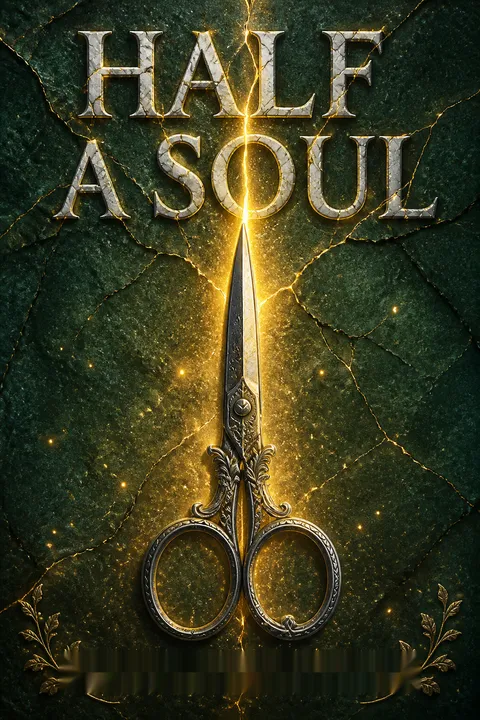
As a child, Dora escapes her lessons to play by a creek, where Lord Hollowvale, a faerie marquess, seizes her and claims her mother promised him her firstborn. His touch dulls her fear and begins to drain her soul, but her cousin Vanessa wounds him with iron embroidery scissors and pulls Dora to safety.
Hollowvale vanishes after declaring that he has received only half his payment. Dora notices that her feelings have gone strangely distant, while Vanessa keeps the scissors close in case the faerie returns. Their family hides the curse, leaving Dora to grow up with half her emotional life missing.
The childhood attack gives the novel’s central metaphor a literal shape: Dora’s difficulty feeling is not a temperament or a moral failing but the consequence of a theft. Vanessa’s quick use of iron establishes that practical care can resist forces adults would rather conceal. Yet the family’s secrecy protects its standing instead of helping Dora, turning the curse into a private shame. The prologue also plants a useful contrast: Dora can describe what a normal person should feel, but cannot summon the feeling itself. Her later emotional growth must therefore involve more than discovering romance; it requires learning to trust her own partial experience.
A Season for Two Cousins
Nearly a decade after the attack, Dora is nineteen and still carries iron scissors at her throat. Her cousin Vanessa postpones her own debut rather than leave Dora behind, and now wants to try the London Season, where she hopes to meet a suitable husband. Their aunt, Frances, objects to the expense and worries Dora will spoil Vanessa’s prospects, but Vanessa wins permission to take her.
In London, the countess hosting them barely acknowledges Dora, whose unusual eyes and detached manner make her easy to overlook. Vanessa asks after the Lord Sorcier, a young court magician said to be handsome and a war hero. Dora has not yet met him, but his reputation will soon draw her into a very different kind of courtship and danger.
The London Season promises Vanessa social mobility, but for Dora it initially means accompanying someone she loves into a world designed to exclude her. Vanessa’s insistence is protective, yet it also risks turning Dora into a dependent object of care. Dora’s numbness makes that arrangement easy for others: she rarely protests when decisions are made around her. The scissors quietly complicate her apparent passivity. They are a practical safeguard she carries because Vanessa once intervened, a reminder that Dora’s vulnerability has never meant she is without agency. The contrast between public polish and private need is established before the romance begins.
The Sorcerer in the Shop
After several days largely left alone, Dora wanders through London in search of an iced dessert and takes shelter from rain in a bookshop that sells magical texts. Its antique mirror briefly shows a candlelit ballroom, Dora in her evening dress with blood across her chest, and a handsome blond man behind her.
In the shop she meets that man in person: Elias Wilder, the Lord Sorcier, whose sharp manners are softened by the patience of his friend Albert Lowe, a physician with a silver hand Elias made after the war. Dora is curious rather than intimidated, and her blunt observations unsettle Elias. Albert secures invitations for Dora and Vanessa to a family ball, giving Dora a chance to investigate both the mirror and the magician.
The mirror introduces uncertainty as a concrete problem rather than a vague supernatural atmosphere. Dora has seen something vivid, but her impaired emotional response prevents the usual warning signals from guiding her. She must learn to treat a vision as evidence and seek interpretation. Her encounter with Elias also reverses the social script: his authority does not make her deferential, and her literalness exposes how much of his rudeness depends on others reacting as expected. Albert’s silver hand supplies an early sign of Elias’s practical loyalty. The three characters enter the plot through different kinds of knowledge: Dora observes, Albert mediates, and Elias investigates.
Punch Replaces Blood
At Lady Carroway’s ball, Dora recognizes the candlelit room from the shop mirror. Elias dances with her, and she explains that the vision showed him beside her after she had been bloodied. He understands the mirror as a divination tool and begins asking what might cause the injury. Dora recalls Hollowvale and the scissors she carries, but no clear threat at the party.
Then a guest jostles Elias, who jerks around with alarming force and spills red punch across Dora’s dress. The stain matches the vision, yet Dora is unharmed. Relieved, she leaves to wash the dress and ruins it further by trying to clean it in a garden fountain. Elias finds her there and magically restores it to white, then learns from Vanessa that Dora is faerie-cursed.
The repeated image demonstrates that prophecy can be accurate about appearances while misleading about causes. Dora is not wounded, but the punch makes the forecast seem fulfilled, forcing Elias to reconsider what the mirror actually revealed. That ambiguity suits Dora’s own difficulty distinguishing emotional urgency from ordinary experience: she cannot rely on panic to tell her when to act. Meanwhile, the fountain episode shifts the relationship from public sparring to private attention. Elias helps without being asked, then turns toward the mystery of her curse. The scene’s comedy does not cancel the threat; it shows how Dora and Elias use wit to approach frightening facts without pretending they are harmless.
A Soul Missing
Elias examines Dora with a second enchanted mirror while Lady Hayworth chaperones them. Dora sees Elias in a battlefield vision, burned and badly injured, as Albert removes shrapnel from his body. The image exposes a history Elias rarely discusses and proves Dora can scry more than the future.
Later, using the mirror to reach Elias privately, she hears his theory: Hollowvale may have taken half her soul, leaving part of her in faerie and giving her an unusual ability to see visions. Elias suspects that retrieving it could require entering the faerie realm, a step he is reluctant to take. Dora also learns he has been researching an outbreak of children falling into an unending sleep, though he initially keeps that work at a distance.
The revelation reframes Dora’s strangeness as an injury with a possible cause, but it does not offer an easy cure. Elias’s theory joins two mysteries, the missing part of Dora and her capacity for scrying, while raising the cost of recovery: the stolen portion remains beyond ordinary reach. The battlefield vision also unsettles the image of Elias as merely an arrogant magician. Dora sees the bodily price of his service, and his guardedness begins to look like a defense against experiences polite society prefers not to hear. Her private mirror conversations create intimacy through inquiry, allowing trust to form before either character knows what to call it.
The Workhouse's Sleeping Child
To satisfy the social plan that she attract Albert, Dora joins him on a visit to Cleveland Street Workhouse, accompanied by Miss Jennings, a former governess. Instead of genteel charity, she finds overcrowded rooms, exhausted inmates, and children forced to pick apart hemp rope. Albert treats the sick while Dora and Miss Jennings change bedding and help him stitch a boy’s injured leg.
In a back room, they find a neglected girl who has been asleep for two days. Albert names the illness a sleeping plague and says children are its most frequent victims. Elias arrives, tests the room for magic, and carries the girl to Mrs Dun’s orphanage, where he has arranged clean beds for other children. Dora asks to help, and Elias lets her stay.
The workhouse makes social suffering visible at the level of bodies: bleeding hands, crowded beds, and a child whose illness has made her easy to ignore. Dora’s lack of acute fear lets her remain useful, but the visit also awakens a deeper response than her usual detachment. Albert’s medical work and Elias’s discreetly funded refuge show two forms of intervention, care at the bedside and infrastructure beyond it. Their efforts are limited, yet they contradict the workhouse master’s view that the poor are burdens. The girl’s movement from institutional neglect to a clean room is modest, but it gives Dora a concrete standard against which to judge charity.
Small Evils, Larger Costs
Dora and Miss Jennings question children at several workhouses, hoping to find a pattern in the plague, while Dora presses Vanessa to see the conditions for herself. Vanessa resists until she joins them at Cleveland Street, where the workhouse master, George Ricks, throws a pregnant woman onto the street. Miss Jennings confronts him; he strikes her, and Albert retaliates.
When Vanessa returns to Dora, shaken by what she has witnessed, the cousins finally share the same understanding of the suffering. That evening Elias, exhausted and unable to eat comfortably amid luxury, condemns the diners for ignoring the poor and storms out. Dora follows him with Lady Carroway and helps him face his grief instead of turning it on his friends.
This sequence tests whether compassion can survive contact with evidence. Vanessa’s generosity is genuine, but Dora recognizes that it has often been directed toward people she personally knows; witnessing the workhouse challenges that narrow field of concern. Miss Jennings’s injury and Albert’s retaliation make moral outrage consequential, not merely rhetorical. Elias’s outburst likewise reveals the danger of a conscience without rest: he identifies real injustice but risks alienating the people who might help address it. Dora does not excuse his cruelty. She names his grief and stays beside him long enough for him to apologize. Care here means both refusing denial and preventing anger from becoming another form of harm.
A Faerie Under England
After the dinner, Elias makes peace with Albert and spends a quiet night speaking with Dora in Carroway House’s garden. He tells her he was born in faerie, escaped to England as a child, and survived in the workhouses.
Believing English misery came from the French, he joined the war; only afterward did he see how England’s powerful continued to prosper while the poor suffered. He admits he is afraid that resting will make him complacent. Dora explains that Vanessa has been her anchor, and Elias recognizes that friendship can make endurance possible.
He leaves Dora a treatise on curses to translate, trusting her with work that might help the sleeping children. Their closeness becomes more deliberate, though neither yet speaks plainly about love.
Elias’s history complicates his moral certainty. He once accepted a simple account of suffering, blaming an enemy because that explanation was available to a starving child. His later anger comes from discovering that domestic institutions also produce misery, and from fearing that comfort will dull his attention. Dora offers a countermodel: attachment need not weaken a person’s conscience; it can keep them from collapsing under it. Their exchange also makes collaboration intimate. Elias entrusts Dora with research, while she recognizes that his exhaustion is not proof of virtue. The chapter distinguishes vigilance from self-punishment and suggests that sustained care requires rest, allies, and a willingness to remain answerable to others.
Stars Over the Ballroom
At Lady Cushing’s ball, Elias arrives despite his dislike of society and claims the dances Dora had promised him. He admits he came because he wanted to be near her, not because he had found a cure for the sleeping children. When Dora calls herself a doll, he counters the insult with tenderness, and her composure breaks into tears.
He extinguishes the ballroom candles and fills the room with harmless points of magical light. Dancing beneath them, Dora discovers that she is not merely calm but genuinely happy, and understands that she loves him. Meanwhile, Vanessa’s growing connection with Edward, Albert’s eldest brother, advances quietly in the same crowded room. For Dora, the evening makes a private feeling legible in public.
The ballroom transforms magic from a tool of investigation into a means of attention. Elias does not restore Dora’s missing feelings, but he creates conditions in which the feelings she has can register clearly. His response to her self-description matters because it separates impairment from personhood; he refuses to let a diagnosis become her identity. The stars also make intimacy visible without forcing Dora into conventional performance. She can name happiness only after experiencing it, not because someone instructs her to feel it. Vanessa’s romantic progress runs alongside Dora’s, but the cousins’ paths are no longer identical. The scene marks a shift from borrowed warmth to a feeling Dora can claim as her own.
The Mirror Takes Her
The morning after the ball, Vanessa is out alone with Edward, and Dora understands that he is likely to propose. Aunt Frances decides to send Dora back to the country before she can embarrass the family or disrupt the engagement.
Her harsh words echo Dora’s oldest fears: that she is barely a person and will always be a burden. Dora tries to scry for Elias in a mirror, but her despair shifts her attention to herself. The vision shows another Dora, passionately crying at a pianoforte, while Hollowvale appears in the same room.
His touch pulls Dora into faerie, where she meets that other self and learns the original theft separated her emotional halves. Hollowvale considers both versions his property and intends to reunite them under his control.
Dora’s attempted departure is not simply a social setback; it recreates the conditions under which her family first concealed the curse. Aunt Frances treats Dora as an inconvenience to be managed, and Dora’s internalized language makes that judgment difficult to resist. The mirror responds to her wish to become someone else by revealing the cost of that wish: another self has lived apart from her, bearing the emotions she cannot access. Hollowvale’s claim of ownership turns private shame into a political relation. He regards people as possessions, while Dora’s struggle begins with recognizing that neither half can be reduced to a guardian’s plan.
Charity House in Faerie
Dora and her emotional counterpart escape the room through a broken window and discover Charity House, a faerie imitation of the London workhouse. There, the sleeping girl is awake and names herself Abigail; other children are forced to unravel and remake hemp rope in a pointless cycle. Hollowvale arrives with a newborn he has bought from Ricks, confirming that the workhouse masters have been selling children into faerie.
Dora and her counterpart hide, then help Abigail take charge of the baby. In the laundry room, Dora uses a tub of water to scry into London and reaches Elias beside her sleeping body. She explains where she is and what has happened. Elias tries to pull her back, but Hollowvale’s bond prevents it.
The faerie workhouse is not a departure from the novel’s social reality but its grotesque continuation. Its pointless labor exposes the logic already operating in London: suffering is treated as morally improving even when it serves no human need. Ricks’s sale of a newborn shows that institutional cruelty can cross into literal trafficking when those in power benefit. Abigail’s choice to protect the baby interrupts that system from within, however briefly. Dora’s water-scrying is equally practical: she uses whatever reflective surface is available to re-establish contact with a person who can act. The scene links rescue to testimony. Elias cannot free her yet, but the truth gives him a target.
A Borrowed Face at the Ball
Hollowvale prepares a lavish faerie ball to force Dora’s two selves back together, while the Baroness of Mourningwood drills Dora in bizarre rules of etiquette. At the invisible gathering, Dora learns from Lord Blackthorn that iron, strong magic, or carefully chosen trickery can defeat a faerie.
Elias arrives wearing another lord’s appearance, then dances with Dora while avoiding the other guests. He gives her Vanessa’s iron scissors and explains that Hollowvale has tied the children and Dora to himself with strands of fate.
Cutting them could return the living captives to their bodies, but he will need to distract the marquess. Elias also reveals that he has already asked Lord Lockheed for Dora’s hand, and received consent. Dora accepts his intention, even as the plan puts him directly in danger.
The faerie ball turns etiquette into a technology of control. Dora is made to obey rules that distort ordinary courtesy, while invisibility ensures she cannot even read the room she is expected to navigate. Her conversation with Blackthorn supplies a crucial distinction: Hollowvale’s power is formidable, but not absolute. Elias’s disguise and the iron scissors combine deception with a tool planted in the prologue, converting earlier vulnerability into tactical knowledge. His marriage request is emotionally significant, yet the scene refuses to make romance a substitute for action. Dora must still choose what to do with the weapon, and Elias cannot make that choice for her.
The Scissors and the Strings
Elias challenges Hollowvale to a duel while Dora sees the red strands binding the marquess to the captives. She cannot wait to become whole before acting. Rather than cut the strands, she drives the iron scissors into Hollowvale’s back, ending his hold over them. His magic fades, but the loose strands attach themselves to Dora’s other half, who takes the title of Lady Hollowvale and promises to release Dora and the living children.
Dora chooses not to reclaim that half of herself, knowing the new ruler must remain in faerie to free them. Elias catches Dora as the connection breaks. She returns to her sleeping body beside Abigail, while the children still trapped in faerie remain under the care of the new Lady Hollowvale.
The climax refuses the comforting solution of restoring Dora to a seamless self. Her decisive act is morally costly: she kills the captor, but the released power does not vanish, and her other half must assume responsibility for it. The choice reveals that wholeness is not automatically the highest good. Dora protects people who cannot wait for her personal repair, while Theodora chooses stewardship rather than escape. Their separation remains painful, but it is no longer imposed by Hollowvale’s theft; it becomes a deliberate arrangement between selves. The scissors, first used by Vanessa to save Dora, now let Dora act in her own defense and in the defense of others.
Two Orphanages, One Promise
Dora wakes at Mrs Dun’s orphanage, where Albert confirms that she and Abigail have returned. The baby is safe, and Ricks has been arrested for black magic. Vanessa is now engaged to Edward and refuses to let Dora be sent back to Lockheed; Lady Carroway offers her a home, and Miss Jennings stays close.
Dora accepts that her other half will remain in faerie and that her own emotions will never be complete. When Elias returns, he tells Dora he loves her and asks her to marry him. She accepts. Albert, meanwhile, grows close to Miss Jennings. The sleeping children recover, and Dora’s life turns toward helping Mrs Dun and supporting another orphanage, rather than toward the cure she once expected.
The resolution gives Dora several forms of belonging without pretending that the original injury has been erased. She remains emotionally partial, but her choices, attachments, and work are fully real. Vanessa’s engagement no longer threatens abandonment because Dora has built relationships beyond their childhood bond. Elias’s proposal is meaningful not as a cure but as recognition: he loves the person Dora is, not a future restored version. The fate of Ricks also connects personal rescue to public accountability, though the epilogue will show that one arrest cannot reform the system. The new orphanage converts the novel’s ethic into practice: care can reduce harm even when it cannot remake society.
Epilogue
Dora and Elias marry, help Mrs Dun, and support a second orphanage. Albert marries Miss Jennings, while Vanessa’s marriage to Edward begins with hope rather than certainty. The workhouses remain cruel, despite reformers’ efforts, but the two orphanages give children a safer alternative.
In old age, Dora and Elias leave England together and disappear into faerie, where Dora becomes Lady Hollowvale beside her other half. Stories say she and Elias sometimes punish the worst workhouse masters, turning the old tale of a stolen child into a warning against cruelty.
The epilogue balances intimate repair against political disappointment. Dora and Elias improve individual lives, but the workhouse system grows harsher, showing that private virtue does not automatically transform institutions. Their two orphanages matter precisely because they do not solve everything; they create shelter with finite means. Dora’s eventual move to faerie also gives the stolen name and title a changed meaning. Hollowvale’s possession becomes a position Dora and Elias choose to inhabit, while the people they protect remain central to their purpose. The ending offers neither utopia nor surrender. It imagines a life in which love sustains continued resistance, even when the larger order remains unjust.
Analysis
Half a Soul makes emotional impairment literal, then asks what people do with that knowledge. Dora’s missing feelings matter, but the novel does not equate emotion with moral worth: she can notice injustice, choose care, and form attachments before she can identify happiness or love. Elias offers a parallel problem. His anger is morally perceptive, yet when it becomes his only mode of response, it isolates him and exhausts his capacity to help. Their relationship develops not by curing either person through romance, but by giving each a witness who can challenge a damaging self-description. Elias tells Dora that incompleteness does not make her less human; Dora shows him that rest and companionship need not weaken his opposition to injustice.
The workhouse plot gives this intimate story a public measure. Children are made to suffer under institutions that call punishment improvement, while the faerie world magnifies the same logic into ritual and spectacle. Hollowvale’s belief that he is charitable is disturbing because it resembles the respectable excuses used by human authorities. His realm does not invent cruelty so much as strip away its polite disguises. The novel is sharpest when it shows how goodness can become selective: Vanessa must see suffering beyond the people she loves, and Lady Carroway must hear criticism that threatens her comfort.
The ending resists a neat restoration. Dora does not reclaim the missing half of her soul, and England does not reform its workhouses. Instead, Dora and her other self make separate choices that free others and create new forms of care. The two orphanages cannot solve poverty, but they change the lives of particular children. This is neither a retreat from structural criticism nor a claim that individual charity is enough. It is a practical ethic for acting under limited power: name the harm accurately, refuse to confuse respectability with virtue, and make the intervention that can be made now.
Review Summary
Half a Soul receives mostly positive reviews, with readers praising its blend of Regency romance and fantasy elements. Many find the characters charming, particularly Dora and Elias, and enjoy the witty banter and cozy atmosphere. Some critics note pacing issues and inconsistencies in worldbuilding. The book is often described as a light, comforting read that tackles social issues while maintaining a whimsical tone. Overall, it's recommended for fans of historical fantasy romance seeking an uplifting escape.
People Also Read








Characters
Dora Ettings
The clear-eyed outsiderDora is a country-bred young woman whose mismatched eyes and unconventional manner make her an easy target for social judgment. Since childhood, she has struggled to experience immediate emotions, yet she can reason carefully about what a situation demands and is unusually candid about injustice. Her attachment to Vanessa gives her an early sense of safety; her growing trust in Elias and her work among poor children widen her understanding of connection and responsibility. Dora’s literalness can unsettle people who depend on polite evasions, but it also lets her name what others conceal. She is not defined by a wish to become socially acceptable. She wants to act fairly, protect the people she cares for, and understand what her own feelings mean.
Elias Wilder
The furious court magicianElias, the Lord Sorcier, is a gifted magician and veteran whose abrasive manners conceal fierce attention to suffering. His friendship with Albert is shaped by shared wartime experience and practical loyalty, including the magical silver hand he made for Albert. Elias distrusts polite society because he sees how easily refinement can hide cruelty, but his anger can exhaust him and wound the allies he needs. Dora’s directness gives him little room to perform indifference, while her company offers an alternative to solitary vigilance. He is drawn to difficult problems, yet the novel repeatedly tests whether he can accept help, rest, and affection without treating them as betrayals of his moral commitments.
Vanessa Ettings
Dora's steadfast cousinVanessa is Dora’s younger cousin, a warm and socially graceful woman who has delayed her debut to remain beside her. She responds to vulnerability with fierce loyalty, especially when Dora is threatened, but her instinctive kindness initially focuses on people she knows personally. Her social success can make her seem sheltered, though she is not shallow; she is learning to see suffering beyond her intimate circle. Vanessa’s affection gives Dora a rare experience of acceptance without performance. At the same time, their closeness is not uncomplicated: Vanessa sometimes tries to decide what is best for Dora, and Dora must ask her to look outward as well as inward.
Albert Lowe
The practical physicianAlbert is Elias’s closest friend, a physician and former soldier whose silver right hand is a result of wartime injury and Elias’s craft. He is patient, considerate, and more comfortable than Elias in ordinary social settings, but his gentleness does not make him passive. He treats patients in the workhouses, recognizes the limits of his knowledge, and keeps returning when institutions fail to care for those he has treated. Albert often translates between Elias’s anger and other people’s defensiveness, though he cannot always prevent conflict. His attention to Dora is built on respect rather than pity, and his affection for his family is visible even when social expectations complicate it.
Lord Hollowvale
The faerie claimantHollowvale is a faerie marquess who treats ownership and rank as proof of virtue. He approaches human suffering through a distorted logic in which hardship is supposed to improve its victims, allowing him to mistake cruelty for benevolence. His polished manners and conspicuous wealth make his self-image more unsettling, not less. He is connected to Dora’s childhood and to the dangerous boundary between human society and faerie, but his worldview is not simply alien: it echoes the class assumptions of the world Dora inhabits. Hollowvale’s certainty leaves little room for empathy or self-questioning, and his presence forces other characters to distinguish generosity from control.
Vanessa's mother, Frances Ettings
The anxious family strategistFrances is Vanessa’s mother and Dora’s aunt. She is preoccupied with financial security, family reputation, and advantageous marriages, concerns sharpened by her dependence on the Lockheed household. Her affection is constrained by social calculation, and she can be cruel when Dora threatens the future she is trying to arrange for Vanessa. Frances is not merely a caricature of ambition; she fears a precarious life and tries to manage that fear through control. Her treatment of Dora shows how class anxiety can turn a vulnerable relative into a problem to be hidden rather than a person to be supported.
Lady Carroway
The charitable matriarchAlbert’s mother is a society hostess who initially thinks in terms of suitable matches and family prospects. She values her sons, especially Albert, and worries about the ways his injury affects his social standing. Encounters with Dora and Elias press her to look beyond genteel charity and hear the political anger behind their work. Lady Carroway is capable of revising her judgments, though change comes through specific relationships and uncomfortable conversations rather than sudden enlightenment. Her influence gives practical shape to charitable efforts, and her willingness to listen makes her an important ally.
Miss Henrietta Jennings
The principled governessMiss Jennings is a former governess who accompanies Dora as a chaperone. She begins in a financially precarious position and accepts work that sometimes asks her to look away, but she cannot remain indifferent when children are suffering. Her experience with children makes her useful in the workhouses, where she can earn their trust and record what they tell her. Jennings has a strong sense of duty, tempered by a realistic awareness of how little security unmarried women can claim. Her willingness to intervene grows from conscience rather than social ambition.
Mrs Martha Dun
The orphanage's steady keeperMrs Dun runs a charitable orphanage and provides a stable, humane home for children removed from workhouses. She is practical about the limits of her household, yet makes room for Elias’s efforts to isolate sick children there. Her care is shown through ordinary work: clean bedding, food, supervision, and a willingness to respond when others bring her another child in need. She offers a living contrast to institutional neglect without being portrayed as able to solve poverty by herself.
Abigail
The workhouse survivorAbigail is a poor child whose bluntness and wary humor have been shaped by neglect. Albert and Elias find her asleep in a workhouse, where Dora and her companions initially know her only by the temporary name Jane. She is alert to false promises and reluctant to trust adults, but she can act decisively when a more vulnerable child needs protection. Abigail’s guardedness is not a lack of feeling; it is a sensible defense in a world where care has rarely been dependable.
Edward Lowe
The heir with a conscienceEdward is Albert’s older brother and heir to the Carroway title. He is considered honorable and kind, though Albert wonders whether his comfortable position has ever truly tested those qualities. Edward’s interest in Vanessa develops alongside the families’ social maneuvering, and his relationship with her offers a possible future built on affection rather than pure strategy. He is important to the courtship subplot and to the Lowe family’s social standing.
Lady Hayworth
The society chaperoneThe countess hosts Frances, Vanessa, and Dora in London and guides the young women through the Season. She values decorum and advantageous introductions, and she is wary of Elias’s manners and reputation. Her household gives the cousins access to society, while her rules often make clear how little room Dora has to behave on her own terms.
George Ricks
The workhouse masterRicks manages Cleveland Street Workhouse and regards its inmates as a burden rather than people in need. His contempt is especially visible in his treatment of sick children and a pregnant woman. He represents the abuses enabled by weak oversight and the moral language used to excuse them.
Lord Carroway
The reform-minded viscountLady Carroway’s husband and Albert’s father, Lord Carroway welcomes Elias despite his political bluntness. He supports charitable causes and is willing to challenge the assumptions of his peers, though his position also gives him access to resources unavailable to the people he hopes to help.
Lady Mourningwood
The merciless etiquette tutorA faerie baroness, Lady Mourningwood instructs Dora in the rules of Hollowvale’s court. She treats etiquette as an instrument of rank and obedience, presenting threats as if they were ordinary social guidance. Her lessons expose the strange, coercive logic governing faerie society.
Lord Blackthorn
The curious faerie peerLord Blackthorn is a faerie noble who approaches Dora with open curiosity rather than immediate hostility. His questions about English customs reveal how distorted Hollowvale’s account of human virtue has become. He is also willing to share knowledge about faerie weaknesses when Dora engages him on his own terms.
Plot Devices
The iron scissors
A weapon against faerieVanessa uses embroidery scissors to wound Hollowvale when he attacks Dora as a child. Their iron makes them dangerous to faeries and disruptive to magic, so Vanessa encourages Dora to carry them. They remain a practical safeguard through the London chapters and become essential when Elias brings them into faerie. The scissors connect protection across the novel: first, a cousin acts for Dora; later, Dora uses the same tool to act for herself and for the captive children. Their small, domestic origin contrasts with the scale of the threat they eventually help defeat.
The scrying mirror
A window into hidden truthsThe antique mirror in the magic shop first shows Dora an image of herself bloodied at a ball. Elias later gives her a smaller enchanted mirror that can reveal past events and let her reach him at a distance. Dora’s unusual connection to faerie makes these visions possible, though their meaning is not always obvious. The mirror turns intuition into investigation: Dora sees Elias’s battlefield injury, glimpses her other self, and finally uses a reflective surface to contact him from faerie. It also makes clear that seeing something is not the same as understanding what it means.
Dora's divided soul
The cost of Hollowvale's bargainHollowvale’s childhood theft leaves Dora with muted emotions while the missing part remains in faerie. This division explains her unusual visions and shapes her relationships: she can reason about emotions she cannot readily feel, while her other self experiences them intensely. The split is not presented as a simple defect that romance can erase. Dora and her other self must decide what wholeness means in the face of Hollowvale’s control, and their choices give the novel its central question about identity, agency, and the difference between being incomplete and being less than a person.
The sleeping plague
A trail to stolen childrenChildren in London’s workhouses fall into an unexplained sleep that ordinary medicine and Elias’s first magical tests cannot cure. The illness forces Dora, Albert, Elias, and Miss Jennings to investigate the conditions surrounding its victims rather than accept easy explanations. Its connection to Hollowvale’s realm reveals that the apparent disease is part of a larger supernatural crime. The plague links the social plot to the faerie plot, making the workhouse children’s treatment central to both the investigation and the rescue.
Faerie bargains and etiquette
Rules that expose powerFaeries operate through bargains, titles, formal rules, and carefully framed choices. Hollowvale uses these conventions to justify control, while Lady Mourningwood’s etiquette lessons turn ordinary manners into threats. Dora and Elias learn that the rules can be challenged through precise interpretation and deliberate trickery, especially when a faerie has made a promise or imposed an ultimatum. This device makes language and social ritual consequential without making them reliable protection: understanding the rules helps, but compassion and courage remain necessary to resist the power behind them.
FAQ
Synopsis & Basic Details
What is Half a Soul about?
- Faerie bargain gone wrong: Theodora Ettings, a young woman, has half her soul stolen by a faerie lord, leaving her emotionally numb.
- Navigating Regency society: She must navigate the social season in London with her cousin, while dealing with her unique condition.
- Seeking a cure and love: She encounters the Lord Sorcier, who offers a chance at a cure, and finds herself falling in love.
Why should I read Half a Soul?
- Unique blend of genres: It combines Regency romance with faerie fantasy, offering a fresh and engaging story.
- Compelling characters: The characters are complex and well-developed, with relatable struggles and motivations.
- Exploration of deeper themes: It delves into themes of identity, resilience, and the nature of the soul, making it thought-provoking.
What is the background of Half a Soul?
- Regency Era England: The story is set in a fictionalized version of Regency England, with its social customs and class distinctions.
- Faerie Lore: It incorporates elements of traditional faerie lore, with its own rules and dangers.
- Magical elements: Magic is present in the world, but it is often subtle and intertwined with the characters' lives.
What are the most memorable quotes in Half a Soul?
- "You humans always miss the most important details.": This quote by Lord Hollowvale highlights the fae's different perception of reality and foreshadows the importance of subtle details in the story.
- "I am rarely amused, but I do enjoy dancing.": This quote from Dora reveals her unique perspective and her ability to find joy in unexpected places, despite her emotional numbness.
- "I am not fond of this conspiracy. One of you at a time is already bad enough. Two is quite intolerable.": This quote from Elias showcases his dry wit and his initial reluctance to engage with social situations, while also hinting at his growing connection with Dora.
What writing style, narrative choices, and literary techniques does Olivia Atwater use?
- Third-person limited perspective: The story is told from Dora's point of view, allowing readers to experience her unique perspective and emotional detachment.
- Witty and engaging dialogue: The dialogue is sharp and often humorous, revealing the characters' personalities and relationships.
- Subtle foreshadowing and symbolism: Atwater uses subtle details and recurring motifs to foreshadow future events and deepen the story's themes.
Hidden Details & Subtle Connections
What are some minor details that add significant meaning?
- The iron scissors: Vanessa's gift of iron scissors to Dora is not just a protective measure, but a symbol of their bond and a foreshadowing of Dora's eventual use of iron against fae.
- The mismatched eyes: Dora's mismatched eyes are a constant reminder of her incomplete soul, but also a symbol of her unique perspective and inner strength.
- The many jackets: Lord Hollowvale's many jackets symbolize his attempts to emulate human society and his misunderstanding of its values.
What are some subtle foreshadowing and callbacks?
- The magic shop mirror: The mirror's vision of Dora in a blood-stained dress foreshadows her eventual injury and the emotional turmoil she will face.
- The mention of a sleeping plague: The early mention of a sleeping plague in the workhouses foreshadows the later plotline and Elias's involvement.
- The repeated phrase "purebred": Sir Albus's constant use of the word "purebred" foreshadows the narrow-mindedness and lack of imagination that Dora and Vanessa encounter in society.
What are some unexpected character connections?
- Albert and Elias's shared past: Their shared experience in the war and their deep friendship reveal a hidden layer of vulnerability in both characters.
- Lady Carroway and Elias's shared values: Despite their initial conflict, Lady Carroway and Elias share a deep concern for the less fortunate, which leads to a surprising understanding.
- Dora and Theodora's mirrored experiences: Theodora's emotional turmoil mirrors Dora's emotional numbness, highlighting the impact of the faerie curse on both halves of her soul.
Who are the most significant supporting characters?
- Lady Carroway: She is not just a matchmaking mother, but a woman with a strong sense of justice and compassion, who ultimately supports Dora and Elias.
- Miss Jennings: She is a former governess who becomes a valuable ally to Dora and Albert, demonstrating her own strength and compassion.
- Mrs. Dun: She is the matron of the orphanage, who provides a safe haven for the children and shows kindness to Dora and Elias.
Psychological, Emotional, & Relational Analysis
What are some unspoken motivations of the characters?
- Elias's need for connection: Despite his abrasive exterior, Elias is driven by a deep need for connection and understanding, which he finds in Dora.
- Vanessa's fear of abandonment: Vanessa's protectiveness of Dora stems from a deep-seated fear of being alone, which is why she is so determined to find a cure for her cousin.
- Lord Hollowvale's desire for control: Lord Hollowvale's actions are driven by a desire for control and ownership, which he attempts to achieve through his twisted sense of virtue.
What psychological complexities do the characters exhibit?
- Dora's emotional numbness: Her lack of emotions is not just a result of the curse, but also a coping mechanism for dealing with the trauma she has experienced.
- Elias's self-loathing: His abrasive behavior and self-deprecating comments stem from a deep-seated self-loathing and guilt over his past actions.
- Vanessa's need for approval: Vanessa's desire to please others and her fear of disappointing her mother reveal a deep-seated need for approval.
What are the major emotional turning points?
- Dora's vision in the mirror: The vision of herself covered in blood forces her to confront the potential dangers she faces and her own mortality.
- Elias's confession of his past: His vulnerability and honesty with Dora mark a turning point in their relationship, deepening their bond.
- Dora's decision to stab Lord Hollowvale: This act of violence, though necessary, forces her to confront her own capacity for darkness and the consequences of her actions.
How do relationship dynamics evolve?
- Dora and Vanessa's bond: Their relationship evolves from one of dependence to one of mutual support and understanding, as they both grow and change.
- Dora and Elias's connection: Their relationship evolves from a tentative alliance to a deep and meaningful love, based on mutual respect and shared experiences.
- Albert and Elias's friendship: Their friendship is tested by the events of the story, but ultimately strengthened by their shared values and loyalty.
Interpretation & Debate
Which parts of the story remain ambiguous or open-ended?
- The nature of faerie: The story leaves the nature of faerie and its relationship to the human world somewhat ambiguous, allowing for multiple interpretations.
- The long-term effects of the curse: The long-term effects of Dora's half-soul and her ability to feel emotions remain open to interpretation.
- The future of Hollowvale: The future of Hollowvale and the fae who remain there is left open-ended, suggesting that the story is part of a larger world.
What are some debatable, controversial scenes or moments in Half a Soul?
- Dora's decision to stab Lord Hollowvale: While necessary for her freedom, this act of violence raises questions about the morality of her actions and the consequences of her choices.
- Elias's initial treatment of Dora: His abrasive behavior and initial dismissal of her feelings can be seen as problematic, raising questions about his character.
- The portrayal of the workhouses: The depiction of the workhouses and the treatment of the poor can be seen as a critique of the social inequalities of the Regency era, but also as a potentially controversial portrayal of poverty.
Half a Soul Ending Explained: How It Ends & What It Means
- Dora's choice to remain incomplete: Dora chooses to remain with half a soul, accepting her unique identity and prioritizing the well-being of others over her own wholeness.
- Elias and Dora's love: Their love is a testament to the power of connection and acceptance, as they find happiness and purpose in each other's company.
- The triumph of compassion: The ending emphasizes the importance of compassion and justice, as Dora and Elias work to create a better world for those in need.
Regency Faerie Tales Series
About the Author
Other books by Olivia Atwater
Download PDF
Download EPUB
.epub digital book format is ideal for reading ebooks on phones, tablets, and e-readers.








