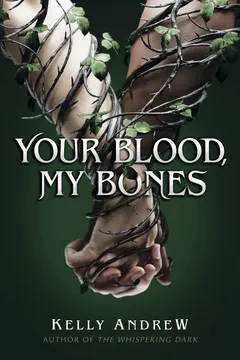


Plot Summary
The Inherited Cellar
At eighteen, Wyatt Westlock comes back to Willow Heath after her estranged father dies and leaves her his Maine farm. She arrives with gasoline, a matchbook, and years of anger at a father who sent gifts instead of affection. The house still holds the pencil marks that charted her childhood, along with memories of the two boys who shared her summers: James Campbell, clever and mischievous, and Peter, pale, taciturn, and difficult to read.
Wyatt means to erase the place. Instead, a voice from the cellar draws her downstairs, where she finds Peter grown, gaunt, and chained to the ceiling by living roots. Her match stays unlit. The boy she thought she had lost is still here.
The inheritance begins as an opportunity to destroy a place that has already wounded Wyatt, but the discovery in the cellar makes destruction morally complicated before she can act on it. The house is not merely a symbol of childhood: it contains a person who has been left to suffer inside it. Wyatt’s first response is practical, abandoning the gasoline to assess his condition. That reflex reveals a conflict between her wish to sever the past and her inability to abandon someone she once loved. The novel makes homecoming an encounter with material consequences, not nostalgia alone.
Seven at the Gate
Wyatt searches for phone service and a way to get help, but her borrowed truck will not start. A goat repeatedly drives her back from the property line, where seven black-robed men wait beyond the gate. They call Peter dangerous, warn that the farm’s wards are failing, and urge her to surrender him before the coming blood moon.
Their stillness unsettles her more than their words. Back inside, the old telephone rings with James’s voice. He is flying from England and warns Wyatt that Peter has tried to kill her before. The call breaks off, leaving her with a threat from men she distrusts and a warning from the boy she once trusted. She chooses to stay, unable to leave Peter chained alone.
The gate turns the farm’s invisible boundary into a visible test of authority. The strangers claim knowledge and offer protection, but their inability to cross the threshold suggests that Willow Heath’s defenses still matter. James’s warning complicates their account rather than resolving it: he has reason to know Peter’s history, yet Wyatt remembers him as a practiced schemer. Her decision to remain does not mean she trusts Peter. It means the immediate fact of his captivity outweighs the uncertain danger ahead. The story’s central tension takes shape as a choice between competing claims on her judgment.
The Farm's Old Rules
Unable to reach her mother, Wyatt searches her father’s journals and finds records of the farm’s secret work. Willow Heath’s gardens are not decorative: a Westlock keeper uses blood and alchemy to hold back creatures in the forest. Since her father died, the plants and protective boundaries have been weakening.
Peter insists that Wyatt can continue the work, but she refuses to accept a legacy she was never taught. Her father’s entries also show that he worried about what years of abuse might make Peter become. Wyatt reads of the family’s fear and guilt, yet still cannot tell whether Peter is a victim, a threat, or both. The old telephone rings again, and James repeats that Peter may kill her, deepening her distrust.
The journals convert the farm’s strange rituals into an inherited system of labor. Protection depends on tending living things, which means the father’s death has practical effects as well as emotional ones. Wyatt’s resistance is not simple denial: she has been excluded from the knowledge that would let her assume the role her family expects. The journals also preserve her father’s uncertainty about Peter, preventing the past from settling into a clean verdict. His concern does not undo his complicity, and Peter’s victimhood does not guarantee his safety. Knowledge arrives as evidence, not comfort.
Keepsakes Under the Chapel
At James’s suggestion, Wyatt searches the old chapel where the boys used to hide. Behind a concealed door, she finds Peter’s mattress and a cache of keepsakes: a toy, James’s lighter, her lipstick, and photographs of the three of them as children. At the bottom lies a dated image of Peter as a small boy from decades before Wyatt was born.
The evidence gives weight to the stranger’s claim that Peter is immortal. Then the chapel is vandalized: its pelican window is smashed, a carnivore’s skull is left on the altar, and a blood-red warning declares that a wolf’s heart will not satisfy the threat. Wyatt returns with the skull and photos, demanding answers Peter still refuses to give.
The hidden room changes Wyatt’s understanding of her memories by showing that Peter has preserved them too. The keepsakes make his secrecy tangible, but the old photograph turns an intimate discovery into a historical impossibility. The chapel’s violation then pushes the mystery beyond the three former friends: something knows where Peter’s private refuge is and is leaving instructions. Objects do double work here. They invite Wyatt to recognize tenderness in Peter while warning that sentiment cannot explain the danger. Her growing knowledge does not restore trust; it gives her sharper reasons to demand it.
Blood, Bone, and Roots
After Wyatt confronts Peter and leaves him food, her fury disturbs the roots holding him. The chains give way, and he reaches the kitchen only to meet her splitting maul. Their uneasy truce begins when Peter explains that her family’s blood magic maintains the barriers around the farm. When an elderly neighbor appears speaking as if the forest were using her, Peter pulls Wyatt inside; afterward, he buries the woman.
Wyatt tries her father’s instructions, but her attempts do not revive the failing plants. Peter reveals that the black powder used in the warding compound is made from his own burned bones. He has died and returned across generations, while the Westlocks have used his remains to strengthen their magic.
The chains breaking without a deliberate spell establishes Wyatt’s power as something responsive to emotion rather than obedient to instruction. That distinction matters: she is not simply inheriting her father’s craft, but discovering a force whose first visible effect is decay. Peter’s disclosure of the bone powder exposes the literal cost beneath the farm’s protective tradition. The ward has been maintained by turning one person’s body into a resource. Wyatt’s compassion therefore cannot remain separate from the system she may be asked to continue. Protection and exploitation have been joined so tightly that reform requires confronting both.
A Face from the Woods
The forest grows more dangerous as animals vanish and unnatural visitors reach the house. Wyatt struggles to learn blood tilling, while Peter’s warnings leave her feeling trapped rather than protected.
When a figure in the woods imitates her mother, Wyatt follows the false headlights and is stabbed with her own penknife. James appears, drives her behind the gate, and brings her back to the farmhouse. He stays while she recovers, but his answers are incomplete, and he urges her to treat Peter as a lethal enemy.
Their old triangle reforms under new strain: Wyatt wants the familiar James she remembers, Peter distrusts him, and neither boy gives her the whole truth. Her injury also reveals how urgently the farm’s failing defenses need attention.
The mimic exploits Wyatt’s specific vulnerability, not a generic fear of the forest: it borrows the voice of the mother whose help she has been seeking. The wound that follows makes her reliance on others unavoidable, just as James’s arrival revives a friendship she had believed lost. Yet his return does not restore the old group. It sharpens the question of who is protecting Wyatt and who is managing her choices. Her body becomes the site where the farm’s danger and the characters’ secrets meet. Recovery is not a return to safety, but a temporary pause in a threat that has learned her face.
The Deathwatch Comes
As Wyatt’s wound worsens, a supernatural deathwatch enters the house and appears to her as a bloodied version of herself. Peter sets fire to the creature’s bed and drives it off as a swarm of beetles, but the attack confirms that the wards no longer protect the interior. James presses Wyatt to offer Peter to the beast before the blood moon, presenting sacrifice as the only practical answer.
Wyatt finds that James’s knowledge of the creature is suspiciously precise. A photograph of him, taken with an old Polaroid, shows a corpse-like figure beneath the familiar face. She follows the image to Peter’s graveyard and discovers James’s grave is empty, evidence that the boy with them is not simply the James she remembers.
The deathwatch makes grief an active vulnerability: it can enter the house by drawing on what its inhabitants have not resolved. Wyatt’s likeness is especially cruel because it turns her own fear and shame into a predator she must face. James’s proposal to sacrifice Peter seems to answer the external threat, yet his intimate knowledge of the creature makes the advice suspect. The Polaroid gives Wyatt a form of evidence that resists argument. In a story crowded with altered memories and imitations, the camera’s image becomes a witness, though even it cannot explain what has happened to James.
The Empty Grave
At James’s unmarked grave, Wyatt confronts Peter and the creature wearing James’s likeness. The beast reveals that Peter’s childhood journey through a gap between worlds stranded him at Willow Heath, where the Westlocks repeatedly killed him for his regenerative power.
It has long wanted Wyatt to kill Peter, whose heart would make a richer offering than animal prey. The creature also confirms that James died years earlier; Joseph Campbell, James’s father and a guild leader, poisoned him while trying to take Peter’s immortality.
The widow, an older forest horror, attacks before the argument can settle. She consumes the beast’s apparent form, while Wyatt’s power blooms through the grove. Wyatt binds Peter to a tree and walks toward the road, choosing escape over another demand to sacrifice herself or him.
This revelation separates three kinds of coercion that have been tangled together: the guild’s exploitation of Peter, the beast’s bargain, and Wyatt’s inherited obligation. The proposed sacrifice is not a neutral ritual but the culmination of a predator’s long manipulation. James’s death also exposes the Campbell household as part of the violence, not a refuge from it. Wyatt’s decision to leave is psychologically significant because care has begun to resemble captivity. Binding Peter is both a practical act of self-defense and a refusal to let his fear dictate her next choice.
The Bone Warden Falls
On her way out, Wyatt meets the bone warden, who wants to add an immortal to his collection and threatens to claim her as well. He sends a mimic after her, but this time she recognizes its tricks and faces the memories it uses against her. Her fear and anger unleash a storm: roots tear free, trees seize the warden, and the crows that served him turn on her.
Peter reaches her after the attack and proves himself with the blue button she took from his necklace. Wyatt accepts his help and lets him hold her while her power subsides. Mackenzie, Wyatt’s cousin, arrives with Lane, a medium, and takes them to Salem. Wyatt faints after Lane reveals that James has been reaching her through the dead and left a message asking for the Becketts.
The bone warden’s threat shifts Wyatt from reacting to supernatural violence to producing it. Her power answers emotion, but the scene does not treat its force as uncomplicated triumph: she is depleted, frightened by what she has done, and vulnerable to the very birds the warden commanded. Peter’s button works as proof because it belongs to their shared history, though the trust it permits is tentative rather than complete. The journey to Salem widens the story beyond the farm and gives Wyatt access to people who understand forms of magic her father’s lineage did not.
Beckett's Message
In Salem, Wyatt learns that James’s spirit has contacted Lane, who can communicate with the dead. Peter believes the voice is only a remnant of the beast, but Wyatt refuses to dismiss it. At the Becketts’ shop, a former classmate confronts Wyatt about Micah, the boy injured during the uncontrolled magical incident that has haunted her since winter.
Peter explains that James died after Joseph poisoned him, hoping to transfer Peter’s immortality; James had been sent to kill Peter but never carried out the act.
Mackenzie gives them an inhaler containing a temporary suppressant for the entity inhabiting James’s body. Wyatt’s mother explains why she took her away from Willow Heath: Wyatt’s power had become too dangerous for the guild to ignore. Wyatt chooses to return with Peter and the half-moon pendant.
Salem does not offer a clean escape from Willow Heath; it reveals how much of that place’s history has followed Wyatt into her ordinary life. Micah’s injury gives her shame a human consequence, while her mother’s account reframes the childhood departure as protection from a dangerous institution. The inhaler offers a provisional method of helping James, not a cure, so the return is a choice under constraint. Wyatt’s insistence that James’s message matters reflects a new willingness to trust evidence outside Peter’s account, even when that trust risks reopening old wounds.
The Greenhouse Kiss
Wyatt and Peter return to Willow Heath as the blood moon rises. In the greenhouse, they find Peter restrained by hooded guild members and the beast wearing James’s face. The creature tries to convince Wyatt that Peter plans to kill her, while corpses stand ready as its guards. Wyatt hides her plan, recalls a childhood game, and gets close enough to kiss the beast while transferring the medicine from Mackenzie’s inhaler.
The suppressant breaks the creature’s hold, and James returns to himself. Peter is badly wounded in the struggle, but the rescue does not close the gap between worlds. James has only hours of borrowed control, and Wyatt now understands that the pendant her father left behind must still be used to finish the work.
The kiss turns a childhood game associated with jealousy and first desire into a tactical act of rescue. It also makes intimacy useful without reducing it to romance: Wyatt risks closeness to reach the person hidden inside the monster. James’s return offers emotional relief, but the temporary suppressant prevents that relief from becoming a false ending. The greenhouse, once a place of cultivation, has become a battlefield among bodies, plants, and inherited magic. Wyatt has learned to act without waiting for certainty, yet the remaining solution carries a cost she has not fully understood.
The Pendant's Hidden Cost
At the chapel beneath the blood moon, James accepts that he cannot stay and leaves rather than risk being caught in the coming rupture. Wyatt opens the half-moon pendant, expecting it to sever the beast’s hold on James. Peter identifies its contents as the beast’s blood and his own bone ash.
Wyatt realizes the tether is bound to Peter, not James; exposing the compound ends Peter’s immortality, and he dies in her arms. Joseph Campbell arrives with guild members and reveals his plan to seize Wyatt’s extraordinary power for himself.
Grief stops time. Wyatt’s magic raises Peter’s body and directs it against the guild, killing the men who try to seize her. James returns and drives a blade through Peter’s heart, restoring motion and opening a chasm that swallows Joseph and the chapel.
The pendant’s mechanism converts a proposed rescue into an irreversible choice. Its ingredients condense the story’s central violence: the beast’s claim and the Westlocks’ use of Peter’s body are physically bound together. Wyatt’s grief then becomes power without becoming mastery. She can stop time and command Peter’s remains, but the result is frighteningly close to the violations she has opposed. James’s final intervention breaks that suspension and lets the world move again. The climax refuses a painless victory: saving the living requires accepting that some losses cannot be reworked into another bargain.
The Farm Goes Up
After James’s blade ends Peter’s animated return, the beast tears free of James and falls into the abyss beneath the grove. The opening between worlds closes, and the immediate threat to the farm is over. Wyatt and James bury Peter beneath stones in the garden, marking his grave with forget-me-nots and the blue button from her old bear.
James remains uncertain about what his return means, but the scars from his wounds begin to fade. Wyatt then uses James’s lighter to burn the house she had once planned to destroy. Rain puts out the flames before the structure is completely consumed. She gathers the chickens, goat, and rooster, leaves the farm behind, and heads for Salem with James.
The ending answers Wyatt’s opening wish to burn Willow Heath, but changes the meaning of the act. At first, fire promised an escape from grief; now it marks a deliberate farewell after she has witnessed what the estate demanded from its inhabitants. Peter’s grave receives a name and a token, giving him a recognition the farm’s older graves lacked. James’s uncertain survival prevents the conclusion from restoring the childhood trio, while the animals carry forward a small, concrete piece of the life Wyatt chooses to protect. Leaving becomes neither forgetting nor surrender.
Analysis
Your Blood, My Bones builds its horror from a conflict over who is allowed to call exploitation protection. Willow Heath’s wards genuinely keep dangerous creatures at bay, but the system depends on repeatedly killing Peter and converting his remains into a resource. The novel therefore refuses an easy division between benevolent tradition and monstrous violence. The Westlocks’ work saves lives, yet its inherited procedures reproduce the very harm they claim to contain. Wyatt’s return forces that contradiction into the open because she is both the presumed successor and someone who was deliberately kept ignorant of the cost. The three central characters have different relationships to the past. Wyatt wants to know what happened, but also longs for the childhood intimacy she remembers. Peter has survived by withholding himself, so honesty threatens the defensive structure that has kept him alive. James turns wit and planning into ways to control a world shaped by his father’s demands. Their shared memories are not false, but none of the three experienced them in the same way. The old games and keepsakes matter because they preserve affection without proving that affection made the group safe.
The novel’s magic gives emotional life material force. Wyatt’s fear can rot plants, her grief can halt time, and her anger can make the landscape answer her. These effects are not simple rewards for feeling strongly. They dramatize the danger of being taught to suppress emotion without being taught how to understand it. Wyatt’s eventual strength comes not from becoming calm or morally pure, but from recognizing what her feelings do and accepting responsibility for their consequences.
The ending rejects the fantasy that love can restore every lost life. Wyatt and James recover a connection, but Peter cannot be returned to the future they imagined. Her final act of burning the farm echoes her first intention, now transformed by knowledge and mourning. She does not erase Willow Heath; she ends her family’s claim to maintain it through another person’s suffering. The story’s most difficult lesson is that care cannot mean keeping someone at any cost. Sometimes love requires ending the structure that made possession look like home.
People Also Read


Characters
Wyatt Westlock
The unwilling keeperWyatt returns to her father’s farm carrying grief, anger, and the belief that leaving it behind will make her safer. She is impulsive and emotionally vivid, but years of embarrassment and fear have taught her to clamp down on feelings she does not know how to manage. Her connection to the natural world is powerful and unsettling, especially because she associates it with harm rather than care. Wyatt’s relationships with Peter and James are shaped by a childhood closeness she remembers differently from each of them. She wants to know what is true, yet is also tempted by the old dream that the three of them might still belong together. Her growth comes through learning to act without denying either her power or her grief.
Peter, also called Pedyr
The deathless captivePeter is the withdrawn boy who spent Wyatt’s childhood summers at Willow Heath, a figure of watchfulness whose silences often conceal more than they reveal. He has endured a life shaped by other people’s rituals and expectations, and he meets vulnerability with control, suspicion, and a capacity for startling cruelty. His attachment to Wyatt and James complicates his wish to escape the farm, because the people who feel most like home are also connected to his suffering. Peter struggles to distinguish survival from freedom and anger from desire. His guardedness makes him difficult to trust, but it also reflects a long history in which speaking plainly has offered little protection.
James Campbell
The clever summer companionJames is the older, quick-witted boy who spends his summers at Willow Heath under the watchful eye of his father. He steals small treasures, invents games, and uses charm as both entertainment and defense. His relationship with Wyatt is affectionate but edged with teasing and rivalry, while his bond with Peter is built on shared secrets and frequent conflict. James is observant enough to recognize what others conceal, though his habit of shaping a story to suit his purpose makes him hard to read. Beneath his confident performance is a boy trying to secure loyalty in a family where approval is conditional. He wants to control the group’s dangers, but cannot always control the consequences of his plans.
Theodora Beckett
Wyatt’s protective motherTheodora is Wyatt’s mother, a witch whose caution around Willow Heath reflects her knowledge of its dangers and the people who gather there. She tries to protect her daughter by keeping her away from the farm and teaching her to manage strong emotions, but secrecy leaves Wyatt feeling abandoned and misled. Theodora is pragmatic, observant, and protective without being able to make every choice for her daughter. Her past decisions reveal the cost of raising a child inside a powerful family tradition controlled by men who treat magic as an inheritance to manage.
Joseph Campbell
The ambitious guild patriarchJoseph is James’s father and a senior figure in the secret society connected to Willow Heath. He is disciplined, persuasive, and accustomed to treating family ties as part of a larger plan. His polished manners conceal an appetite for influence and a belief that dangerous powers should be controlled by those prepared to use them. Joseph’s authority shapes James’s summers and helps explain why the boy is so practiced at evasion. He represents a more interventionist ambition than the Westlocks’ role as keepers of the farm’s defenses.
The beast
The forest's hungry voiceThe beast is an ancient presence associated with the dark forest and the opening between worlds. It speaks through familiar forms and exploits people’s longing, guilt, and fear rather than relying only on physical force. Its promises are tailored to the listener, which makes its manipulation difficult to separate from genuine hope. The beast understands that love can make a sacrifice more potent, and it is patient enough to cultivate attachment before demanding payment. Its hunger drives the supernatural threat, but its methods also echo the human institutions that treat vulnerable bodies as resources.
Mackenzie Beckett
Wyatt’s inventive cousinMackenzie is Wyatt’s cousin, a confident and resourceful young woman raised among the Becketts’ unusual spiritual practices. She is blunt when worried and quick to turn practical knowledge into an experiment, including her work on a temporary elixir. Her humor gives the family a warmer counterpoint to Willow Heath’s severity, but she does not mistake levity for safety. Mackenzie responds to Wyatt’s crisis by bringing help and tools rather than demanding a complete explanation first.
Lane
The medium who hears JamesLane is Mackenzie’s friend and a medium who can perceive and communicate with the dead. Quiet and attentive, she takes supernatural experiences seriously even when their meaning is uncertain. Her sensitivity gives Wyatt and Peter access to information they cannot obtain at Willow Heath, and her patience allows James’s message to reach them. Lane’s relationship with Colton brings her close to another person negotiating the boundary between life and death.
Colton Price
Lane’s otherworldly partnerColton is Lane’s partner, a man altered by death and return. Dry, blunt, and sometimes deliberately unsettling, he understands what it means for a supernatural force to inhabit or influence a person. His experience helps him explain the danger facing James, while his role in testing Mackenzie’s elixir makes him a practical participant in the rescue effort. He resists being treated as an experiment, even when the treatment may help.
Aunt Violet
The Beckett family seerAunt Violet is Wyatt’s aunt and Mackenzie’s mother, a spiritual practitioner whose insights are often delivered through domestic rituals and startling certainty. She believes emotion and intuition can disclose truths that formal knowledge misses. Her warnings about Wyatt’s abilities are imperfectly understood, but they help establish that the girl’s power belongs to more than one family legacy. Violet offers a noisy, affectionate home in contrast with Willow Heath’s secrecy.
Micah Barclay
The wound Wyatt remembersMicah is a former schoolmate whose serious injury is bound to Wyatt’s guilt about her uncontrolled magic. Though he appears mainly through memories and other people’s reports, his condition gives her fear a concrete human consequence. He represents the life outside Willow Heath that Wyatt hoped she could return to unchanged.
Slightly
The old family catSlightly is Wyatt’s elderly Maine coon cat, familiar with Willow Heath and fiercely attached to her own comforts. Her presence carries the ordinary texture of home into scenes crowded with death, magic, and distrust. She is a quiet measure of how much Wyatt has tried to preserve from her former life.
The bone warden
The collector at the gateThe bone warden is a supernatural collector who covets rare remains and treats living people as potential additions to his collection. He approaches with the manners of a cultivated visitor, but his interest in Wyatt and Peter is acquisitive rather than friendly. His presence shows that Willow Heath’s dangers include creatures with plans of their own, not merely the force in the forest.
Mrs. Germaine
The neighbor at the fenceMrs. Germaine is an elderly neighbor known to Wyatt from childhood. Her familiar appearance makes her encounter at the farm especially disturbing, while her brief role signals that the forest’s influence can reach into recognizable community life.
Plot Devices
Blood tilling
The living wardThe Westlock family uses blood, compounds, and cultivated plants to strengthen the boundaries around Willow Heath. The practice makes gardening an act of defense: when the keeper dies and the grounds are neglected, the wards weaken and creatures can approach the house. Wyatt’s power does not follow the controlled methods preserved in her father’s journals. It responds directly to emotion and can cause both decay and sudden growth. This device joins the novel’s supernatural mechanics to its family history, showing how protection can be sustained by inherited labor and bodily cost.
Peter’s bone ash
The cost of protectionThe black powder added to the Westlock warding compound is made from Peter’s burned remains after his repeated deaths. Mixed with a Westlock’s blood, it strengthens the plants that hold back the forest. This turns the farm’s protective tradition into a physical record of the boy’s exploitation: the people who depend on the wards have also made Peter’s body their resource. The reveal changes Wyatt’s understanding of the compound and sharpens the moral question of whether a defense built through repeated abuse can be continued without repeating that abuse.
The half-moon pendant
The severed tetherWyatt’s father leaves behind a half-moon pendant infused with an alchemical compound intended as a last resort against the force in the forest. Peter believes that exposing its contents can sever the supernatural tether binding the threat to this world. Its importance is prepared through the family’s hidden alchemy and Peter’s search for it, but its true ingredients alter the meaning of the plan. The pendant represents the Westlocks’ preference for a final, destructive solution when their ordinary methods of maintaining the wards fail.
The blood moon
The world's open seamThe coming eclipse marks the period when the boundary between worlds is especially vulnerable. The beast demands an offering before it arrives, and the guild’s warnings make the deadline press on Wyatt’s choices. The moon is not simply atmospheric decoration: it gives the characters a fixed point by which the farm’s failing defenses and the creature’s demands intensify. Its red light also frames the final attempt to close the breach, linking celestial timing to the novel’s cycles of death, return, and sacrifice.
Polaroid photographs
Evidence against appearancesJames’s old camera preserves moments the characters remember differently or cannot fully explain. The hidden photographs in Peter’s chapel room reveal the boys’ shared past and provide evidence that Peter’s history stretches far beyond Wyatt’s childhood. Later, an image of James exposes a mismatch between his familiar appearance and the condition beneath it. The photographs cannot interpret what they record, but they offer Wyatt a stable object to compare against shifting memories, supernatural disguises, and the boys’ evasions.
Download PDF
Download EPUB
.epub digital book format is ideal for reading ebooks on phones, tablets, and e-readers.








