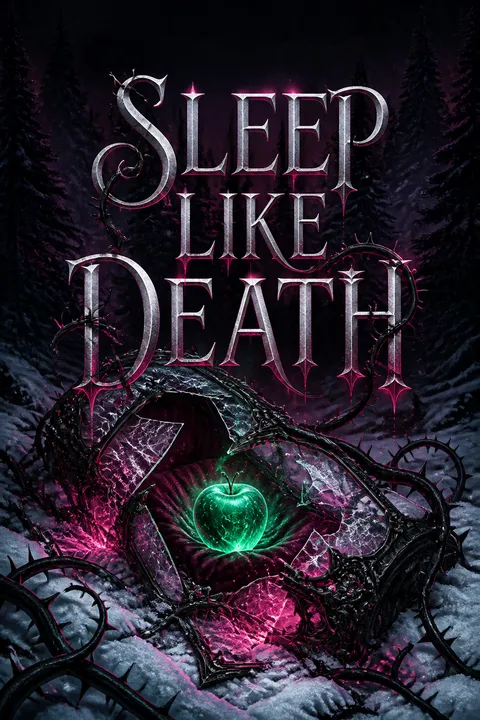


Plot Summary
Flax Reaches the River
Princess Eve can shape fire, ice, lightning, and darkness into weapons, and she hears the feelings carried in animals' calls. While hunting with her mentor, Huntress, she drives off a dire wolf with a blade of lightning. At Castle Veil, Queen Regina summons Eve to investigate Sir Gregory's flax, which is growing beyond its fields toward the River Farris, Queen's Bridge's water source.
The plants even sprout anew after being cut. Regina rides to the farm, where Gregory's family is frantically harvesting, but Gregory seems strangely unaware of the crop's reach. His evasions make clear that the overgrowth is not ordinary farming trouble, and the Queen presses him to explain.
The opening gives Eve a power set that looks like an answer to danger, but Huntress's criticism of her hunting shows its limit: Eve would rather overpower a problem than learn its conditions. The flax crisis makes that preference consequential. A private choice by one farmer threatens a shared resource, while Regina responds by visiting the endangered land herself. Her kingship is defined through attention and service, not distance. The growing crop also establishes the book's central pattern: desire can be granted literally, while its consequences spread well beyond the person who asked.
The Nightingale's Bargain
Gregory admits he asked the Knight to make his flax yield abundantly for the rest of the season. He sought more time with his wife and eight children after drought ruined other crops, but his carefully phrased wish has made the flax unstoppable. Regina arranges workers to keep it from the river.
She tells Eve why she recognizes the danger: years earlier, her wife, Queen Sanaa, wished for the loveliest singing voice and became a nightingale, still kept in a gilded cage. The Knight granted the wish by turning Sanaa into a bird. Regina's grief is renewed whenever another resident trusts his bargains. Eve has spent years collecting accounts of such disasters and insists she will one day make him answer for them.
Gregory is not reckless for pleasure; shame keeps him from asking the Queen for help, and that shame makes the Knight's offer attractive. His case complicates the idea that bad bargains come only from greed. Sanaa's transformation supplies a more intimate proof of the Knight's method: he honors a wish's wording while disregarding the human purpose behind it. Regina's care for Gregory's family, even after his mistake, contrasts with the Knight's punitive logic. Eve, meanwhile, has converted inherited grief into a mission, but her certainty that vengeance is the same as justice is already visible.
The Stone Behind the Hearth
Eve notices Regina hiding a large black seeing stone beneath her chamber floor. When she uncovers it, a young man appears inside the reflective surface, then steps out. He identifies himself as Nova, a messenger and enforcer for the Knight, but refuses to explain why he visits Regina.
Eve breaks the stone's surface with a fire blade, only to learn the damage has not driven Nova away. Regina orders Eve not to discuss what she saw and shuts her out of the truth. Rather than accept the silence, Eve rides to Gregory's farm and asks his eldest son, Mekhi, to help track the Knight's moving castle. She conceals her real purpose, telling Gregory they are hunting a wolf.
The seeing stone turns privacy into a physical threshold: Regina's secret is not merely something she withholds, but a place where another person can appear. Eve's discovery forces her to confront the gap between closeness and complete knowledge. Regina's secrecy may protect her daughter, yet it also deepens Eve's suspicion and pushes her toward danger. Nova complicates the boundary further. He is a visible agent of the Knight, but his guarded presence suggests that service and conviction may not be identical. Eve responds by converting uncertainty into pursuit, repeating the control-seeking habit that Huntress has warned her about.
Tracks Toward the Castle
On the journey, Mekhi reveals why he hates the Knight. His beloved Fairouz wished to bring her dead mother back; the result was a rotting corpse, and when Mekhi killed it to protect her, Fairouz walked into the River Farris. Mekhi nevertheless follows Eve's plan. His tracking finds the Knight's enormous, steam-breathing castle in a snowy valley.
Inside, they witness the Knight torturing a man whose bargain involved surrendering his firstborn. Eve attacks with a sword of fire, but the Knight catches it, extinguishes her magic, and strikes her down. Nova distracts him long enough for Eve to escape. The moving castle kills Mekhi during their flight, and Eve buries him beneath snow before returning home injured and defeated.
Mekhi's history mirrors the book's recurring trap: a wish can restore the object of longing while destroying the life that made that longing bearable. His loss of Fairouz gives him a reason to join Eve, but not protection from her decisions. Eve's defeat is therefore more than a failed duel. She has treated her innate gifts as proof that she is destined to win, and Mekhi pays for that confidence. Nova's intervention saves Eve but cannot undo the consequence. The burial marks a shift from triumphant revenge fantasy to guilt, forcing Eve to reckon with the people her certainty places at risk.
A Life Owed at Seventeen
Back at Castle Veil, Eve confronts Regina and Huntress about the training that had prepared her to fight the Knight. Regina admits she and Sanaa once wished for a child. The Knight created Eve, but required Regina to kill her by her seventeenth birthday, or have someone kill her on Regina's orders. Regina concealed the terms while searching for another way out.
With only two weeks remaining, she, Huntress, and Nova plan to stage Eve's death using a substitute heart, then hide her from the Knight. Eve must remain absent from Regina's life so the deception holds. The news reframes her powers and royal identity as parts of the bargain, while the proposed escape demands that mother and daughter surrender their daily closeness.
The revelation makes Eve's existence both an act of love and the site of coercion. Regina did not wish carelessly; she made a choice under the pressure of longing, then spent years trying to prevent its cost from reaching her child. Her concealment arose from protection, but protection has become a form of unilateral control. Eve's anger is justified, especially after years of being trained toward an impossible confrontation, yet she is still excluded from the plan meant to save her. The bargain converts motherhood into a forced choice between attachment and survival, testing whether love can endure separation without becoming possession.
A Birthday for Goodbye
Regina gives Eve the grand seventeenth-birthday celebration she once denied her, but the music and dancing disguise a final farewell. Nova tells Eve she must disappear permanently, not simply wait until danger passes. After the guests leave, Regina gives her ring to Eve and sends her out with Huntress. On the journey, Huntress reveals she loves Regina and believes Eve has kept the Queen from a life with her.
She intends to kill Eve and provide the Knight with a real heart. Huntress wounds Eve with a dagger, but the crows attack and Nova arrives. He kills Huntress before she can strike again. Eve survives, and Nova carries her to Claude Kingfisher's home to recover, where the plan's false death remains possible.
The celebration makes the cost of the plan legible through ordinary gestures: a dance, a ring, a room full of people who do not know what is being staged. Eve's separation is not abstract duty but the loss of a shared life with Regina. Huntress's betrayal reveals how love can be distorted by grievance. She interprets Eve's existence as an obstacle to her own hoped-for future, then calls murder a necessary service to Regina. Nova's rescue does not erase his complicity in the Knight's schemes, but it demonstrates that his choices are beginning to diverge from his assigned role.
The Kingfisher Shelter
Claude Kingfisher and his sons nurse Eve through her wounds. Claude recounts how he and his late wife Leah asked the Knight for a large family; seven sons came in seven years, and Leah died giving birth to the last. Their surviving boys, Junior, Hunter, Chance, and Savion, make room for Eve without demanding that she replace their mother.
Nova visits through a shard of Regina's seeing stone and reports that the Knight believes Eve dead, though he continues tormenting Regina with images of her daughter's death. Eve learns the Queen is being worn down by this siege. Despite the danger to Claude's family, she decides to return to Castle Veil. Nova waits to accompany her, and together they travel under cover of darkness.
The Kingfisher home offers a countermodel to the Knight's bargains. It cannot restore Leah or erase the boys' grief, but its care is practical and shared: food, healing, work, and space to mourn. Claude's story also widens the pattern beyond Regina and Eve, showing that the consequences of a wish can become an inherited family structure. Nova's visits create a fragile intimacy founded on partial truths and remorse. Eve's return is motivated by love for Regina, but it risks reopening the deception that has kept the Kingfishers safe. Chosen family becomes both refuge and responsibility.
The Mirror's Cruel Answer
Eve and Nova slip into Regina's chambers and find the Queen physically ravaged by the Knight's repeated visions in the seeing stone. Regina explains that he is trying to make her beg for another bargain. Before Eve can persuade her to leave, the Knight enters. He lifts Regina and forces her to repeat a question to the mirror, then answers that Eve is alive.
He has discovered the deception. Sanaa's nightingale form urges Eve away, while Nova knocks her from the balcony to help her escape. Outside, Eve finds the bodies of guards and residents cut down around the castle, then flees on horseback. At Claude's home, she later learns that Regina has been declared dead, leaving Eve to grieve without knowing the truth.
The mirror's forced ritual weaponizes a familiar image of beauty into an instrument of surveillance and humiliation. The Knight uses Regina's own voice to announce the secret she had been protecting, making her body a stage for his control. Sanaa's warning and Nova's shove turn rescue into a painful act of separation. Eve escapes, but the massacre makes clear that the Knight's power extends beyond private bargains into public terror. Regina's reported death then compounds uncertainty with grief: Eve cannot know whether her mother is gone or whether the official account is another part of the trap.
Nerium's Missing Name
After Regina's reported death, Eve withdraws into grief at Claude's home. A note from Junior helps her emerge, and Claude shares a childhood memory of Nerium, an old woman in Hamelin who said the Knight had once made a great mistake. Eve rides to the nearly abandoned hamlet of Little Stilts and finds Nerium still alive.
Nerium confirms that a girl once beat the Knight at his own bargain, driving him into a rage, but she cannot explain how. The clue gives Eve something she has never had: evidence that the Knight can be outmaneuvered. Back at Claude's, Eve finds a strange old visitor carrying a green apple and speaking Sanaa's name. Before Eve can understand why, the woman attacks her.
Grief initially narrows Eve's world until Junior's small act of connection gives her a reason to move again. The journey to Little Stilts transforms her pursuit: instead of gathering examples of the Knight's cruelty, she seeks a mechanism that might make resistance possible. Nerium offers only a fragment, but that fragment challenges the Knight's cultivated image of invulnerability. The green apple interrupts Eve's investigation with a different kind of threat, one that links old stories to present danger. The sequence suggests that folklore is not distant commentary on events; it may be the surviving record of how those events can be changed.
The Apple Comes Home
Claude knocks the attacker away before she can force the apple into Eve's mouth. The woman is Regina, transformed into a frail old crone and enchanted to kill her daughter. Eve recognizes her mother's star-shaped emerald and the scar on her hand. Regina says the Knight made her repeat the mirror ritual, altered her appearance, and sent her toward Eve with poison.
She fought his influence, but could not stop her body from obeying. Claude restrains her until she can trust her control. The family realizes the Knight knows Eve is alive and may come for them. As crows gather overhead, Nova appears in the shard and warns that the Knight is on his way. Eve prepares to defend the Kingfishers while Regina asks to protect the boys.
The poisoned apple turns a storybook image into a direct assault on maternal trust. Regina's body has been made to enact the opposite of her deepest commitment, yet Eve recognizes that intention and action have been forcibly split. Claude's restraint protects Eve without dismissing Regina's account, while Eve's willingness to free her mother depends on trust rather than certainty. The reveal also destroys the safety of the false death: the Knight has found the secret and is directing his violence toward the household that sheltered Eve. The animals' alarm and Nova's warning convert an intimate crisis into an imminent siege.
A Wish Bought in Blood
The Knight's moving castle reaches the Kingfisher home, and the family hides the younger boys and Regina while Eve and Claude face him outside. Nova emerges beaten, then tries to fight beside them. Junior shoots an arrow into the Knight's eye, but the Knight's attack kills him.
To spare Claude and the other boys, Eve agrees to a new bargain: the Knight will leave Queen's Bridge if she chooses someone she loves to die. Regina offers herself, but Nova takes the poisoned apple and dies before Eve can stop him.
The Knight dismisses the cost of his son's life. Eve attacks, Claude drives a knife into the Knight's exposed body, and Eve pierces him with a fire blade. The Knight flees, and Eve follows his blood into the woods, where she removes his head.
The battle brings the book's competing moral systems into direct collision. The Knight treats grief as leverage, forcing Eve to choose a loved one as payment; Nova refuses that logic by taking the poison himself. Junior's death makes resistance costly even before Eve chooses, while Claude's attack turns paternal grief into action. Eve's final violence is not the triumph of an invulnerable weapon. She wins only after the Knight's armor is damaged and his body exposed, with help from people he had treated as disposable. His son, his victims, and his bargains converge in a victory that cannot restore the dead.
The Name Beneath the Armor
Stripped of armor, the Knight reveals that a girl once defeated him by discovering his name and voiding their bargain. Eve later learns from storykeepers Maeve and Clio that the girl was the miller's daughter in the tale of Rumpelstiltskin, and that Eve's Miller family descends from her. The Knight's final words were terms for a last bargain: Nova would sleep like the dead until their hands and lips met.
Two years after Eve killed the Knight, she kisses Nova in his glass coffin, and he wakes. Regina returns to her throne, while Eve remains with Claude and the boys, still mourning Junior and Nova's lost years. The ending grants reunion, not erasure; the family carries its grief into a future no longer ruled by the Knight.
The late connection between Eve's family and the miller's daughter recasts the conflict as inherited history, not simply a personal feud. The Knight's fixation on the Millers grows from an old defeat he could not accept, while the family's forgotten origin preserves the means of resisting him. The final bargain is both a curse and an unintended opening: the Knight designed a prolonged mourning, but its condition can be met through love rather than another act of violence. Nova's awakening does not cancel the deaths of Junior, Mekhi, or Regina's years of torment. It makes survival possible without pretending loss was merely a lesson.
Analysis
Sleep Like Death treats the fairy-tale bargain as a problem of power, not simply a warning against greed. The Knight's victims often ask for recognizable human goods: food, family, health, restored love. What makes the wish dangerous is the unequal structure around it. He controls the terms, interprets language in bad faith, and benefits from the desperation that narrows a person's choices. Gregory's shame, Regina and Sanaa's longing for a child, and Fairouz's bereavement are different forms of vulnerability, yet each becomes material for the same predatory system.
Eve inherits both the consequences of her mothers' wish and the family history that explains the Knight's fixation. At first she treats her elemental gifts as evidence that she is meant to defeat him. The deaths of Mekhi and Junior expose the moral danger in that belief: courage without humility can enlist other people in a risk they did not choose. Her eventual victory depends on accepting help, listening to stories, and recognizing that the Knight's armor conceals a body that can be wounded. The book does not replace action with passivity; it makes effective action relational rather than solitary.
Its mother figures are varied and imperfect. Regina's protection becomes secrecy, Huntress's love becomes possessiveness, and Claude's care makes room for grief without demanding that Eve recover on schedule. Sanaa's continuing presence as a bird gives family love a form that survives the loss of speech. Nova's arc likewise asks whether a person shaped by coercion can still be accountable for harm and capable of choosing differently. His remorse does not erase what he has done, but his final choice gives Eve a future beyond the Knight's design.
The ending's hope remains deliberately costly. Regina returns, the Knight is gone, and Nova awakens, but Mekhi and Junior remain dead, and Regina carries the physical consequences of the Knight's attack. Folklore preserves a way forward without promising restoration of everything lost. The story's deepest answer to cruelty is therefore neither perfect justice nor uncomplicated happily ever after. It is the possibility of making a life with the survivors, remembering the dead, and refusing to let the perpetrator define what love must cost.
Review Summary
Sleep Like Death is a divisive Snow White retelling with mixed reviews. Some praise its unique twist, atmospheric writing, and strong representation. Others criticize underdeveloped characters, rushed pacing, and confusing world-building. The romance is often described as unconvincing. Readers appreciate the dark tone and creative elements but find the plot lacking depth. Many note it feels more suited for younger readers despite violent content. Overall, opinions vary widely, with some loving the fresh take on fairy tales and others finding it disappointing.
People Also Read



Characters
Eve
The storm-wielding heirEve is the seventeen-year-old princess of Queen's Bridge, raised by Queen Regina and Queen Sanaa and trained by Huntress to hunt and fight. She can draw weapons from natural forces and understand the emotional calls of animals. Her devotion to Regina gives her courage, but it also sharpens into a fixation on vengeance against the Knight. Eve measures herself by competence and control, so accepting help or uncertainty feels like weakness. Her journey asks whether power is meaningful only when it defeats an enemy, or whether listening, grief, and dependence can be forms of strength. Her protectiveness is sincere, though her impulsiveness can put the people she wants to save in danger.
Regina
The people's devoted queenQueen Regina is Eve's mother and the ruler of Queen's Bridge. She treats residents as people to serve rather than subjects to command, and she personally investigates threats to their farms and water. Her life is shaped by love for Sanaa, responsibility for her queendom, and fierce devotion to Eve. Regina's instinct to protect Eve leads her to keep painful truths hidden, even when secrecy strains their closeness. She carries grief without surrendering her capacity for tenderness, and her leadership depends on practical care as much as authority. Her choices reveal the vulnerability beneath a ruler's composed public face.
Nova
The guarded emissaryNova serves as a messenger and intermediary for the Knight, appearing through reflective surfaces and carrying out the obligations attached to bargains. He is observant, dryly teasing, and difficult to read; his careful manner often conceals fear and shame. Nova knows more about the Knight's methods than he initially admits, but his own freedom is constrained by forces he rarely explains. His encounters with Eve are charged by their mutual distrust and growing attention to one another. He is drawn to the possibility of being seen as more than the role he has been made to perform, though he does not assume that remorse alone can undo harm.
The Knight
The bargain-making monsterThe Knight is an ancient, armored figure whose traveling castle appears across the territories surrounding Queen's Bridge. He grants wishes through bargains, often twisting precise requests into devastating outcomes. He is patient enough to exploit private desperation and cruel enough to keep tormenting people after a bargain's terms appear settled. His control depends partly on reputation: many believe no one can oppose him, and that belief keeps them isolated. He is especially interested in the Miller queens, though the reason for his fixation remains mysterious for much of the story. He treats suffering as proof of his power and resists any outcome he cannot dictate.
Huntress
Eve's stern combat mentorHuntress has trained Eve since childhood in tracking, hunting, and combat. She is blunt, disciplined, and wary of Eve's confidence, believing that anger can make skill dangerous rather than useful. Her bond with Regina is deep, and her place in Eve's life combines mentor, protector, and maternal authority without becoming uncomplicated. Huntress values preparation and duty, sometimes so intensely that she mistakes rigid control for protection. She wants Eve ready for threats she cannot fully explain, and her sharpness comes from fear as much as from temperament.
Queen Sanaa
The caged nightingale queenSanaa is Regina's beloved wife and Eve's other mother. Before the Knight's magic changed her, she was a queen and a gifted singer who wished to recover her voice. She remains present in the castle as a nightingale, and her song carries an emotional force that Eve can sense but cannot fully interpret. Sanaa's history is a warning the family has lived with for years, yet she is more than a symbol of what the Knight has done. Her continuing bond with Regina and Eve makes love visible even when speech and ordinary presence have been taken away.
Mekhi
The gifted young trackerMekhi is Sir Gregory's eldest son, a capable tracker with a strong attachment to his family. He carries private grief over Fairouz and the catastrophe that followed her wish to restore her mother. Though cautious about Eve's hatred of the Knight, he joins her search because he shares her anger and wants to help. Mekhi is perceptive enough to recognize when courage is turning into recklessness, but he is also loyal to the people he loves. His practical skills provide a counterweight to Eve's reliance on magic.
Sir Gregory
The proud flax farmerSir Gregory is a kind, aging farmer and father to a large family. Drought and fear that he cannot provide for his children lead him to seek a faster harvest through the Knight's wish-making. He is proud enough to resist help from Regina, even when his decision endangers the River Farris. Gregory also makes marionettes, a craft that gives him a form of creative work beyond the farm. His story shows how a decent person's shame and desperation can create consequences for an entire community.
Claude Kingfisher
The grieving, generous fatherClaude is a miner, widower, and father whose home becomes a refuge for Eve. He tells his family's painful history through a story, keeping some emotional distance from events that remain difficult to face. Despite his own grief, he offers Eve food, medical care, and a place among his sons. Claude is wary of the Knight and understands the cost of bargains, but he does not reduce people to their worst choices. His protective instincts are practical and generous, shaped by a father's determination to keep his family together.
Junior
The responsible eldest brotherJunior, Claude's eldest surviving son, takes on responsibility for his younger brothers and often watches over them as a second parent. His maturity does not erase his youth or his grief for the mother and brothers he lost. He makes room for Eve in the family and recognizes that she is carrying sorrow of her own. Junior's care is direct and unshowy: he offers companionship, remembers what others need, and tries to keep his household steady.
Hunter
The blunt older brotherHunter is one of Claude's older sons, a miner and hunter who helps shoulder the family's work. He speaks plainly and can sound insensitive, but his directness is paired with loyalty to his brothers and father. He helps make the Kingfisher home function while Eve recovers there, and he is alert to how dangerous the Knight's attention may become.
Chance
The eager younger brotherChance is one of Claude's younger sons, curious, sociable, and quick to turn a visitor into a companion. He watches over Eve while she recovers and is eager to learn from her magic. His openness helps soften the Kingfisher household's grief without pretending that grief has vanished. Chance's enthusiasm is balanced by loyalty to his brothers and trust in his father.
Savion
The suspicious youngest brotherSavion, usually called Grumpy, is Claude's youngest son. His scowl and sharp remarks hide a fierce protectiveness, particularly toward Eve and his brothers. He is wary of strangers and quick to take up a weapon when his family seems threatened. Savion's humor is prickly, but his seriousness is not a pose: he wants the people he loves kept safe.
Fairouz
Mekhi's lost belovedFairouz was a young woman from Hastwich Pass who loved Mekhi and longed for the mother she had lost. Her grief made the Knight's promise of restoration difficult to resist. Her story shapes Mekhi's distrust of bargains and gives his hatred of the Knight a deeply personal source.
Nerium
The keeper of fragmentsNerium is an ancient, sharp-tongued woman living in the near-abandoned hamlet of Little Stilts. She knows fragments of old stories about the Knight, including evidence that he was once defeated. She guards what she knows and offers no easy explanation, making her a difficult but valuable source for Eve's search.
Maeve
The patient story collectorMaeve travels with her sister Clio to collect stories from across the territories. She is careful about how dangerous knowledge is recorded and shared, believing that old tales can preserve truths that official accounts conceal. Her measured manner balances Clio's sharper impatience.
Clio
The sharp-eyed archivistClio is Maeve's sister and a rigorous recorder of strange histories. She is skeptical, incisive, and less patient with people than with evidence. Her notes preserve connections among stories that others dismiss as children's tales, while her bluntness gives the sisters' careful work an edge.
Lady Anne
The castle's warm-hearted cookLady Anne has known Regina and Eve for years and serves as Castle Veil's head cook. Her affection for Eve makes her resist the Queen's ban on birthday talk, while her open-hearted manner offers a glimpse of the family life surrounding the royal household.
Captain Amaranth Mock
The cautious royal captainCaptain Mock leads Regina's royal guard and advises the Queen on security. He tends to favor distance between the Crown and ordinary residents, a view Regina rejects. His caution reflects a conventional understanding of power that clashes with her personal, service-minded rule.
Nina
Regina's longtime friendNina is a longtime friend of Regina and mother to the infant Aldis. Her ordinary warmth and familiarity with the Queen show how Regina's authority has not erased her personal bonds with the people she governs.
Plot Devices
The Knight's bargains
Desire turned against itselfThe Knight grants wishes under terms or payment, then interprets the agreement with merciless literalism. A farmer's wish for abundant flax threatens the river; a queen's wish for a beautiful voice turns her into a nightingale. The bargains bring private longings into public consequences, creating the story's recurring moral and practical crisis. Because the Knight treats consent to a bargain as irrevocable, characters must find ways to resist the terms rather than simply regret their wishes.
The seeing stone
A window that becomes a trapThe black reflective stone lets Regina communicate with Nova and see images, but it also gives the Knight a way to invade her privacy and torment her with visions. Its hidden placement under the floor signals the secrets surrounding Eve's birth and the bargain behind it. The stone is not a neutral tool: whoever controls what appears in it can shape what its viewer believes, fears, and remembers. Its fragment later provides Eve a precarious means of contacting Nova.
Eve's elemental magic
Nature forged into weaponsEve can shape fire, lightning, ice, snow, darkness, and starlight into tools or weapons. Her gift provides striking ways to solve immediate problems, from driving off a dire wolf to cutting the magically regrowing flax. It cannot by itself defeat the Knight, whose power exceeds hers. The gap between what Eve can conjure and what she can control forces her to revise her faith in raw ability and accept that discovery, cooperation, and timing matter as much as force.
Animal voices
Warnings hidden in callsEve hears animals' calls as meaningful emotional signals, allowing her to sense fear, pain, curiosity, and danger. The ability helps her read horses, detect the forest's silence around a threat, and recognize when birds gather in alarm. It is both a practical early-warning system and a form of relationship: Eve listens to creatures rather than treating them as scenery. Their responses also connect her magic to the land itself, not only to combat.
Living folktales
Old stories preserve a routeEve collects accounts of the Knight's bargains, while Maeve and Clio preserve stories in coded records. These stories initially seem like scattered warnings, but Nerium's account of the Knight's defeat and the sisters' interpretation of the Rumpelstiltskin tale reveal a shared history. Folklore functions as imperfect evidence: it distorts events through rumor, yet keeps details alive after official memory has erased them. The device links Eve's family, the Knight's original defeat, and the final terms governing Nova's sleep.
Download PDF
Download EPUB
.epub digital book format is ideal for reading ebooks on phones, tablets, and e-readers.








