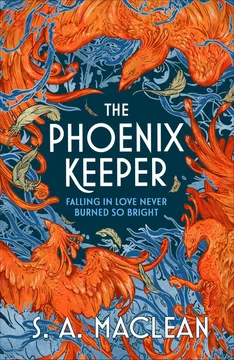


Plot Summary
Rubra's Empty Perch
Before visitors arrive at the San Tamculo Zoo, keeper Aila Macbhairan slips through the quiet grounds to care for Rubra, the zoo's lone Silimalo phoenix. Aila has loved phoenixes since childhood and built her education and career around protecting them. But San Tamculo has not bred the endangered birds for more than a decade, and Rubra has no mate.
Aila studies another zoo's successful nesting pair on a live camera and promises Rubra that she will find a partner. Elsewhere in the aviaries, mischievous archibird Archie jams a toy's metal pieces into the doors, delaying Aila's rounds until her friend and colleague Tanya distracts him. Aila's gift for animal care is clear. Her confidence with people is not.
The opening makes Aila's ambition concrete through daily care rather than grand declarations. Her promise to Rubra is both professional commitment and private repair: she has spent years feeling misplaced among people, while animals offer a relationship governed by attention and trust. The derelict breeding program gives that devotion a material obstacle. Archie’s prank supplies comedy, but it also establishes the practical intimacy of Aila's world, where affection means knowing an animal's habits, making a toy, and accepting the mess that follows.
The Empty Jewelport Nest
Aila's careful animal routines collide with the zoo's public demands when she struggles through a kelpie feeding talk and then watches confident dragon keeper Connor charm a crowd. The contrast sharpens her belief that she is bad at being seen. Back at the phoenix complex, she discovers that the live camera from Jewelport has gone dark.
A news search reveals why: thieves broke into the zoo and took a female Silimalo phoenix and her five eggs, leaving the male behind. The bird had immolated to hatch the clutch, making the newborns and her feathers especially valuable to poachers. Aila collapses beside Tanya, grieving for the birds and for the breeding program she had hoped to revive by watching them.
The theft converts distant conservation statistics into an intimate wound. Aila has treated the Jewelport camera as a daily source of knowledge and companionship; its sudden darkness marks the disappearance of living animals and the collapse of her imagined future. Her response also exposes a central conflict: she knows that species protection depends on institutions, yet those institutions cannot guarantee safety. Connor's ease with the public offers a quieter counterpoint, reminding Aila that visibility is a skill she lacks just as her own expertise becomes urgently needed.
A Letter to Rivera
The theft leaves Aila fearing that Jewelport's program may be suspended and that Rubra could be transferred elsewhere. While two visitors frighten her geese by grabbing one for a photograph, Aila intervenes, and Archie steals part of the offenders' shattered phone.
The incident reinforces her conviction that the zoo must protect animals from human carelessness as well as poachers. Luciana Reyes, the polished head of the griffin show, presses the opposing case: Rubra could draw crowds and donations as a performer.
Aila rejects the idea, especially after Luciana suggests the phoenix might be moved to Jewelport. At home, Aila stops waiting for news and writes IMWS director Maria Rivera, arguing that Rubra should stay and asking for a male phoenix to come to San Tamculo.
Aila's letter is her first significant act beyond the safe boundaries of husbandry. She cannot make herself persuasive in a crowd, but she can marshal evidence about habitat, temperament, and breeding. The confrontation with Luciana gives that knowledge a political edge: both women want conservation, yet they disagree about whether public spectacle serves or compromises it. The visitors' rough handling of the goose echoes the larger threat of poaching on a small scale. Aila's protective instinct is ethical, but it also risks becoming possessive when the animal she loves is at stake.
Two Months to Prove It
Aila checks her inbox for weeks, increasingly certain that her appeal has vanished into bureaucracy. Then Hawthorn, San Tamculo's director, summons her to meet Rivera, who explains that IMWS is reassessing its phoenix program after the Jewelport breach.
San Tamculo may receive the replacement male, but only if its breeding facility and security pass inspection. Aila's knowledge of phoenix climate, nesting needs, and surveillance systems turns the meeting from a reprimand into an opportunity. Rivera schedules an inspector for two months later.
The chance exhilarates Aila until she and Tanya survey their neglected building: cracked floors, expired fireproof paint, failing equipment, and incubators borrowed by the dragon keepers. Aila has finally been heard, but now she must make the forgotten facility fit for a phoenix.
The meeting transforms Aila from a keeper pleading for recognition into a professional whose expertise can influence resource allocation. Yet the opportunity is conditional, exposing how conservation depends on infrastructure as much as passion. Aila's anxiety is not merely fear of judgment; a failed inspection could affect an endangered species and erase years of hope. That scale magnifies her perfectionism. Tanya's presence offers emotional ballast, while the visible decay of the facility makes clear that neither friendship nor devotion can substitute for coordinated labor.
Renovation Under Fire
Aila turns the inspection into a military campaign, rebuilding the nest platform, ordering olive trees, restoring incubators, and studying every breeding protocol she can find. Connor helps retrieve and repair the equipment, and their easy work together feeds Aila's crush.
Luciana initially resists Aila's request for help, leaving Aila convinced that asking her was a mistake. The deadline tightens as Aila cuts sleep and tries to manage every task herself. Then a dropped blowtorch starts a fire that destroys much of the carefully sorted paperwork.
Tanya steadies her, and Connor offers to lay the new flooring. Luciana arrives with a team of griffin keepers, assigning them to camera upgrades, painting, and records. Aila accepts the help, though the truce is for the phoenixes, not for her pride.
The renovation externalizes Aila's internal rule that competence means never needing anyone. Her exhaustion makes that rule dangerous: a minor handling error destroys the records she had labored to perfect. The crisis forces a distinction between responsibility and solitary control. Tanya supports Aila without treating her anxiety as failure, Connor contributes practical skill, and Luciana mobilizes a team. Their help does not diminish Aila's expertise; it makes the work possible. The shared project also complicates Aila's simple categories of friend, rival, and admirer.
The Ring and the Inspector
On inspection morning, Aila presents a restored facility to Giuseppe Garumano, the renowned phoenix-breeding specialist. His questions probe Rubra's diet, climate, and introduction plan, and Aila struggles when he asks how she would respond if the female rejected a mate.
Luciana then calls her away: Archie has stolen an engagement ring from a visitor. Aila calms the bird by trading the ring for a shiny metal rod from the ruined enrichment toy, resolving the crowd's crisis. She returns to Garumano fearing the interruption has ruined everything.
Weeks later, Rivera calls with the verdict: San Tamculo is IMWS's leading choice for the transfer. Garumano praised the facility and Aila's preparation. Her lifelong request has become a real commitment, but a male phoenix will bring new responsibilities and new risks.
The evaluation tests more than stored information. Garumano's question identifies a genuine gap in Aila's planning, while Archie's theft gives her an unscripted chance to demonstrate observation and animal handling. The incident that looks like sabotage becomes evidence of competence because Aila responds to the creature rather than panicking at the audience. The eventual approval validates preparation, but not as a fantasy of flawless performance. Aila earns trust through knowledge, adaptation, and the ability to let practical judgment outrank her fear of embarrassment.
A Kiss, Then Dinner
At a celebration for the approved transfer, Luciana takes charge of public relations, while Connor congratulates Aila and kisses her in the quiet of the keeper kitchen. He arranges a formal dinner for their first date. Aila arrives in one of her few dresses, nervous but hopeful; the restaurant's elegance only deepens her unease.
She talks eagerly about the zoo, then falls quiet when Connor dismisses her parents' modest pub as an unimpressive place. He speaks at length about investments and other interests, while Aila struggles to respond and blames herself for the awkwardness.
Connor reassures her about the phoenix project, but the evening leaves her feeling small rather than understood. His later invitation to meet again complicates her certainty: Aila wants to be wanted, yet cannot tell whether she enjoys being with him.
The date distinguishes being pursued from being known. Connor's initiative initially answers Aila's longing for connection, but his casual judgment of her family's restaurant reveals a difference in values that she cannot yet name. Her silence is not proof that she has nothing to offer; it is a response to feeling evaluated. The scene also shows how Aila converts discomfort into self-accusation, assuming that social failure must originate in her. The romance subplot therefore becomes a test of whether attention alone can compensate for the absence of mutual curiosity.
Carmesi Meets Rubra
In spring, IMWS sends Carmesi, a gentle male phoenix, to San Tamculo. Rivera oversees his arrival and the first visual introduction through a mesh partition. Rubra responds with a furious display, and Carmesi retreats into his carrier.
Aila tries gradual introductions, but Rubra hides him under branches and remains hostile when they share the exhibit. Connor checks on Aila and offers a simple lunch, while Luciana pushes for a live camera to promote the program. Aila resents the publicity pressure and bristles when Luciana challenges her avoidance.
Their argument reaches back to college, when Aila believed Luciana laughed at her stage fright and abandoned a group project. Luciana reveals she had changed groups to support a grieving friend, not to reject Aila. The old grievance no longer fits the facts.
Carmesi's arrival makes the breeding program emotionally real and immediately uncertain. Aila has mastered the protocols, but animals do not obey the timetable of an ambitious keeper. The conflict with Luciana follows the same pattern: Aila interprets incomplete evidence through an old fear of being dismissed. Luciana's explanation does not erase the hurt of the classroom incident, but it interrupts Aila's certainty about its meaning. Both relationships require the same skill: observe what is actually happening instead of forcing events into a familiar story of rejection.
Nimit's Empty Stall
Aila seeks Luciana out to apologize, but finds her alone in Nimit's empty stall. The elderly peacock griffin, Luciana's first training assignment and longtime companion, has died.
Luciana admits she has been staying busy to avoid grief, then apologizes for laughing during Aila's college presentation and explains that her confident stage manner was learned, not effortless. Aila listens as Luciana remembers how Nimit steadied her during her own early fear of performing. Their hostility softens into mutual recognition, and Aila offers company rather than advice.
When Luciana admits she is not as invulnerable as she appears, Aila begins to see the person behind the public image. She also realizes that the publicity Luciana advocates may come from genuine devotion to the animals, not vanity.
The empty stall gives grief a physical presence and strips Luciana's persona of its usual setting. Aila's apology matters because she revises her interpretation rather than simply requesting forgiveness. Luciana, in turn, makes vulnerability legible by describing the labor behind confidence. Their exchange complicates Aila's habit of treating competence as evidence of ease. Both women have hidden fear beneath different strategies: Aila retreats, Luciana performs. Listening becomes a form of care that neither can provide through expertise alone.
A Camera, A Dance
When Rubra and Carmesi fight, Luciana calmly settles the distressed male on her gloved hand and coaches Aila to keep her own tension from reaching Rubra. The birds quiet enough for a cautious reunion. Aila then agrees to appear at a national news interview, where Luciana handles the opening questions but leaves room for Aila to describe why phoenixes matter to her.
Aila speaks through her nerves and endorses a live camera, recognizing that viewers can become donors and advocates. Afterward, Rubra accepts a leaf Carmesi offers in the species' courtship display. The pair's first bonding dance gives Aila the evidence she has been waiting for: the program is not just repaired on paper. The phoenixes themselves may be choosing each other.
Luciana's calm intervention turns animal handling into a lesson in emotional regulation without reducing Aila's fear to incompetence. Aila succeeds publicly not by imitating Luciana's polish, but by speaking from her specific knowledge and attachment. Her change of mind about the camera likewise joins care to communication: visibility can expose animals to risk, yet it can also build the support that protects them. The courtship dance offers a payoff earned through patience. Biological progress depends partly on the keeper learning when to guide and when to let the birds act.
The Friend Left Waiting
The phoenix camera goes live with Nadia's technical help and Luciana's design, drawing viewers who celebrate Rubra and Carmesi. Aila becomes so absorbed in the feed that she forgets to deliver food for Tanya's exhibits.
Tanya tells her that the volunteer-keeper proposal has stalled and that the phoenix project has consumed much of the time she had meant to give it. Aila apologizes at Tanya's home, bringing snacks and offering to proofread and rehearse the grant proposal. Tanya's pilot program is later approved.
Around the same time, Rubra lays five fertile eggs. Aila's joy is immense, but she now understands that her dream has leaned on Tanya's generosity. Supporting conservation means noticing the person beside her, not only the animals behind the glass.
The conflict with Tanya reveals the cost of making one person's dream the center of every relationship. Aila's devotion is sincere, but sincerity does not prevent neglect. Her apology becomes meaningful when it includes changed behavior: she brings practical help and gives Tanya's project sustained attention. The two successes, grant approval and a fertile clutch, resist the idea that care is a limited resource in which one person's thriving must displace another's. Aila begins to understand collaboration as reciprocal attention rather than emergency assistance summoned when her own plans falter.
Choosing Her Own Measure
After a second lunch with Connor, Aila notices that his reassurance often minimizes the work and worry she carries. When he takes her to feed a dragon, she ends their courtship, despite fearing that she will hurt him. Connor accepts the decision without argument.
Director Rivera later visits the nest, praises Aila's work, and describes conservation as a team effort rather than a solitary burden. With Tanya and her mother, Aila admits that she still has a crush on Luciana.
At the Pepper Festival, she helps Luciana present Carmesi to the crowd and watches an eight-year-old visitor ask how to become a phoenix keeper. Aila answers with encouragement drawn from her own path. In the quiet afterward, she and Luciana kiss, turning a long-hidden attraction into a possibility they can choose together.
Aila's breakup is a small but essential act of self-trust. She does not need Connor to be villainous to recognize that their connection leaves her diminished. Rivera's visit reinforces a broader model of professional identity: success can include mentoring, teamwork, and future growth without requiring Aila to abandon hands-on care. The child's question lets Aila meet her younger self with guidance rather than shame. Her kiss with Luciana follows this return of agency. The romance grows from mutual recognition, not from Aila finally becoming a more socially acceptable version of herself.
Connor Cuts the Camera
Three days before the expected hatching date, Rubra immolates early while Aila works late. Carmesi calls over the nest, and Aila recovers five newborn chicks plus Rubra, reborn smaller, placing them in warmed incubators to stabilize. When the live feed fails, Aila finds its cable cut.
Connor appears, then locks her inside the phoenix aviary and silences her attempts to call for help. He reveals that he sold the diamondback dragon hatchlings to collectors to pay his father's debts and has been cultivating Aila's trust to steal the phoenix chicks.
He takes her phone and radio, disables the internet, and threatens the birds to keep her from warning Tanya. Luciana arrives after Tanya asks her to check on Aila, frees her, and helps move the chicks into an insulated tote before Connor returns.
The betrayal weaponizes the trust built through practical cooperation. Connor's earlier help gave him access to the facility, its security, and Aila's hopes, so the heist is not a sudden intrusion but the consequence of intimacy misused. His justification that captive animals are doomed exposes a moral evasion: he calls exploitation realism because it relieves him of responsibility. Aila's fear is no longer merely social; her mistakes could endanger lives. Luciana's arrival offers a different model of closeness, one that responds to danger without asking Aila to earn help first.
The Zoo Becomes a Trap
Aila and Luciana discover the night guard drugged with lavender oil and the office phone disabled. Armed accomplices force them back from the exit, so Aila hides the chicks beneath Khonsu, the Bix phoenix who shelters in a rocky burrow. They split up: Luciana draws danger away while Aila uses Archie to disarm one gunman, then lures another into Maisie's kelpie tank and seals him safely inside after the kelpie's hypnotic pull leaves him stunned.
Connor catches Aila near the amphitheater, but Luciana returns on Ranbir, the peacock griffin, and knocks him down. Tanya has trusted her instincts and brought police, who arrest Connor and the remaining accomplice. With the thieves in custody, Aila retrieves the chicks from Khonsu's feathers.
The climax turns Aila's intimate knowledge of the zoo into tactical intelligence. The animals are neither weapons she commands at will nor decorative symbols; each acts according to familiar behavior that Aila and Luciana understand. Archie pursues shine, Khonsu tolerates a warm bundle in his den, Maisie responds to prey, and Ranbir follows his training. The rescue also depends on cooperation across different temperaments. Aila's courage is not a sudden cure for anxiety. It is her willingness to act while frightened, using the competence she has built through years of attention.
A Home for the Chicks
Aila carries the recovered chicks back to the phoenix complex, where they can resume care in the incubators and with Carmesi. The rescue ends the immediate threat, but it does not undo the vulnerability exposed by the break-in.
San Tamculo increases its night patrols, while Aila, Tanya, and Luciana remain connected through the work of keeping the breeding program alive. The chicks' survival completes the promise that began with Aila watching Jewelport's nest on a screen: she has helped create a place where phoenixes can breed safely.
Her achievement belongs to a network of keepers, administrators, friends, and animals, not to one keeper working alone. The following month will test that truth through daily care, public attention, and the next generation of trainees.
The resolution is deliberately practical. The birds need warmth, monitoring, and stronger security; emotional relief cannot substitute for those measures. Aila's original wish was to prove herself through solitary expertise, but the successful rescue makes that model untenable. The program survives because Tanya trusts her instincts, Luciana acts under pressure, and trained animals contribute their own learned behaviors. The clutch also changes the meaning of Aila's early promise to Rubra. Keeping a species alive is not a single heroic act; it is repeated care organized across people and institutions.
Epilogue
A month later, the five chicks have grown into loud, hungry fledglings, and Aila and Tanya trade night shifts to keep them fed and warm. The zoo's strengthened patrols deter further break-ins, while Luciana fields the growing press requests and Tanya prepares to welcome volunteers into her new pilot program. Aila now greets visitors instead of hiding from them.
She and Tanya bring Carmesi to the griffin show, where Aila steps onto the stage and sends him flying between the keepers. The crowd applauds as the phoenix returns to her arm. Aila has not stopped being anxious, but she can share the bird she loves with the world, and help a new keeper find her way into the work.
The epilogue measures Aila's growth through behavior, not a claim that her anxiety has disappeared. She still needs preparation and support, but she can now step into public space because the work has acquired a purpose beyond proving her worth. The fledglings also make conservation visible as repetitive labor: feeding, measuring, resting, and protecting. By welcoming volunteers and helping a new keeper, Aila becomes part of the chain of care she once imagined only as a personal dream. The final flight is spectacle with a changed meaning. It does not replace the birds' welfare; it connects an audience to the care that keeps them alive.
Analysis
The novel's central question is not whether Aila can become fearless, but whether she can act without waiting for fear to disappear. Her anxiety shapes real choices: she avoids audiences, overprepares for inspections, and initially treats dependence as a risk. The plot does not cure her through a speech or romance. It gives her repeated chances to use the knowledge she already has, from trading with Archie to calming Rubra and protecting the chicks. Each success expands the circumstances in which she can participate.
Conservation is presented as a relationship among systems, not as solitary virtue. Aila's expertise matters, yet it cannot repair a building, fund a program, operate a camera, or stop armed thieves by itself. Tanya's labor, Luciana's public communication, Nadia's technical skills, Rivera's institutional authority, and the public's support all contribute. The book's conflict over spectacle is therefore not resolved by declaring publicity shallow or science pure. The live camera and griffin show can attract money and attention, but they must remain accountable to the animals they represent.
The relationships deepen through corrected assumptions. Aila first reads Luciana's confidence as effortless superiority and Connor's attention as proof of compatibility. She learns to ask what those impressions conceal, while also allowing others to see her own needs. Her apology to Tanya is especially important because it converts affection into responsibility. By the end, Aila is not merely the keeper who knows phoenixes best. She is a colleague, friend, mentor, and public advocate, roles that extend rather than replace her devotion to animal care. The story's most durable lesson is that expertise becomes more protective when it is shared.
Review Summary
The Phoenix Keeper receives mixed reviews, averaging 3.8 stars. Readers consistently praise the magical zoo worldbuilding, diverse creature lore, and representation of social anxiety, bisexuality, and a trans supporting character. Many love the cozy atmosphere and animal-focused storytelling. Common criticisms include an immature, self-centered protagonist who acts younger than her 28 years, slow and repetitive pacing, a predictable antagonist, and misleading marketing around the sapphic romance, which doesn't develop until roughly 70% through the book.
People Also Read


Characters
Aila Macbhairan
Phoenix program keeperAila is a skilled, intensely observant zookeeper whose lifelong fascination with Silimalo phoenixes shapes her education and work. She is most at ease with animals, where patience and close attention matter more than polished conversation. Around people, anxiety makes her second-guess herself, retreat from opportunities, and mistake uncertainty for proof that she is inadequate. Her care is practical: she builds enrichment toys, studies breeding protocols, and notices changes in an animal's behavior. Aila is also loyal to her friends, though her focus can narrow until she overlooks their needs. Her defining tension is between deep competence and the belief that she must become more like other people before that competence deserves to be seen.
Luciana Reyes
Griffin show leaderLuciana leads the zoo's popular griffin show and handles public appearances with practiced ease. Her immaculate presentation can make her seem self-absorbed or untouchable, especially to Aila, who has long compared herself unfavorably with her. Beneath the polish is a keeper who knows animals well, works hard, and understands that public attention can fund conservation. Luciana has learned to perform confidence, but that skill does not make her immune to grief or judgment. She values competence and directness, sometimes expressing concern as a challenge. Her relationship with the zoo's animals and colleagues reveals a more complicated person than the flawless public figure Aila first sees.
Tanya
Aila's closest friendTanya is Aila's college roommate and closest friend, now a fellow keeper responsible for Bix phoenixes and other birds. Warm, perceptive, and practical, she can coax Aila out of a spiral without treating her as fragile. She offers help freely but also expects Aila to notice when her own ambitions need room. Tanya is building a volunteer-keeper program because she wants to train the next generation, not merely support someone else's dream. Her affectionate teasing disguises a clear-eyed understanding of Aila's habits. Their friendship works best when care moves in both directions.
Connor
Dragon keeper neighborConnor is a capable keeper in charge of the zoo's dragons, including an injured diamondback and a maned dragon. His easy manner and good looks attract Aila, who initially reads his attention as a promising chance at romance. He has experience with breeding and incubator maintenance, making him a useful colleague during the phoenix renovation. Connor's comfortable social style contrasts with Aila's hesitancy, and his advice often sounds reassuring even when it fails to engage with the scale of her concerns. His work with dragons gives him a place in the zoo's conservation network.
Rubra
The resident phoenixRubra is San Tamculo's female Silimalo phoenix, a fiery, independent bird who has lived at the zoo for years without a mate. Aila knows her routines, health, and temperament in exceptional detail, and their daily relationship gives the keeper's work its emotional center. Rubra is not a passive emblem of conservation: she chooses where to perch, resists unfamiliar company, and makes her preferences unmistakable. Her need for suitable habitat and careful handling turns the breeding program into a concrete responsibility. To Aila, Rubra is both a cherished animal and the living focus of a childhood dream.
Carmesi
The transferred male phoenixCarmesi is a male Silimalo phoenix transferred from Jewelport to San Tamculo. Smaller than Rubra and marked with gold along his breast, he has a generally gentle temperament, though stress can make him thrash and lash out. His arrival gives the inactive breeding program a chance to resume, but the birds must establish their own tolerance and courtship. Carmesi's behavior requires Aila to balance careful protocol with close observation. He is also a public ambassador for his species, though his value is not limited to the attention he attracts.
Archie
Shiny-object thiefArchie is a mischievous archibird in Aila's World of Birds aviary. He collects metal objects for an elaborate tower, and his magically adhesive saliva lets him weld pieces together. His cleverness repeatedly turns routine keeper work into a contest of patience, from jamming doors to stealing visitors' possessions. Aila scolds him but understands his instincts and uses his attraction to shiny metal to redirect him. Archie is funny, troublesome, and unexpectedly useful when the zoo becomes dangerous.
Maisie
The kelpie in Aila's careMaisie is a carnivorous kelpie housed in a foggy, water-filled exhibit modeled on the Vjari moors. Her hypnotic presence makes her dangerous to humans, so Aila follows strict safety procedures when entering her habitat. At the same time, Maisie recognizes her keeper and responds to familiar routines. Aila's work with her requires respect rather than sentimentality: she feeds the kelpie meat, cleans the tank, and maintains barriers that protect both animal and visitors.
Khonsu
Tanya's elusive Bix phoenixKhonsu is Tanya's water-controlling Bix phoenix, a crafty bird who repeatedly digs or hides in a hole in his exhibit. His intelligence frustrates Tanya's efforts to block the opening, while Aila admires the problem-solving that makes him so hard to redirect. Khonsu is not a Silimalo phoenix and has never raised a clutch, but his den and warm feathers become part of an emergency plan. His habits, first a nuisance, later prove crucial.
Theodore
Tanya's humane-society partnerTheodore, whom Tanya affectionately calls Teddy, works for the San Tamculo Humane Society and helps rescue abandoned animals. He is gentle, dependable, and comfortable offering Aila practical advice without making her feel foolish. His relationship with Tanya is affectionate and collaborative, and he respects her right to pursue her own ambitions. He also acts as a calm sounding board when Aila needs to prepare an apology or think through what she wants to say.
Maria Rivera
IMWS conservation directorMaria Rivera directs the Movas division of the International Magical Wildlife Service and helps coordinate regional phoenix breeding. She once worked hands-on with the San Tamculo birds, so she understands both the emotional pull of keeping them and the difficult choices conservation requires. Rivera evaluates Aila's proposal on evidence and preparation, then offers support without reducing their relationship to inspection and approval. Her professional path shows Aila that animal care can lead to broader conservation work.
Clement Hawthorn
San Tamculo Zoo directorHawthorn directs the San Tamculo Zoo after a career as an aquatic keeper. He supports Aila's phoenix proposal while balancing donor concerns, budgets, and the zoo's wider conservation work. His enthusiasm for the institution's projects can make him sound like a promoter, but he understands that a breeding program needs resources and public support. He gives Aila room to prove the facility can serve the phoenixes.
Giuseppe Garumano
Phoenix breeding specialistGiuseppe Garumano is a respected Silimalo phoenix researcher and breeding-program director. His inspection is exacting, focused on animal health, facility standards, and what keepers will do when introductions go wrong. His reserve makes it difficult for Aila to tell whether she has satisfied him, but his judgment carries institutional weight. He values detailed knowledge and contingency planning over enthusiasm alone.
Nimit
Luciana's veteran griffinNimit is an elderly peacock griffin and one of the San Tamculo Zoo's most beloved show animals. He is gentle with keepers and has a particular fondness for being scratched beneath his neck feathers. For Luciana, he is more than a public attraction: their long working relationship connects her to the early, uncertain years of her career. Nimit's needs reveal the private tenderness beneath her stage persona.
Aila's parents
Her lifelong supportersAila's parents own the Macbhairan Pub and Tequileria and have supported her interest in animals since childhood, even though neither shares her professional expertise. They encouraged her education, bought her books, and remain proud of the work she has chosen. Their warmth can overwhelm Aila, but it gives her a reliable place to return to when the zoo and her own expectations become too much.
Nadia
Griffin show technicianNadia works with the griffin show's technical systems and helps upgrade the phoenix complex's security and live-camera equipment. Efficient and direct, she turns complicated installations into manageable tasks and supports the conservation program through practical skill.
Patricia
Unicorn exhibit keeperPatricia keeps the zoo's unicorns and cheerfully explains the live-camera system in their exhibit. Her outgoing manner overwhelms Aila, but her willingness to share experience helps the phoenix team understand how online viewing can connect visitors to animals.
Angel Aguirre
National news reporterAngel Aguirre reports for Movasi National News and interviews Aila and Luciana about the phoenix program. Their questions invite Aila to speak from personal experience rather than recite technical information alone, helping her connect the birds' survival to the public.
Antonio
Zoo night guardAntonio is a San Tamculo security guard assigned to the zoo after closing. He patrols the grounds and responds when Aila reports something suspicious, representing the security system the keepers rely on to protect their animals.
Martin
New dragon keeperMartin is a new keeper assigned to the dragon exhibits. Nervous during his first public talk, he reminds Aila of her earlier difficulties speaking to visitors. She and Tanya welcome him and offer practical help as he learns the zoo.
Plot Devices
The phoenix breeding program
A dream with stakesRubra's isolation gives Aila a specific professional goal: revive San Tamculo's dormant breeding program by securing a mate and suitable facilities. The effort requires approval from IMWS, renovations, careful introductions, and a successful nesting season. It turns Aila's childhood fascination into an ongoing test of skill and judgment. The program also makes the novel's conservation question practical: keeping a species alive takes more than admiration. It requires funding, expertise, infrastructure, and the willingness to collaborate.
The live phoenix camera
A window with consequencesAila first follows Jewelport's nesting pair through a live feed, which gives her knowledge, hope, and a daily connection to another breeding program. After the Jewelport theft, she fears that cameras can help poachers track vulnerable birds. Luciana argues that viewers can become supporters, and the San Tamculo feed eventually draws attention and donations. The same technology later becomes a vulnerability when the thieves cut the connection on hatch night. The camera therefore holds both sides of visibility: public engagement can fund protection, but exposure must be balanced against security.
Archie's metal tower
A shiny solutionArchie's tower is built from stolen metal objects joined by the archibird's unusually powerful saliva. It establishes his attraction to shiny objects and his talent for stealing them, first as comic disruption and later as useful knowledge. Aila trades a metal rod for an engagement ring, then Archie attacks an armed intruder who brings a gun into his aviary. The device connects animal behavior to plot mechanics without making Archie an obedient tool. His choices remain recognizably his own, even when they help Aila.
Animal handling routines
Care becomes actionAila's routine work teaches her to read animal behavior, maintain safe barriers, and respond to stress without escalating it. Luciana's experience with show animals adds another method: a keeper's calm can help a frightened creature settle. These practices matter when Rubra rejects Carmesi, when the chicks need shelter, and when the zoo becomes dangerous. The story repeatedly makes expertise physical and situational. Knowledge is not merely stored in manuals; it is expressed through timing, restraint, familiar cues, and attention to what an animal is actually doing.
The zoo's hidden paths
A sanctuary turned mazeThe zoo's winding visitor paths, keeper corridors, aviaries, and back enclosures shape how the characters move through their world. At first, the paths let Aila avoid crowds and find quiet among animals. During the theft attempt, the same design limits escape and gives the intruders places to search. Aila's intimate knowledge of exhibits becomes an advantage: she knows where Khonsu hides, how Maisie's tank works, and which animal may react to a stranger. The setting turns familiarity into both vulnerability and resource.
Download PDF
Download EPUB
.epub digital book format is ideal for reading ebooks on phones, tablets, and e-readers.








