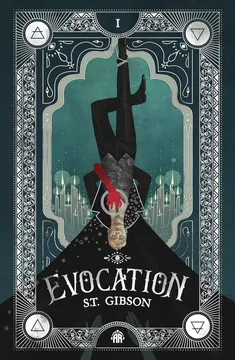


Plot Summary
A Voice in the Séance
At a séance for Miriam, a wealthy widow hoping to contact her dead husband, David Aristarkhov uses his mediumship to reassure her and earn his fee. Then something strikes his mind with a terror unlike any spirit he has encountered and identifies him as the son of Anatoly. David leaves shaken, unable to explain why the name has lodged in him.
Though he has spent years avoiding Rhys McGowan, his former lover and fellow occultist, David reaches out with a question about possession. The message breaks six months of deliberate silence. The disturbance has found a way past David’s practiced composure, and his first instinct is to seek the one person who once understood his magic as well as he did.
David’s professional identity depends on treating contact with the dead as a controlled service: he enters, interprets, and leaves. The intrusion overturns that arrangement by making his own mind the site of an unwanted encounter. His choice to contact Rhys is therefore more than a practical request. It exposes how much their old intimacy remains available beneath the rules of separation. The episode also seeds the story’s central conflict between inherited power and personal agency: David’s abilities, once a source of status, may be the very channel through which something claims him.
The Interrupted Summoning
Rhys McGowan, a meticulous ceremonial sorcerer, is trying to bind a demon when David’s message breaks his concentration. The spirit slips free before Rhys can secure it, leaving him with a failed ritual and an unwelcome reminder of David.
Rhys is married to Moira, a gifted tarot reader and rootworker, and has asked his former lover to keep their relationship strictly limited to Society business. At the Society, however, he and David still spar over magical practice and compete to succeed Wayne as High Priest.
Rhys favors study, discipline, and reform; David trusts his inherited talent and social influence. Rhys refuses to answer David’s question directly, but the failed summoning and the unexplained message unsettle the careful boundary he has tried to maintain.
Rhys’s failed ritual makes interruption itself consequential: a simple phone notification undoes weeks of preparation. His focus on control resembles David’s, though it takes a different form. Rhys builds safeguards and procedures, while David relies on talent and command. Their competing methods are also competing defenses against vulnerability. Rhys refuses to answer because engagement with David threatens a life he has deliberately rebuilt with Moira. Yet the fact that the message can derail his work shows that emotional distance has not made David irrelevant.
An Apology at the Door
After Rhys leaves a message insisting that he still needs space, David researches spontaneous possession and discovers that his symptoms resemble an uninvited spirit entering a host.
He visits Rhys and Moira anyway, admitting he needs help and offering an awkward apology for an earlier accusation that Moira had created a hostile thoughtform. Rhys recalls that the accusation helped trigger a dangerous fight between the couple; Moira accepts neither the apology nor David’s attempt to control the conversation.
She agrees to examine his birth chart, however, and charges him for her work. When their hands brush, Moira unexpectedly senses the force of David’s emotions. The encounter gives her a new reason to take his condition seriously, even as Rhys remains wary of letting him close.
The apology is deliberately incomplete, and Moira’s refusal to grant immediate forgiveness prevents charm from substituting for accountability. Her choice to help anyway reflects a distinction between moral judgment and practical care: she can distrust David while still responding to danger. Their accidental emotional contact unsettles both characters because it bypasses the performances they use to manage one another. David’s cultivated influence works on a room; Moira’s intuition reaches the feeling beneath the performance. The contrast establishes the terms on which their eventual alliance can grow.
The Library’s Price
Rhys delivers Moira’s detailed astrological reading to David at the Society and learns that David believes an unknown presence forced its way into him during a séance. When David later collapses in his father Evgeni’s Beacon Hill house, Rhys and Moira find pages covered in frenzied writing, including a warning that the Devil knows David’s name.
Rhys discovers that the house contains Evgeni’s extensive occult library and offers Rhys unrestricted access if he investigates the attack. David also offers Moira lessons in controlling her unexplained ability to sense the dead.
On the journey home, Moira tells Rhys that she has seen and felt spirits since childhood, though she has tried to suppress the gift. Both spouses agree to consider the bargain, knowing it will draw them back into David’s life.
The bargain joins three forms of need: David’s fear of losing control, Rhys’s hunger for rare texts, and Moira’s desire to understand a gift she has been taught to fear. None can pretend the arrangement is purely professional. Rhys and Moira are drawn by different rewards, while David uses his resources to make refusal harder. Moira’s disclosure to her husband marks an important counterpoint: she accepts help from David only after beginning to practice honesty with Rhys. The library is both a material prize and an instrument of renewed intimacy.
The Name in Evgeni’s Books
Rhys and David resume contact at brunch, and Rhys gradually rejoins the friend group he had avoided since the breakup. At the Beacon Hill house, he searches Evgeni’s records while Moira begins teaching David basic grounding and protection, skills his father never taught him.
Their work is repeatedly interrupted by noises that Rhys cannot hear, though Moira and David can. Rhys finds the name Baelshieth marked in several of Evgeni’s books and notes, suggesting the presence is connected to David’s family history.
Moira also learns that the house carries a hostile spiritual weight. David asks her to test her sensitivity there, and the exercise brings her close to panic. The clues deepen the investigation, but no one yet knows what Baelshieth wants.
The first shared investigation makes the characters’ different ways of knowing visible. Rhys trusts archival repetition, Moira registers atmosphere and emotion, and David recognizes psychic danger but lacks a protective framework. The name Baelshieth matters because it appears across Evgeni’s records, not because any one character can yet explain it. Meanwhile, grounding offers David a practice contrary to his lifelong compulsion to act, work, and dominate. The house’s noises sharpen the gap between Rhys’s scholarship and the perceptions he cannot access.
Evgeni’s Room Opens
During a grounding lesson, a crash sends David and Moira into a bedroom David was forbidden to enter as a child. The room belonged to Evgeni, whose lingering presence has been disturbing the house and worsening Moira’s discomfort.
When the door slams shut and furniture begins flying, David freezes in the terror of his childhood. He tells Moira that Evgeni beat him and once knocked out a tooth. Instead of retreating, Moira challenges the ghost and insists that David’s home no longer belongs to his father.
David finds enough strength to tell Evgeni to leave. The violence abruptly stops, and the door opens. David embraces Moira in gratitude, then pockets a piece of her broken rose quartz, accepting a small gift from someone he once treated as an adversary.
The haunting gives physical form to an abuse that David has kept sealed inside his self-sufficient persona. His paralysis is not a failure of magical skill; it is the bodily return of a child who learned that defiance invited violence. Moira’s intervention matters because she refuses to let his fear dictate what the present can contain. David’s decision to speak against Evgeni is a modest act of self-authorship, not a tidy cure. The broken crystal and the embrace make their cooperation tangible, but the house remains a place where memory has power.
The Hidden Contract
Following Evgeni’s references, Rhys searches the underside of the family desk and uncovers a hidden compartment containing a Russian document dated 1514. David translates enough to recognize the rumored Aristarkhov bargain: a soul exchanged for persuasive power and occult instruction, with the youngest heir named as payment.
The demon is Baelshieth. David insists the document could be forged, but the discovery makes his unexplained illness harder to dismiss. Before the Society’s gala, Wayne privately tells Rhys he has chosen him as successor, though Rhys keeps the news from David.
Rhys’s victory places him closer to the power they have both pursued, while the contract raises a more intimate question: whether David’s talent is truly his own or a legacy with a price attached.
The document converts family legend into evidence without resolving its meaning. Its concealment inside a desk Evgeni treated as a symbol of inheritance suggests that secrecy, too, was part of the legacy. David’s denial is understandable: accepting the contract would mean seeing his greatest advantage as an instrument of exploitation. Rhys’s private appointment creates a parallel inheritance, one earned through scholarship and political work rather than blood. His silence about the news is not yet betrayal in the simple sense, but it reveals how ambition and fear of losing David’s fragile goodwill can make him withhold the truth.
Champagne and Betrayal
David arrives at the Society benefit gala already weakened by severe spirit sickness, determined to appear composed and strengthen his chances of becoming High Priest. He dances with Moira, who tells him that her kindness is freely chosen rather than a strategy to reach Rhys.
Then Wayne publicly names Rhys as his successor. David watches the announcement land, takes champagne despite nearly three years of sobriety, and drinks. Later, in a secluded alcove, David kisses Rhys.
Rhys responds before realizing David is drunk, then breaks away and confronts him. Their argument revives the painful pattern of David’s drinking and Rhys’s role as caretaker. Rhys takes David’s keys and drives him home, while Moira joins them and prevents the confrontation from escalating further.
The gala brings professional disappointment and private longing into the same room. David’s relapse follows a sharp collision between his belief that he deserves the Priesthood and the public confirmation that Rhys has been chosen. The alcohol is not just a plot trigger; it is a familiar means of escaping humiliation and regaining sensation. The kiss briefly offers what David wants, but intoxication makes consent and trust impossible to separate from the old destructive pattern. Rhys’s anger is therefore mixed with grief: he is not rejecting desire so much as refusing to become an enabler again.
A Friend Comes Back
At David’s condo, Rhys searches for alcohol and makes sure he reaches bed safely. Moira stays beside him while he admits that he fears being useless if his powers and work fail. Afterward, Rhys confesses that David kissed him and that he kissed back. Moira does not pretend to have no jealousy, but tells Rhys that honesty and their marriage matter more than denying the feelings between the men.
Days later, Moira visits Lorena Vargas, David’s longtime occult mentor, and asks her to check on him. David is there, helping Lorena with errands because he has finally returned to someone who cared for him in childhood. Over coffee, he apologizes sincerely to Moira and admits that he values her friendship, easing the distance left by the gala.
This section shifts care from crisis management toward chosen relationship. Moira does not erase the harm of David’s intoxicated kiss, but she distinguishes the act from the feelings that surround it and asks Rhys not to conceal either. Her visit to Lorena demonstrates care without permission from Rhys, while David’s apology recognizes Moira as a person he has injured, not merely the spouse he must placate. The growing intimacy is not effortless: it depends on speaking plainly where all three have previously relied on rules, silence, or charm.
The Second-in-Command
As High Priest, Rhys finds that the Society’s disordered records and competing factions are consuming his time and straining his marriage. He appoints Antoni as a trusted ally in the transition, then asks David to become his second-in-command.
David negotiates authority over scrying and the Society’s ritual work; Rhys grants it while reserving the right to protect David if he is too ill to serve. In the office, Rhys kisses David, but David asks what he will receive in return, assuming the gesture is political leverage.
Rhys secures David’s support among the older members, and the two seal their agreement. At home, Rhys tells Moira about the kiss. She sets terms for exploring nonmonogamy: honest communication, therapy for Rhys, and no treating her as a go-between.
The appointment makes intimacy inseparable from institutional power. Rhys has the authority to offer David a role, and David has political value that Rhys needs, so neither can pretend their relationship exists outside negotiation. David’s question about payment protects him from mistaking desire for security; Rhys’s kiss, however, makes clear that the arrangement carries more than political intent. Moira responds not with blanket permission or prohibition but with explicit conditions. Her boundaries transform an ambiguous triangle into a relationship structure that must be discussed rather than assumed.
The Thirtieth Birthday
David tries to resume prosecuting cases, but his condition worsens until pain and a vision interrupt his closing argument in court. The episode shows him a scene of an old bargain being sealed with blood and leaves him unable to speak smoothly or finish his work.
He calls Rhys, who takes him to The Black Swan, the Boston nightclub owned by David’s older half-sister, Leda. Leda uses chaos magic and knows more of the family legend than David does. She confirms a deadline omitted from his understanding of the curse: the demon is expected to collect when the Aristarkhov heir turns thirty.
David’s birthday is only days away. Though Leda doubts the legend’s reliability, the new timeline changes the investigation from a troubling illness into a race against an approaching date.
David’s courtroom collapse punctures the identity he has built around being the person who never loses control in public. The vision links the present illness to an ancestral act, while the inability to speak threatens his most practiced instrument: persuasion. Leda introduces a different magical temperament, one that can entertain several explanations without prematurely choosing among them. Her uncertainty is useful but not comforting. The birthday deadline forces David and his allies to act under conditions where certainty is unavailable and time itself has become an antagonist.
The Heir’s Inheritance
David returns with Rhys and Moira to Lorena, who examines him and finds that the sickness is bound to old blood magic, not a routine curse she can remove. She explains the loophole in the family bargain: the youngest Aristarkhov heir could pass the debt to another generation by fathering sons before thirty.
David realizes that Evgeni likely repeated the pattern, and that his father’s rejection of Leda as heir may have been part of the same scheme. He is furious that he was raised as a useful prodigy while being groomed to bear a cost he never chose. Lorena urges him to fight rather than surrender. David leaves with Rhys and Moira, accepting their offer of a room, as the three begin frantic, unsuccessful attempts to break the curse.
The revelation reframes the Aristarkhov inheritance as a system that preserves wealth and power by transferring danger onto children. David’s talent no longer looks like a simple gift; it may be evidence of a family bargain designed to make him valuable before making him expendable. His anger at Evgeni is also anger at the role he has been assigned without consent. Lorena’s insistence on choice does not promise rescue. It restores a narrower but crucial freedom: David can decide whether to enact the fatal logic his family has repeated.
Blood for Blood
At the McGowan-Delacroix home, failed rituals leave David increasingly weak, and Rhys works through exhaustion rather than abandon him. On the eve of David’s thirtieth birthday, David disappears. Rhys and Moira find him feverish and hidden in his childhood bedroom at Beacon Hill. Rhys brings him to the library for one last rite drawn from a text tied to the bargain’s era.
The exorcism does not work, and David begins to convulse. Rhys sees no time for another plan. He uses Evgeni’s ceremonial dagger to cut David’s palm and his own, then joins their blood and declares himself adopted into the Aristarkhov line, with Moira witnessing the act. The attempt shifts the demon’s claim from David to Rhys, but Rhys collapses under its force.
Rhys’s choice is both loving and dangerously consistent with his character: when ordinary limits fail, he wagers his own body to secure an outcome. The blood adoption uses the family’s defining mechanism, inheritance, against the family’s design. It is an act of chosen kinship, but not a clean escape, since the demon’s attention moves rather than vanishes. Moira’s role as witness makes the decision relational instead of private. She cannot prevent Rhys from risking himself, but her presence binds the sacrifice to the people it is meant to protect.
The Demon Changes Hosts
David wakes clearheaded, then understands that Rhys has taken the demon’s place as the threatened heir. Moira explains the blood adoption while Rhys suffers inside the ritual circle.
David uses the family’s own blood and his mediumship to command Baelshieth out of Rhys, insisting that Rhys belongs to their chosen family rather than to Evgeni’s line. Moira feeds David strength through their psychic connection, though the effort nearly drains her. The demon finally leaves Rhys, who survives but collapses from the ordeal.
David’s illness lifts, and his psychic gifts remain, though weaker than before. They have defeated the immediate possession, but the danger is not fully settled: Rhys now carries the inherited claim, and the three know another solution will be needed.
David’s decisive act is not a rejection of his inheritance but a reclamation of it. He uses the bloodline’s power to define kinship differently, separating Rhys from the abusive patriarch whose legacy has shaped them both. Moira’s energy-sharing makes the climax collective: no single protagonist can complete the work alone. Yet the demon’s departure is not equivalent to the curse’s permanent destruction. The novel preserves the cost of Rhys’s sacrifice, refusing an easy closure in which love magically erases the structure that endangered them.
A New Kind of Family
After recovering, Rhys completes his Society ascension, and David attends in support rather than as a rival. David gives him expensive red-soled loafers, then watches Rhys lead a ceremony that opens the Society to allies beyond its old inner circle.
Later, David hosts the celebration at the Beacon Hill house, now cleaned and reclaimed from Evgeni’s oppressive presence. Rhys finds him on the stairs and tells him he wants David close as family, then asks him to be his partner. David accepts with a kiss.
Moira joins them, glad that they have spoken honestly and ready to continue their magical training and investigation together. They leave the nature of their three-way bond open to further negotiation, and agree that the unresolved curse will require their continued cooperation.
The ending resolves David’s immediate isolation and Rhys’s leadership struggle without pretending that their larger danger has disappeared. The ascension ceremony gives Rhys the public authority he has pursued, while David’s gift signals admiration without competing for the same title. Reclaiming the Beacon Hill house turns a site of abuse into a place for chosen gathering, although its history cannot simply be erased. Their emerging family depends on consent, ongoing conversation, and shared work. Love here is not a final cure; it is the reason they agree to face the next problem together.
Analysis
Evocation makes inheritance a supernatural mechanism and a psychological condition. David has been told, implicitly and explicitly, that his value lies in his exceptional gifts. When the family contract appears, that belief becomes horrifyingly literal: his abilities may be tied to a bargain made before his birth, and his father may have treated him as an asset prepared for collection. The curse therefore does not simply threaten David’s life. It gives magical form to the way abuse can make a person feel owned by the past. The novel sets three kinds of discipline against that inheritance. David uses performance and work to keep control; Rhys uses scholarship, ritual, and institutional ambition; Moira uses care, intuition, and inherited community practices. Each approach has power and limits. David’s talent cannot protect him without grounding. Rhys’s research cannot save David without risking Rhys himself. Moira’s compassion is not passive, because she names boundaries, confronts Evgeni’s ghost, and refuses to let either man dictate her choices. The climax works only when their distinct abilities become interdependent.
That interdependence also reshapes the romance. Rhys and David’s attraction is inseparable from a history of addiction, caretaking, control, and separation, so a kiss cannot by itself repair them. Moira insists that desire be accompanied by honesty and clear agreements. Her position changes the familiar triangle from a contest for one person’s attention into a negotiated question of how affection can be shared without erasing anyone’s needs. The ending offers commitment, not certainty: Baelshieth is driven from Rhys, but the curse is not conclusively destroyed. The characters’ chosen family is powerful precisely because it does not pretend danger has vanished. They choose to keep working, telling the truth, and making room for one another.
Review Summary
Reviews for Evocation are polarizing, averaging 3.58/5. Fans praise the atmospheric dark academia setting, occult elements, and complex character dynamics between David, Rhys, and Moira, with many highlighting Gibson's vivid prose and authentic portrayal of astrology and tarot. Critics, however, take issue with the polyamorous relationship feeling underdeveloped or misrepresented, Moira's characterization leaning into stereotypes, the demon possession plot feeling secondary, and Rhys being perceived as controlling or abusive toward David.
People Also Read
Characters
David Aristarkhov
Heir to a haunted giftDavid is a wealthy Boston prosecutor and sought-after medium whose skill at influencing people has been cultivated alongside his occult talent. He is ambitious, polished, and most comfortable when work gives him measurable proof of his worth. Beneath that poise lies a man shaped by an abusive father, a difficult history with alcohol, and a fear that he matters only when he is useful. His former relationship with Rhys left them bound by attraction, rivalry, and old injuries; his growing friendship with Rhys’s wife, Moira, asks him to practice care without control. David’s central struggle is learning to accept help and distinguish his own choices from the powers and expectations inherited from his family.
Rhys McGowan
Scholar of commanded spiritsRhys is a ceremonial sorcerer, medievalist, and Society reformer who has built his expertise through study rather than innate psychic gifts. His discipline conceals a formidable appetite for knowledge, status, and influence. Raised in a working-class Irish Catholic family, he is alert to the barriers that old institutions place around power, yet he can also become controlling when frightened. His marriage to Moira gives him a loving home and a partner who insists on honesty; his past with David remains emotionally charged and difficult to manage. Rhys’s ambition is real, not merely a disguise, but he must learn that leadership cannot mean carrying every burden alone or deciding what others should want.
Moira Delacroix
Rootworker and spirit-seerMoira is a tarot reader, astrologer, and rootworker whose warmth makes clients feel safe without diminishing her sharp judgment. Raised in a family that passed down practical magic and community care, she has learned to value goodness, generosity, and emotional attentiveness. Her intuition lets her sense feelings and spiritual presences, a capacity she has tried to keep at a distance. Moira loves Rhys but refuses to become an accessory to his ambition or a mediator between him and David. Her curiosity, pride, and willingness to set clear boundaries complicate the gentle image others place on her. She is drawn to discovering what her own power can do and to shaping relationships through candor rather than self-denial.
Leda Aristarkhov
Chaos magician sisterDavid’s older half-sister, Leda owns a Boston nightclub and practices an improvisational form of chaos magic. She is charismatic, irreverent, and comfortable with unconventional relationships and spiritual methods. Her years apart from David have left them affectionate but not practiced at asking each other for support. Leda’s willingness to entertain contradictory possibilities offers a counterweight to Rhys’s formalism and David’s certainty. She cares deeply about her brother, even when frustration makes that care blunt.
Lorena Vargas
Botanica’s occult mentorLorena is a respected Boston occultist and botanica owner who helped guide David when he was young. She combines spiritual authority with a practical understanding of remedies, ritual, and community. Her affection for David is tempered by impatience with his habit of isolating himself until a problem becomes urgent. She offers knowledge without claiming that every inherited harm can be quickly repaired.
Evgeni Aristarkhov
Abusive occult patriarchEvgeni is David’s father, a wealthy occultist whose formidable learning and influence shaped the Aristarkhov household. He treated magic as a means of command and expected his children to serve the family’s legacy. His presence persists in David’s memories and in the atmosphere of the Beacon Hill home. Evgeni represents a model of power built on control, secrecy, and the belief that children are extensions of their parents.
Wayne
Outgoing Society priestWayne leads the Society through a period of stagnation and declining membership. A longtime mentor to David, he values tradition and recognizes both David’s natural talent and Rhys’s discipline. His decision about succession reflects his awareness that the Society needs a different kind of leadership, even as he leaves his successor with a disorderly institution.
Antoni Bresciani
Ambitious young sorcererAntoni is a talented, energetic Society member who is eager to advance his practice and build a place for himself in the organization. He admires Rhys and becomes a dependable ally during the leadership transition. His ambition is visible, but so is his capacity for loyalty and friendship.
Nathan Vo
Society’s genial connectorNathan is a cheerful venture capitalist and Society member whose warmth helps keep the younger men connected. He often plays mediator when David and Rhys clash, and his easy sociability contrasts with their guardedness. He is married to Kitty and values the friendships he has gathered around him.
Kitty Vo
Geomancer behind the scenesKitty is an accomplished designer and geomancer whose insight gives her influence in Boston’s occult community, despite the Society’s exclusion of women. She is Nathan’s wife and Moira’s friend. Practical, politically astute, and ambitious, she sees institutional access as a way to expand her magical knowledge and influence.
Cameron Casillas
Theology-minded ritualistCameron is a theology professor and Society member who approaches magic through psychological and ethical inquiry. Thoughtful and restrained, he often watches the other men’s rivalries rather than joining them. His scholarly habits make him a useful companion in debates about occult texts and ritual practice.
Whitney
David’s vigilant co-counselWhitney works alongside David in court and notices when his physical distress threatens his performance. She urges him to pause rather than press through his symptoms. Her concern exposes the cost of David’s insistence on finishing every task himself.
Plot Devices
The Aristarkhov contract
Inheritance with a priceAn old document records a bargain between an Aristarkhov ancestor and Baelshieth, trading a soul for occult instruction and persuasive power. Its terms become dangerous to later generations because the family has preserved a method of passing the claim to another heir. The contract turns David’s apparent gifts into a question of ownership and choice. Rhys and Moira investigate its traces through Evgeni’s library, while its inherited logic eventually gives Rhys a way to redirect the demon’s attention. The immediate possession is defeated, but the underlying threat remains unresolved.
Psychic grounding
Keeping the self presentMoira teaches David to attend to his body, release excess energy, and build spiritual protection instead of relying on force of will. The lessons challenge the way he has practiced mediumship since childhood, with little preparation and little rest. Grounding becomes a practical defense against psychic overwhelm and a means of helping David resist Baelshieth during the final struggle. The method also carries emotional meaning: David must learn to remain present with fear rather than overpower it or flee into work.
The Beacon Hill house
A home shaped by abuseDavid’s ancestral brownstone contains Evgeni’s occult library, the family records, and the memories of David’s childhood. Its hostile atmosphere affects Moira strongly, and its lingering ghost turns the house into more than a research location. The rooms embody the power Evgeni exercised over his son, while the library gives Rhys the evidence needed to connect David’s illness to the family bargain. When Moira and David confront the haunting, the house begins to shift from a site of inherited fear toward a place the living can reclaim.
Blood adoption
Chosen kinship redirects dangerFaced with David’s imminent collapse, Rhys uses a ceremonial dagger to join his blood to David’s and declare himself part of the Aristarkhov line. The act applies the family bargain’s own logic to create a new kinship bond, moving the immediate demonic threat from David to Rhys. It buys David time but places Rhys in danger instead. David later uses his own blood and psychic power, with Moira’s help, to expel Baelshieth from Rhys. The ritual establishes chosen family as a force that can challenge inherited obligation, though it does not conclusively end the curse.
The Society’s succession
Power under public scrutinyThe occult Society’s High Priest position gives David and Rhys a continuing source of rivalry and a measure of public authority. David expects his talent, family standing, and political ease to make him the natural choice; Rhys seeks reform and has earned support through study and advocacy. Wayne’s choice of Rhys forces both men to confront what they want from power and from each other. As High Priest, Rhys appoints David as his second-in-command, turning competition into a working alliance while keeping their personal history close to institutional decisions.
Download PDF
Download EPUB
.epub digital book format is ideal for reading ebooks on phones, tablets, and e-readers.








