

Plot Summary
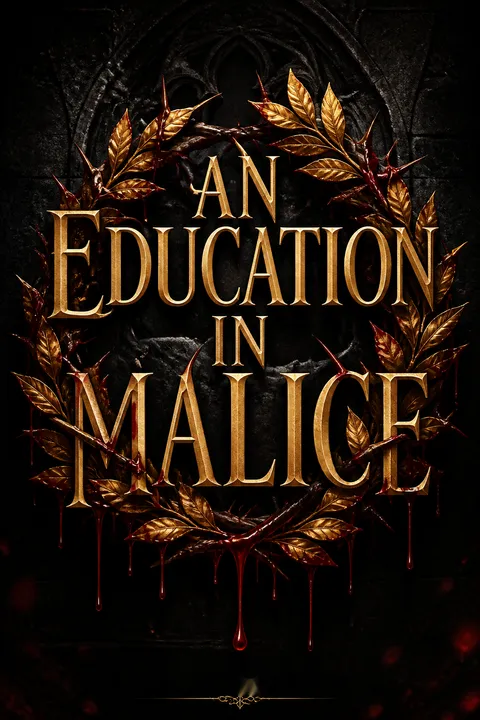
Laurels in the Fire
Laura Sheridan arrives at Saint Perpetua's from Mississippi carrying her father's hopes for her writing and a private ambition to become a priest. Her senior mentor, Maisy Cohen, welcomes her and introduces her to Elenore Robinson, a sharp, stylish student in Laura's writing cohort. At the college's opening bonfire, the seniors crown freshmen with laurel wreaths.
One of them, the Austrian Carmilla Karnstein, places a wreath on Laura and leaves her flushed with an attraction she cannot explain. Maisy identifies Carmilla as a brilliant, difficult senior. Laura enters college hoping to make a life through poetry; before classes begin, one particular classmate has already become the center of her attention.
The college offers Laura a structure she actively wants: schedules, mentors, religious ritual, and a recognized path toward intellectual life. But the bonfire's ceremonial welcome also makes desire part of her education before she has language for it. Laura's immediate idealization of Carmilla exposes a familiar psychological strategy: she turns a stranger into an image that can safely hold feelings she has kept private. The wreath marks her entrance into the institution, while her fixation hints that belonging here will depend less on fitting in than on risking exposure.
The Seminar's New Rival
In the advanced poetry seminar, Laura meets Professor Evelyn De Lafontaine, whose command of literature makes the room feel like a stage. Carmilla arrives late, recites a poem, and watches as De Lafontaine praises Laura's own work before the class.
Afterward, Carmilla questions whether Laura's writing comes from genuine experience, turning Laura's crush into an antagonism neither can ignore. Laura answers by pointing out that De Lafontaine has judged her differently, and sees Carmilla's composure crack.
The exchange gives them a private measure of each other: Carmilla is threatened by the newcomer, while Laura discovers she enjoys being able to unsettle her. Their rivalry begins as a contest for artistic authority and the professor's approval.
The first wound is delivered as criticism, but its force comes from the audience. Carmilla has built her standing around being singular, and De Lafontaine's praise of Laura makes that standing feel suddenly conditional. Laura's reply matters because she does not retreat into politeness; she uses the professor's approval as leverage and experiences the pleasure of having power over Carmilla. Their competition is therefore intimate from its beginning. Poetry gives them a respectable public arena in which to stage envy, attraction, and the fear of being replaced.
Blood Behind the Lesson
Carmilla has come from Austria to study with De Lafontaine, whom she first approached as a twenty-year-old outsider determined to earn a place in the professor's orbit. Their bond includes private poetry lessons and bloodletting, which Carmilla experiences as both intimacy and proof that she is indispensable.
When De Lafontaine withholds details of her research, Carmilla steals a note from her planner and breaks into the library after hours. The books she locates concern the college's history, its original architect, and its earliest plans.
In a margin, De Lafontaine has left a clue pointing beneath the school. Carmilla hopes the discovery will restore her mentor's confidence, but the investigation shows how closely her hunger for knowledge is tied to her fear of abandonment.
Carmilla treats access as a form of love. De Lafontaine's attention, praise, and willingness to share blood make her feel chosen, so withheld information registers not as a boundary but as rejection. Her library break-in is an attempt to repair closeness through competence: if she can uncover the professor's secret, she can make herself necessary again. The clue beneath the college gives this emotional dependence a physical destination. Private longing and institutional history begin to converge, while Carmilla's inability to distinguish intimacy from entitlement makes her especially vulnerable to De Lafontaine's influence.
The Teacher's Teeth
De Lafontaine invites Laura into her small private poetry cohort, placing her beside Carmilla in the professor's apartment and sharpening their competition. Later, after Laura and Carmilla race through the rain and arrive laughing together, De Lafontaine punishes them for disrupting class. Laura lingers outside and overhears the professor accusing Carmilla of being distracted by her.
Through the partly open door, Laura sees De Lafontaine's teeth lengthen as she bites Carmilla's neck. In her office, De Lafontaine confirms that she is a vampire, and Carmilla admits she has hidden the truth from everyone. Laura could leave, but instead agrees to protect them and continue her studies. The secret turns her fascination into a deliberate choice.
The revelation does more than introduce the supernatural; it exposes the coercive structure that has been present in the classroom all along. De Lafontaine controls grades, access, praise, and Carmilla's bodily safety, while presenting that control as education. Laura recognizes the danger but also feels chosen by the professor, a recognition powerful enough to compete with fear. Her consent is real, yet it is shaped by a system that gives her little information and offers exceptional belonging in exchange for silence. The scene makes secrecy both a bond and a means of control.
A Kiss in Hell
At the dormitory's Halloween party, Laura dresses as an angel and Carmilla as the diarist Anaïs Nin. After Carmilla dances and kisses a male guest, Laura follows her outside and confronts her jealousy with an unexpected show of physical confidence.
The confrontation becomes their first kiss, fierce enough to make their hostility feel like another form of courtship. De Lafontaine interrupts them before either can decide what the encounter means. Rather than send them back to the party, she takes both students through Seward Hall's basement and opens a concealed trapdoor.
Carmilla recognizes the professor's long-awaited research site as they descend into a stone chamber. The professor has turned their private desire into a threshold, bringing them to a place neither girl can safely pretend is only academic.
Laura's jealousy becomes the first occasion on which she acts without translating herself into a dutiful student. Carmilla responds to that force because it gives shape to desires she has hidden even from herself. Their kiss is mutual, but the professor's interruption restores the unequal triangle: De Lafontaine can redirect the girls' intimacy toward her own purposes. The movement from crowded party to concealed chamber also shifts the story's register. What began as an erotic rivalry is now physically entangled with an older, more dangerous history that De Lafontaine controls.
The Coffin Beneath Seward
In the chamber, De Lafontaine reveals a stone coffin containing her sleeping maker, a vampire called Isis. She cuts Carmilla's palm and feeds the blood to the corpse, hoping to wake the woman she has spent years searching for. Isis revives violently, slashes Carmilla's throat, and escapes into the tunnels.
As Carmilla bleeds out, De Lafontaine gives her own vampire blood to revive her, but the newly changed Carmilla is starving and cannot feed on her maker. Laura consents to offer her blood. Carmilla drinks until De Lafontaine pulls her away, and the three carry the weakened fledgling to the professor's apartment. Carmilla survives, but she now shares the condition that has shaped De Lafontaine's life.
De Lafontaine's attempt to restore an old love makes Carmilla's body the instrument of a decision she does not fully understand. The professor's tenderness and her exploitation are inseparable here: she gives Carmilla a second life only after exposing her to lethal danger. Laura's willingness to feed Carmilla establishes a different kind of bond, grounded in consent but born under emergency pressure. Transformation converts the novel's abstract fascination with permanence into a bodily fact. Carmilla's new life begins not with mastery, but with dependence, pain, and an appetite she cannot yet control.
The First Night's Price
After three days confined to De Lafontaine's apartment, Carmilla sees Laura again when Laura sneaks outside to bring her out. They walk to a secluded pond, undress, and swim in the cold. Carmilla admits her desire for Laura and asks to drink from her; Laura agrees, and the bite becomes their first intimate feeding.
A scream interrupts them. On the quad, they find a French exchange student with her throat torn open and her skull crushed. De Lafontaine arrives, hides the pair from the gathering students, and tells them the killer is Isis.
She explains that she revived her former lover after years of searching, and that the blood she used to wake Isis came from Carmilla. Laura and Carmilla now know that the professor's love has endangered the whole college.
The pond scene makes blood exchange at once erotic, intimate, and dangerous, but the murdered student destroys any fantasy that private consent can contain the consequences. Laura and Carmilla are not merely lovers or accomplices; their secret has made them witnesses to a threat that can reach anyone on campus. De Lafontaine's confession supplies the history behind the crisis, yet it also reveals her self-deception: she mistook reviving Isis for an act of love without asking whether Isis wanted to return. The first death makes the cost of that assumption public.
Names on the Bell
Carmilla brings Laura into an illicit overnight gathering of senior students in the old bell tower. The girls climb through the dormitory ceiling, carve their names into the bell, and drink and dance while the rest of the college sleeps.
As dawn approaches, Carmilla admits that eternal youth feels less like a gift now that she understands everyone else will keep growing and leaving. Laura listens without trying to dismiss the fear. Carmilla kisses her with unusual gentleness, and they agree to become a couple.
The moment gives their relationship a form beyond rivalry and feeding, even as Carmilla's fear of permanence complicates their promise. Laura leaves the tower believing they have finally chosen each other rather than merely collided.
The bell offers a communal kind of permanence: earlier students have left their names, and Laura can imagine returning to add hers in a later year. Carmilla cannot share that ordinary future because her body has stopped in time. Her confession reframes immortality as a social loss, not simply an escape from death. Laura's response is not a cure for that fear, but a commitment to meet it honestly. Their relationship begins with tenderness precisely when Carmilla admits that eternal life has made her uncertain about what she wants.
Magdalena's Open House
De Lafontaine takes Carmilla and Laura to a Boston gathering hosted by Magdalena, a socially powerful vampire. Laura sees vampires feeding and lovers exploring desire openly, while learning that humans can serve as companions or long-term thralls.
When Carmilla joins a sexual encounter with another couple, Laura's jealousy turns into a clear demand that Carmilla pursue pleasure on Laura's terms. Carmilla obeys, and the two make love in the crowded house, choosing each other amid the spectacle.
Their relationship becomes physical and explicit, but De Lafontaine refuses to let Laura accompany Carmilla back to her apartment afterward. Laura walks home alone, newly attached to Carmilla and newly aware that De Lafontaine can still decide who is allowed close.
Magdalena's gathering functions as a social world where appetite is not automatically concealed or condemned. Laura's response is not simply to imitate what she sees; she experiments with authority, then discovers that directing Carmilla's desire can be both pleasurable and frightening. The encounter gives their relationship a vivid mutuality, but the professor's final separation of them reasserts the old hierarchy. Their intimacy is real, yet it exists inside a structure De Lafontaine still controls. The scene refuses to treat sexual freedom as freedom from power.
Across the Country
Hurt by De Lafontaine's dismissal and unsure whether Carmilla wants a committed relationship, Laura accepts Elenore's invitation to spend Thanksgiving in San Francisco. Elenore gives her a glimpse of a warmer, more ordinary intimacy through record shops, political conversations, and the welcome of her family.
Then Carmilla calls, anxious that Laura left without telling her and asking for a future together. Laura promises she wants that too. Back at Saint Perpetua's, Carmilla studies vampire history with De Lafontaine, who teaches her to hunt; Carmilla's first attempt to feed from a townie leaves her longing for Laura instead.
When Laura returns, they reconcile in De Lafontaine's bedroom, and Carmilla drinks from her. De Lafontaine finds blood on the sheets and understands their bond has deepened.
The trip gives Laura a brief counter-image to the sealed intimacy of the college's vampire circle. Elenore's family offers care without making Laura prove artistic brilliance or surrender a secret, and that ordinary welcome helps her see what she might lose by remaining entangled with Carmilla. Carmilla's call is a reversal: the girl who once controlled the terms of attention now admits fear of abandonment. Their reunion is loving, but blood on the sheets makes that love legible to De Lafontaine as a new claim on Carmilla.
Edith's Empty Room
After classes resume, Laura and Carmilla secretly enter the catacombs beneath Seward Hall to learn what De Lafontaine has concealed. They overhear Isis demanding another young woman as proof of De Lafontaine's devotion, while the professor resists but does not end the arrangement. The discovery confirms that the danger is ongoing, not a single violent outburst.
Soon after, Elenore tells De Lafontaine that Edith, a student from Carmilla's circle, has been missing for days. The professor dismisses the concern as one of Edith's trips, and Elenore leaves unconvinced. Carmilla and Laura recognize the pattern but still lack a way to reach Isis or protect the missing girl. Their private knowledge has become a burden with a deadline.
The catacombs reveal that De Lafontaine's indecision is not passive: each delay leaves other people exposed to Isis. Her attachment to her maker turns a private emotional conflict into a public ethical failure. Laura and Carmilla's covert investigation gives them agency, but not yet enough power to intervene. Edith's disappearance makes the threat immediate and personal, particularly because she belongs to the same student world that has offered Carmilla companionship. The section's central pressure is the gap between knowing what is wrong and being willing to risk everything to stop it.
The Christmas Threat
A week after Edith disappears, Miranda finds her dead in her locked bathroom, and soon withdraws from college, shattered by the discovery. De Lafontaine grows more severe as finals approach, then briefly softens and invites Laura to spend Christmas with her and Carmilla.
The fragile holiday peace ends when a note from Isis threatens that the killings will continue until De Lafontaine returns to her. On New Year's Day, police find a third student dead by the river.
Unable to carry the guilt alone, Laura goes to confession; afterward, De Lafontaine admits Isis wants Carmilla sacrificed as proof of loyalty. Laura proposes luring Isis above ground, where she can be confronted outside the labyrinth of tunnels. De Lafontaine agrees to hear her plan.
The murders expose how institutional explanations can function as cover for violence. Edith's locked room and the third body cannot be absorbed into the college's usual routines, yet De Lafontaine's authority keeps delaying an open response. Laura's confession is psychologically significant because she seeks moral clarity from a religious structure even while protecting a supernatural secret. Her proposed plan marks a shift from witness to strategist. She no longer asks only whether De Lafontaine will act; she begins creating a situation in which inaction will have immediate consequences.
The Greenhouse Reversal
Laura's plan brings Carmilla and De Lafontaine to the greenhouse, with Laura serving as the messenger who draws Isis out of the tunnels. Isis seizes Laura and uses her as leverage, then releases her when De Lafontaine insists the conflict is between them. Isis demands Carmilla's life as proof that De Lafontaine still belongs to her.
De Lafontaine appears to comply, dragging Carmilla into the greenhouse and raising her sickle. Instead, she slashes Isis's throat and then decapitates her. Laura returns with a knife, but the fight is already over. She and De Lafontaine comfort the terrified Carmilla, then bury Isis before dawn. The professor has ended the killings by destroying the bond she spent decades trying to restore.
The climax is built around a betrayal that changes meaning in the instant it happens. De Lafontaine's apparent surrender repeats the coercive pattern Carmilla has lived under, making the moment feel like the final proof that she is disposable. The sickle then reverses the power relation: De Lafontaine uses the tool associated with her greenhouse's cultivated beauty to end Isis's control. Killing Isis protects Carmilla and the students, but it does not absolve the professor of the earlier choices that enabled the deaths. The act is both rescue and grief, not a clean moral reset.
A Choice at Dawn
After the burial, Laura and Carmilla help De Lafontaine through the night, reading poetry until she falls asleep. The professor leaves Saint Perpetua's in spring, admitting that fear of losing Carmilla had led her to repeat the control she learned from Isis.
Carmilla graduates and receives an invitation from Magdalena to work with her in Europe, with Laura welcome to come along. Three weeks later, in Magdalena's Boston home, Laura is offered a choice: remain human or drink vampire blood and enter the undying life.
Magdalena leaves the decision to her, unlike the adults who have repeatedly made choices for Laura and Carmilla. The story ends before Laura drinks. She faces the cup with a new sense of agency, uncertain which life she will choose.
The ending does not resolve Laura's future because its decisive question is no longer whether she is brave enough to enter a forbidden world. It is whether she can choose that world without being chosen, pressured, or claimed by someone else's hunger. De Lafontaine's departure acknowledges the damage caused by confusing love with possession, while Magdalena offers a model of authority that permits refusal. Laura's human life has never meant passivity, and immortality would not automatically mean freedom. The suspended choice makes autonomy, rather than romance or supernatural power, the novel's final test.
Analysis
An Education in Malice treats education as an intimate transfer of power. De Lafontaine teaches poetry by demanding exposure, then uses praise, exclusion, and secrecy to make her students compete for access to her. This arrangement is especially potent for Laura and Carmilla because both have learned to make artistic excellence a way of securing attachment. Their rivalry is not simply overcome by romance; it becomes the route through which each discovers desires that institutional respectability has taught her to conceal.
The vampire mythology makes those dynamics bodily. Feeding can be tenderness, pleasure, nourishment, and domination at once. The novel therefore resists the easy division between a human world of ordinary ethics and a supernatural world of appetite. De Lafontaine's choices have human consequences, while her apparent sophistication does not prevent her from repeating the coercive patterns that harmed her. Her love for Isis explains her delay but cannot excuse the students who die while she hesitates.
Laura's religious life adds a second language for judging desire. Confession gives her a ritual for examining guilt, but neither the church nor the college can make the moral decision for her. By the end, she is offered immortality without being told what to choose. That unresolved cup is the clearest measure of her development: she has moved from hoping to be selected by a teacher or beloved toward claiming the right to decide what kind of life she wants. The book's central question is not whether love can survive forever. It is whether love can remain love when it treats another person's freedom as negotiable.
Review Summary
Reviews for An Education in Malice are mixed, averaging 3.48/5. Praise centers on Gibson's lush, atmospheric prose, gothic dark academia setting, and compelling sapphic vampire premise rooted in the classic Carmilla. Many readers adored the rivals-to-lovers dynamic between Laura and Carmilla. Common criticisms include slow pacing, shallow characterization, excessive telling rather than showing, and an underdeveloped plot. Readers familiar with Gibson's A Dowry of Blood frequently expressed disappointment, having expected similar emotional depth. The professor-student power dynamic received divided reactions regarding its thematic execution.
People Also Read







Characters
Laura Sheridan
The searching poetLaura is a Mississippi freshman whose father encourages her gift for writing and whose religious seriousness gives her a strong inward life. She is shy in company, precise in her studies, and more comfortable shaping difficult feelings into poems than speaking them aloud. Her attraction to Carmilla unsettles the dutiful identity she has built, while the college's secret world tests her ability to distinguish devotion from surrender. Laura is not simply innocent: she has forceful desires and a curiosity about power that she has learned to keep private. Her central need is to be recognized without having to become someone else's possession.
Carmilla Karnstein
The brilliant rivalCarmilla is an Austrian student, a gifted poet, and the favored pupil of Professor De Lafontaine. She carries herself with theatrical confidence, but beneath the vanity is a young woman intensely afraid of being abandoned. She seeks approval through talent and loyalty, then resents anyone who threatens her exclusive place. Her attraction to Laura unsettles the careful hierarchy she has relied on, drawing out both her cruelty and her capacity for tenderness. Carmilla's appetite for art, danger, and control reflects a deeper wish to feel chosen without having to beg for it.
Evelyn De Lafontaine
The seductive professorEvelyn De Lafontaine is a formidable poetry professor whose wit, erudition, and attention make students hungry for her approval. She treats teaching as an intense personal apprenticeship, pushing her pupils while keeping control of what they know and when they receive her affection. Her life is shaped by an old love and by a fear of being left alone, which she disguises as authority and artistic rigor. Evelyn can be generous, perceptive, and genuinely protective, yet her care is tangled with possession. She understands poetry's power to preserve memory, but struggles to accept that love cannot make another person stay.
Elenore Robinson
Laura's clear-eyed friendElenore is a stylish, candid student in Laura's writing cohort who hopes to become an investigative journalist. She notices Laura's attraction to Carmilla before Laura is ready to name it and responds without shaming her. By inviting Laura to San Francisco and welcoming her into her family, Elenore offers a form of friendship that does not demand secrecy or artistic competition. Her warmth has edges: she can recognize Carmilla's evasions and warns Laura not to confuse concern with self-endangerment.
Maisy Cohen
The generous seniorMaisy is Laura's athletic senior sister, assigned to help her adjust to Saint Perpetua's. She is outgoing, practical, and quick to pull a newcomer into college life. Her easy warmth contrasts with the intense rivalries of De Lafontaine's seminar, and she offers Laura an early model of uncomplicated friendship. Maisy also reads Carmilla as lonelier than her reputation suggests, a perception that helps Laura consider the person beneath the performance.
Magdalena
The society hostessMagdalena is a gracious, politically astute vampire who hosts gatherings for vampires and their human companions. Her house is governed by rules of privacy and consent, even as it permits forms of pleasure unfamiliar to Laura. She studies people with a hostess's warmth and a strategist's precision, and her history with De Lafontaine gives her a perspective on love's costs. Magdalena represents an alternative to Evelyn's closed, possessive mentorship: she offers guidance while leaving the choice to the person receiving it.
Isis
The vanished elderIsis is an enigmatic figure from De Lafontaine's past, associated with a profound old attachment and the hidden history beneath Saint Perpetua's. Her return brings the college's carefully maintained world into contact with a harsher, older order. Isis understands intimacy as a claim that can be tested and enforced, and her presence exposes what De Lafontaine has spent decades refusing to accept about their relationship.
Fabrizio
Magdalena's human stewardFabrizio is Magdalena's courteous gatekeeper and trusted human companion. He manages the practical details of her household and treats guests with calm efficiency, even amid the gathering's startling displays of appetite. His continued humanity shows that proximity to vampires does not require surrendering one's mortal life. He is a steady presence in a society otherwise organized around shifting power and desire.
Laura's father
The distant encouragerLaura's father is a loving Mississippi parent who recognizes her talent for writing and pushes her toward the education he believes she needs. His affection and financial help give Laura a secure point of reference as she enters a strange college world. Though he remains far from the supernatural events, his trust in her independence helps make her new life possible.
Edith
The missing classmateEdith is a senior student and classically trained dancer who belongs to Carmilla's wider circle. Her disciplined habits and commitment to dance make her disappearance alarming to friends who know her routines. She is one of the students whose ordinary campus life brings the growing danger close to the people Laura and Carmilla know.
Miranda
Edith's worried friendMiranda is a quiet student in Laura's astronomy class and part of Carmilla's senior circle. She is more animated during late-night adventures than in lectures, and her concern for Edith makes her willing to challenge the college's authority. Miranda's friendship shows the loyalties and vulnerabilities that exist beyond Laura and Carmilla's intense central bond.
Father Frise
Laura's confessorFather Frise is the patient Episcopal priest who hears Laura's confessions. He offers her a familiar religious structure, though his views are more traditional than Laura's hopes for women's ordination. His presence connects Laura's spiritual habits to her attempts to understand desire, guilt, and responsibility.
Plot Devices
De Lafontaine's poetry seminar
Art as a power testThe seminar gives the story a public arena for Laura and Carmilla's rivalry and a private mechanism for De Lafontaine to shape her students. Recitations and critiques reward brilliance but also expose each pupil to judgment, making artistic mentorship feel both exhilarating and coercive. Laura's modern, intimate work challenges Carmilla's sense of superiority, while De Lafontaine's shifting praise keeps both students competing for her attention. Poetry is more than subject matter: the characters use it to express desires they cannot yet state directly, preserve experiences, and turn emotional vulnerability into a performance.
Blood exchange
Intimacy with a costBlood links feeding, desire, care, and power throughout the novel. De Lafontaine drinks from Carmilla within their private teacher-student arrangement, then uses Carmilla's blood in the attempt to wake Isis. Carmilla's transformation creates a new hunger that Laura chooses to meet, making their relationship physically dependent as well as emotionally charged. Feeding can be negotiated, but its bodily consequences remain real, and the power difference between vampire and human complicates every offer. The device makes love impossible to separate from vulnerability and asks whether consent remains meaningful when one person controls the other's survival.
The buried crypt
History beneath the campusThe concealed chamber beneath Seward Hall turns Saint Perpetua's respectable academic surface into a literal cover for its hidden history. Carmilla discovers archival clues while trying to regain De Lafontaine's confidence, and the professor's search eventually leads the students into the crypt. The underground passage also gives Isis a place to move unseen and makes the college's danger difficult to confront. Its architecture reflects the story's structure: beneath intellectual mentorship and campus ritual lie older appetites, unresolved relationships, and decisions that the institution cannot keep buried.
Vampire society
A wider moral orderMagdalena's Boston gathering shows that De Lafontaine's household is not the only possible model of vampire life. The gathering establishes social rules for vampires and human companions, including privacy and permission around feeding, while displaying a broad spectrum of erotic and emotional arrangements. Laura sees a world where desire is not hidden, but also where humans remain vulnerable among predators. The society expands the story's scale and gives Laura and Carmilla a glimpse of futures beyond the college. Magdalena's later offer makes that wider world a real choice rather than a passing spectacle.
Letters and hidden notes
Secrets made tangibleWritten messages propel discovery and danger across the story. Carmilla steals a research clue from De Lafontaine's planner and uses it to trace the professor's interest in the college's origins. Later, Isis sends a threat that turns De Lafontaine's private indecision into an urgent public danger. Magdalena's letter offers Carmilla and Laura a possible future after Saint Perpetua's. These papers carry what their authors cannot say openly, but they do not guarantee honesty: a clue can conceal as much as it reveals, and a promise can arrive only after the damage has begun.
Download PDF
Download EPUB
.epub digital book format is ideal for reading ebooks on phones, tablets, and e-readers.








