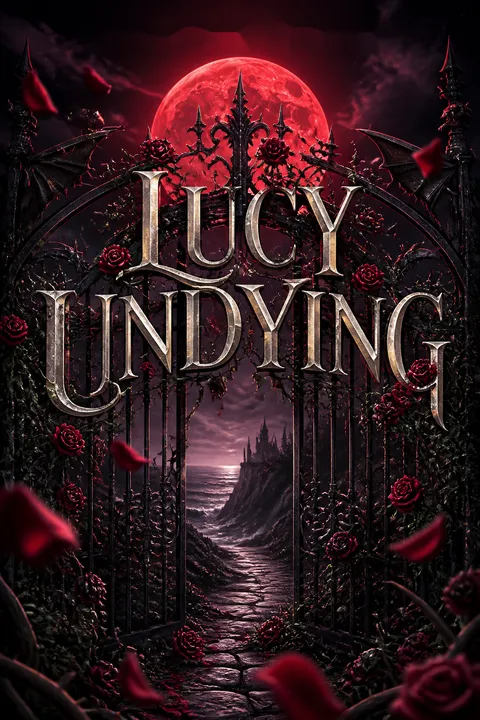


Plot Summary
Dracula Watches the Trail
The story opens in Salt Lake City, where Dracula4 watches Iris Goldaming1 walk alone beneath the stars. He has chosen her as his next victim and imagines that his familiar pursuit will end with her letting him into her home. Iris1 does not yet know he is watching, but the scene plants the danger that will later gather around her.
Dracula4 has outlived centuries by making each new hunt feel like a private destiny. His confidence rests on the assumption that the woman he targets will mistake his attention for rescue or love. This time, however, other eyes are following him, too, and the pattern he trusts is already beginning to break.
The opening gives the predator the first interpretive advantage: Dracula narrates Iris as a destined prize before she can define herself. That framing is not merely suspenseful. It previews the novel's central conflict over who gets to name desire. Dracula treats attention as ownership and assumes that vulnerability will become consent. The watching figures complicate his apparent omniscience, suggesting that his power depends partly on repeating a familiar script without noticing who has learned to read it.
London's Runaway Heiress
In October 2024, Iris1 reaches London exhausted, carrying the small savings and runaway backpack she has kept through years of failed escapes. Her father19 calls from his care home, terrified that her dead mother6 has appeared at his window; Iris1 insists the sight cannot be real, though she remembers watching her mother6 die.
Her solicitor Dickie Cox12 keeps pressing her to accept the Goldaming inheritance and return to America. Iris1 wants neither the company nor its money. Outside a station, she steps into traffic and is yanked clear by a striking red-haired woman3 who tears the strap from her pack. Iris1 is shaken, grateful, and instantly drawn to the stranger,3 who leaves before Iris1 can learn much about her.
Iris's flight is both practical and psychologically complicated. She wants distance from a coercive family business, yet the money that could fund escape is inseparable from the family that controlled her. Her father's terror also destabilizes her confidence in what she knows about her mother's death. The first meeting with the red-haired woman offers a brief alternative to surveillance: a stranger acts decisively to protect Iris, then asks for nothing. That small act becomes the emotional counterweight to a legacy built on ownership.
Hillingham's Hidden Journal
Iris1 takes the keys to Hillingham, her family's neglected London mansion, hoping its contents will provide enough cash to leave. Instead she finds dust, broken fixtures, and no obvious valuables. A locked bedroom yields a hidden journal belonging to Lucy Westenra,2 a girl who once lived in the house. Iris1 finds a second volume concealed in a safe and reunites the books, though she initially dismisses their worth.
She also meets the red-haired rescuer3 again: Elle,3 who says she works at a local museum and wants to assess the house. Their inspection uncovers no easy fortune, but a large fox attacks outside the door and stops short of entering. Iris1 recognizes that her family’s influence may reach farther than she can see.
The mansion functions as more than an asset. Its locked room and hidden writing make inheritance a material form of memory, containing what the family would rather leave unexamined. Iris first approaches the journals as possible commodities, then begins to feel protective of their author. The fox's refusal to cross the threshold turns an old superstition into a practical warning, while the contrast between Iris's need for money and Elle's interest in history brings two different relationships to the past into the same house.
Lucy's Secret Beloved
The journal takes Iris1 back to 1890, when seventeen-year-old Lucy Westenra2 lives at Hillingham under her mother's constant scrutiny. Lucy2 writes sharp, funny observations in private while presenting the agreeable daughter expected in public.
Her closest attachment is Mina Murray,5 her former governess, whose intelligence and care once made Lucy2 feel understood. Lucy2 longs for a life with Mina5 but lacks the language and freedom to name that longing. Meanwhile, Doctor Seward15 visits her supposedly ailing mother, and Arthur Holmwood14 and the American Quincey Morris16 court Lucy.2
She finds their attention oppressive, even when their manners seem kind. To keep her real thoughts safe from her mother's searching hands, Lucy2 hides one journal and maintains another filled with acceptable lies.
Lucy’s two journals give form to the split between a socially legible self and a private one. Her wit is not simply decorative; it is a way to preserve judgment when direct resistance would bring punishment. Mina represents intimacy, but Lucy's dependence on her also makes the friendship emotionally precarious. The suitors expose how easily care and possession blur in a world that assumes a young woman's future must be arranged by others. Lucy's hidden writing is both testimony and shelter.
Three Proposals, One Trap
Lucy2 learns that her mother is dying, then faces three proposals in quick succession. Seward15 proposes first, followed by Quincey;16 Lucy2 refuses both. After drinking her mother's drugged brandy, she accepts Arthur's14 proposal, partly because she thinks becoming a bride will please Mina5 and keep them close. In Whitby, Mina5 arrives engaged to Jonathan Harker18 and speaks more about her future than Lucy's2 heartbreak.
Lucy2 tries to hide her despair behind rehearsed expressions. One night she sees a threatening stranger watching Mina's5 window and leads him away, hoping to protect her friend. The stranger is Dracula.4 Lucy's2 choice to divert him places her between the vampire and Mina,5 while her own needs and safety remain unspoken.
Lucy's engagement is less a romantic decision than an attempt to manage other people's expectations. She accepts Arthur because she believes a socially approved marriage might preserve her closeness to Mina, even as that choice moves her farther from the life she wants. Her intervention against Dracula repeats the same self-erasure in a more dangerous form: she makes herself expendable without telling Mina what she is doing. The scene links protection to silence, showing how a supposedly loving sacrifice can also deny others the chance to choose.
The Window Opens
Dracula4 returns to Lucy2 repeatedly, leaving her cold, weak, and unable to explain her worsening condition. She keeps watch over Mina5 and offers herself whenever the vampire approaches, convinced she can absorb the danger. Seward15 and Arthur14 respond with sedatives and blood transfusions, but they do not tell Lucy2 what they are doing or ask her consent.
The donor blood makes her violently ill. Her mother dies under suspicious circumstances, and Lucy,2 nearly delirious, opens a window in the hope that Dracula4 will end her suffering. He feeds on her again. Lucy2 dies believing she has failed Mina,5 while the men around her have protected their legal and financial plans more carefully than her bodily autonomy.
The chapter places two forms of bodily violation beside each other. Dracula takes blood by force; Lucy's human protectors administer blood and drugs without permission, claiming necessity while withholding information. Their methods differ, but both treat Lucy as a body to be managed rather than a person with a voice. Her self-sacrifice is shaped by a culture that praises women's usefulness and calls it love. The tragedy deepens because the men can recognize danger and still fail to tell her what is being done to her.
A Bride Refuses Her Cage
Lucy2 awakens in her sealed tomb, ravenous and unable to remember her own name. Dracula's4 brides, whom she later calls Raven and Dove, find her and offer touch as well as blood. When Lucy2 remembers Mina5 and tries to leave, Raven warns that she can never return to her former life. The next night, Dove approaches Lucy's2 mausoleum carrying a child.
The men Lucy2 once knew mistake Dove for her and decapitate her, then abandon the living child outside the cemetery. Lucy2 carries him to a bakery, where he can be found and cared for. The atrocity teaches Lucy2 that both vampires and men can turn people into objects, but she still chooses mercy when she has power over someone vulnerable.
Lucy’s awakening does not deliver liberation all at once. Her new strength arrives alongside hunger, amnesia, and dependence on the brides who introduce her to this life. The men’s attack on Dove repeats the violence Lucy feared for herself, while their abandonment of the child reveals how little their righteous mission attends to actual care. Lucy's decision to rescue the child matters because it is an early choice made on her own terms. She cannot yet define a moral system, but she can refuse to let another helpless person be discarded.
Raven Sends Her East
Still desperate to find Dracula4 and learn why he changed her, Lucy2 tells Raven she must also know whether Mina5 is safe. Raven sends her to Liaoning, China, claiming Dracula4 is waiting there. On the journey Lucy2 survives by hiding aboard a ship and learning languages from the sailors.
When she reaches the port, a familiar tries to lure her away, so she kills him and discovers Raven's letter: the trip was meant to make Lucy2 create bodies and resting places that would let Dracula4 expand east. Lucy2 dumps the familiar's remains into the harbor, denying Dracula4 a grave. The local Queen,7 a powerful vampire who guards her land and protects girls from predators, captures Lucy2 but spares her after hearing what happened.
Raven's deception converts Lucy's longing for answers into a weapon against her. Lucy's travels show how easily a need for direction can be exploited when she has not yet learned to trust her own judgment. The familiar's death is both an act of survival and a deliberate refusal to serve Dracula's expansion. The Queen initially offers an alternative model of power: protection backed by force. Lucy is drawn to that promise because it resembles the safety she once sought from Mina, but the resemblance will prove incomplete.
Buried Beneath the Palace
The Queen7 tells Lucy2 that Dracula4 has supposedly been killed and lets her stay in a hidden palace, where rescued girls train to hunt vampires. Lucy2 discovers that their safety has a price: the Queen7 controls their choices and forbids them to leave. In the Queen's7 room, Lucy2 finds a poster showing how she was once displayed and abused; the Queen7 explains that she built the palace to protect girls like the one she had been.
When Lucy2 urges her to grant them freedom, the Queen7 snaps Lucy's2 neck and buries her in a lightless cell. The Queen7 visits over the years, sharing memories through the wall. Lucy2 survives by eating insects and rats, then claws toward a sliver of moonlight and escapes in a form that leaves her scattered by the sun.
The Queen's history makes her control understandable without making it benign. She has transformed helplessness into a system of protection, but the system repeats the structure of captivity that injured her. Lucy recognizes the contradiction because she has lived inside similar forms of care that offered comfort while denying agency. Her escape requires more than physical persistence: she must accept that compassion does not obligate her to stay where she is controlled. The episode complicates the fantasy of a safe refuge by asking who is allowed to decide what safety costs.
The Doctor's Battlefield
After drifting across Europe as moonlight, Lucy2 is revived by the blood-soaked earth of the First World War. She meets a vampire physician, the Doctor,8 who studies injured bodies in a field hospital and recruits Lucy2 to find matching blood for transfusions. Lucy2 also carries wounded soldiers away from the front.
When she discovers Allied and German leaders negotiating an armistice, she compels them to sign, believing she has ended the slaughter. The Doctor8 calls the action a disruption to her research rather than a victory. Lucy2 leaves, realizing that usefulness is not the same as being valued. The war returns in another form, and her confidence in changing the world through isolated acts of rescue begins to collapse.
The Doctor and Lucy share a desire to confront death, but they assign different meanings to the body. The Doctor seeks knowledge by examining how bodies fail; Lucy wants to keep particular people alive. Their conflict becomes clearest when Lucy's intervention ends a battle while the Doctor sees lost research opportunities. The scene rejects easy heroism: Lucy's success is real, yet it cannot permanently resolve a system that produces violence. Her departure marks a shift from seeking approval through usefulness toward judging relationships by whether they recognize her aims.
Paris Keeps the Lover
In 1920s Paris, Lucy2 befriends a vampire she calls the Lover,9 who delights in fashion, dancing, and the city's performers. The Lover9 has been repeatedly stalked and killed by the same admirer, then revived in a grave, and she mistakes the ritual for proof that he sees and loves her.
When Lucy2 finds a murdered dancer arranged like the Lover's9 previous victims, she tracks down and kills the admirer before he can strike again. She leaves Paris, angry that the Lover's9 chosen role as bait has cost another woman her life. Lucy's2 intervention does not cure her own hunger for validation, but it forces her to see how easily she, too, has accepted exploitation in exchange for feeling wanted.
The Lover makes Lucy confront a familiar bargain in its starkest form: accepting harm because attention feels like evidence of love. Lucy can identify the killer's violence more clearly than the Lover can, yet her anger also reflects her own unresolved history. She has repeatedly allowed other people to assign her a useful role, from bride to prisoner to courier. Killing the admirer protects a victim, but leaving Paris does not instantly free Lucy from the desire that made the pattern intelligible to her.
Whitby After Midnight
As Iris1 reads Lucy's journals, the story's private language begins to feel like a lifeline. Iris1 recognizes Lucy's2 longing for Mina5 and the cost of hiding her own feelings, then invites Elle3 to Whitby for a break from Hillingham. There, Elle3 reveals that her father died in the town and that she was never allowed to grieve honestly.
At a silent rave in the ruined abbey, Iris1 protects Elle3 from a man who grabs her; a storm drives them to shelter together. Back in London, Iris1 tells Elle3 about the Goldaming company, her mother's6 coercion, and the reproductive procedure imposed on her as a teenager. Elle3 offers to help Iris1 escape, and the women kiss, trusting each other with more than attraction.
The relationship grows through reciprocal acts of disclosure rather than a rescue fantasy. Iris protects Elle at the rave, then listens as Elle names grief she had been taught to suppress. Later Iris risks telling her own history, including the assault on her bodily autonomy. This exchange contrasts with the silence surrounding Lucy's life and the secrecy in Iris's family. Their attraction matters, but the more consequential change is that each woman begins to treat the other's account as credible, even when it is painful or difficult to interpret.
Portrait in the Attic
After Iris1 returns from Whitby, her mother's bodyguard Ford13 attacks her in an alley and warns that the family is watching. A fox joins the pursuit at Hillingham, but Iris1 uses concentrated garlic to drive both attackers away and escapes with Elle3 and Rahul.10
Iris1 tells them about the vampires and the company that wants her returned to America. Later, the local museum director says no employee named Elle3 works there. Iris1 investigates the attic and finds a clean portrait of the woman she knows, painted as Lucy Westenra.2
Lucy2 appears behind her and explains that she came to Hillingham to recover her own past, not to exploit Iris.1 Iris1 embraces her instead of recoiling, and Lucy2 begins to recognize that her hidden journals have helped her see herself with compassion.
The revelation tests the difference between a lie of manipulation and a concealed identity shaped by fear and uncertainty. Iris has reason to distrust anyone who withholds information, yet she does not reduce Lucy to the deception. Her response gives Lucy something she has rarely received: recognition without a demand that she become harmless first. The portrait also makes memory embodied. Lucy's return is not just a supernatural twist, but a confrontation with the young person she left behind and the private record she preserved.
Hillingham's Inheritance Crime
Iris1 studies Lucy's journals alongside the papers in Hillingham's safe and recognizes a financial plot behind the historical account of Lucy's2 death. Arthur Holmwood14 was bankrupt, while Doctor Seward15 controlled the Westenra household's medical care and prepared documents that would redirect Lucy's2 fortune to Arthur.14
Mina's5 letters show that she had worked with the same solicitor, and records reveal that she later inherited another wealthy man's estate through marriage. Iris1 concludes that Lucy,2 her mother, and others were cultivated or discarded as the scheme required.
She tells Lucy2 what she has found, including the possibility that Mina5 helped exploit her. Lucy2 struggles to accept it. The revelation binds Iris's1 present escape to the family's original theft of Lucy's2 future.
The archive turns lineage from a source of prestige into evidence of repeated extraction. Iris learns that the wealth she is trying to escape began with a young woman's vulnerability being converted into legal property. The documents matter because they expose how respectable procedures can conceal coercion more effectively than overt violence. Lucy's difficulty accepting the evidence is not stupidity; Mina has occupied the center of her emotional world for more than a century. The scene asks whether truth can free someone when it also threatens the memory that helped them survive.
Blood Beneath the Brand
Iris1 returns to Salt Lake City under Goldaming Life's watch, agreeing to meetings and blood treatments while secretly copying company files. The treatments reveal that her rare blood is being harvested, not simply replaced.
In the laboratory she meets a vampire physician8 who recognizes Lucy2 and resents the company for exploiting her research. Iris1 also encounters Alicia Del Toro,21 a security guard whose loyalty to Goldaming Life has been built through promises of advancement and transformation.
The polished wellness language conceals a system that sells access to Goldaming blood and turns devoted recruits into vampires. Iris1 learns that her mother's6 reproductive scheme and her family's illness belong to the same design: the family line is infected, and its blood has become the company's most valuable product.
The corporate setting translates supernatural predation into familiar mechanisms of aspiration: branded health, exclusive access, and promises that devotion will make a person exceptional. Alicia's recruitment shows why the system can feel like opportunity to people denied other routes to security. Iris's blood disorder is both a genuine bodily condition and a resource others have learned to exploit. By joining those facts, the novel resists a simple division between monstrous magic and ordinary institutions. The company's most effective disguise is not invisibility, but a language that makes extraction sound like self-improvement.
The Trail Becomes Bait
Iris1 and Lucy2 separate so Iris1 can draw Dracula4 into the open while Lucy2 returns with the Queen7 and the Lover.9 Iris1 walks the Salt Lake trail, using the attention Dracula4 mistakes for surrender to keep him near.
Lucy2 watches from the hills but refuses to tell Iris1 that killing Dracula4 may end her own existence. Their shared blood lets Lucy2 reach Iris's1 dreams, while Iris's1 letters and the backpack strap bracelet keep their connection tangible.
Dracula4 finally approaches Iris1 in daylight, assaults her, and bites her lip before she escapes to a perfume shop where vampire senses are overwhelmed. There Iris1 confronts Lucy2 about the hidden cost of their plan. Their argument exposes that Lucy's2 hunt began partly as a wish to die with Mina's5 blood inside her.
The baiting strategy reverses Dracula's usual script, but it also repeats Lucy's old habit of making herself a sacrifice without giving another person the facts. Iris refuses to let romantic trust excuse that omission. Their conflict is therefore not a rejection of love but a demand that love include informed choice. The bracelet and dream connection make intimacy operational, while the perfume shop offers a rare refuge from supernatural tracking. Lucy must confront that protecting someone by concealing the cost can reproduce the same paternalism that harmed her.
A Home Without Faith
Iris1 tries garlic and religious wafers to keep Dracula4 from crossing her threshold, but the protections fail because she does not believe they can hold him. Dracula4 attacks her and begins feeding before Lucy2 forces her way into the house, having understood that Iris's1 trust made it a home for her.
Lucy2 tears Dracula4 away, but Goldaming guards overwhelm her with sensory weapons and capture her. Iris's mother, Blanche,6 returns in her supernatural form and explains that Goldaming descendants carry a dormant vampiric infection.
Lucy2 is taken to the company laboratory, where the Doctor8 frees her and joins the Queen,7 the Lover,9 and Alicia Del Toro.21 They locate Dracula4 and Iris,1 then keep Dracula4 alive while Lucy2 goes to the Goldaming gala to rescue Iris.1
The threshold rule gives physical form to a psychological distinction: ritual objects alone cannot substitute for a settled conviction about what is sacred. Iris's inability to believe in protection reflects a life in which safety has repeatedly been conditional. Lucy's entry succeeds because Iris has already made room for her emotionally, not because the house has been magically prepared. Capture then shifts the conflict from one predator to an institution, and the allies' rescue shows how knowledge built through earlier losses can become collective capacity.
Mina Claims the Ballroom
At the gala, Lucy2 expects to take Iris1 away, but the woman who emerges from the ceremonial doors is Mina,5 alive and transformed by centuries of ambition. Mina5 dismisses Lucy's2 devotion and confirms that she chose wealth and power over Lucy's2 wellbeing. Iris1 recognizes that Mina's5 influence extends through the Goldaming bloodline and the company.
Lucy,2 still caught by her old attachment, cannot immediately turn from Mina5 toward Iris.1 Iris1 cuts her own arm with a silver blade, using the value of her blood to expose Mina's5 dependence on it. When Mina5 turns to save Iris,1 Lucy2 and Iris1 work together: Iris1 drives the blade into Mina's5 heart, and Lucy2 makes the wound fatal. Blanche6 also dies, ending Mina's5 rule over the family.
Mina's return tests whether emotional truth can outweigh the idealized figure Lucy has carried. Iris does not defeat Mina by arguing Lucy out of her attachment; she creates a moment in which Mina's own priorities become visible. The self-inflicted wound is a desperate tactic, but also a refusal to let the family treat Iris's body as a resource without cost. Lucy's decisive action comes only after she can see Mina as a person rather than as the answer to every unfulfilled desire.
The Blood Bank Closes
Mina's5 death breaks the Goldaming vampire network, and Iris1 loses so much blood that Lucy2 changes her only after Iris1 gives clear consent. Iris1 awakens as a vampire with Lucy's2 blood and her own name intact. The company collapses under Iris's1 orders: its leaders must compensate victims' families, surrender illicit fortunes, and dissolve Goldaming Life.
Dracula4 survives the upheaval. He escapes after the Queen,7 the Lover,9 and the Doctor8 refuse to spend their lives guarding him, and Lucy2 and Iris1 decide to hunt him together. They visit Vanessa's20 grave and leave the account of Lucy's2 story with her. Their future is no longer a promised rescue or a guaranteed ending, but a chosen partnership with time enough to keep making decisions.
The ending does not confuse survival with victory. Iris gains immortality, but the company that exploited her is dismantled through legal and financial accountability, while Dracula remains dangerous. Lucy's transformation of Iris differs from the violence that made her: consent is requested, and Iris's identity is returned rather than erased. The novel closes by replacing a single final cure with continued agency. Their shared future is meaningful not because it is safe or complete, but because both women can choose what happens next.
Epilogue
At Vanessa's20 grave, Lucy2 records the rest of her story and leaves the recording behind, while Iris1 reminds her that endings are not the only source of meaning. They have survived Mina's5 empire, but Dracula4 is still loose, so their next task remains ahead.
Iris1 and Lucy2 plan to visit Rahul10 and Anthony,11 whose new family plans are tied to the home Iris1 gave them. As they leave the cemetery, the women carry the past with them without letting it dictate the shape of their future.
The voice memo returns the book to its frame and gives Vanessa's listening a lasting consequence: Lucy has learned to regard her own life as worth recording. Iris's interruption keeps that conclusion from becoming solitary or self-congratulatory. Their humor restores ordinary companionship after the scale of the supernatural climax. The unresolved Dracula plot matters, but the final emphasis is on continuation rather than suspense alone. Lucy and Iris can remember what happened without treating their lives as finished, and the gift of a home to Rahul and Anthony makes their new future materially generous as well as romantic.
Analysis
Lucy Undying makes the vampire story a conflict over who can interpret another person's desire. Dracula4 calls fixation love, Lucy2 mistakes self-erasure for protection, and Mina5 treats other people as pieces in a plan for wealth and independence. Their harms differ, but each depends on overriding another person's ability to choose. The novel's sharpest formal choice is to place Lucy's hidden journals beside corporate records. A private account restores the texture official documents erase: jokes, attraction, fear, and the daily labor of pretending. Iris1 recognizes Lucy2 not because their lives are identical, but because both have been told that privilege should cancel injury and that family affection creates a debt. Their intimacy offers a different model of care, grounded in disclosure and consent rather than rescue without explanation. The supernatural rules reinforce that psychology. A threshold is not secured by ritual alone; it depends on what a person can trust as sacred. Blood, meanwhile, makes inheritance brutally literal: the family sells and harvests the very substance through which it claims ownership. The ending refuses a simple victory. Mina's5 death breaks Goldaming's vampire network, and Iris1 dismantles the company, but Dracula4 escapes. That unresolved threat prevents love from becoming a cure-all. Lucy2 and Iris1 are not saved from danger by romance; they acquire the ability to face danger together, with more honest knowledge and more power over what happens to their bodies. The book's hope lies not in innocence restored, but in a future where chosen connection can coexist with memory, anger, and unfinished work.
Review Summary
Lucy Undying received mixed reviews, with some praising its gothic atmosphere, sapphic romance, and creative retelling of Dracula. Many appreciated the character development of Lucy Westenra and the unique vampire MLM storyline. However, others found the pacing slow, the plot convoluted, and criticized the portrayal of original Dracula characters. Some felt the book was too long and struggled to finish it. The audiobook narration was positively noted. Overall, readers who enjoyed feminist retellings and gothic fantasy were more likely to rate it highly.
People Also Read


Characters
Iris Goldaming
Runaway family heiressIris is a literature-loving young woman trying to separate her identity from the wealthy family that raised her as an asset. Wry, wary, and practiced at presenting the face others expect, she uses humor to make painful truths easier to dismiss. Her rare blood disorder and family history have made her body a site of other people's plans, so independence means more to her than comfort or status. She is drawn to Lucy's2 private writing because it gives words to feelings Iris has been trained to doubt. Her central drive is to make a life whose choices belong to her, even when leaving means risking money, family ties, and the possibility of being loved.
Lucy Westenra
Victorian hidden diaristLucy is a clever, observant young woman whose private journals preserve the wit and longing she conceals in public. Raised to please her controlling mother and behave as a suitable heiress, she has difficulty distinguishing care from the attention she must earn. Her strongest early attachment is to Mina5, whose approval shapes Lucy's hopes long after their lives diverge. Lucy's imagination, generosity, and hunger for connection make her vulnerable, but they also lead her to protect people when she has the power to do so. She is not defined only by suffering; her ability to notice others, make jokes, and keep asking what love should mean gives her a path toward self-recognition.
Elle
Red-haired local historianElle appears at first to be a small, confident woman with a deep interest in Hillingham's local history. She is curious about old objects and buildings, yet attentive to the people living among them. Her teasing warmth draws Iris1 out of isolation, while her quietness around Whitby suggests a private history she does not readily explain. Elle's relationship with Iris1 grows through practical kindness and a willingness to listen without correcting or minimizing difficult memories. She is attentive to how rooms preserve stories, and her own unsettled sense of home shapes the tenderness and caution she brings to intimacy.
Dracula
Predatory immortalDracula is an ancient vampire who approaches his victims through fixation, patience, and the promise of being uniquely seen. He treats desire as a form of possession and assumes that a woman's vulnerability will eventually become consent. His elaborate hunts reveal a need for control more than genuine intimacy: he wants to shape another person while remaining untouched by mutual obligation. He can command animals, change form, and exploit the fears of those he pursues, but his confidence depends on others accepting his version of events. Dracula's presence links the personal violence of an attack to the larger systems that shelter and profit from him.
Mina Murray
Lucy's former governessMina is Lucy's2 former governess and closest confidante, known for her practical intelligence, disciplined habits, and ability to plan a future for herself. She comes from a different social position than Lucy2 and understands how financial dependence can narrow a woman's choices. Lucy2 admires Mina's capability and seeks her approval, making the relationship emotionally powerful and uneven. Mina is often the person who gives Lucy2 structure, but she also expects Lucy2 to accept her judgments. Her role in Lucy's2 inner life is central because Lucy's2 memories of Mina shape what she believes love, loyalty, and self-worth should look like.
Blanche Goldaming
Iris's formidable motherBlanche is the charismatic leader who expanded Goldaming Life from a wellness business into a powerful institution. She values discipline, legacy, and public polish, and she expects family members to serve the organization she built. Her love for Iris1 is entangled with control and inheritance, leaving little room for Iris1 to define a future of her own. Blanche believes that hardship can be justified by the rewards she promises, a conviction that lets her recast exploitation as sacrifice. She is a forceful presence in both private life and corporate culture, and her attention makes even apparently ordinary choices feel monitored.
The Queen
Armed protector of girlsThe Queen is a powerful vampire who rules a hidden compound in China and trains girls to defend themselves against predators. Formal, commanding, and difficult to approach, she has built her authority around protecting those who resemble her younger self. She values safety and discipline, but her understanding of protection can leave little room for the people she shelters to make their own choices. Her history shapes both her strength and her mistrust. Lucy's2 presence challenges her to consider whether refuge can remain compassionate when its residents are not free to leave.
The Doctor
Vampire physician researcherThe Doctor is a highly skilled physician who studies the ways human bodies break and searches for methods to preserve them. Precise, impatient, and intellectually ambitious, she trusts research more readily than emotion. Her work among wounded soldiers reveals both a genuine wish to understand life and a tendency to treat people as cases before individuals. Lucy's2 insistence that she consider the suffering in front of her unsettles that distance. The Doctor's blunt manner can seem cruel, yet her commitment to knowledge is also a way of coping with her own unresolved questions about mortality.
The Lover
Parisian vampire performerThe Lover is a stylish, playful vampire who finds pleasure in dancing, clothes, and the company of performers. She changes her appearance readily and resists settling on a single name, treating reinvention as a form of freedom. Beneath her exuberance lies a dangerous attachment to being desired, which makes her vulnerable to an admirer she mistakes for a devoted pursuer. Lucy's2 friendship exposes the cost of that confusion without erasing the Lover's wit or vitality. She brings lightness to Lucy's2 otherwise solitary existence, while also revealing how appetite and affection can become difficult to separate.
Rahul
Iris's generous cabdriverRahul is the cabdriver who brings Iris1 to Hillingham and offers help when she has few people to rely on. Warm, quick-witted, and observant, he recognizes that Iris1 is isolated without demanding that she explain everything. His marriage to Anthony11 gives Iris1 a glimpse of easy, affectionate partnership. Rahul's kindness is practical: he provides transport, food, and a route to trustworthy legal advice. He becomes a measure of the kind of community Iris1 has rarely experienced, where assistance is offered without a hidden claim on her money or loyalty.
Anthony
Rahul's affectionate husbandAnthony is Rahul's10 tall, warm-hearted husband and a skilled cook who helps Iris1 feel welcome in a house that initially frightens her. His ease with affection contrasts with Iris's1 experience of relationships shaped by bargaining and control. He is generous without being naïve, and his concern for Rahul10 is expressed through humor as much as protectiveness. Together, he and Rahul10 model a stable partnership that Iris1 finds both comforting and unfamiliar. His kindness helps turn Hillingham from a neglected inheritance into a possible home for someone else.
Dickie Cox
Persistent family solicitorDickie is the Goldaming family's lawyer, responsible for managing Iris's1 inheritance and keeping her close to the company's needs. Formal, exacting, and difficult to read, he speaks in the language of contracts and obligations. Iris1 sees him as one more instrument of her mother's6 control, though his motives are not always easy for her to assess. His role demonstrates how a coercive family can operate through paperwork and professional procedure as well as personal pressure. Dickie's careful attention to legal detail makes him both a gatekeeper and a potential source of information.
Grace Ford
Goldaming's imposing bodyguardGrace Ford is a towering security operative who serves the Goldaming family with intimidating efficiency. She is physically powerful and unsettlingly composed, and Iris1 knows her from years of conflict with the people protecting her mother6. Ford believes in order, loyalty, and the authority of the Goldaming line. Her manner makes her dangerous even when she claims to be acting in someone's interest. She represents the force behind the company's polished promises, the person who can turn its demands into direct physical pressure.
Arthur Holmwood
Lucy's titled suitorArthur is an elegant, socially assured man who courts Lucy2 while presenting himself as a suitable husband and protector. Lucy2 finds him pleasant enough but does not share his romantic interest, and his polished manner makes it difficult for her to judge what he truly wants. He belongs to a world where status and money shape every relationship, and his attention places pressure on Lucy2 to perform the role of a grateful future wife. His friendship with Seward15 and Quincey16 places him among the men who claim to know what is best for Lucy2.
Doctor Seward
Lucy's mother's physicianSeward is a physician and sanitarium director who makes repeated visits to Lucy's2 mother. He is observant, clinical, and increasingly involved in Lucy's2 personal life, though she feels studied rather than understood around him. His habit of offering medicine and directing her behavior reflects the era's assumption that a woman's feelings can be managed by men with medical authority. He is close to Arthur14 and Quincey16, and his professional role gives him access to the Westenra household at a vulnerable time.
Quincey Morris
Kind American suitorQuincey is an American visitor whose expansive stories and unusual turns of phrase make him an object of Lucy's2 amused skepticism. Beneath his bluster, he seems kinder and less entitled than the other men courting her. Lucy2 can imagine friendship with him more easily than marriage, and his straightforward concern sometimes offers relief from her mother's household. His place among Seward15 and Arthur14 shows how men's friendships can give them access to one another's lives while Lucy2 remains socially constrained.
Abraham Van Helsing
Foreign vampire investigatorVan Helsing is an older Dutch physician and investigator brought into Lucy's2 circle when her illness becomes difficult to explain. His habits strike Lucy2 as intrusive and paternal, and she does not feel able to trust him with her own account of what is happening. He represents the men who respond to a woman's danger by interpreting it for her rather than giving her the information to act. His knowledge of unusual maladies makes him important to the group's efforts, even as Lucy2 experiences him as another authority she must endure.
Jonathan Harker
Mina's solicitor fiancéJonathan is Mina's5 fiancé, a solicitor whose work takes him away from England on business. Lucy2 knows little about him and finds him dull, while Mina5 regards marriage to him as a route toward financial stability. His absence and his connection to Dracula's4 movements influence both women's choices. Jonathan's story illustrates how economic security can become a central part of marriage for someone without Lucy's2 inherited wealth.
Iris's father
Frightened absent protectorIris's father is an elderly man living in a care home, where his fear of her dead mother6 unsettles Iris1 even from across the ocean. He has been worn down by Blanche's6 power and has not reliably protected Iris1 from her mother's6 control. Iris's1 feelings toward him mix care, resentment, and the knowledge that he could not give her the support she needed. His calls keep Iris1 connected to a family she is trying to leave.
Vanessa
Lucy’s patient therapistVanessa is a therapist who records Lucy's2 account after a violent encounter with another vampire. Patient and candid, she listens without assuming that Lucy's2 experience can be reduced to a diagnosis. Her own life gives her a grounded understanding of identity, mortality, and the value of being believed. Vanessa's questions help Lucy2 put her scattered memories into sequence and consider what she has been seeking. She offers a rare kind of attention that neither demands performance nor claims ownership.
Alicia Del Toro
Ambitious Goldaming recruitAlicia is a bilingual, resourceful woman who joins Goldaming Life hoping to build a larger life than the one she inherited. She is attracted by the company's promises of health, beauty, belonging, and advancement, and she works hard to earn recognition. Her ambition is genuine, as is her need for community, which makes her vulnerable to an organization that packages exploitation as opportunity. Alicia's path shows how the Goldaming system draws people in through aspiration rather than force alone.
Albert Fallis
Goldaming's London solicitorAlbert is the London solicitor who provides Iris1 with the keys and paperwork for her family's properties. Fussy and possessive about the Goldaming legacy, he treats the old house and its documents as evidence of a history he helped preserve. His office and manner make Iris1 feel that the family's past is being guarded from her as much as for her.
Kyle Palmer
Goldaming's devoted executiveKyle is a senior Goldaming Life executive whose loyalty to the organization reaches beyond ordinary corporate enthusiasm. He serves as a link between the company's leadership and its supernatural operations. His eagerness to please reveals how devotion can be cultivated until a person mistakes submission for purpose.
Plot Devices
Lucy's paired journals
Private truth survives scrutinyLucy2 keeps one journal hidden in Hillingham's floor and another in a safe, with the safer volume designed to satisfy her mother's6 expectations. Iris1 discovers both and uses their differences to reconstruct Lucy's2 thoughts and the events around her. The journals are not neutral records: one contains Lucy's2 private longing, while the other protects her by performing respectability. Their survival gives Iris1 evidence that legal files alone cannot provide, and later gives Lucy2 a way to recover a younger self she had learned to dismiss. They make reading an act of intimacy, but also raise questions about privacy and who has the right to tell another person's story.
The invitation threshold
Belief controls entryVampires face limits around homes and other spaces people hold sacred, but the protection is connected to conviction rather than a simple mechanical rule. Iris1 tries religious objects and garlic against Dracula4, yet her disbelief leaves her vulnerable. By contrast, her trust in Lucy2 gives Lucy2 a genuine place in her home. The threshold therefore measures more than physical access. It exposes the characters' relationship to safety, faith, and self-trust, while making hospitality both a risk and a deliberate act of recognition.
Goldaming blood
Inheritance becomes a resourceThe Goldaming family carries unusual blood linked to a dormant vampiric condition. While living, members suffer a rare disorder that makes cold dangerous; their blood is also harvested and sold through the company's wellness products. Goldaming Life converts a family inheritance into both a biological supply and a promise of transformation for devoted recruits. The system ties bodily autonomy to corporate power, making Iris's1 health, reproductive capacity, and future targets of the same institution. The blood also establishes a supernatural connection between the family and Dracula's4 history.
Unhallowed resting ground
The dead find strength in deathVampires recover by sleeping in their own grave earth or on ground steeped in death, while ordinary cemeteries can be poor sources of strength. Blood, burial, and place therefore shape who can travel, heal, or survive a long conflict. Dracula's4 plans depend on creating resting places through the dead he leaves behind. Lucy's2 refusal to provide a grave for a familiar blocks that expansion, and her own mausoleum becomes a recurring refuge. The device links supernatural power to the material consequences of violence rather than treating immortality as weightless.
The Gold Path
Aspiration disguises extractionGoldaming Life markets advancement through wellness products, recruitment milestones, exclusive access, and promises of belonging. Members are encouraged to interpret money, beauty, and transformation as rewards for loyalty. The same structure that recruits Alicia21 and other hopeful people protects the family's control of blood and bodies. Its corporate language gives supernatural exploitation a respectable public face, allowing victims to participate in their own recruitment before they understand the cost. Iris1 later turns the company's paperwork and financial records against its leaders, showing that the institution's administrative machinery can also expose it.
FAQ
Synopsis & Basic Details
What is Lucy Undying about?
- Modern Reimagining of Dracula: Kiersten White's Lucy Undying reimagines the story of Lucy Westenra from Bram Stoker's Dracula, casting her as a vampire navigating centuries of undeath while seeking answers about her transformation and the fate of those she loved.
- Dual Narrative Across Time: The novel follows two protagonists: Lucy, recounting her fragmented, immortal life to a therapist in Boston, and Iris Goldaming, a modern woman in London grappling with her family's dark legacy and a mysterious inheritance.
- Unraveling Hidden Histories: As Iris explores a seemingly abandoned family mansion, she discovers Lucy's hidden journals, revealing a deeper, more complex truth about Lucy's death, the origins of Iris's own powerful family, and the enduring presence of ancient evils.
Why should I read Lucy Undying?
- Fresh Take on Classic Horror: It offers a compelling feminist and queer subversion of the Dracula narrative, giving agency and depth to a character traditionally portrayed as a passive victim.
- Intriguing Dual Timelines: The alternating perspectives of Lucy's centuries-spanning vampiric journey and Iris's modern-day investigation create a layered mystery that connects past and present in surprising ways.
- Deep Emotional & Psychological Themes: The novel delves into complex themes of identity, trauma, control, love, and the search for meaning across lifetimes, offering rich psychological analysis of its characters.
What is the background of Lucy Undying?
- Subversion of Bram Stoker's Dracula: The novel directly engages with and reinterprets characters and events from the original 1897 novel, particularly Lucy Westenra's transformation and the actions of the men who pursue Dracula.
- Critique of Victorian Society: Lucy's 19th-century life highlights the oppressive constraints placed upon women, particularly wealthy heiresses, and critiques the patriarchal control exerted by figures like her mother and male suitors.
- Modern Cult & MLM Commentary: Iris's storyline grounds the supernatural horror in contemporary issues, using the Goldaming Life empire to critique predatory multi-level marketing schemes and cult dynamics, linking them metaphorically to vampiric draining.
What are the most memorable quotes in Lucy Undying?
- "Love like a knife, slicing me into ever smaller pieces until I'm exactly the shape that pleases her the most." (Lucy, Journal Entry): This quote powerfully encapsulates Lucy's emotionally abusive relationship with her mother, establishing a core theme of control and the violence inherent in conditional love that echoes throughout the novel, particularly in Iris's experiences.
- "It doesn't work if you don't believe in it." (Dracula): This line, spoken by Dracula to Iris regarding the power of religious symbols against him, reveals a crucial vulnerability for vampires tied to faith and belief, but also serves as a metaphor for the power of conviction and self-belief in resisting manipulation and control.
- "Forever is composed of nows." (Iris, quoting Emily Dickinson): This recurring quote, first appearing in Iris's thoughts and later shared with Lucy, becomes a central motif representing the value of present moments and emotional connection over the endless, often meaningless, expanse of immortal time or the weight of the past.
What writing style, narrative choices, and literary techniques does Kiersten White use?
- Alternating First-Person Perspectives: The novel primarily uses the first-person voices of Iris (modern timeline) and Lucy (recounting her past), often shifting between them chapter by chapter, creating suspense and revealing parallel experiences.
- Incorporation of Found Documents: Lucy's journal entries and later, other historical documents and transcripts, are woven into the narrative, providing multiple layers of perspective and challenging the reader to discern the truth from unreliable accounts.
- Metaphorical Language and Symbolism: White employs rich metaphorical language, particularly around themes of blood, cold, heat, light, darkness, and animals, to explore character states and thematic depth, such as comparing love to a knife or hope to feathers.
Hidden Details & Subtle Connections
What are some minor details that add significant meaning?
- The Wolf Legend in Whitby: Rahul's anecdote about a wolf escaping the zoo and frightening a woman to death in Hillingham House initially seems like local color but foreshadows the supernatural events tied to the house and Lucy's encounter with Dracula, who often appears as a wolf.
- The Locked Bedroom Window: The boarded-up window in the specific Hillingham bedroom, dismissed by Iris as mere disrepair, is later revealed in Lucy's journal as the site of Dracula's attacks and her near-fatal encounters, symbolizing the vulnerability and violation she experienced in that space.
- The Scent of Coffee: Iris's constant smell of coffee, initially a comfort and a defiance against her mother's disdain ("Caffeine is the refuge of the undisciplined"), becomes a protective shield against vampires like Ford, who recoils from the scent, highlighting how seemingly mundane habits can offer unexpected defenses.
What are some subtle foreshadowing and callbacks?
- Iris's Father's Fear: Her father's panicked calls about her dead mother being at his window, dismissed by Iris as dementia, subtly foreshadow the reality of vampires and the possibility of the undead returning, hinting at the true nature of the Goldaming family legacy.
- The "Blood is Life" Slogan: The Goldaming Life slogan, initially presented as corporate wellness jargon, is a direct callback to a phrase associated with vampires in Stoker's Dracula and is later revealed to be literal truth within the Goldaming empire, linking the corporate cult to vampirism.
- Lucy's Art Teacher's Actions: The unsettling interaction with Lucy's art teacher, who tries to kiss her and blames her for his actions, foreshadows the predatory behavior of the men in her life and the way women are often blamed for the unwanted attention they receive, echoing themes of violation and lack of consent.
What are some unexpected character connections?
- Arthur Holmwood as Lord Goldaming: The revelation that Lucy's fiancé, Arthur Holmwood, is also Lord Goldaming connects Lucy directly to Iris's family history, establishing the Goldaming fortune's origins in the exploitation and death of Lucy Westenra.
- Mina Murray as Lady Goldaming/Dracula: The most shocking connection is that Lucy's beloved friend Mina not only married Jonathan Harker and later Arthur Goldaming, but became the true power behind the Goldaming empire and is, in fact, the novel's version of Dracula, having made a deal with the original vampire.
- The Doctor as a Goldaming Life Captive: The brilliant vampire Doctor, whom Lucy befriended during WWI, is revealed to be held captive by Goldaming Life, forced to use her scientific knowledge to develop their blood-based products and understand the unique properties of Goldaming blood, linking Lucy's past allies to Iris's present enemies.
Who are the most significant supporting characters?
- Mina Murray: Initially appearing as Lucy's beloved friend, Mina is revealed as the manipulative architect of the inheritance scheme and the true antagonist, becoming the "Dracula" figure who builds the Goldaming empire on exploitation and control. Her character drives the central conflict and connects the two timelines.
- The Doctor: A brilliant vampire scientist Lucy encounters during WWI, she represents intellectual curiosity and a desire to understand vampirism scientifically. Her later captivity by Goldaming Life highlights the company's predatory nature and provides crucial information about their operations and the nature of Goldaming blood.
- Rahul and Anthony: This modern couple, a cab driver and restaurant owner, offer Iris genuine, unconditional kindness and support, contrasting sharply with the transactional and manipulative relationships she's known. They represent the possibility of healthy connection and become unexpected beneficiaries of Iris's defiance.
Psychological, Emotional, & Relational Analysis
What are some unspoken motivations of the characters?
- Lucy's Search for Validation: Beyond finding Mina or Dracula, Lucy's centuries-long journey is driven by a deep-seated need for validation and to understand why she was chosen/abandoned, stemming from a lifetime of feeling unseen and controlled, particularly by her mother and suitors.
- Mina's Relentless Ambition: Mina's actions are motivated by a fierce determination to escape her impoverished background and gain power and security, viewing relationships and even supernatural encounters as opportunities for advancement, as evidenced by her calculated marriages and deals.
- Iris's Need for Control: Haunted by a childhood where her body and life were controlled by her mother, Iris's drive for independence is fueled by a desperate need to reclaim agency, leading her to take extreme risks and attempt to control her own fate, even in the face of overwhelming odds.
What psychological complexities do the characters exhibit?
- Lucy's Fragmented Identity: Lucy struggles with a fractured sense of self, oscillating between the innocent Victorian girl she was and the ancient, often ruthless, vampire she became, grappling with trauma, memory loss, and the difficulty of reconciling her past with her present.
- Mina's Narcissistic Delusion: Mina exhibits extreme narcissism, believing herself to be a divine figure and the center of the universe, incapable of genuine empathy or love, viewing others solely in terms of their usefulness to her legacy and power.
- Iris's Trauma Response: Iris displays classic trauma responses, including hypervigilance, difficulty trusting others, using humor and deflection as coping mechanisms, and a deep-seated fear of vulnerability and loss of control due to her mother's abuse and the egg retrieval incident.
What are the major emotional turning points?
- Lucy's Realization of Mina's Betrayal: Discovering Mina's true nature and her role in the inheritance scheme is a devastating emotional turning point for Lucy, shattering her core belief system and forcing her to confront the reality that the person she loved most was a monster.
- Iris's Acceptance of Elle's True Nature: Iris's decision to accept and love Lucy despite discovering she is a vampire, rather than recoiling in fear, marks a significant emotional shift, demonstrating her capacity for unconditional love and breaking the cycle of betrayal she's experienced.
- Lucy's Forgiveness of Herself: Through Iris's love and acceptance, Lucy reaches a crucial emotional turning point where she can finally forgive the vulnerable girl she was and integrate her past trauma into her present identity, moving beyond self-blame and shame.
How do relationship dynamics evolve?
- Lucy and Mina: Their relationship transforms from a seemingly devoted friendship and unrequited love into a revelation of profound betrayal and manipulation, culminating in a final confrontation that redefines their connection.
- Iris and Elle/Lucy: What begins as a flirtatious encounter evolves into a deep, trusting relationship between Iris and Elle, which is then complicated and ultimately strengthened by the revelation that Elle is Lucy, forcing them to navigate the complexities of identity and trust.
- Iris and Her Parents: Iris's relationships with her parents are defined by control and betrayal; her father's passive failure to protect her and her mother's active abuse and manipulation shape Iris's inability to trust, culminating in her final defiance against her mother's legacy.
- Lucy and Her Suitors: Lucy's interactions with Seward, Holmwood, and Morris evolve from polite endurance to dawning suspicion and ultimately, the horrifying realization that they are complicit in her exploitation and death, highlighting the predatory nature hidden beneath societal norms.
Symbolism & Motifs
What are some key symbols in Lucy Undying?
- Blood: Symbolizes life, lineage, power, and corruption. Goldaming blood is a unique resource, both a source of vulnerability (autoimmune disease) and power (vampirism, wealth). Vampire blood represents transformation, connection (Dracula's line), and nourishment, but also violation and disease.
- Doors and Windows: Represent access, barriers, and vulnerability. Locked doors and boarded windows symbolize secrets and attempts at protection or confinement (Lucy's room, the safe, the lab). Open doors and broken windows symbolize intrusion, danger, and unexpected entry (Dracula entering, the wolf legend, Iris inviting Elle in).
- Animals: Various animals symbolize different aspects of characters or threats. The fox represents cunning and territoriality (watching Hillingham). The wolf represents predatory danger (Dracula's form, the legend). Rats symbolize decay and Dracula's influence. Leopards symbolize controlled power and watchfulness (the Queen's guards).
What recurring motifs appear throughout the story?
- The Search for Home: Both Lucy and Iris are displaced, seeking a place of safety and belonging. Hillingham and the Whitby house are potential homes but also sites of trauma. The Queen and the Lover attempt to create homes wherever they go, highlighting the universal need for sanctuary.
- Performance and Pretending: Characters constantly perform roles to survive or manipulate. Lucy pretends to be a dutiful daughter and desirable maiden. Iris uses practiced smiles and personas to navigate Goldaming Life. Vampires like Dracula and Mina maintain human facades. This motif explores the cost of hiding one's true self.
- The Cycle of Abuse and Control: The pattern of powerful figures (Mother, Suitors, Dracula, Mina, Goldaming Life) exerting control and preying on the vulnerable is a pervasive motif, echoing across generations and timelines, highlighting how trauma and power dynamics are perpetuated.
How does the symbolism of cold and heat function?
- Cold as Vulnerability and Death: Cold is directly linked to the Goldaming autoimmune condition, making Iris and her mother physically vulnerable. It also symbolizes emotional distance, fear, and the lifelessness of vampires (Lucy's initial coldness, Dracula's touch).
- Heat as Life and Connection: Heat represents warmth, comfort, and human vitality (Rahul and Anthony's warmth, the desire for hot baths). It also symbolizes passion, arousal, and the life force that vampires seek, becoming a source of power and connection (Lucy warming up after feeding, the heat between Iris and Lucy).
What is the significance of mirrors and reflections?
- Mirrors as Self-Perception: Mirrors are used by Lucy and Iris to practice their deceptive facades, highlighting the gap between their inner selves and outward appearances.
- Reflections in Others: Characters seek to understand themselves by seeing their reflections in others. Lucy looks for herself in Mina and other vampires. Iris sees parallels with Lucy. Dracula is unable to see himself reflected, emphasizing his lack of self-awareness or empathy. The Doctor and Queen become mirrors for Lucy's journey.
Interpretation & Debate
Which parts of the story remain ambiguous or open-ended?
- The Exact Nature of Goldaming Blood: While its unique properties (causing autoimmune issues, enabling vampirism) are central, the precise biological or supernatural mechanism behind it remains somewhat mysterious, rooted in Mina's initial infection.
- The Fate of the Doctor, Queen, and Lover: While they agree to hide Dracula and later leave him, their ultimate fate after the Goldaming Life collapse is not explicitly stated, leaving open the possibility of their continued existence or eventual end.
- The Future of Iris and Lucy: The ending suggests a hopeful future together, hunting Dracula, but the challenges of their immortal lives, the potential for future threats, and the long-term implications of Iris's transformation are left open to interpretation.
What are some debatable, controversial scenes or moments in Lucy Undying?
- Mina's Portrayal as Dracula: This is a significant subversion of the source material and a controversial interpretation of Mina's character, transforming her from a Victorian heroine into a manipulative, narcissistic villain and the true monster of the story.
- The Egg Retrieval Scene: Iris's account of her forced egg retrieval is a deeply disturbing depiction of bodily autonomy violation and medical abuse, serving as a controversial but powerful illustration of the control exerted by her mother and the Goldaming empire.
- Lucy's Justification for Killing Other Vampires: Lucy's rationale for killing other vampires, sometimes framed as mercy or self-preservation but also driven by anger and a desire to destroy mirrors of her own pain, raises ethical questions about her actions and the nature of vampiric morality.
Lucy Undying Ending Explained: How It Ends & What It Means
- Mina is the True Dracula: The climax reveals that Lucy's beloved Mina Murray is the actual mastermind behind the Goldaming empire and the novel's version of Dracula. She made a deal with the original vampire, gaining power and immortality, and has perpetuated a cycle of exploitation through her descendants, using Goldaming blood for wealth and control.
- Lucy and Iris Defeat Mina: Empowered by Iris's unconditional love and her own self-acceptance, Lucy confronts Mina. Iris, using a silver dagger and her knowledge of Mina's core belief (power/legacy), fatally wounds her. Lucy then finishes Mina, taking her heart, ending her reign and the Goldaming Life vampire line.
- A New Beginning for Lucy and Iris: Dracula is left weakened but alive, hidden by Lucy's vampire friends. Iris, now a vampire herself due to Lucy's bite, chooses to embrace her new life with Lucy. They plan to hunt the original Dracula together, dismantle the remnants of the Goldaming empire, and build a future based on mutual love and freedom, breaking the cycles of trauma and control that defined their pasts.
About the Author
Download PDF
Download EPUB
.epub digital book format is ideal for reading ebooks on phones, tablets, and e-readers.








