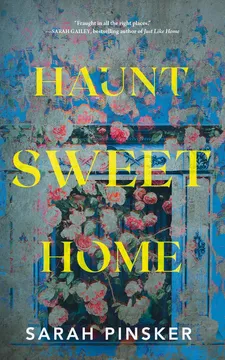


Plot Summary
Prologue
A transcript from Haunt Sweet Home shows host Jeremy arriving at a Massachusetts castle to meet new owners Maggie and Conor Ferguson. Their beloved library seems to have a ghost that throws books, speaks, and sends a dark shape crashing into Jeremy.
The crew flees the room as the lights burst and the shape escapes through the door. The footage promises a haunting that exceeds the show’s usual tricks, but the transcript withholds who or what caused it.
The transcript opens with a finished television story before the reader knows the people behind it. Its staged format initially encourages skepticism, but the violent, unexplained events leave room for something the crew cannot manufacture. That tension establishes the novella’s central uncertainty: when a haunting is produced for entertainment, the people creating it may not be the only ones present. The preview also turns the library into a destination whose meaning will change as Mara’s private story catches up with the show.
Thanksgiving Goes Sideways
At Thanksgiving, Mara Billings arrives at her uncle AJ’s house to find the host missing and the family forced to improvise a meal with chicken parts, a broken oven, and a camping burner. When AJ later mocks her repeated attempts at college, nobody at the table defends her; Mara retreats to her car to eat alone.
Her cousin Jeremy, the successful host of Haunt Sweet Home, has already offered her a production-assistant job, but she waits a week to accept and learns it has been filled. After college again loses its hold on her, Jeremy offers a second chance when another assistant is fired. Mara takes it, hoping a new job might be a life she can actually enter.
Mara’s first decisive move follows a familiar family pattern: she waits for permission, then treats the delay as evidence of personal failure. The Thanksgiving meal makes that pattern visible through physical exclusion as much as mockery. She is present among a capable family but has no task, chair, or advocate. Jeremy’s offer is both opportunity and temptation because it comes through the very relative whose effortless success sharpens her sense of inadequacy. Accepting the second opening does not mean Mara has found a vocation. It means she has finally chosen motion over another season of self-reproach.
Fog Over Stonemill
Mara reaches a western Massachusetts shoot expecting to work beside Jeremy, only to learn she is assigned to the night crew, under producer Lauren Tran and camera assistant Andi. At Stonemill Farm, the crew plans to turn an overgrown apple orchard into a haunting. While carrying a fog machine with director of photography Felix, Mara finds a buried cemetery and a broken marker bearing part of the name Han.
The crew seizes on the discovery as a story hook, although no records connect it to the house. Mara operates the fog machine, then flashes lights and plays a recorded voice among the trees. The owners see a figure in the mist and begin imagining who Han might have been.
The crew’s methods make belief a collaborative production. A real cemetery supplies material, but the ghost story is assembled from guesses, lighting, timing, and the owners’ own fears. Mara’s role is deliberately small, yet she is the person who makes the fog cross the orchard at the right moment. This distinction matters: she begins by treating the haunting as a technical task, while the setting’s neglected history resists the crew’s tidy invention. The grave’s fragmentary name offers just enough evidence to feel personal, without enough to establish whose story the production is telling.
The Shape in the Applewood
During a later night at Stonemill, Mara finds a lightning-split apple tree whose broken trunk resembles a human body. Thinking of her grandmother Oma’s practice of finding forms inside wood, she begins carving with only a small knife and a multi-tool. The dense applewood makes every cut slow, and she continues through the season’s weekends, shaping a tense figure with clenched fists and a strained, unfinished face.
Meanwhile, she works on other houses, including one haunted by a hidden speaker playing mournful viola music, and tries without success to draw Jeremy into a real conversation. The sculpture becomes the first thing she has made that feels unmistakably hers, even as she remains unsure what she wants beyond the next job.
Mara’s carving differs from the show’s tricks because it cannot be completed by following someone else’s instructions. Oma’s teaching gives her a method, not a design, so Mara must stay with uncertainty long enough to recognize a shape. The sculpture externalizes a conflict she has trouble naming: ambition mixed with embarrassment about having no clear direction. It also introduces a form of attention that the production crew lacks. They look at the orchard for a usable ghost story; Mara looks at the damaged tree until it becomes a figure that can hold feelings she has not yet learned to claim.
A Cow Screams at Midnight
At a house beside a former cattle pasture, Mara is told to make mournful cow sounds, but a stranger named Jo appears and offers to handle the scream. Her sound is so convincing that the owners panic, and the crew praises Mara for an effect she did not create. After a smoky hot-plate fire at the motel leaves Mara exhausted, Jeremy finally visits the set.
Jo screams again during the staged tea scene; the owners flee to a motel and decide to leave the house and the production behind. Jeremy is startled too, while Tran refuses his demand to control the footage. At dawn, Mara learns the owners will not return. Jo’s intervention has turned a routine scare into a costly failure, and Mara still cannot explain who Jo is.
Jo enters the story by doing Mara’s assigned work better than Mara could, then leaves her to receive the credit. That imbalance turns a useful collaboration into an unsettling question of authorship. The owners’ departure also exposes the production’s ethical boundary: the crew intends to frighten people, but the scream exceeds their planned dose and has real consequences. Jeremy’s brief loss of composure punctures his polished television persona, while Tran’s refusal to surrender footage shows that the show’s power is institutional, not his alone. Mara is caught between gratitude for help and unease about what she cannot account for.
A Stranger at Oma’s Fire
When the production gets a long weekend, Mara invites Jo to stay at Oma’s house rather than spend the break alone. Jo admires Oma’s sculptures, then joins Mara’s family bonfire, where she plays fiddle with Mara’s relatives and is welcomed more easily than Mara expects.
Watching her connect with the family leaves Mara jealous, especially when relatives accept Jo without asking whether her job is temporary. On the drive home, Mara lashes out over Jo’s talents and the earlier cow scare; Jo answers that Mara seems unwilling to value her own life.
They separate angrily. That night, Jo appears beside Mara’s bed despite the locked door, looking like Mara, then vanishes before morning. Mara leaves without finding her, unsure whether the visit was real.
The conflict grows from a painful asymmetry: Mara invites Jo into a place she longs to belong, then resents how naturally Jo inhabits it. Her family’s warm response does not create the jealousy, but it exposes the story Mara tells herself about being the least accomplished person in the room. Jo’s criticism lands because it names a real habit, yet its intimacy feels invasive rather than comforting. The appearance in the locked bedroom shifts their quarrel from social friction toward the uncanny. Mara has tried to dismiss Jo as a stranger, but the stranger now seems to know her from the inside.
Books Fall Without a Hand
At Cleaveland House, Felix hides Mara in a narrow gap above the Fergusons’ library so she can drop books through the night. Jo appears there too, challenges Mara’s low expectations for herself, and says she could take Mara’s place. Before Maggie and Conor enter, Jo flings books from the balcony, including valuable volumes that the plan was to drop gently.
Then books fall from places neither woman could reach, and a voice speaks from around the room. Maggie climbs the ladder to investigate. Jo startles Mara from behind, and Mara tumbles over the railing, landing on Jeremy below. As the crew and owners react, a separate, powerful scream fills the library, the chandelier shatters, and Mara runs from the house.
The library scene breaks the production’s basic bargain: the crew can stage a fear, but it cannot guarantee control over what enters the frame. Jo’s taunts make the scare personal, while the falling books and destructive force exceed anything Mara or the crew planned. Mara’s fall is both a physical accident and a public exposure of her hidden labor. For the Fergusons, the reveal should prove the show is fake, yet the unexplained events leave them with a different question. The scene’s horror comes from overlapping causes that cannot be cleanly separated: performance, intrusion, and something genuinely outside the crew’s command.
Han Becomes Johanna
Mara finds Jo waiting in her car with her keys and backpack, then drives to Stonemill and uncovers the carving she has kept under a tarp. When Mara tries to leave the sculpture in the orchard, Jo explains that the damaged tree drew her into the wood and that Mara’s carving gave her a way to move.
Jo touches Mara’s hand and shares memories of her life as Johanna, a young farm worker who tended six apple trees, cattle, and a fiddle-playing family. Johanna died suddenly at twenty-five while gathering apples, then remained bound to the tree. Mara recognizes the connection between Johanna and the cemetery marker, Han. Rather than leave her there, Mara and Jo carry the heavy carving back to the car together.
The revelation turns the cemetery clue from production material into a person’s interrupted history. Johanna’s memories do not arrive as a polished ghost biography; they are lived details of work, music, family, and the ordinary future she expected to have. Mara’s carving has become a meeting place because she attended to the tree rather than forcing it into a convenient shape. Yet the bond is not simple possession: Johanna receives Mara’s memories too, and both selves remain distinct within their connection. Mara’s choice to bring the sculpture back rejects the idea that unfinished parts of a life can simply be abandoned.
A Throne of Her Own
Mara returns to the shoot and learns the Cleaveland House footage has been edited to make her fall and escape look like a flying figure. Two months later, Jeremy visits the Fergusons, who have repaired the house and wonder whether their quiet library ghost remains.
Across the season, Mara and Jo haunt twenty-two homes together. Jeremy later admits his own sudden-success story was edited to hide dozens of failed auditions, prompting Mara to reconsider how she narrates her life. After filming ends, Tran offers Mara a union assistant-coordinator job, which she does not immediately accept.
At Oma’s fire pit, Mara brings home a carved chair of her own. Jo reveals the library’s most destructive effects came from another presence, not her, leaving one genuine haunting unexplained as Mara considers what comes next.
The ending refuses to turn Mara’s growth into a neat career conversion. She has learned that the show edits events into satisfying narratives, including Jeremy’s rise, and that her own story need not be reduced to failure or borrowed success. Her chair gives that change a physical form: unlike the older family thrones, it carries her own uncertain, mixed identity rather than a flattering emblem chosen for her. The job offer presents a real next step, but Mara pauses before accepting. The unresolved force in the library preserves the novella’s supernatural uncertainty, even as Mara becomes less uncertain about her right to make things.
Analysis
Haunt Sweet Home is built around a useful contradiction: its crew manufactures ghosts for a living, yet Mara’s work eventually brings her into contact with a history that cannot be reduced to production design. The show’s tricks are not merely a comic frame. They expose how readily people accept a story when it is arranged around their own anxieties, and how editing can make uncertainty look like proof. The homeowners’ fear is real even when the source is a hidden speaker or a timed fog machine. The crew’s confidence in controlling that fear becomes less secure as the novel proceeds.
Mara’s deeper problem is not that she lacks ability, but that she has learned to interpret an unfinished direction as a defective self. Her family’s chairs make belonging concrete: each carved throne carries a chosen image, while Mara’s empty place seems to confirm that nobody has decided who she is. The applewood sculpture changes that relationship. Following Oma’s method, Mara does not begin with a confident plan; she studies what is already there and works patiently toward a form. That act lets her recognize a capacity she could not have claimed through comparison alone.
The connection between Mara and Johanna makes identity relational without making either woman interchangeable. Mara gives Johanna access to another life, while Johanna’s memories make Mara’s own desires more legible. Their bond is intimate and difficult, not a cure for loneliness. The ending wisely leaves Mara’s career decision open. Her new chair and possible promotion suggest expanded agency, but the unresolved force in the library prevents the world from becoming fully explainable. Mara’s progress lies less in solving every mystery than in becoming willing to make something, claim a place, and decide what happens next.
People Also Read



Characters
Mara Billings
Restless night-shift PAMara is the youngest adult in a large, competent family and has spent years trying college plans without finding a direction that feels like hers. She is observant, practical in the woods, and more comfortable keeping her hands busy than announcing what she wants. A job on a paranormal reality show gives her a fresh setting but not instant confidence; she still measures herself against her famous cousin and talented relatives. Her attention to wood, fear of being replaceable, and longing for a place in the family all shape how she approaches both work and friendship. Mara’s central psychological tension is not laziness but a habit of treating uncertainty as proof that she has nothing to offer.
Jo
Uncanny fellow haunterJo first presents herself as a day-crew floater who can supply an astonishing scream and help Mara with difficult scares. She is quick-witted, musically skilled, and socially confident, often entering situations as if she already belongs. Her ease can feel generous or intrusive, especially when she notices the self-doubt Mara tries to hide. Jo pushes Mara toward a more active view of her own life, but she does so with a teasing bluntness that can bruise as well as clarify. Her unusual access to Mara’s work and private feelings makes her both a companion and a source of unease.
Jeremy
Famous cousin and hostJeremy is Mara’s older cousin and the polished host of Haunt Sweet Home. His success has made him a family legend, which leaves Mara feeling both impressed by and resentful of him. He offers her a production job, but his self-absorption and carefully managed public persona make him difficult to reach. On set, he knows how to guide homeowners through a story and protect his image, yet his own career history is less miraculous than its edited version suggests. Jeremy embodies the gap between a life as lived and a life packaged for an audience.
Oma
Sculptor and family anchorMara’s grandmother is a respected wood sculptor whose work fills her home and once supported a small shop. She believes that a carver must study the wood before deciding what it should become, a practice that gives Mara a model for patient attention. Oma’s arthritis has ended her carving, and her handmade chairs remain visible signs of the family members she once chose to represent. She is independent, exacting about her craft, and less perceptive about family personalities than the younger generation imagines. Her example inspires Mara without prescribing what Mara’s own work must mean.
Andi
Night-crew allyAndi, a camera assistant on the night crew, is the first colleague to welcome Mara and explain the show’s strange routines. She is candid, funny, and comfortable working in a team without pretending the production is more glamorous than it is. Her practical kindness helps Mara learn the job, while her confidence highlights how new Mara feels among experienced coworkers. Andi understands that the owners’ reactions depend on genuine surprise, even when the haunting itself is fabricated.
Lauren Tran
Exacting night producerTran leads the night crew with direct instructions and a clear sense of what makes an episode work. She expects Mara to anticipate needs, accepts the risks built into the job, and protects the production’s plan from Jeremy’s attempts to interfere. Her standards can make Mara feel small, but Tran is not simply a hostile boss; she recognizes useful work and later sees a need for a more senior night-production role. She represents the show’s demanding professional structure, where creative control and employee vulnerability coexist.
Felix
Practical-effects directorFelix is the night crew’s director of photography and effects-minded planner. He devises the low fog at Stonemill, finds ways to hide equipment, and turns the architecture of Cleaveland House into a hiding place. His technical ingenuity makes him proud of unusual scares, though his plans sometimes ask Mara to endure unsafe or degrading conditions. Felix treats the haunting as craft, balancing spectacle against the practical limits of a small production.
Cath
Roommate with boundariesCath is Mara’s roommate at the motel and the day production assistant responsible for the crew’s snack table. Abrupt and territorial at first, she makes clear that shared space requires rules and that she values her own comfort. She is not a close confidante, but she shows occasional consideration, including leaving Mara money to wash smoky clothes after the fire. Cath reflects the practical negotiations of low-level production work, where coworkers share cramped rooms and little privacy.
Maggie Ferguson
Book-loving new homeownerMaggie buys Cleaveland House with her partner, Conor, chiefly because of its two-story library. A librarian, she treats the inherited books as objects worth cataloguing and repairing, not merely props for renovation. Her confidence in the library makes its apparent haunting especially personal, while her attempts to interpret the books give the episode a thoughtful counterpoint to Conor’s suspicions.
Conor Ferguson
Practical co-ownerConor purchases Cleaveland House with Maggie and approaches the renovation as a practical problem, prioritizing a usable kitchen and safe living conditions. He is more skeptical than Maggie about ghosts, though exhaustion and strange events complicate that skepticism. His concern for the house’s condition and his willingness to work alongside Maggie make him an active partner rather than a passive witness.
Plot Devices
Haunt Sweet Home
Manufactured fear machineThe reality show supplies the story’s framework and its everyday machinery. Night crews use fog, speakers, hidden positions, editing, and carefully timed interruptions to frighten homeowners while presenting the episode as a genuine haunting. For Mara, the job offers money and a possible direction, but it also places her at the bottom of an unstable production hierarchy. The format makes every ghost ambiguous: a scare may be staged, a reaction may be real, and the crew’s confidence in its own tricks can conceal events it did not create.
The Applewood Carving
A self made into a vesselMara discovers a broken apple tree at Stonemill and slowly carves its trunk into a human figure. The work begins as a way to use her hands during long, lonely nights, but the tree carries a history the production has not uncovered. Mara’s patient shaping connects her own unspoken frustrations with another person’s past, making the sculpture both an artwork and a supernatural point of contact. The carving also gives the story a physical measure of Mara’s changing sense of ownership over her skill and identity.
The Han Marker
A fragment of lost historyFelix and Mara find a weathered grave marker in the orchard, with only part of a name visible. The crew uses the fragment to invent a backstory for its staged ghost, but the name later proves to point toward a real life the records have forgotten. The marker creates a contrast between the production’s appetite for a usable narrative and the incomplete evidence left by the past. It is an understated clue whose importance depends on the reader remembering its partial inscription.
Oma’s Carved Thrones
Belonging made visibleOma’s sculpted stump chairs give each adult family member a distinctive place around the fire, except Mara, whose chair was never made. The family calls them thrones, turning furniture into a visible record of who has been recognized and who has not. Their history also carries the family’s unresolved tensions around age, marriage, artistic limits, and Oma’s failing hands. Mara’s eventual carving enters this tradition without simply copying it, making the chairs a recurring measure of how she understands her place among the Billings family.
Download PDF
Download EPUB
.epub digital book format is ideal for reading ebooks on phones, tablets, and e-readers.








