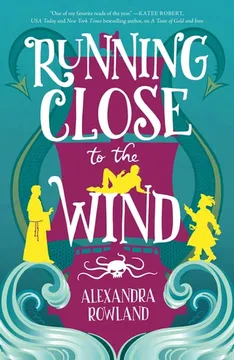


Plot Summary
The Passenger Returns
Avra Helvaçi is hiding in a cabin aboard a merchant ship when The Running Sun, the pirate vessel captained by his former lover Teveri az-Ḥaffār, captures it. Teveri’s crew recognizes Avra, ties him up, and delivers him to the captain, who is still furious about his last departure and a vulgar song he wrote.
Avra expects to be marooned again, but he notices that the crew’s latest prizes are meager and that the serpent season is nearly here. He offers something valuable enough to keep him alive: stolen papers from Araşt’s Shipbuilder’s Guild. Their contents, he warns, could make the crew rich or bring the government down on them.
Avra’s return begins as a comic reckoning, but his predicament is more than a lovers’ quarrel. His apologies are an improvised survival technique, and his jokes test whether Teveri’s anger still leaves room for attachment. The valuable papers change the balance: Avra is no longer merely a nuisance to be thrown overboard, but a person whose knowledge can protect a whole crew. His instinct is to make himself useful before he risks asking to be wanted.
A Recipe Worth Treason
In Teveri’s cabin, Avra explains how his clumsy curiosity led him into the Guild’s guarded offices. After a truthwitch cleared him of plotting against Araşt, he wondered whether his supposedly impossible luck could be tested. He wandered into the Guild, found keys, blundered past guards, and copied papers from a hidden safe.
Among the engineering diagrams was the recipe for the offering poured into the sea by Araşti ships during the serpents’ breeding season. Avra fled the country with his notes and part of the secret in his head. Teveri takes the papers and promises to keep him alive until they can be sold, turning Avra’s crime into the crew’s dangerous opportunity.
The theft is a collision between curiosity and consequence. Avra does not plan a political crime so much as stumble into one, then discovers that his apparently harmless experiments have made him responsible for other people’s safety. The story’s luck question stays deliberately unresolved: his success looks supernatural, yet each step can also be explained by accident and poor security. Teveri responds more practically. The secret has a price, and money might rescue a crew whose survival is precarious.
The Monk Deciphers
Teveri brings in Julian, a tall Vintish monk who joined the crew after a supposed treasure map led him nowhere. Avra suspects him immediately, especially when Julian reveals a vow of celibacy and a past as a revolutionary who fled a failed conspiracy against his king. Julian agrees to study the alchemical notes, but the recipe lacks instructions for using it.
Avra’s flirtation gives way to a useful confession: sailors pour four barrels overboard when serpents appear, while the crew hides below deck. He also remembers that the technique was invented by a merchant family seeking profit during the dangerous season. Julian now has both the formula and the practical details needed to test it.
Julian unsettles the ship because he cannot be sorted into a simple role. His religious discipline sits beside a rebellious past, while his scholarship is useful to pirates whose lives depend on practical knowledge. Avra treats seduction as both play and information-gathering, but Julian turns the exchange into an interrogation and gets facts Avra would otherwise scatter among jokes. Their chemistry is already tangled with suspicion: attraction makes Avra more forthcoming, while Julian’s restraint makes him harder to read.
A Ghost Names Betrayal
As The Running Sun crosses the haunted Turtle Shallows, a drowned sailor appears and warns that a traitor stands aboard. The crew argues over whether the warning points to Avra, Julian, or one of the pirates, but Teveri turns the fear toward a practical question: if they sell the secret together, no single sailor can steal it and betray the rest.
The crew agrees to pursue the sale despite the risk of provoking Araşt. The Pact has kept Scuttle Cove fed by shielding Araşti ships from piracy, yet the stolen technique could let pirates supply themselves. When the ghost accepts a song and moves on, the crew reaches port with a shared plan and a new threat hanging over them.
The ghost’s accusation makes betrayal feel intimate, but Teveri answers it by changing the structure of the risk. Instead of demanding trust in private, they make the secret a collective responsibility and let every crew member see what is at stake. The Pact is not simply a treaty; it is a dependency that keeps a crowded pirate town alive through the serpent season. The crew’s choice therefore carries both liberation and danger. Their new unity is real, but it rests on money, mutual surveillance, and a common enemy.
Baltakan Starts Watching
In Scuttle Cove, Avra meets Ambassador Baltakan, the new Araşti official who is still building contacts and investigating the Shipbuilder’s Guild break-in. Avra reassures him that the original theft has been solved, while carefully hiding his own role.
Baltakan asks Avra to introduce him to influential locals and listen for anyone selling stolen information. Avra notices that the ambassador’s vigilance could expose the crew, but also that Baltakan lacks the old ambassador’s networks.
Their conversation leaves Avra pulled between his former government and the pirates who have taken him back. Meanwhile, Teveri’s promise of sex if Avra behaves through the Shallows gives him a personal reason to stay useful, however much he pretends otherwise.
Baltakan brings the state’s power into the harbor without needing soldiers or threats. He relies on procedure, information, and the belief that a former intelligence agent will remain legible to his country. Avra’s cheerful helpfulness makes him dangerous precisely because it looks like foolishness: he understands people, yet rarely presents himself as a serious operator. His new position is unstable. He has left the Ministry, but still knows how to perform loyalty, and he has not yet decided what belonging to the pirate crew requires of him.
The Fences Set a Test
Teveri takes the papers to Scuttle Cove’s powerful fences, including Black Garda, who doubts that a struggling captain has truly found the world’s most valuable secret. Rather than buy it on faith, the fences demand proof: The Running Sun must sail to Blue Dog Island and bring back two rare blue dogs. The trip will test both the claimed serpent defense and Teveri’s judgment.
Red, a red-haired visitor, and the veiled Puppeteer arrange help from an Ammat crew whose shallow-drafted catamaran can travel fast through dangerous water. Julian prepares the formula, while Avra is ordered aboard The Running Sun. The expedition now has witnesses, a deadline, and a public wager attached to it.
The fences convert an abstract claim into a test with visible stakes. Their skepticism is not mere greed; they have to decide whether to risk capital, reputation, and the fragile balance of the town. Teveri accepts because a spectacular success could restore the captain’s standing and support the crew. The Ammat sailors introduce a different kind of competence, shaped by a vessel suited to shallow water rather than the heavy pirate carrack. Their presence also broadens the story’s idea of expertise beyond the institutions that control the secret.
Teeth, Dogs, and Debt
When a breeding swarm attacks, Julian’s first experiment fails. The sea serpents keep striking The Running Sun, and one crashes onto the deck before Oskar kills it with an axe. The Ammat crew helps them reach Blue Dog Island, where the pirates find a glowing blue dog and, later, a pack feeding on a beached serpent.
To keep the Ammat sailors from reporting the failure, Avra wagers his share of any future profits against their silence in a jump-rope contest. He loses almost immediately, leaving his promised winnings in Heirani’s hands. The setback makes his usually comic gambling consequential: he has given away his possible fortune to protect Teveri’s reputation and buy the crew more time.
Avra’s wager is a rare moment when his luck cannot be separated from responsibility. He expects to win, but he is not gambling only for himself: the crew’s credibility and Teveri’s standing are on the line. Losing exposes the cost of using chance as a private philosophy. At the same time, the glowing dogs offer a clue that the failed formula has not erased the possibility of discovery. The chapter moves from slapstick danger to a more serious kind of generosity, one Avra can explain only by trusting his friends.
The Serpent Starts Glowing
As The Running Sun returns through the Shallows, a giant turtle breaches beside the ship and floods the deck. The water spills Julian’s barrels into the hold, where the mixture runs over Oskar’s dead serpent. Its bright stripes begin to glow.
Julian realizes that the concoction has caused a reaction, and Avra remembers an old intelligence mission in which a serpent’s glowing stripe had been cut away before he replaced it with another corpse. Before they can investigate, an Araşti naval ship comes alongside to search them under the Pact. Teveri refuses access to the ship’s logbook, which the treaty does not authorize, and the inspectors leave without finding the papers.
The discovery arrives through damage rather than controlled experiment. A turtle’s sudden force creates the conditions that Julian could not produce deliberately, making accident and scientific observation inseparable. Avra’s old mission supplies a missing piece: the government had not only guarded the recipe but concealed what the serpents’ stripes had to do with it. Teveri’s refusal to surrender the logbook shows a different kind of expertise, legal knowledge used as a shield. The crew survives because Julian notices the reaction and Teveri knows exactly where the Pact’s authority ends.
Collars Buy a Chance
Back in Scuttle Cove, Avra and the crew turn golden straw into silver-colored braid and present collars to Black Garda with the two glowing dogs. The gift flatters her love of dogs and hints at the Nightingale relics that matter to Teveri’s reputation. Black Garda gives the crew rooms and, after learning that another captain has been dismissed, hires The Running Sun to protect her wife Navya’s cake in the competition.
The money will keep the crew afloat. Avra also learns that Baltakan has brought a truthwitch, Witness Amita, to investigate the Guild theft, and that the ambassador wants Julian questioned at the festival. The crew’s immediate danger is no longer only the sea; it now stands among them in disguise.
The collars make a practical resource carry symbolic weight. They transform cheap straw into an imitation of the silver sails associated with the legendary Nightingale, allowing Teveri to offer dignity when the crew cannot offer proof or wealth. Black Garda reads the gesture and rewards its ingenuity, but the new income does not remove the state’s attention. The truthwitch’s arrival shifts the danger from physical search to spoken truth. The crew must now manage its public reputation, its precarious finances, and the possibility that honest answers can be weaponized.
A Friend, Not a Client
Overwhelmed by the danger and the uncertainty around Julian, Avra visits Cat, a courtesan he has known for years and always paid promptly. Cat offers friendship rather than another transaction, and Avra struggles to accept care without knowing its terms. He tells Cat that Julian keeps flirting while bound by his vow, and Cat urges him to ask for clarity.
Avra does so. Julian apologizes for making the attraction confusing, but admits he does not know whether he will abandon his vow. Avra retreats beneath a bed rather than stay in the conversation. Teveri finds him there and supports his attempt to set a boundary, even while admitting that Julian’s behavior affects them too.
Avra’s relationship with Cat reveals that the courtesy he treats as a tactic has created genuine attachment. He has built trust by respecting other people’s work, but struggles when that trust is offered without a price or a script. His boundary with Julian is similarly important: wanting someone does not make uncertainty harmless. Teveri’s support gives Avra a model of care that is imperfect but recognizable. The three-way romantic tension is not only about desire; it is about whether each person can state what they want without forcing another to guess.
The Cake Names the Crime
At the cake competition, the crowd first mourns Captain Kgosi, the oldest living captain, whose family reads his prepared farewell. His irreverent message insults Baltakan and leads into the day’s theme: the security breach at the Shipbuilder’s Guild. The ambassador, disguised in burlap, is now surrounded by public mockery as well as suspicion.
He takes Julian and Avra to Eel-face Yusin’s bar, where Witness Amita questions Julian. Rather than conceal his views, Julian explains that he is reconsidering his celibacy vow and condemns institutions that hoard knowledge while ordinary people struggle to survive. He tells Amita he would give the serpent technique freely, not sell it to another powerful buyer.
The competition turns political embarrassment into a public ritual. Kgosi’s funeral speech lets the town mourn and mock authority in the same breath, while the theme makes the Guild theft impossible to ignore. Julian’s interview is not a clever evasion. He answers from a coherent moral position, forcing the truthwitch and Baltakan to confront the difference between truthful speech and state loyalty. His critique also recasts knowledge as something that can be hoarded or shared. For Avra, the stakes of the secret begin to exceed the money he first used to save himself.
Granny Layla's Starship
While the crews inspect one another’s cakes, Avra and Julian visit Granny Layla, whose replica Araşti ship is deliberately ugly and strangely luminous. Layla explains that, decades earlier, she saw a ship moving beneath the dark water during serpent season. Its hull shone, yet the serpents ignored it. She kept the sighting secret until The Running Sun sailed out with Avra aboard, suspecting that he had stolen something from the Guild.
Julian recognizes that the old woman’s memory may connect the recipe, the glowing animals, and the Araşti hulls. He leaves the competition to test his theory. Layla’s account gives them evidence the Guild’s documents alone could not provide: the secret may belong to the ship’s surface, not merely its cargo.
Layla’s testimony is valuable because it comes from someone outside the official record and outside the market for the secret. Her memory has survived precisely because no institution considered a cook’s observation worth pursuing. The cake competition becomes an unlikely archive, preserving an encounter that formal intelligence work missed. Julian’s response is disciplined rather than triumphant: he has a hypothesis, not proof. In a novel full of people treating knowledge as leverage, Layla’s decades of silence become an act of stewardship that makes discovery possible.
The Ambassador Falls
Before the contest’s durability test, the long table gives way and sends the cakes sliding together. Navya’s carefully reinforced creation survives, while Baltakan, still in his disguise, falls into the wreckage and becomes the day’s most visible joke. The collapse appears linked to a support pole Avra had repeatedly touched, though no one can prove his luck caused it.
Navya wins, and Black Garda pays The Running Sun’s crew for guarding her cake, then gives Teveri the two rare feathers they had requested. The payment eases the immediate money crisis. Yet Avra recognizes that the ambassador could retaliate by disrupting the food ships that sustain Scuttle Cove, and Teveri points out that doing so would violate the Pact.
The fallen table gives the festival a physical version of its political comedy: authority literally lands in the mess it hoped to inspect. The accident cannot be confidently credited to Avra’s luck, which preserves the novel’s refusal to make supernatural causation easy. Navya’s cake survives because it was built to endure, while Teveri’s crew wins money by combining competence with theatrical timing. Their success is not a clean victory. Public humiliation may provoke retaliation, and the Pact that has kept the town fed now becomes both a constraint and a possible opening.
Light Under the Hull
After the competition, Julian takes Avra and Teveri by dinghy to the nearby Araşti ship. He suspects its painted hull carries the missing part of the defense, especially after Avra recalls that the original technique dates back only a little over two centuries. Julian quietly pours the remaining mixture onto the hull.
A greenish light spreads beneath the water, confirming that the paint reacts with the formula. The process still needs careful study, and the three have not settled whether to sell the secret or share it freely. Julian argues that giving it away could break Araşt’s monopoly; Teveri worries about keeping the crew alive. For now, the light proves the secret is real, and the three return to their ship together.
The final experiment converts an abstract secret into a visible change in the world. The glow is beautiful, but its meaning is political: a monopoly that has shaped trade, hunger, and safety may be reproducible. Julian’s insistence on testing before distributing the method keeps moral urgency from becoming recklessness. Teveri’s fear of poverty is not dismissed as greed; it reflects a life in which a ship and crew can be lost through one bad season. The ending leaves the choice open, but changes the question from what the secret is worth to whom it ought to serve.
Analysis
Running Close to the Wind makes a comedy out of people who are not safe enough to take themselves lightly. Avra’s clowning is not simply comic relief. It is a learned form of social intelligence: he pays bills, remembers names, notices discomfort, and uses absurdity to draw attention away from fear. His jokes sometimes conceal his need for affection, but they also help him read power and keep connections alive. The people around him gradually respond to the person beneath the performance, not by demanding that he stop being ridiculous, but by insisting that his care and fear count too.
The political plot gives that emotional movement material consequences. Araşt’s monopoly over safe passage has turned food into leverage, making a supposedly cooperative treaty a system of dependence. The secret’s value therefore cannot be separated from who gets to travel, eat, and learn. Julian’s belief in freely shared knowledge challenges both the state and the pirate economy, while Teveri’s hesitation comes from an equally real fear: ideals do not repair a ship or feed a crew. The novel refuses to make either position costless. Its final discovery offers a possible way to break the monopoly, not a completed solution.
The romance echoes that unresolved choice. Teveri fears that vulnerability will cost them authority; Julian is reconsidering a vow shaped by institutional power; Avra wants intimacy but often hides behind performance. Their growing trust depends on saying what they mean, respecting refusals, and making room for each other’s uncertainties. The ending’s luminous hull offers no guarantee of safety. It does, however, turn a private experiment into a shared possibility, and leaves the three characters facing the same question as the pirates: what is a discovery worth if its benefits remain in only a few hands?
Review Summary
Running Close to the Wind receives mixed but generally positive reviews, averaging 4/5 stars. Readers frequently praise its hilarious, absurdist humor, vibrant queer cast, and chaotic pirate adventure. Many compare it favorably to Our Flag Means Death and Terry Pratchett. Common criticisms include repetitive sex jokes, lack of actual spicy content despite constant innuendo, thin plot, and an exhausting one-note protagonist in Avra. Reviewers consistently note its drastically different tone from A Taste of Gold and Iron, warning fans of that book to adjust expectations accordingly.
People Also Read





Characters
Avra Helvaçi
The Lucky PoetAvra is a former Araşti intelligence agent, a poet, and a compulsive flirt whose apparently impossible luck has made him a legend among pirates. He uses jokes, theatrical helplessness, and casual charm to keep danger at arm’s length, but his comic performance hides a keen eye for people and for details others overlook. He is generous with money when he has it and unusually attentive to whether workers are treated fairly. His bond with Teveri is intimate and volatile; his attraction to Julian unsettles both of them. Avra wants affection without having to ask plainly, so he often provokes the people he loves until they turn their attention toward him.
Teveri az-Ḥaffār
The Haunted CaptainTeveri is the scarred, golden-eyed captain of The Running Sun, a formidable leader whose anger is as famous as their stubborn sense of responsibility. They grew up in Tash and rejected the religious order that defined their childhood, but their embroidered coat still asserts a connection to their homeland on their own terms. Teveri wants a ship, a lasting reputation, and the freedom to define themself rather than become someone else’s imitation of a hero. Their relationship with Avra moves between desire, exasperation, and hard-won loyalty. Financial strain makes every risk personal: the crew’s livelihoods and Teveri’s identity are bound to the same vessel.
Julian
The Restless MonkJulian is a Vintish cleric with a scholar’s appetite for explanation, a sailor’s growing practical skill, and a vow of celibacy that shapes his relationships. He is patient enough to listen through Avra’s digressions and perceptive enough to recognize when humor is protecting pain. His religious life is not passive obedience: he takes seriously the pursuit of understanding and questions institutions that claim authority over it. Julian is physically imposing but gentle in manner, qualities that make him a calming presence aboard a crew accustomed to roughness. His attraction to Avra and Teveri complicates his discipline, while his curiosity keeps the crew’s uncertain discovery moving forward.
Markefa
The Crew's Steady HandMarkefa is The Running Sun’s bosun, a seasoned sailor and Teveri’s trusted ally. She manages provisions, reads crew dynamics, and can steer Avra away from trouble by turning his own desires into a better plan. Her affection for him is frank and unsentimental, built from years of friendship rather than indulgence. She also looks after her nephew Ellat and understands how quickly a crew’s financial strain can become a matter of survival.
Oskar Wertscraft
The Loyal First MateOskar is Teveri’s broad-shouldered first mate, a practical sailor whose patience with Avra has limits. He enforces the captain’s orders, protects the crew, and takes direct action when danger reaches the deck. His loyalty is physical and unmistakable, though his temper can flare under prolonged stress. He represents the crew’s grounded competence in contrast with Avra’s improvisation and Julian’s theory.
Ellat
The Young ApprenticeEllat is Markefa’s seventeen-year-old nephew and the youngest sailor aboard The Running Sun. He is eager to prove himself, still young enough to be teased as a child, and observant enough to ask questions that older sailors overlook. His search for adult independence runs alongside his affection for his aunt and his wish to belong to the crew.
Nagasani
The NavigatorNagasani navigates The Running Sun through the reefs and moving Turtle Shallows. Her calculations depend on careful observation of stars, tides, and ghostly signals. She is disciplined and practical, giving the crew a route through a world where familiar charts can quickly become dangerous.
Black Garda
The Retired Pirate QueenBlack Garda is a former pirate captain who has become one of Scuttle Cove’s most influential fences. She is shrewd about reputation and business, fond of well-trained dogs, and willing to reward a clever gesture when it serves both sides. Her history gives her authority among captains, but she is not sentimental about money or risk.
Cat
Avra's Trusted FriendCat is a courtesan on the Street of Flowers who has known Avra for years. He appreciates Avra’s manners and humor, but also sees through his habit of treating every bond as a transaction. Cat’s kindness is direct and bounded by professional self-respect. He offers Avra friendship without asking him to perform for it.
Ambassador Baltakan
Araşt's Watchful EnvoyBaltakan is Araşt’s newly appointed ambassador to Scuttle Cove. He is conscientious, ambitious, and more comfortable with official channels than with the town’s informal networks. His belief in thorough procedure makes him an effective investigator, but it also leaves him liable to misread people whose loyalties do not follow institutional rules.
Witness Amita
The TruthwitchWitness Amita is an Inachan truthwitch whose ability to detect lies serves her temple and the officials who hire her. She carries herself with poise and treats truthful speech as a serious spiritual practice. Her work requires concentration and can strain her physically, giving her a personal stake in how institutions use her gift.
Red
The Red-Haired ScholarRed is a fiery, red-haired visitor who arrives with the Ammat sailors and takes an interest in Scuttle Cove’s people and history. He helps connect the pirate crew to a vessel suited to shallow, dangerous waters. His curiosity is directed toward lives that more powerful institutions tend to leave unrecorded.
The Puppeteer
The Veiled InterpreterThe Puppeteer is a veiled Tashaz visitor who communicates through a puppet and serves as an interpreter for the Ammat crew. Their method confuses Avra, but their calm presence helps people with different languages cooperate. The puppet is a chosen form of communication, not a magical creature.
Captain Heirani
The Ammat CaptainHeirani commands the shallow-drafted Ammat catamaran and brings her sailors into the crew’s dangerous expedition. She is practical, friendly, and quick to protect her younger sister Haukea from trouble. Her willingness to cooperate does not mean she will accept a broken bargain.
Granny Layla
The Veteran CakesmithGranny Layla is an elderly cakesmith and long-standing presence at Scuttle Cove’s cake competition. She is shrewd, mischievous, and protective of the town’s traditions. Her years of watching the harbor have left her with memories that may matter more than the official records.
Lieutenant Viyan
The Ambassador's GuardViyan is an Araşti royal guard assigned to the ambassador. Patriotic, orderly, and sincere, she tries to make Baltakan’s new posting work and treats Avra as a colleague from home.
Nonso
The Crew's DancerNonso is a former court dancer and one of The Running Sun’s most capable sailors. His steady judgment and warm presence help calm disputes among the crew.
Eel-face Yusin
The Harbor InnkeeperYusin owns the cave-side bar where sailors gather in Scuttle Cove. He is blunt, observant, and kinder to regulars than his rough manner suggests.
Plot Devices
Avra's Heralds
A comic compass for chanceAvra consults a deck of symbolic cards when he is anxious, curious, or trying to give a random event meaning. The cards do not reliably predict the future, and their repeated appearance of The Bower becomes a running joke. They externalize the story’s uncertainty about luck: Avra can interpret events, but cannot prove whether fate, chance, or his own choices caused them.
The Serpent Season Pact
A treaty built on dependenceDuring the breeding season, sea serpents make open-water travel perilous. Araşt supplies Scuttle Cove with food in exchange for pirates leaving Araşti ships alone. The arrangement keeps the town alive but also gives Araşt leverage over its economy. The stolen defense technique could change that balance by letting ships cross the dangerous waters without relying on Araşt’s protection.
The Guild's Sea Defense
A monopoly hidden in paintThe Shipbuilder’s Guild papers contain an alchemical recipe, but the recipe alone does not work as the pirates expect. Evidence from glowing dogs, a dead serpent, Granny Layla’s memory, and an Araşti hull leads Julian to test the painted ship’s surface. The final glow confirms a reaction, but the method still needs careful study. This device drives the central mystery and raises the question of whether vital knowledge should be sold or shared.
The Nightingale Relics
Reputation made visibleThe silver mainsail of the legendary Nightingale marks Teveri’s ship and connects the captain to the pirate world’s most celebrated history. Other relics remain in the hands of wealthy captains, and Teveri hopes to acquire them. The sail is both a practical inheritance and a public symbol: it lends status to a crew that has struggled to earn money or respect by conventional measures.
The Cake Competition
A festival staged as combatScuttle Cove’s annual cake contest is a serious public spectacle, with pirate crews guarding cakes, judges using unusual rubrics, and sabotage treated as part of the tradition. It gives Teveri’s crew a paid job and a chance to rebuild its reputation. This year’s theme turns the competition into political commentary on the Guild breach, while its rituals let the town mock authority without abandoning its own customs.
Download PDF
Download EPUB
.epub digital book format is ideal for reading ebooks on phones, tablets, and e-readers.








