

Plot Summary
Prologue
The prologue circles a secret everyone involved believes safely buried. No one knows, no one will speak, and the past should stay underground. But the certainty falters at one question: what if someone starts looking? The brief opening frames the novel as an inquiry into the damage silence can preserve, and the danger of disturbing it.
The prologue makes concealment feel less like a settled fact than a shared agreement under strain. Its anonymous voice could belong to anyone implicated, which suits a story where several people have hidden different truths for years. The closing question turns memory into an active threat: the past is buried, but not inert. This framing also prepares the reader for a mystery in which solving a crime cannot be separated from asking who has been protected, who has been harmed, and whether disclosure will repair anything or merely expose old wounds.
Three Typed Lines
In London in 1905, clerk Jeremy Kite receives a typewritten accusation that he murdered his Oxford friend Toby Feynsham. His superior, Mr Leighton, spreads the news through the office, where colleagues scrawl murderer on Jem's blotter. Rather than endure another round of public suspicion, Jem resigns. The letter's wording echoes the abuse that drove him from Oxford ten years earlier, and he decides to learn why someone has revived it.
At the British Library, he traces the surviving members of their old circle: Hugo Morley-Adams is a rising politician, Aaron Oyede a doctor, Ella Feynsham a chemist, Prudence Warren a village schoolmistress, and Nicholas Rook still teaches at St Anselm's. Jem buys a notebook and begins asking questions.
The accusation does more than threaten Jem's livelihood. It breaks the arrangement he has made with himself: if he stays small and avoids the past, perhaps the past will leave him alone. Leighton's gossip demonstrates that social punishment can be renewed without proof, while Jem's resignation converts humiliation into agency. His first research is practical and constrained by money, yet it also reveals how differently the old friends have survived. The mystery begins with an injury that is both material and historical: the letter costs Jem his job, then makes his lost future impossible to keep ignoring.
Seven Wonders Assemble
The story reaches back to 1892, when scholarship student Jem arrives at St Anselm's College, conscious of his working-class background and club foot. Toby, red-haired, wealthy, and instantly welcoming, rescues Jem's windblown mortarboard.
With Nicholas Rook's sharp humour and Hugo Morley-Adams's easy confidence, Toby brings him into the buttery, where Aaron Oyede joins them after other students jeer at him for being Black. The group soon includes Toby's twin, Ella, a chemistry student, and her friend Prue Lenster, a fellow mathematician who shares Jem's outsider's unease.
Toby keeps collecting people others overlook. Through meals, arguments, and college life, Jem begins to belong. The nickname Seven Wonders follows the group's achievements, and Oxford starts to feel like a future rather than a place he has merely entered.
The first meeting establishes Toby's charisma as a force that can genuinely welcome outsiders, even while it gives him the role of choosing who belongs. Jem's arrival makes class and disability concrete: his body and accent announce his difference before he can speak. Aaron's welcome exposes the racial hierarchy of the college, but the group answers public contempt with an offered seat and shared company. These friendships are not false simply because they later fracture. Their early warmth matters precisely because Jem experiences it as evidence that Oxford's institutions might be more generous than the society outside them.
A Play, A Kiss, A Rupture
In their second year, the friends stage Cymbeline in the college quad. Jem's acting and rowing help earn the group its extravagant nickname, while Nicky's drunken collapse during the final performance turns a triumph sour. Later, when Toby learns his uncle has fathered a legitimate son, his expected inheritance vanishes.
Jem finds Nicky bruised and distressed after Toby has handled him roughly, and comforts him; the two begin a secret physical relationship. By their final year, Toby's academic failures and debts deepen his resentment as Ella and Aaron plan to marry.
At a private gathering in the Mitre, Toby exposes Nicky and Jem, attacks Ella and Aaron's relationship, and insults the people he once gathered around him. Jem leaves humiliated. The group has not yet understood how much that quarrel will determine what happens next.
The play's public success and Nicky's drunken failure reveal how performance governs this circle: Toby can celebrate his friends' brilliance until their distinction makes his own lesser standing visible. Losing the inheritance removes the future that had excused his idleness, and his growing need to control others follows. Jem and Nicky's intimacy offers Jem a rare experience of being chosen, but it is fragile because Nicky remains emotionally bound to Toby. The Mitre gathering converts private tensions into public humiliation. Each character's desire becomes legible at once, yet nobody can speak without risking status, safety, or affection.
The Door Stays Jammed
After the Mitre quarrel, the six friends disperse through Oxford. Toby is found dead the next afternoon in his room at Summoner Quad, stabbed with the Italian stiletto he used as a paperknife. The door has been jammed from outside, delaying discovery and giving the killer time to remove evidence.
Years earlier, the friends had privately learned how to make that faulty door stick; none of them tells the police. Ella says she and Aaron were together during the crucial hour, and Aaron supports her account, though the others doubt it.
The police first target Aaron, then arrest Nicky, but find no proof against either. Jem's grief and shame overwhelm him before his examinations, and he leaves Oxford without a degree. The survivors separate, each carrying suspicions that their shared silence has made impossible to settle.
The jammed door is the mystery's most important physical clue because it converts friendship into shared liability. The group knows a method the police do not, and their decision to withhold it protects the killer while also protecting every private bond exposed by the quarrel. Their silence is not a single coordinated conspiracy so much as a series of frightened omissions, each made for a different reason. Yet those motives produce the same result: the official inquiry stalls, Aaron and Nicky become public suspects, and Jem loses the academic future that had seemed within reach.
Four Reunions, One Suspicion
In 1905, Jem visits Hugo and learns that his fiancée, Lady Lucy, received the same accusation a day before Jem did. Aaron confirms that a letter also reached his medical partners. Each is addressed to someone able to cause real trouble, not simply to the accused.
Jem asks who killed Toby; neither man can answer, though both urge him to stop. He then finds Prue in Aldbury. Her husband has died, and her young son Joe recently drowned after falling from a tree.
Prue's grief has hardened into anger at Oxford and at the friends she believes treated her and Jem as lesser people. She suspects Nicky, whom she thinks killed Toby out of rejected love. Jem cannot dismiss the accusation, but he leaves with a more urgent question: what secret made Toby's last quarrel so dangerous?
The matching letters change the case from a private torment into a targeted campaign. Their destinations suggest a writer who understands where reputations can be damaged, while the friends' differing reactions reveal how much the scandal has already shaped their lives. Prue's account is painful but not neutral: bereavement has given her reasons to read the past through betrayal. Her suspicion of Nicky also gives voice to a familiar social prejudice, the idea that queer desire naturally turns violent when refused. Jem recognizes the danger in that story, even as its evidence presses on his own feelings.
Back Beneath The Spires
Jem returns to St Anselm's and confronts Nicky, now a senior lecturer. Their first meeting is stiff, but they share tea on the rooftop where they once watched Oxford's spires and briefly recover their old ease. Nicky says the other friends could all have killed Toby, though none seems capable of it.
Jem also meets the Master, Dr Earnshaw, who lets slip that Toby had asked how the college would handle an anonymous allegation of a serious offence shortly before he died.
A sensational pamphlet about the murder points readers toward Nicky through his scholarship on Anglo-Saxon poetry, but offers no reliable evidence. The old case has become a campus entertainment. Jem sees that the missing motive may lie not in romantic jealousy alone, but in a secret Toby meant to expose.
Returning to Anselm's forces Jem to encounter the place as both home and crime scene. The rooftop restores a fragile intimacy with Nicky, while the Master's guarded account suggests institutional self-protection: the college preferred an intruder theory to the possibility of wrongdoing among its students. The murder pamphlet shows how public curiosity fills evidentiary gaps with a satisfying suspect, especially one already marked as queer. Jem's inquiry therefore challenges two distortions at once, the college's silence and the public's appetite for a neat villain. The new clue redirects suspicion toward coercion and concealed conduct.
A Crime Behind The Alibi
Jem speaks with Miss Keele, the former tutor who confirms that Prue was pregnant before Toby's murder and had sought help. Keele describes how dangerous abortion was under the law, especially for unmarried women.
Jem presses Aaron, who admits he assisted a doctor and nurse in providing safer abortions, an illegal practice that could have led to prison. Toby had discovered it and threatened to expose Aaron unless he abandoned Ella. Aaron insists he and Ella broke off their engagement that night, but his account sounds rehearsed.
Jem writes to his former friends implying he knows their secrets. Hugo visits, urges him to rest, and questions his reliability. That evening Jem returns to find his room ransacked, his notebook stolen, and oil spread across the darkened stairs. Nicky shelters him and asks for one day before he acts.
The abortion work makes the social stakes of secrecy sharply unequal. Aaron risked imprisonment to prevent women from suffering unsafe procedures, while Toby could weaponize the law against him and threaten the lives of people who had sought care. Jem must distinguish legal guilt from moral harm, a distinction the old investigation never had to confront. His tactic of implying knowledge finally provokes a response, but it also puts him in physical danger. Hugo's gentle concern and the room's sabotage create competing interpretations of protection and coercion, while Nicky's request for time keeps Jem from acting before he understands the cost.
Nicky Names Himself
At their next meeting, Jem tells Nicky he will take every secret to the police unless someone gives him a reason not to. Nicky confesses that he killed Toby. After the others left the Mitre, Nicky went to Toby's room to confront him.
Toby threatened to report Aaron's work and expose Nicky and Jem's relationship to the authorities. When Toby picked up the stiletto and threatened him with it, Nicky struggled for the knife and stabbed him. He jammed the door, disposed of his bloody shirt, and kept quiet because he feared execution and would not volunteer himself to a prejudiced police inquiry.
Jem realizes that he had suspected Nicky all along. Nicky refuses to surrender, leaving Jem to decide whether truth demands a prosecution that could destroy the survivor he still loves.
Nicky's confession resolves the mechanics of the murder but not its moral meaning. He killed during a struggle after Toby threatened to expose two vulnerable people, yet his subsequent silence allowed suspicion to injure the rest of the group for ten years. His fear of a justice system hostile to queer men and indifferent to racial prejudice is understandable, but it does not erase the harm caused by concealment. Jem's revelation is also intimate: the person he most wants to trust is the person whose act ended his Oxford life. The question shifts from identifying guilt to deciding what accountability can mean.
Oil, Fog, And Footsteps
After leaving Nicky, Jem walks through the fog and sees a figure waiting near Bascomb Stair. The man attacks, pins Jem in the mud, and twists his arm until Aaron's shout drives him away. Aaron and Ella find Jem injured and bring him inside.
Jem admits that the oil on the staircase was also an attempt on his life, then tells them Nicky confessed and that he will not expose Aaron's medical work. The three return to Nicky's rooms, where Nicky repeats his confession. Aaron admits he had privately suspected Ella, while she had trusted his word and had not suspected him.
The group begins to compare the sabotage with Hugo's sudden arrival and efforts to discredit Jem. Aaron recognizes the fleeing attacker by his running gait. They learn Hugo has left for Hertfordshire, where Prue lives.
The attack transforms the investigation from a struggle over memory into an immediate question of survival. Jem's physical vulnerability, already present in his limp, makes the violence frighteningly specific; someone has exploited the dark stair and fog rather than confronting him openly. The rescue reunites Aaron and Ella with him, but also exposes the damage their unspoken suspicions caused their relationship. Their renewed cooperation is not automatic forgiveness. It is a practical choice to compare what each knows. Hugo's gait and destination give that collaboration direction, connecting the present assault to the older harm Prue has kept private.
The Last Gathering
Jem, Nicky, Aaron, and Ella reach Prue's cottage before Hugo can intimidate her further. Prue reveals that Hugo raped her; when she sought Toby's help, Toby used her disclosure to pressure Hugo into proposing to Ella.
Hugo denies the assault and denies killing Toby, but Jem exposes his stolen notebook and the attack on him. Prue refuses a trial that would subject her to public disbelief. The group demands that Hugo stay away and pay her substantial compensation. After he leaves, Prue admits she wrote the anonymous letters, lashing out while grieving Joe.
Ella apologizes for having failed her, and Miss Keele has offered Prue a path back to study. Jem and Nicky consider a future together. They end with a toast to absent friends, forgiveness, and what may come next.
The final confrontation refuses the easy satisfaction of a courtroom victory. Prue's account identifies the original abuse, but she retains authority over whether to relive it publicly. The group instead imposes material consequences on Hugo and protects her chosen boundary, an imperfect response shaped by the era's unequal credibility. Prue's authorship of the letters complicates the inciting incident: her malice was real, but it came from grief and a wish to make others feel the weight of the past, not from knowledge of the murder. The closing reunion does not restore the old circle. It gives its survivors a chance to build relationships without pretending the damage never happened.
Analysis
Death in the Spires treats an unsolved murder not as a puzzle kept alive by missing clues, but as a social arrangement maintained by people with unequal reasons to stay silent. Jem's friends hide evidence to protect a lover, a sister, an illegal medical network, or themselves from public disgrace. Those motives differ morally, but their shared silence produces a common injury: Jem loses his education, Aaron and Nicky become suspects, and every survivor mistakes isolation for safety. The novel therefore separates truth from justice. Learning that Nicky killed Toby answers the factual question, yet prosecuting him would not undo the prejudices that shaped his fear or restore the lives already damaged. Conversely, sympathy for Nicky cannot erase the consequences of leaving others under suspicion.
The book's treatment of class, race, gender, and sexuality is especially concrete. Jem's scholarship does not cancel his vulnerability as a working-class disabled man. Aaron's medical work is illegal even though it protects women from dangerous procedures, and his relationship with Ella is judged through racist expectations. Prue's assault is made harder to disclose by the same hierarchy that lets Hugo presume his reputation will outweigh her testimony. The college and the police do not stand outside these pressures; they reproduce them by preferring a convenient story to uncomfortable evidence.
The final movement offers no clean restoration. The group cannot recover Toby as the generous friend they remember, nor can it make the past harmless. It can listen to Prue, impose a material cost on Hugo, acknowledge the suspicions that damaged Aaron and Ella, and choose not to turn Nicky's confession into another spectacle. Jem's real escape from limbo begins when he can distinguish accountability from vengeance and imagine a future that does not require forgetting what happened.
Review Summary
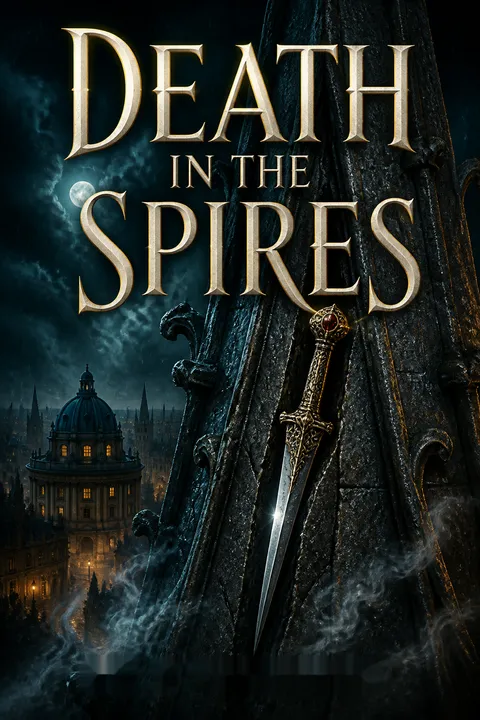
Death in the Spires is a historical mystery set in Oxford, praised for its compelling plot, atmospheric setting, and well-developed characters. Readers appreciate the author's skillful writing, complex relationships, and exploration of themes like social inequality and racism. While marketed as "not a romance," many note the presence of a romantic subplot. The dual timeline structure and the protagonist Jem's journey to uncover the truth about his friend's murder a decade earlier are highlighted as engaging elements. Most reviewers highly recommend the book, with some calling it a favorite of the year.
People Also Read
Characters
Jeremy Kite
The returning investigatorJem is a scholarship student from a working-class Midlands family, a gifted mathematician, and a man whose club foot shapes how others see him. At Oxford he finds belonging among people far wealthier and more socially secure than himself, then loses his studies and confidence after Toby's murder. By 1905, he survives through modest clerical work and deliberate obscurity. His defining habit is to turn blame inward, which makes him vulnerable to shame but also attentive to the ways institutions and friends evade responsibility. He wants the truth, yet must learn that knowing it does not automatically determine what justice should demand.
Nicholas Rook
The brilliant guarded donNicky is a tall, witty Oxford student who studies English and Anglo-Saxon, fences with unusual skill, and uses polished rudeness as both entertainment and armour. He is emotionally intense beneath his cultivated pose, with deep loyalties that can become damaging when he gives another person too much power over him. His affection for Toby and his attraction to Jem place him in a period when queer desire carries legal and social danger. He is clever at reading others but less willing to examine his own dependence, and his connection with Jem is marked by tenderness, fear, and unequal honesty.
Toby Feynsham
The magnetic centreToby is Ella's twin brother, an heir to a possible title, and the charismatic organizer who gathers the Seven Wonders around him. Handsome, generous, and instinctively social, he makes Jem feel welcome in a world that might otherwise exclude him. He is less diligent than his friends and depends on inherited status to imagine his future. When that prospect weakens, his need to remain central becomes harder to separate from affection: Toby wants loyalty, admiration, and influence, and can mistake his power over friends and family for a right to direct their lives.
Ella Feynsham
The formidable chemistElla is Toby's twin and a gifted chemistry student who resists being treated as an ornament or an extension of her family. She is disciplined, intellectually ambitious, and unusually self-contained, traits that help her withstand the assumptions aimed at women in her college and profession. Her bond with Aaron rests on mutual respect as well as affection. Ella can be fiercely protective, but her independence does not make her effortlessly perceptive in friendship; she often keeps private matters private, even when silence leaves another person isolated.
Aaron Oyede
The composed physicianAaron is a Black Oxford student who studies medicine, excels at running, and meets prejudice with an almost unnerving composure. His self-possession is not passivity: he is proud, principled, and willing to take risks when other people's safety is at stake. His relationship with Ella is shaped by mutual intellectual respect and by the racist assumptions that make their future together a public target. Aaron's reserve can shelter others, but it can also keep his own doubts hidden, leaving trust to be tested when loyalty and fear pull in different directions.
Hugo Morley-Adams
The polished politicianHugo is the wealthy son of a shipbuilding magnate, a talented fencer, and an ambitious Liberal politician. His charm and courtesy make him an easy companion across class lines, and he is skilled at presenting himself as both progressive and dependable. He enjoys influence and expects to be heard, even when he believes he is acting for a friend's benefit. Hugo understands how reputation works in elite society, a talent that can serve as diplomacy or concealment depending on what he wants to protect.
Prudence Lenster Warren
The steadfast mathematicianPrue is a sharp-minded mathematician from a village family and a student who, like Jem, must navigate Oxford without the security of inherited wealth. She is lively and ambitious among trusted friends, but her social position makes her attentive to the costs of being judged. Her affection for Toby and her friendship with Ella place her close to the group's emotional centre without giving her equal power within it. Prue's history of choosing privacy should not be mistaken for weakness; she is careful about whom she trusts and what she is willing to expose.
Dr Earnshaw
The college's cautious MasterThe Master of St Anselm's is an elderly academic who values the college's reputation and prefers explanations that keep scandal at a distance. His guarded memory of Toby's inquiry shows how institutional caution can become a form of complicity, even when no one openly intends harm. He is not a detective or a confidant, but his recollection gives Jem a crucial indication that Toby had learned something serious before his death.
Miss Keele
The women's advocateMiss Keele served as a morality tutor at Anselm Hall, but her perspective reaches beyond conventional supervision. She supports women's education and reproductive autonomy, and speaks plainly about the dangers created by restrictive laws. Her care for students is practical rather than sentimental: she respects confidentiality, yet remains willing to offer help when a former student may need a way back into academic life.
Mr Leighton
Jem's wary superiorLeighton supervises Jem at the Registrar-General's Bureau. He is more concerned with the institution's reputation than with shielding an employee from anonymous scandal, and his decision to spread Jem's history through the office helps make the new accusation costly.
Plot Devices
The anonymous letters
A buried scandal returnsThe typewritten accusations repeat the same formula while changing the name of the alleged murderer. Their arrival at employers and family connections turns private suspicion into practical danger, prompting Jem to resign and question the surviving friends. The letters are also a misdirection: their author is not the person who killed Toby. Their eventual source reframes the novel's inciting event as an act of grief and anger rather than a calculated attempt to solve the murder.
The jammed door
A private trick delays discoveryToby's old door can be wedged from outside by a method known to the Seven Wonders. The delay gives the killer time to leave and dispose of evidence, while the friends' decision not to explain the trick deprives the police of a crucial clue. The door makes their silence physically consequential: only someone within the circle could confidently exploit it, and every survivor has reason to conceal what the group knew.
The Italian stiletto
A familiar object becomes lethalToby keeps a sharp Italian stiletto among his possessions and uses it as a paperknife. Its ordinary presence in the friends' rooms means no one would need to arrive armed, while its use in the struggle leaves the central question dependent on motive, timing, and the room's manipulated door. The weapon links the intimate world of Toby's possessions to the irreversible violence that destroys the group's shared future.
The stolen notebook
Research becomes physical dangerAs Jem interviews the survivors, he records addresses, discoveries, and personal details in a pocket notebook. Someone steals it during the ransacking of his room, showing that his inquiry has reached a person willing to act against him. Its contents also help connect the threats to Prue's hidden history and give Jem a way to trace Hugo's journey. The notebook turns private investigation into both evidence and vulnerability.
About the Author
Other books by K.J. Charles
Download PDF
Download EPUB
.epub digital book format is ideal for reading ebooks on phones, tablets, and e-readers.








