

Plot Summary
The Gate at Lackaday
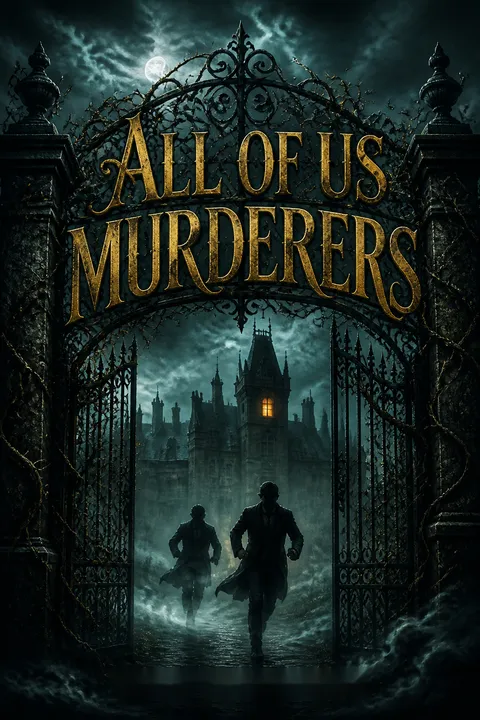
Zeb Wyckham, a restless young Londoner whose latest job has failed, reaches Lackaday House after a long drive across Dartmoor. Its towering wall and locked gate make his cousin Wynn’s invitation feel less like hospitality than confinement. Before he can enter, a young woman in a nightdress runs from the house into the dark.
The secretary waiting in the doorway is Gideon Grey, Zeb’s former lover, whom he has not seen since their relationship ended in disgrace. Gideon introduces himself with chilly formality and reveals that Zeb’s estranged brother Bram, Bram’s wife Elise, their cousin Hawley, and other relatives are also staying. The reunion Zeb expected to avoid has become a gathering of almost everyone he fears disappointing.
The arrival makes architecture psychological before it becomes supernatural. Zeb notices barriers, silence, and failed courtesies because he is already primed to experience family life as judgment and enclosure. His restless humor helps him recognize the Gothic setup, but recognition does not give him control over it. Gideon’s formal greeting is especially destabilizing: Zeb’s longing briefly returns before shame catches up. The fleeing young woman offers the first sign that the house’s inhabitants may be less secure than its walls suggest. At the threshold, the novel joins two traps, the literal estate and the emotional history Zeb has tried to leave behind.
A Fortune with a Bride
At dinner, Wynn explains that the young woman is Jessamine, the daughter of his late cousin Georgina, whose own mother died after being exploited and abandoned. He says he has tried to protect Jessamine from the family’s contempt for her birth.
Now he intends to keep Lackaday House and its fortune intact by leaving both to the Wyckham who marries her. Bram expected to inherit and treats the announcement as a theft; Hawley sees a chance to gain money and status, while Elise and the brothers sharpen old grievances.
Zeb questions whether Jessamine should be made the price of an inheritance, but Wynn insists she will choose a husband from among them or he will choose for her. The family’s uneasy reunion becomes a contest with a young woman at its center.
Wynn casts marriage as protection, but his plan makes Jessamine’s body the instrument through which property stays in the family. His account of Georgina’s suffering gives the arrangement a compassionate rationale, yet the remedy repeats the underlying coercion by limiting Jessamine’s choices to men selected for their inheritance value. Bram’s anger is not only greed: he has organized his identity around an expected succession. Hawley treats the prospect as a game, while Zeb senses the moral problem without yet seeing how deeply he is implicated. The scene turns a supposedly benevolent family gathering into a pressure system where money intensifies every existing wound.
The Curse Keeps Him
The next morning Zeb decides to leave, but a visit to the library brings him into easy conversation with Jessamine, who is curious about the Gothic books and legends surrounding the house. When he reaches Wynn’s study, he objects to using her marriage to secure an estate.
Wynn asks him to reconsider, then reveals the Wyckham family’s supposed curse: since Walter Wyckham, the family’s wives and descendants have died before fifty. Wynn himself has just turned forty-nine, and says his doctor expects him to live less than a year.
He begs Zeb to keep that confidence and remain for the promised fortnight, so he can settle Jessamine’s future. Zeb reluctantly agrees, though he doubts the supernatural explanation. The secret now binds him to the house more firmly than its locked gate.
Wynn’s disclosure makes a private medical claim function as leverage. Zeb’s promise comes from compassion, not belief in the curse, but the promise also activates his deepest vulnerability: he experiences obligations as dangerous tests he is likely to fail. The story places his decency beside his difficulty refusing authority, showing how care can become a route into coercion. Jessamine’s literary curiosity offers a gentler connection, yet even that meeting is framed by the house’s inherited stories. The curse may be superstition, but its social force is real: it shapes decisions, quiets dissent, and makes Wynn’s family history feel like an approaching deadline.
Follies and Fault Lines
On a walk around the estate, Zeb sees its temples, pyramid, crypt, and stone circle, all theatrical monuments to Walter’s taste for Gothic spectacle. Jessamine describes a hooded, faceless figure she has seen in the corridors, and says Gideon also encountered it.
Bram dismisses her fear, while Hawley encourages her interest to court her. Once they are alone, Bram proposes an alliance: Zeb should marry Jessamine while Bram controls the fortune. Zeb rejects the offer, unwilling to become his brother’s dependent again.
Gideon later confronts Zeb as if he intends to pursue the inheritance, and Zeb leaves hurt and angry. That night, he sees the grey-robed figure in his own corridor. He chases it around a corner, but finds no person or open door, and returns to his room shaken.
The estate’s follies expose Walter’s Gothic imagination as a family inheritance made physical: it turns landscape into stage scenery for the very fears the household claims to dismiss. The tour also gives each relative a role in the marriage contest. Bram tries to preserve authority through a bargain that would keep Zeb financially subordinate; Hawley performs romantic interest; Jessamine is treated as audience and prize. Zeb’s refusal is an early act of self-definition, but Gideon’s suspicion shows that old intimacy cannot yet outweigh the evidence of Zeb’s precarious finances. The apparition converts literary atmosphere into a problem no character can comfortably explain.
The Fortune's Rotten Roots
The following day Gideon tells Zeb that he took Wynn’s job after months without work, partly because their dismissal from Cubitt’s had damaged his prospects. He assumes Zeb is competing for the fortune and fears losing another position because of him.
During a walk, Zeb explains that he has learned the family wealth came from Walter’s slave ships and plantations. A visitor named Jerome, descended from people enslaved on those plantations, came seeking the family records and told Zeb what Walter had done.
Zeb refuses to handle the inheritance, even to redirect it, because he fears greed could make him justify keeping it. Gideon realizes Wynn’s account of Zeb’s motives was wrong and apologizes for believing it. They agree to speak more gently, but Gideon says the renewed closeness still hurts.
The conversation shifts the inheritance from abstract wealth to historical violence. Zeb’s refusal is not a performance of purity: he distrusts his own capacity to rationalize a fortune once it is his. That self-suspicion connects the family’s past to his fear of repeating its choices. Gideon’s apology matters because he listens to evidence rather than defending his first judgment. Their renewed trust is real but incomplete; Gideon still protects himself from hope. The scene gives moral attention a concrete form: Jerome’s testimony cannot undo the harm, but Zeb’s willingness to hear it changes what he is willing to accept from his family.
The Monk in the Corridor
Suspicious writing appears outside Hawley’s room and vanishes before Zeb can inspect it. Jessamine argues that the ghost leaves messages for the guilty, drawing on Walter’s novel The Monastery. At dinner, Wynn admits that he and other relatives have seen the same faceless, hooded figure.
He claims it comes as retribution for guilt and warns them not to look beneath its hood. Zeb points out that Walter’s book describes the same ghost, but Wynn insists the book was based on an apparition.
Hawley later threatens to expose Zeb’s relationships with men if he competes for Jessamine. As Zeb climbs to bed, he sees the grey monk himself. It turns and disappears around a corner, leaving him unable to decide whether someone is staging the haunting or the house is doing something worse.
The ghost’s power lies less in proof than in its ability to make everyone interpret fear through guilt. Wynn’s testimony lends the apparition authority, while Zeb’s knowledge of Walter’s fiction offers a rational explanation that cannot account for what he has seen. Hawley’s blackmail translates that atmosphere into a very human threat: the same secrets that make people vulnerable to supernatural judgment can be used to police queer lives. The vanished writing and figure keep the mystery open, but the emotional mechanism is already visible. Each character fears exposure, and the house turns that fear into a weapon.
One Night Without Hope
The next evening, Elise screams that a monk appeared in her room, pointed a skeletal hand at her, and whispered. Zeb and Colonel Dash search the room but find no intruder or hidden door. Soon after, Gideon comes to Zeb’s room. With the house closing in and their past still raw, Zeb asks for one night together.
Gideon kisses him and they fall back into the physical intimacy they once shared, but afterward he refuses to reopen a future he cannot afford to hope for. He wants to rebuild his career and debts without waiting for Zeb to return. Zeb accepts that Gideon is protecting himself, though the separation still hurts. Their closeness gives neither man a resolution; instead, it makes the next morning’s attempt to leave feel more urgent.
The scene links Elise’s fear to Zeb and Gideon’s private vulnerability without making the supernatural a simple metaphor for their relationship. Elise is forced to confront the terror everyone else has minimized, while Zeb and Gideon choose intimacy despite knowing it cannot solve their practical circumstances. Gideon’s refusal of hope is not emotional coldness but a survival strategy formed by financial loss and past disappointment. Zeb, who instinctively wants closeness to repair injury, must recognize that desire does not entitle him to another person’s risk. The encounter restores tenderness while sharpening the cost of being trapped together.
Mist Becomes a Prison
In the morning, Dartmoor mist gives Wynn a reason to forbid the motor, horses, and anyone’s departure. Zeb argues that the danger is exaggerated, but Wynn invokes his father’s death in the mire and refuses to send a driver out.
Gideon privately confirms that the chauffeur and grooms have been ordered to stay put. Bram tells Zeb how he abandoned his pregnant former mistress, Florence, after Elise demanded proof of his loyalty, and insists her death was not his fault.
Later, Hawley confides that shadows seem to move around the house and that he fears the curse. As the mist persists, Zeb’s room is found crawling with spiders, alongside a concealed message meant to expose him. Gideon gets him to safety, and the attack makes the house’s menace unmistakably deliberate.
The mist converts a familiar Gothic image into a practical mechanism of control: Wynn can make confinement appear responsible, especially by invoking his father’s fatal accident. Bram’s confession reveals how he protects himself with a story in which Elise caused his choices, just as the family’s curse makes individual responsibility seem predetermined. Hawley’s fear complicates his usual cynicism without making him trustworthy. The spiders attack Zeb at the exact point where shame can be used to isolate him. What had seemed like an eccentric haunting now bears the marks of planning, and Gideon’s care becomes an immediate counterforce to the house’s manufactured terror.
Spiders and Second Chances
Gideon finds Zeb’s room filled with spiders and a removable patch of wallpaper carrying an insult about his sexuality. He takes Zeb to his own room and checks every belonging for hidden insects.
While Zeb recovers, they finally explain the breakup: Gideon had asked for a promise of a shared future, and Zeb, terrified of failing another obligation, answered cruelly that he could offer only the evening. Both men had mistaken fear for rejection. Zeb describes how his father forced Bram to promise support, then Bram cut him off and left him ashamed of needing help.
Gideon understands why Zeb distrusts promises and admits he had misread him. They choose to begin again without grand guarantees. Gideon also suspects Wynn arranged the attack to provoke them into hurting each other.
The spiders turn Zeb’s private fear into an instrument of humiliation, but the threat also creates the privacy in which the lovers can finally interpret their rupture. Their conflict was not a simple mismatch between commitment and freedom. Each man experienced the other’s request through an older wound: Gideon feared never being enough, while Zeb feared becoming the next person who broke a promise. Their repair depends on naming those histories rather than pretending affection erased them. The resulting commitment is deliberately modest, based on present choice and shared effort instead of a vow either man experiences as a trap.
Blood on the Altar
With the mist still thick, Zeb cannot leave, and Gideon says Wynn has blocked every route out. They discover Colonel Dash has vanished from his room, though Wynn claims he has malaria. Jessamine takes Zeb to the stone circle, where blood covers the altar and drips into the grass.
Zeb rejects a ghostly explanation but recognizes that someone is staging a frightening scene. Back inside, Wynn rebukes them for going outdoors and resists questions about Dash. Gideon reveals that Wynn hired him after learning he and Zeb were dismissed together, suggesting their reunion was part of the arrangement.
When Zeb asks Elise to leave with him, she instead suspects Jessamine is older than claimed and that Wynn’s family story is false. Elise also tells him that Laura’s mother was imprisoned in the house to keep her inheritance from her.
The bloody altar changes the mystery’s scale. Earlier apparitions could be dismissed as isolated pranks; blood paired with a missing guest suggests that someone may be using Gothic theater to conceal physical danger. Zeb’s preference for human explanations is not disbelief in what Jessamine saw, but a refusal to let supernatural language stop investigation. Elise’s suspicions redirect attention from the ghost to the family’s management of women, money, and credibility. The revelation about Laura’s mother turns the house from a stage for old fiction into a place with an actual history of confinement. The past is no longer merely atmospheric.
Elise Falls Silent
Zeb hears a scream and reaches the hall as Elise lies dead at the foot of the stone staircase. Bram and Hawley appear above her, while Wynn treats the body as a dramatic image rather than a human loss. Gideon later tells Zeb he saw movement at the top of the stairs, making an accident unlikely.
The household does not summon the police that night, and Wynn’s staff move Elise’s body into an anteroom. Gideon comforts Zeb, who cannot reconcile grief for a woman he barely knew with the possibility that his relatives have killed her.
In the aftermath, Gideon learns Zeb is the successful children’s author Zinnia Waters, a secret Zeb had kept because he expected ridicule. Gideon’s pride offers a rare piece of good news in a house that has turned every revelation into danger.
Elise’s death collapses the distance between Gothic spectacle and consequential violence. Wynn’s aesthetic response, likening the scene to a literary villainess, is chilling because it converts a dead woman into evidence for his private drama. Zeb’s grief is not based on idealizing Elise; it arises from recognizing how little room anyone in the house has been given to become more than a role. Gideon’s discovery of Zeb’s authorship briefly reverses the family’s hierarchy of judgment. Zeb has built a life and livelihood without their approval, yet shame kept that achievement hidden even from the person whose support he most wanted.
Walter's Script
After Bram confesses that Florence died following his abandonment of her, Wynn stages a procession to the family crypt. Zeb refuses to carry Elise’s body inside, fearing the door will be shut on him.
With Gideon, he recognizes that the attacks echo Walter Wyckham’s novels: the hooded ghost, the altar, the spiders, the staircase fall, and the crypt. In the library, Zeb finds Wynn’s calculations comparing the ages of dead Wyckhams with the years Walter lived beyond fifty.
He concludes Wynn intends to repeat the supposed bargain by killing younger relatives to extend his own life. Meanwhile, the staff reveal that Wynn recruited them through grievances against the Wyckhams. They seize Gideon, but Rachel changes sides, frees him, and gives the pair a secret passage and a chance to escape.
The novel’s puzzle resolves through pattern recognition rather than a single confession. Zeb’s reading habit, previously treated as eccentric distraction, lets him see how scenes from Walter’s fiction have been repurposed as a murder plan. Yet identifying the pattern does not make the threat supernatural: Wynn’s arithmetic is a human decision clothed in occult belief. The staff’s revenge is equally rooted in material history, since institutions have repeatedly denied them recourse. Rachel’s change of course prevents the story from reducing injured people to a unified mob. Her judgment responds to Zeb’s conduct, showing that ethical action can create alliances even when law and class have failed.
The Last Gate Opens
Before taking the passage, Zeb searches for Bram and begs him to leave. Bram believes Elise’s death was vengeance for Florence and refuses to give up the inheritance. Wynn arrives, turns Bram against Zeb, and has Zeb locked inside the library.
Gideon does not abandon him: he finds another concealed passage, retrieves Zeb’s manuscript, and pulls him out. Together they reach the grounds and race for the gate, only to find a grocer’s cart departing. They catch it after a painful sprint and persuade its driver to take them to town.
Behind them, Lackaday House shuts its gates once more. Zeb leaves without rescuing Bram or the others, but he and Gideon choose to face the consequences together rather than repeat their old retreat from each other.
The escape tests the difference between responsibility and self-sacrifice. Zeb’s attempt to save Bram honors a real childhood bond, but Bram’s refusal makes clear that Zeb cannot choose his brother’s values for him. Gideon’s return transforms the lovers’ renewed commitment into action, not sentiment: he risks his own escape to retrieve Zeb and the work Zeb has made. The manuscript matters because it represents a future Zeb built without family wealth. The cart offers no heroic rescue, only a narrow opening made possible by a worker’s help. Freedom arrives as a practical collaboration, not a victory over every injustice.
Epilogue
At the inquest, Wynn and his staff blame Elise’s death on Bram, then say Hawley fatally shoots Bram and jumps from the roof to avoid justice. Zeb’s account of Wynn’s plan is dismissed, and Wynn escapes blame. Months later, Lackaday House burns on the eve of Wynn’s fiftieth birthday; his body is found in the ruins, and Dash’s remains are discovered in a disused well.
Jessamine is presumed dead, though a woman matching her description leaves for America with money and jewels. Zeb inherits what remains and places it in a trust for the islands where Walter’s plantations stood, with Gideon as his secretary and business manager. He goes on to write for decades.
The ending denies the comfort of a clean legal reckoning. The inquest accepts a version of events that preserves Wynn’s respectability, while Zeb’s accurate account is treated as implausible. The resulting deaths do not restore justice, though they expose how thoroughly the house’s power depended on controlling which stories counted. Jessamine’s apparent disappearance leaves her survival uncertain and her agency unresolved, fitting a book in which women repeatedly evade the identities assigned to them. Zeb’s inheritance becomes meaningful only when he redirects it toward the places damaged by Walter’s wealth. His partnership with Gideon turns stewardship into a continuing practice, not a claim that reparations can erase the past.
Analysis
The novel makes the Gothic house an instrument of social power. Lackaday’s walls do not merely isolate the guests; they allow Wynn to regulate movement, control information, and turn ordinary uncertainty into fear. The locked gate and Dartmoor mist create conditions in which every claim requires trust, just as every relationship is already weakened by class, money, and sexual secrecy.
Walter’s novels supply the story’s visible pattern, but the deeper pattern is repetition of harm. The family treats women as liabilities, staff as disposable, and wealth as an inheritance detached from its origins. The staff’s retaliatory plot is not presented as a simple moral correction. Their anger emerges from real injuries and the failure of legal institutions, yet their chosen revenge risks reproducing the same logic of dehumanization. Rachel’s decision to help Zeb and Gideon matters because she judges them by their actions rather than their name alone.
Zeb’s characterization complicates conventional ideas of competence. His disorganization and distractibility make him vulnerable to ridicule, but his associative thinking connects clues others overlook. More importantly, his willingness to listen lets him perceive people beyond their assigned roles. The story does not make kindness a magical solution: he cannot save everyone, and his efforts to rescue Bram cannot substitute for Bram’s own choices. But his attention creates the alliance that allows him and Gideon to survive.
Their romance develops through a parallel correction. Both men once interpreted fear as evidence that they were unlovable or unwanted. Reconciliation requires them to describe the history beneath their reactions and to replace impossible promises with present, accountable acts. The ending extends that ethic outward. Zeb cannot repair the past by inheriting the fortune, but he can refuse to treat it as innocent property. Returning it toward the places Walter exploited turns inheritance from private reward into an obligation, while Gideon’s partnership makes that decision part of their shared future.
Review Summary
All of Us Murderers is a gothic mystery with a second-chance romance subplot. Readers praise the atmospheric setting, intriguing plot, and well-developed characters, particularly the ADHD representation of the protagonist, Zeb. The book blends elements of horror, romance, and historical fiction, set in Edwardian England. While some found the pacing slow initially, many enjoyed the tension and twists. The romance between Zeb and Gideon received mixed reactions, with some finding it underdeveloped. Overall, the book is well-received for its engaging storytelling and unique blend of genres.
People Also Read
Characters
Zebedee Wyckham
Restless, principled heirZeb is a quick-minded, warm-hearted man whose attention moves in bursts: he fidgets, loses objects, and can disappear into a book or a line of thought. His family interprets these traits as laziness, and repeated criticism has left him wary of promises and ashamed of failure. Humor helps him endure discomfort, but it can also make him speak before he has sorted out what he means. Beneath the disorganization is a strong moral instinct, especially when someone with less power is being mistreated. Zeb wants to be loved without being remade into a more orderly person. His challenge is to trust his own judgment while accepting care from others.
Gideon Grey
Careful, guarded loverGideon is a capable, disciplined secretary who values privacy, reliable work, and clear expectations. His reserve reflects years of suppressing desire and fear of exposure, not a lack of feeling. With Zeb, he is drawn to spontaneity but can become impatient when chaos complicates his responsibilities. Financial pressure on his sister’s family makes professional security especially important, so he measures emotional risk carefully. Gideon often shows love through practical acts: remembering details, solving problems, and attending to Zeb’s needs. He wants intimacy, but fears that hope will leave him suspended between a life he has lost and one he cannot reach.
Wynn Wyckham
Benevolent-looking hostWynn is the owner of Lackaday House, an elderly cousin who presents himself as genial, considerate, and concerned for his young ward. He is attentive to family history and speaks as though preserving the estate is a moral duty. That conviction can make him paternalistic: he treats other people’s choices as problems he is entitled to solve. His affection for the memory of Laura and concern for Jessamine coexist with a powerful attachment to the Wyckham name and property. Wynn’s calm manner encourages others to doubt their own reactions, especially when his decisions become difficult to challenge.
Jessamine Wyckham
Sheltered Gothic enthusiastJessamine is introduced as Wynn’s young ward, raised apart from ordinary social life and eager to learn about books, the estate, and the wider world. She is imaginative, emotionally intense, and especially responsive to Gothic stories, which help her interpret the frightening experiences she reports. Her sheltered upbringing leaves her hungry for attention and experience, while also making her vulnerable to the adults who claim to know what is best for her. Jessamine wants to be treated as a person with desires and judgment, not merely as a family duty or an inheritance strategy.
Bram Wyckham
Resentful elder brotherBram is Zeb’s older brother, a conservative literary critic who prizes status, authority, and conventional self-command. He believes that competence gives him the right to direct others, and he has long viewed Zeb’s disorganization as proof that Zeb cannot manage his own life. His marriage to Elise is marked by old injuries and public hostility, but Bram explains his unhappiness in ways that preserve his own innocence. He carries a deep need to be recognized as the proper head of the family. His relationship with Zeb mixes genuine shared history with years of condescension and distrust.
Hawley Wyckham
Provocative painter cousinHawley is a fashionable painter whose artistic ambitions are matched by a taste for provocation, drink, and sexual freedom. He sees convention as a target and enjoys exposing the hypocrisies of Bram and Elise, but his sharpness often disguises selfishness. He is skilled at charming people when it serves him and at turning private knowledge into leverage when it does not. Hawley resents being dismissed as frivolous and wants recognition as an artist, yet he is careless with the people who become material for his desires. He treats the inheritance as both money and proof that the family cannot ignore him.
Elise Wyckham
Glamorous, unsparing sister-in-lawElise is Bram’s elegant wife and Hawley’s former lover. She understands the social uses of beauty, restraint, and reputation, and can make a cutting judgment without raising her voice. Her marriage has left her wary of men who frame their own behavior as her fault. Although she is often cruel, she is observant and capable of noticing inconsistencies others miss. Elise protects her position through calculation, but her poise also conceals loneliness and a more complicated sense of what she might have wanted from life.
Wyckham Dash
Military second cousinColonel Dash is a polished, confident second cousin who brings a soldier’s practicality to the family gathering. He is socially adept, attentive to the people around him, and more willing than most to question an implausible explanation. His age and military bearing make him another possible match in Wynn’s marriage scheme, though he knows he is not the obvious choice for a young woman. Dash’s habit of observing before acting gives him a useful steadiness in a house where others prefer argument or performance.
Rachel
Watchful housemaidRachel is a housemaid whose guarded manner reflects the precariousness of service in a household dominated by wealthy men. She is alert to power and careful about what she reveals, because a servant’s livelihood and reputation can be endangered by a single accusation. Her reserve should not be mistaken for passivity: she forms judgments, weighs risks, and has a strong sense of what is fair. Rachel’s position gives her access to the hidden workings of the house that the guests cannot easily see.
Walter Wyckham
Gothic novelist patriarchWalter is the Wyckham ancestor who built Lackaday House and wrote lurid Gothic novels full of trapped women, haunted corridors, and cruel family secrets. His literary imagination shaped the family’s taste for spectacle, while his business fortune came from slavery. Walter’s stories create a legacy that is both artistic and morally compromised. The portrait of him in the house suggests a man who understood how power could turn other people’s suffering into entertainment.
Laura Wyckham
Wynn's beloved relationLaura was born to Walter’s last wife and raised alongside Wynn as his sister, though she was also his aunt by family relation. She is remembered through portraits and Wynn’s tender stories of their childhood. Her life was shaped by the family’s judgment of her birth and by separation from the people she loved. Laura’s memory gives Wynn a personal reason to protect her descendants, while also connecting the house’s present conflicts to its long history of controlling women.
Constance
Servant turned Wyckham wifeConstance was a servant who became Walter Wyckham’s last wife and the mother of Laura. Her low social status made her a target of the family’s contempt, despite her legal place within it. The family’s treatment of her exposes the distance between its claims to honor and its willingness to deny dignity to a woman of humble birth.
Jerome
Bearer of family historyJerome is a distant Wyckham relation descended from people enslaved on Walter’s plantations. He visits Zeb seeking access to family papers for a historical account of the plantations. His willingness to describe what happened forces Zeb to confront the human cost behind the family’s wealth, rather than treating slavery as a remote or abstract inheritance.
Anna
Household cookAnna is the cook at Lackaday House, one of the staff members whose life has been shaped by Hawley’s treatment of women. She is practical and guarded, with little reason to trust the family or its promises. Her presence shows how the Wyckhams’ private appetites create consequences for people who have no comparable social power.
Fenton
Hard-faced chauffeurFenton is the chauffeur who drives Zeb to Lackaday House and helps maintain the estate’s isolation. He is physically imposing, taciturn, and openly contemptuous of the guests. His role places him between the family and the outside world, with control over the vehicle and one of the few practical routes to freedom.
Alfred
Resentful footmanAlfred is a footman at Lackaday House, responsible for serving and assisting the guests. His unfriendly manner reflects a household where the staff are poorly treated and the family’s authority is taken for granted. He is also connected to the wider history of servants whose lives have been damaged by the Wyckhams.
Florence
Bram's former companionFlorence is a young woman from Bram’s past whose experience reveals the consequences of his choices. She is remembered through Bram’s defensive account and the family’s uneasy response to it. Her story matters because it challenges the ease with which privileged men turn abandonment into someone else’s misfortune.
Georgina
Laura's daughterGeorgina was Laura’s daughter and Jessamine’s mother. Her difficult history is described by Wynn as a reason for his protectiveness toward Jessamine. She links the present generation to the family’s earlier attempts to manage women’s reputations and futures.
Plot Devices
Lackaday House
Turns setting into confinementThe remote mansion sits behind a high wall and locked gate, with a long drive, sparse staff, and grounds crowded by Gothic follies. When Dartmoor mist arrives, Wynn uses the danger of travel to prevent the guests from leaving. Secret passages, unused rooms, and the crypt make the house both a physical maze and a system of surveillance. Its architecture gives practical force to the story’s central tension: characters may recognize that something is wrong and still have no safe way to act on that knowledge.
The inheritance marriage
Turns affection into leverageWynn offers his estate and fortune to the Wyckham who marries Jessamine, hoping to keep the property within the family and secure her future. The arrangement gives Bram, Hawley, Zeb, and Colonel Dash competing motives, while making Jessamine’s choice seem inseparable from money. It also exposes how easily protection becomes control when a guardian decides that a young woman’s security must be purchased through marriage. The device drives family conflict while forcing Zeb to distinguish genuine concern for Jessamine from the desire to possess an inheritance.
The Wyckham curse
Makes fear feel hereditaryThe family believes no Wyckham has lived to fifty since Walter survived a curse by trading the lives of his wives and descendants for his own. Wynn invokes the legend to explain his urgency and later treats it as a calculation that can be repeated. The curse gives characters a framework for interpreting deaths, apparitions, and guilt, but it also obscures human responsibility. Its power comes from making violence seem like fate, even when people are actively creating the conditions that make the legend appear true.
Walter's Gothic novels
Provide a murderer's blueprintWalter Wyckham’s fiction supplies a catalogue of haunted monks, sacrificial stones, spider-filled rooms, trapped heirs, and fatal falls. Zeb recognizes that the strange incidents at Lackaday House reproduce scenes from those books, turning his reading knowledge into a practical tool. The novels initially encourage the family to explain events as supernatural, but their repeated details eventually expose a deliberate human design. The device connects literary imagination to power: stories can provide a script for terror, while a reader’s attention to pattern can help him resist being cast inside it.
The staged haunting
Weaponizes private guiltA hooded figure, disappearing messages, unexplained footsteps, bloody props, and spiders unsettle the guests and staff. Secret passages and hidden panels explain how some effects are produced, while poor lighting, isolation, and existing guilt make the apparitions feel credible. Wynn’s scheme depends on turning each person’s fear or shame into evidence against someone else. The haunting is therefore more than a puzzle: it creates distrust, weakens solidarity, and conceals the human motives behind the Gothic performance.
About the Author
Other books by K.J. Charles
Download PDF
Download EPUB
.epub digital book format is ideal for reading ebooks on phones, tablets, and e-readers.








