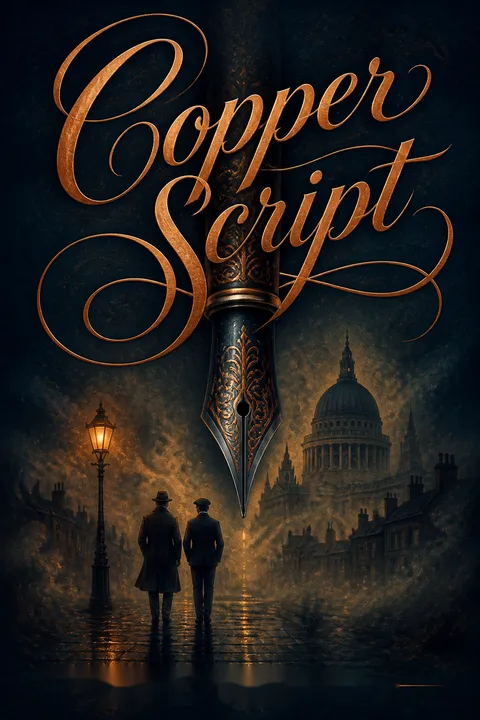


Plot Summary
The Handwriting Reader
In autumn 1924, Detective Sergeant Aaron Fowler reluctantly investigates his cousin Paul’s claim that graphologist Joel Wildsmith ruined his engagement. Using a false name, Aaron visits Joel’s bare Pentonville room and offers three samples. Joel describes Aaron’s brother-in-law as dependable, then reads Aaron’s own copied passage as the work of a tightly controlled, unhappy man.
The third sample makes Joel recoil. He calls its author cruel, drawn to hurting the helpless, and warns that the man must be stopped. Aaron recognizes the hand as Wilfred Molesworth’s, the executed child murderer, and leaves convinced Joel has staged an elaborate trick. Yet Joel’s involuntary horror unsettles him more than any of the supposedly scientific claims.
The first encounter makes reading itself a contest over who is entitled to know another person. Aaron arrives prepared to expose a fraud, but Joel turns the scrutiny back on him and names an unhappiness Aaron has concealed even from himself. The strongest evidence is not a successful prediction but Joel’s visceral response to Molesworth’s handwriting. Aaron interprets that reaction as performance because his professional worldview offers no category for it. His skepticism is therefore also self-protection: accepting Joel’s perception would mean admitting that a stranger has seen through his disciplined surface.
A Cousin’s Confession
Aaron’s inquiries uncover that Paul’s fiancée ended their engagement after Joel described the circumstances in which Paul wrote to her. Paul admits he had just slept with another woman, though he insists no one could have known. Aaron returns to Joel, who explains that his method is not a set of graphology rules: he imagines the person behind the pen and reports the impressions he receives.
He refuses to identify clients, but confirms that Paul’s hand carried a sense of smug betrayal. Joel also reveals that a policeman’s false testimony sent him to prison for soliciting, leaving him wary of the force. Aaron believes Joel about his own abuse, but still cannot explain the uncanny accuracy.
Paul’s admission changes the meaning of Aaron’s investigation. Joel is no longer merely a nuisance who may have embarrassed a selfish cousin; he may possess an ability Aaron cannot reduce to surveillance or stagecraft. Their argument also establishes why trust will be difficult between them. Joel has learned that authority can manufacture guilt, while Aaron believes that institutions can be repaired by honest service. Neither man is simply wrong, but their experiences have trained them to expect different kinds of betrayal.
The Canal’s Missing Files
Aaron and Detective Constable Helen Challice investigate Gerald Marks, a private detective found dead beside the Regent’s Canal with a fatal head injury. His gold watch remains, his wallet is gone, and someone appears to have entered his locked office after midnight. The notebooks recording his recent work have vanished, while his landlady, Mrs. Trotter, says Marks had recently paid overdue rent.
At home, Aaron and Challice find no files or explanation for the money. Mrs. Trotter eventually reveals that Marks once investigated the conviction of Sammy Beech, hanged for killing art dealer Thaddeus Knight. The case had been led by Aaron’s divisional chief, John Colthorne, whom Marks’s clients believed had helped secure a wrongful conviction.
Marks’s death gives the book’s mystery a material shape: a body, a missing record, and an old conviction that powerful people consider settled. The uncertainty matters. The canal, rain, and alcohol leave room for accident, while the missing notebooks suggest deliberate erasure. Aaron’s instinct to keep several explanations open is sound policing, but the case also exposes a weakness in official certainty. Beech was executed, his family emigrated, and the person who might have challenged the verdict is now dead. What remains is not proof, but a pattern asking to be examined.
A Warning at Home
Sergeant Hollis visits Joel and warns that Paul may sue him for slander, leaving Joel afraid that the police will help silence him. Joel goes directly to Aaron, who assures him he will testify truthfully about Paul’s admission rather than protect his cousin. Joel explains how a constable named Sefton solicited him, then arrested and testified against him; Aaron checks the allegation and learns Sefton has been suspended for other misconduct.
An inspector dismisses Joel’s account because he is queer and convicted, prompting Aaron to recognize how the force protects itself at victims’ expense. Paul abandons the threatened suit when Aaron refuses to support it. The two men’s uneasy respect deepens, though neither yet trusts the other fully.
This episode places institutional hypocrisy beside intimate vulnerability. Aaron’s promise to tell the truth costs him family loyalty, but his attempt to pursue Sefton shows how easily a good intention can be absorbed by a system that discounts certain victims. Joel’s distrust is not an abstract prejudice; it comes from a specific encounter in which a policeman used his authority to conceal abuse. Aaron begins to understand that personal integrity alone does not make a police institution just. Joel, meanwhile, sees that Aaron may be different from the officers who harmed him, without yet being able to rely on that difference.
Eight Hands, No Names
With Marks’s investigation stalled, Aaron proposes a blind test: Joel will assess eight anonymous handwriting samples from a live embezzlement inquiry, while Aaron records the readings without knowing whose hands they are.
Joel agrees only after securing payment and a promise that his opinions will not influence the investigation. Over dinner, he explains that he is saving for an advanced prosthetic hand, since the government-issued hook is uncomfortable and his right-handed retraining has failed.
Aaron recognizes that graphology is not a parlour game for Joel but the livelihood funding a future he has chosen for himself. Their meal also draws them into talk of police corruption and the Sabini gang, revealing how seriously Aaron takes public trust.
The test translates a private argument about belief into a procedure with safeguards. Aaron wants evidence without feeding Joel clues; Joel wants his work treated as labor rather than either magic or fraud. The arrangement also exposes their different forms of discipline. Aaron builds rules to contain uncertainty, while Joel relies on a practiced imaginative surrender to the writer’s character. Their conversation over food complicates the detective’s suspicion: Joel is not simply performing a trick, but a wounded man trying to finance independence in a society that offers little support. Curiosity begins to become personal responsibility.
Number Seven’s Shadow
Joel reads all eight samples without knowing the case or the writers. He describes one hand as bitter and resentful, another as ruled by addiction, and a third as dangerously callous, possibly marked by killing. He singles out a different hand as the likely embezzler.
When Sergeant Hollis opens the sealed notes after solving the case, Joel’s descriptions match the clerks and unrelated samples with startling precision. His chosen culprit is the man who confessed.
More alarming, number seven belongs not to a suspect but to Divisional Detective Inspector Colthorne, whom Joel believes has killed. Aaron had secretly included the senior officer’s writing as a control. The test vindicates Joel and leaves Aaron afraid of what that validation implies.
The blind test resolves one mystery while creating a more dangerous one. Joel’s accuracy cannot be dismissed as Aaron’s wishful reading of vague statements, because the sealed predictions correspond to people and facts he did not know. Yet the result offers no courtroom proof against Colthorne; it offers Aaron a reason to investigate, not permission to convict. This distinction preserves the ethical tension at the heart of the book. Joel can perceive character with uncanny force, but Aaron must still build a case through evidence. The gift heightens responsibility rather than replacing it.
One Night, One Boundary
Shaken by Joel’s reading of Colthorne, Aaron goes to Joel’s room for comfort. Joel welcomes him, and their charged banter turns into a consensual first night together. Joel helps Aaron surrender the self-control he has maintained for years, while Aaron handles Joel’s prosthesis with care rather than treating it as an embarrassment.
Afterward, Aaron admits that his police career makes any continuing affair dangerous and cannot promise more than occasional meetings. Joel accepts the limit, though the refusal wounds him. They agree to meet publicly for the meal Aaron owes him. Their intimacy has given Aaron a rare experience of trust, but the law and his fear still dictate the terms of what he believes he can have.
The encounter is both erotic fulfillment and an ethical problem neither man can wish away. Aaron’s restraint has protected his position, but it has also turned desire into something he experiences as a threat to the self he has built. Joel’s attention to the prosthesis makes intimacy an act of recognition rather than repair: he does not pretend the injury is irrelevant, and he does not reduce Joel to it. Yet Aaron’s immediate retreat into limits repeats a familiar pattern of sacrifice. He can accept care for a night more easily than imagine a life that includes it.
Dinner Beneath Pressure
At Shafi’s restaurant, Aaron finally explains that his birth mother came from the wealthy Napier-Fox family and that union organizer Terry Fowler raised him after marrying her. Aaron joined the police partly to serve the public and partly to defy the father whose sacrifices left him feeling permanently indebted.
When Colthorne assigns him to monitor union activity, Joel recognizes the order as a demand to suppress workers, not simply enforce the law. Aaron cannot explain the wider danger, and when he declines Joel’s invitation to go home, their fragile connection breaks into anger.
Joel walks alone through the wet streets, senses a watcher near his lodgings, and finds a man waiting outside. The next day, gang enforcer Eddie Twigg demands protection money.
Aaron’s family story clarifies why service feels less like a career than a debt he must keep paying. His father’s idealism gave him a model of public duty, but also taught him that love could arrive as a sacrifice that leaves the recipient unable to repay it. Joel challenges that inheritance by asking whether Aaron’s assigned loyalty serves justice or merely the institution. Their quarrel shows the cost of Aaron’s silence: protecting Joel by withholding information leaves him exposed to danger he cannot interpret. The watcher makes private longing part of the public conflict, turning the relationship into a vulnerability others can exploit.
Protection Money and Partnership
Eddie Twigg first demands weekly payments from Joel, then raises the price and offers relief in exchange for information about Aaron. Paul’s letter threatens a slander suit and hints that Aaron’s relationship with Joel could destroy his career. Joel brings both threats to Aaron, who explains his suspicion that Colthorne is using the Sabini gang to discredit him before he can investigate Marks’s death.
After anger and fear pull them together again, Aaron proposes sending Joel away. Joel refuses to become another sacrifice and insists they investigate together. They decide he will tell Sabini that Aaron has treated him as a paid graphological consultant, giving the gang a plausible story while they search for Marks’s missing evidence.
The threats converge on the same pressure point: Joel’s vulnerable legal status and Aaron’s hidden desire can be turned into instruments of control. Their renewed intimacy does not erase the danger; it gives them a reason to stop treating danger as Aaron’s burden alone. Joel refuses the role of protected dependent, while Aaron must confront the difference between care and martyrdom. Their partnership begins with a lie designed to survive predatory scrutiny, but its emotional basis is unusually direct. Each has already acted for the other without certainty of reward, and now they choose shared risk over Aaron’s familiar strategy of withdrawing alone.
Sabini’s Dangerous Favor
At a meeting with Darby Sabini, Joel reads the gang leader’s own handwriting and flatters his determination and generosity. When Sabini demands dirt on Aaron, Joel claims Aaron wants to hire him as a secret consultant, giving the gang a reason to believe he has useful information without accusing his lover. Sabini offers to use the story against Aaron and expects Joel to owe him a favor.
Soon afterward, Detective Constable Helen Challice visits Joel with news that Colthorne has accused Aaron of misconduct, including claims that Joel made false allegations. Joel knows the claims repeat the cover story he gave Sabini. Challice believes Aaron and, despite his warning to stay out, agrees with Joel to search for the evidence Marks hid.
Joel’s performance before Sabini is not a triumph over power so much as a narrow negotiation with it. He uses his talent to win a measure of attention, then carefully feeds the gang a story that protects Aaron without provoking an immediate demand for proof. The favor Sabini expects remains a real danger. Challice’s arrival changes the balance: Aaron’s suspicion is no longer held by one man and one extraordinary reader. Her decision to act gives the investigation a colleague inside the institution, while Joel contributes the social intuition that can expose how Colthorne’s threats are being coordinated.
The IOU Hits Print
Joel and Challice return to Mrs. Trotter, who reveals that Marks left his files with her before his death and instructed her to distrust the police. Marks had searched London’s lost-property offices and found a note showing Colthorne owed art dealer Thaddeus Knight thousands of pounds shortly before Knight was murdered.
A recent notebook records Marks demanding money from Colthorne days before Marks himself died. Rather than risk the evidence disappearing inside the Met, Joel takes it to Tribune editor Tony Wilson, while Challice and Aaron support the plan.
Newspapers publish the IOU Affair, and reporting links Colthorne to both murders and Beech’s execution. The story also exposes Paul’s role in Colthorne’s threatening letter. Aaron leaves the force as the scandal breaks.
The recovered documents turn a pattern of suspicion into evidence with a history: an undisclosed debt, a murder, a framed laborer, and a detective paid to reopen the case. Publicity is not a substitute for justice, but it prevents the Met’s leadership from quietly controlling the story. Joel’s decision to approach the press also transfers risk onto himself, knowing that his conviction can be used to discredit him. Aaron’s departure underscores the cost of exposing institutional wrongdoing: the truth may become visible without making the institution eager to reward its messenger. The newspaper becomes both a safeguard and a weapon.
A Letter at Gunpoint
After the press revelations, Colthorne enters Aaron’s flat with a revolver and forces him to write a message summoning Joel. Aaron obeys under threat, but Joel recognizes the strain in the handwriting and alerts Challice instead of coming alone. She brings Sergeant Hollis and a uniformed constable to Aaron’s door.
Colthorne has kept Aaron on the floor for hours; when the officers confront him, Challice steps toward the gun and he gives it up before fleeing. The evidence and new witnesses make his position untenable. Later that night, he shoots himself outside Scotland Yard. Aaron survives, and the investigation that once depended on secret suspicion ends with Colthorne unable to silence the people who exposed him.
The final danger makes the novel’s central skill literal: Joel reads not a suspect’s character but the pressure written into Aaron’s desperate hand. His perception matters because he acts on it, contacting someone who can intervene rather than obeying the apparent summons. Challice’s courage and Hollis’s presence turn private warning into collective protection. Colthorne’s gun briefly concentrates the authority he has abused into one visible object, but it cannot restore the institutional control he has lost. His suicide closes the immediate threat, while leaving the broader questions of accountability and the Met’s culture unresolved.
A Future Chosen Together
After Colthorne’s death, Aaron explains that he has resigned and no longer wants to preserve a career built on compromises he cannot accept. Joel, who has already risked his safety and reputation to help expose the case, refuses to let Aaron treat their future as another sacrifice.
They choose to stay together, and Aaron asks Joel to travel with him to Germany to examine the more functional prosthetic hand he has long hoped to afford. He offers the journey as a shared holiday and an opportunity, not payment for Joel’s help. Joel admits he fears the device may disappoint him, but agrees to go. Aaron tells him he loves him, and Joel answers with the same commitment.
The ending resolves the personal question that has been shadowing the mystery: whether Aaron can accept a future he has not earned through suffering. Leaving the Met does not restore what he lost, but it lets him stop confusing loyalty with obedience to a compromised institution. Joel’s hoped-for hand remains uncertain; the promise is not that technology will make him whole, but that he will not have to face the experiment alone. Their shared trip transforms assistance from repayment into mutual life-making. Both men choose possibility without requiring certainty.
Analysis
Copper Script ties a murder investigation to a romance through the question of who gets believed. Joel’s handwriting readings make hidden character legible, but the book does not treat perception as a replacement for evidence. Aaron must still pursue records, witnesses, and procedure, even when his instincts and Joel’s gift point in the same direction. That distinction matters because both men know what happens when authority claims certainty without accountability: Joel was convicted through a policeman’s false account, and Sammy Beech was hanged after a compromised investigation.
The novel’s treatment of disability resists the easy language of inspiration. Joel’s missing hand is painful, inconvenient, and expensive to accommodate; his desire for a better prosthesis is neither shameful nor guaranteed to succeed. His work lets him earn money and preserve autonomy in a society that has offered him little support. Aaron’s approach to Joel’s injury becomes meaningful not because he can fix it, but because he learns to attend to Joel’s practical needs without turning them into a sentimental lesson.
Aaron’s conflict is equally specific. He has mistaken endurance for moral cleanliness, believing that staying inside the police and accepting its compromises is the price of serving the public. Colthorne’s corruption forces him to see that an institution can use an honest officer’s loyalty as cover. Joel counters Aaron’s reflexive self-sacrifice with a more reciprocal ethic: risk can be shared, and accepting help is not a failure of duty.
The romance develops through concrete acts of trust: Aaron testifies against Paul, investigates Sefton’s abuse, and eventually accepts Joel as a partner; Joel reads Aaron’s handwriting, protects him from Sabini’s demand, and risks public exposure to preserve the evidence. Their future remains uncertain, especially around Joel’s prosthesis and Aaron’s life after the force. The hopeful ending rests not on certainty or institutional reform, but on their decision to face uncertainty together.
Review Summary
Copper Script received mixed reviews, with ratings ranging from 1 to 5 stars. Many readers praised the well-written dialogue, engaging characters, and historical setting. Some found the graphology premise intriguing, while others felt it stretched credibility. Critics noted pacing issues, underdeveloped plot elements, and a rushed ending. The romance between Aaron and Joel was generally well-received, though some wanted more relationship focus. Overall, fans of KJ Charles enjoyed the book, while others found it less polished than her previous works.
People Also Read


Characters
Aaron Fowler
The duty-bound detectiveA London CID detective sergeant, Aaron is methodical, self-controlled, and deeply invested in the idea that public service can correct an unjust world. He was born to a wealthy family but raised by union organizer Terry Fowler, whose generosity and emotional distance left Aaron feeling indebted. That history makes him wary of personal desire and prone to treating self-denial as proof of integrity. He is a capable investigator who questions easy conclusions, yet his faith in policing is tested by the gap between the law’s ideals and the force’s treatment of vulnerable people. His attraction to Joel unsettles a life arranged around caution, duty, and the fear that one private choice could cost everything.
Joel Wildsmith
The one-handed readerJoel earns his living interpreting handwriting, an unusual talent that lets him inhabit the emotional character of the writer. Red-haired, left-handed, sharp-tongued, and missing his left hand from a wartime injury, he refuses to let other people define him by either his disability or his criminal conviction. His experience of police entrapment has made him distrust authority, while his humor and theatrical bravado protect a more easily wounded nature. He lives frugally and saves toward a sophisticated prosthetic, wanting practical independence rather than sentimental reassurance. Joel’s instinct to read people is matched by a strong instinct for survival, but Aaron draws him toward a riskier choice: caring about someone enough to fight beside him.
Helen Challice
The determined colleagueA young detective constable in a male-dominated CID, Helen is brisk, observant, and more resilient than her colleagues often recognize. She works difficult cases that others deem suitable for a woman, including sexual violence, and she understands how institutional indifference can wear down both victims and investigators. Her confidence is not naïveté; she watches carefully before deciding whom to trust. Helen respects Aaron’s standards but does not simply follow his lead, and her ability to act when his position becomes precarious makes her an essential investigator in her own right.
John Colthorne
The polished superiorThe divisional detective inspector overseeing Aaron’s unit, Colthorne presents himself as genial, authoritative, and protective of the force. He understands hierarchy and public reputation, and he expects younger officers to accept his judgment as practical wisdom. His manner can make criticism sound like friendly advice, which gives his authority a quiet force. Colthorne is a significant presence in Aaron’s professional life because he embodies the institution’s power to shape an officer’s assignments, reputation, and prospects.
Paul Napier-Fox
The entitled cousinAaron’s cousin through his mother’s wealthy family, Paul is vain, self-protective, and accustomed to believing that social standing should shield him from consequences. His complaint about Joel begins the story, though his version of events reveals how readily he blames others for the results of his own behavior. Paul’s relationship with Aaron is strained by family history and by the contrast between his entitlement and Aaron’s sense of obligation. He remains socially connected enough to bring pressure into Aaron and Joel’s lives.
Darby Sabini
The local gang bossThe powerful leader of a London gang, Sabini presides over a network that extracts money from local businesses and expects loyalty in return. He is shrewd about people and prefers to present himself as a man who grants favors rather than one who issues orders. His attention turns Joel’s fragile livelihood into leverage against Aaron. Sabini is dangerous not only because of his men, but because he knows how to make coercion resemble a bargain.
Sergeant Hollis
The spiritualist specialistA uniformed sergeant with experience investigating mediums and fortune-tellers, Hollis helps Aaron design a controlled test of Joel’s abilities. He is open-minded enough to examine unfamiliar evidence, though he initially participates in warning Joel off. His shifting role reflects the difficulty of distinguishing institutional habit from individual conscience. Hollis is practical, sociable, and willing to reconsider a judgment when facts make it untenable.
DI Davis
The obedient bullyAaron’s immediate superior, Davis is abrasive, dismissive, and quick to enforce the chain of command. He piles work onto Aaron and treats challenges to authority as insubordination. His presence helps create the hostile atmosphere in which Aaron finds it difficult to distinguish routine pressure from deliberate obstruction.
Gerald Marks
The private investigatorA solitary private detective who takes on difficult inquiries, Marks becomes central to the mystery through his work on Sammy Beech’s conviction. He keeps his clients’ affairs private and leaves few obvious connections behind, making his papers more revealing than his personal life.
Mrs. Trotter
Marks’s cautious landladyMarks’s landlady is wary of police questioning and protective of the tenant she has known for years. Her reserve comes from loyalty as well as suspicion, and her decision to preserve what he entrusted to her gives her a crucial role in the investigation.
Terry Fowler
The union organizerAaron’s adoptive father, Terry is a prominent labor organizer whose public commitment to workers shapes how Aaron understands duty. He takes Aaron into his family and provides for him, but his tendency to love through sacrifice leaves emotional distance between them. His legacy gives Aaron both a model of service and a painful standard he feels compelled to match.
Sarah Fowler
Aaron’s loyal sisterAaron’s sister, Sarah is married to Roger and is one of the few people in his family who makes him feel securely loved. Her loyalty and warm family life offer a contrast to the divisions that shaped Aaron’s childhood.
Plot Devices
Joel’s handwriting gift
Character made visibleJoel reads handwriting by imaginatively entering the writer’s emotional perspective, receiving impressions that range from vague personality traits to forceful sensations. His ability is fantastical within the story, but it is treated as work rather than prophecy: he offers judgments, not certainty, and cannot always explain what prompted them. The gift first unsettles Aaron through its accuracy about his family and inner life, then becomes the basis for a blind test. It helps identify danger and reveal the motives behind written evidence, but it never replaces the need to verify facts through investigation.
The sealed test
A fraud-proof challengeAaron arranges eight numbered handwriting samples, including suspects and uninvolved controls, without knowing which writer matches each number. Joel records his assessments while Aaron takes notes, and they seal both sets of findings before the case is solved. The test prevents Joel from reading Aaron’s reactions or tailoring his answers to known facts. When the embezzlement suspect and several control subjects match Joel’s predictions, the experiment gives Aaron a reason to trust the gift. One control sample also points toward the central danger.
Marks’s hidden papers
Evidence against authorityThe notebooks and documents Gerald Marks hides before his death connect his investigation of Sammy Beech’s conviction to his own fatal encounter. His landlady keeps the papers because Marks warned her not to trust the police. A note of hand reveals that Colthorne owed art dealer Thaddeus Knight a large sum shortly before Knight’s murder, while a later notebook records Marks demanding money from Colthorne. The records turn Joel and Aaron’s suspicions into evidence, though the case still needs public scrutiny and corroboration.
Joel’s prosthetic ambition
A future worth pursuingJoel’s uncomfortable government-issued hook makes everyday tasks difficult and reminds him that official promises to wounded veterans have not provided the independence he wants. He saves money for an advanced artificial hand developed in Germany, despite fearing it may not feel or function as he hopes. The prosthetic is not a cure or a symbol that erases his injury. It gives Joel a concrete future to work toward, and Aaron’s final offer to travel with him makes that private ambition part of the life they choose together.
About the Author
Other books by K.J. Charles


Download PDF
Download EPUB
.epub digital book format is ideal for reading ebooks on phones, tablets, and e-readers.








