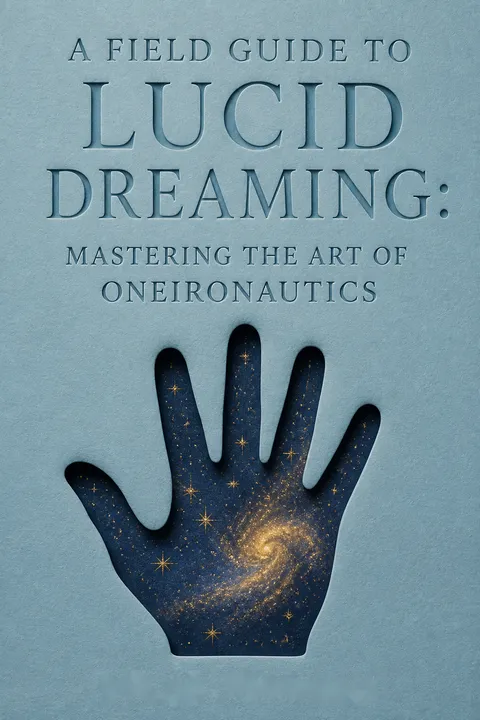


Key Takeaways
Wake up inside dreams, then explore the world your mind builds nightly.
Lucidity is awareness. A lucid dream is a dream in which you recognize, while it is happening, that you are dreaming. Vividness alone does not count: the crucial shift is becoming self-aware inside the experience, with enough memory and judgment to make choices. The authors describe lucid dreaming as a skill available to ordinary people, not a rare gift or a product of special equipment.
A signal from sleep. In 1975, researcher Keith Hearne arranged for lucid dreamer Alan Worsley to move his eyes in a pre-agreed pattern during a dream. The sleeping body’s eyes followed the pattern, offering a way to signal lucidity to researchers. Stephen LaBerge later conducted a similar test. Their method made a private experience observable without pretending the dream itself could be brought back as evidence.
The eye-signal experiment gives this subject a useful anchor: it shows that a dreamer can form an intention during sleep and communicate it through the body. That establishes lucid dreaming as a reportable state, not that dream events occur in a separate external world. Keeping those claims distinct makes the experience no less remarkable. It also offers a practical standard for evaluating claims: distinguish what a person experiences, what can be measured, and what remains an interpretation.
Record dreams before morning steals the details you need for lucidity.
Recall takes practice. The book argues that people who say they do not dream usually mean that they do not remember dreaming. It describes dreams as full experiences that become fragmentary in memory after waking. The practical move is to stay still when you wake, let images and feelings return, and write down even a few scraps before the day takes over.
Make a useful record. Keep a journal and pen within reach. Note keywords first if you are short on time, then add details when possible. Give each entry a title and record recurring people, places, or situations. The authors cite estimates that more than half of a dream may be forgotten within five minutes of waking, which is why a bedside record matters.
A journal does more than preserve stories. It gives the dreamer a growing sample of personal material to compare, making repeated settings and themes easier to notice than they are in isolated recollections. The method also imposes a helpful discipline: distinguish what actually appeared in the dream from what is guessed about it afterward. A record can reveal patterns, but it cannot establish that every image carries a hidden message. Curiosity works better than a universal symbol dictionary.
Practice reality checks around recurring dream signs until skepticism follows you asleep.
Build the question into the day. A reality check means pausing to ask whether you are dreaming, then testing the answer rather than trusting appearances. In dreams, ordinary details may behave strangely, but the scene can still feel completely convincing. Checks described in the book include trying to breathe while holding the nose, inspecting the hands, or reading text twice to see whether it stays consistent.
Use your own clues. A dream sign is a recurring element in a person's dreams, such as a familiar house that keeps changing or a particular relative who often appears. A journal can reveal these patterns. Use them as prompts for reality checks during waking life, so the same cue may prompt questioning in a dream. The authors suggest doing checks several times daily.
The technique trains a habit of metacognition: noticing an experience and asking how reliable it is. That capacity is useful beyond dreaming, though daytime checks should not become compulsive or distressing. The book's emphasis on personal dream signs is especially practical because a tailored cue is easier to recognize than a generic reminder. A failed physical test should not be treated as definitive; checking more than one feature helps avoid mistaking an odd dream for waking evidence.
Use the morning REM window to give lucidity a better chance.
Aim for longer dream periods. REM, or rapid eye movement sleep, is a sleep stage associated with vivid dreaming and brain activity resembling wakefulness. The book explains that REM periods tend to lengthen toward morning, making the final sleep cycles attractive practice opportunities. A Dream-Initiated Lucid Dream, or DILD, occurs when someone becomes lucid after an ordinary dream has already begun. The authors say this is the most common route to lucidity.
Try wake-back-to-bed. This technique means waking after about six hours of sleep, staying awake for roughly fifteen to twenty minutes, then returning to bed with a clear intention to notice a dream. During the brief waking interval, review dream notes or think about recurring dream signs. Timing varies between people, and the method is useful only if it does not make sleep so disrupted that the practice becomes counterproductive.
The appeal of this method is its alignment with the book's sleep-cycle account: practice is concentrated where dreams are expected to be longer and easier to remember. It also combines timing with a cognitive prompt, rather than treating lucidity as a matter of luck. The tradeoff is important. Deliberately interrupting sleep is not automatically worthwhile for everyone, and a technique that undermines rest may defeat its own purpose. A gentle experiment, tracked in a journal, is more informative than rigid adherence to one schedule.
Stabilize a lucid dream before excitement or fading ends the visit.
Awareness can slip. Newly lucid dreamers may wake from excitement or become absorbed in the dream and forget they are dreaming. The authors call the deliberate effort to hold attention anchoring or stabilization. They recommend using it as soon as lucidity begins, when the scene starts to fade, or whenever awareness feels weak.
Engage your senses. Slow down, examine the surroundings, touch an object, rub your hands together, or focus on a specific sensation. Some dreamers spin in place or give a simple verbal instruction for the scene to become clearer. These actions give attention something concrete to hold. The point is not to command every detail of the dream, but to remain present enough to explore it while remembering that it is a dream.
Stabilization is a useful reminder that awareness is not simply on or off. Attention can fluctuate, and a small sensory task can help organize it. This resembles a general feature of mindful practice: returning to a chosen focus when distraction pulls attention elsewhere. The techniques should be treated as experiments rather than guaranteed controls. A spinning movement may help one dreamer and unsettle another, so recording which actions precede longer, clearer dreams can turn trial and error into personal knowledge.
Use expectation to shape dream adventures, while leaving room for surprise.
Dreams respond to assumptions. The authors describe expectation as a powerful influence on what happens in a lucid dream. If flying seems impossible, the dreamer may stay grounded; if a door is expected to open onto a chosen place, it may do so. When direct control feels difficult, a doorway, mirror, imagined device, or closed eyes can provide a believable route to a new scene.
Direct, do not dictate. Dreamers can use this flexibility to fly, travel, rehearse a presentation, or create artwork. Yet the dreamer does not necessarily specify every detail. The book's example of a carefully imagined house includes unexpected features supplied by the dreaming mind. That balance is part of the appeal: intention sets a direction, while the dream may add its own material.
The most useful interpretation of dream control is not omnipotence, but guided improvisation. A clear intention reduces aimlessness, while unexpected details can make the result more interesting than a perfectly controlled fantasy. The same distinction matters for creative use: rehearsal in a dream may help someone imagine a task, but it does not replace learning or practice while awake. The dream can generate a felt experience or a fresh possibility; waking judgment is still needed to decide what is useful.
Question dream characters as inner material, not proven visitors from elsewhere.
Treat characters as interlocutors. The book describes dream figures ranging from barely responsive strangers to seemingly wise guides. Rather than dismissing them as scenery, a lucid dreamer can ask who they are, what they want, or what the dreamer should consider. One dream character, asked for useful advice, told a dreamer that he was neglecting what he wanted to do.
Keep the explanation open. The authors suggest that dream characters may express parts of the dreamer's own mind, while also entertaining the possibility that some seem independent. The experience can be meaningful without settling that question. A conversation with a deceased relative or a frightening figure may offer emotional insight, but the dream alone cannot prove that the character is an external being or a reliable authority.
Dream dialogue offers a way to encounter thoughts that may be easier to hear when they arrive in another voice. The character's apparent independence can make a familiar concern feel newly visible, which is psychologically valuable even without a supernatural explanation. The caution is epistemic as well as practical: vividness and surprise do not certify a message as true. Dream answers are best treated as prompts for reflection, then compared with evidence, values, and trusted perspectives in waking life.
Face nightmares with curiosity, and treat dream healing as support, not medicine.
Turn fear into a cue. A nightmare can prompt the question, 'Am I dreaming?' If lucidity follows, the authors advise stopping the escape and turning toward the feared figure or situation. One dreamer faced two pursuers instead of running; the encounter shifted from threat to a message that felt personally important. The book presents nightmares as possible reflections of conflict, fear, or stress, not as puzzles with guaranteed meanings.
Use care with healing claims. Dream imagery can support emotional exploration, and the book describes people seeking closure or imagining healing scenes. It also explicitly warns that lucid dreaming is not a substitute for medical treatment and recommends professional help when trauma feels too difficult to face alone. Physical or psychological improvement should not be assumed from a powerful dream alone.
The invitation to face rather than flee a nightmare can be empowering because it changes the dreamer's role from helpless target to active participant. It is not a universal prescription: some experiences are too intense to revisit without support, and safety matters more than completing an exercise. The distinction between emotional relief and medical treatment is essential. A dream can provide comfort, rehearsal, or a new interpretation, but those benefits do not establish that an illness has been cured.
Plant a specific, emotional question before sleep, then read its answer carefully.
Set the stage deliberately. Dream incubation is the practice of focusing before sleep on a desired dream, place, person, or question. Write the intention down, picture it clearly, and connect it to a feeling that matters. A concrete scene, such as walking through a childhood home, gives the mind more to work with than a vague wish to have an interesting dream. Repeating the intention while falling asleep can reinforce it.
Expect a response, not a verdict. The book cites a study in which 76 students tried incubating dreams about personal problems; about half reported a related dream, and many of those believed it offered a solution. Dreams may answer through images rather than a direct yes or no. The dreamer's own associations matter more than fixed dictionary meanings, and an apparent answer should be weighed rather than obeyed.
Incubation turns sleep into a structured form of reflection: a question is held in mind, then the resulting imagery becomes material to examine. Its value need not depend on a claim that the subconscious knows the objectively correct answer. A dream may recombine concerns, memories, and hopes in a way that reveals a neglected perspective. That makes it potentially useful for generating options, but not for outsourcing consequential decisions. The strongest follow-up is to ask what the dream suggests and what waking evidence supports.
Enter dreams through waking awareness only after learning to relax without forcing sleep.
A direct route exists. A Wake-Initiated Lucid Dream, or WILD, is an attempt to keep awareness while the body falls asleep, entering a dream without first losing consciousness. The authors describe the transition into sleep as a twilight state, where brief images, sounds, or sensations may appear. These are called hypnagogic imagery. The process can include a heavy or numb feeling as the body enters REM atonia, the temporary muscle inhibition associated with REM sleep.
Stay gently attentive. The suggested approach is to wake near the end of the night, remain awake briefly, then return to bed relaxed, observing images without chasing them. If one becomes clear, the dreamer imagines moving into it. Strange sensations can occur during the transition, but the technique is difficult and effort can keep a person awake. A reality check can also help identify a false awakening.
WILD makes the transition into sleep itself the object of attention, rather than relying on a realization inside a finished dream. That can be fascinating, but the instruction to remain aware creates an inherent tension: too little attention means losing the thread, while too much can prevent sleep. The authors' emphasis on relaxed observation addresses that tension well. Unusual sensations are described as part of the transition, not evidence that the dreamer has left the body or entered another realm.
Bring dreamlike attention into daytime choices without confusing metaphor with evidence.
Practice awareness while awake. The book's final move is to carry self-observation into ordinary life. A reality check can interrupt automatic routine; an intention can clarify what deserves effort; reflection on dreams can reveal feelings that are otherwise easy to ignore. In this sense, lucid living means noticing one's actions and assumptions instead of drifting through the day on habit.
Keep the analogy bounded. The authors connect dream experience to a broad view of reality, arguing that perception and expectation shape how life feels. That is useful as a reminder that perspective affects experience, but it does not mean thoughts can erase external constraints or that waking life is literally a dream. The practical lesson is to act more deliberately while staying answerable to the world beyond one's interpretation.
The transfer from dream awareness to daily life is strongest when understood as a practice of attention, not a claim that waking reality is imaginary. People can notice habitual reactions, reconsider assumptions, and choose more deliberately without denying material conditions or other people's independent lives. The dream analogy can loosen rigid perspectives, but it can also overstate personal control. Awareness expands the range of possible responses; it does not guarantee that every obstacle is merely a mistaken belief.
Analysis
This book works best as a field manual for attention, not as a final theory of what dreams are. Its narrative of exploration makes a technical sequence memorable: recover dream memories, notice personal patterns, question reality, use sleep timing, and stabilize awareness. The sequence matters because a reader who cannot recall dreams has little material for recognizing them, while a reader who becomes lucid without learning to hold attention may wake before doing anything useful.
The most persuasive claims are operational. Eye signals during REM gave researchers a way to verify that a sleeping person could communicate a deliberate action. Journaling and recurring cues turn dream recall into something observable over time. Wake-back-to-bed and WILD offer procedures that a person can test, though their value depends on individual results and the cost to sleep. The book's practical advice is therefore strongest when framed as a set of experiments, not guarantees.
Its more speculative material requires sharper boundaries. A dream figure may feel autonomous, an image may provide emotional relief, and an incubated dream may suggest an answer. None of those experiences, by themselves, demonstrates an external guide, a medical cure, or a supernatural shared world. The distinction does not diminish their subjective importance. It protects readers from confusing felt certainty with evidence, especially where health or major life choices are involved.
The deeper contribution is the book's repeated invitation to become an observer within experience. Lucidity interrupts the automatic story of a dream; the same reflective pause can interrupt a habitual reaction during the day. That analogy is valuable so long as it remains an analogy. Waking life is not as freely editable as a dream, but attention can alter how a person interprets a situation and what response becomes available. The book's practical promise is less escape from reality than a more deliberate encounter with it.
Review Summary
A Field Guide to Lucid Dreaming receives mostly positive reviews, with readers praising its accessible approach to lucid dreaming techniques. Many found it helpful in improving dream recall and achieving lucidity. Criticisms include repetitive content and occasional New Age-like passages. Readers appreciate the practical advice, personal anecdotes, and inspiring potential of lucid dreaming. Some experienced lucid dreams while reading the book, while others found it a good starting point for exploring the topic. Overall, it's recommended for beginners interested in learning about lucid dreaming.
People Also Read







Glossary
Lucid dream
Awareness during a dreamA dream in which the dreamer recognizes, while still dreaming, that the experience is a dream. Lucidity can vary: a person may know the dream is happening without being able to control its events. The book distinguishes this awareness from a dream that is merely vivid or memorable after waking.
Dream sign
Recurring dream clueA person, place, object, or situation that appears repeatedly in an individual's dreams. By noting recurring elements in a dream journal, a dreamer can learn to recognize them as clues that a current experience may be a dream. The most useful signs are personal rather than drawn from a universal symbol list.
Reality check
Test for waking realityA practiced pause in which someone asks whether they are dreaming and tests the answer using a physical or perceptual action. Examples include trying to breathe while holding the nose, examining one's hands, or rereading text. Repeating checks while awake is intended to make the questioning habit more likely to occur in a dream.
Dream-Initiated Lucid Dream (DILD)
Lucidity inside an existing dreamA lucid dream that begins after an ordinary dream is already underway. The dreamer notices an inconsistency, recognizes a recurring dream sign, or performs a reality check, then realizes that the current scene is a dream. The book presents this as the most common route to lucid dreaming.
Wake-back-to-bed
Brief waking before returning to sleepA lucid dreaming technique that involves waking after several hours of sleep, staying awake briefly, and then going back to bed with a clear intention to notice a dream. The book recommends aiming for the longer REM periods near morning. Timing varies, and the technique should not come at the expense of needed sleep.
Anchoring
Focus to steady a dreamAn effort to maintain lucidity by directing attention toward a concrete sensation or action within a dream. A dreamer might touch an object, examine the surroundings, rub the hands together, spin, or give a verbal instruction. The aim is to sustain attention and awareness, especially when the dream begins to fade.
Dream incubation
Intention for a chosen dreamA practice of focusing before sleep on a particular dream subject, setting, person, or question. The dreamer may write down the intention, visualize it, and connect it to a strong feeling. Incubation can influence the topic of a dream without guaranteeing an exact scene or a clear answer.
Wake-Initiated Lucid Dream (WILD)
Lucidity maintained into sleepA technique in which a person tries to preserve awareness while falling asleep, entering a dream without first becoming unconscious and then recognizing the dream. It often involves observing the transition into sleep, including fleeting images or sensations, while remaining relaxed. The method can be difficult because focused attention may delay sleep.
Hypnagogic imagery
Images during sleep onsetBrief images, lights, sounds, or other perceptions that can occur as someone transitions from wakefulness into sleep. In the book, these experiences are treated as ordinary features of the twilight period and as possible cues for a Wake-Initiated Lucid Dream. They do not by themselves establish that a person is dreaming.
REM atonia
Temporary REM muscle inhibitionThe temporary inhibition of most voluntary muscle activity associated with REM sleep. It helps prevent the sleeping body from physically acting out dream movements. During attempts to enter a dream while maintaining awareness, the transition may be accompanied by a sense of heaviness or numbness.
FAQ
What's "A Field Guide to Lucid Dreaming" about?
- Exploration of Lucid Dreaming: The book is a comprehensive guide to understanding and mastering lucid dreaming, where the dreamer is aware they are dreaming and can control the dream.
- Authors' Experience: Written by Dylan Tuccillo, Jared Zeizel, and Thomas Peisel, it combines their decade-long experiences with lucid dreaming and insights from other dreamers and scientists.
- Practical Techniques: It provides step-by-step advice on how to reconnect with dreams, achieve lucidity, and explore the subconscious mind.
- Dream Navigation: The book aims to teach readers how to become an "oneironaut," or a dream navigator, exploring the dream world with clarity and awareness.
Why should I read "A Field Guide to Lucid Dreaming"?
- Self-Discovery: Lucid dreaming offers a unique opportunity for self-exploration and understanding the subconscious mind.
- Adventure and Creativity: The book encourages readers to use dreams as a playground for creativity and adventure, offering experiences like flying or meeting dream characters.
- Practical Benefits: Lucid dreaming can help with problem-solving, overcoming fears, and even healing emotional or physical issues.
- Comprehensive Guide: It provides a structured approach to learning lucid dreaming, making it accessible for both beginners and experienced dreamers.
What are the key takeaways of "A Field Guide to Lucid Dreaming"?
- Lucid Dreaming Basics: Understanding what lucid dreaming is and how it differs from regular dreaming.
- Techniques for Lucidity: Practical methods like reality checks, dream journaling, and the wake-back-to-bed technique to achieve lucid dreams.
- Exploration and Control: How to navigate and control the dream environment, including flying, shape-shifting, and interacting with dream characters.
- Personal Growth: Using lucid dreaming for self-discovery, healing, and enhancing creativity and problem-solving skills.
How do the authors define lucid dreaming in "A Field Guide to Lucid Dreaming"?
- Awareness in Dreams: Lucid dreaming is defined as the ability to know you're dreaming while you're dreaming.
- Control and Exploration: It allows the dreamer to behave like someone who is awake, exercising free will, imagination, and memory.
- Dream Navigation: The book emphasizes becoming an "oneironaut," a dream navigator who explores the dream world with clarity and awareness.
- Practical Application: Lucid dreaming is presented as a tool for personal growth, creativity, and overcoming fears.
What are the best techniques for achieving lucidity according to "A Field Guide to Lucid Dreaming"?
- Reality Checks: Regularly questioning whether you're dreaming during the day to develop the habit of doing so in dreams.
- Dream Journaling: Keeping a detailed record of dreams to improve recall and identify dream signs.
- Wake-Back-to-Bed: Waking up after six hours of sleep, staying awake briefly, and then returning to sleep with the intention of becoming lucid.
- Setting Intentions: Using affirmations and visualizations before sleep to focus the mind on becoming lucid.
What is the "Wake-Back-to-Bed" technique in "A Field Guide to Lucid Dreaming"?
- Timing: Set an alarm to wake up six hours after going to bed, targeting the last REM cycles.
- Brief Wakefulness: Stay awake for 15-20 minutes to activate the analytical mind, which aids in recognizing the dream state.
- Return to Sleep: Go back to bed with a strong intention to become lucid, using affirmations and visualizations.
- Increased Success: This method increases the likelihood of entering a lucid dream due to the proximity to REM sleep.
How does "A Field Guide to Lucid Dreaming" suggest using dreams for personal growth?
- Self-Reflection: Lucid dreams act as a mirror to the subconscious, revealing hidden thoughts, fears, and desires.
- Problem Solving: Dreams can be used to explore solutions to waking-life challenges and gain insights.
- Healing: Lucid dreaming can aid in emotional and physical healing by confronting fears and integrating repressed aspects of the self.
- Creativity and Exploration: The dream world offers a limitless space for creative expression and exploration of new ideas.
What are dream signs and how are they used in "A Field Guide to Lucid Dreaming"?
- Recurring Elements: Dream signs are recurring themes, people, or objects in dreams that can signal the dream state.
- Identification: Keeping a dream journal helps identify personal dream signs, which can be used as triggers for lucidity.
- Awareness Tool: Recognizing dream signs during a dream can prompt the realization that one is dreaming.
- Practical Application: By focusing on these signs, dreamers can increase their chances of becoming lucid.
How does "A Field Guide to Lucid Dreaming" address nightmares?
- Facing Fears: Lucid dreaming provides a safe space to confront and defuse nightmares by facing them directly.
- Integration: Nightmares are seen as shadow elements, parts of the psyche that need acceptance and integration.
- Lucidity as a Tool: Becoming lucid in a nightmare allows the dreamer to change the narrative and find healing.
- Empowerment: The book encourages using nightmares as opportunities for personal growth and understanding.
What role do dream characters play in "A Field Guide to Lucid Dreaming"?
- Types of Characters: Dream characters range from sleepwalkers with low awareness to guides with high awareness.
- Interaction: Engaging with dream characters can provide guidance, insights, and even healing.
- Symbolic Representation: Characters may represent aspects of the dreamer's psyche or subconscious mind.
- Exploration: The book encourages exploring relationships with dream characters to gain deeper understanding and wisdom.
How does "A Field Guide to Lucid Dreaming" suggest using dreams for healing?
- Mental Healing: Lucid dreams can help integrate repressed emotions and resolve psychological conflicts.
- Physical Healing: The book discusses using dream imagery to influence physical health and well-being.
- Guided Imagery: Techniques like visualizing healing light or seeking out dream healers are suggested.
- Holistic Approach: Lucid dreaming is presented as a complementary tool to traditional medicine and therapy.
What is the "WILD" technique in "A Field Guide to Lucid Dreaming"?
- Direct Entry: WILD, or Wake-Initiated Lucid Dreaming, involves entering a dream directly from the waking state.
- Conscious Transition: The technique requires maintaining awareness while the body falls asleep, often using hypnagogic imagery.
- Advanced Practice: It is considered more challenging but offers stable and long-lasting lucid dreams.
- Unique Experience: WILDs provide a seamless transition into the dream world, offering a profound and vivid experience.
Download PDF
Download EPUB
.epub digital book format is ideal for reading ebooks on phones, tablets, and e-readers.








