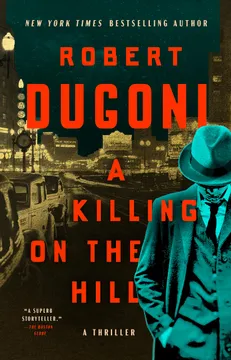


Plot Summary
The Pom Pom Shooting
In 1933, William Shumacher, called Shoe, is a young Seattle Daily Star reporter trying to earn enough to support his struggling family in Kansas City. Chief Detective Ernie Blunt summons him to the Pom Pom Club, where former boxer Frankie Ray lies shot on the dance floor.
Club owner George Miller and the other men present offer a calm, unified story: Ray tried to rob the club, and Miller shot him in self-defense. At the hospital, Ray dies after refusing to identify his killer. His cryptic final exchange with Blunt leaves Shoe with the sense that the detective has heard more than he lets on. The murder becomes Shoe’s chance to prove he can do more than fill newspaper inches.
Shoe’s first major assignment makes professional ambition inseparable from economic need. He does not enter the case as a detached investigator: his family depends on his wages, and his own meals are uncertain. That vulnerability gives Blunt’s invitation its force, but it also makes Shoe easy to recruit into the police department’s informal relationship with the press. Ray’s silence establishes a second pressure: in this city, withholding information can be a form of loyalty, defiance, or self-preservation. The mystery begins not only with a killing, but with competing claims about who has the right to tell its story.
Blood Beyond the Bar
Blunt dismantles Miller’s account through details the other men overlook. The bullet casings lie too far from where Miller claims he fired, and Ray’s wounds contradict the story that he was shot while charging with his hands raised.
A bloodied handkerchief at the club does not belong to Ray or any of the men held there, suggesting another person fled before police arrived. Blunt finds a Luger holster in Miller’s home, then Seattle criminologist Luke May matches its impressions to the murder weapon and finds Miller’s fingerprints on the loaded magazine and bullets.
A dry cleaner’s report leads Blunt to Al Smith, who says he accompanied Ray and witnessed Miller shoot him after an argument. The evidence gives prosecutor Laurence McKinley grounds to charge Miller.
The case advances through material traces rather than confessions. Dust, casings, blood, and fingerprints expose how a rehearsed account can be contradicted by objects that have no interest in protecting anyone. Blunt’s reasoning also models a form of authority built on attention: he notices what the witnesses assume is too small to matter. Yet the investigation remains morally unsettled. The officers’ dependence on access and publicity means evidence does not speak in a vacuum; it must be selected, interpreted, and made public by people with their own interests. Shoe learns both the power and the limits of observation.
A Cadillac's Hidden Cost
The expensive Cadillac parked outside the club leads Blunt to Joan Daley, Ray’s girlfriend, whose name is on the car payments. Joan worked at a disorderly house connected to Miller and is recovering from injuries after jumping from a window during a raid. Smith initially tells Blunt that Ray went to confront Miller over Joan’s hospital bill, which Miller had promised to cover.
Smith also describes Miller shooting Ray twice and threatening him, then disappears from reach. The account gives McKinley a motive and supports the murder charge, while Miller’s lawyers prepare to argue self-defense. As the case grows, Shoe senses that Ray’s new car and the conflicting stories may point to more than an unpaid bill.
The Cadillac functions as an economic contradiction. Ray appears too poor to afford it, yet someone has financed it, and that discrepancy forces the investigation beyond the club’s staged version of events. Joan’s hospital expenses connect private intimacy to Miller’s business network, showing how dependence can be used as leverage. Smith’s willingness to speak is also conditional: he is unemployed, frightened, and exposed to the men he implicates. The apparent motive is plausible enough to move the prosecution forward, but the unexplained money behind the car leaves a seam in the story. Shoe’s instinct to notice that seam becomes more important than his hunger for a headline.
A Reporter Finds Home
While the murder investigation advances, Shoe meets Amara Giovacchini at her family’s bakery and invites her to a movie. Her father, Arturo, initially rejects him because Shoe is German American, but Amara chooses to see him anyway. Their first date leads to dinner with her family, where her towering brothers tease Shoe and Arturo gradually recognizes his own immigrant beginnings in the young reporter’s struggle.
Shoe and Amara build a modest courtship around matinees, walks, and family outings, while Shoe’s front-page reporting wins him a regular salary. He begins to imagine asking Amara to marry him, even as he sends more money home to his parents. For the first time since leaving Kansas City, he has a possible home in Seattle.
Amara’s family gives Shoe something his newspaper success cannot: a place where he is valued beyond his usefulness as a reporter. His courtship is shaped by scarcity, but scarcity does not make it joyless. Shared outings and meals become measures of care rather than spending power. Arturo’s resistance reflects inherited grief and suspicion, while his eventual warmth comes through recognition of a familiar immigrant bargain: leaving home because staying offered no future. The romance grounds Shoe’s ambition in a possible life with other people. It also raises the stakes of his choices, because the story he pursues may endanger the first community that has begun to claim him.
The Trial's Rehearsed Story
When Miller’s trial finally begins, the defense presents Ray as a violent drunk and Miller as a frightened club owner. Smith abruptly changes his account on the stand, claiming Ray threatened Miller and that he did not witness the shooting.
McKinley counters by introducing Smith’s earlier statement, then exposes his new job at a company owned by Miller and business partner Syd Brunn. Brunn also disavows his earlier account, while other witnesses repeat the same strange phrases and contradict what they told police.
The pattern makes the defense look coached, though its witnesses are clearly being rewarded or pressured. Shoe covers the testimony for the Star and watches the courtroom become another stage where powerful men try to control which version of Ray survives.
The courtroom turns memory into contested property. Smith and Brunn do not simply forget; their accounts shift in ways that reveal dependence on Miller’s organization. McKinley’s tactic of comparing statements makes inconsistency itself evidence, while the defense tries to convert Ray’s reputation into permission for his killing. Shoe’s reporting is implicated in this contest: the Star’s coverage can shape public judgment before the jury decides. The trial also exposes how poverty weakens the witness’s freedom to speak. A job, a bail arrangement, or fear of retaliation can be as coercive as a direct threat, and the result is testimony that sounds like a script with missing pages.
Joan's Last Warning
Shoe visits Joan in her rooming house hoping for an interview. Drunk and unguarded, she challenges the idea that Ray went to Miller simply to collect her hospital bill. She explains that the Cadillac payments had to remain in her name because Ray’s money would otherwise invite questions, and she implies Miller had reason to wonder where Ray obtained it.
Before Shoe can learn more, he leaves and is followed by a black Ford like Blunt’s. The next morning Joan is found dead below her window, though her room has been ransacked. At the same time, Shoe learns his father has suffered a heart attack. He conceals his visit to Joan, fearing the scandal could cost him the job his family needs.
Joan’s disclosure changes the emotional temperature of the case: what had looked like a dispute over a small bill now suggests concealed wealth and a larger betrayal. Her death makes the danger concrete, but Shoe’s silence is not simple cowardice. His parents’ poverty has made employment a family obligation, so telling the truth could harm people who have no role in the crime. The parallel crisis at home tightens that bind. Shoe must decide whether loyalty means protecting his family’s income or pursuing a woman whose warning may have cost her life. His choice to investigate quietly shows the first painful split between his public identity as a reporter and his private knowledge.
Seattle's Missing Fortune
Shoe searches court files and discovers that the Musketeers, Miller and Brunn’s holding company, faced large tax claims tied to several clubs and taverns. Tax commissioner Jacob Rosen explains that the documented shortfall exceeds one hundred thousand dollars, with the missing cash possibly far greater.
The money was likely hidden to evade taxes, and the city’s officials have little incentive to expose the businesses that finance them. Shoe reports Miller’s courtroom admission that police officers and politicians frequented the Pom Pom Club, then pursues the tax trail despite Blunt’s probing questions.
On a date with Helen Ruth, he is unexpectedly kissed just as Amara and her family see them. Soon after, an intruder searches Shoe’s room and knocks him unconscious.
The discovery of the tax claims widens the novel’s moral field. The shooting is no longer only a private quarrel or a corrupt club’s cover-up; it sits inside a civic economy where illegal profits sustain officials, workers, and entertainment during the Depression. Shoe’s investigation becomes dangerous precisely because the money has many potential owners. His public exposure of police complicity and his private pursuit of the missing funds are connected, even when he cannot prove the link. The kiss with Helen adds a smaller but painful failure: Shoe’s work-driven secrecy produces an appearance of betrayal for Amara. In both the romance and the investigation, incomplete information has consequences before anyone can explain it.
The Bible's Address
After recovering Ray’s stored belongings, Shoe finds a receipt for concrete, a sledgehammer, and a trowel. Marks in Ray’s Bible combine into an address on East John Street. Shoe identifies the address as the abandoned Topsy Turvy, once a speakeasy, and enters through a broken window.
Beneath a rug in the basement, he finds linoleum covering a rectangular patch of newer concrete. He keeps the discovery from Phish and from Blunt, suspecting that either man might be watched or involved.
Meanwhile, the trial continues: medical testimony complicates the defense’s claims about Ray, and Miller’s witnesses expose the club’s crooked games and police protection. Shoe now has a possible location for the missing money, but he waits until the trial is over before acting.
Ray’s Bible is an unexpectedly intimate map. Its coded marks turn a devotional object into a practical safeguard, suggesting that Ray planned for betrayal even while living within the underworld’s loyalties. The concrete patch offers a physical answer to Shoe’s growing suspicion, but it is not yet proof of what lies beneath it. His decision to conceal the find marks a change: he is no longer merely reporting what officials tell him, and he has begun to protect information from the institutions he covers. That independence carries risk. Shoe’s choice is sharpened by the courtroom’s disclosures, where even police officers admit to selective enforcement and the boundary between public order and private profit grows difficult to locate.
A Verdict With Teeth
Miller takes the witness stand and claims Ray was a violent, medically disturbed attacker, then admits he lied to police to protect officers who tolerated the club’s illegal drinking and gambling. His testimony hints at political connections without naming every participant.
The defense calls witnesses to support Ray’s violent reputation, while McKinley attacks their ties to Miller’s businesses. After both sides close, the jury rejects first-degree murder but finds Miller guilty of second-degree murder.
Judge Kincaid sentences him to thirty-one years in prison, the maximum term. The verdict closes the public trial but does not settle Shoe’s private questions: Ray’s hidden money remains missing, Joan’s death remains suspicious, and Shoe still does not know whether Blunt has been using him.
The split verdict captures the difference between proving a killing and proving its full design. Miller’s admission about police protection damages the city’s self-image, but it also serves his own defense by making the case feel like a wider, muddier system rather than a single man’s act. The jury’s rejection of first-degree murder does not erase responsibility; the maximum sentence gives the second-degree finding real force. Yet institutional punishment cannot recover the whole truth. The trial resolves Miller’s legal status while leaving the money and Joan’s death outside its frame. Shoe’s continued unease is therefore not a failure to accept the verdict. It is recognition that the courtroom has answered only the question it was allowed to ask.
The Empty Treasure Pit
After the verdict, Shoe returns to the Topsy Turvy with tools and breaks through the concrete. Prosecutor McKinley arrives with Katheryn Conner, Miller’s partner, and admits they have come for the hidden tax money. McKinley threatens Shoe into digging, but Conner shoots him when he turns away. She then keeps Shoe working at gunpoint until Blunt steps from the shadows.
Conner fires at the detective; Blunt shoots her dead. The pit is empty. Blunt reveals that he had followed McKinley and Conner, suspected the treasure hunt, and knew Ray had hidden the money somewhere. He tells Shoe to leave, then constructs an official account that places McKinley at Joan’s death and presents Conner’s shooting as self-defense.
The treasure hunt brings the novel’s competing versions of justice into one basement. McKinley, who prosecuted Miller, is willing to threaten a reporter for money; Conner turns on her accomplice as soon as he becomes an obstacle; and Blunt uses both his investigative skill and his institutional authority to shape the aftermath. His account may be partly true, partly manufactured, and Shoe has no clean way to verify it. The empty pit denies everyone a simple reward, but it does not make the danger meaningless. By surviving, Shoe sees that moral character cannot be inferred from a badge, a courtroom role, or a polished public reputation.
A Ring, A Reckoning
Shoe nearly gives up on Seattle, but first returns to Amara. Her father apologizes for misjudging him and gives him permission to propose. Shoe and Amara reconcile on the family porch, where he asks her to marry him with his grandmother’s ring, and she accepts. Shoe then tells publisher Howard Phish about the Topsy Turvy and learns that Phish secretly found the money, replaced the soil, and sealed the floor again so no one would suspect Shoe had discovered it.
Rather than keep the fortune, Phish places it in his family’s charitable foundation. The foundation anonymously pays Shoe’s parents’ mortgage and medical bills, while Shoe helps direct support toward people in need. He remains at the Star, ready for the next assignment.
The resolution distinguishes wealth from security. Shoe’s family receives real help, but not through his own seizure of the hidden cash; Phish turns the money into a charitable resource and keeps Shoe from having to decide whether desperation justifies taking it. This does not make the money clean or erase the deaths attached to it. Instead, it shifts its use toward people whose need resembles Shoe’s family’s own. The engagement offers a parallel resolution grounded in accountability: Shoe returns to Amara and admits, through his actions, that silence can injure even when it is meant to avoid conflict. His future combines ambition with a stronger sense of what he owes others.
Analysis
A Killing on the Hill makes the Depression more than a backdrop: it is the pressure system that connects every choice. Shoe’s family needs his wages, witnesses need jobs, nightclub patrons need escape, and officials accept arrangements that keep illicit businesses operating. In such a city, corruption is not simply a villainous exception. It becomes a social service with a price, tolerated because people fear what happens when the service disappears.
The novel’s mystery turns on competing forms of evidence. The casings and fingerprints contradict Miller’s first account; courtroom testimony bends under economic pressure; Ray’s coded Bible preserves information that no institution can be trusted to keep. Shoe learns to distrust both polished respectability and official procedure, but the book does not offer cynicism as wisdom. Blunt, McKinley, Miller, and Phish all occupy roles that appear morally legible until money or access complicates them. Shoe’s most important achievement is not discovering the hidden fortune. It is recognizing that he cannot know with certainty what he would do if it were his.
That uncertainty makes the final choice meaningful. Phish directs the money toward people in need, while Shoe’s family receives help without being asked to participate in the crime. His engagement to Amara likewise depends on honesty after a misunderstanding, not on a grand gesture alone. Together, these resolutions suggest that integrity is less a permanent possession than a practice: admitting harm, refusing easy explanations, and choosing how power will be used when no clean option is available.
Review Summary
Most readers praise A Killing on the Hill as an engaging historical mystery set in Depression-era Seattle, appreciating Dugoni's vivid period detail, well-developed characters, and compelling courtroom drama. Fans highlight protagonist "Shoe" Shumacher's journey as a young reporter navigating corruption, romance, and moral dilemmas. Many recommend reading the author's note, which reveals the story's fascinating real-life inspiration. A few readers found the pacing slow or the writing too simplistic and did not finish. Overall, the book earned strong ratings, with most reviewers eagerly anticipating more from Dugoni.
Characters
William Shumacher
Hungry young reporterKnown at work as Shoe, William is a nineteen-year-old reporter for Seattle’s afternoon Daily Star. He has come from Kansas City because his family can no longer afford to support him, and he sends home what little he earns. Ambitious and observant, he studies the established reporters and learns to follow details others overlook. His hunger for a career is balanced by a strong sense of obligation to his parents and siblings. As he becomes entangled in the Pom Pom Club case, he must learn that access to a story is not the same as understanding it, and that professional courage can require restraint as much as pursuit.
Ernie Blunt
Unflappable homicide detectiveSeattle’s celebrated chief homicide detective, Blunt is physically imposing, perceptive, and comfortable directing a room. He reads crime scenes through small physical inconsistencies and knows how to use both scientific evidence and human behavior. He treats Shoe as a useful apprentice, offering access while carefully managing what the young reporter learns. Blunt is pragmatic about the city’s bargains and its corruption, but he does not easily reveal his own judgments. His presence forces Shoe to consider whether a respected investigator can be trusted simply because he is skilled, admired, and accustomed to speaking with authority.
Howard Phishbaum
Pizzazz-loving publisherPhish, as the newsroom calls him, owns the Daily Star and pushes Shoe to produce vivid, saleable stories. His appetite for headlines can make him seem more interested in circulation than in truth, but he repeatedly warns Shoe not to become a mouthpiece for either side. He is practical, frugal, and self-made, having purchased the paper rather than accepting it as a gift. Beneath his brusque editorial manner is a paternal concern for Shoe’s future and family. Phish understands that ambition can consume a reporter’s private life, because he has paid a personal cost for his own devotion to the news.
Amara Giovacchini
Bakery owner's daughterAmara works in her family’s bakery and hopes one day to open a restaurant of her own. Warm, perceptive, and quietly independent, she is proud of her Italian American family and its shared work in Rainier Valley. She responds to Shoe’s earnestness but does not confuse affection with permission to avoid hard conversations. Her relationship with Shoe offers him intimacy and belonging beyond the newsroom, while her family’s traditions give her a strong sense of what partnership should require. Amara’s kindness does not make her passive: she expects Shoe to meet her with honesty and to take responsibility when his choices hurt her.
George Miller
Polished nightclub proprietorMiller owns the luxurious Pom Pom Club and several other businesses tied to Seattle’s nightlife. Dapper and socially confident, he can present himself as a respectable operator even while running establishments built around illegal liquor, gambling, and prostitution. His public ease contrasts with a volatile temper and a talent for recruiting others into his version of events. He understands that power rests not only in money but in the people who will repeat a story, overlook a crime, or accept a favor. Miller’s polished appearance makes him especially difficult to read at first.
Joan Daley
Underworld survivorJoan is Ray’s girlfriend and a worker in one of Miller’s disorderly houses. She cultivates a glamorous, teasing manner, but behind it is a woman navigating precarious work, injury, and dependence on men who control the businesses around her. Her connection to Ray and to Miller places her near the case’s central tensions, though she is not easily reduced to either man’s possession. Joan can be guarded and provocative, especially with Shoe, yet she recognizes that appearances often conceal the real transaction. Her vulnerability does not erase her ability to read danger or to decide when she will share what she knows.
Laurence McKinley
Ambitious homicide prosecutorMcKinley is the King County prosecutor assigned to Miller’s case. Tall, serious, and intellectually combative, he understands courtroom strategy and is willing to challenge witnesses who change their stories. He works closely with Blunt, while also resisting the detective’s judgments when the evidence seems thin. McKinley’s disciplined public role makes him appear committed to the state’s case, but his interest in the city’s tax investigations places him near questions of money and access beyond the murder trial. He is a reminder that legal competence and moral reliability are not identical qualities.
Katheryn Conner
Miller's elegant companionConner lives with Miller and moves easily through the nightclub world he controls. Sharp-tongued and self-possessed, she refuses to be intimidated by police officials, reporters, or the men who assume they understand her place. Her polished clothes and public composure conceal a more complicated private attachment to Miller. She is attentive to the shifting loyalties around the case and has reason to resent the women who compete for Miller’s attention.
Al Smith
Unsteady boxing witnessSmith is a former boxer and unemployed salesman who accompanies Ray to the Pom Pom Club. He is large and physically imposing, but his economic insecurity makes him vulnerable to fear and pressure. His account initially gives investigators a direct explanation of the shooting, then changes under the defense’s influence. On the witness stand, his contradictions reveal how easily testimony can be bent when a witness depends on the people he is describing.
Syd Brunn
Miller's business partnerBrunn is Miller’s partner in the Pom Pom Club and a bail bond broker with a controlled manner. He is present after Ray is shot and becomes one of the people whose account changes as the case develops. Brunn is practiced at withholding information, using brief answers and an air of confidence to avoid committing himself. His business ties to Miller make his testimony a measure of how loyalty, self-interest, and pressure can overlap.
Mrs. Alderbrook
Shoe's boardinghouse landladyMrs. Alderbrook runs the Pike Street boardinghouse where Shoe rents a room. Blunt about money and rules, she also notices when he is hungry, exhausted, or frightened. Her practical kindness recalls the maternal care Shoe has left behind in Kansas City. She offers food, small loans, and emotional comfort without pretending that generosity removes the Depression’s costs.
Arturo Giovacchini
Protective bakery patriarchAmara’s father owns the family bakery and holds tight to the sacrifices that brought his family from Italy to Seattle. He is proud, protective, and wary of anyone he believes might hurt his daughter. His early suspicion of Shoe is shaped by personal loss and by a strong sense of family duty. Beneath his severity is a man who understands what it means to leave home with little and build a life through work.
Luke May
Forensic evidence specialistMay is Seattle’s renowned criminologist. He examines the Luger, its holster, and the physical evidence from Ray’s shooting, translating fine scratches and wound paths into findings the court can understand. His work gives the investigation a scientific counterweight to the witnesses’ shifting accounts.
Walter Lutz
First officer at the clubOfficer Lutz arrives first at the Pom Pom Club and finds Ray wounded while the men at the bar stand silent. His careful account of the scene gives Blunt and McKinley an important baseline against which to test Miller’s story.
Frankie Ray
Fallen prizefighterRay is a former lightweight contender whose career has left him with a reputation for toughness and a place on the edge of Seattle’s underworld. He knows Miller and Brunn, dates Joan Daley, and lives with financial uncertainty. Other people describe him as violent, loyal, or reckless, but his choices remain partly obscured by the conflicting accounts surrounding his death. His car and carefully hidden clues suggest a more deliberate side than the courtroom portraits allow.
William's parents
Family in Kansas CityShoe’s parents are struggling through the Depression with two younger children and his aunt in their home. His father’s accounting work has disappeared, while his mother manages the household through practical resolve. They encourage Shoe to keep his job in Seattle even when the family crisis makes him want to return. Their hardship explains both his financial anxiety and his instinct to put other people’s needs ahead of his own.
Plot Devices
The Bloody Handkerchief
A missing witness's traceBlunt finds a bloodied handkerchief near the club that does not belong to Ray or any of the men still present. Laboratory comparison links its blood to Ray’s shirt, confirming that someone else was close enough to the shooting to be stained and then leave. The cloth turns an absence into evidence. It directs the investigation toward the cleaner who received Smith’s suit and gives Blunt a route to a witness whom the club’s unified story had left out.
The Press and the Trial
A public contest of accountsShoe’s newspaper access connects the police investigation to the public courtroom. Blunt uses reporters to pressure witnesses and signal that investigators know more than they have disclosed, while Miller’s defense team uses the press to circulate its self-defense theory. Phish wants vivid stories but warns Shoe not to become either side’s instrument. As testimony changes and officials expose their ties to the club, the Star’s coverage becomes part of the struggle over which version of the crime Seattle will believe.
Ray's Marked Bible
A coded route to concealmentAmong Ray’s stored belongings, Shoe finds a Bible with a handful of page numbers and words marked in pencil. Read together, the marks point to an address on East John Street. A receipt for concrete and tools suggests Ray prepared a hidden space, and Shoe recognizes the address as an abandoned speakeasy. The clue links Ray’s private planning to the city’s forgotten buildings and gives Shoe a way to pursue the mystery without relying on Blunt or McKinley.
The Hidden Tax Money
Greed behind the shootingTax claims against Miller and Brunn’s holding company reveal that a large sum from their businesses has gone unreported. The missing cash reframes Ray’s Cadillac, the club argument, the false witness accounts, and the search of Joan’s room. Several characters seek the money, making it a motive for betrayal as well as a measure of what desperation can make people excuse. The fortune’s ultimate use is tied to the question of whether wealth can be redirected toward good without making its origins disappear.
About the Author

Download PDF
Download EPUB
.epub digital book format is ideal for reading ebooks on phones, tablets, and e-readers.








