

Plot Summary
A Bone Above Cedar Grove
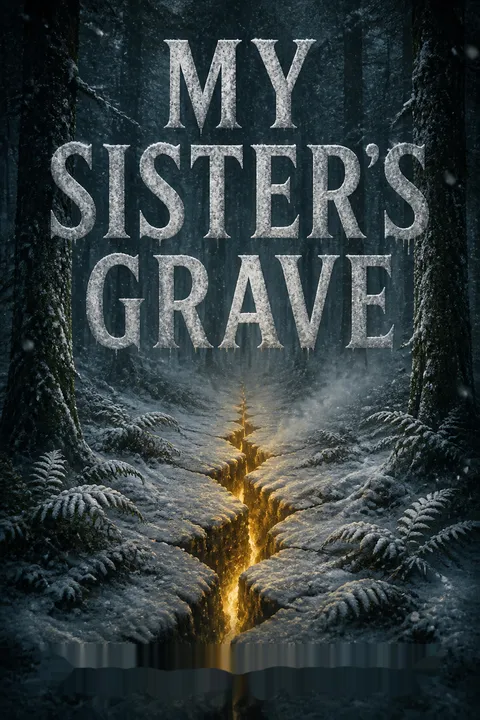
Seattle homicide detective Tracy Crosswhite is working a separate murder when her partner, Kinsington Rowe, tells her hunters have uncovered what looks like a human bone near Cedar Grove, her childhood home.
Sheriff Roy Calloway asks her to stay outside the investigation, but she recognizes the site as land once flooded by a hydroelectric project. Tracy remembers that volunteers searched the area before the reservoir covered it, then points out that the body could have been buried after that search and just before the flooding.
When the lake receded years later, the grave became accessible again. At the excavation, forensic anthropologist Kelly Rosa uncovers a silver championship buckle. Tracy knows she gave it to her missing sister, Sarah, the last night she saw her.
The opening makes geography part of the evidence. The reservoir once concealed a crime, and its retreat brings back not only remains but a town’s unfinished account of what happened. Tracy’s professional knowledge gives her a way into the scene, yet the buckle turns the case instantly intimate. Her insistence that the grave was created after the search challenges Calloway’s authority with a precise, testable claim. The discovery begins as forensic work, but its first consequence is emotional: the object proves Sarah is dead while reviving the possibility that the official story about her disappearance was wrong.
The Championship Farewell
In 1993, Tracy and Sarah enter the state cowboy-action shooting championship nearly tied. Tracy misses a target in the final round, but Sarah deliberately misses two, letting her older sister win the buckle because she knows Tracy’s boyfriend, Ben, plans to propose that evening. Tracy realizes Sarah has thrown the match and scolds her, then gives her the buckle along with the keys to their blue truck.
A storm is closing in. Tracy urges Sarah to stay on the highway, but Sarah insists on taking the quicker county road and promises to be careful. Tracy leaves with Ben, carrying an uneasy sense that she has forgotten something. Sarah watches them go, unaware that this small parting will become the last moment Tracy can remember clearly.
Sarah’s generosity takes the form of a prank that her sister cannot initially recognize as love. The championship matters less as a contest than as a final test of their intimacy: Sarah knows how Tracy reacts to losing and uses that knowledge to protect the proposal from a bad mood. Tracy, in turn, tries to care for Sarah through instructions and caution, but affection cannot guarantee obedience or safety. The buckle becomes a compact record of both women’s motives. It marks Sarah’s sacrifice, Tracy’s guilt, and the ordinary decision to separate that later acquires the terrible weight of an irreversible choice.
A Convenient Conviction
When Sarah fails to return home, Tracy and her parents join a townwide search. Calloway quickly focuses on Edmund House, a recently paroled rapist living with his uncle, Parker. House has scratches on his face and arms but claims a woodworking accident caused them; a judge refuses an early search warrant.
Seven weeks later, salesman Ryan Hagen reports seeing a red truck near Sarah’s abandoned vehicle. Calloway uses the account to obtain warrants. Investigators find blonde hairs and blood in the truck, plus Sarah’s pistol-shaped earrings in Parker’s shed.
Calloway later says House confessed, but there is no recording or signed statement. A jury convicts House of murder without a body. Tracy doubts the earrings were Sarah’s, and years of unanswered questions end her teaching career, strain her marriage, and follow her into homicide work.
The conviction rests on a chain whose parts appear mutually reinforcing, even though the chain is never properly tested. A prior rape makes House easy to imagine as the culprit; an uncertain witness unlocks a search; physical evidence then seems to validate the witness. The missing body prevents the defense from examining the crime scene, while the unrecorded confession supplies a powerful story that cannot be independently verified. Tracy’s skepticism begins with something small and concrete, the earrings, but institutions treat her concern as grief rather than evidence. Her career change converts private doubt into methodical investigation, though it cannot free her from the guilt attached to the night Sarah vanished.
The Grave Contradicts Court
Rosa confirms the remains are Sarah’s and explains why the burial does not fit the account used at trial. Sarah’s body was bent into a shallow hole after rigor mortis had set in, and fragments of black plastic and carpet fibers were recovered nearby.
The grave also contains jade earrings and a silver necklace, not the pistol earrings presented as trial evidence. Tracy attends Sarah’s burial with old friends and meets Dan O’Leary, now a lawyer and her childhood companion. She gives him the files she has kept for years.
Dan reads the trial record and questions why Hagen’s story and Calloway’s alleged confession were never properly challenged. Their review gives Tracy something she has lacked for decades: a legal path to test her suspicions rather than carry them alone.
Forensics do not identify Sarah’s killer, but they unsettle the story that made House’s conviction seem complete. The body’s position suggests a delay between death and burial, while the jewelry contradicts a central item of the prosecution’s case. These are not dramatic revelations in isolation; their force comes from how they expose gaps in the old account. Dan’s role is consequential because he refuses to treat Tracy’s attachment as proof of irrationality or truth. He gives her doubts a procedural form, turning grief into questions that can be put to witnesses and judged against evidence.
Dan Reopens the Record
Dan reviews Tracy’s boxes of reports, transcripts, and witness statements, then agrees to represent House in a petition for post-conviction relief. Tracy visits Hagen, who becomes evasive when she asks which news broadcast supposedly revived his memory.
She also learns that Calloway has been monitoring her conversations and urging her to stop. Dan questions House in prison; House denies making the confession attributed to him and claims the evidence was planted, but he does not offer a clean explanation for Sarah’s murder.
Tracy and Dan build their petition around the grave evidence and defects in the original trial. The Court of Appeals grants a hearing. The decision brings their case into public view, draws opposition from Tracy’s Seattle superiors, and places her private pursuit under the scrutiny of a national media campaign.
The case changes shape when suspicion acquires a courtroom remedy. Dan’s legal work does not require him to believe House is innocent; it requires him to test whether the conviction was reliable. That distinction forces Tracy to confront an uncomfortable possibility: correcting an unjust verdict may benefit a dangerous man. Meanwhile, Calloway’s effort to silence her and Hagen’s refusal to answer simple questions make the old case seem less settled, not more. The hearing also creates competing audiences. Tracy wants a truthful record, while the media wants a compelling scandal, and her department worries about its image rather than the unresolved murder.
The First Story Breaks
Before the hearing begins, someone fires a shotgun through Dan’s front window, wounding his dog Rex with buckshot. Dan and Tracy rush Rex to a veterinarian, where doctors expect him to recover. In court, Dan calls Calloway first.
The sheriff admits that he used a false claim about a witness seeing a woman in House’s truck to pressure House, and concedes that he never recorded the supposed confession. Parker confirms that the Chevy had been stripped of its carpet and that he kept no lawn bags there.
Crime-scene detective Margaret Giesa retraces how she found the hair, blood, and pistol earrings. Each witness supplies a piece, but the testimony also reveals how little was documented and how confidently the original investigation filled its gaps.
The attack on Dan’s house makes the legal dispute physically dangerous, and Rex’s injury gives the threat an innocent victim. Inside court, the danger is less visible but equally consequential: Calloway’s admission shows that the official narrative relied on deliberate deception. His motive may have been finding Sarah, yet the false claim compromised the warrant and shaped what House said afterward. Parker’s description of the truck and Giesa’s chain of custody do not resolve who altered the evidence. Instead, they narrow the question to whether the prosecution’s apparently solid objects were ever reliable proof.
A Photograph Changes Everything
Dan traces the dam’s flooding date and establishes that Sarah’s grave lay in the area before it was submerged. Search leader Vern Downie admits that volunteers could not cover every acre.
Hagen’s memory deteriorates under questioning: he cannot name the broadcast he supposedly watched, and Dan uses old service records to show that Hagen regularly visited Cedar Grove. Tracy then takes the stand. She produces the last photograph of Sarah, taken at the shooting competition, and identifies the jade earrings and necklace found in the grave.
The pistol earrings used at trial do not appear in the picture. Tracy explains that Sarah had stopped wearing them after they irritated her ears. The photograph, kept outside the police file, gives the hearing a direct comparison the first jury never saw.
The photograph works because it is modest, personal evidence rather than a grand forensic breakthrough. Tracy preserved it as a keepsake, not as an exhibit, and its private purpose gives it unusual force in court. It does not establish who placed the pistol earrings in Parker’s shed, but it undermines the claim that those objects tied Sarah to House. The other testimony weakens Hagen’s apparent independence and exposes the limits of the original search. Together, these moments demonstrate how an investigation can mistake a persuasive pattern for a verified one, especially when the community is desperate for a culprit.
The Hair Identifies Family
Independent forensic scientist Harrison Scott tests preserved samples that were unavailable for DNA analysis at House’s trial. The blood yields too little information to identify a person, but several hair samples from the red Chevy match Tracy’s DNA. Two more belong to her sister.
The finding makes the truck evidence look less like proof against House and more like material gathered from the Crosswhite home, where the sisters shared a hairbrush. With the testimony about the earrings and Hagen’s account already weakened, Judge Meyers concludes that House’s trial raises serious fairness concerns.
He recommends a new trial and orders House released under strict conditions rather than return him to prison while appeals continue. Outside the courthouse, Tracy notices a flatbed truck with one brake light out and manages to copy part of its plate.
The DNA result does not establish innocence; it changes what the hair can mean. The same evidence once presented as a link between House and Sarah now connects the truck to the sisters’ shared domestic life. That shift demonstrates how forensic certainty can coexist with interpretive error: a correct match does not prove when or how hair arrived at a scene. Meyers’s ruling protects the right to a fair process without deciding the murder itself. House’s release therefore resolves one injustice while intensifying the central danger, because the man whose conviction is collapsing may still be Sarah’s killer.
The Flatbed Leads Home
Kins searches possible plate combinations and finds one registered to Cascadia Furniture, Parker House’s business. Tracy recognizes the name from the trial record describing Parker’s woodworking shop. As a blizzard knocks out power, Dan returns home to find her gone and reads her note identifying the truck.
He and Calloway set out to find her. Their search takes them first to DeAngelo Finn’s burning house, where they discover the elderly former defense lawyer nailed to a closet door but still alive.
At Parker’s isolated property, Tracy has already found Parker pinned through his hands and feet in a chair. Before she can understand who attacked him, someone strikes her from behind. She wakes chained underground, where House reveals that he has taken her to the hidden mine.
The partial license plate converts a detail from the courthouse into a route toward immediate danger. Tracy’s instinct is investigative, but the storm removes the safeguards that normally make investigation collective: roads vanish, phones fail, and she acts without backup. The attacks on Finn and Parker show that the hearing has not merely reopened an old case; it has triggered a campaign of revenge against people connected to it. House’s return to the mine binds the present to Sarah’s captivity. The town’s landscape, once an obstacle to finding a body, becomes a weapon for isolating Tracy.
The Mine Reveals Its Secret
In the mine, House tells Tracy he had been watching her when she taught chemistry in Cedar Grove and intended to abduct her. In the rain, he mistook Sarah, wearing Tracy’s black hat and driving her truck, for her sister.
He kept Sarah chained in the mine for seven weeks, then killed and buried her before the reservoir rose. He says he feared Calloway’s investigation would uncover the crime. Meanwhile, Calloway tells Dan that House did confess, and that he and prosecutor Vance Clark used false evidence and Hagen’s testimony to secure a search warrant.
After House’s conviction, Calloway and Parker found the mine and Sarah’s restraints but kept the discovery secret at James Crosswhite’s request. James had planted the hair and earrings, believing a guilty House had to remain imprisoned.
The mine resolves the physical mystery while exposing a second moral one. House’s fixation on Tracy explains why Sarah was mistaken for her, but his language of attachment disguises deliberate violence and possession. Calloway’s account also destroys the comforting division between a guilty killer and an honest justice system. James, grieving and desperate to prevent another victim, corrupted the evidence; Calloway and Clark knowingly helped him. Their choice saved the town from an uncertain verdict at the cost of truth, and it left Tracy carrying guilt for a crime she did not cause.
Sarah Leaves a Way Out
House leaves Tracy chained while he pursues Calloway, whom he captures in a bear trap and hangs in the mine beside her. As the generator-powered light fades, Tracy discovers the sisters’ childhood prayer scratched into the wall.
Nearby tally marks show Sarah counted her days there, and the unfinished message points Tracy toward the concrete plate she had tried to loosen. She digs through the weakened floor and finds the metal spike Sarah used to chip at the bolts. House returns and attacks when Tracy challenges his plan.
She drives the spike into him, tears the plate from the wall, and reaches Calloway’s revolver, but House drags her back with the chain. Tracy uses the generator wires to shock him, then fires when he rises again. House dies; Calloway is alive but badly injured.
Sarah’s message is both practical instruction and an act of continued care. She leaves behind the private words that once helped her sleep, turning shared memory into a tool that can free her sister decades later. Tracy’s chemistry knowledge completes what Sarah began: she understands how dampness weakened the concrete, then uses the generator’s current against House. The rescue does not erase the years of captivity or the cost of the investigation. It does, however, reverse House’s central fantasy of control. He built a room for Tracy, but Sarah’s ingenuity and Tracy’s training make it a place he cannot command.
A Town Faces Its Truth
Rescuers reach the mine after Dan raises the alarm, and paramedics carry Calloway out; Finn and Parker also survive their injuries. At a church press conference, Tracy confirms that House murdered Sarah but publicly attributes the fabricated evidence to her father, James, who had died by suicide after years of grief.
She describes his actions as desperate protection and declines to accuse Calloway, Clark, or Parker, despite Calloway’s admission that he and Clark helped shape the false case. Calloway retires and tells Tracy that James feared she would be crushed if she learned House had originally targeted her.
Parker admits he fired the shot that wounded Rex, hoping to frighten Dan and Tracy away. Tracy and Dan continue their relationship without rushing her return to Cedar Grove; she later visits her childhood home and accepts an invitation inside.
The resolution distinguishes factual disclosure from complete confession. Tracy names her father as the source of the planted evidence, but her public account also shields other participants whose actions Calloway has acknowledged. Her choice is emotionally intelligible: she wants the town to remember James as a loving father, not reduce him to his worst act. Yet the novel leaves a productive tension between compassion and accountability. Tracy’s private healing does not depend on pretending the system was innocent. It depends on seeing that love, grief, institutional loyalty, and fear all helped produce a false verdict.
The Kid Shoots Again
A month after returning to Seattle, Tracy enters a cowboy-action shooting competition for the first time in years. She takes the nickname The Kid, runs the course without missing, and posts a time faster than every other competitor’s.
The performance reconnects her with the skill she shared with Sarah and their father, but she does not treat the win as a return to the past. When an older shooter asks what should happen to the competition’s buckle, Tracy suggests giving it to his young granddaughter and encouraging her to keep shooting.
She leaves before the winner is formally announced, carrying her father’s handmade gun cart toward a life that now includes a home in West Seattle, a developing relationship with Dan, and the possibility of visiting Cedar Grove without surrendering to it.
The epilogue returns to the competition that began the tragedy, but changes its emotional terms. Tracy’s clean run is not a correction of her 1993 mistake; no perfect performance could have prevented House’s crime. Instead, she chooses to shoot because the activity belongs to her as well as to the memory of Sarah. Passing the buckle to a younger competitor turns a once painful symbol into an invitation rather than a burden. Her departure before the formal result also matters: recognition is no longer the point. She can carry the past without letting it decide where she lives.
Epilogue
A month after the hearing, Tracy returns to cowboy-action shooting under the name The Kid. She completes the course without a miss and beats the field’s fastest time. When asked what to do with the winner’s buckle, she recommends giving it to a young competitor.
Tracy leaves with her father’s old gun cart, no longer treating the sport as a place she must avoid. She has made a home in Seattle and begun to imagine a future with Dan, while allowing herself to return to Cedar Grove on her own terms.
The final competition echoes the opening without pretending that the past can be replayed or repaired. Tracy’s accuracy cannot undo the night Sarah disappeared, and the book does not present achievement as a cure for grief. Instead, the sport becomes available to her again because its meaning has changed: it can hold affection and memory without demanding self-punishment. Giving the buckle to a younger shooter transforms an emblem of sisterly sacrifice into a gesture of continuity. Tracy’s chosen departure from the range suggests a life no longer governed by winning, proof, or the need to settle every account.
Analysis
My Sister’s Grave is built around two failures that mirror each other. The first is House’s violent crime, hidden by a flooded landscape and by his ability to make other people part of his private fantasy. The second is the community’s response: James Crosswhite, Calloway, and Clark use false evidence to ensure that a dangerous man remains imprisoned. Their motive is protection, not profit, but the result is still a corrupted conviction and decades of silence. The novel refuses the easy moral comfort of believing that good intentions make truth optional.
Tracy’s investigation turns on the difference between suspicion and proof. Her doubts begin with the earrings, then gather force through the grave position, the photograph, Hagen’s unreliable memory, and DNA from the sisters’ shared life. No single clue solves everything. The case changes because she insists that each claim be checked against the next. The hearing therefore becomes more than a device for freeing House; it exposes the institutional habits that let a coherent story replace a verified one.
The emotional center is the sisters’ bond, rendered through small objects and repeated actions: a buckle passed between them, a hat borrowed in the rain, a childhood prayer. These memories do not sentimentalize Sarah. Her humor, generosity, and practical intelligence shape the plot, especially when her message helps Tracy survive. The past remains active, but it does not simply imprison Tracy. By returning to shooting and approaching Cedar Grove voluntarily, she begins to distinguish remembrance from self-punishment.
The ending’s public account remains morally uneasy. Tracy names her father’s role while protecting the reputations of other participants, even though Calloway has admitted his own part in the false case. That tension makes the resolution human rather than clean. Justice requires exposure, but grief makes truth costly, and the town must decide whether it can acknowledge both its love for the Crosswhites and the damage done in their name.
Review Summary
My Sister's Grave is a compelling legal thriller and police procedural that introduces Detective Tracy Crosswhite. Readers praise Dugoni's writing, character development, and plot twists. The story follows Tracy's quest to solve her sister's 20-year-old murder case, blending courtroom drama with intense investigative work. While some found the pacing slow at times, most enjoyed the emotional depth and surprising conclusion. The book's strengths include its vivid setting, believable characters, and skillful blend of genres. Overall, it's a strong start to the series that leaves readers eager for more.
People Also Read




Characters
Tracy Crosswhite
The relentless detectiveA Seattle homicide detective and former chemistry teacher, Tracy is observant, disciplined, and difficult to dissuade once she sees a contradiction. Her younger sister Sarah’s disappearance shaped her work and her private life, while the last night they spent together remains a source of guilt. Tracy trusts physical evidence but knows that evidence can be mishandled or made to serve a preferred story. Her professional composure helps her investigate painful crimes, yet it can also keep other people at a distance. She relies on humor, competence, and action when grief threatens to overwhelm her. Her bond with Sarah, her friendship with Dan, and her memories of Cedar Grove all reveal a woman trying to distinguish loyalty from self-blame.
Sarah Crosswhite
Tracy’s spirited younger sisterSarah is an accomplished shooter, an affectionate younger sister, and a mischievous force in the Crosswhite family. She delights in frightening Tracy and teasing her friends, but her playfulness sits beside a generous instinct: she quietly sacrifices her own chance at winning to make Tracy’s engagement evening happier. Sarah looks up to Tracy and imagines their adult lives remaining close, even as she approaches independence and college. Her memory is central to the novel, but it is not reduced to victimhood. Through childhood scenes and the evidence she leaves behind, Sarah emerges as resourceful, loving, and more perceptive than others realize.
Dan O’Leary
The lawyer from homeDan is Tracy’s childhood friend, a returning Cedar Grove resident, and a criminal-defense lawyer whose professional skepticism becomes essential to her effort. He has survived a painful marriage and the deaths of his parents by rebuilding his childhood home and making a life with his dogs, Rex and Sherlock. Humor helps him manage discomfort, but he is capable of careful legal analysis and courage under pressure. Dan does not promise Tracy certainty; he helps her test the record and accepts that the search for truth may have costs. His affection for her grows alongside his respect for her independence, making support rather than rescue the basis of their connection.
Edmund House
The convicted predatorHouse is a violent offender whose charm and self-presentation conceal a possessive, calculating nature. Before Sarah’s disappearance, he had already served time for raping a teenage girl, a history that makes him an obvious suspect but does not excuse the investigators’ failures. In prison, he cultivates strength, studies, and files appeals while remaining attentive to how others react to him. He understands that people may confuse his confidence with honesty and uses that uncertainty to manipulate them. His fixation on Tracy and Sarah reveals a mind that treats other people as objects in a private fantasy, while his skill at exploiting institutional mistakes makes him dangerous beyond physical force.
Roy Calloway
Cedar Grove’s stubborn sheriffCalloway has served Cedar Grove for decades and carries the town’s troubles as both a public duty and a private burden. He is imposing, proud, and accustomed to being obeyed, but his loyalty to James Crosswhite complicates his judgment. He believes a community needs safety and continuity, and that belief can harden into a willingness to control what others are allowed to know. His history with Tracy includes affection for her family and repeated attempts to keep her away from the case. Beneath his bluster lies a man who has spent years defending a decision he knows was made outside the law.
James Crosswhite
The grieving family doctorJames is Tracy and Sarah’s father, a respected Cedar Grove doctor known for quiet kindness, careful attention, and deep loyalty to his family. He is also a competitive shooter who shares that pastime with his daughters. When Sarah disappears, his usual steadiness gives way to an urgent, grief-stricken need to find her and punish whoever caused her harm. His love for Tracy shapes the secrets others keep from her, while his commitment to Sarah becomes entangled with a willingness to manipulate the justice system. James is defined by the painful gap between the principled man his community remembers and the desperate father he becomes in crisis.
Vance Clark
The county prosecutorClark is Cascade County’s prosecutor and the lead public advocate in House’s original trial. Methodical and cautious, he represents the legal machinery that turns a circumstantial case into a conviction. His relationship with Calloway is shaped by their shared desire to resolve Sarah’s disappearance and protect Cedar Grove from further fear. Clark’s career and personal reputation depend on the integrity of his work, making the weaknesses in the old case especially consequential. He is neither a theatrical villain nor a simple bureaucrat; his willingness to accept a convenient account illustrates how professional loyalty can compromise independent judgment.
Parker House
Edmund’s isolated uncleParker is Edmund’s uncle, a heavy drinker and furniture maker who lives on a secluded property outside Cedar Grove. He gives his nephew a place to stay and access to a red Chevy truck, while his workshop and restored vehicles make him a natural figure in the original investigation. Parker is quiet, physically weathered, and accustomed to keeping his own counsel. His sense of family responsibility binds him to Edmund even as he recognizes that his nephew is dangerous. His practical knowledge of the property and the surrounding hills makes him central to understanding what investigators did, and did not, uncover.
Kinsington Rowe
Tracy’s trusted partnerKins is Tracy’s homicide partner in Seattle, a former football player managing a degenerative hip injury and the pain it causes. Their long working relationship rests on candor, mutual competence, and an ease that lets him notice when Tracy is struggling even when she says she is fine. He handles practical work when her attention is pulled toward Cedar Grove and helps trace the suspicious flatbed’s registration. Kins provides a steady professional connection to Tracy’s life outside the old case, reminding her that continuing to care about Sarah does not erase her present responsibilities.
Kelly Rosa
The forensic anthropologistRosa is a forensic anthropologist who excavates Sarah’s grave and explains what the remains can, and cannot, establish. Precise and compassionate, she understands that Tracy needs information while recognizing the emotional cost of receiving it. Rosa documents each bone and object carefully, then keeps her scientific conclusions distinct from speculation. Her testimony introduces the burial position, the fibers, plastic, and jewelry that challenge the prosecution’s old account. She embodies the value of restraint in forensic work: uncertainty is not a weakness when it prevents a persuasive guess from being mistaken for fact.
Ryan Hagen
The traveling salesmanHagen is an auto-parts salesman whose testimony places a red truck on the county road near the night Sarah disappeared. He is practiced at presenting himself as an ordinary, helpful witness, and his account initially gives investigators a route to search Parker’s property. Years later, details about the broadcast that supposedly refreshed his memory and his visits to Cedar Grove make his reliability doubtful. Hagen’s importance lies less in his personality than in how easily an apparently independent witness can anchor an entire prosecution when nobody tests the source or timing of his knowledge.
DeAngelo Finn
House’s original defense lawyerFinn is an elderly Cedar Grove attorney who reluctantly takes House’s defense when few others will. He is not a polished courtroom performer, but Tracy’s father respects him and cares for his ill wife. By the time the case resurfaces, Finn is frail and retired, with a strong attachment to the community and the people who once treated him kindly. His reluctance to discuss the original trial reflects the burden of a professional choice he does not want to revisit. Finn’s role highlights how an inadequate defense can shape a verdict even when the accused is unpopular.
Ben
Tracy’s former fiancéBen is Tracy’s boyfriend on the night Sarah disappears and the man who plans to propose after the shooting competition. His presence explains why Sarah is left to drive home alone, but he does not cause the crime. In the years that follow, Tracy’s devotion to investigating Sarah’s case strains their marriage, and he eventually leaves when she cannot share her attention with their life together. Ben represents the cost of living beside grief that has no resolution, even when love and patience are present.
George Bovine
A survivor’s grieving fatherBovine is Annabelle’s father, a quiet man who travels to Dan’s office to describe the lasting damage House inflicted on his daughter. He wants House kept away from other potential victims, and his account helps explain why James and Calloway become willing to bend the law. Bovine’s concern is rooted in lived experience rather than vengeance alone. His presence complicates easy judgments about punishment: the threat House poses is real, but a prior crime cannot substitute for reliable evidence in another case.
Annabelle Bovine
House’s earlier victimAnnabelle is the teenage girl House raped and assaulted before the events involving Sarah. Her father describes the lasting physical and psychological harm, including the scar she carries and the fear that continues to shape daily life. Though she appears briefly, her experience helps explain the urgency and anger of those determined to stop House. She also represents the danger of treating a previous conviction as proof in a later case, however disturbing the earlier crime may be.
Sunnie Witherspoon
A childhood friendSunnie grows up alongside Tracy and Sarah in Cedar Grove, sharing their outings and school years. She is often irritated by Sarah’s pranks and sometimes jealous of the sisters’ closeness. As an adult, she remains in town and carries her own memories of how Sarah’s disappearance changed the community. Sunnie helps show the cost of the tragedy beyond the Crosswhite family, though her old friendship with Tracy has become awkward after years apart.
Finlay Armstrong
Calloway’s steady deputyArmstrong is Calloway’s longtime deputy and the next in line to lead the Cedar Grove Sheriff’s Office. He handles the initial discovery of the remains and helps coordinate the excavation and later emergency response. Less forceful than Calloway, Armstrong is observant and dependable, able to work within the sheriff’s authority while showing care for Tracy. His practical steadiness becomes especially valuable as the storm cuts off normal communication and the search turns into a rescue operation.
Plot Devices
The receding reservoir
Conceals, then revealsThe dam’s reservoir covers the area where Sarah is buried, shielding the shallow grave from animals and from further searches. When the dam is decommissioned and the water retreats, hunters and their dog reach ground that had been inaccessible for years. The changing shoreline explains why the body was not found earlier and gives Tracy a concrete reason to question the original search. The flood also establishes the window in which Sarah’s killer could bury her before the water rose.
The championship buckle
Carries the final goodbyeSarah deliberately lets Tracy win the shooting championship, and Tracy gives her the prize buckle before leaving for the evening. The buckle is later recovered from Sarah’s grave, linking the excavation to the last time the sisters were together. It serves as an identifying object and as a material reminder of their affection, Tracy’s guilt, and Sarah’s generosity. Its return does not merely confirm the victim’s identity; it brings the original night back into the investigation.
The hidden photograph
Tests disputed jewelryTracy keeps the final photograph of Sarah from the shooting competition outside the official police file. At the post-conviction hearing, the image shows Sarah wearing jade earrings and a silver necklace, not the pistol-shaped earrings used to connect House to the crime. Tracy’s testimony about Sarah’s sensitivity to the pistol earrings strengthens the comparison. The photograph turns a family keepsake into evidence and demonstrates how a detail overlooked or withheld from a trial can alter the meaning of physical exhibits.
The sisters’ prayer
Carries Sarah’s escape planAs children, Tracy and Sarah repeat a private prayer when Sarah is afraid of the dark. In captivity, Sarah scratches part of it into the mine wall beside tally marks. House does not understand its personal meaning, but Tracy recognizes it and searches the wall and floor for the tool Sarah used. The message directs her to a metal spike and to the weakened concrete around her restraints. Memory becomes practical knowledge, allowing Sarah to help Tracy across the distance of twenty years.
The forensic hair evidence
Reverses the old inferenceHair recovered from House’s truck appears at trial to connect him to Sarah. Years later, DNA testing identifies several strands as Tracy’s and Sarah’s, consistent with their shared home and hairbrush. The results do not name whoever placed the hairs in the truck, but they undermine the claim that the strands independently prove House’s guilt. The evidence illustrates a central distinction in the case: a scientific match may be accurate while the story built around it is false.
FAQ
Synopsis & Basic Details
What is My Sister's Grave about?
- Haunted by the past: Seattle detective Tracy Crosswhite is still deeply affected by her sister Sarah's disappearance twenty years prior.
- A body is found: When remains believed to be Sarah's are discovered, Tracy returns to her hometown, Cedar Grove, to investigate.
- Unraveling a mystery: Tracy's investigation uncovers a web of secrets, lies, and potential cover-ups, forcing her to confront the past and seek justice for her sister.
Why should I read My Sister's Grave?
- Compelling mystery: The novel offers a complex and suspenseful mystery that keeps readers guessing until the very end.
- Emotional depth: The story explores themes of loss, grief, and the unbreakable bond between sisters, creating a powerful emotional experience.
- Strong female lead: Tracy Crosswhite is a resilient and determined protagonist, making her a compelling character to follow.
What is the background of My Sister's Grave?
- Fictional setting: The story is set in the fictional town of Cedar Grove, Washington, in the North Cascades, a place with a history of mining and a close-knit community.
- 1990s timeline: The initial disappearance of Sarah Crosswhite occurs in 1993, and the story revisits this time period through flashbacks and the investigation.
- Legal and police procedures: The novel incorporates realistic details of police investigations, legal proceedings, and forensic science, adding to its authenticity.
What are the most memorable quotes in My Sister's Grave?
- "Death is easier.": Tracy's dark humor, reflecting her emotional state and the toll of her work, is a recurring theme.
- "I am not afraid of the dark.": This line, a childhood prayer between Tracy and Sarah, becomes a powerful symbol of their bond and Tracy's resilience.
- "Let the dead bury the dead.": This phrase, used by Roy Calloway, highlights the conflict between moving on and seeking justice, a central theme in the novel.
What writing style, narrative choices, and literary techniques does Robert Dugoni use?
- Dual timelines: Dugoni skillfully weaves together present-day investigations with flashbacks to the past, creating a sense of mystery and emotional depth.
- First-person perspective: The story is primarily told from Tracy's point of view, allowing readers to connect with her thoughts, feelings, and motivations.
- Detailed descriptions: Dugoni uses vivid descriptions of the setting, characters, and events, creating a rich and immersive reading experience.
Hidden Details & Subtle Connections
What are some minor details that add significant meaning?
- The black Stetson: Tracy's black Stetson, given to Sarah before her disappearance, becomes a symbol of their bond and a reminder of Tracy's guilt.
- The silver belt buckle: The championship belt buckle, given to Sarah by Tracy, is a key piece of evidence that leads to the discovery of Sarah's remains.
- The weeping willow: The weeping willow in Tracy's childhood home symbolizes grief and loss, and its absence later in the story reflects the changes in Tracy's life.
What are some subtle foreshadowing and callbacks?
- Sarah's missed targets: Sarah's uncharacteristic missed targets at the shooting competition foreshadow her impending disappearance and the events that follow.
- The "I am not afraid of the dark" prayer: This childhood prayer, repeated throughout the novel, foreshadows Tracy's journey into the darkness of her sister's murder.
- The mention of the red truck: The mention of a red truck on the county road early in the story foreshadows the significance of the truck in the investigation.
What are some unexpected character connections?
- James Crosswhite and Roy Calloway: The close friendship between Tracy's father and Roy Calloway adds a layer of complexity to the investigation, as Tracy must confront the possibility that her father's friend was involved in a cover-up.
- Tracy and Dan O'Leary: The rekindled friendship between Tracy and Dan, her childhood friend, provides emotional support and a new perspective on the case.
- Edmund House and Parker House: The relationship between Edmund and his uncle, Parker, is more complex than it initially appears, with Parker's actions playing a key role in the events.
Who are the most significant supporting characters?
- Finlay Armstrong: As Roy Calloway's deputy, Finlay provides a sense of continuity and loyalty, and his actions at the end of the novel are crucial.
- Kelly Rosa: The forensic anthropologist, Kelly Rosa, provides crucial evidence and insights into the case, and her relationship with Tracy adds a layer of emotional depth.
- DeAngelo Finn: Edmund House's original lawyer, DeAngelo Finn, is a complex character whose past actions and present state add to the moral ambiguity of the story.
Psychological, Emotional, & Relational Analysis
What are some unspoken motivations of the characters?
- Roy Calloway's guilt: Calloway's actions are driven by a deep sense of guilt over his inability to find Sarah and his role in the cover-up.
- James Crosswhite's grief: Tracy's father's actions are motivated by his overwhelming grief and a desire to protect his surviving daughter from the truth.
- Edmund House's desire for control: House's actions are driven by a need for control and a desire to manipulate those around him, even from prison.
What psychological complexities do the characters exhibit?
- Tracy's survivor's guilt: Tracy struggles with survivor's guilt, blaming herself for Sarah's disappearance and feeling responsible for bringing her killer to justice.
- Calloway's moral conflict: Calloway is torn between his duty as a law enforcement officer and his loyalty to his friend, James Crosswhite, leading to a moral conflict.
- House's psychopathy: Edmund House exhibits traits of a psychopath, including a lack of empathy, a manipulative nature, and a desire for control.
What are the major emotional turning points?
- The discovery of Sarah's remains: The discovery of Sarah's remains is a major emotional turning point for Tracy, forcing her to confront the reality of her sister's death.
- The revelation of her father's involvement: The revelation that her father was involved in the cover-up is a devastating emotional blow for Tracy, challenging her perception of her family.
- The final confrontation with House: The final confrontation with House is a cathartic and emotionally charged moment for Tracy, as she finally confronts her sister's killer.
How do relationship dynamics evolve?
- Tracy and Dan: The relationship between Tracy and Dan evolves from a childhood friendship to a romantic connection, providing emotional support and a sense of hope.
- Tracy and Calloway: The relationship between Tracy and Calloway evolves from one of distrust and conflict to one of understanding and shared grief.
- Tracy and her parents: The relationship between Tracy and her parents is strained by Sarah's disappearance, and the novel explores the impact of grief and loss on family dynamics.
Interpretation & Debate
Which parts of the story remain ambiguous or open-ended?
- The full extent of the conspiracy: While the novel reveals the key players in the cover-up, the full extent of the conspiracy and the motivations of all those involved remain somewhat ambiguous.
- The nature of justice: The novel raises questions about the nature of justice and whether it is always possible to achieve a truly fair outcome.
- Tracy's future: The novel leaves Tracy's future open-ended, suggesting that her journey of healing and self-discovery is ongoing.
What are some debatable, controversial scenes or moments in My Sister's Grave?
- The justification of the cover-up: The novel presents the cover-up as a misguided attempt to protect Tracy, but it raises questions about whether such actions can ever be justified.
- The portrayal of Edmund House: The portrayal of Edmund House as a manipulative and remorseless killer raises questions about the nature of evil and the possibility of redemption.
- The role of the media: The novel explores the role of the media in shaping public opinion and the potential for sensationalism to overshadow the truth.
My Sister's Grave Ending Explained: How It Ends & What It Means
- House's death: Edmund House is killed by Tracy in a final confrontation, bringing an end to his reign of terror and his manipulation of the legal system.
- Tracy's closure: Tracy finds a measure of closure by uncovering the truth about her sister's murder and confronting the people who were involved in the cover-up.
- A community's healing: The novel ends with a sense of hope for the future, as the community of Cedar Grove begins to heal from the trauma of Sarah's disappearance and the subsequent events.
Tracy Crosswhite Series

About the Author


Download PDF
Download EPUB
.epub digital book format is ideal for reading ebooks on phones, tablets, and e-readers.








