

Key Takeaways
Prepare carefully, then let the moment surprise you.
Preparation creates room. In Breaking Bad, Cranston had to play Walter White watching Jane, his partner’s girlfriend, choke on her own vomit. He prepared by dividing the scene into beats, or shifts in feeling, while leaving the precise reaction open. In the moment, he imagined his daughter Taylor dying, and genuine grief flooded the performance. When the director called cut, he was sobbing. The scene felt true not because he had planned every gesture, but because he had done the work and stayed receptive.
A role can reveal you. Cranston describes an actor’s palette as personal experience, research, talent, and imagination. The role was Walter’s, but the emotional truth came partly from Cranston’s own life. His nightly ritual of removing makeup and sitting under warm towels helped him leave the character behind.
What's striking is that preparation and spontaneity are not opposites here. Preparation gives the performer enough structure to respond rather than manufacture a reaction on cue. The same principle appears in improvisation: practice narrows the number of things that demand conscious attention, leaving more capacity for surprise. The account also shows that emotional access can be powerful without being perfectly controllable. Work that deliberately touches grief or fear needs routines for returning to ordinary life, not just techniques for entering the feeling.
Turn childhood adaptations into choices, not permanent identity.
A family can shape survival. Cranston grew up watching his father chase acting success through a string of ventures, while his parents’ fights and financial troubles worsened. His father eventually left. His mother, once lively and attentive, became depressed and drank heavily, then tried to support the family by selling secondhand goods. Bryan and his older brother were sent to live and work on their grandparents’ farm, where they collected eggs and learned to kill chickens.
Old coping can outlive its use. As a teenager, Bryan called himself Sneaky Pete: he cut corners, lied, and dodged responsibility. Years later, therapy with his siblings helped him see that humor and performance let him redirect pain, while his brother was still carrying guilt about their father. These responses helped each child endure a fractured home, but they did not have to define adulthood.
The memoir resists the tidy claim that adversity automatically produces strength. The same childhood can leave one sibling deflecting pain and another feeling responsible for it. That difference matters: family history is shared, but its meaning is not identical for every child. The useful question is not whether an old coping strategy was irrational. It is whether it still serves the person using it. Naming the strategy makes change more possible, while still respecting the ingenuity that once made it necessary.
Choose the craft you love, not the career you merely suit.
Aptitude is not enough. Cranston and his brother joined the police Explorers, and Bryan excelled. He finished first among 111 recruits, then discovered his buddy had counted ten extra push-ups for him. The praise felt hollow because he knew he had not earned it. He could imagine a career in law enforcement, but could not tell whether he wanted it.
The road clarified the choice. In 1976, the brothers left California on motorcycles, taking temporary jobs and sleeping wherever they could. During a week of cold rain on Virginia’s Blue Ridge Parkway, Cranston read Ibsen’s Hedda Gabler and became so absorbed that he lost track of the hours. He emerged certain he wanted to act. He chose a difficult craft he loved over a stable path that fit his abilities better, while still working jobs to support the choice.
This distinction separates being good at something from wanting the life that comes with it. The false push-up count makes the point sharply: external recognition cannot supply the private satisfaction of earned competence. Yet passion alone is not a complete plan. Cranston’s choice became viable because he accepted practical jobs, kept learning, and stayed with acting through long stretches of uncertainty. Vocation is less a lightning bolt than a direction that must be supported by ordinary logistics.
Let a public failure teach you, not name you.
One mistake became an identity. In fifth grade, Cranston played Professor Flipnoodle in a school production. A friend suggested a joke that would change a line about President Lincoln returning to the White House. Bryan tried to suppress the idea, then accidentally said it onstage. The audience erupted. His attempt to repeat the line correctly only revived the laughter. He left the experience ashamed and concluded that performing was not for him.
A verdict can be revised. Years later, an acting class in junior college brought him back to performance. Much later, after being fired from Loving, he went to photograph the New York City Marathon. Watching runners of every age finish made him question his assumption that he could not run it. He entered the next year and completed the race. In both cases, the important step was refusing to let an old humiliation or an untested limit decide what came next.
Embarrassment often feels like evidence about the self, even when it is only evidence that something went wrong in one situation. Cranston’s story shows how a vivid social failure can become a private rule, then quietly govern choices for years. The marathon offers a counterexample: confidence followed action, rather than preceding it. Still, persistence is not always the answer; the lesson is not to ignore feedback, but to distinguish useful information from a permanent sentence passed by one bad day.
Judge auditions by your work, not their verdict.
Rejection was part of the job. For years, Cranston left auditions wondering whether he had made a mistake, then waited for a call that often never came. Actor-focused coach Breck Costin urged him to shift attention from the outcome to the performance itself. The audition was not a request for a job; it was an opportunity to do the work: make a character interesting, take chances, and serve the scene.
Give instead of pleading. Cranston began entering auditions with choices, even adjusting the room when a scene called for more physical intensity. He put finished scripts in a basket at home rather than obsessing over them. When a friend won a pilot he had tested for, he could congratulate him sincerely. The approach did not guarantee employment. It gave Cranston a measure of control over the one part of the process he could actually perform.
This is a practical response to a system where effort and reward are loosely connected. Separating the quality of one’s work from the decision-maker’s verdict reduces the temptation to treat every rejection as a diagnosis. The approach also protects attention: energy goes into preparation and performance rather than endless postmortems. But process focus cannot erase unequal access, arbitrary taste, or economic pressure. It is a tool for preserving agency, not proof that the selection system is fair.
Be honest about commitment before someone builds a life around you.
Silence can become a promise. At twenty-three, Cranston married Mickey Middleton, despite sensing that she wanted a home and children sooner than he did. He had gone along with her hopes because he was not mature enough to say what he wanted. When they finally discussed it plainly, they recognized that they had been mismatched. They separated without turning the truth into a fight, and remained friends.
Boundaries matter too. A later relationship with Ava became volatile and frightening. Cranston describes threats, stalking, and a moment when fear gave way to an imagined act of lethal violence. In reality, neighbors called police, who removed her from his building. He acknowledges that he should have sought help sooner. His eventual marriage to Robin was different: both wanted a shared life, and they treated the relationship as a foundation rather than an assumption.
The contrast is not between a failed relationship and a successful one. It is between choices made by passive drift and choices made with clearer knowledge. Early honesty can spare both people the cost of building toward incompatible futures. The account of Ava also needs a different frame from ordinary relationship advice: intimidation and stalking are safety issues, not merely communication problems. Candor helps, but protection may require outside support and firm boundaries.
Build a steady home that makes risky work possible.
Stability supports ambition. Cranston and Robin built the kind of family life he had missed as a child. Their marriage gave him a secure base from which to take demanding roles. After glamorous award ceremonies, ordinary chores still waited at home; Cranston saw that contrast as healthy, not deflating. His advice to young actors was to put relationships, health, and personal life in order so that work could absorb their full energy.
Parenting is not protection from every stumble. Cranston and Robin let their daughter Taylor explore acting without pushing her into a professional career as a child. They wanted her to have room to grow and make mistakes. He describes a parent’s role as comforting a child after failure while preserving the child’s appetite to try again. Taylor eventually pursued acting as an adult, supported by her own work ethic rather than a parental push.
A stable private life is not simply a refuge from professional risk; it can make risk tolerable. This resembles a secure base in developmental thinking: confidence to explore grows when support is dependable. The parenting principle is similarly balanced. Preventing every disappointment may protect a child from immediate distress while depriving them of practice recovering from it. The tension is real, since failure can be damaging when stakes or support are unequal. Encouragement works best alongside attentive protection, not in place of it.
Defend the story with questions, not ego.
Actors can improve the blueprint. On Breaking Bad, Cranston challenged moments that did not fit Walter’s motives. In one scene, Walter had been separated from his baby daughter, so Cranston questioned why he would ignore her when he returned home. The crew found a compromise: Walter moved toward the baby, but Skyler stopped him. The plot’s tension remained, and the character’s longing became visible.
Collaboration includes disagreement. Cranston also objected when a scene’s blocking weakened the exchange between three characters. He argued for a triangular arrangement that let each person observe and react to the others. The director agreed, and the scene was shot that way. Not every dispute ended in his favor. His account distinguishes creative engagement from obstruction: the useful question is whether a proposed change serves the character and the story, not whether it flatters the actor.
Good collaboration is neither passive obedience nor a contest for control. The strongest example here begins with a specific contradiction, then searches for a solution that protects multiple dramatic needs. That method is portable to teams beyond film: challenge the assumption, explain the consequence, and offer an alternative. It also requires humility. An actor’s interpretation can be wrong, and production constraints are real. The standard should be evidence about the work, not seniority, volume, or personal attachment.
Show moral change as a chain of choices, not a sudden switch.
Walter’s transformation accumulated. The Breaking Bad pilot presents a depressed chemistry teacher facing cancer, money worries, and a wish to provide for his family. His first steps into making meth are framed as understandable, but the motive shifts as pride, control, and power take hold. The show did not ask viewers to accept one sudden leap from ordinary man to villain. It let each compromise make the next one easier to rationalize.
The audience shares the drift. Cranston’s most painful scene came when Walter watched Jane choke and failed to save her. He understood the character’s rationalizations, but the scene also forced him to see a young woman as his own daughter. The show’s moral force came from making viewers experience the excuses alongside Walter, then notice how far those excuses had carried them.
Gradual moral change is persuasive because people rarely experience themselves as villains in the instant they cross a line. They explain, minimize, and adapt. The series turns that familiar psychological process into a viewing experience: sympathy becomes a route into complicity. Its slow pacing is therefore more than a stylistic choice. It gives the audience time to rehearse Walter’s defenses. That effect is potent, though identification should not be confused with absolution. Understanding a choice does not make its harm smaller.
Choose the story over stardom, then earn every line.
The work mattered before the fame. Cranston watched his father chase stardom through acting and business schemes, often at great personal cost. Bryan instead learned to build a career through smaller jobs, repeated practice, and roles that let him develop. When offers multiplied, he created CAPS, the Cranston Assessment of Project Scale: a scoring system that ranked story highest, followed by writing, role, director, and cast. Money was not part of the score.
Big roles still demand ordinary labor. For All the Way, Cranston played Lyndon Johnson in a nearly three-hour stage production, with only a short time offstage. He initially spent too much time researching and too little memorizing, then faced weeks of intense preparation and serious doubt. He kept working until the performance became possible. Breaking Bad made him famous, but fame was an outcome, not the standard by which he chose the work.
The scoring system makes taste visible and forces tradeoffs into the open. Putting story first is especially coherent for an actor whose craft depends on what a script gives him to build upon. Yet a rubric cannot capture every obligation, financial constraint, or collaborator’s risk. Cranston’s own history makes that limitation clear: early in his career, practical jobs kept the artistic path open. The deeper principle is not to ignore money, but to avoid letting prestige or a temporary paycheck quietly become the only measure.
Analysis
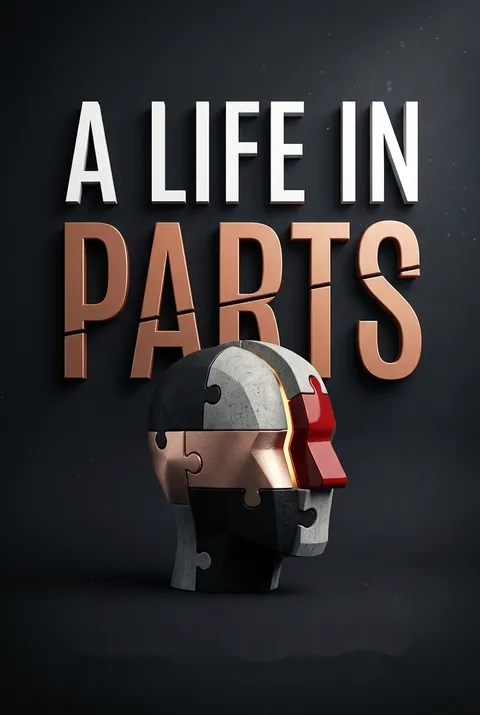
A Life in Parts is a memoir of an actor, but its deeper subject is how people improvise a self from the roles available to them. Its structure moves between remembered events and the performances that later gave those events another shape. A childhood shaped by an absent father, an alcoholic mother, and abrupt changes in home life leaves Cranston with habits of evasion, humor, and watchfulness. Acting becomes both livelihood and a way to approach feelings he had not learned to express directly.
The book’s central tension is between preparation and openness. Cranston is disciplined about scripts, marks, memorization, and the practical machinery of production, yet he distrusts performance that has become mechanical. The actor must arrive with choices, then remain alert enough to revise them. That tension also describes his career: he chooses acting despite its instability, works ordinary jobs to support it, and learns to measure success by the quality of the work rather than by the role’s status.
Family complicates the account. Cranston does not reduce his parents to villains or turn his own adult success into a simple redemption story. His father’s unfulfilled ambition offers both warning and inheritance. His mother’s depression and later Alzheimer’s reveal how a person’s needs can narrow, while the siblings’ different memories show that a shared childhood does not create a single shared story. Robin and Taylor represent a steadier home, but not a cure for the past. The Breaking Bad material brings these strands together. Cranston’s own disciplined empathy helps him inhabit Walter White, while the series’ gradual moral shifts show how persuasive self-justification can become. The memoir is strongest when it holds contradictions in view: ambition can sustain and consume, vulnerability can produce art and require care, and success can arrive without proving that a life has been lived well. Its account of creative work ultimately argues for both devotion and proportion: take the craft seriously, but do not mistake the spotlight for the thing worth pursuing.
Review Summary
A Life in Parts receives positive reviews for its honesty, humor, and engaging storytelling. Readers appreciate Cranston's insights into his acting career, particularly his role in Breaking Bad. The memoir is praised for its well-written vignettes, covering Cranston's childhood, various jobs, and personal relationships. Many reviewers recommend the audiobook version narrated by Cranston himself. While some found parts of the book slow, most enjoyed learning about the actor's life experiences and his approach to his craft.
People Also Read






Glossary
beats
Emotional shifts in a sceneBeats are the distinct moments or shifts within a scene that an actor can prepare. Cranston uses them to consider the emotional possibilities available to a character without fixing every gesture or reaction in advance. Mapping beats gives a scene structure while preserving room for an unexpected response during performance.
actor’s palette
Resources for building a characterCranston uses actor’s palette to describe the resources an actor draws on to create a role: personal experience, research, talent, and imagination. These elements help bridge the distance between performer and character. The phrase emphasizes that acting involves more than memorizing lines or copying observable behavior.
CAPS
A project-choice scoring systemCAPS stands for Cranston Assessment of Project Scale, a scoring method he devised to compare acting opportunities. It rates story, text, role, director, and cast or other factors, giving the story the greatest weight. The total score helps him decide whether a project is a must-do, worth serious consideration, uncertain, or a pass. Money is not included.
FAQ
What is A Life in Parts by Bryan Cranston about?
- Memoir of Bryan Cranston: The book is a candid memoir chronicling Cranston’s journey from a turbulent childhood to becoming a celebrated actor, including his personal and professional struggles.
- Career and Family Insights: It covers his early acting days, breakthrough roles in Malcolm in the Middle and Breaking Bad, and his reflections on family, relationships, and self-discovery.
- Themes of Transformation: The narrative explores identity, resilience, and the many “parts” Cranston has played both on and off screen, emphasizing growth through adversity.
Why should I read A Life in Parts by Bryan Cranston?
- Inspiration from Perseverance: Cranston’s honest recounting of rejection, self-doubt, and eventual success offers motivation for anyone facing setbacks.
- Behind-the-Scenes Access: Readers gain rare insight into the craft of acting, the realities of Hollywood, and the making of iconic shows.
- Humanizing Celebrity: The memoir demystifies fame, showing Cranston’s struggles with celebrity and his efforts to balance public and private life.
What are the key takeaways from A Life in Parts by Bryan Cranston?
- Process Over Outcome: Cranston emphasizes focusing on the work itself, not just the results, which builds mental toughness and reduces anxiety.
- Resilience and Self-Belief: The importance of perseverance, discipline, and embracing vulnerability is a recurring lesson throughout his journey.
- Personal Foundation Matters: Stable relationships and self-care are essential for sustaining creativity and emotional health in demanding careers.
How did Bryan Cranston’s early life and family background influence his acting career in A Life in Parts?
- Turbulent Upbringing: Cranston’s childhood was marked by family instability, his father’s absence, and his mother’s struggles, providing a deep emotional well to draw from as an actor.
- Early Exposure to Performance: School plays and imaginative childhood games sparked his interest in storytelling and acting.
- Work Ethic from Hardship: Taking on various odd jobs taught him discipline, resilience, and the value of hard work, all of which shaped his approach to acting.
What challenges did Bryan Cranston face during his early acting career according to A Life in Parts?
- Frequent Rejection: Cranston faced constant auditions, rejections, and the emotional toll of waiting for opportunities in a competitive industry.
- Typecasting and Limited Roles: Early on, he was often cast in minor or villainous roles, making it difficult to showcase his range.
- Financial Instability: He juggled guest roles, commercials, and odd jobs to make ends meet, sometimes supporting family members financially.
How does Bryan Cranston describe his acting philosophy and methods in A Life in Parts?
- Storytelling as Essential Art: Cranston sees acting as a form of storytelling that helps us understand ourselves and others.
- Embracing Imperfection: He values spontaneity and discovery over perfection, believing that authenticity resonates most with audiences.
- Confidence and Preparation: Cranston stresses the importance of preparation, emotional openness, and trusting oneself to deliver genuine performances.
What specific advice and methods does Bryan Cranston share about acting and auditions in A Life in Parts?
- Focus on Performance, Not Outcome: He advises actors to concentrate on giving a compelling performance rather than obsessing over getting the job.
- Character Building: When scripts are sparse, Cranston recommends inventing character details to create a multidimensional portrayal.
- Letting Go After Auditions: He suggests mentally “tossing the script in a basket” after auditions to avoid rumination and maintain resilience.
How did Bryan Cranston prepare for and portray Walter White in Breaking Bad as described in A Life in Parts?
- Understanding the Character: Cranston identified Walter White’s core as depression and numbness, shaping his portrayal around these traits.
- Physical and Costume Choices: He used costume details, like tighty-whities and bland clothing, to convey Walt’s vulnerability and invisibility.
- Gradual Moral Decay: Cranston worked closely with the show’s creator to ensure Walt’s transformation was believable and nuanced, immersing himself deeply in emotionally intense scenes.
What insights does A Life in Parts by Bryan Cranston offer about the making of Breaking Bad?
- Collaborative Excellence: Cranston highlights the meticulous organization and creative teamwork among writers, directors, and actors that made the show successful.
- Character Development: The serialized format allowed for gradual, believable character arcs, especially Walt’s transformation.
- On-Set Challenges: He shares anecdotes about physically and emotionally demanding scenes, illustrating the dedication required for such a complex production.
How does Bryan Cranston describe the impact of fame and celebrity in A Life in Parts?
- Ambivalence Toward Fame: Cranston initially resisted celebrity, feeling unworthy and uncomfortable with constant recognition.
- Loss of Privacy: He discusses the challenges of being recognized everywhere, needing disguises, and protecting his family’s privacy.
- Celebrity as Imprisonment: Cranston compares fame to a form of self-imprisonment, highlighting its isolating aspects and the comfort he finds in work.
How did Bryan Cranston’s family relationships and personal life shape his journey in A Life in Parts?
- Complex Parental Relationships: His parents’ troubled marriage and personal struggles deeply influenced his emotional development and resilience.
- Sibling Bonds and Healing: Cranston and his siblings sought therapy together to address shared childhood trauma, emphasizing the importance of healing and growth.
- Marriage and Fatherhood: He credits his wife and daughter for providing stability and grounding, shaping his philosophy on parenting and personal fulfillment.
What are the most memorable quotes from A Life in Parts by Bryan Cranston and what do they mean?
- “One man in his time plays many parts.” — Shakespeare; frames the memoir’s theme of identity and transformation.
- “Love art in yourself, not yourself in art.” — Stanislavski; emphasizes focusing on the creative process rather than seeking validation through fame.
- “The imperfect is our paradise.” — Wallace Stevens; reflects Cranston’s belief in embracing imperfection and spontaneity in both performance and life.
- “It’s more important to have a dream than to achieve a dream.” — Highlights the value of hope and aspiration, regardless of outcome.
Download PDF
Download EPUB
.epub digital book format is ideal for reading ebooks on phones, tablets, and e-readers.








