

Key Takeaways
Turn inherited possibility into music through practice and encouragement.
A spark needs a setting. When Dave’s daughter Harper asks to learn drums, he discovers he has no real lesson plan. He puts on AC/DC, points out the kick, hi-hat, and snare, and watches her find the beat. The moment recalls his own childhood, when his mother took him to hear jazz and punk records became his teachers. He interprets the family’s musical ear as something passed through DNA, but his stories also show how attention, exposure, and practice bring an ability to life.
Nurture what appears. His daughter Violet learns melodies by ear and eventually sings with a band. Rather than dictate a career, Dave and his mother give the girls room to discover what music means to them.
The memoir’s inheritance story is most persuasive when biology is treated as potential, not a complete explanation. The scenes themselves show a chain of human influences: a parent takes a child to a club, records invite imitation, and a patient audience makes experimentation feel safe. That does not diminish the family resemblance. It makes the resemblance actionable. A reader cannot choose a child’s natural ear, but can help create the moments in which an interest becomes practice, confidence, and choice.
Make your own stage before anyone decides you are ready.
Belonging arrived through sound. At thirteen, Dave visits his cousin Tracey in Chicago and finds her transformed into a punk rocker, with a room full of records he has never heard. She introduces him to a network of bands making inexpensive records, booking shows, and creating their own clothes and artwork. At the Cubby Bear, he sees Naked Raygun play in a cramped room, close enough to feel the crowd’s energy. The show overturns his idea that musicians need giant stages or virtuoso technique.
Participation beats permission. Tracey’s own teenage band, Verboten, writes songs and plays gigs. Dave returns to Virginia convinced that music is something ordinary people can make together, not a distant spectacle reserved for stars.
The punk scene gives the memoir a concrete model of access: creation does not have to wait for institutional approval. Its small venues and handmade records make participation visible. Just as important, the scene is not solitary. Tracey supplies the records, the introduction, and the invitation to a show. The useful lesson is not that skill or resources never matter. It is that a welcoming community can lower the threshold enough for beginners to start building skill and resources themselves.
Let rejection hurt, then give the feeling somewhere creative to go.
A young heartbreak becomes material. At thirteen, Dave falls hard for Sandi, writes songs and poems for her, and imagines their relationship as permanent. It ends quickly when she says she does not want to be tied down. In a dream that night, he plays a triumphant guitar solo before an arena crowd, with Sandi watching from the front row. He wakes with a different thought: perhaps the guitar, and the music he can make with it, can help him through the rejection.
Pain becomes expression. He later sees heartbreak as a recurring source of songwriting, not because he wants revenge, but because intense feeling gives him something honest to write from. Decades later, Sandi appears at a Foo Fighters concert, and the old dream returns as a joke shared between them.
This story does not claim that pain is good or that every wound produces art. Its sharper point is that a feeling can be transformed rather than merely endured. The imagined arena scene gives a rejected teenager a future-oriented identity at the moment his self-image is most vulnerable. That transformation depends on a medium he already loves, not on a universal recipe. Creative work can make distress communicable, but it should not become a demand to turn every hurt into something useful.
Use embarrassment as a lesson, not a verdict on your talent.
A bad set clarifies the gap. As a teenager, Dave accepts his mother’s birthday challenge to play drums with a jazz band, despite knowing almost nothing about jazz. He survives the performance by keeping time, then leaves humbled and determined to learn. He asks drummer Lenny Robinson for a lesson. Lenny corrects his backward grip and starts him on basic strokes, exposing how little he knows. Dave takes only that one lesson, but continues learning by listening closely to records.
Practice meets opportunity. Years later, when Scream needs a drummer, Dave auditions by playing the band’s songs from memory. The self-taught approach has given him speed and familiarity, while the earlier embarrassment has taught him that raw enthusiasm is not the same as control.
The episode resists two easy myths: that natural ability makes instruction unnecessary, and that a humiliating first attempt proves someone lacks talent. Dave’s story shows a more useful sequence: try, discover the specific weakness, then keep working. His later success does not mean every self-taught habit was ideal; Lenny’s correction matters precisely because it adds something the records could not. The strongest learning path here is neither blind independence nor obedience to a teacher, but curiosity that remains open to feedback.
Choose the uncertain road when staying put means betraying your work.
A second chance changes the decision. At seventeen, Dave is invited to join Scream but initially declines, afraid of leaving school, disappointing his father, and abandoning his friends in Dain Bramage. At a Scream show, he hears the band’s music and realizes how much he wants to be part of it. He asks to rejoin the opportunity. His mother supports his decision to leave school and tour, while his father objects. Dave takes warehouse work, rehearses, and gets on the road.
The risk is real. Touring means cramped vans, little money, uncertain places to sleep, and canceled shows. When Scream’s prospects collapse, Dave eventually leaves for Seattle to try out for Nirvana. His choices are not risk-free victories; they are successive commitments made without knowing the outcome.
The memoir makes courage more specific than a general appetite for risk. Dave first says no, recognizes that fear is driving the decision, and changes course when he sees what the refusal costs him. His mother’s support helps make the leap possible, while his father’s opposition shows the emotional stakes. The story should not be read as proof that dropping out or abandoning security is wise for everyone. Its more transferable question is whether a safe-looking choice is quietly asking someone to abandon the work that matters most.
Success can change your audience faster than it changes your sense of belonging.
The crowd becomes unfamiliar. Nirvana’s Nevermind is released as the band begins touring in small clubs. After the album and the Smells Like Teen Spirit video reach a much wider audience, the rooms fill with people who do not resemble the punk and college-radio fans Dave expected. He feels both pleasure at sharing the music and unease about the new attention. The old underground rules, including suspicion of mainstream success, make popularity feel like a test of identity.
Attention brings danger too. At a Dallas show, an overcrowded, volatile audience and technical problems push the performance toward chaos. Kurt smashes equipment, a fight breaks out, and the band is warned that people outside want to attack them. Their success has expanded the audience, but it has not given them a way to control what that audience expects or does.
The section avoids treating popularity as either pure reward or automatic corruption. The same widening audience that carries a song into more lives also unsettles the people who made it and alters the conditions of performance. That tension is especially acute for artists whose identity was built partly around refusing the mainstream. The useful distinction is between reaching more people and feeling more understood. Those outcomes can diverge, and success alone cannot resolve the conflict between artistic identity, audience expectations, and personal safety.
Keep a promise by adapting its form, not by denying your limits.
The plan changes mid-show. During a Foo Fighters performance in Sweden, Dave catches a cable and falls from the stage, badly breaking his leg and dislocating his ankle. With a large audience waiting, he promises the band will continue. A doctor restores the ankle and stays beside him as he is carried back to the stage. Dave finishes the concert seated, with his leg supported, and even makes his way to the center of the stadium on crutches.
Commitment takes another shape. The show cannot continue as originally planned, but it can continue in a modified form. The audience’s support turns the night into an experience of shared endurance, while Dave’s daughter, who witnesses the accident, becomes the person whose fear he must also attend to.
The memorable choice is not the refusal to stop at any cost. It is the practical improvisation: a chair, medical help, a brace, and a changed performance. That distinction matters because the scene could otherwise romanticize injury as proof of dedication. A promise to an audience does not erase a performer’s body or responsibilities. The more durable principle is to preserve the purpose of a commitment when circumstances change, while allowing the means to change too.
Let grief arrive on its own schedule, without judging its shape.
Loss does not follow a script. In 1994, Dave receives a confused phone call saying Kurt is dead, then another call saying he is alive after an overdose. When Kurt dies weeks later, the first false alarm has left Dave’s emotions tangled. He tries to keep grief at a distance, building what he describes as walls around himself. Later, his childhood friend Jimmy dies, and the loss feels different because Jimmy was part of the home and shared history Dave had carried since childhood.
Memory changes its texture. Dave finds that grief returns unpredictably, and that there is no correct timetable or single response. Songs, cologne, foods, and places keep Kurt and Jimmy present. Over time, some reminders that once hurt begin to bring comfort as well.
The account is valuable because it refuses to make mourning look orderly or morally legible. Numbness is not evidence of indifference, and intense pain is not the only proof that someone mattered. Dave’s friendships also show that chosen bonds can shape identity as deeply as family ties, so their loss can destabilize a person’s sense of self. The story offers no cure or timetable. Its humane contribution is permission to experience grief as uneven, personal, and capable of changing without disappearing.
Make family presence a deliberate choice, not an afterthought to work.
Love has to appear on the calendar. When Dave learns that his daughter’s school dance falls on a sold-out Foo Fighters show in Perth, he asks the band to move the concert. The schedule is rearranged so he can fly from Australia to Los Angeles, attend the dance, and return for the next show. The journey is exhausting, but his daughter had waited years to join her sister at the event.
The choice has roots. Dave’s father was largely absent from his childhood, and fatherhood makes him wonder what that absence meant. He tries to be present with his own daughters, even while touring. The family travels with the band, and the touring schedule becomes shorter as the musicians have children of their own.
This is not simply a story about grand gestures. The flight makes the priority visible, but the deeper change is the repeated effort to fit family life around a demanding career. Dave connects that effort to his own childhood, where a missing relationship leaves questions he cannot fully answer. That gives his decision emotional force without making one dramatic trip a universal standard. Presence is built through many ordinary choices, and families differ in what those choices can realistically require.
Bring the people who backed your first leap into your biggest rooms.
The ending returns to the beginning. After playing a sold-out show at Chicago’s Wrigley Field, Dave breaks down backstage. Across the street is the Cubby Bear, where his cousin Tracey took him to see Naked Raygun as a teenager. That small, crowded show had helped him recognize a life in music. The stadium is not what overwhelms him; it is the short distance between that first spark and the vast room he has reached.
Success belongs to a circle. His mother, who supported his choices and gave him freedom to find his way, is there with him. Dave also thinks of his bandmates and friends, including those who have died. The moment makes achievement feel less like a solo ascent than a life carried by many people.
The crosswalk image keeps the memoir from ending as a simple tale of fame. It ties the stadium to a specific first encounter with music and makes the achievement legible through the people who helped create its conditions. That perspective is emotionally generous, but it also corrects the lone-genius story that celebrity narratives often invite. The final measure is not merely how far someone travels. It is whether the people, places, and experiences that made the journey possible remain visible from the destination.
Analysis
The Storyteller is a memoir organized less by a single argument than by a sequence of vivid scenes, many recalled through music. A teenage heartbreak, a small punk show, a disastrous jazz performance, a van tour, a stadium fall, and a school dance become markers along one life. The pattern gives the book its central claim: a life gains shape through moments of attention, commitment, and connection, not through a tidy plan made in advance.
Music functions as several things at once. It is a memory system, a route into community, a craft learned by imitation, and a way to make emotion audible. The book’s strongest scenes show that none of these functions is solitary. Dave’s mother takes him to jazz, Tracey opens the door to punk, bandmates refine his playing, and his daughters give him new reasons to reconsider what a successful life requires. Even the idea of individual talent is complicated by the people and settings that nurture it.
The narrative also exposes a tension between spontaneity and hindsight. The younger Dave repeatedly acts without knowing what will follow, but the older narrator can connect those choices to a coherent path. That retrospective pattern is moving, though it can make chance look more purposeful than it felt at the time. The book is careful to include failure, grief, instability, and luck, but readers should not mistake an exceptional career for a reliable formula. Dropping out, touring broke, or working through injury are not universal prescriptions.
What readers can carry forward is less a blueprint than a set of questions: Which experiences make a person feel most alive? Which risks serve that commitment, and which merely endanger it? Who made the first opportunity possible, and how can that support be returned? The memoir’s most persuasive answer is that ambition matters, but its value is measured alongside loyalty, family, and the ability to keep recognizing the people who made the music meaningful.
Review Summary
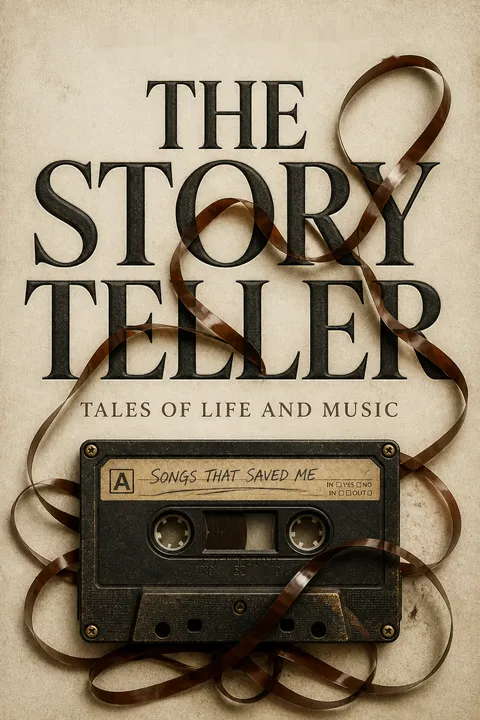
The Storyteller: Tales of Life and Music is widely praised as an engaging, heartfelt memoir by Dave Grohl. Readers appreciate Grohl's humility, humor, and genuine love for music and family. Many recommend the audiobook narrated by Grohl himself. The book offers insights into his time with Nirvana, the formation of Foo Fighters, and his experiences meeting musical icons. While some critics found it disorganized or superficial, most readers enjoyed Grohl's storytelling style and the glimpses into his personal and professional life.
People Also Read








Glossary
Law of Attraction
Focus shapes outcomesA belief that the universe responds to what a person concentrates on, helping bring focused desires into reality. As a teenager, Grohl uses this idea to describe praying for musical success at an altar he made himself. The memoir presents it as his interpretation of events and personal faith, not as a scientific law or guaranteed technique.
synesthesia
One sense triggers anotherA perceptual experience in which stimulation associated with one sense is accompanied by another kind of sensory impression. Grohl describes hearing music as shapes or visual arrangements, which helps him remember parts of songs despite not reading written notation. In his account, this way of perceiving music supports his ear-based approach to learning and composing.
noise jam
Improvised band warm-upAn improvisational exercise in which Nirvana played freely, exploring changes in volume and intensity without first mapping out a conventional song structure. Grohl describes it as a way for the musicians to develop shared instinct. Ideas could emerge through playing together, rather than through verbal planning alone.
feel
A musician’s rhythmic characterThe personal quality a musician brings to rhythm, timing, and the spaces between notes. Grohl distinguishes it from simply playing the written pattern correctly: two drummers can perform the same part and make it sound different. He connects feel to an individual’s physical and emotional interpretation of music, something that cannot be manufactured by technique alone.
Download PDF
Download EPUB
.epub digital book format is ideal for reading ebooks on phones, tablets, and e-readers.








