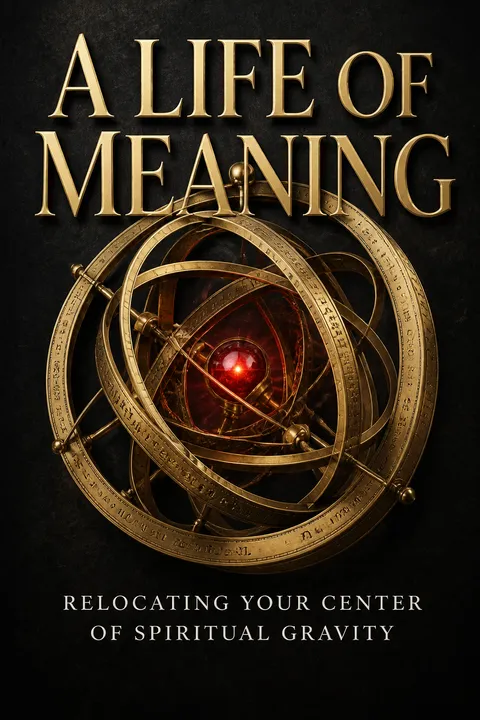


Key Takeaways
Treat recurring patterns as evidence about old stories, not fixed identity
Patterns preserve old lessons. Hollis argues that childhood experiences become provisional stories about safety, approval, power, and belonging. A child who learns that conflict threatens connection may grow into an adult who repeatedly gives way, even when the original danger has passed. Such stories can shape choices of partners, work, and friendships, making new situations feel like familiar ones. Jungian psychology calls a charged cluster of past experience a complex: it can influence reactions without conscious direction.
Look for the repeated premise. Notice what keeps happening, what situations provoke disproportionate reactions, and what other people say about recurring behavior. Then ask what an earlier version of the self believed was necessary for survival. The aim is not to blame childhood or erase history, but to see where an old protective strategy now limits adult choice.
This account connects naturally with attachment research, which shows how early expectations about trust and care can shape later relationships without dictating them. The useful move is from self-judgment to curiosity: a repeated response may once have been adaptive, even if it is costly now. But history should be treated as a hypothesis, not a complete explanation. Similar patterns can arise from current stress, social conditions, or practical constraints. Asking what a behavior protects against is more illuminating than assuming every difficulty has a hidden childhood cause.
Ask what your life is calling for, not only what others expect
A job is not always a calling. Hollis distinguishes paid work from vocation, meaning a commitment that feels worthy of sustained effort and service. A vocation may be a job, but it can also take another form. Novelist Hilary Mantel, as Hollis recounts, relied on discipline and attentiveness rather than waiting for inspiration. Hollis describes writing after a full day of clinical work because the work felt internally demanded, not easy or comfortable.
Question inherited instructions. The book contrasts the ego, which manages everyday decisions and social life, with the Jungian Self, the larger totality of the psyche seeking expression. Asking what the psyche wants is not permission to indulge every impulse. It is an invitation to examine whether choices serve fear, approval, or a deeper commitment. The answer may require effort, loneliness, or a departure from conventional success.
The distinction between occupation and vocation resembles research on intrinsic motivation: people often persist more readily when work expresses valued purposes, not merely external rewards. Yet an inner sense of calling can be difficult to distinguish from family conditioning, status ambition, or temporary excitement. Hollis's emphasis on sustained attention offers a practical test: does the commitment retain meaning through the unglamorous labor? Treating a calling as service, rather than proof of specialness, also guards against turning personal authenticity into self-absorption.
When a life script expires, treat the crisis as a passage
An old identity can stop working. Hollis describes a middle passage as a threshold period in which a familiar map of self and world has worn out, while a replacement is not yet clear. The transition can begin in the thirties or forties, after years of living out early choices, or be triggered by loss, illness, divorce, or a changed role. A client dreamed that a supportive relative told her it was time to die. Hollis understood the death as symbolic: her inherited life script, not her body, needed to end.
Expect vulnerability between chapters. Hollis compares the transition to an animal outgrowing its protective shell: the old structure once helped, but clinging to it becomes dangerous. The uncertain interval may last years, not days. Depression or dissatisfaction can signal that an identity needs examination, though distress can also require clinical care and should not automatically be interpreted as a message.
The passage model helps explain why transitions can feel like loss before they feel like growth. Developmental psychology likewise treats identity as something revised across life, not settled once in adolescence. The shell image captures the cost of change without promising a neat transformation. A necessary caution is that symptoms do not reliably prove a person has outgrown a role. Depression, for example, can have many interacting causes. The metaphor is most useful as an additional question, not as a substitute for medical assessment or practical support.
Separate fate from destiny, then act where choice remains
Circumstances are not the whole story. Hollis uses the ancient Greek distinction between fate and destiny. Fate is the given: family, body, era, and conditions outside personal control. Destiny is the unrealized possibility a person may be called to develop. A life takes shape through their interaction, along with character and the limits of perception. Hollis also draws on hamartia, often translated as a tragic flaw, to mean the biased lens through which a person misreads a situation.
Take responsibility without claiming total control. Some events, such as serious illness or deprivation, can sharply restrict what is possible. Still, a person may have choices in how to respond, what values to uphold, and what capacities to cultivate. This is not a promise that courage defeats every constraint. It is a way to distinguish what cannot be changed from the portion of life for which one remains accountable.
This distinction avoids two familiar extremes: blaming people for conditions they did not choose, and treating them as powerless inside those conditions. It resonates with the psychological idea of agency under constraint, where meaningful action exists but is unevenly distributed. The framework is ethically strongest when social realities remain visible. Poverty, discrimination, disability, and violence can narrow options in ways that individual resolve cannot simply overcome. Personal responsibility matters, but it should not become a convenient explanation for another person's hardship.
Bring disowned traits into view before they steer you or become someone else's fault
The shadow is more than evil. In Hollis's Jungian usage, the shadow includes traits, motives, and desires that conflict with a person's preferred self-image. Some are destructive; others are strengths that were suppressed to gain approval, such as creativity or spontaneity. In poet Maxine Kumin's poem about killing woodchucks in her basement, a speaker who sees herself as humane gradually rationalizes violence when the animals threaten her garden. The story illustrates how self-interest can hide behind moral certainty.
Look inward and outward. Individuals can project disowned qualities onto other people, while groups can cast blame onto outsiders. Hollis points to book burnings and the euphemism of “manifest destiny” as examples of collective self-justification concealing harm. Shadow work does not mean acting on every impulse. It means recognizing motives and capacities honestly, then choosing how to use them responsibly.
The shadow offers a sharp account of moral blind spots: people can sincerely endorse principles and still rationalize actions that serve their interests. Social psychology supports the broader point that group identity and self-image can shape how evidence and blame are interpreted. The idea of a positive shadow is especially useful because self-examination need not end in self-condemnation. Still, introspection alone cannot correct institutional harm. Collective accountability also requires listening to affected people, examining incentives, and changing systems that reward denial.
Read cravings as clues to unmet needs, not lasting nourishment
The seven sins describe distorted hungers. Hollis reads gluttony, lust, wrath, pride, envy, greed, and sloth as recurring ways people lose balance. Food, sex, money, admiration, or anger can offer brief relief or intensity, but may fail to meet the deeper need beneath them. One client who had known childhood deprivation repeatedly bought new cars as an adult. The cars had once symbolized escape and freedom, but acquiring them could not resolve the old feeling of constraint.
Ask what the behavior is doing. Hollis treats compulsions as possible anxiety-management strategies, not simply evidence of weak character. Anger can register a real violation, yet become destructive when it dominates; desire can enliven life, yet become compulsive; rest can restore, while avoidance can become sloth. The key question is what a pursuit provides briefly, what it costs, and what it keeps a person from addressing.
This reading shifts moral language away from shame and toward function: what need is a repeated behavior trying to meet? That question is compatible with behavioral approaches to addiction, which examine triggers, immediate rewards, and longer-term costs. It also avoids treating appetite itself as a fault. The difficult distinction is between a symbolic interpretation and a material need. Compulsive spending may express emotional deprivation, but financial pressure and access to care matter too. Understanding a behavior's function should deepen accountability, not excuse its consequences.
Use dreams, symptoms, and journaling as prompts for inquiry, not verdicts
The unconscious leaves traces. Hollis suggests beginning with patterns, dreams, bodily symptoms, and projections because they make hidden assumptions more visible. He describes active imagination, a Jungian technique in which a person revisits a dream image while awake and engages with it without immediately forcing a preferred outcome. In Hollis's own dream, a witch-like figure besieged a castle. His analyst encouraged him to meet the figure in imagination rather than dismiss it, opening a longer exploration of what the image represented to him.
Make reflection concrete. Record memorable dreams and waking thoughts, then ask what associations the images evoke and where a reaction has appeared before. Journaling can track emotional triggers and recurring choices. The practice is inquiry, not fortune-telling: a dream image is personal material to consider, not an objective instruction or diagnosis. If symptoms are severe or persistent, psychological or medical support may be needed alongside reflection.
The practice resembles reflective journaling and metacognition: noticing an automatic response can create a pause in which alternatives become possible. Dream work may also help people articulate concerns that are hard to approach directly. Its limitation is interpretive uncertainty. A vivid image can support several readings, and the analyst's interpretation is not independently verified simply because it feels resonant. Keeping the dreamer's associations central, and testing insights against waking behavior, makes the exercise more grounded than treating symbols as a universal code.
Build an inner compass when inherited myths no longer orient you
Shared maps can lose authority. Hollis argues that modern life has weakened some religious and cultural stories that once connected people to the cosmos, nature, community, and personal identity. Their absence can leave individuals in an in-between state, unsure what deserves allegiance. He uses the term numinous for an encounter with something experienced as larger than ordinary ego concerns, whether through art, nature, dreams, or a sense of calling.
Meaning still needs a social home. Hollis does not equate personal authority with superiority or isolation. He describes people who feel out of step with prevailing values but can still contribute to families and communities through an honest, ongoing search. The task is to assess which inherited beliefs remain alive, which have become empty forms, and what commitments can connect personal meaning to a shared world.
The account captures a real tension in pluralistic societies: inherited authorities may no longer persuade, while private conviction alone cannot automatically sustain common life. Sociological work on secularization and social trust helps frame the problem, but the loss of one shared story does not mean meaning has disappeared. It may be distributed across relationships, civic work, art, or faith communities. An inner compass is valuable when it remains answerable to evidence and other people, rather than becoming a license to dismiss inconvenient criticism.
Let mortality clarify what deserves your limited time and courage
Limits sharpen priorities. Hollis describes aging through concrete losses: greater physical pain, less predictable energy, and the deaths of loved ones. He notes that average life expectancy in the United States was about 47 in 1900, compared with roughly 78 in the period when he wrote. More years do not remove mortality; they make its demands harder to ignore. One terminally ill client, recognizing how fear had narrowed her life, chose challenging activities and described her remaining time as unusually alive.
Use awareness, not denial. Hollis challenges the habits people use to avoid mortality, including busyness, numbing, and constant distraction. The point is not to romanticize illness or demand dramatic risks. It is to ask what fear prevents, what unfinished business matters, and how to show up for the present work and relationships that remain.
Mortality awareness has a long history in philosophy, and modern research on mortality salience suggests that reminders of death can intensify both defensiveness and reflection, depending on context. Hollis's emphasis on ordinary commitments helps keep the idea from becoming a theatrical call to seize every day. The terminal client's choices are compelling, but they should not be treated as a model everyone must copy. Courage can mean setting boundaries, accepting care, or completing a small promise. The measure is not risk itself, but whether fear has become the decision-maker.
Turn self-examination into a more honest contribution to other people
History can be outgrown, not erased. Hollis says old wounds and habits may return because development is not a straight line. A familiar fear can reappear, but an adult may now have resources unavailable in childhood. Reviewing the past can reveal unfinished apologies, neglected capacities, or choices repeatedly postponed. The purpose is not endless self-analysis; it is to make freer decisions and reduce the burdens passed into relationships and families.
Show up for what matters. Hollis's practical counsel joins humility, preparation, and participation: recognize the wider suffering around you, do the work that matters, and contribute what you can. He draws on ancient reflections in Gilgamesh and Ecclesiastes to emphasize tending to present responsibilities, valuing companions, and remembering life's mystery. A meaningful life is not a perfect one. It is a life in which awareness becomes accountable action.
This closing connects personal development to intergenerational and civic responsibility. Work on narrative identity suggests that people make sense of experience by shaping stories that link past and future; revising a story can alter what feels possible without changing the facts of the past. Hollis's emphasis on contribution prevents introspection from becoming private self-absorption. A useful test is whether reflection changes conduct toward others. Insight that never affects repair, boundaries, or daily obligations may remain an elegant explanation rather than a lived transformation.
Analysis
A Life of Meaning is a collection of essays arranged as a life journey, from childhood conditioning through midlife disruption, shadow, aging, and death. Its argument is consistent: people often mistake an adaptive identity for their whole nature, then feel distress when that identity no longer fits. Hollis invites readers to treat recurring behavior, dreams, symptoms, and emotional conflict as material for inquiry, and to shift allegiance from approval and fear toward a deeper sense of vocation and responsibility.
The book's narrative power comes from placing abstract Jungian concepts beside vivid clinical stories: the client who dreams of a symbolic death, the scholar pulled away from a dance by a family obligation, and the older man whose rescue role repeats across generations. These stories make inner conflict legible. They also reveal a challenge: interpretations are persuasive partly because they are retrospective and shaped by the analyst's framework. Readers should borrow the questions, not assume every dream has one discoverable meaning.
The most useful contribution is its account of protection turning into confinement. Avoidance, compliance, control, and compulsive consumption may once have helped someone manage vulnerability; awareness can make them choices rather than automatic destiny. The distinction between fate and destiny gives this idea ethical balance by acknowledging circumstances without surrendering agency. Its shadow work extends the same logic from individuals to institutions, where moral ideals can coexist with rationalized harm.
The book's spiritual language may resonate most with readers open to Jung's idea of an autonomous psyche. Others can translate that language into attention to values, emotion, imagination, and neglected capacities without accepting a metaphysical claim about the Self. Across either reading, the practical discipline is similar: notice patterns, test interpretations against life, face fear with support, and let reflection alter conduct. Hollis offers no formula for permanent resolution. He argues for an ongoing practice of becoming more conscious, more accountable, and less governed by inherited scripts.
Review Summary
A Life of Meaning receives overwhelmingly positive reviews, with readers praising its depth, accessibility, and thought-provoking content. Many find it transformative, offering insights into Jungian psychology and life's purpose. Hollis's writing style is described as clear, lyrical, and compassionate. Readers appreciate the book's focus on self-reflection, inner connection, and finding meaning in life's journey. Some highlight its relevance for midlife and beyond, while others note its applicability at any age. A few readers mention revisiting the book multiple times for continued insight.
Glossary
complex
Charged cluster of experienceIn Jungian psychology, a complex is a group of emotionally charged memories, expectations, and associations formed around experience. It can be activated by a person or situation and influence perception and behavior without conscious intention. Complexes are not inherently pathological; they become limiting when they repeatedly govern reactions without being recognized.
projection
Unconscious attribution to othersProjection is an unconscious process in which a person experiences disowned feelings, expectations, or motives as if they belong to someone else. It can distort how another person is perceived and can feed conflict or idealization. Hollis treats noticing a strong reaction as an opportunity to ask what personal material may be shaping the view.
transference
Past response repeated in relationshipsTransference is the tendency to respond to someone in the present through familiar patterns formed in earlier relationships. It can provide continuity and help people make sense of new encounters, but it can also impose old expectations on someone who is different from the people who shaped those expectations.
Self
Totality of the psycheHollis uses the Jungian Self, with a capital S, for the psyche's larger totality, beyond the conscious ego and its preferred self-image. In this account, the Self expresses itself through dreams, symptoms, and inner demands for development. It is a psychological concept, not simply a person's everyday sense of identity.
false self
Adaptive identity shaped by expectationsThe false self is an identity organized around adaptation to family and social demands rather than spontaneous, instinctual expression. Hollis does not mean that a person is deliberately deceptive. The term describes coping strategies that once helped secure approval or safety but may later constrain development and obscure personal desires.
shadow
Disowned parts of the personalityThe shadow includes aspects of a person or group that are denied, avoided, or experienced as incompatible with its preferred values and identity. It can include harmful impulses and mixed motives, but also strengths such as creativity or spontaneity that were suppressed. Making the shadow conscious means recognizing it and taking responsibility for its expression.
positive shadow
Disowned constructive capacitiesThe positive shadow refers to valuable qualities that have been pushed out of awareness or expression because they felt unsafe, unacceptable, or incompatible with an adapted identity. Hollis names creativity, enthusiasm, and spontaneity as examples. Recovering these capacities can support development without implying that every impulse should be acted upon.
middle passage
Transition between life identitiesA middle passage is a period when a person's established understanding of self and world has become inadequate, while a new orientation has not yet formed. It can involve uncertainty, grief, and symptoms, and may be triggered by aging, loss, illness, or role changes. The phrase describes a threshold, not a fixed age or a brief crisis.
numinous
Encounter with felt mysteryHollis uses numinous for an experience that feels charged by a reality larger than ordinary ego concerns and seems to summon a response. Art, nature, dreams, or an ancestral association may evoke it. It is not manufactured by deliberate effort; a person can attend to it and consider what changes in perspective or values follow.
active imagination
Dialogue with inner imagesActive imagination is a Jungian practice of consciously returning to an image or scene from a dream or fantasy and engaging with it while allowing it some independence from the ego's preferred control. The practitioner may ask what the figure represents or wants. It differs from simply rewriting a dream to produce a desired ending.
vocation
Calling worthy of commitmentVocation means a calling or commitment that feels worthy of sustained effort and service, rather than merely a paid occupation or a route to comfort and status. It may coincide with employment or take another form. Hollis emphasizes discipline and continued attention, since meaningful work is not necessarily easy or reliably inspiring.
magical other
Fantasy of rescue through anotherThe magical other is the imagined partner or figure expected to understand, complete, or repair a person's life. Hollis argues that this expectation can burden relationships with an impossible task and postpone personal responsibility. Relinquishing the fantasy does not deny the value of care or mutual support; it means no other person can do one's inner work.
fate and destiny
Given conditions and latent possibilityHollis distinguishes fate, the circumstances and conditions a person does not choose, from destiny, the possibilities or capacities that may seek expression through that person. A life develops through their interaction, along with character and choices. The distinction recognizes both real limits and the responsibility that remains within them.
personal authority
Capacity to judge one's directionPersonal authority is the ability to sift through external expectations and internalized voices and decide which values and commitments genuinely fit one's life. Hollis presents it as a developmental achievement, not a claim to infallibility or independence from others. It involves listening inwardly while remaining accountable for choices and consequences.
FAQ
What's A Life of Meaning about?
- Exploration of Meaning: The book delves into the quest for meaning in life through Jungian psychology, examining how formative experiences shape our understanding of self and the world.
- Spiritual and Personal Growth: It emphasizes the importance of asking significant questions over seeking definitive answers, structured around life stages and their challenges.
- Integration of Shadow Work: Hollis introduces the concept of the shadow, representing parts of ourselves we deny, and stresses the importance of integrating these aspects for personal development.
Why should I read A Life of Meaning by James Hollis?
- Insightful Psychological Framework: Offers a rich perspective based on Hollis's experience as a Jungian analyst, providing tools for self-exploration.
- Addresses Universal Questions: Tackles fundamental questions about identity and purpose, relevant for anyone seeking deeper self-awareness.
- Practical Guidance: Provides advice on confronting personal shadows and embracing life's complexities for a more authentic existence.
What are the key takeaways of A Life of Meaning?
- Value of Questions: Emphasizes that questions propel personal growth, while answers reflect past experiences.
- Understanding the Shadow: Discusses how recognizing and integrating denied aspects of ourselves is essential for wholeness.
- Navigating Transitions: Offers insights on handling life changes, especially during midlife, when reassessing values and paths is common.
What are the best quotes from A Life of Meaning and what do they mean?
- "This is not about curing you because you’re not a disease, you’re a process.": Highlights personal growth as an ongoing journey, not a destination.
- "Our summons is to make this short pause as luminous as we can.": Suggests life is brief, urging us to seek meaning and understanding.
- "Nothing human is alien to me.": Emphasizes the universality of human experiences, inviting readers to embrace their shared humanity.
How does A Life of Meaning address midlife transitions?
- Midlife as a Passage: Describes midlife as a critical period of identity reassessment and encourages embracing discomfort for growth.
- Reassessing Values: Suggests midlife is an opportunity to reevaluate values and life choices, confronting what no longer serves us.
- Embracing Change: Emphasizes welcoming change as a natural part of life, providing strategies for navigating it with resilience.
What is the significance of the shadow in A Life of Meaning?
- Understanding the Shadow: Represents parts of ourselves we deny due to societal expectations, crucial for personal growth.
- Impact on Relationships: Shadows can affect relationships, leading to projections and misunderstandings; recognizing them improves interactions.
- Path to Wholeness: Confronting the shadow is essential for achieving wholeness, embracing both strengths and weaknesses.
How does James Hollis suggest we find personal resilience in times of change?
- Embrace Larger Questions: Encourages asking larger questions to guide through difficult times, focusing on values and what truly matters.
- Reflect on Patterns: Advises examining personal patterns and behaviors that may hold one back, making conscious choices aligned with true selves.
- Cultivate Self-Compassion: Stresses the importance of kindness to oneself during transitions, recognizing shared human struggles.
What role do dreams play in A Life of Meaning?
- Dreams as Guidance: Viewed as a means of accessing the unconscious, providing insights into personal issues.
- Myth-Making Process: Describes dreams as part of a myth-making process, uncovering hidden desires and fears influencing waking life.
- Connecting with the Self: Suggests dreams help connect with deeper selves, essential for personal growth and understanding.
How does A Life of Meaning define personal authority?
- Recovery of Personal Authority: Involves recognizing and honoring one’s values and desires, crucial for living authentically.
- Distinguishing Voices: Encourages differentiating between societal expectations and inner guidance, key to exercising personal authority.
- Embracing Responsibility: Argues that personal authority comes with the responsibility to make choices reflecting one’s true self.
What practices does James Hollis recommend for self-exploration in A Life of Meaning?
- Journaling and Reflection: Suggests keeping a journal to document thoughts and dreams, aiding in processing experiences and gaining insights.
- Active Imagination: Introduces engaging with the unconscious through creative expression, facilitating deeper self-understanding.
- Mindfulness and Presence: Emphasizes being present and mindful, helping connect with true selves and navigate challenges with clarity.
How does A Life of Meaning relate to the concept of vocation?
- Vocation as a Summons: Defined as a calling from within, urging pursuit of what truly matters, requiring courage and commitment.
- Distinction from Career: Differentiates between a job and a vocation, emphasizing fulfilling purpose over merely earning a living.
- Aligning with the Self: Posits that following one’s vocation leads to a more authentic life, experiencing purpose and connection.
What is the concept of "hauntings" in A Life of Meaning?
- Definition of Hauntings: Described as unresolved past issues affecting the present, manifesting as emotional patterns or behaviors.
- Engaging with Hauntings: Encourages recognizing and engaging with these influences for insight into motivations and behaviors.
- Healing Through Awareness: Addressing hauntings leads to healing and growth, understanding the past to create a meaningful future.
About the Author
Other books by James Hollis


Download PDF
Download EPUB
.epub digital book format is ideal for reading ebooks on phones, tablets, and e-readers.








