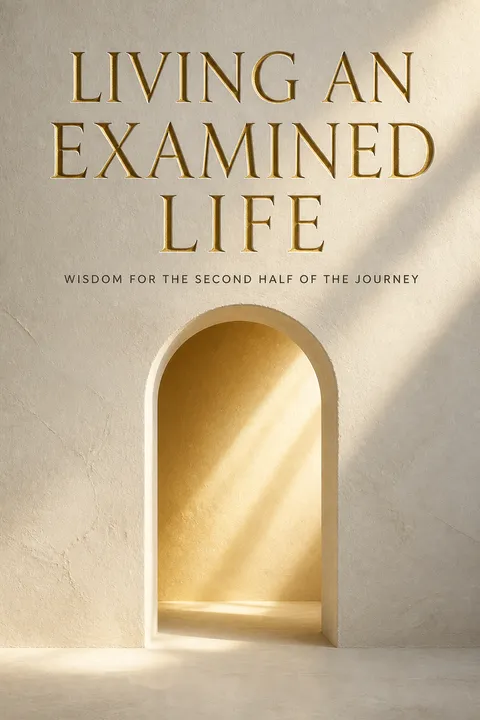


Key Takeaways
Notice whose voice is choosing before you call your life inevitable.
Choice has a history. Family rules, cultural expectations, and early experiences teach people what earns approval and what risks rejection. Those lessons can keep directing adult decisions long after the original danger has passed. Hollis argues that freedom is real but limited: people choose through a narrow, often unconscious view of themselves and the world.
Examine the instructions. Ask whether a belief fits lived experience and opens a fuller life, or merely preserves belonging and certainty. Not choosing also has consequences. The task is not to prove complete free will, but to become more aware of the pressures shaping a decision and take responsibility for acting.
This is a useful middle ground between blaming people for every outcome and treating them as passive products of circumstance. Behavioral economics similarly shows that choices are shaped by defaults, habits, and framing, often outside awareness. The practical implication is to inspect the conditions around a decision, not just ask whether it feels voluntary. Still, self-examination cannot dissolve poverty, discrimination, or coercion. Personal agency matters, but it operates within real limits.
Treat repeated pain as an old survival strategy, not proof of fate.
Familiar can feel safer. Freud’s term “repetition compulsion” describes the tendency to reenact old patterns, even painful ones, as if familiarity offered control or a chance to change the ending. Hollis illustrates this with Camus’s story “The Guest”: a teacher gives a prisoner the option of escaping into the desert, but the prisoner heads toward the authorities and captivity. The unknown freedom is harder to choose than the known constraint.
Trace the old lesson. Early experiences teach people how to seek safety, approval, or closeness. A Jungian complex is an emotionally charged cluster of memories and expectations that can take over responses in the present. Recognizing a pattern means asking what it once protected, and whether that protection now costs more than it offers.
The survival-strategy lens can replace shame with curiosity, which makes patterns easier to study rather than defend. Learning theory offers a related insight: a behavior may persist because it once reduced distress, even if it creates long-term harm. That history deserves respect, but it does not make every repetition wise or inevitable. Patterns can also be reinforced by present conditions, such as an unsafe relationship, so change may require practical support as well as insight.
Ask what your stuck behavior protects before demanding more willpower.
The surface may mislead. A stalled goal is often doing more than it appears to do. Hollis uses eating as an example: food can provide comfort, reassurance, or a sense of welcome, so changing the behavior may feel like losing more than a source of calories. The visible habit can conceal an unmet emotional need or an attempt to manage anxiety.
Find the feared loss. Hollis suggests asking what might happen if the familiar behavior stopped. Under the vague dread, a specific fear may emerge, such as being overwhelmed or left alone. Once that fear is visible, a person can choose a more direct response instead of relying on a reflexive coping system. Getting unstuck may require tolerating discomfort while building other sources of support.
This approach resembles functional analysis in behavior therapy: instead of labeling a behavior irrational, examine what triggers it and what relief it provides. That question can reveal a need worth addressing, not simply a habit to suppress. The caution is that a hidden emotional meaning should be treated as a hypothesis, not a diagnosis. Food, for example, can reflect biology, access, medication, culture, and many other factors. Curiosity works best alongside practical evidence.
Grow up by facing fear and doing the work your life requires.
Adulthood is an action. Hollis distinguishes having adult roles from developing adult responsibility. A person can hold a job, raise children, and still wait for others to supply approval, certainty, or rescue. He describes fear and lethargy as recurring forces that encourage avoidance, distraction, and delay. Growing up means showing up despite them, not waiting for them to disappear.
Use a daily standard. Hollis turns to Marcus Aurelius, the Roman emperor who reminded himself to rise for the work before him, even when comfort beckoned. The point is not relentless productivity. It is to notice when fear or inertia is making the decision. Hollis summarizes the inner work as insight into the pattern, courage to confront it, and endurance to keep practicing that choice.
The emphasis on action is a strong counterweight to endless self-analysis. In psychological research, gradual exposure to feared situations can weaken avoidance by letting people learn that distress is survivable. The book’s framing adds a question of purpose: what task is worth that discomfort? Yet the language of duty can be misused to glorify overwork or dismiss exhaustion. Showing up responsibly includes recognizing limits, asking for help, and distinguishing meaningful effort from self-punishment.
Choose meaning over happiness when comfort asks you to ignore what matters.
Pleasure fades quickly. Hollis does not reject happiness, but argues that it is a poor measure of a whole life. A satisfying meal, a safe moment, or a new achievement can bring pleasure, then lose its force. Meaning, by contrast, can arise through difficult commitments, discovery, or care for others. He describes feeling moved by people who meet hardship with compassion and resilience, even when their circumstances are not happy.
Test the direction. At a crossroads, ask whether a choice enlarges your life or narrows it to approval, safety, or status. This does not mean choosing hardship for its own sake. It means noticing when the pursuit of comfort requires denial of a deeply held value, and deciding whether the short-term relief is worth the longer cost.
The distinction echoes research that separates immediate positive feeling from a sense of purpose and coherence. They can support each other, but they are not identical: caregiving or creative work may be meaningful and tiring at once. That distinction helps explain why comfort alone can feel insufficient. At the same time, suffering is not automatically meaningful, and hardship should not be romanticized. Meaning is more credible when it is chosen, connected to values, and not imposed as a justification for avoidable harm.
Separate earning, obligation, and calling before deciding what you owe.
Three claims compete. A job earns a living; duty recognizes legitimate responsibilities to other people; vocation is a calling that asks for a particular contribution. They may overlap, but they are not interchangeable. Hollis recalls working on an assembly line and cleaning houses, jobs that taught him about labor and survival, while his later teaching and analytic work also served a deeper vocation.
Hold the conflict open. In John Fowles’s novel The French Lieutenant’s Woman, a man faces competing loyalties to faith, scientific work, and romantic commitment. Hollis draws on Jung’s idea that when two obligations both matter, a person should not choose casually. The “third” is the more developmental direction that emerges through honest reflection on the conflict, not a convenient escape from responsibility.
This distinction is valuable because modern life often treats paid work as the sole measure of contribution, while unpaid care and civic responsibility disappear from view. It also resists the opposite fantasy that everyone can turn a calling into a career. Material necessity is real, and a meaningful life may involve several imperfectly aligned roles. The framework is most useful as a way to clarify competing values, not as a demand that every person discover one grand, singular vocation.
Live your own life so your children do not have to carry it.
Children inherit more than advice. Hollis argues that a parent’s unfulfilled ambitions can become an invisible burden: children may be pushed to achieve, conform, or repair a parent’s disappointments. A parent who berates a child during a game may damage the child’s pleasure in playing, even if the parent claims to be helping. Good intentions do not erase the impact of repeated pressure.
Release the child from your script. The measure of care is whether children feel valued as themselves, not only when they confirm a parent’s religion, politics, or hopes. Hollis’s answer is not perfect parenting. It is for adults to take responsibility for their own unfinished lives, model independent growth, and allow children to make choices that differ from theirs.
This insight fits family-systems thinking, which studies how anxiety and roles move across generations. A parent’s emotional independence can give a child room to develop without becoming a caretaker or proof of parental success. The standard is demanding, however, and can turn ordinary parental influence into a source of guilt. No parent avoids shaping a child. The more realistic aim is to stay curious about the difference between guidance that protects a child and pressure that serves the adult.
Stop waiting for applause to offer the particular gift only you can give.
Worth is not a performance. Hollis argues that a person’s contribution is not limited to exceptional talent or public recognition. It may appear in ordinary acts of care, creative work, or a perspective that would otherwise be missing. He tells of James Hampton, a government janitor who privately assembled an elaborate religious artwork from discarded materials. Recognition came only after his death, but the work mattered before anyone praised it.
Recover what was silenced. Many people remember a talent, interest, or form of spontaneity they abandoned to avoid criticism or disappointment. The question is not whether it will make them famous. It is whether fear is still preventing something honest and worthwhile from finding expression. Permission may have to be claimed rather than granted.
The example challenges the modern assumption that value requires visibility, measurable achievement, or an audience. Creativity research often distinguishes intrinsic motivation, doing something for its inherent interest, from external rewards such as status. That distinction helps explain why private work can be deeply worthwhile. Still, the language of a unique gift should not become another performance demand. Not every interest needs to become a mission, and a meaningful contribution can be small, shared, or simply sustaining.
Own the harm, including the harm done by abandoning yourself.
Guilt needs sorting. Hollis distinguishes contextual guilt, tied to injustices that benefit groups or societies; direct guilt, arising from harm one has personally caused; and inauthentic guilt, which is often anxiety about departing from old expectations rather than evidence of wrongdoing. These feelings call for different responses. Direct harm may require apology or repair. Anxiety disguised as guilt may call for a difficult but appropriate act of self-assertion.
Include yourself in repair. Making amends is not self-punishment. Acknowledging past choices matters, but endless shame can keep a person trapped rather than help those harmed. Hollis also invokes Jung’s “shadow,” the parts of a person that conflict with their preferred self-image. Recognizing these parts is not excusing them. It is a way to take responsibility for how they affect others and for the life they suppress.
The distinction between guilt about harm and anxiety about disapproval is ethically useful: it prevents every act of independence from being treated as wrongdoing. Moral psychology similarly finds that remorse can motivate repair, while shame can push people toward concealment or defensiveness. The hardest cases involve mixed motives, where an action both hurts someone and breaks an unfair expectation. In those situations, listening to the affected person and examining consequences is more reliable than treating any one feeling as a final verdict.
Keep questioning; certainty can be an old defense dressed as wisdom.
Maturity makes room for mystery. Hollis argues that inherited religion, political ideology, and popular advice can offer comfort while discouraging independent judgment. A mature spirituality, in his account, helps people encounter mystery, tolerate uncertainty, accept responsibility, and live by values without claiming total certainty. One test is “resonance”: whether an idea feels deeply fitting in lived experience, rather than merely familiar or approved by a group.
Keep the examination alive. Hollis presents the examined life as ongoing inquiry into identity, purpose, and responsibility. Answers that once helped can become too small for new circumstances. He recommends taking the ideas slowly and returning to them, rather than treating self-understanding as a quick fix. The goal is not to eliminate questions, but to use them to make more conscious choices.
This approach treats spirituality less as a set of propositions and more as a discipline of attention, compatible with scientific curiosity and philosophical humility. Uncertainty can widen thought where dogma narrows it. But inner resonance is not enough by itself: prejudices and wishes can feel profoundly right. A mature test pairs inward response with evidence, ethical consequences, and dialogue with people who see the situation differently. Questions deepen judgment when they remain answerable to the world.
Analysis
Hollis’s book is best understood as an existential guide built from Jungian psychology, not as a program for symptom removal or an optimization plan. Its central claim is that people often live through inherited psychological scripts while mistaking those scripts for identity. Repetition, distress, and dissatisfaction become signals to examine those scripts and choose more deliberately. The book’s second half of life is therefore a psychological threshold, not an age bracket: it begins when roles and old explanations stop answering the question of how to live.
The strongest feature is its account of responsibility as both moral and developmental. It does not ask readers to become invulnerable or perfectly self-directed. Instead, it asks them to notice what they are serving, repair harm where possible, and accept that a more authentic choice may cost approval or comfort. Its attention to parental influence also extends self-examination beyond private fulfillment, toward what adults transmit to children and communities.
The framework has limits. Dreams, symptoms, and inner feelings can prompt useful questions, but they cannot reliably identify their own causes. Treating distress as a message from the psyche may enrich reflection, yet serious symptoms can also require clinical care and practical intervention. Likewise, an emphasis on individual choice can understate structural forces, although Hollis explicitly acknowledges poverty, prejudice, and unequal opportunity. The most grounded reading treats inner signals as evidence to investigate, not unquestionable instructions. Pair them with external facts, trusted relationships, and attention to consequences. The book’s durable invitation is not to find a final answer, but to become more accountable for how one interprets uncertainty and acts within it.
Review Summary
Living an Examined Life receives mostly positive reviews, praised for its insightful guidance on personal growth and self-reflection. Readers appreciate Hollis's wisdom and clear writing style, finding the book helpful for navigating life's challenges. Many plan to re-read it at different stages of life. Some criticize repetitiveness and academic language, while others find it too dismissive of organized religion. The book is seen as thought-provoking but challenging, requiring careful consideration rather than casual reading.
People Also Read




Glossary
Complex
Emotionally charged inner patternIn Jungian psychology, a complex is a cluster of emotionally charged memories, expectations, and reactions organized around an important experience. When activated, it can shape perception and behavior outside deliberate awareness, making a present situation feel governed by an older one. Hollis uses the term to explain why people repeat familiar responses even when those responses no longer serve them.
Repetition compulsion
Reenactment of painful patternsA Freudian term for the tendency to repeat earlier experiences or relationship patterns, including painful ones. Hollis presents repetition as an attempt to remain within the familiar or, unconsciously, to gain mastery over what once felt overwhelming. The term helps explain why changing the external circumstances alone may not end a recurring pattern.
Individuation
Becoming more fully oneselfIn Jungian psychology, individuation is the process of becoming a more whole and distinct person by recognizing and integrating parts of the psyche that have been ignored or disowned. Hollis does not equate it with selfishness or self-importance. He frames it as a responsibility to express one’s particular capacities while remaining accountable to other people and the wider world.
Shadow
Disowned parts of the selfThe shadow refers to aspects of a person or group that conflict with its preferred self-image, values, or sense of what is acceptable. It can include destructive motives, but also qualities that were suppressed to gain approval. For Hollis, becoming conscious of the shadow is a moral task: recognition makes accountability possible, but does not excuse harmful behavior.
Resonance
A felt sense of fitHollis uses resonance as a way to assess whether a belief or practice feels genuinely fitting in a person’s lived experience. It contrasts personal conviction with mere conformity to inherited authority. Resonance is not a guarantee of truth, and a once-fitting idea may stop fitting as circumstances change; it is a prompt for discernment rather than a permanent verdict.
Numinous
An encounter with mysteryNuminous describes an experience that feels charged with a presence or significance beyond ordinary ego control. It may attract, unsettle, or frighten a person, and can require a changed understanding of self or world. Hollis uses the term for encounters with deep mystery, including experiences that are difficult rather than comforting.
Counterphobic behavior
Acting despite an old fearHollis uses counterphobic behavior to describe deliberately approaching an action that an old, protective anxiety urges a person to avoid. The point is to experience the fear and learn whether it still reflects present danger or an earlier condition. This does not mean ignoring real risks; it means testing inherited fears when the current situation allows it.
Contextual guilt
Guilt tied to shared injusticeContextual guilt concerns harm embedded in a society, institution, or group history, including injustices from which some people benefit. Hollis argues that recognizing this inheritance can lead to accountability for continuing effects. It differs from guilt over a specific personal act and calls for attention to collective conditions as well as individual conduct.
Direct guilt
Guilt for personal harmDirect guilt arises when a person recognizes harm caused by their own actions or failures to act. It can point toward apology, restitution, or changed behavior. Hollis cautions that guilt becomes unhelpful when it turns into incapacitating self-condemnation rather than a response that acknowledges the injured person and seeks appropriate repair.
Inauthentic guilt
Anxiety mistaken for wrongdoingInauthentic guilt is Hollis’s term for anxiety that feels like moral guilt but may arise from breaking old rules of compliance, avoiding disapproval, or asserting a legitimate need. The feeling alone does not prove that harm has been done. The task is to examine whether the person has injured someone or is reacting to an inherited fear of independence.
FAQ
What's "Living an Examined Life" about?
- Purpose and Growth: "Living an Examined Life" by James Hollis is about encouraging readers to live a life of introspection and personal growth. It emphasizes the importance of self-examination to find purpose and meaning.
- Challenges and Choices: The book discusses the challenges individuals face in their personal journeys and the choices they must make to live authentically.
- Guidance for the Second Half of Life: It provides wisdom and guidance specifically for those in the second half of their lives, helping them navigate the complexities of aging and self-discovery.
- Practical Advice: Hollis offers practical advice through 21 chapters, each focusing on a different aspect of personal development and self-awareness.
Why should I read "Living an Examined Life"?
- Self-Discovery: The book is a valuable resource for anyone seeking to understand themselves better and live a more meaningful life.
- Practical Wisdom: It offers practical wisdom and insights that can be applied to everyday life, making it relevant for readers at any stage of their personal journey.
- Encouragement to Grow: Hollis encourages readers to confront their fears, let go of the past, and embrace personal growth, which can lead to a more fulfilling life.
- Expert Guidance: As a Jungian analyst, Hollis provides expert guidance on navigating the complexities of the human psyche and finding one's true path.
What are the key takeaways of "Living an Examined Life"?
- Personal Authority: One of the key takeaways is the importance of recovering personal authority and taking responsibility for one's life choices.
- Facing Fears: The book emphasizes the need to confront and overcome fears that hold us back from living authentically.
- Meaning Over Happiness: Hollis suggests choosing meaning over happiness, as a meaningful life is more fulfilling and sustainable.
- Continuous Growth: The book encourages continuous personal growth and self-examination as essential components of a well-lived life.
How does James Hollis define "The Choice Is Yours"?
- Personal Responsibility: Hollis emphasizes that individuals have the power to choose how they live their lives, despite external influences and past conditioning.
- Conscious Living: He advocates for living consciously and making deliberate choices that align with one's true self and values.
- Overcoming Conditioning: The chapter discusses overcoming societal and familial conditioning to make choices that are truly one's own.
- Empowerment: By recognizing that the choice is theirs, readers are empowered to take control of their lives and pursue their authentic paths.
What does "It's Time to Grow Up" mean in the context of the book?
- Maturity and Accountability: Hollis calls for readers to embrace maturity and take accountability for their actions and life choices.
- Facing Reality: The chapter encourages facing the realities of life, including its challenges and responsibilities, rather than avoiding them.
- Personal Development: Growing up is seen as a continuous process of personal development and self-improvement.
- Letting Go of Childish Patterns: It involves letting go of childish patterns and behaviors that no longer serve one's growth and well-being.
How does "Living an Examined Life" address "Letting Go of the Old"?
- Releasing Past Patterns: Hollis discusses the importance of releasing old patterns and beliefs that hinder personal growth and development.
- Embracing Change: The chapter encourages embracing change and uncertainty as opportunities for growth rather than clinging to the familiar.
- Overcoming Repetition Compulsion: It addresses the psychological tendency to repeat past behaviors and experiences, even when they are harmful.
- Freedom from the Past: Letting go of the old is about freeing oneself from the constraints of the past to live a more authentic and fulfilling life.
What is "Recover Personal Authority" about in "Living an Examined Life"?
- Self-Empowerment: This chapter focuses on reclaiming one's personal power and authority over their life choices and direction.
- Insight, Courage, Endurance: Hollis emphasizes the need for insight, courage, and endurance to live authentically and resist external pressures.
- Sorting Internal Voices: It involves sorting through internal voices and influences to identify which ones truly belong to the individual.
- Living Authentically: Recovering personal authority is about living authentically and making choices that align with one's true self.
What does "Choose Meaning over Happiness" mean in the book?
- Sustainable Fulfillment: Hollis argues that meaning provides a more sustainable and fulfilling life than the pursuit of transient happiness.
- Depth Over Superficiality: The chapter encourages seeking depth and purpose in life rather than superficial pleasures and distractions.
- Alignment with Values: Choosing meaning involves aligning one's life with personal values and what truly matters to the individual.
- Enduring Satisfaction: A meaningful life leads to enduring satisfaction and a sense of purpose, even in the face of challenges.
How does "Living an Examined Life" suggest "Exorcising the Ghosts of the Past"?
- Confronting Past Influences: Hollis advises confronting and understanding past influences that continue to affect present behavior and choices.
- Breaking Free from Patterns: The chapter focuses on breaking free from self-destructive patterns and the hold of past experiences.
- Healing and Growth: Exorcising the ghosts of the past is about healing and allowing for personal growth and transformation.
- Living in the Present: It encourages living in the present and making conscious choices that are not dictated by past conditioning.
What is the significance of "Seize Permission to Be Who You Really Are"?
- Self-Acceptance: Hollis emphasizes the importance of self-acceptance and granting oneself permission to live authentically.
- Overcoming External Expectations: The chapter discusses overcoming external expectations and societal pressures to conform.
- Embracing True Self: It encourages embracing one's true self and living in alignment with personal values and desires.
- Empowerment and Freedom: Seizing permission to be who you are leads to empowerment and the freedom to live a fulfilling life.
What are the best quotes from "Living an Examined Life" and what do they mean?
- "The choice is yours." This quote emphasizes personal responsibility and the power individuals have to shape their own lives.
- "Choose meaning over happiness." It highlights the importance of seeking a meaningful life rather than chasing fleeting happiness.
- "Recover personal authority." This quote encourages reclaiming one's power and making choices that align with one's true self.
- "Seize permission to be who you really are." It underscores the need for self-acceptance and living authentically, free from external pressures.
How does "Living an Examined Life" guide readers to "Live the Examined Life"?
- Continuous Self-Reflection: Hollis encourages continuous self-reflection and examination of one's life choices and direction.
- Living the Questions: The book advocates for living the questions rather than seeking definitive answers, as this leads to growth and discovery.
- Embracing Uncertainty: It involves embracing uncertainty and ambiguity as part of the journey toward self-discovery and fulfillment.
- Personal Growth: Living the examined life is about personal growth, understanding oneself better, and living a life of purpose and meaning.
About the Author
Other books by James Hollis

Download PDF
Download EPUB
.epub digital book format is ideal for reading ebooks on phones, tablets, and e-readers.








