

Key Takeaways
Assume each life carries a distinctive image seeking expression
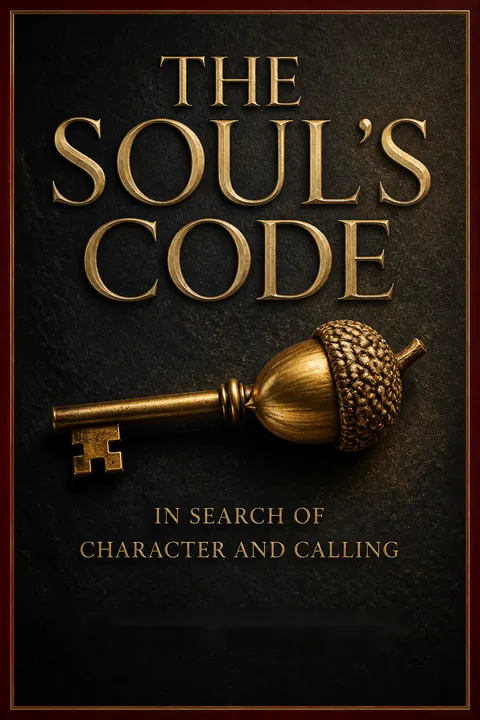
A pattern before achievement. Hillman’s acorn theory proposes that a person arrives with an individual image or pattern that presses toward expression. He calls its guiding presence a daimon, drawing on the ancient idea of a personal spirit that accompanies a life. This is not a claim that everyone has one obvious career or a fully mapped future. The image is understood gradually through character, recurring interests, and choices that feel unusually consequential.
A sudden turn. Ella Fitzgerald entered an amateur contest intending to dance, then changed course and sang. Hillman reads the moment as a possible sign of her calling, not merely a random pivot or an inherited talent switching on. The story illustrates his central lens: look for the particular shape of a life, not only the forces that caused it.
The idea is powerful as a way to resist reducing a person to a diagnosis, a family history, or a statistical profile. It also resembles narrative identity: people make sense of themselves by finding patterns among experiences that once seemed unrelated. That process can restore agency and curiosity. The distinction between a useful lens and a proven account matters, though. Fitzgerald’s decision can support a compelling interpretation, but it cannot establish that a pre-birth image guided her. The theory earns its value when it invites careful attention to a life, not when it turns hindsight into certainty.
Treat childhood fascinations as clues, not diagnoses or prophecies
Notice the early signals. Hillman argues that childhood can reveal a person’s characteristic concerns before the child has the skills to act on them. The philosopher R. G. Collingwood, at eight, felt that a difficult book on ethics concerned his future, though he could not yet understand it. The future bullfighter Manolete, by contrast, was fearful and withdrawn before bulls became central to his life. A calling, in Hillman’s account, may appear as fascination, resistance, or retreat, not simply precocious achievement.
Respect the mismatch. Barbara McClintock wanted adult tools as a small child, and young Yehudi Menuhin rejected a toy violin because it could not match the music he imagined. Hillman interprets these episodes as a large inner vision housed in a child’s limited abilities. They are prompts for inquiry, not proof of a fixed destiny or a reason to ignore a child’s needs.
This view asks adults to observe before correcting, a valuable counterweight to treating every intense preference as a symptom to eliminate. It also fits a broader developmental insight: children can show strong interests long before they can explain them. But interpretation needs humility. A child’s refusal may express temperament, fatigue, fear, or a passing preference, and the same behavior can have different meanings in different contexts. The practical gain is not identifying a child’s hidden fate. It is asking what the behavior communicates while keeping health, safety, and the child’s own changing wishes in view.
Stop making parents the sole authors of a child's character
Question the family story. Hillman calls the belief that parents fundamentally determine a person’s fate the parental fallacy. He tells of identical twins raised by different mothers who both explained their intense neatness through their mothers: one had copied an orderly parent, the other had reacted against a messy one. The same trait could be fitted to opposite accounts, suggesting that the explanation may be doing more work than the evidence.
Widen the surroundings. Hillman does not claim parents have no influence. He argues that children also respond to peers, teachers, books, physical places, animals, and wider social conditions. His example of a young monkey discovering how to wash a sweet potato highlights learning that spreads among peers and can move from child to parent. The question becomes how a child’s particular character finds room in a whole world, not just a family.
The critique is strongest when it exposes a habit of causal overconfidence. Family relationships matter, but a single childhood explanation rarely accounts for an entire adult life. Contemporary developmental thinking likewise attends to interacting influences, including peers, institutions, and experiences that siblings do not share. Hillman’s counterweight can become an overcorrection if parental harm is treated as incidental or chosen by the child’s soul. A balanced use of the argument expands the map of influence without erasing responsibility, unequal power, or the real effects of neglect and abuse.
Find mentors who can see a person's style before others can
Recognition changes possibility. Manolete’s mentor, José Flores Camará, did not simply praise the timid boy. He noticed that the boy’s build and movements called for a different bullfighting technique, while recognizing unusual courage and skill. He then trained him. Hillman treats this as a form of perception that detects a person’s distinctive way of acting and gives it practical support.
A different kind of guidance. Similar relationships appear in the stories of teacher Anna Shank, who encouraged the young Elia Kazan toward the humanities, and teacher Catherine Wood, who recognized Truman Capote’s literary ambition. Hillman distinguishes a mentor’s task from a parent’s: the mentor helps develop a particular capacity, while a caregiver provides the ordinary support of daily life. The useful question is not only who cares for someone, but who can accurately recognize how that person works.
The chapter makes recognition more than a pleasant feeling. A perceptive mentor notices concrete details, offers tailored instruction, and creates opportunities for practice. That resembles effective teaching, where feedback is specific enough to help a learner revise a performance rather than merely feel encouraged. Recognition can also misfire: mentors may project their own ambitions onto a young person or mistake resemblance for potential. The best version of Hillman’s idea joins imaginative attention with evidence, consent, and room for the learner to change direction.
Protect the obsessions and fantasies that give imagination its material
Appetite is informative. Hillman resists the assumption that a child’s imagination must be fed only prestigious books or approved activities. Cole Porter devoured cheap adventure stories, while Quentin Tarantino absorbed crime novels and comics. These materials were not automatically signs of refined taste; they mattered because the children engaged with them intensely. John Lennon described a powerful encounter with a natural landscape as an early source of creative feeling.
Give concentration room. Hillman names three conditions that can support a child’s imagination: a caregiver’s active fantasy about who the child might be, eccentric people who widen the child’s sense of possibility, and courtesy toward obsessive play. He sees play as a child’s serious work, not empty time. His advice is to notice what absorbs a child and avoid interrupting merely to satisfy an adult’s schedule, while still attending to safety and daily needs.
The useful distinction is between the cultural status of an activity and the quality of attention it generates. Creative work often draws on unexpected sources, and sustained play can help children experiment with roles, rules, and possibilities. Yet intensity alone does not make an interest beneficial, and a fixation may sometimes signal distress or crowd out sleep, relationships, or learning. Respectful attention is not passive indulgence. It means becoming curious about what the child is doing, setting appropriate limits, and allowing room for fascination to develop without assuming it predicts a career.
Let a calling descend into ordinary obligations and shared life
Growth has a downward direction. Hillman’s term growing down describes becoming rooted in the body, one’s actual place, relationships, and responsibilities. It challenges the familiar idea that maturity means climbing toward status or abstract ideals. In his reading of Judy Garland, extraordinary performance never settled into the ordinary attachments she longed for. Josephine Baker’s path, by contrast, included work for the French resistance, civil-rights activity, and care for eleven adopted children.
Calling needs a world. Hillman uses these contrasting lives to argue that a vocation cannot be measured only by achievement or public acclaim. A person’s particular gifts must find a form in everyday circumstances and contribute to a shared world. That may involve accepting the limits of the body, belonging to a family or community, and responding to duties created by one’s circumstances. The descent is not a retreat from ambition; it is how an ideal becomes lived rather than merely performed.
This emphasis usefully challenges the fantasy that purpose is proven by exceptional success. A life can be organized around a demanding vocation and still require ordinary care, reciprocity, and limits. Baker’s public and private commitments make that connection especially visible. Garland’s suffering, however, should not be romanticized as the price of a calling or treated as evidence that her life failed to become grounded. The concept is most humane when it directs attention toward practical support and connection, rather than turning pain into a symbolic requirement.
Read life stories as crafted meanings, not transparent records
Memory edits the record. Hillman examines people who changed names, embellished childhood stories, hid documents, or resisted biographies. Leopold Stokowski repeatedly invented details about his origins and early musical life, while also destroying personal papers. Hillman sees such disguise as a possible defense against being reduced to a neat chain of causes. The story a person tells about a life may express identity even when some details are inaccurate.
Interpret without surrendering facts. For Hillman, a biography is not simply a timeline. Retrospective storytelling gives events a pattern, and apparent inconsistencies may show how a person wants to be understood. This does not make every false memory profound or every concealment a sign of genius. It does mean that autobiographies and biographies should be read as acts of interpretation, shaped by memory, audience, privacy, and the author’s sense of what matters.
The argument connects with a well-established point about memory: recollection is reconstructive, not a perfect replay of stored events. A life story can therefore reveal priorities and self-conceptions as well as historical information. But treating fabrication as psychologically meaningful must not make verification optional. Biographies also concern other people, public consequences, and contested events. A rigorous reader can ask two questions at once: What can be established about what happened, and what does the narrator’s version reveal about the identity being built?
Find meaning in accidents without pretending they were planned
Fate is not fatalism. Hillman uses moira, the Greek idea of a share or portion of fate, to describe events that can shape a life without dictating every choice. Fatalism says that a complete plan controls everything. His alternative is to reflect on unexpected events and ask what they came to mean, while keeping personal action and responsibility in view.
Purpose without prophecy. As a child, Bette Davis accidentally caught fire while playing Santa Claus. She later recalled transforming the frightening moment into a dramatic performance. Hillman treats the fire as accidental, while showing how her character gave it a particular significance. He also distinguishes telos, the limited purpose of an action, from teleology, a sweeping claim that the whole life is moving toward a known final goal. Meaning can be made from an event without claiming it was destined.
This is a useful middle path between helplessness and the demand to control every outcome. People often integrate disruptive events by telling stories that connect them to later priorities or choices. That can support reflection, but it is not evidence that harm was necessary or secretly intended. In particular, survivors should not be pressured to discover a lesson in trauma. The strongest application preserves uncertainty: an accident may remain senseless in some respects while still becoming part of how someone understands and directs a life.
Name destructive motives without excusing harm or reducing them to childhood
Evil resists one-cause stories. In his discussion of Hitler and violent offenders, Hillman challenges explanations that blame only bad parenting or biology. He sketches several possibilities, including traumatic conditioning, inherited vulnerabilities, group norms, reward and punishment, the human capacity for cruelty, emotional absence, and what he calls a demonic call. His language proposes that destructive behavior can have an inner force or fascination that ordinary material explanations may miss.
Understanding is not absolution. Hillman argues that recognizing a destructive drive does not make its acts acceptable or remove the need to protect victims and restrain offenders. He favors forms of recognition, mourning, and service over fantasies of purifying society by identifying and eliminating supposedly dangerous children. His account is deliberately unsettling, especially where it treats violence as a possible calling. Its practical warning is to investigate multiple causes without confusing explanation with excuse.
The insistence on multiple levels of explanation is valuable, especially when collective violence is attributed to one abnormal individual rather than to institutions and shared beliefs. But the daimonic account is a metaphorical and metaphysical interpretation, not an established causal model of criminality. Used carelessly, it could make violence seem inevitable or even grand. Any serious account must center victims, evidence, prevention, and accountability. Hillman’s strongest contribution here is a warning against simplistic innocence: societies also need to examine the systems and ideologies that make cruelty possible.
Measure character by how someone inhabits a role, not its prestige
A job is not a soul. Hillman rejects mediocrity as a verdict on a person’s inner life. A role can be socially ordinary without the person performing it being interchangeable. He describes vocation not only as a special occupation, but as a distinctive manner of living and acting. Omar Bradley’s steady diligence, for example, mattered whether or not it led to a prominent military career. A butcher, teacher, or clerk may express an individual character in ways that status rankings cannot measure.
Eachness and equality. Hillman connects this claim to democracy: people differ greatly in ability and circumstance, yet each has a distinct worth that cannot be reduced to achievement. Public recognition is not the same as human importance. The challenge is to notice the specific qualities in an ordinary life instead of treating fame, wealth, or exceptional talent as the only evidence that a life has a pattern.
This is a humane challenge to status as the default measure of value. It also separates individual worth from market usefulness, a distinction that matters in workplaces and civic life. Still, praising a unique style should not obscure material inequality or turn character into a substitute for fair opportunities. Some people face constraints that others do not, and not every role offers equal freedom. The democratic force of Hillman’s argument lies in taking each person seriously without pretending that everyone has equal power, recognition, or resources.
Analysis
The Soul’s Code is a philosophical argument carried by biography. Hillman proposes that a person is not merely the outcome of genes, parenting, and social conditions, but arrives with a distinctive image that seeks a life in which to appear. Plato’s Myth of Er supplies the book’s imaginative foundation: a soul chooses a pattern of life and travels with a daimon that remembers it. The book’s recurring stories then ask readers to interpret childhood fascinations, refusals, accidents, mentors, eccentricities, and even pathologies as possible traces of that pattern.
Its lasting strength is a change in attention. Instead of asking only what caused a behavior, readers are invited to ask what it expresses, what gives it force, and what conditions might help it enter ordinary life. That shift can counter the reduction of a person to a label and can make biography more vivid than a chronology of injuries and achievements. The ideas of growing down and imaginative recognition also temper the romance of solitary genius by insisting on embodiment, place, and shared responsibilities.
The book’s weakness is its method. Hillman draws large conclusions from selected anecdotes and often reads lives backward, making childhood details appear to foreshadow later careers. Such interpretation can illuminate a life, but it is vulnerable to confirmation bias: the same incident can support many possible stories. His critique of genetic and family explanations also sometimes swings toward the opposite extreme, understating what careful developmental research can explain. The daimon is most persuasive as a metaphor for irreducible individuality, not as a scientifically established entity. Likewise, reading suffering as part of a pattern can restore meaning for some people, but risks turning preventable harm into destiny. The book is best approached as an invitation to richer interpretation, not a replacement for evidence, care, or accountability.
Review Summary
The Soul's Code receives mixed reviews. Many praise Hillman's acorn theory, which posits that each person has a unique destiny or calling. Readers find the concept thought-provoking and appreciate Hillman's erudition. Some criticize the book's reliance on celebrity examples and lack of practical application. Others find it rambling or contradictory. The writing style is described as both eloquent and ethereal. While some readers are deeply inspired by the ideas presented, others struggle with the book's spiritual and philosophical nature, finding it disconnected from reality.
People Also Read





Glossary
Acorn theory
An innate life-patternHillman’s proposal that each person arrives with a distinctive image or pattern that seeks expression in a life. The image is not a complete career plan or a guarantee of success. It becomes legible through recurring interests, character, choices, and the way a person responds to circumstances. Hillman uses the theory to challenge accounts based only on heredity and environment.
Daimon
A personal guiding spiritAn ancient Greek term Hillman uses for the companion or guiding presence associated with an individual life. In his account, the daimon carries the person’s distinctive image and presses for its expression, often through persistent interests, intuitions, or resistance. It is not identical to conscience, a moral judge, or the everyday personality.
Growing down
Rooting a calling in lifeHillman’s term for moving beyond aspiration or exceptional performance into embodied, practical participation in the world. It involves accepting the body, belonging to a place and community, and responding to the duties created by actual circumstances. The idea reverses the assumption that maturity is simply upward progress toward status or achievement.
Parental fallacy
Parenting as total explanationHillman’s label for the belief that parents, especially mothers, are the decisive explanation of a person’s character and fate. He argues that this account can absorb contradictory evidence and overlook peers, schools, culture, place, and individual difference. The term challenges parental determinism without logically proving that parenting has no influence.
Mythic sensibility
Perceiving meaning through imagesA mode of attention that treats images, stories, and symbols as meaningful ways of encountering realities that cannot be directly measured. Hillman contrasts it with explanations that reduce phenomena to observable causes. Mythic sensibility can reveal patterns and suggest interpretations, but it does not by itself verify that those interpretations are factual.
Moira
A portion of fateA Greek term for a share or allotted portion. Hillman uses it to distinguish fate from fatalism: events may intervene in a life and acquire significance without every detail being controlled by a complete predestined plan. Moira invites reflection on what lies beyond an individual’s control while preserving responsibility for choices and actions.
Telos
A specific purposeA Greek term meaning aim, end, or the purpose for which an action is performed. Hillman distinguishes telos from teleology, which makes a broader claim that a whole life is moving toward a known final goal. Telos can help interpret the limited purpose or significance of an event without pretending to predict a person’s ultimate destiny.
Bad Seed
Destructive inner driveHillman’s name for the possibility that a powerful, destructive impulse may shape a person’s life and cannot be explained only by childhood, biology, or social conditions. He uses the idea to examine extreme violence while insisting that understanding such a drive does not excuse harm. It is a provocative interpretive concept, not an established scientific diagnosis.
FAQ
What's The Soul's Code about?
- Exploration of Individuality: The book explores the concept that each person has a unique calling or "daimon" that guides their life, encapsulated in the "acorn theory."
- Critique of Traditional Psychology: Hillman critiques conventional psychology for focusing too much on trauma and environmental influences, arguing for the importance of intrinsic aspects of character and calling.
- Focus on Destiny and Calling: It emphasizes recognizing and nurturing one's calling, often obscured by societal and familial expectations.
Why should I read The Soul's Code by James Hillman?
- Unique Perspective on Psychology: Hillman offers an alternative to mainstream psychology, focusing on individuality beyond environmental or genetic influences.
- Encouragement of Self-Discovery: The book encourages readers to reflect on their childhood and recognize moments that shaped their sense of calling.
- Rich with Anecdotes: Hillman uses biographies and stories of famous individuals to illustrate his points, making the book engaging and relatable.
What are the key takeaways of The Soul's Code?
- Acorn Theory: Each person has an "acorn" representing their unique potential and calling, guiding them toward their true purpose.
- Importance of Mentorship: Mentors play a crucial role in recognizing and nurturing a person's calling, significantly impacting personal development.
- Reframing Childhood Experiences: Hillman suggests viewing childhood through positive influences and moments of clarity that shape destinies.
What is the acorn theory in The Soul's Code?
- Innate Image of Destiny: The acorn theory posits that each individual is born with a unique image or calling that represents their potential.
- Influence of Fate: Lives are shaped by this innate calling, not just genetics or environment, emphasizing the need to nurture this calling for fulfillment.
- Rejection of Victim Mentality: The theory encourages a proactive approach to life, understanding and fulfilling one's unique destiny.
How does The Soul's Code critique traditional psychology?
- Focus on Trauma: Hillman critiques the emphasis on trauma as primary shapers of personality, arguing it neglects individuality and innate calling.
- Beyond Nature vs. Nurture: He challenges the binary view of human development, advocating for a nuanced understanding including the daimon and acorn.
- Call for a New Paradigm: Hillman calls for a shift to include fate, character, and calling, leading to a more holistic understanding of behavior.
What role does the daimon play in The Soul's Code?
- Personal Guiding Spirit: The daimon is an inner guiding force representing an individual's true self and potential, influencing choices and actions.
- Connection to Creativity: It is closely linked to creativity and inspiration, often manifesting in artistic expression or personal passions.
- Role in Personal Development: The daimon serves as a compass, guiding individuals toward their unique calling and helping navigate life's challenges.
How does The Soul's Code address childhood experiences?
- Reframing Childhood Narratives: Hillman encourages focusing on positive influences and moments of clarity, not just trauma, in shaping identity.
- The Role of Imagination: He highlights the importance of imagination in childhood, suggesting it often reveals a child's unique calling.
- Understanding Dysfunction: Childhood dysfunctions can be seen as struggles to fulfill one's calling, not just symptoms of trauma.
What is the significance of fate in The Soul's Code?
- Guiding Force: Fate is a guiding force shaping an individual's life path, essential for personal fulfillment.
- Connection to the Daimon: Fate is linked to the daimon, representing the innate calling each person possesses.
- Rejection of Randomness: Hillman challenges the notion of life as random, advocating for recognizing fate's role in shaping destinies.
How does The Soul's Code relate to creativity and individuality?
- Creativity as Expression of the Acorn: Creativity is a manifestation of the acorn, allowing individuals to express their unique calling.
- Individuality Beyond Genetics: Individuality is shaped by the daimon and innate image, not just genetics or environment.
- Encouragement of Self-Expression: Embracing creativity and individuality is crucial for living a fulfilling life.
What are the best quotes from The Soul's Code and what do they mean?
- “We have been robbed of our true biography—that destiny written into the acorn.”: Emphasizes societal frameworks obscuring true potential and calling.
- “The daimon does not go away.”: Reinforces the persistence of one's calling, suggesting it cannot be ignored.
- “Character is fate.”: Highlights that character traits and choices shape destiny, emphasizing the importance of understanding one's character.
What role do mentors play in The Soul's Code?
- Recognition of Potential: Mentors are crucial in recognizing and nurturing an individual's calling, impacting personal development.
- Guidance and Support: They provide guidance and support, helping individuals navigate paths and overcome obstacles.
- Examples from History: Historical examples demonstrate the transformative power of mentorship in shaping destinies.
What are the implications of The Soul's Code for personal growth?
- Self-Discovery: Encourages exploring inner landscapes and recognizing the influence of the acorn and daimon.
- Embracing Individuality: Nurturing one's unique essence empowers pursuing true passions and purpose.
- Navigating Life's Challenges: Understanding fate, the daimon, and choices helps navigate challenges with clarity and purpose.
Download PDF
Download EPUB
.epub digital book format is ideal for reading ebooks on phones, tablets, and e-readers.








