

Key Takeaways
Read myths as maps of psychic change, not reports from ancient history.
Stories speak inward. Campbell sees myths and dreams as symbolic expressions of recurring human conflicts. A myth is not simply a record of what a people believed happened in the past. Its characters and monsters give shape to powerful inner experiences, including fear, desire, loss, and the struggle to mature. He calls the recurring pattern across heroic stories the monomyth: a person leaves familiar life, meets transformative powers, and returns changed.
Private and shared imagery. A modern dream about a son, his father, and his mother, for example, resembles the ancient Oedipus story. Campbell uses such parallels to argue that myth gives shared form to psychological material, while dreams personalize it. The pattern, he suggests, recurs from folktales to religious epics, though each culture gives it its own images.
What's compelling is the invitation to read an old story as a tool for noticing inner conflict, rather than dismissing it as primitive science. Narrative psychology likewise treats stories as ways people organize experience and identity. But resemblance does not prove a single universal mental blueprint. Stories can travel between societies, and similar problems can generate similar plots independently. Campbell's comparison is most useful as an interpretive lens, not as proof that all cultures share one psychology or that every myth means the same thing.
Treat disruption as a summons to outgrow the life that no longer fits.
The familiar breaks. In the Grimm tale of the princess and the frog, her golden ball falls into a deep spring. The accident forces her into a bargain with a creature she would rather ignore. Campbell reads this disruption as a call: an event that draws a person beyond an old identity or routine. It can be a chance encounter, an illness, a loss, a new responsibility, or a dawning realization.
Refusal has a cost. Prince Siddhartha’s father tries to shield him from aging, illness, and death, but seeing those realities, and then a monk, redirects the prince’s life. Campbell compares this with King Minos, who keeps a sacred bull for private gain and helps create the conditions for the Minotaur. Still, refusal is not always cowardice: withdrawal can also be a deliberate period of creative searching.
The call is powerful as a retrospective idea: an interruption may reveal that an old arrangement has become too small. This resembles developmental psychology's account of transitions, when roles and assumptions must be renegotiated. Yet disruption is not automatically meaningful, and not every crisis contains a hidden invitation. Campbell's own examples suggest a useful distinction: avoidance can harden into stagnation, while chosen retreat can create space for change. The difference lies less in how dramatic the event looks than in whether it opens or closes the person's capacity to respond.
Cross the unknown with help, but expect your old identity to die.
Guidance at the edge. In the Navaho story Campbell recounts, Spider Woman equips twin heroes with protective objects and instructions before they travel to meet their father, the Sun. She represents the help that can appear before or during a difficult passage: a teacher, tradition, trusted companion, or practical tool. The hero then faces a threshold, the boundary between the familiar world and an uncertain one.
The whale's belly. Folktales often show a hero swallowed by a beast, apparently dead, then reborn. Campbell interprets this as an image of surrendering an old self, not merely defeating an external enemy. In another story, Prince Five-weapons exhausts his physical attacks against the Sticky-hair ogre, then relies on knowledge within himself. Passing the threshold requires courage, but also humility about what ordinary strength can accomplish.
The helper and threshold make a useful pair: people often need both support and a real change in perspective. In contemporary terms, mentorship can reduce uncertainty, while a transition still demands the learner's own work. Campbell's imagery also warns against treating help as rescue from all discomfort. The whale's belly is not a shortcut around vulnerability. At the same time, the metaphor should not romanticize danger: some thresholds are unsafe, and leaving them is wiser than pressing onward. A symbolic framework cannot replace judgment about actual risk.
Let trials reconcile the parts of life your ego labels enemies.
Opposites become visible. In the Sumerian story of Inanna, the goddess descends to the land of the dead and must surrender an item of royal clothing at each of seven gates. Stripped of her status, she is killed. The ordeal dramatizes a confrontation with what the conscious self resists or cannot control. Campbell sees initiation as a process of meeting and integrating what had seemed wholly foreign.
The inner opponent. In the Buddha story, the future Buddha remains steady as Mara attacks with weapons and temptation. The attacks are transformed, and the Buddha reaches enlightenment. Campbell reads such monsters and trials as symbolic tests of consciousness. Their point is not that pain is secretly good, but that a person may discover capacities unavailable while defending an unquestioned identity. The hero's change is measured by what can now be faced without being ruled by fear.
The idea of integrating opposites has clear resonance with psychological approaches that help people acknowledge disowned emotions rather than letting them govern behavior from the background. Inanna's loss of her ornaments makes that surrender vivid. But Campbell's framework can flatten distinct experiences if every conflict is treated as an inward drama. Inanna's story also has cultural and religious meaning specific to its tradition. A careful reading can hold both levels together: psychological usefulness does not erase historical difference, and suffering should not be excused as a necessary spiritual test.
Seek the boon beneath the symbols, not comfort in the symbol itself.
The treasure is insight. Across myths, the hero returns with a prize: fire, a sacred teaching, a healing substance, or a new power. Campbell argues that these objects represent a deeper transformation. The hero's journey is not simply an expedition to acquire something unavailable; it reveals capacities that were present but unrecognized. In his reading, the gods and sacred images are guides or carriers of meaning, not the final destination.
The Buddha's hesitation. After awakening beneath the Bo Tree, the Buddha doubts whether people can understand what he has realized. The god Brahma urges him to teach, and he returns to share a path rather than a transferable possession. Campbell treats the lesson as a limit on what stories and doctrines can do: they can point toward insight, but cannot perform the inner experience for someone else. The symbol is a doorway, not the room.
This distinction between a sign and what it signifies is a strong safeguard against turning religious images into literal trophies. It also applies to secular ideals: a title, credential, or ritual can stand for growth without guaranteeing it. The Buddha's hesitation makes transmission part of the challenge, not an automatic consequence of insight. Still, private realization alone cannot settle whether a teaching is true or beneficial. Symbols may inspire, but their meanings need interpretation, and claims about reality need more than the intensity of personal experience.
Bring hard-won insight home, where translating it becomes another ordeal.
Return is part of the task. A hero who reaches the source but never comes back has not completed the full pattern. The return asks the traveler to carry a changed understanding into ordinary life and make it useful to others. In Campbell's account of the Buddha, awakening is followed by teaching. The boon matters because it can renew a community, not simply enrich the individual.
The homecoming can fail. Oisin returns to Ireland after what seems to him a short stay in the Land of Youth, only to learn that centuries have passed. When he touches the ground, he becomes an old man. Rip van Winkle also returns from a long absence, but brings no clear understanding of what happened and finds his society transformed. These stories dramatize the difficulty of translating an experience from one world into another.
The return gives transformation an ethical test: does insight change how someone participates in the world, or remain a private possession? This resembles the distinction between learning and transfer in education. Understanding gained in one setting does not automatically survive the move into another. Oisin's story captures the shock of that gap. Yet service should not be treated as a universal duty to disclose every private experience. Some insights need time, careful language, or a receptive audience before they can help anyone.
See creation and collapse as one cycle, not a contest of absolutes.
The world keeps turning. Part Two widens the hero's story into a creation story: forms emerge from an unseen source, multiply, and eventually dissolve. Campbell calls this the cosmogonic cycle. Many traditions picture the movement through images such as a cosmic egg, a world tree, or a universe repeatedly created and destroyed. The point is not that all traditions share identical doctrines, but that they use recurring images to think about change, origin, and return.
A center inside the world. The World Navel is Campbell's name for the symbolic point from which life or renewal flows. It may be a temple, mountain, hearth, or other sacred center, and ultimately can be found anywhere. He also reads the Minotaur story politically: Minos hoards what should serve a wider community, becoming a tyrant. Renewal requires breaking a fixed order when it has become destructive.
A cyclical view can loosen the illusion that any present arrangement is permanent. It connects mythic time with ecological thinking, where living systems depend on renewal as well as stability. The World Navel also makes sacredness less remote: a center can be discovered within ordinary surroundings. Still, cycles are metaphors, not guarantees that collapse produces improvement. Communities can lose knowledge and people in real upheavals. Campbell's image is most valuable when it encourages renewal without making destruction seem harmless or inevitable.
Build modern meaning across cultures instead of retreating into tribal myths.
The old map no longer fits. Campbell argues that modern science and secular society weakened the authority of inherited mythic systems, leaving many people without shared symbols for life's transitions. He does not recommend simply restoring an earlier social order. The modern hero, in his view, must find meaning under contemporary conditions and recognize humanity beyond national, religious, or tribal divisions.
Difference without division. Campbell insists that traditions express profound questions in distinct cultural forms. He warns against mistaking one community's images for the only path to truth. His preferred hero returns with a vision broad enough to see other people as kin, not as enemies outside the protection of one's own group. The task is not to erase local stories, but to understand how their symbols can speak across boundaries without becoming a new universal dogma.
This is the book's most civic and most demanding proposal: shared humanity should widen belonging without requiring cultural uniformity. It anticipates the challenge of pluralistic societies, where people need common ground but also need room for incompatible histories and beliefs. Campbell's comparative method can encourage curiosity across traditions. Its risk is that a universal pattern may absorb differences into a scheme devised by the interpreter. Cross-cultural understanding is strongest when comparison creates dialogue, not when it claims to have translated every tradition into one master story.
Analysis
Campbell's achievement is less a final theory of myth than a compelling method for reading it. He places stories from widely separated traditions beside one another and asks what human problem their images make visible. The result is an unusually spacious account of transformation: leaving an inherited identity, enduring a confrontation with the unknown, and returning with a capacity that can serve life beyond the self. The return matters as much as the adventure. Without it, the hero's private illumination has no social consequence.
The method is also vulnerable to its own success. Because Campbell finds recurring patterns everywhere, the reader may mistake a persuasive comparison for proof of a universal psychological structure. Similar motifs can arise through cultural exchange, shared human concerns, or later reinterpretation. A repeated shape does not establish a single origin or meaning. His reliance on Freud and Jung, especially on infantile family conflicts and fixed masculine and feminine roles, also reflects theories that contemporary psychology and anthropology treat with substantial caution. Those claims should not be accepted simply because they illuminate a story.
The book's most durable contribution is therefore a disciplined use of myth as metaphor. A story can help a reader imagine growth, grief, or social renewal without dictating what every person must experience. Campbell's framework becomes more credible when local history and cultural specificity remain visible, and when the pattern is treated as a possibility rather than a law. Its ethical center is the demand to bring insight back into shared life, while resisting the temptation to turn one's own symbols into weapons against outsiders. Read this way, the book offers both a map and a warning: stories can widen the self, but interpreters can also use them to make difference disappear.
Review Summary
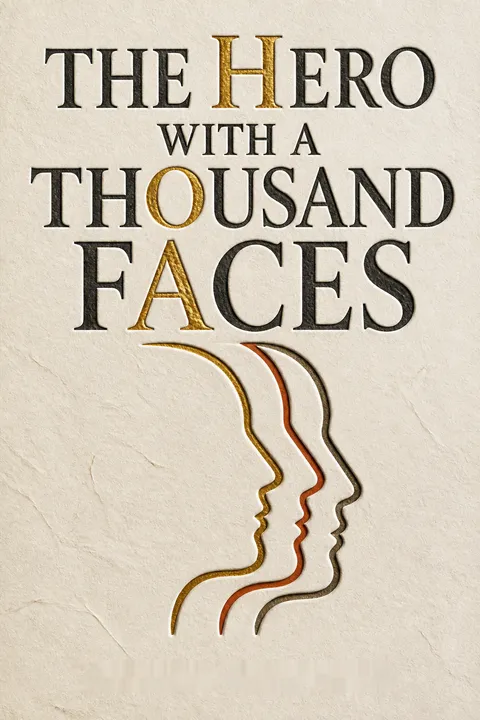
The Hero with a Thousand Faces is a seminal work that explores the commonalities in mythologies across cultures, presenting the concept of the monomyth or hero's journey. While praised for its groundbreaking ideas and influence on storytelling, some readers find Campbell's psychoanalytical approach and dense writing challenging. The book's impact on literature, film, and popular culture is widely acknowledged, with many citing its relevance to understanding human experience and spiritual growth. Despite criticisms of outdated elements, it remains a significant text in comparative mythology and narrative structure.
People Also Read








Glossary
Monomyth
Recurring heroic patternCampbell's name for a recurring structure he identifies across heroic myths: a figure leaves ordinary life, undergoes a transformative encounter, and returns with a boon. He uses it as a comparative model for stories from different cultures and as a metaphor for personal change. The term came from James Joyce, and Campbell's use of it does not mean every myth follows an identical sequence.
World Navel
Symbolic center of renewalA mythic image of the center through which life, energy, or grace enters the world. It may be represented by a sacred site, a mountain, a tree, a temple, or another place of origin and renewal. Campbell treats the center as both cosmic and psychological, and argues that it can be encountered anywhere rather than belonging exclusively to one geographic location.
Archetype
Recurring symbolic patternFollowing Jung, Campbell uses archetype for a recurring image or pattern associated with the unconscious and found in myths, rituals, and dreams. Examples in the book include the helper, the dangerous threshold, and the mother figure. Campbell sees archetypes as shared sources of symbolic form, while individual dreams and cultural traditions give those forms particular details.
Cosmogonic Cycle
Creation and dissolution patternCampbell's term for mythic accounts of the universe emerging from an unmanifest source, taking many forms, and dissolving or returning to that source. Such accounts may use images including a cosmic egg, a primordial pair, or a world tree. The cycle parallels the hero's movement from origin into experience and back toward a larger understanding.
Apotheosis
Elevation beyond ordinary identityA stage or outcome in which the hero is represented as divine, enlightened, or otherwise beyond the limits of ordinary personal identity. Campbell uses the term for a transformation in understanding, not simply an increase in status. The hero's expanded perspective can disclose a unity between the seeker and what was sought, and may prepare the way for a return to the world.
Bodhisattva
Being oriented toward awakeningIn Mahayana Buddhism, a being associated with enlightenment and compassion for all sentient beings. Campbell emphasizes the Bodhisattva who delays final release in order to help others, treating this figure as an image of insight returning to the world. The term has specific meanings within Buddhist traditions and should not be reduced to Campbell's comparative interpretation.
FAQ
What's "The Joy of Less" by Cary David Richards about?
- Simplification Journey: The book is about simplifying your life by de-cluttering your environment, focusing on what truly matters, and reducing stress.
- Personal Experience: Cary David Richards shares his personal journey from a high-stress lifestyle to a more fulfilling, minimalist existence.
- Practical Guide: It provides practical techniques and strategies for de-cluttering various aspects of life, including your home, digital world, and work environment.
- Philosophical Insights: The book also delves into the philosophical aspects of minimalism, encouraging readers to find joy and fulfillment in simplicity.
Why should I read "The Joy of Less"?
- Practical Advice: It offers actionable steps to help you de-clutter and simplify your life, making it more manageable and less stressful.
- Personal Transformation: The book provides insights into how simplifying your environment can lead to personal growth and a more purposeful existence.
- Inspiration: Richards' personal story of transformation can inspire readers to embark on their own journey towards minimalism.
- Comprehensive Approach: It covers various areas of life, from physical spaces to digital environments, making it a holistic guide to simplification.
What are the key takeaways of "The Joy of Less"?
- De-cluttering Benefits: Simplifying your environment can lead to reduced stress, increased joy, and a more fulfilling life.
- Personal Journey: The process of de-cluttering is unique to each individual and should be approached at your own pace.
- Practical Techniques: The book provides specific strategies for de-cluttering different areas, such as your home, office, and digital world.
- Mindset Shift: Emphasizes the importance of changing your mindset towards material possessions and focusing on what truly matters.
How does Cary David Richards suggest starting the de-cluttering process?
- Start Small: Begin with one room or space at a time to avoid feeling overwhelmed.
- Triage Method: Use the categories of Keep, Remove, and Store to decide what to do with each item.
- Involve Others: Ensure that family members or roommates are on board with the de-cluttering process to avoid conflicts.
- Lifestyle Change: Approach de-cluttering as an ongoing lifestyle change rather than a one-time event.
What are some specific techniques for de-cluttering your home according to "The Joy of Less"?
- Room-by-Room Approach: Tackle one room at a time, removing everything and deciding what to keep, remove, or store.
- Organize and Simplify: Ensure that each item has a designated place and only keep what is useful or brings joy.
- Regular Maintenance: Establish a routine for regular de-cluttering to prevent "clutter creep."
- Mindful Purchasing: Be conscious of what you bring into your home, focusing on items that add value or reduce complexity.
How does "The Joy of Less" address de-cluttering your digital world?
- Photo Management: Regularly delete unnecessary photos and videos to keep your digital space organized.
- Unsubscribe: Ruthlessly unsubscribe from emails and notifications that do not add value to your life.
- App Management: Only keep apps that are useful and delete those that haven't been used in the last 30 days.
- Organize Files: Create a coherent system for organizing digital files and regularly clean your hard drive.
What advice does Cary David Richards give for de-cluttering your office?
- Clear Desk Policy: Keep your desk clear of unnecessary items to maintain focus and productivity.
- Stop Incoming Clutter: Deal with incoming items immediately by taking action, filing, or trashing them.
- Proper Storage: Ensure you have adequate storage for important items and avoid overloading drawers and cabinets.
- Email Management: Keep your email inbox organized by regularly deleting, replying, or archiving messages.
How does "The Joy of Less" suggest handling de-cluttering with children?
- Involve Kids: Engage children in the de-cluttering process to teach them decision-making and organization skills.
- Designate Spaces: Ensure that toys and belongings have designated places to encourage tidiness.
- Regular Purges: Schedule regular de-cluttering sessions to keep children's spaces organized.
- Teenagers: Allow teenagers some autonomy in their spaces but require them to respect common areas.
What are some of the best quotes from "The Joy of Less" and what do they mean?
- "Perfection is achieved, not when there is nothing more to add, but when there is nothing left to take away." - This quote emphasizes the minimalist philosophy of reducing excess to find true value.
- "Simplicity is the essence of happiness." - Suggests that a simpler life leads to greater joy and fulfillment.
- "A place for everything and everything in its place." - Highlights the importance of organization in maintaining a de-cluttered environment.
- "The simplest things are often the truest." - Encourages readers to focus on what truly matters in life.
How does Cary David Richards define minimalism in "The Joy of Less"?
- Personal Definition: Richards does not strictly define minimalism but shares how living with less has brought joy and fulfillment to his life.
- Focus on Value: Emphasizes keeping only those things that add value or bring joy to your life.
- Ongoing Journey: Minimalism is portrayed as a personal journey that evolves over time, rather than a fixed destination.
- Mindset Shift: Encourages a shift in mindset towards material possessions and a focus on what truly matters.
What is the role of mindset in the de-cluttering process according to "The Joy of Less"?
- Mindful Approach: Approach de-cluttering with a clear and focused mindset to make thoughtful decisions about what to keep.
- Emotional Attachment: Be aware of emotional attachments to items and make conscious choices about their value.
- Present Focus: Stay present and focused on the current task to avoid feeling overwhelmed by the process.
- Personal Journey: Recognize that de-cluttering is a personal journey and there is no right or wrong way to approach it.
How does "The Joy of Less" suggest maintaining a de-cluttered lifestyle?
- Regular Maintenance: Establish a routine for regular de-cluttering to prevent clutter from accumulating.
- Mindful Purchasing: Be conscious of what you bring into your home, focusing on items that add value or reduce complexity.
- Lifestyle Change: View de-cluttering as an ongoing lifestyle change rather than a one-time event.
- Stay Present: Remain focused on the present moment and make decisions based on what is important to you now.
About the Author


Download PDF
Download EPUB
.epub digital book format is ideal for reading ebooks on phones, tablets, and e-readers.








