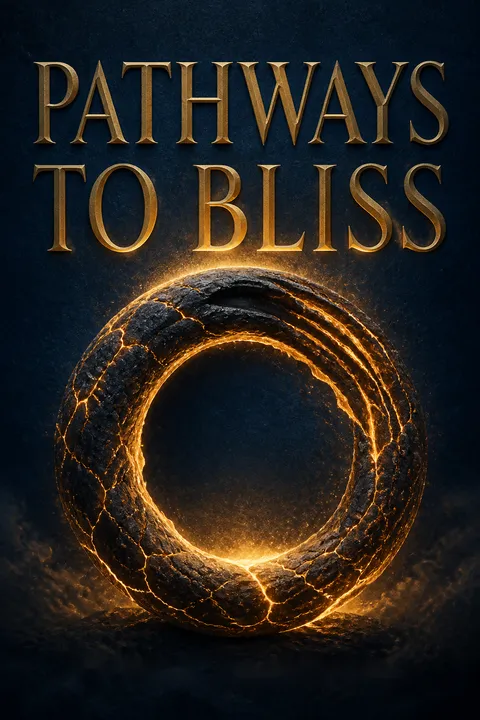


Key Takeaways
Read myths as maps of inner life, not outdated science.
Symbols point inward. Campbell distinguishes myth from history and allegory. A mythic image, in his account, points beyond its literal story toward spiritual or psychological experience; an allegory delivers a more fixed lesson. He contrasts Jesus as a historical figure with Christ as an enduring spiritual principle, arguing that a symbol can matter even when its story is not treated as a factual report. Myths, then, are not simply mistaken explanations of astronomy or biology. They are a language for experiences that ordinary description struggles to hold.
Keep the image open. A symbol loses this function when it is treated as the final answer, rather than as a doorway to reflection. Campbell sees ritual as a way to enter the story through action, not merely to hear it repeated.
This reading preserves the psychological force of religious imagery without requiring every reader to accept its historical claims. It also leaves room for religious communities to understand their symbols differently, rather than declaring that a psychological interpretation is the only valid one. The distinction is useful beyond religion: stories can shape how people understand grief, loyalty, or change without serving as literal records. Still, symbolic interpretation should not erase history when historical claims matter. A myth can carry meaning and make claims about the world, and those claims deserve separate evaluation.
Modern life displaced myth's cosmic and social maps, not its human needs.
Four jobs of myth. Campbell describes four functions: to awaken awe before existence, to picture the cosmos, to authorize a social order, and to guide people through life stages. The first is mystical, the second cosmological, the third sociological, and the fourth psychological or pedagogical. A tradition once joined these tasks, so the universe, community rules, and personal duties appeared to belong to one order.
The old map broke. Campbell argues that science now revises accounts of the cosmos, while secular societies debate and change their laws. Those shifts weaken myth's older public authority, but they do not remove the need to face suffering, grow up, age, and die. His question is how people can find awe and psychological guidance without pretending that ancient cosmologies remain scientific descriptions.
The four-part scheme works as a diagnostic: a culture can have accurate science and still lack shared language for grief, responsibility, or wonder. It also clarifies why a factual correction alone rarely replaces a religious story's emotional role. Yet modern societies have not simply abandoned social meaning. Nations, movements, and markets also create shared narratives and rituals, sometimes with mythic force. The framework is most useful when treated as a set of functions that can migrate between institutions, not as proof that secular life is empty.
Face existence by affirming it, renouncing it, or trying to repair it.
Three responses to suffering. Campbell sorts major mythic outlooks into three broad stances. One accepts life in its full mixture of birth, pleasure, pain, and death. Another seeks release from worldly involvement, with Jain renunciation and early Buddhist traditions as examples he discusses. A third imagines a damaged world that people can help restore, a pattern he traces through Zoroastrian ideas of good opposing evil and into later religious traditions.
Name the bargain. These are not simply competing doctrines; each offers a different way to live with life's harshness. Affirmation says the world's pain does not cancel its value. Renunciation limits participation. Reform tries to make the world better by acting within it. Campbell's scheme asks what kind of hope a worldview offers, and what it asks people to accept or refuse.
The comparison makes hidden assumptions visible. A reformer, for example, may believe that suffering is intolerable and changeable, while an ascetic may see attachment itself as the deeper problem. These stances can illuminate personal choices as well as religious traditions. The categories are broad, however, and a person can combine them: someone may accept mortality, renounce status, and still work to prevent injustice. They are best used as questions about emphasis, not as boxes into which entire religions or individuals must fit.
Track what repeatedly captivates you to uncover your personal myth.
Follow recurring energy. Campbell uses bliss to mean a deep sense of being engaged in what feels most fully one's own, not a promise of comfort or constant pleasure. He connects it to the Vedantic idea of five kośas, or sheaths surrounding the spiritual ground of a person: body, breath, mind, wisdom, and bliss. Myth, in his account, helps conscious thought reconnect with the less deliberate wisdom of living nature.
Look for the pattern. Campbell spent years without a job during the Depression, reading and noticing what held his attention. That period fed the work he later shared as a teacher and scholar. Jung's method offers another clue: remember childhood fascinations, keep a dream journal, and watch which images and concerns recur. A personal myth is the pattern of meaning that appears in such repetitions.
Repeated attention can reveal values that a person has not yet put into words. This resembles narrative approaches to identity, which look for recurring themes across memories and choices rather than assuming that self-knowledge arrives as a single revelation. Campbell's account is strongest when bliss means a durable orientation, not a mood or an excuse to disregard commitments. Access to time, money, and freedom is unequal, too. A calling may need to be cultivated alongside paid work and care for others, not pursued as if everyone can simply walk away.
Translate inherited symbols into your life instead of copying their costumes.
Keep the image, reinterpret it. Campbell argues that inherited traditions can still offer usable symbols, especially those absorbed in childhood, even when their original social rules no longer fit. He borrows two terms for myth's double character: mārga, the path toward personal insight, and deśī, the local cultural form through which an image appears. A symbol may carry a broad human question while taking shape in a particular religion, landscape, or story.
Translate, do not imitate. A person drawn to Asian philosophy, for example, need not adopt its clothing or social conventions to learn from it. Campbell makes a similar case for Christian imagery: its value can lie in what it awakens within a person, not only in institutional claims about history. The work is to discover what an image means in the life being lived now.
This approach avoids two easy mistakes: treating one tradition as universally authoritative, or dismissing all inherited symbols as obsolete. Translation lets people draw on cultural memory while adapting it to present circumstances. It also raises a question of responsibility. Borrowed images come from communities with histories and meanings of their own, so personal use should not imply ownership of the tradition. Campbell's distinction between a symbol's local form and wider resonance is suggestive, but comparison needs humility about what gets lost when context is stripped away.
Mark life's transitions with rituals that guide, rather than imprison, the self.
Transitions need meaning. Campbell sees myth as a kind of developmental shelter, comparable to the pouch in which a young marsupial continues to grow. Human beings depend on others for an unusually long time, then face adulthood, aging, and death. In traditional societies, initiation rites marked major changes and taught people how to inhabit a new role. Such ceremonies could also bind individuals tightly to the group's rules.
A story can prepare action. Campbell describes Navajo medicine man Jeff King using a ritual based on the story of twin heroes to prepare Navajo men drafted into military service. The story was sung and enacted, linking an unfamiliar role to a meaningful narrative. The example shows how ritual can make a threshold comprehensible. It also shows why guidance must be distinguished from coercion: a rite can support a person, or enforce conformity.
Ritual gives change a public shape. A graduation, funeral, or welcoming ceremony can help people recognize that a relationship or responsibility has changed, even when no supernatural claim is involved. The example also makes clear that rites are not automatically benign. A group may use them to create belonging, but also to demand obedience or exclude people. The relevant question is not whether a ritual is ancient or powerful, but whether participants can enter it with understanding and whether it helps them meet the transition ahead.
Treat midlife upheaval as a demand to integrate neglected parts of yourself.
The psyche has counterweights. In Campbell's account of Jung, a persona is the social mask used in a role, while the shadow holds traits and possibilities a person has rejected or failed to recognize. Jung's enantiodromia describes a reversal in which a neglected side of the personality can return with disproportionate force. Someone who has lived only for achievement may discover a hunger for intimacy; someone defined by pleasing others may become controlling when that role loses its purpose.
Make room for complexity. The task is not to obey every impulse, but to recognize what the dominant self-image has excluded. Campbell also discusses anima and animus, Jung's terms for inner images associated with the other sex, and warns that idealized projections can obscure a partner's actual humanity. He presents integration as a way to meet people and one's own limits with greater realism and compassion.
The model offers a useful alternative to interpreting every disruptive desire as either a command or a defect. It invites curiosity about what a rigid identity has kept out of view. Contemporary psychology can recognize the general value of self-reflection without accepting Jung's archetypes as established universal structures. Campbell's gendered language is also historically specific and can make the anima and animus sound more fixed than many lives allow. The practical insight survives that limitation: ideals and roles can narrow perception, and relationships often expose the parts of a self-image that do not fit reality.
Enter your own unknown path, then bring a useful gift back.
The hero leaves and returns. Campbell calls the recurring adventure pattern the monomyth, or hero's journey. In simplified form, it moves through three linked tasks:
1. Leave the familiar world after a call or crisis.
2. Face trials that expose hidden fears and capacities.
3. Return with a discovery that can enter ordinary life.
No borrowed route. In the Grail story Campbell recounts, Arthur's knights do not enter the forest together on a cleared road. Each chooses an individual way into its darkest, least-traveled part. The image captures his argument that models can inspire, but cannot dictate a person's path. The return matters as much as the adventure: insight that cannot be carried into work, relationships, or community remains incomplete.
The journey pattern helps organize experiences of departure, uncertainty, learning, and return without reducing them to a checklist. It also shifts attention from winning to integration: the discovery must change how ordinary life is lived. The risk is that a compelling template can make every hardship seem destined to produce growth, or imply that people who cannot return triumphantly have failed. Real lives may remain unresolved, and some losses offer no neat boon. The pattern is most humane when treated as a lens, not a verdict.
Ask artists to make old symbols speak in the universe we inhabit.
Old images need new forms. Campbell argues that inherited cosmologies can lose authority when they conflict with what people observe, as when an ancient picture of the heavens sits uneasily beside modern astronomy. He sees artists and poets as potential makers of images that reconnect everyday experience to mystery without pretending that the old cosmology is still literal fact. He points to Thomas Mann and James Joyce as writers who cast modern life in mythic patterns.
The moon as a new image. Campbell treats the lunar landing as a mythically important event because it changed how people imagined Earth and the wider universe. He also welcomed the Star Wars films as contemporary works drawing on heroic patterns. In this view, myth is not only inherited; new art can make shared experience feel meaningful again.
Art can make abstract changes perceptible. A journey to the Moon is both a scientific achievement and an image that alters how people picture home, distance, and human capacity. That does not mean every technological milestone automatically becomes a meaningful myth. Shared symbols require interpretation, and artistic stories can reinforce narrow ideals as easily as they can open new possibilities. Campbell's strongest claim is that accurate knowledge and wonder need not compete: a larger cosmos can deepen awe, provided artists help people feel its significance.
Analysis
Pathways to Bliss is a collection of lectures and conversations organized around one persistent claim: mythology can connect conscious life with deeper psychological experience. Its argument moves from myth's cultural functions, through Jungian psychology, toward a practical question: what story is shaping this particular life, and can that story be lived deliberately? The book's most useful move is to treat myths as active symbols rather than failed science. Its examples, from rites of passage to the Grail quest, make abstract psychological transitions memorable.
The approach is an interpretive synthesis, not a settled scientific theory. Campbell often writes as though symbols share universal meanings and as though broad cultural regions can be described in oppositional terms. Those claims simplify historical variation, and his East-West contrasts sometimes flatten diverse traditions into a single pattern. His accounts of gender roles are especially dated. The hero's journey is powerful as a narrative lens, but it is not a reliable description of every life, and its emphasis on individual destiny can understate economic constraint, caregiving, or collective struggle.
The book is most convincing when its concepts are used as prompts rather than laws. A recurring image may help someone notice a neglected desire; a ritual may help a community acknowledge a change; a story may offer language for an experience that otherwise feels isolating. None of these uses proves that the image is universal or that a person must follow it. Nor should the language of bliss turn structural barriers into personal failures. The enduring contribution is a method of attention: examine the symbols that shape perception, ask what they invite or forbid, and test their value against lived consequences. The reader can keep the imaginative force while remaining critical about claims of universality, history, and destiny.
Review Summary
Pathways to Bliss is highly praised for its accessible exploration of mythology, psychology, and personal growth. Readers appreciate Campbell's insights on finding one's personal myth and following one's bliss. The book is seen as a great introduction to Campbell's ideas, offering a blend of lectures and interviews. While some find certain sections repetitive or dated, most reviewers highlight the book's profound impact on their understanding of life's journey and the relevance of myths in modern times.
People Also Read



Glossary
Four functions of mythology
Myth's four cultural tasksCampbell groups mythology's work into four functions: mystical, cosmological, sociological, and psychological or pedagogical. They awaken awe, picture the universe, support a social order, and guide individual development through life's stages. The framework explains why myths can matter beyond telling stories, though its categories are best treated as a guide rather than a complete account of every tradition.
personal myth
A life-shaping inner storyA personal myth is the underlying pattern of images, commitments, and longings that gives direction to an individual's life. It may be consciously chosen, inherited from childhood, or discovered through recurring dreams and interests. Campbell urges people to identify the story that actually moves them, rather than assuming that an institution, career plan, or social role fully explains their deepest commitments.
monomyth
The recurring hero patternCampbell uses monomyth for a recurring structure in heroic stories: a person leaves a familiar world, encounters trials and transformation, and returns with something that can be brought back into ordinary life. The pattern appears in myths and literature and can serve as a lens on personal change. It is a comparative model, not a universal rule for how lives must unfold.
Elementargedanke
A broadly shared mythic ideaAdolf Bastian's term for an elementary or broadly recurring idea found across cultures. Campbell uses it to distinguish a myth's underlying theme from the particular imagery through which a culture expresses it. The idea does not appear in a culturally neutral form; it is always encountered through specific stories, symbols, and local experience.
Völkergedanke
A culture-specific mythic formBastian's term for the local or ethnic expression of a more broadly shared idea. In Campbell's account, a culture gives universal human concerns their particular imagery, such as representing danger through wolves in forest traditions or sharks in ocean traditions. The concept emphasizes that common themes and local meanings operate together rather than separately.
mārga and deśī
Path and local expressionCampbell draws on these Indian terms to describe two dimensions of a mythic symbol. Mārga means the path by which an image may lead an individual toward insight; deśī refers to its provincial or culture-specific form. Together, the terms express Campbell's view that symbols can connect personal reflection with the tradition and setting that gave them shape.
enantiodromia
A reversal into the neglected oppositeA Jungian term Campbell uses for a reversal in which an underdeveloped or suppressed side of the personality emerges with unusual force. A person strongly identified with achievement, for example, may find neglected desires for intimacy or play suddenly taking over. Campbell treats the resulting upheaval as an opportunity to recognize and integrate opposing tendencies, not simply as a new identity to obey.
persona
A social role or maskIn Jung's vocabulary as presented by Campbell, the persona is the outward role a person adopts to function in society, such as teacher, parent, or executive. The role is useful, but trouble follows when a person mistakes it for the whole self. Recognizing the persona as a role allows someone to fulfill responsibilities without being entirely defined by them.
shadow
Disowned traits and capacitiesThe shadow is the collection of qualities, impulses, and possibilities a person does not recognize or accept as part of the self. Campbell describes it as containing both troublesome desires and valuable capacities excluded by a narrow social role or self-image. Becoming aware of the shadow does not require acting on every impulse; it means acknowledging what has been disowned.
anima and animus
Inner gendered imagesIn Jung's model as Campbell presents it, anima names the feminine image in a man's unconscious and animus the masculine image in a woman's. These inner figures can be projected onto people, shaping attraction and expectations. Campbell argues that recognizing projection helps a person meet a partner as a fallible individual rather than as the embodiment of an ideal.
kośa
A sheath around spiritual groundIn the Vedantic model Campbell discusses, a kośa is one of five sheaths surrounding the ātman, or spiritual ground of the individual. The sheaths are associated with food and the body, breath, mind, wisdom, and bliss. Campbell uses the model to distinguish conscious thought from deeper organic wisdom and from the underlying experience of bliss.
bliss
Deep vocational alivenessCampbell uses bliss for a profound sense of being present in an activity or direction that feels deeply one's own. It is not merely pleasure, comfort, or financial success. He presents it as a clue to the inner pattern guiding a person and as an experience that can lead toward spiritual meaning. The idea does not guarantee an easy path or remove practical obligations.
FAQ
What's Pathways to Bliss about?
- Exploration of Mythology: Pathways to Bliss by Joseph Campbell explores the role of mythology in personal transformation and psychological growth. It highlights how myths provide frameworks for understanding our lives and experiences.
- Personal Development Focus: The book discusses how mythology can guide individuals through life stages, helping reconcile inner desires with societal expectations. Campbell suggests that understanding myths can lead to a more fulfilling life.
- Integration of East and West: Campbell contrasts Eastern and Western approaches to mythology, highlighting cultural interpretations of the self and its relationship to the universe.
Why should I read Pathways to Bliss?
- Insightful Perspectives: The book offers profound insights into the human experience, relevant for those interested in psychology, spirituality, or personal growth. Campbell's exploration of myths provides a unique lens for viewing life's challenges.
- Timeless Wisdom: Drawing on diverse mythological traditions, Campbell connects ancient wisdom with modern life, making the book a valuable resource for personal transformation.
- Encourages Self-Reflection: Readers are encouraged to reflect on their life stories and the myths they live by, inviting a deeper understanding of oneself and one's place in the world.
What are the key takeaways of Pathways to Bliss?
- Myth as a Tool: Myths are not just stories but tools for personal growth and understanding, helping individuals navigate their life journeys and connect with their deeper selves.
- The Hero’s Journey: Central to Campbell's work, this concept illustrates how individuals can embark on transformative quests, facing challenges, gaining wisdom, and achieving personal fulfillment.
- Integration of Opposites: The book discusses integrating various aspects of the self, such as the conscious and unconscious, to achieve wholeness and personal bliss.
What are the best quotes from Pathways to Bliss and what do they mean?
- "Follow your bliss.": This encapsulates Campbell's philosophy that individuals should pursue what brings them joy and fulfillment, suggesting true happiness comes from aligning life with passions and desires.
- "To know others is wisdom; to know yourself is enlightenment.": Highlights the importance of self-awareness in personal growth, portraying understanding oneself as a path to deeper wisdom and enlightenment.
- "Myth is the transcendent in relationship to the present.": Emphasizes that myths connect us to timeless truths and universal experiences, serving as bridges between our current lives and deeper meanings of existence.
How does Joseph Campbell define mythology in Pathways to Bliss?
- Framework for Understanding: Campbell defines mythology as a framework that helps individuals make sense of their experiences and the world around them, providing context and meaning to life's events.
- Psychological Growth: Mythology serves a psychological function, aiding in personal development and transformation, guiding individuals through life's challenges and transitions.
- Cultural Reflection: Myths reflect cultural values and beliefs, shaping how societies understand themselves and their place in the universe, crucial for understanding personal and collective identity.
What is the significance of the Hero’s Journey in Pathways to Bliss?
- Universal Pattern: The Hero’s Journey is a universal pattern found in myths across cultures, representing the process of personal transformation individuals undergo in their lives.
- Stages of Growth: Campbell outlines stages like the call to adventure, facing trials, and achieving a return with newfound wisdom, essential for personal growth and self-discovery.
- Empowerment: Engaging with the Hero’s Journey empowers individuals to see life challenges as part of a larger narrative, encouraging them to embrace their journeys and learn from experiences.
How does Pathways to Bliss address the relationship between society and myth?
- Societal Influence: Myths are shaped by societal values and norms, reflecting the collective consciousness of a culture, reinforcing social structures and moral codes.
- Personal vs. Collective: Campbell illustrates the tension between individual desires and societal expectations, showing how myths help navigate this conflict for a harmonious relationship with society.
- Rituals and Rites: Rituals connect individuals to cultural myths, serving as means of participating in the collective experience and reinforcing identity within society.
What role do symbols play in Pathways to Bliss?
- Energy Release: Symbols act as triggers that release psychological energy, channeling it toward personal growth, helping individuals connect with deeper meanings and experiences.
- Universal Language: Seen as a universal language, symbols transcend cultural boundaries, allowing shared understanding of fundamental human experiences, resonating with the collective unconscious.
- Connection to the Divine: Symbols facilitate a connection to the transcendent, helping individuals navigate spiritual journeys, serving as bridges between the mundane and the divine.
How does Campbell differentiate between Eastern and Western approaches to mythology in Pathways to Bliss?
- Cultural Context: Campbell contrasts Eastern emphasis on unity and interconnectedness with Western focus on individuality and personal achievement, shaping cultural interpretations of myths and personal development.
- Role of the Ego: In the West, the ego is central to personal identity, while in the East, the goal is often to transcend the ego, influencing engagement with myths and spiritual practices.
- Mythological Functions: Eastern myths emphasize harmony with the cosmos, while Western myths focus on the individual's journey and struggle, reflecting broader philosophical differences.
What is the psychological function of mythology according to Campbell in Pathways to Bliss?
- Navigating Life Stages: Mythology helps individuals navigate life stages, providing guidance and meaning during transitions from birth to death.
- Integration of Experiences: Myths allow individuals to integrate experiences, emotions, and desires, fostering a sense of wholeness and exploration of the unconscious.
- Coping Mechanism: Mythology acts as a coping mechanism for life's challenges and uncertainties, offering a framework for understanding suffering and finding purpose.
How can I apply the concepts from Pathways to Bliss in my own life?
- Self-Reflection: Engage in self-reflection to identify personal myths and how they shape your life, leading to greater self-awareness and fulfillment.
- Embrace the Hero’s Journey: View life challenges as part of your own Hero’s Journey, embracing trials and lessons as opportunities for growth, fostering resilience and empowerment.
- Connect with Myths: Explore myths from various cultures for insights and inspiration, seeing how these stories resonate with your experiences and aspirations.
What is the anima/animus concept in Pathways to Bliss?
- Definition of Anima/Animus: Anima represents feminine aspects within a man's psyche, while animus represents masculine aspects within a woman's psyche, crucial for understanding gender dynamics.
- Relating Through Others: Campbell emphasizes relating to anima or animus through relationships with others, leading to deeper understanding and integration of these inner aspects.
- Role in Personal Growth: Engaging with anima/animus facilitates personal growth and self-discovery, encouraging exploration and embrace of qualities associated with the opposite gender.
About the Author
Download PDF
Download EPUB
.epub digital book format is ideal for reading ebooks on phones, tablets, and e-readers.








