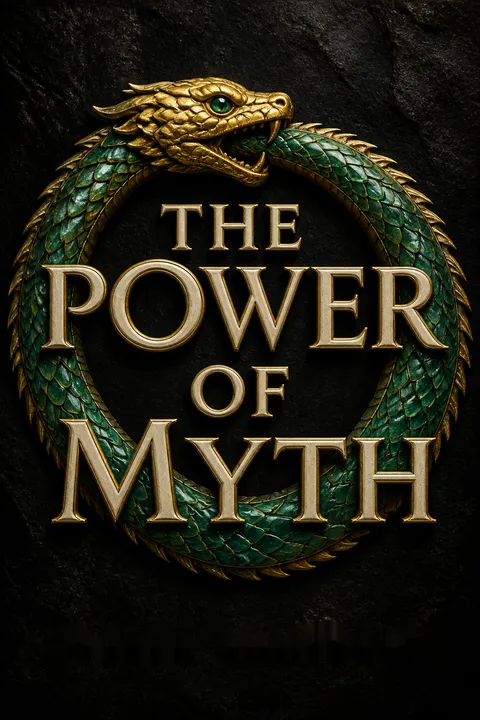


Key Takeaways
Read myths for a felt life, not a ready-made answer to existence.
Stories orient experience. Campbell uses myth to mean symbolic stories that help people encounter profound features of living, including birth, love, suffering, and death. Their value is less like an answer key and more like a map of inner terrain. He distinguishes the search for life's abstract meaning from the desire to feel fully alive within it. Myths, in this view, help make that experience recognizable and speakable.
Ordinary life matters. Campbell illustrates the tension through Thomas Mann's character Tonio Kröger, who leaves his hometown for an artistic circle, only to discover that he loves the imperfect, ordinary people he had thought himself above. The story suggests that insight need not require contempt for everyday life. Myth can deepen attention to the life already being lived, rather than promise escape from it.
The shift from explanation to experience connects myth with narrative psychology: people often make sense of a life by locating events within a story, not by solving a metaphysical puzzle. Tonio's divided loyalties also resist the easy fantasy that the artist must reject ordinary attachments. Yet myths do not simply reveal universal truths waiting to be found. They can also teach social norms, including unjust ones. Their value depends partly on whether readers can interpret them without treating inherited stories as unquestionable instructions.
Use myth's four functions to spot what modern stories no longer provide.
Four kinds of work. Campbell says myths serve four functions: the mystical opens awareness of life's mystery; the cosmological pictures the universe; the sociological supports a community's order; and the pedagogical offers guidance for living a human life. The functions can overlap, but they need not age equally. A story about the structure of the cosmos may lose authority as science advances, while its guidance about grief or maturation may remain meaningful.
The missing instruction. Campbell argues that modern education often teaches information and technical skill without helping students connect knowledge to life values. He sees the sociological function of inherited religion as especially vulnerable to becoming outdated, while the pedagogical function remains essential. The practical question is not simply whether a story is old, but whether it still helps people face real thresholds and responsibilities.
This framework is useful because it prevents a false choice between treating myths as scientific accounts and dismissing them as useless fiction. A creation story may fail as astronomy and still shape belonging or moral imagination. The distinction resembles how institutions are evaluated by several outcomes rather than one score. The harder question is who decides which function is still beneficial. A myth that offers comfort to insiders may also exclude outsiders, so its social usefulness cannot be judged only by the cohesion it produces.
Read sacred stories as metaphors, not rival explanations of physical reality.
Image points beyond itself. Campbell treats religious images as metaphors: visible or narrative forms that suggest a reality they cannot literally contain. A story of ascent to heaven, for example, can be read as an inward transformation rather than a journey through physical space. The point is not to prove that a story happened exactly as described, but to ask what experience its images make available.
Comparison can reopen faith. Campbell learned to notice recurring patterns in Catholic teaching, Indigenous stories, Hindu texts, and Arthurian legends. He argues that another culture's stories can loosen the assumption that one's own symbols are merely factual claims. His menu analogy makes the caution clear: mistaking a religious image for the reality it points toward is like trying to eat the menu instead of the meal.
A metaphorical reading can let religious traditions converse with scientific knowledge without demanding that either answer the other's questions. It also resembles literary interpretation, where an image can carry meaning without being a literal report. The approach has a limit: believers may understand some claims as historical, not merely symbolic, and interpreting them away can feel like replacing their religion with Campbell's philosophy. Comparative reading is most fruitful when it clarifies possibilities rather than declaring one authorized meaning for everyone.
Build rituals that make life's transitions public, embodied, and consequential.
Passages need recognition. Campbell sees ritual as the enactment of a myth, giving shared form to a change in status or identity. In initiation rites described in the book, young people are separated from childhood, taught their community's stories, and welcomed back with adult responsibilities. The ordeal makes the change difficult to ignore. Without recognized passages, Campbell argues, young people may invent their own group rules and initiations.
Symbols confer authority. A judge's robe distinguishes the office from the private individual wearing it. Marriage ceremonies and public funerals can likewise make a relationship or collective loss visible to a community. Campbell points to the public rites after President Kennedy's assassination as a moment when shared ceremony helped people experience national solidarity. A ritual is not just decoration: at its best, it gives people a role, witnesses, and obligations.
The insight aligns with anthropology's study of rites of passage, where separation, transition, and return help communities recognize changed identities. It also explains why ceremonies can matter even to people who do not accept their theology. But ritual's power is morally neutral. An initiation can create belonging while enforcing hierarchy, and an ordeal can harm rather than mature. Effective modern rituals need more than symbolism: they require consent, meaningful responsibility, and a community willing to support the person after the ceremony ends.
Measure heroism by transformation brought back for others, not applause.
The adventure changes the traveler. Campbell describes a common heroic pattern: a person leaves familiar life, faces trials, discovers something unavailable at home, and returns with a benefit or insight. The hero may act physically, as someone who saves a life, or inwardly, by undergoing a transformation and sharing what was learned. The journey matters not because the hero becomes famous, but because a new capacity can serve others.
A modern costume. Campbell reads Luke Skywalker in Star Wars as a contemporary version of this pattern. Luke's challenge is not simply to defeat an enemy, but to find the resources to act humanely rather than surrender to an impersonal system. Campbell also treats motherhood as heroic because it gives one's life to another. His examples broaden heroism beyond public conquest, even though they reflect the gender assumptions of his era.
The return is crucial: it distinguishes a meaningful transformation from private self-improvement that never changes one's conduct toward others. This has a parallel in leadership, where insight matters only when translated into shared practice. Campbell's emphasis on service also counters celebrity culture, which confuses visibility with contribution. Still, the hero pattern can overvalue individual drama and underplay collective effort. Caregiving, organizing, and mutual aid often change lives without a lone protagonist or a spectacular ordeal.
Follow your deepest vocation without confusing courage with impulse.
Notice what brings you alive. Campbell's idea of bliss is a felt sense of deep engagement that can point toward one's vocation. He links it to the Sanskrit terms for being, consciousness, and bliss, arguing that attention to genuine rapture can help a person discover a fitting direction. His own path included years without a steady job during the Depression, spent reading and working on scholarship with help from others who trusted his potential.
Desire needs judgment. Campbell does not present every attractive impulse as a calling. He pairs the inward search with the image of Daedalus, who warns Icarus to avoid flying too high or too low. The lesson is to pursue a meaningful path while staying alert to practical limits and consequences. A teacher or mentor can help someone recognize a possibility, but cannot choose the life on that person's behalf.
This account resembles work on intrinsic motivation: people often persist more steadily when an activity expresses personal interest and values, rather than only external reward. Campbell's emphasis on attentive mentors is equally important, since a calling is often recognized through conversation, not discovered in isolation. The Depression story also exposes a constraint in the advice. Financial security and social support shape which risks are possible. A vocation can guide choices without requiring people to treat economic survival as evidence of spiritual failure.
Accept life's losses without turning suffering into a virtue test.
Life depends on loss. Campbell sees a recurring mythic problem in the fact that living beings survive by consuming other life. Hunting societies in his account respond through rituals of thanks and respect toward the animals they kill. Planting myths give another image: in an Algonquin story, a youth is buried and corn grows from the place where he lies. The stories do not erase death; they place it within cycles of nourishment and renewal.
Acceptance is not approval. Campbell describes a woman with lasting physical pain who had understood her condition as punishment. He urged her to see suffering as part of the life that had shaped her. Such reframing helped her, in the story, but Campbell's broader claim that people should accept what happens can be dangerous if turned into blame. His strongest point is that unavoidable suffering need not make life meaningless, not that every injury should be endured passively.
The myths connect with ecological thinking by making dependence visible: food, bodies, and ecosystems are bound into cycles rather than separated into consumers and resources. That recognition can deepen gratitude and restraint. Campbell's language of acceptance, however, needs careful handling. Meaning-making can help people live with pain, but it cannot establish that sufferers caused their circumstances or should stop seeking relief. Compassion requires both acknowledging reality and resisting preventable harm.
Treat the living world as kin, not a storehouse of resources.
Relationship changes perception. Campbell contrasts a reverent relationship with animals and landscapes against a view that reduces them to objects. In his account of Plains cultures, the buffalo is addressed with respect because human survival depends on it. The mass killing of buffalo for hides, while leaving bodies to rot, represents a shift from a being encountered as a presence to a thing treated as disposable.
The damage returns to us. Moyers and Campbell discuss a story about a boy who brings home a bird whose song delights him. His father kills it rather than feed it, and the tale connects the bird's death to the father's own collapse. The story makes ecological destruction more than a loss of scenery: it is also a loss in human life and imagination. Campbell's larger claim is that people belong to nature, rather than standing outside it.
This relational view anticipates environmental ethics that emphasize responsibility to other species and the systems that sustain human life. Seeing an animal as a fellow being can alter behavior in ways abstract resource accounting may not. Yet cultural reverence should not be romanticized as proof that a society lived in perfect balance with nature. The more durable lesson is practical: dependence creates obligations, and economies should be judged partly by what they destroy, waste, or make invisible.
Let love choose a person; let commitment serve the relationship.
Love has distinct forms. Campbell contrasts Eros, physical desire, and Agape, compassionate love for others, with Amor, his term for personal, person-to-person love. He locates Amor in the medieval troubadour tradition, where love could be understood as an inward recognition that challenged marriages arranged for social or political reasons. The Tristan and Isolde story dramatizes love as an experience powerful enough to entail suffering, not merely a convenient match.
Commitment is different. Campbell distinguishes a love affair from marriage, which he sees as a durable relationship requiring the sacrifice of some individual preferences. In his account, partners are not meant to erase themselves for each other; the shared relationship becomes a central responsibility. This ideal offers a way to understand commitment as more than continued romance. But Campbell's traditional assumptions about male and female roles, and his narrow account of marriage, should not be mistaken for universal rules.
The distinction between attraction, broad compassion, and particular attachment helps explain why the word love covers very different experiences. Relational psychology similarly treats a partnership as an ongoing pattern of mutual responsiveness, not simply a feeling held by two separate people. Campbell's emphasis on loyalty can give commitment substance, but his claim that a couple becomes a single identity risks obscuring autonomy or unequal power. A strong relationship needs shared obligation and room for each partner's independent personhood.
Build belonging wide enough to include the planet's strangers.
Shared patterns, local meanings. Campbell notices recurring images across traditions, including death and renewal, journeys into danger, and encounters with divine figures. He argues that common bodily experiences help explain some similarities, while migration and cultural exchange help explain others. The stories are never identical: each culture gives shared motifs a local form. His image of divine masks captures the difference between a symbol and the mystery it tries to express.
A planetary story. Campbell worries that myths tied to exclusive religious or national groups can intensify conflict when outsiders are treated as less worthy of care. He calls for a wider identification with humanity and the natural world. The view from the moon, where national borders disappear from sight, serves in the book as a symbol of that wider perspective. A planetary myth would not require identical beliefs; it would ask that shared vulnerability count across cultural boundaries.
This proposal connects myth with the challenge of building solidarity among people who do not share a religion, language, or history. A common planetary frame can support cooperation on ecological risks that cross borders. But shared human patterns should not be mistaken for proof that cultures are interchangeable. Comparative mythology has sometimes flattened differences by fitting diverse stories into one preferred template. A better planetary story would make room for translation, disagreement, and historical injustice, rather than treating unity as a reason to ignore them.
Analysis
The book's central achievement is to make mythology relevant without requiring literal belief in its supernatural events. Campbell and Moyers treat stories as symbolic technologies: they orient attention, give shape to transitions, and connect private experience to a community's inherited language. The conversational form helps this argument travel. Moyers asks the practical questions a skeptical reader might ask, while Campbell answers through stories rather than a formal system. That method also makes the book's claims feel more seamless than they are.
Campbell's comparative method is powerful when it notices recurring human problems: dependence, maturation, mortality, desire, and the need to belong. It is less convincing when recurrence becomes evidence of a single universal structure. Similar motifs can arise from shared bodily conditions, cultural exchange, independent invention, or later interpretation. These possibilities are not mutually exclusive. But a pattern found across traditions does not, by itself, prove that the traditions mean the same thing. Local histories and political uses matter.
The book's most practical insights concern modern life. Ritual gives transitions witnesses and obligations. The hero's journey is valuable as a model of change that returns to serve others. Mythic images can help people face mortality without turning grief into a problem to solve. Yet Campbell's broad claims about gender, religion, and Indigenous societies reflect assumptions that deserve scrutiny. His call to affirm life should not excuse avoidable suffering, and his spiritual reading should not replace the testimony of people whose traditions carry meanings he does not share.
Read today, the book works best as an invitation to interpret, not a final theory of all myth. It asks readers to examine which stories shape their loyalties, which rituals make growth possible, and whether their sense of kinship stops at the border of a group. Its lasting force lies in that question of attention: can inherited symbols help people live more awake, more compassionately, and with a wider sense of responsibility?
Review Summary
The Power of Myth receives mixed reviews, with many praising its profound insights into mythology and human experience. Readers appreciate Campbell's ability to connect ancient myths to modern life, finding the book enlightening and transformative. Some criticize it for being preachy, outdated, or lacking in scholarly rigor. The book's format, based on interviews with Bill Moyers, is both praised for its accessibility and criticized for its lack of structure. Despite criticisms, many readers find the book thought-provoking and consider it a valuable exploration of mythology's role in human culture.
People Also Read
Glossary
Myth
Symbolic guide to experienceFor Campbell, a myth is a symbolic story that connects human experience with spiritual possibility and the mystery of existence. It is not primarily a factual report or a scientific explanation. Myths can orient people to life stages, communal identity, the natural world, and experiences that ordinary language cannot fully describe.
Four functions of myth
Four roles of mythCampbell identifies four functions: the mystical function opens awareness of life's mystery; the cosmological function presents an image of the universe; the sociological function supports a social order; and the pedagogical function offers guidance for living. A single myth may serve several functions, and the usefulness of each can change across historical periods.
Archetype
Recurring symbolic patternCampbell uses Jung's term for recurring mythic images and patterns that he associates with shared human bodily experience and psychological life. Examples include journeys, births, deaths, and encounters with powerful figures. He distinguishes these from images shaped primarily by an individual's personal history, while also recognizing that cultures give recurring patterns different forms.
Hero's adventure
Journey of transformationCampbell's term for a recurring pattern in which a person leaves familiar life, crosses into difficulty or the unknown, undergoes trials or insight, and returns changed. The return matters because the knowledge or capacity gained can serve a community. The pattern may describe physical courage, spiritual discovery, or ordinary psychological maturation.
Bliss
Deep sense of alivenessCampbell uses bliss to describe a felt experience of deep engagement that can help a person recognize a meaningful direction in life. He connects the term with the Sanskrit idea of ananda, alongside sat, or being, and chit, or consciousness. Bliss is not simply pleasure or excitement; it is a clue to where a person's abilities and attention feel most fully alive.
Amor
Personal, particular loveCampbell uses Amor for an individual, person-to-person experience of love, associated in his account with the medieval troubadours. Unlike generalized desire or universal compassion, Amor is directed toward a particular person and understood as a potentially profound spiritual experience. Campbell contrasts it with socially arranged partnership, though his historical interpretation and ideals are not universal.
Eros
Physical desireIn Campbell's distinctions among kinds of love, Eros refers to the biological or bodily force of sexual desire. It can seize a person with powerful attraction, but it is not identical to the personal recognition he calls Amor or the compassionate concern he calls Agape. The terms describe different emphases, not necessarily mutually exclusive experiences.
Agape
Compassionate universal loveCampbell uses Agape for spiritual love expressed as concern for others broadly, rather than attachment to one chosen person. It is associated with compassion and the ethical call to treat another's life as worthy of care. He distinguishes it from Eros, which emphasizes bodily desire, and Amor, which emphasizes particular personal love.
axis mundi
Center of the worldThe axis mundi is a mythic image of the world's central point, often represented by a mountain, tree, or sacred site. In Campbell's interpretation, it joins temporal movement with an image of stillness or eternity. A place can be locally specific while symbolizing a center that, in spiritual experience, is available everywhere.
Mandala
Diagram of cosmic orderA mandala is a circular, symbolically organized image used to represent a cosmic or spiritual order. Campbell describes it as a way to relate personal experience to a larger whole. Creating or entering a mandala can focus attention, arrange competing concerns around a center, and support meditation or ritual healing.
Bodhisattva
Compassionate spiritual participantIn the Buddhist traditions discussed by Campbell, a bodhisattva is a figure who has realized spiritual freedom yet remains engaged with the suffering of the world. The bodhisattva represents compassion as active participation, not withdrawal for private bliss. Campbell uses the figure to illustrate the possibility of acting freely and compassionately amid life's unavoidable sorrows.
FAQ
What's The Power of Myth about?
- Exploration of Mythology: The Power of Myth is a dialogue between Joseph Campbell and Bill Moyers that explores the role of myths in human culture and their relevance today. It examines how myths influence our understanding of existence and spirituality.
- Cultural Connections: The book highlights the connections between ancient myths and modern stories, showing that these narratives reflect universal themes that resonate across cultures and eras.
- Personal Journey: Campbell emphasizes the importance of personal experience and self-discovery through myth, suggesting that engaging with these stories can lead to a deeper understanding of oneself.
Why should I read The Power of Myth?
- Insightful Perspectives: The book offers profound insights into how mythology shapes human consciousness and culture, encouraging readers to reflect on their beliefs and experiences.
- Timeless Relevance: Campbell's exploration provides a framework for understanding modern issues like identity and spirituality, making it relevant for navigating contemporary life.
- Engaging Dialogue: The conversational format between Campbell and Moyers makes complex ideas accessible, allowing readers to connect with the material in a relatable way.
What are the key takeaways of The Power of Myth?
- Myths as Guides: Myths are not just stories but serve as guides to understanding the human experience and spiritual journey, helping individuals navigate life's challenges.
- Unity of Experience: The book emphasizes the commonality of human experiences across cultures, highlighting the interconnectedness of humanity.
- Sacredness of Life: Campbell discusses recognizing the divine in everyday experiences and encourages finding one's "sacred place" in the world.
What are the best quotes from The Power of Myth and what do they mean?
- "People say that what we're all seeking is a meaning for life.": This quote suggests that the quest for meaning is about experiencing life deeply, not just finding answers.
- "If you follow your bliss...": Campbell advises that pursuing joy and fulfillment leads to self-discovery and alignment with one's true purpose.
- "The animal envoys of the Unseen Power...": This reflects the idea that modern society has lost touch with spiritual connections that once guided humanity.
How does Joseph Campbell define myth in The Power of Myth?
- Myth as a Map: Campbell describes myth as an "interior road map of experience," guiding individuals through life's complexities.
- Cultural Reflection: Myths reflect a culture's values and beliefs, serving as a lens for interpreting life.
- Spiritual Potential: Myths reveal deeper truths about existence and the nature of reality, pointing to spiritual potentialities.
What role do rituals play in The Power of Myth?
- Connection to Myth: Rituals enact myths, allowing individuals to participate in the stories that shape their identities.
- Cultural Significance: They reinforce cultural values and provide a sense of belonging and continuity within a community.
- Personal Transformation: Rituals often mark significant life transitions, helping individuals navigate growth and change.
How does The Power of Myth address the concept of the hero's journey?
- Universal Pattern: The hero's journey is a universal pattern in myths, involving stages like departure, initiation, and return, symbolizing personal growth.
- Symbolic Meaning: It represents overcoming obstacles and achieving a deeper understanding of oneself and one's place in the world.
- Cultural Variations: While common, the specifics of the hero's journey vary across cultures, illustrating its adaptability.
What is the significance of the "sacred place" in The Power of Myth?
- Personal Sanctuary: A "sacred place" is where individuals can retreat to reflect and connect with their inner selves, fostering personal growth.
- Connection to Nature: Often involves a deep connection to nature, enhancing a sense of belonging and reverence for the environment.
- Cultural Heritage: Sacred places tie to cultural and spiritual traditions, preserving collective memory and wisdom.
How does The Power of Myth relate to modern society?
- Loss of Mythological Connection: Modern society's disconnection from mythological narratives can lead to alienation and confusion.
- Need for New Myths: Campbell argues for new myths that resonate with contemporary experiences, helping navigate modern complexities.
- Role of Artists: Artists and storytellers are crucial in creating and revitalizing myths, tapping into the collective unconscious.
What does Joseph Campbell mean by "following your bliss"?
- Pursuit of Joy: Campbell encourages pursuing what brings joy and fulfillment, leading to a more authentic life.
- Natural Path: Following one's bliss aligns personal desires with a greater sense of purpose, often filled with creativity.
- Empowerment: It empowers individuals to make choices reflecting their values and passions, fostering agency and connection.
How does The Power of Myth relate to spirituality?
- Myth and Spirituality Connection: Myths are intertwined with spiritual beliefs, providing insights into existence and the divine.
- Compassion as a Spiritual Principle: Emphasizes compassion and interconnectedness with all beings, leading to a fulfilling life.
- Personal Experience of the Divine: Spiritual experiences are often rooted in personal encounters with the divine, understood through myths.
What role does love play in The Power of Myth?
- Love as a Transformative Force: Love is portrayed as a powerful experience leading to personal growth and deeper connections.
- Romantic vs. Spiritual Love: Distinguishes between romantic and spiritual love, each serving different life purposes.
- Love's Challenges: Acknowledges that love involves suffering and sacrifice, yet through these, individuals find joy and fulfillment.
About the Author
Download PDF
Download EPUB
.epub digital book format is ideal for reading ebooks on phones, tablets, and e-readers.








