

Key Takeaways
Treat a dream as a personal image, not a universal cipher
Symbols exceed definitions. Jung distinguishes a sign, which points to a known thing, from a symbol, which carries meanings not fully grasped by conscious thought. A key, for example, might suggest sex in one dream, but that does not make it a standard code for sex. The dreamer's circumstances and associations matter more than a dictionary of meanings.
Stay close to the dream. Jung's own dream of a man climbing onto his back drew on an everyday expression meaning indifference to criticism. The image made sense through Jung's particular experience of being misrepresented. His method asks what the dream itself presents, then examines the dreamer's context instead of wandering through every association.
The method resembles close reading: a metaphor gains force from its speaker, setting, and history, not from a fixed lookup table. That discipline can protect interpretation from the analyst's projection. It also creates a problem: if meanings are entirely personal, interpretations can become difficult to test. A useful standard is not whether an interpretation sounds profound, but whether it fits the dreamer's lived context and opens a clearer, more responsible way of understanding a problem.
The unconscious preserves missed experience and generates genuinely new ideas
Not merely a storage room. Jung describes unconscious material as including forgotten memories, unnoticed perceptions, and ideas that have never yet entered awareness. A professor walking past a farm while absorbed in conversation caught the smell of geese without noticing it. The scent stirred childhood memories of living on a farm, showing how unnoticed experience can shape thought.
Creation can begin below awareness. Jung also cites chemist August Kekulé's dream of a snake biting its tail, which helped him imagine benzene's ring structure. Such examples suggest that work done outside focused awareness can return as a sudden image or solution. For Jung, dreams reveal both the past that escaped notice and possibilities that conscious planning has not found.
Contemporary accounts of memory and creative problem-solving also recognize that perception and thought continue outside deliberate attention. Incubation can help a person see a problem differently after sustained effort. Jung's examples are vivid, but an inspiration story cannot show that a dream supplied the decisive discovery; later reasoning and verification matter too. The practical lesson is to take unexpected images seriously as prompts, then test the resulting idea against evidence and reality.
Read unsettling dreams as possible corrections to conscious blind spots
Dreams may rebalance an attitude. Jung calls this the compensatory function: a dream may bring forward material that challenges a one-sided conscious outlook. Someone convinced of personal superiority might dream of humiliation or failure; the image may expose what self-confidence excludes. It is not necessarily a moral verdict. It may be a counterweight to an inflated or overly narrow self-picture.
Warnings are not prophecies. Jung recounts a reckless mountain climber whose dream showed him stepping into empty space. The climber later died in a fall. Jung interpreted the dream as reflecting danger already gathering in the man's behavior, not as magic foreknowledge. He also notes that dreams do not always warn clearly, and their messages can be ambiguous or misleading.
The compensatory idea offers a useful question: what does a person's current self-story leave out? A dream of falling might invite reflection on overconfidence, but it cannot establish that a particular accident is coming. This distinction matters because vivid stories invite hindsight to turn ambiguity into prediction. The strongest application is reflective rather than prophetic: treat a dream as a hypothesis about neglected feelings, habits, or risks, then check it against observable life.
Own your shadow before you recruit it as an enemy
The shadow is disowned personality. Jung uses this term for traits a person does not recognize or accept in themselves, including both weaknesses and useful capacities. A man who represses spontaneity may dream of an unruly childhood friend; the figure can represent energy and play that his disciplined public self has excluded. The shadow is not simply evil. It contains qualities that may need restraint, recovery, or both.
Projection makes conflict easier. When people attribute their own rejected motives to opponents, they can see the other side only as corrupt. Jung applies this idea to political hostility as well as private relationships. Recognizing projection does not mean that every accusation is false or that sides are equally responsible. It means asking whether some of the outrage is fueled by conduct the accuser also disowns.
This is a powerful bridge between personal introspection and group conflict. Social psychology likewise examines how people assign unwanted motives to out-groups while viewing their own conduct more generously. The concept is most useful as a self-question, not a device for dismissing legitimate criticism: 'What might I be avoiding in myself?' It should not become a shortcut that treats evidence of harm as mere projection or excuses an opponent's actions.
Look for recurring human patterns, not inherited myth pictures
An archetype is a tendency, not a photograph. Jung proposes that the psyche contains inherited patterns that shape the kinds of images and stories people create. He does not mean that a person is born with a specific myth or picture already in mind. The same underlying pattern can take different forms across cultures and individual lives. Jung calls the hypothesized shared layer of these patterns the collective unconscious.
Myths make patterns visible. Joseph Henderson compares hero stories from widely separated cultures. Their details differ, but many depict a hero who begins vulnerable, gains help, confronts danger, and must face the limits of power. The Winnebago stories he discusses range from an impulsive trickster to more socially capable heroes, whose strength also risks becoming destructive. Myth offers a comparative lens for dreams, not a universal decoder.
Archetypes are best approached as a model for recurring narrative shapes, such as rescue, rivalry, or transformation. Such patterns can help readers compare stories without assuming that every resemblance proves a universal inheritance. Cultural learning, shared human problems, and independent invention may also produce parallels. Jung's distinction between an organizing tendency and a fixed inherited image is subtle, and it keeps the theory more plausible than a claim that people inherit ready-made mythological scenes.
Treat major transitions as passages, not contests you must win
Heroism and initiation ask different things. In Henderson's account, the hero myth dramatizes the growing ego's struggle to become capable and independent. Initiation stories add another demand: surrender an old identity, endure a symbolic loss, and enter a changed relationship with the community or with life. The initiate is not promised a victory prize. The ordeal marks a passage from one stage to another.
The pattern recurs beyond youth. Henderson applies initiation imagery to adulthood, marriage, and old age, not only coming-of-age ceremonies. One young man dreamed of climbing a mountain to prove his strength, then found himself symbolically dead before receiving new vitality. The dream reframed progress as accepting change rather than winning another test. The book presents these myths as psychological analogies, not instructions for literal sacrifice.
Ritual studies offer a complementary insight: transitions become easier to recognize when a culture gives them a clear beginning, ordeal, and return. Modern life often supplies fewer shared ceremonies, leaving people to improvise meaning around marriage, parenthood, career change, or aging. Still, not every crisis is a hidden rite of passage, and framing suffering as necessary can romanticize avoidable harm. The idea is most valuable when it helps name a transition without glorifying the pain.
Let a wider self guide the ego beyond usefulness and approval
Individuation means becoming a more integrated person. Jung's colleague Marie-Louise von Franz uses the term for the gradual process of bringing conscious aims into relation with the wider psyche. Jung calls that wider totality the Self, distinct from the ego, which is the center of conscious identity. The Self is a psychological idea, not simply another name for ambition or a claim that every impulse should be obeyed.
Growth may resist efficiency. Von Franz retells a story by the Chinese thinker Chuang-Tzu about an old oak dismissed as useless because its wood could not make tools. Its lack of practical value had allowed it to survive and grow. She uses the tree to question the ego's assumption that a life matters only through visible achievement. The task is not to imitate someone else's path, but to notice what one's own development requires.
The distinction between ego and a wider self can loosen the grip of status-driven goals. It resonates with approaches to development that treat identity as a continuing process rather than a finished achievement. Yet inner guidance is not automatically wise, and an appealing sense of destiny can also rationalize avoidance or grandiosity. The oak story works best as a challenge to narrow productivity metrics, not as evidence that every unproductive choice expresses a deeper calling.
Read art as a cultural symptom, not just a collection of objects
Images carry emotional history. Aniela Jaffé traces how stones, animals, and circles recur in religious art and myth. Cave paintings of animals, for instance, may have served ritual purposes rather than simple decoration. A circle or mandala can represent psychic wholeness in Jung's framework. These meanings are not properties that every viewer must find in every artwork; they are patterns Jaffé uses to interpret how people give form to powerful concerns.
Modern art can register a split. Jaffé reads the separation of circles and squares in some modern paintings as an image of disconnection between psyche and material life. She also sees abstraction as a response to a world in which familiar religious meanings have weakened. These interpretations make art a record of cultural tension, but the painting remains more than evidence for a psychological theory.
Jaffé's approach encourages a useful shift from asking whether art looks realistic to asking what emotional work its forms perform. Modern visual culture still offers abundant examples of anxiety, fragmentation, and the search for coherence. But symbolic readings are interpretive claims, not objective keys to an artist's mind. A strong reading should illuminate the work's choices and historical setting while leaving room for meanings that Jungian categories do not capture.
Make interpretation collaborative, provisional, and specific to the dreamer
The analyst is not an oracle. Jung argues that dream interpretation involves two people, each bringing a personality and a point of view. His disagreement with Freud over a dream about an ancient house made him realize that an analyst's theory can overwhelm the dreamer's own context. He also distinguishes broad psychological preferences, such as introversion and extraversion, while warning against treating them as absolute types.
Henry's case shows the method in motion. Jolande Jacobi describes a 25-year-old engineer who was hesitant about marriage and adult responsibility. Across 35 sessions, he brought 50 dreams. Their images gradually helped him examine his passivity and fear of life. The account ends with his decision to marry and move to Canada. It illustrates one analysis, not a typical result or proof that dream interpretation caused every change.
The insistence on dialogue anticipates a central strength of collaborative therapy: an interpretation that does not fit the client's experience should be revised, not imposed. Henry's story is compelling because it shows a pattern unfolding across many dreams rather than relying on one dramatic symbol. Its limits are equally important. A single case cannot establish efficacy, and a patient's agreement may reflect trust, suggestion, or genuine insight. Good interpretation stays open to all three possibilities.
Let meaningful coincidences prompt reflection, not replace evidence
Synchronicity names a proposed connection. Jung uses this term for events that are not linked by ordinary cause and effect but seem joined by meaning. In Henry's analysis, a consultation of the Chinese I Ching produced a passage whose themes echoed his dreams. The coincidence deeply affected him and helped him confront assumptions he had treated as unquestionable. Jung presents it as a possible expression of an activated archetype, not as a mechanism he can fully explain.
A personal meaning is not proof of a universal law. The book also points to Darwin and Wallace arriving independently at related evolutionary ideas. Von Franz suggests that synchronicity might matter to science, but describes this as an open hypothesis. The analogy between psychological meaning and events in physics is speculative, and the book acknowledges that much remains unknown.
A coincidence can genuinely reorganize someone's attention without demonstrating an acausal force in nature. That distinction preserves the psychological value of the experience while keeping scientific claims proportionate to evidence. Humans are skilled pattern-finders, which makes meaningful matches memorable and ordinary non-matches easy to forget. Synchronicity can therefore serve as a prompt to ask why an event matters now, but it should not be used to make factual decisions that require independent verification.
Analysis
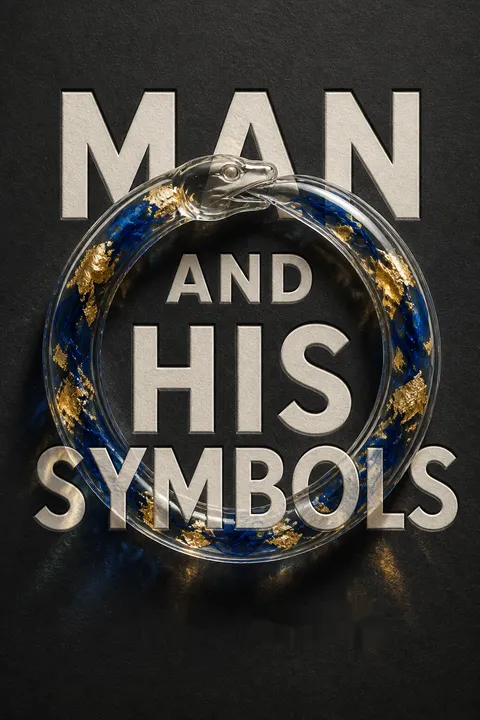
Man and His Symbols is part introduction to Jungian psychology, part illustrated tour of myth and art, and part clinical casebook. Its governing claim is that conscious intention is only one participant in a person's mental life. Dreams and other spontaneous images can disclose neglected experience, instinct, and imaginative possibilities. Jung's key practical restraint is also the book's most durable contribution: symbols do not come with universal translations, and interpretation must be tested against the dreamer's life.
The book's narrative moves between scales. Jung begins with everyday slips and a personal dream, then extends the argument to myths, initiation rituals, religious images, modern painting, and speculative connections with physics. Henry's analysis gives the theory human stakes: a hesitant engineer's recurring dreams become a record of conflict and change. The movement from private image to cultural pattern is evocative, but it also creates the book's hardest evidentiary problem. Similar stories across cultures may suggest shared psychological needs, yet resemblance alone cannot establish inherited archetypes. Nor can one clinical case demonstrate that dream interpretation produced a particular outcome.
A modern reader can retain the interpretive practice without accepting every metaphysical claim. Dreams may be treated as emotionally charged material for reflection, not as prophecies or instructions. Jung's account of projection remains useful for examining how individuals and groups disown unwanted qualities, while his view of synchronicity and inherited psychic structures remains conjectural. The book also reflects its era in assigning fixed feminine and masculine traits to anima and animus, a framework that requires critical distance rather than literal adoption.
Its strongest invitation is neither to obey the unconscious nor to dismiss it. It is to notice where deliberate self-understanding is incomplete, listen carefully to the images that emerge, and bring them back into conversation with evidence, relationships, and ethical choice. The result is a psychology of interpretation that is rich in meaning, cautious in its best moments, and most convincing when it respects the singular person behind the symbol.
Review Summary
Man and His Symbols explores Jung's theories on archetypes, dreams, and the collective unconscious. Readers find it enlightening, offering insights into human psychology and symbolism. Many appreciate Jung's approach to dream interpretation and his ideas on individuation. Some criticize the book's dated content and vague concepts. The work is seen as a gateway to understanding Jungian psychology, though some find it complex and challenging. Overall, readers value its exploration of the human psyche and its connection to myths, art, and culture.
People Also Read



Glossary
Symbol
Image with surplus meaningA word, object, or image that points beyond its obvious or conventional meaning toward something not fully known or definable. Jung distinguishes symbols from signs, which simply identify a known thing. A dream symbol cannot be interpreted reliably through a universal dictionary because its significance depends on the dreamer's associations and circumstances.
Compensatory function
Dreams counterbalance awarenessJung's term for the way dreams may correct or balance a one-sided conscious attitude. A dream might challenge excessive confidence, expose neglected feelings, or bring forward an instinct the waking personality has suppressed. Compensation is a possible interpretive approach, not a rule that every dream must oppose the dreamer's conscious view.
Collective unconscious
Shared inherited psychic patternsJung's hypothesis that the psyche includes a layer beyond an individual's personal memories, containing inherited tendencies that shape recurring images and patterns of thought. It is not a storehouse of complete myths or pictures. Jung uses it to explain why similar symbolic motifs appear in dreams, myths, and rituals across different cultures.
Archetype
Pattern shaping recurring imagesAn innate tendency to form certain broad psychological patterns, rather than an inherited picture with fixed details. Jung compares archetypes to instincts: they may shape how people respond and imagine, while their visible expressions vary by person and culture. Examples discussed in the book include the hero, the shadow, and the wise guide.
Individuation
Growth toward psychic integrationThe gradual development through which a person becomes more fully themselves by bringing conscious identity into a living relationship with unconscious elements. The process is individual rather than a standard path or social ideal. In Jungian thought, it involves recognizing excluded qualities, integrating opposites, and relating the ego to the larger Self.
Self
Totality of the psycheJung's name for the total psyche, including both conscious and unconscious life. It differs from the ego, which is the center of conscious identity. The Self often appears symbolically as a center, a whole figure, a stone, or a mandala. It is a psychological concept and should not be confused with ordinary self-esteem or personal ambition.
Shadow
Unrecognized side of personalityThe aspects of personality that the conscious ego does not recognize or accept. The shadow can include selfishness, fear, and destructive impulses, but also energy, creativity, spontaneity, and other useful traits. Jung argues that people often project these qualities onto others, and that integration requires judgment about which traits to restrain and which to reclaim.
Anima
Jung's inner feminine figureIn Jung's historical model, the anima is a feminine personification of unconscious qualities in a man's psyche, including moods, feeling, intuition, and relation to the unconscious. It may appear as a guide or as a destructive fantasy. The concept reflects Jung's gendered framework and should not be treated as a universal description of gender or personality.
Animus
Jung's inner masculine figureIn Jung's historical model, the animus is a masculine personification of unconscious qualities in a woman's psyche. It may appear as rigid, unquestioned opinion, or as a source of initiative, courage, and reflection. Like the anima, it is a gendered theory from Jung's era, not a settled account of how all women or men experience their inner lives.
Active imagination
Engagement with inner imagesA Jungian practice in which a person gives focused attention to fantasies or images arising from the unconscious and records or develops them through writing, drawing, or another medium. The person then reflects on their meaning and ethical implications. It is not simply unstructured daydreaming or an attempt to control the unconscious.
Synchronicity
Meaningful, noncausal coincidenceJung's term for the apparent meaningful connection between an inner psychological event and an outer event that are not linked by an ordinary causal chain. He proposes that an archetype may be active in both. The book presents synchronicity as a hypothesis and interpretive idea, not as an established scientific explanation for coincidences.
Mandala
Image of psychic wholenessA circular or four-part design that Jung interprets as a symbolic image of psychic organization and wholeness. Mandalas appear in religious art, ritual spaces, and spontaneous drawings or dreams. In the book, they may express restored balance or the emergence of a new psychological order, rather than simply serving as decorative geometry.
FAQ
What's Man and His Symbols about?
- Exploration of the Unconscious: The book delves into the unconscious mind, focusing on how symbols manifest in dreams and art.
- Role of Symbols: Jung emphasizes the importance of symbols for self-understanding and personal growth, serving as guides to navigate one's psyche.
- Collective Unconscious: Introduces the concept of the collective unconscious, containing archetypes that resonate across cultures and time.
- Integration of Opposites: Discusses the importance of integrating conscious and unconscious aspects for psychological wholeness.
Why should I read Man and His Symbols?
- Accessible Psychology: Jung wrote this book to make his ideas more accessible to the general public, beyond academic psychology.
- Self-Understanding: Offers insights into personal psychological struggles through the exploration of dreams and symbols.
- Cultural Relevance: Connects ancient myths and modern psychology, showing how timeless symbols influence contemporary life and thought.
- Practical Applications: Readers can apply Jung's insights to their own lives, particularly in understanding dreams and personal symbols.
What are the key takeaways of Man and His Symbols?
- Dreams as Guidance: Dreams are meaningful messages from the unconscious, offering guidance and insight into personal issues.
- Individuation Process: Outlines the process of integrating different aspects of the self to achieve a balanced personality.
- Symbolism in Life: Recognizing and understanding symbols can lead to deeper self-awareness and healing.
- Symbols as Guides: Symbols serve as guides to understanding our inner selves and navigating life's challenges.
What are the best quotes from Man and His Symbols and what do they mean?
- “The dream is its own interpretation.”: Dreams should be understood in their own context, not through external definitions.
- “The unconscious is a great guide, friend, and adviser of the conscious.”: Emphasizes the supportive role of the unconscious in self-discovery.
- “Man becomes whole, integrated, calm, fertile, and happy when the process of individuation is complete.”: Achieving balance between the conscious and unconscious leads to a fulfilling life.
- "The anima is responsible for the fact that a man is able to find the right marriage partner.": Highlights the anima's role in guiding men toward meaningful relationships.
How does Jung define symbols in Man and His Symbols?
- Symbols vs. Signs: Symbols carry deeper meanings, while signs merely denote objects or concepts without additional significance.
- Personal and Collective Symbols: Symbols can be personal, arising from individual experiences, or collective, rooted in shared human history and culture.
- Dreams as Symbolic Language: Dreams communicate through symbols, revealing insights about the dreamer's psyche and life circumstances.
What is the process of individuation in Man and His Symbols?
- Integration of the Self: Individuation involves integrating various aspects of the self, including the conscious ego and unconscious elements.
- Role of Archetypes: Archetypes, such as the shadow and anima, play a crucial role in confronting and assimilating hidden aspects.
- Psychological Growth: Leads to greater self-awareness and maturity, allowing individuals to live more authentically and harmoniously.
What role do archetypes play in Man and His Symbols?
- Universal Patterns: Archetypes are universal symbols and themes in the collective unconscious, influencing behavior and thought across cultures.
- Guiding Forces: Serve as guiding forces in the individuation process, helping individuals navigate their inner worlds.
- Cultural Reflection: Manifest in myths, dreams, and cultural narratives, reflecting shared human experiences and psychological truths.
How does Jung address the relationship between the conscious and unconscious mind in Man and His Symbols?
- Interconnectedness: The conscious and unconscious minds are interconnected, with the unconscious influencing conscious thoughts and behaviors.
- Balance and Harmony: Achieving balance between the two is essential for psychological health, as neglecting the unconscious can lead to neurosis.
- Role of Symbols: Symbols act as bridges between the conscious and unconscious, facilitating understanding and integration.
What is the anima and how is it discussed in Man and His Symbols?
- Feminine Aspect of the Male Psyche: The anima represents feminine qualities within a man's psyche, encompassing emotions and intuition.
- Integration for Wholeness: Integrating the anima is crucial for psychological wholeness, allowing men to connect with their emotional selves.
- Symbolic Representation: Often appears in dreams as a female figure, guiding the dreamer toward deeper self-awareness.
How does Jung define the anima and animus in Man and His Symbols?
- Anima as Feminine Aspect: The anima is the feminine element within a man's psyche, manifesting in various forms.
- Animus as Masculine Aspect: The animus represents the masculine aspect within a woman's psyche, influencing thoughts and behaviors.
- Integration is Key: Both must be integrated into the conscious self for psychological balance and maturity.
What role do dreams play in Man and His Symbols?
- Dreams as Communication: Dreams are a primary means through which the unconscious communicates with the conscious mind.
- Collective Images: Often present collective images that provide insight into psychological conflicts and potential for growth.
- Symbolic Interpretation: Understanding dream symbols is crucial for personal development and self-awareness.
How does Jung relate the unconscious to modern science in Man and His Symbols?
- Interconnection of Psyche and Matter: Suggests a relationship between the unconscious and the structure of matter, proposing a unifying principle.
- Synchronicity Concept: Meaningful coincidences illustrate how inner psychic events correspond with outer phenomena.
- Influence on Scientific Thought: Jung's ideas encourage exploration of connections between the unconscious and the natural world.
About the Author
Other books by C.G. Jung



Download PDF
Download EPUB
.epub digital book format is ideal for reading ebooks on phones, tablets, and e-readers.








