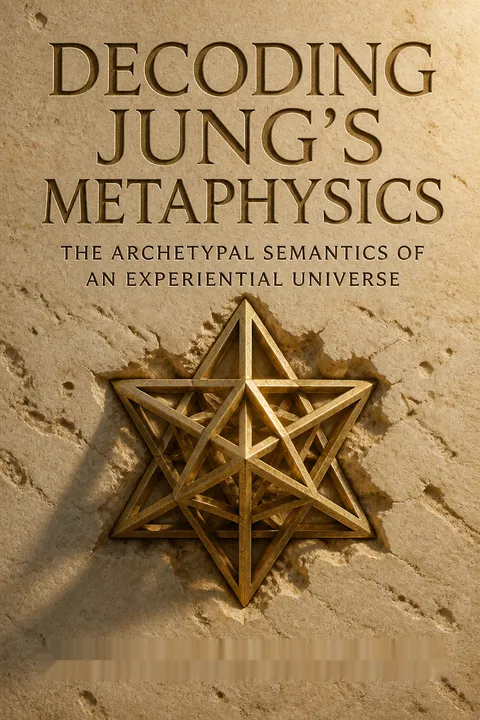


Key Takeaways
Treat the unconscious as living experience, not a warehouse of forgotten memories.
Experience runs deeper. Jung uses psyche for the whole field of mental life, not just deliberate thought. Kastrup argues that its unconscious contents remain experiences, even when the ego cannot inspect or control them. A dream, an unbidden feeling, or an impulse can therefore be psychic without being consciously chosen. Jung’s term consciousness is narrower than the modern idea of experience: it involves deliberate control, self-reflection, and links to other mental contents.
A relative boundary. Conscious and unconscious contents differ by degree, not by a hard division between mind and non-mind. Some material can move into awareness, while other activity shows itself only through effects on the ego. This reading is central to Kastrup’s interpretation of Jung, not an independently established fact about every unconscious process.
The distinction between having an experience and noticing that one is having it is useful well beyond Jungian theory. Attention can make pain, breathing, or emotion reportable without creating the underlying sensation from nothing. That distinction helps explain why self-report is an imperfect measure of mental life. The larger claim, that all unconscious activity is experiential, is philosophically coherent but difficult to test directly. Evidence that some mental processing occurs without awareness does not by itself settle whether such processing has a felt inner quality.
Your ego is one island of awareness in a much larger psyche.
The ego is not everything. Jung’s ego is the center of the ordinary, waking sense of self, formed by the experiences and memories that feel connected to it. Kastrup emphasizes Jung’s view that the unconscious is not one hidden second personality. It is more like a scattered set of processes, some of which may form partially connected centers of experience, separate from the ego’s access.
A porous self. Jung used dissociation to describe breaks in the links that let one part of mental life communicate with another. The book points to cases of divided personality and to the distinct people who appear in dreams as reasons to take this possibility seriously. The ego remains real, but it is only one organized perspective within a broader psychic life.
This picture has a useful counterpart in contemporary accounts of the mind as a collection of partly coordinated processes rather than a single command center. It can help readers understand conflicting motives without labeling every inconsistency as hypocrisy. Still, metaphors of separate inner agents can become too literal. Evidence of dissociated mental organization does not establish that each part is a fully formed subject with its own independent perspective. The model is most helpful when it opens inquiry into neglected experience, not when it turns every impulse into a hidden person.
Use archetypes as pattern maps, not scripts that dictate your life.
Patterns beneath images. Jung’s archetypes are innate, formal tendencies that shape recurring patterns of feeling, thought, and action. The collective unconscious is the transpersonal ground Jung believed these patterns belong to. An archetype is not itself a picture or a character: it is more like a template that becomes visible through particular images and behavior. A nurturing parent or a driven achiever can express patterns Jung associated with the mother or hero archetype.
Form takes content. A dream image or behavior is an archetypal manifestation, shaped by the person’s circumstances and associations. Kastrup compares the archetype to a mold: the mold constrains a form, but the material filling it gives the result its specific appearance. This makes archetypes interpretive tools, not fixed predictions of what a person must do.
The idea resembles the distinction between a cognitive bias and a specific belief: a general tendency can shape many different thoughts without determining any one of them. That makes archetypes potentially useful for noticing recurring human patterns while preserving individual variation. The difficult question is how to distinguish a genuinely widespread pattern from a story that feels universal because interpreters select confirming examples. Archetypal language earns its value when it generates testable questions about a person’s experience, not when it serves as a label that explains everything after the fact.
Interpret dreams as the psyche's symbolic attempt to correct one-sided living.
Dreams can compensate. Jung held that dreams may balance an attitude that dominates waking life. Kastrup illustrates this with a dream of a mud creature advancing from the sea, consuming everything. In his interpretation, the creature symbolizes unchecked instinct and destructive consumption; a laboratory represents reflective inquiry, while a child in danger points toward vulnerable future growth. The dream becomes a symbolic warning about what conscious life may be overlooking.
Meaning is contextual. This is not a universal dream dictionary. The same image can carry different significance depending on the dreamer’s life and associations. Jung’s term individuation names the development of a more integrated personality, as previously excluded parts of psychic life become recognized and related to the ego. Dreams may offer clues toward that integration, but the dreamer must do the interpreting.
The compensatory model makes dreams psychologically interesting without requiring them to predict events. It directs attention toward neglected emotions and contradictions, much as reflective journaling can reveal patterns that ordinary routines conceal. Its strength is also its risk: a vivid interpretation can feel true because it is narratively satisfying. A responsible reading should remain a hypothesis, checked against the dreamer’s own associations and lived circumstances. The aim is greater understanding, not a claim that one analyst possesses the final translation.
Treat uncanny coincidences as invitations to inquire, not proof of cosmic intent.
Meaning without an apparent cause. Jung called synchronicity the meaningful concurrence of an inner state and an external event that appear symbolically related, without an ordinary causal connection. His famous clinical example involved a patient recounting a dream about a golden scarab as a beetle resembling a scarab struck the window and entered the room. The coincidence seemed to echo the dream’s theme of renewal.
A proposal, not a verdict. Jung and physicist Wolfgang Pauli considered whether acausal patterns might organize events alongside cause and effect. Kastrup connects this possibility to quantum indeterminacy, but acknowledges that coincidence can also feel significant because of cognitive bias and context. The book invites attention to such events while presenting synchronicity as a metaphysical interpretation, not a settled scientific explanation.
The scarab episode shows why coincidences can matter to people even when their cause remains unclear. A striking event can reorganize attention and make a previously abstract concern feel immediate. But subjective significance and evidence of an external organizing principle are different claims. People notice matches more readily than the many non-matches that pass without comment, and memorable stories rarely provide a comparison group. Treating coincidence as a prompt for reflection preserves its personal value without asking it to carry more evidential weight than it can bear.
Imagine matter as the outside appearance of experience, not its source.
Kastrup’s central reconstruction. Jung rejected the idea that experience can simply be explained as a byproduct of physical processes. Kastrup argues that Jung’s claims about archetypes shaping both inner life and physical events point toward objective idealism: reality is grounded in experience, including experience beyond any individual ego. On this account, the physical world is not an illusion. It is how transpersonal experience appears from the outside, much as bodily processes are the observable aspect of a person’s inner life.
One ground, two views. Jung’s collective unconscious, in Kastrup’s reading, is both the source of dreams and the ground that appears as the external world. This can unify mind and matter, but it is an interpretation of Jung’s often ambiguous writing. The book’s discussion of mathematics and nature adds an analogy, not proof, that shared organizing patterns may underlie both.
This view reverses the familiar assumption that matter is fundamental and experience somehow emerges from it. Its appeal is explanatory economy: experience is treated as the starting point, rather than as a phenomenon that must be derived from something wholly unlike it. Yet moving from the fact that experience is directly known to the claim that all reality is experiential requires a substantial inference. The same observations can support competing metaphysical pictures. Quantum uncertainty and mathematics’ success do not, by themselves, demonstrate that the universe is a mind or that events carry symbolic meaning.
Your self-reflection may help the universe become aware of itself.
A religious consequence. Kastrup reads Jung’s account of God and the unconscious as pointing toward one transpersonal experiential reality. Human beings are distinct centers within that reality, not beings wholly separate from it. In Jung’s interpretation of the biblical story of Job, a key human capacity is self-reflection: people can examine experience, while the divine, as Jung describes it, lacks that same deliberate self-inspection.
A purpose, not a measurement. Kastrup presents human reflection as a service through which the universe comes to know its own creation. This gives suffering and limited human life a larger religious meaning. It is a metaphysical and spiritual interpretation, not a result established by psychology. Jung’s language can be read in several ways, and the claim that God needs human consciousness remains an act of interpretation rather than an empirical finding.
The proposal offers a striking answer to the question of purpose: awareness is not merely a private human possession but a contribution to a larger reality. It also resembles traditions in which the universe becomes intelligible through beings capable of reflection. That picture can encourage humility and care toward the world, since human attention becomes consequential rather than incidental. A necessary caution is that meaning need not depend on proving a cosmic recipient. People can find purpose in understanding, relationships, and responsibility even if the theological account remains unverified.
Self-awareness frees choice, but also creates the stories that make us suffer.
The Fall as a mental shift. In the appendix, Kastrup reads the biblical Fall not as the beginning of human experience, but as the emergence of self-reflection. Adam and Eve, in this interpretation, already experience their surroundings before eating the fruit; afterward, they know themselves as experiencers. Self-reflection makes it possible to compare what is with imagined alternatives, and to build stories about regret, shame, and what might happen next.
A double-edged capacity. Those stories can intensify anxiety and dissatisfaction, but reflective awareness also supports deliberate choice and the interpretation of experience. Kastrup connects this account to paleoanthropologist Ian Tattersall’s discussion of symbolic thought as a striking development in human history. The proposed link between that development and the biblical Fall is a philosophical reading, not a settled account of human evolution.
This distinction captures a familiar tension: the ability to observe thought can loosen automatic reactions, yet the same capacity can keep a person rehearsing imagined pasts and futures. The insight connects naturally to contemplative practices that train attention without demanding that thought disappear. It also guards against romanticizing pre-reflective life as pure peace. Self-awareness brings pain, but it permits planning, accountability, and the revision of inherited habits. The evolutionary story remains uncertain, so the Fall works best here as a conceptual image for the cost and value of reflective consciousness.
Analysis
Kastrup’s project is both an interpretation of Jung and an argument for idealism. Its organizing move is to connect three features of Jung’s psychology: unconscious experience, archetypal organization, and self-reflective consciousness. If unconscious life is experiential, and if archetypal patterns shape both psyche and physical events, Kastrup reasons that the physical world may be experience viewed from outside rather than a separate material substance. The conclusion is elegant, but it depends on how these premises are read. Jung’s terminology shifts across contexts, and the book’s close reading is designed to resolve those shifts in favor of a coherent system. That reconstruction is intellectually productive, though not the only defensible interpretation.
The most compelling contribution is the bridge from depth psychology to metaphysics. Dreams, symptoms, and compulsions become not merely disturbances to suppress, but possible expressions of activity outside the ego’s narrow field. This offers a practical discipline of attention: interpretations should be treated as hypotheses that can enlarge self-understanding. The same caution matters for synchronicity. Meaningful coincidence can be psychologically important without proving that nature arranges events semantically. Personal significance, statistical rarity, and metaphysical explanation are distinct levels of claim.
The book is strongest when it clarifies those levels and weakest when suggestive evidence is made to carry a universal conclusion. Quantum indeterminacy leaves room for outcomes not fixed in the familiar classical sense; it does not establish archetypal coordination. Nor does the fact that experience is our most immediate evidence prove that experience is the sole substance of reality. Those are philosophical arguments, not experimental discoveries. Still, Kastrup’s synthesis gives readers a coherent alternative to treating consciousness as an afterthought. Its enduring value may lie less in proving that the universe is a dream than in sharpening the question of what counts as evidence, and in teaching readers to take inner life seriously without confusing interpretation with demonstration.
Review Summary
Decoding Jung's Metaphysics receives widespread praise for its clarity in systematizing Jung's philosophical underpinnings within an idealist tradition. Readers appreciate Kastrup's ability to make Jung's elusive metaphysical concepts accessible, particularly regarding the collective unconscious, archetypes, and synchronicity. Many find it transformative and intellectually stimulating. Critics note occasional repetitiveness, the author's heavy self-citation, and suggest Kastrup's own idealist commitments sometimes overshadow Jung's voice. Overall, it is considered a valuable, thought-provoking entry point into Jungian metaphysics.
People Also Read








Glossary
Psyche
The full field of experienceIn Jung’s usage, the psyche includes mental life broadly, including thought, feeling, intuition, imagination, and unconscious activity. Kastrup emphasizes that Jung’s psyche is not limited to the conscious ego. In his interpretation, both conscious and unconscious contents are experiential, although they differ in how available they are to deliberate control and self-reflection.
Ego-consciousness
The organized waking selfEgo-consciousness is the ordinary waking field of awareness organized around the ego, the self-image with which a person identifies. In Kastrup’s account of Jung, it involves experiences that are relatively accessible to deliberate choice, self-reflection, and a connected network of associations. It is a significant part of the psyche, but not the whole of it.
Collective unconscious
Transpersonal psychic foundationJung’s term for a foundational layer of the unconscious that is not limited to an individual’s personal memories. It is associated with archetypes, the recurring formal patterns Jung believed shape psychic life. Kastrup interprets it metaphysically as a transpersonal experiential ground that underlies both the individual psyche and the physical world.
Archetype
An underlying psychic patternAn archetype is a formal, largely unconscious tendency that organizes recurring patterns of thought, feeling, imagery, or behavior. It is not itself a fixed image or character. Rather, it becomes recognizable through particular manifestations, such as dream symbols or habitual responses. Jung linked archetypes to the collective unconscious and treated their expression as shaped by context.
Psychoid
Psychic-like, beyond inspectionJung used psychoid for processes or contents that affect conscious life but cannot themselves be brought into direct conscious awareness. The term signals caution about calling such contents fully psychic when the ego cannot inspect them. Kastrup argues that Jung’s wider system implicitly treats the psychoid as experiential, even though Jung sometimes leaves its nature uncertain.
Synchronicity
Meaningful, apparently acausal coincidenceJung’s term for the concurrence of an inner psychic state and an external event that appear meaningfully related despite no evident causal connection. Kastrup presents Jung’s proposal as an alternative organizing principle to cause and effect, potentially grounded in archetypal patterns. The interpretation is metaphysical and should not be confused with an established scientific account of coincidence.
Individuation
Integration of the whole personalityJung’s term for the development through which a person becomes more fully integrated, bringing aspects of psychic life outside ordinary ego-awareness into a more conscious relationship with the self. In Kastrup’s account, dreams and archetypal manifestations can point toward this process by revealing neglected tendencies. Individuation is not simply self-improvement or conformity to a fixed ideal.
Objective idealism
Reality grounded in experienceA metaphysical position in which reality exists independently of any individual person but is fundamentally experiential rather than material in itself. Kastrup uses the term for his reconstruction of Jung’s implied worldview: the external world is real and autonomous from the ego, yet its underlying nature is related to experience, not to matter conceived as wholly outside experience.
Daemon
Autonomous psychic agencyIn this book, a daemon is an autonomous complex or agency within psychic life, potentially with its own direction and influence. It is not necessarily evil, unlike the modern common meaning of demon. Kastrup uses the term for Jung’s notion that forces outside ego-control can press into awareness and, in some cases, resemble distinct centers of experience.
About the Author


Download PDF
Download EPUB
.epub digital book format is ideal for reading ebooks on phones, tablets, and e-readers.








