

Key Takeaways
Treat a symptom as information about a life that has lost balance
The ego is not the whole mind. Jung began by studying divided states of personality and concluded that conscious awareness is only part of the psyche. The ego is the center of what a person knows about themselves; unconscious thoughts, emotions, and impulses can also shape behavior. Mental health, in this view, depends less on perfect control than on finding a workable relationship between these parts.
Symptoms can carry meaning. Jung argued that distress may reveal a conflict or neglected need that the conscious self has failed to recognize. This does not make suffering desirable, or prove that every symptom has a symbolic message. It does invite a useful question: what does this difficulty reveal about the way a person is living?
This view usefully challenges the idea that introspection provides complete access to motives. Contemporary cognitive science also distinguishes conscious explanations from processes that guide attention and action without awareness. The clinical value is a shift from blame to curiosity. Yet meaning should not replace medical assessment: psychological distress can involve biological illness, social adversity, or both. Jung’s model is strongest as a lens for interpretation, not as a single explanation for every disorder.
Notice which feelings hijack your intentions before calling them character
A complex can take the wheel. Jung used the term for an emotionally charged cluster of memories, ideas, and reactions that can operate with partial independence from conscious intention. A complex might disrupt speech, memory, or judgment, especially when something touches a sensitive subject.
His tests made hidden emotion visible. In a word-association experiment, Jung read people a list of words and measured how quickly they answered. Delays, mistakes, and unusual reactions clustered around emotionally loaded topics. One man’s responses to words involving knives and injury led Jung to ask about a concealed episode. The man then disclosed that he had once stabbed someone in a drunken fight. The point is not that a test reads minds, but that emotion can leave traces before a person explains it.
The example anticipates a broad psychological insight: people can reveal concern through timing, avoidance, and inconsistency without consciously intending to. Modern lie detection, however, has repeatedly struggled to distinguish guilt from anxiety, embarrassment, or ordinary cognitive load. The durable lesson is to notice patterns, then ask open questions. A reaction is evidence of emotional significance, not proof of a particular story.
Ask what present adaptation has stalled before blaming childhood alone
The present can reactivate the past. Jung disagreed with explanations that located every neurosis in childhood. He thought early experiences mattered, but argued that distress often intensified when someone could not meet a current demand or change an established way of living. He called psychic energy “libido,” meaning energy of the psyche in general, not only sexual drive.
A backward turn can prepare change. Jung described regression as energy turning inward when outward progress is blocked. Old fantasies and childhood feelings may return, but he saw them not merely as debris. They might contain neglected capacities needed for a new response. This is not a claim that all crises lead to growth. It is a reason to ask both what shaped a problem and what present task it may be obstructing.
This perspective complements developmental psychology’s attention to both early experience and changing life demands. A person can carry old vulnerabilities while encountering a genuinely new challenge, so past and present need not compete as explanations. Jung’s language of psychic energy is metaphorical by current scientific standards, and should not be mistaken for a measurable force. Its practical contribution is the future-facing question: what capacity or decision is missing now?
Read recurring myths as patterns of possibility, not inherited pictures
Archetypes are forms, not scripts. Jung proposed that the collective unconscious is a shared layer of the psyche, distinct from personal memories. Its archetypes are inherited possibilities for organizing experience, not ready-made images or ideas passed down intact. A mother, hero, or wise guide can therefore appear in different forms across cultures and individual lives.
Jung looked for patterns across sources. A patient with schizophrenia described a tube-like form descending from the sun and linked it to wind. Jung later found a similar image in an ancient religious text. He treated this parallel as evidence for shared psychic patterns, not as proof that the patient had inherited the specific image. The interpretation remains controversial: similarity across stories can suggest a common structure, but does not establish its origin.
The distinction between an inherited capacity and an inherited representation is conceptually important. It resembles the difference between a biological predisposition and the particular behavior a culture teaches. Jung’s comparative method can make unfamiliar dreams intelligible, but it also risks finding parallels because the researcher already knows the myths. Cross-cultural recurrence is suggestive, not decisive evidence for a universal psychic inheritance.
Let dreams challenge your waking story, but interpret them in context
A dream may counterbalance awareness. Jung saw many dreams as compensatory: they bring attention to what a person’s waking attitude overlooks. He did not treat the dream as a disguise for one fixed hidden wish. Instead, he advised gathering the dreamer’s associations and considering the current situation before proposing a meaning. A symbol is not a code with the same translation for everyone.
One dream warned an ambitious patient. A successful man dreamed of rushing for a train, missing it, and watching the rear coaches derail after the engine accelerated. Jung read this as a warning that the man’s drive for advancement had outstripped his capacity. The patient rejected the interpretation, then pursued further opportunities and suffered a personal collapse. The story shows Jung’s method, not proof that dreams predict events.
Treating dreams as material for reflection can expose assumptions that daytime reasoning protects. The discipline of asking about context also guards against the dream dictionary’s false certainty. Jung’s dramatic story, however, risks hindsight bias: a later setback can make an earlier image seem more predictive than it was. Dreams may clarify fears and conflicts without serving as reliable forecasts.
Wear your social role without mistaking its mask for your whole self
The persona is a useful social face. Jung used this term for the role a person presents to meet social expectations, such as professional authority or public agreeableness. The role is not inherently false; problems arise when someone identifies with it so completely that private needs and weaknesses have nowhere to go.
The shadow holds disowned traits. Jung called the shadow the qualities a person refuses to recognize in themselves, including uncomfortable impulses and undeveloped abilities. These traits may be projected onto other people, who then seem to embody everything the observer condemns. Jung argued that acknowledging the shadow is not the same as acting on every impulse. It means recognizing one’s part in the conflict before treating another person as its sole cause.
Social psychology offers a useful parallel: identities are shaped by roles and group expectations, yet no role captures the whole person. Jung’s projection concept is especially valuable when moral certainty makes self-examination difficult. Still, his accounts of inner life often rely on sharply gendered ideas about masculine and feminine traits. Those assumptions reflect his era and should not be treated as universal descriptions of men and women.
Develop the neglected side of your temperament instead of worshipping your type
Types describe a bias, not a box. Jung introduced extraversion and introversion to describe whether a person tends to orient more toward the outer world or inner experience. He also proposed four ways of processing experience: thinking, feeling, sensation, and intuition. Any function could predominate alongside either attitude, producing different patterns of personality.
A strength can become one-sided. The reflective person may hesitate when action is needed; the outwardly energetic person may overlook inner reactions. Jung thought the less-developed side could surface through irritation, poor judgment, or conflict. His type theory was intended as a guide to differences and a caution against assuming everyone sees the same situation as oneself, not as a reason to reduce people to labels.
Personality frameworks are most useful when they improve communication and expose blind spots, not when they become identity badges. Jung’s insistence that every person contains opposing tendencies anticipates a more flexible view than many popular type tests offer. His categories are not equivalent to contemporary validated trait models, and the four functions are difficult to measure consistently. Their value is heuristic: ask what your preferred style makes easy, and what it makes easy to miss.
Use midlife's loss of meaning to develop what success left unused
Growth changes its direction. Jung thought the first half of life often centers on building a place in the world, while the second half may demand attention to inner life and neglected capacities. He observed that people established in work and family could still feel empty or stuck. He did not present this shift as a universal timetable, but as a recurring pattern in his practice.
He began with a child’s game. During a period of inner turmoil, Jung remembered building with blocks as a boy and began arranging stones by the lake. The activity helped him give form to fantasies he could not yet explain. He called the longer movement toward a more complete psychological life individuation. Drawing circular mandalas later helped him represent a center around which conflicting parts could be organized.
Jung’s own story makes the case that development is not simply accumulation of achievement. Creative activity can offer a way to approach feelings that are difficult to state directly, a principle reflected in expressive arts therapies. But his account is a personal case, not a prescription for a midlife crisis. Meaningful change may also require practical support, relationships, or treatment, rather than solitary reflection alone.
Pursue wholeness without pretending darkness is unreal
The self means the whole psyche. Jung distinguished the self from the ego: the ego is the center of conscious awareness, while the self names the broader totality of conscious and unconscious life. He saw symbols of circles and four-part patterns, including mandalas, as expressions of an integrating tendency. The goal was not to erase conflict, but to let opposing needs enter a more conscious relationship.
Alchemy gave him a language for joining opposites. Jung read the alchemists’ attempts to transform matter as symbolic parallels to psychological transformation. He also challenged the view that evil is merely an absence of good. In his reading of the biblical Book of Job, he focused on the moral problem of suffering under a powerful, contradictory God. These are psychological and theological interpretations, not settled claims about divine reality.
The framework resists a common moral shortcut: declaring one side wholly pure and assigning every disturbing impulse to an enemy. In ethics, recognizing harmful capacities can support responsibility rather than excuse wrongdoing. Jung’s argument about evil is compelling as a warning against denial, though his symbolic interpretation of theology is not the only faithful or philosophical reading. Integration should mean facing conflict honestly, not treating good and harm as interchangeable.
Treat meaningful coincidence as a prompt for inquiry, not proof of hidden forces
Synchronicity names meaningful coincidence. Jung proposed the term for events that seem meaningfully connected despite lacking an identifiable causal link. In one account, a patient described dreaming of a golden beetle as a similar beetle tapped at Jung’s window. He connected the coincidence with the patient’s shift in attitude and with the beetle’s place in ancient rebirth imagery.
The claim reaches beyond ordinary evidence. Jung thought such events challenged a worldview built only around cause and effect. He explored the idea with physicist Wolfgang Pauli and speculated about a deeper unity underlying mind and matter. The examples explain why the idea mattered to Jung; they do not demonstrate that coincidence is governed by a hidden principle. The concept is best approached as a question about meaning, not a license to treat chance as a message.
Synchronicity captures something people readily recognize: a coincidence can feel personally consequential even when no causal mechanism is apparent. Cognitive science also shows how attention and memory make striking matches more memorable than the many non-matches. That does not erase the meaning a person finds in an event, but it limits what can be inferred from it. Jung’s proposal is intellectually imaginative and empirically unsettled.
Resist mass certainty by taking responsibility for the shadow you project
Groups can magnify unexamined impulses. In his late essay on modern society, Jung warned that people can surrender judgment to a political movement, institution, or leader. When individuals treat themselves as harmless and locate all evil in an opposing group, they become less able to recognize their own contribution to collective harm.
Self-knowledge is a civic practice. Jung argued that a person who recognizes disowned motives is less easily swept along by slogans and collective emotion. His proposed defense was not withdrawal from society, but stronger individual judgment and more honest relationships. This argument grows out of his psychological account of projection: what is unseen in oneself can be attributed to others, making conflict harder to understand or interrupt.
The connection between personal blind spots and political polarization remains powerful. Research on group identity helps explain why criticism of an opposing camp can feel easier than scrutiny of one’s own. Jung’s emphasis on the individual, however, can understate the role of institutions, material conditions, and coordinated political power. Self-examination is necessary, but it cannot substitute for collective safeguards or accountability.
Analysis
The selection traces Jung’s movement from hospital psychiatry to a psychology of adult development, religion, and society. Its narrative thread is the problem of division: a personality can split into autonomous complexes, a conscious attitude can exclude needed capacities, and a society can project its feared qualities onto an enemy. Jung’s proposed remedy is not simple self-control. It is increased awareness of unconscious material, followed by a difficult negotiation between inner opposites.
The sequence matters. Early association experiments support Jung’s claim that hidden emotional processes have observable effects. His clinical work then encourages broader interpretations of symptoms and dreams. Archetypes, alchemy, the self, and synchronicity expand that psychology into a speculative account of shared patterns and an underlying unity of reality. This expansion is also the book’s central tension. Jung’s clinical observations and symbolic interpretations can be illuminating without proving inherited archetypes or acausal connections. His careful qualifications coexist with claims that are difficult to test by modern scientific standards.
The adaptation’s most useful distinction is between Jung as a clinician and Jung as a metaphysical interpreter. His advice to attend to context, resist one-sided explanations, and examine projections remains productive even for readers who reject his cosmology. His type theory and gendered account of anima and animus require particular caution: they can prompt reflection, but should not be mistaken for contemporary measurement or universal psychology.
The book’s political argument follows the same inner logic. When a person or population disowns its own capacity for harm, it becomes easier to moralize, obey, and blame. Jung may place too much weight on individual transformation, yet he identifies a real limit of purely institutional solutions: institutions are enacted by people whose motives also need scrutiny. His enduring challenge is to combine inner accountability with external evidence, and personal development with social responsibility.
Review Summary
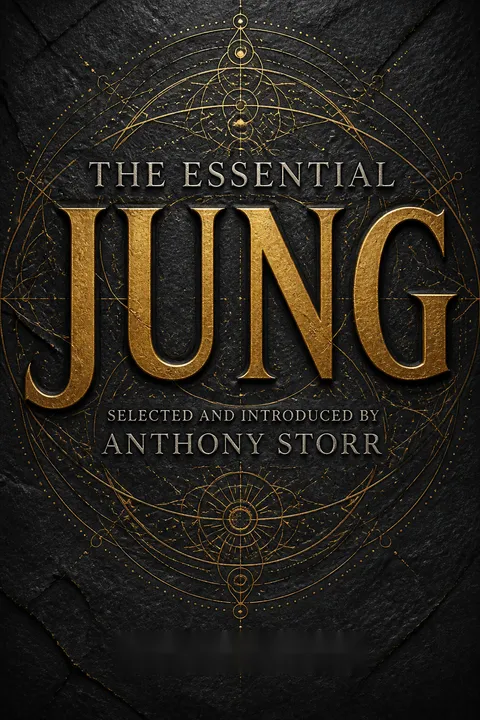
The Essential Jung is hailed as a masterful compilation of Jung's most important writings, offering readers a comprehensive overview of his groundbreaking theories. Many reviewers praise the book's accessibility, noting that it serves as an excellent introduction to Jung's complex ideas. While some found certain sections challenging, particularly those on alchemy, the majority appreciated the depth and breadth of insights provided. Readers consistently highlighted the book's relevance to modern psychology and personal growth.
People Also Read










Glossary
Complex
Emotionally charged psychic clusterA complex is a group of associated memories, thoughts, and feelings organized around an emotionally significant theme. Jung observed that complexes can disrupt attention, memory, speech, and intentional action. They are not necessarily pathological, but their relative autonomy can make a person feel or behave in ways that conflict with their conscious intentions.
Collective unconscious
Shared inherited psychic patternsJung’s term for a proposed layer of the psyche that is not formed from an individual’s personal memories. He described it as containing archetypes, or inherited possibilities for organizing experience. The concept is theoretical and does not mean that specific ancestral memories or images are passed intact from one generation to another.
Archetype
Inherited form of psychic organizationAn archetype is a proposed underlying pattern that can shape how people experience and represent recurring situations, such as birth, danger, or guidance. Jung distinguished the archetype from the particular image that expresses it: images are shaped by individual experience and culture, while the archetype is the hypothesized organizing form.
Libido
Psychic energy in generalJung used libido more broadly than Freud, not only for sexual drive but for psychic energy or interest in general. He used the idea to describe how psychological energy could move toward outer demands or turn inward when adaptation was blocked. This is a theoretical model, not a measurable energy in the physical sense.
Compensation
Unconscious balancing of awarenessCompensation is Jung’s term for the way unconscious activity may counterbalance a one-sided conscious attitude. A dream, symptom, or fantasy might bring forward a neglected concern or capacity. Compensation does not mean that every unconscious message is wise or that every symptom has one definite interpretation.
Persona
Socially adapted public roleThe persona is the role or face a person adopts to function in society. Professional identity, public manners, and expected behavior can all contribute to it. Jung regarded the persona as useful, but warned that identifying with it completely can distance a person from private needs, feelings, and other parts of their character.
Shadow
Disowned or undeveloped traitsThe shadow consists of qualities a person does not recognize or accept as part of themselves. It may include impulses that conflict with the person’s self-image, but also neglected strengths and capacities. Jung argued that recognizing the shadow supports self-knowledge and can reduce the tendency to attribute one’s own disowned traits entirely to others.
Individuation
Development toward psychological wholenessIndividuation is Jung’s term for the process of becoming a more integrated psychological individual. It involves developing a relationship between conscious and unconscious aspects of the psyche, including traits that have been neglected or rejected. Jung distinguished this process from individualism: the aim is greater wholeness, not mere separation from other people.
Self
Totality of conscious and unconscious lifeThe self is Jung’s name for the psyche as a whole, including both conscious awareness and unconscious processes. It is distinct from the ego, which centers conscious experience. Jung treated the self as both a psychological concept and a symbol of unity, often represented in dreams and art by circular or centered forms.
Mandala
Circular symbol of psychic orderA mandala is a circular image, often arranged around a center and sometimes divided into four parts. Jung studied mandalas appearing in religious traditions, dreams, and personal artwork. He interpreted their spontaneous appearance during confusion or conflict as an attempt to represent order and psychological integration, not as proof that every circle has the same meaning.
Active imagination
Conscious engagement with inner imageryActive imagination is a Jungian practice in which a person gives sustained attention to images or fantasies arising from the unconscious while remaining awake and observant. Jung described using drawing, painting, writing, and other forms to engage with this material. The aim is neither to suppress the images nor to mistake them automatically for external facts.
Synchronicity
Meaningful, noncausal coincidenceJung used synchronicity for a coincidence between events that seem meaningfully related but have no identifiable causal connection. His famous example involved a patient’s dream of a beetle coinciding with a similar beetle appearing at his window. The concept proposes an alternative way to think about connection, but remains scientifically disputed.
Transcendent function
Symbolic mediation of opposing tendenciesThe transcendent function is Jung’s term for a psychological process in which conscious and unconscious tendencies are held in relation until a new symbol or attitude emerges. It does not mean supernatural ability. Jung saw this process as one possible route toward a response that avoids simply suppressing one side of an inner conflict.
FAQ
What's The Essential Jung about?
- Compilation of Jung's Work: The Essential Jung is a collection of key writings by Carl Gustav Jung, selected by Anthony Storr. It focuses on Jung's theories of the unconscious, archetypes, and individuation.
- Psychological and Spiritual Exploration: The book delves into the complexities of the human psyche, emphasizing the interplay between the conscious and unconscious mind, and the spiritual dimensions of personal growth.
- Cultural and Historical Context: Jung's ideas are placed within a broader cultural and historical framework, examining their relevance to religious beliefs and societal changes.
Why should I read The Essential Jung?
- Foundational Psychological Concepts: The book introduces foundational concepts in analytical psychology, essential for anyone interested in psychology, therapy, or personal development.
- Insight into Human Psyche: Jung's exploration of archetypes and symbols provides insights into personal behaviors and motivations, enhancing self-awareness.
- Relevance to Modern Issues: Jung's ideas about the collective unconscious and self-awareness are particularly relevant in today's world, addressing feelings of disconnection and the quest for meaning.
What are the key takeaways of The Essential Jung?
- Individuation Process: A central theme is individuation, the process of integrating various aspects of the self to achieve wholeness.
- Archetypes and Collective Unconscious: Jung emphasizes the existence of universal symbols and themes that shape human experiences and behaviors.
- Importance of Self-Knowledge: The book highlights the significance of understanding one's unconscious motivations for personal growth and fulfillment.
What is the collective unconscious according to Jung in The Essential Jung?
- Shared Psychological Heritage: The collective unconscious is a part of the unconscious mind shared among all humans, containing universal experiences and archetypes.
- Archetypes as Organizers: Archetypes are primordial images that shape our experiences and perceptions, influencing thoughts, feelings, and behaviors.
- Universal Themes: This concept explains why certain themes and symbols appear across different cultures and historical periods, reflecting commonalities in human experience.
What are archetypes, and how do they function in Jung's theory?
- Definition of Archetypes: Archetypes are innate, universal symbols and themes residing in the collective unconscious, representing fundamental human experiences.
- Influence on Behavior: They shape perceptions and reactions, often influencing dreams and fantasies, guiding understanding of self and relationships.
- Role in Therapy: Recognizing and integrating archetypes can facilitate personal growth and healing, offering insight into unconscious motivations and conflicts.
How does Jung define individuation in The Essential Jung?
- Process of Becoming Whole: Individuation is the process of integrating various aspects of the self, including the conscious and unconscious, to become a unified whole.
- Integration of Opposites: It involves reconciling opposing forces within the psyche, such as the shadow and the anima/animus, leading to a balanced personality.
- Lifelong Journey: Jung portrays individuation as a lifelong journey of self-discovery and personal development, requiring courage and commitment.
How does Jung differentiate between the persona and the shadow?
- Definition of Persona: The persona is the social mask or identity presented to the world, shaped by societal expectations and norms.
- Definition of Shadow: The shadow represents the repressed, darker aspects of the personality, including undesirable traits and emotions.
- Integration for Wholeness: Achieving psychological wholeness requires acknowledging and integrating both the persona and the shadow, fostering self-awareness.
What is the significance of the anima and animus in Jung's psychology?
- Contrasting Archetypes: The anima represents the feminine aspect of a man's psyche, while the animus represents the masculine aspect of a woman's psyche.
- Projection and Relationships: Individuals often project their anima or animus onto others, leading to idealized or distorted perceptions of partners.
- Path to Individuation: Engaging with the anima or animus facilitates individuation, allowing integration of inner opposites for greater self-understanding.
What role do dreams play in Jung's analytical psychology?
- Dreams as Compensatory: Dreams are compensatory expressions of the unconscious, providing insight into unresolved conflicts and hidden aspects of the self.
- Symbolic Language: They contain symbols and archetypes reflecting the dreamer's inner experiences and psychological state, crucial for understanding the psyche.
- Path to Individuation: Engaging with dreams helps integrate unconscious contents into conscious awareness, facilitating personal growth and self-discovery.
What is the relationship between alchemy and Jung's analytical psychology?
- Alchemy as a Metaphor: Jung viewed alchemy as a metaphor for individuation, where transforming base metals into gold symbolizes personal growth.
- Symbolism in Alchemy: Alchemical symbols parallel Jung's psychology, particularly regarding the integration of opposites and the quest for the Self.
- Historical Context: Alchemy represents a historical link between ancient wisdom and modern psychology, uncovering deeper meanings behind psychological phenomena.
What is the significance of synchronicity in Jung's work?
- Meaningful Coincidence: Synchronicity is the meaningful coincidence of events not causally related, suggesting connections through meaning rather than cause and effect.
- Psychic and Physical Events: It highlights the relationship between psychic states and physical events, indicating interconnectedness of psyche and external world.
- Implications for Psychology: Synchronicity challenges traditional causality views, opening new avenues for understanding human experience and reality.
How does The Essential Jung relate to modern psychological practices?
- Influence on Psychotherapy: Jung's concepts, like the collective unconscious and archetypes, significantly influence modern psychotherapy, especially in depth psychology.
- Holistic Approach: His work encourages a holistic approach to mental health, valuing emotional and spiritual well-being alongside psychological health.
- Cultural Sensitivity: Exploration of symbols and archetypes fosters cultural sensitivity in therapy, enhancing understanding of clients' experiences within cultural contexts.
About the Author
Other books by C.G. Jung






Download PDF
Download EPUB
.epub digital book format is ideal for reading ebooks on phones, tablets, and e-readers.








