Plot Summary
Endless Happy Endings Fatigue
Zinnia Gray, once a terminally ill girl, now spends her life hopping between versions of Sleeping Beauty, fixing stories and rescuing princesses. She's grown weary of endless "happily ever afters," feeling the weight of repetition and the hollowness of forced joy. Her friends, Charm and Prim, have found their own happiness, leaving Zinnia feeling like an outsider, unable to settle or find peace. She skips celebrations, haunted by the knowledge that every story, including her own, must end. Zinnia's identity is split: she's both the dying girl and the dimension-hopping hero, determined to give others the happy endings she doubts she'll ever have. This restless drive propels her into new worlds, even as she questions the meaning and cost of her interventions.
A Queen's Desperate Reflection
After another fairy tale wedding, Zinnia is pulled through a mirror by a mysterious, desperate woman—an older, regal figure with a dangerous aura. Instead of another Sleeping Beauty, Zinnia finds herself in a world echoing Snow White, with motifs of apples and mirrors but no familiar spindles. The woman, revealed as a queen, is not a princess in need but a villain seeking escape from her own doomed narrative. Zinnia is quickly ensnared, her skills and knowledge of stories making her both a threat and a potential key. The queen's hunger for agency and survival mirrors Zinnia's own, setting up a tense, uneasy alliance. The boundaries between stories, and between hero and villain, begin to blur.
Chains, Mirrors, and Motives
Zinnia is imprisoned and interrogated by the queen, who wants to know how to escape her story and fate. The queen's methods are ruthless—magical strangulation, threats, and manipulation—but her desperation is palpable. Zinnia recognizes the queen's pain: a life defined by others' stories, always cast as the villain, never given a name or agency. Their exchanges are sharp, laced with mutual suspicion and reluctant empathy. The queen's magic mirror, a symbol of truth and self-reflection, becomes the focal point of their struggle. Zinnia's knowledge of fairy tales and her own experience as a narrative outsider make her both a target and a possible ally, as the queen's hunger for freedom grows.
Escapes, Huntsmen, and Fairy Tales
Zinnia attempts to escape using her lock-picking skills and fairy tale logic, but is thwarted by the queen's loyal huntsman. The queen's world is unstable, with fairy tale artifacts and motifs bleeding in from other stories. Zinnia's own childhood copy of Grimm's Fairy Tales appears, deepening the sense of narrative slippage. The queen's identity crisis intensifies—she is both the villain and a victim of her own story's constraints. Zinnia's empathy grows, but so does her resolve to resist being used as a tool for the queen's escape. The boundaries between stories, and between hero and villain, continue to erode as both women confront the limits of their agency.
Slipping Stories and Tangled Fates
The queen's mirror allows her and Zinnia to slip between versions of Snow White, each with its own rules and horrors. They encounter alternate Snow Whites—some empowered, some victimized, some monstrous. The multiverse is destabilizing, with characters and motifs crossing over, and the fabric of stories fraying. Zinnia and the queen are forced into uneasy cooperation, their fates increasingly intertwined. They meet Zellandine, a fairy from Zinnia's past adventures, who confirms that the boundaries between stories are breaking down. The cost of Zinnia's interventions—her refusal to finish her own story—becomes clear, threatening all worlds with collapse.
Red's World: Cannibal Queens
Zinnia and the queen land in a grim, horror-inflected version of Snow White, where the queen is a literal cannibal and children are hunted for their hearts. They meet Red, a brave but traumatized girl, and witness the brutality of this world's huntsmen. Zellandine's magic is weakened here, and Zinnia's usual tricks fail. The queen, stripped of her power and status, is forced to confront the consequences of villainy and the limits of survival at any cost. Zinnia's heroism is tested—not by grand gestures, but by the need to protect a single frightened child in a world where happy endings seem impossible.
Rescue, Betrayal, and Revolution
Zinnia and the queen, reluctantly allied, join forces with Red's parents and other villagers to rescue the stolen children from the cannibal queen's lair. The mission is harrowing, filled with violence and sacrifice. The queen's skills and Zinnia's knowledge are both crucial, but it is the courage and solidarity of ordinary people that turns the tide. Red's family leads a revolution, overthrowing the monstrous queen and reclaiming agency for themselves. Zinnia and the queen, battered and changed, are left to reckon with the aftermath—the cost of survival, the meaning of heroism, and the possibility of redemption.
Dungeons, Confessions, and Agency
Captured by the new Snow White—now a tyrant herself—Zinnia and the queen are thrown into a dungeon, stripped of their tools and hope. Facing execution, they finally confess their fears, regrets, and desires. The queen reveals her true motives: not malice, but a desperate need for control in a world that denied her agency. Zinnia admits her own avoidance—her refusal to finish her story, her fear of loss, her longing for connection. Their mutual vulnerability forges a bond, and Zinnia shares the secret of narrative resonance: the power to move between worlds by enacting familiar story beats. But with the magic mirror shattered, escape seems impossible.
Sacrifice, Shards, and Home
As execution looms, the queen sacrifices herself to destroy the mirror, preventing the tyrant Snow White from spreading her horror to other worlds. In the chaos, Zinnia glimpses her friend Charm through a shard of the broken mirror and is pulled home. She returns to her own world, physically and emotionally battered, and is confronted by her friends. The cost of her running—her absence, the damage to her own world, the pain she's caused—is laid bare. Zinnia is forced to reckon with the consequences of her choices and the necessity of facing her own story, rather than endlessly fleeing into others.
Writing New Endings
With the help of her friends and her old professor, Zinnia realizes that the only way to restore balance is to finish her own story. She returns to the queen, now living quietly in a new world, and together they write a new ending in Zinnia's childhood fairy tale book. By naming herself and telling her own story, the queen claims agency and a future beyond villainy. The act of writing becomes an act of creation, opening a new world for both women. Zinnia learns that stories can be rewritten—not by running away, but by choosing what comes next.
Happily, For As Long As
Zinnia and the queen arrive in a peaceful, sunlit world of their own making. The queen, now named and free, finds a modest castle and a future she can shape. Zinnia, still bound to her own world and friends, must say goodbye, but not before sharing a moment of genuine happiness and hope. The queen gifts Zinnia an apple, inscribed with a promise of rescue and love. Their stories, once defined by doom and villainy, are now open-ended—marked not by "ever after," but by the choice to live as happily as possible, for as long as they have.
Apples, Kisses, and Hope
Back in her own world, Zinnia is changed. She reconciles with her friends, accepts the limits of her own story, and finds hope in the possibility of love and rescue—even at the end. The apple from the queen is a symbol of both danger and salvation, a promise that stories can be rewritten and endings can be deferred. Zinnia's journey is no longer about escaping death or fixing others' stories, but about living fully, loving deeply, and accepting the uncertainty of what comes next. The fairy tale is not over, and neither is she.
Characters
Zinnia Gray
Zinnia is a young woman who once lived under the shadow of a terminal illness, her life defined by the expectation of an early death. After a miraculous reprieve, she becomes a fixer of fairy tales, leaping between worlds to rescue princesses and rewrite unhappy endings. Her wit and sarcasm mask deep exhaustion and a fear of settling, as she avoids her own story by immersing herself in others. Zinnia's relationships—with her best friends Charm and Prim, with the various princesses she saves, and ultimately with the queen—reveal her longing for connection and meaning. Her journey is one of agency: learning to stop running, to face her own narrative, and to choose love and hope even in the face of inevitable endings.
The Queen (Eva)
The queen, initially nameless and cast as the archetypal evil stepmother, is a complex figure driven by desperation and a hunger for control. Her villainy is a product of circumstance: a foreign bride, denied power and children, forced into the role of antagonist by a patriarchal world. Her magic mirror is both a tool and a prison, reflecting her longing for truth and escape. Through her interactions with Zinnia, the queen's humanity emerges—her vulnerability, her capacity for love, and her desire to write her own story. Her arc is one of transformation: from villain to hero, from object to author, from namelessness to selfhood.
Charm
Charm is Zinnia's former best friend, now married to Prim. She is grounded, direct, and unafraid to call Zinnia out on her avoidance and self-destructive tendencies. Charm's love is tough but unwavering, and her frustration with Zinnia's running is rooted in fear of loss and abandonment. As Zinnia's anchor to her home world, Charm represents the ordinary heroism of showing up, caring, and insisting on accountability. Her relationship with Zinnia is strained but ultimately redemptive, reminding Zinnia of the importance of staying and loving, even when it's hard.
Prim (Primrose)
Prim, once a Sleeping Beauty rescued by Zinnia, is now Charm's wife and Zinnia's steadfast friend. She embodies grace, patience, and a deep understanding of the costs of both heroism and villainy. Prim's desire to adopt a child and build a future with Charm highlights the theme of chosen family and the courage to hope for happiness. Her interactions with Zinnia are marked by compassion and honesty, offering forgiveness and a path home. Prim's presence grounds the story in the possibility of healing and new beginnings.
Zellandine
Zellandine is a fairy godmother figure who exists on the margins of many stories, slipping between worlds as the boundaries fray. She is wise, wry, and self-aware, recognizing both the power and the danger of meddling in narratives. Zellandine's own story is one of loss and adaptation, as she navigates the dissolution of her home and the blurring of her role. She serves as a mentor to Zinnia, challenging her to consider the consequences of her actions and the ethics of intervention. Zellandine's presence underscores the interconnectedness of stories and the importance of agency.
Red
Red is a young girl in a horror-inflected Snow White world, hunted by a cannibal queen. She is resourceful, wary, and fiercely determined to survive, despite the terror and loss she has endured. Red's story is a stark reminder of the brutality that can lurk beneath fairy tale surfaces, and her rescue becomes a catalyst for revolution. Her relationship with her parents and her ability to inspire collective action highlight the power of solidarity and the possibility of rewriting even the darkest stories.
Snow White (Tyrant Queen)
In one world, Snow White becomes the cannibal queen, perpetuating the cycle of violence and victimhood. Her beauty masks a chilling hunger for youth and power, and her reign is marked by terror and exploitation. Snow White's transformation from victim to villain complicates the moral binaries of fairy tales, forcing Zinnia and the queen to confront the dangers of unchecked narrative roles. Her defeat is not the end of the story, but a turning point that allows for new possibilities and the reclamation of agency by others.
Berthold (The Huntsman)
Berthold is the queen's huntsman, tasked with carrying out her orders but ultimately unable to harm the innocent. His loyalty is both a strength and a weakness, as he navigates the shifting allegiances and moral ambiguities of the story. Berthold's actions reveal the limits of obedience and the potential for compassion, even within systems of power and violence. He serves as a reminder that even minor characters can shape the course of a narrative.
Red's Parents
Red's mother and father are central to the uprising against the cannibal queen, embodying the strength and determination of ordinary people pushed to extraordinary acts. Their love for their daughter and their willingness to risk everything for her safety catalyze the collective action that overthrows tyranny. Their story is one of loss, hope, and the reclamation of agency, demonstrating that heroism is not limited to protagonists or chosen ones.
Dr. Bastille
Dr. Bastille is Zinnia's former professor, a folklorist who provides critical insight into the mechanics of stories and the dangers of narrative disruption. Her pragmatic, sometimes acerbic advice helps Zinnia understand the stakes of her actions and the necessity of finishing her own story. Dr. Bastille represents the wisdom of experience and the importance of boundaries, both personal and narrative.
Plot Devices
Narrative Resonance and Multiversal Slippage
The central device is the idea that every fairy tale is a world, and that repeated motifs—spindles, apples, mirrors—create "thin places" where stories bleed into each other. Zinnia's ability to move between worlds is powered by narrative resonance: enacting familiar story beats allows her to slip into alternate versions. However, her refusal to finish her own story destabilizes the multiverse, causing characters and motifs to cross over and stories to unravel. The magic mirror serves as both a literal and metaphorical portal, reflecting the desire for agency and the danger of unchecked intervention. The structure is recursive and self-aware, with stories within stories and characters questioning their roles. Foreshadowing is woven through repeated motifs and the gradual breakdown of narrative boundaries, culminating in the need to write a new ending to restore balance.
Analysis
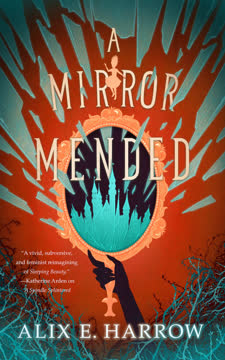
Alix E. Harrow's A Mirror Mended is a meta-fairy tale that interrogates the nature of stories, agency, and the cost of refusing to accept one's own ending. Through Zinnia's journey, the novella explores the exhaustion of endless "happily ever afters" and the hollowness of escapism. The collision of fairy tales—Sleeping Beauty, Snow White, and their countless variants—serves as a metaphor for the ways in which narratives shape, constrain, and sometimes liberate us. The queen's arc, from villain to self-authored hero, mirrors Zinnia's own struggle to claim agency and face her mortality. The book challenges the binaries of hero and villain, victim and survivor, insisting that everyone deserves the chance to write their own story. In a modern context, A Mirror Mended speaks to the desire for control in a chaotic world, the importance of chosen family, and the radical hope that even the most broken stories can be rewritten. Its ultimate lesson is that endings are inevitable, but how we live—and love—until then is up to us.
Last updated: