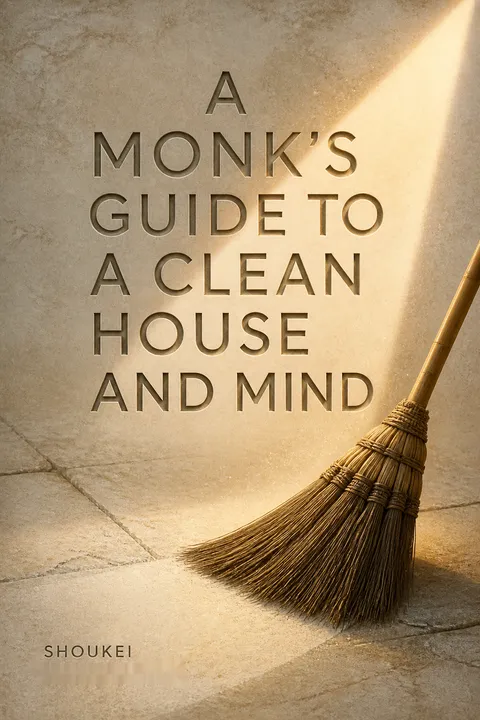


Key Takeaways
Treat cleaning as attention training, not merely a way to remove dirt.
The temple's lesson. Matsumoto begins with a monk's morning: sweeping the grounds and polishing the hall, even when there is no obvious mess. The task is not simply sanitation. Repeated, careful action trains attention and humility. A Buddhist story describes a disciple finding insight through sweeping, illustrating the book's premise that ordinary work can become contemplative practice. The monks' daily work is called samu, or practical temple duties that include cleaning and maintenance.
Practice, not performance. This shifts the measure of success from gleaming surfaces to the care brought to the task. A short, focused sweep can be enough; the point is to notice what is being done. The practice is available at home, without adopting Buddhist beliefs.
What's striking is the book's insistence that attention is built through the body, not just through ideas. A person who notices a corner, chooses a suitable tool, and finishes a small task is rehearsing sustained attention in a tangible setting. This resembles embodied approaches to learning, where repeated actions shape what people notice and how they respond. The metaphor is most useful when treated as an invitation, not a diagnosis: a messy room does not prove a troubled character, and a spotless room does not guarantee serenity. Cleaning can support reflection without becoming a moral test.
Start the morning by airing and sweeping, then reset the house before bed.
A deliberate beginning. Temple cleaning starts in the morning, before the day's activity has gathered force. Matsumoto recommends opening the windows first, then cleaning while the house and neighborhood are still quiet. Fresh air and the physical effort of sweeping make the task a transition into the day. In temples, the morning routine belongs to the unsui, a Zen apprentice who lives and trains at the temple.
A gentler ending. The evening task is not a second full cleaning. It is a reset: return used objects to their places and deal with the day's mess before sleep. A tidy room lets the next morning begin without yesterday's chores immediately demanding attention. Regular, modest care matters more than saving everything for a major clean.
This routine gives household work a useful place in the day's structure. Behavioral research often finds that routines are easier to sustain when attached to an existing transition, such as waking or preparing for bed. The book adds a sensory element: open a window, feel the air, and begin moving. That can turn an abstract intention into a concrete cue. Still, early mornings and open windows are not equally practical for everyone, especially people with health, safety, or caregiving constraints. The valuable principle is a reliable daily reset, adapted to the household's actual conditions.
Finish today's small chores before they occupy tomorrow's mind.
The cost of postponing. Zengosaidan is a Zen expression Matsumoto applies to daily work: give the present day your effort rather than carrying avoidable tasks forward. Dirty dishes and unfinished laundry can linger as a reminder at bedtime, then greet the person again the next morning. His advice is to handle chores when they arise or, at minimum, restore order before bed.
Keep the task small. The goal is not to complete every possible job. In the kitchen, monks wash utensils after use instead of leaving them to soak overnight. During cooking, they use spare moments to clear tools and dishes, which reduces the post-meal pile. The practice is a way to reduce pending work, not a demand for endless productivity.
The insight connects a physical backlog with a cognitive one: visible unfinished tasks can keep attention returning to what remains undone. Clearing a small task can therefore create relief beyond the time spent on it. The distinction between completion and perfection is essential, though. If every object becomes an urgent obligation, the method reproduces the pressure it is meant to ease. A practical version asks which small task will most reduce friction tomorrow, then allows rest when the answer is good enough.
Respect objects by maintaining them, repairing them, or passing them on.
An object's second life. Matsumoto argues that things do not begin as rubbish; they become waste when their usefulness and history are ignored. He recounts the monk Rennyo picking up a scrap of paper as something still worthy of care. The book also warns against confusing gratitude with keeping everything. Items that still work but no longer serve one household can be given to someone who needs them.
Care over replacement. Temple practice favors maintaining tools and repairing worn belongings. A torn garment can be patched, old fabric can become a cleaning cloth, and a leaking bucket can serve as a planter. Such attention recognizes the labor behind an object and makes use of materials already at hand. It also turns letting go into a deliberate act rather than careless disposal.
This approach resembles repair cultures that treat maintenance as a form of knowledge: a person learns how an object works by keeping it in use. It also challenges the assumption that convenience is the only measure of value. The strongest version is not frugality for its own sake, but thoughtful stewardship across an item's life. There is a needed limit: sentimental attachment can itself create clutter, and not every object is safe or worthwhile to repair. Gratitude can mean extending an object's use, donating it, recycling it, or responsibly discarding it.
Rotate household chores so everyone learns the work behind a comfortable home.
Roles should move. At a temple, tenyaku means changing assigned roles so monks experience different duties, such as moving from kitchen work to garden work. Cleaning is individual practice, but it is also coordinated teamwork: each person needs to notice where others are working and choose a useful task rather than duplicate their effort.
Make care visible. Matsumoto recommends sharing and occasionally rotating chores at home. A family member who has never cooked may discover how many small tasks a meal requires; children can learn by helping, even when teaching them initially takes longer than doing the job alone. The practice makes dependence visible and gives each person a clearer sense of what keeps the household running.
Rotating chores is more than a fairness slogan. It builds practical competence and reveals labor that can otherwise disappear from view, especially planning and cleanup. In organizational settings, cross-training helps people understand how roles depend on one another; a household can benefit from the same kind of shared knowledge. Rotation alone, however, does not guarantee fairness. The amount of work, available time, and individual capacity still matter. A useful household conversation makes both the visible tasks and the less visible coordination work discussable.
Leave kitchens, bathrooms, and toilets ready for the next person.
Shared spaces matter. Matsumoto describes the kitchen, bath, and toilet as places where water sustains daily life and where personal habits affect others. Zen tradition calls the meditation, eating, and sleeping hall, bathroom, and toilet the Three Mandas of Silence, spaces where monks avoid speaking. The shared quiet encourages awareness of the water and bodily routines moving through them. In the kitchen, close opened cupboards, use ingredients carefully, and wash dishes before food hardens.
Clean for the next user. Temple toilets are cleaned at least in the morning and evening, and users are expected to leave them orderly. A well-kept room encourages the next person to treat it with similar care. The underlying habit is straightforward: notice what the next person will encounter, then leave the space usable and welcoming.
The book turns private rooms into a lesson in public responsibility. A shared sink or toilet is a small commons: its condition depends on repeated choices by people who may never meet. That makes the advice relevant far beyond temples, from family kitchens to workplaces. Cleanliness can invite considerate use, although it cannot substitute for clear expectations or adequate maintenance. The moral language is best read as a call to mutual regard, not as a reason to shame people whose homes or bodies do not meet an ideal standard.
Own fewer useful things, and return each one to a known place.
Less to manage. During training, Zen monks are allotted a space about the size of one tatami mat, roughly 180 by 85 centimetres, for sleeping, eating, and meditation. The book describes their possessions as few, with each item kept in a designated place. At home, Matsumoto recommends thinking carefully before buying, favoring useful, durable items over a constant stream of replacements.
A place for everything. Take out a tool, use it, and return it promptly. This simple rule keeps small spaces functional and prevents belongings from becoming anonymous clutter. The aim is not to own nothing. It is to keep what can be cared for and used, so cleaning and daily life require less searching and rearranging.
The book links reduced possessions with reduced decision-making: fewer items mean fewer things to store, clean, and relocate. Environmental psychology similarly examines how surroundings shape behavior, including how clutter can compete for attention. Yet minimalism is not automatically virtuous, and storage needs differ across households. A small number of belongings can be expensive to acquire if durability is treated as a luxury. The practical test is not whether a home looks spare, but whether its objects serve real needs and can be maintained without exhausting the people who live there.
Let weather and seasonal change guide the work, not a fixed routine.
Work with conditions. Temple chores change with the weather. Monks postpone outdoor work in the rain and turn to indoor cleaning or repairs; after rain, damp soil makes weeds easier to pull. Matsumoto also urges readers to open windows and notice the air, light, and sounds that mark the seasons. Uchimizu is the practice of sprinkling water on a path or street to cool it and settle dust, while also welcoming someone home.
Mark transitions. Seasonal changes can shape clothing care, room preparation, and household cleaning. The point is not to reproduce temple life exactly, but to let a home's tasks respond to actual conditions instead of running on autopilot. Nature is both a constraint on the work and part of what the work is meant to notice.
This is a useful corrective to the fantasy that a home can be held in one ideal state regardless of climate. Weather-based planning resembles adaptive management: observe conditions, choose an appropriate action, and adjust when circumstances change. The book's language about constant indoor climate weakening body and mind is broader than the practical advice warrants. Heating, cooling, and filtered air can be essential for health and safety. The durable insight is attentiveness to local conditions, not a rule against modern comforts.
Use washing, breathing, and meals to practice attention in your body.
Ordinary bodily rituals. The book extends cleaning beyond rooms to the body. Matsumoto recommends washing the face deliberately in the morning, using water carefully, and treating toothbrushing as a way to care for the mouth that speaks and eats. He also describes slow breathing: exhale fully before breathing in, with attention focused below the navel.
Receive a meal. Temple meals are eaten with gratitude and without rushing. Matsumoto suggests noticing each bite and stopping when about 80 percent full. These practices share one idea: routine acts can interrupt autopilot. Washing, breathing, and eating become opportunities to notice the body's needs and the resources that sustain it, rather than chores to rush through.
The body offers a direct route into attention because breathing, eating, and washing are repeated many times a day. Their familiarity can make them easy to overlook, so a deliberate pause can restore awareness without requiring a separate meditation session. This also makes the practices adaptable: a single attentive breath or meal can be more realistic than a perfect routine. The recommendation to stop at a set fullness level should remain personal rather than rigid, since appetite and health needs vary. Mindfulness should support bodily care, not override it.
Turn the annual deep clean into a ritual of shared gratitude.
A collective reset. Matsumoto describes susuharai, a traditional year-end cleaning associated with removing soot. At Honganji Temple, monks, visitors, and the head priest gather in December, pray together, and clean as a group. One ritual uses a long bamboo pole to beat dust from tatami mats before sweeping it away. The event is not merely a way to reach neglected corners; it marks the shared passage through another year.
Clean together. Matsumoto recommends making a similar annual event at home, assigning work so family members can tackle areas they do not usually handle. A shared deep clean makes maintenance visible and gives people a reason to work alongside one another. The ritual can be modest: focus on overlooked places, divide the effort, and treat finishing as a moment of appreciation.
A communal cleaning day can transform an unpleasant job into a recurring social event. Rituals work partly by giving ordinary actions a shared meaning and a predictable place in the calendar. This example also makes an important distinction between daily upkeep and occasional collective attention to neglected areas. The event need not become another standard of domestic perfection. Its value lies in participation and recognition, especially when the work is distributed fairly and the gathering leaves people with more connection rather than more resentment.
Analysis
The book's central move is to recast housework from a low-status interruption into a practice of attention. Its organizing image is the temple, where sweeping, washing, repairing, cooking, and arranging are not separate from spiritual training. The domestic setting becomes a field for noticing impermanence, dependence, and the consequences of small actions. This gives otherwise repetitive tasks a narrative: a person does not merely remove dust, but practices seeing what is present and caring for what supports daily life.
The most persuasive parts are practical and relational. Open the windows, adapt outdoor work to rain, wash utensils before food hardens, return tools to their places, share chores, and repair usable belongings. These recommendations reduce friction while making work more visible. The book's attention to the next user is especially valuable. It treats cleanliness not as private self-improvement alone, but as a form of hospitality and maintenance of shared space. Its accounts of role rotation and year-end temple cleaning show that discipline can be social rather than solitary.
The spiritual metaphors also need careful handling. Matsumoto often links disorder, stains, or damp rooms with an impure or clouded heart. As poetry, the connection makes routine acts memorable. As a literal explanation, it risks turning poverty, disability, illness, or limited time into evidence of moral failure. A cluttered room may reflect an overloaded life, not a careless character. Similarly, the book's preference for direct contact with seasonal conditions is not a universal health prescription; climate control can be necessary.
The strongest adaptation preserves the invitation while loosening the judgment. Cleaning can create conditions for attention, but it cannot guarantee emotional clarity. A useful practice is one that fits the household, distributes labor, and respects physical limits. Read this way, the book offers not a standard of spotless living, but a disciplined way to meet ordinary tasks with care, gratitude, and awareness of other people.
Review Summary
A Monk's Guide to a Clean House and Mind receives mixed reviews. Many readers appreciate its simple wisdom and find it calming, while others criticize its impracticality for non-monastic life. Positive reviews highlight the book's ability to change perspectives on cleaning and mindfulness. Critics argue it's repetitive and obvious. Some readers enjoy learning about Japanese culture and Buddhist practices. The book's short length and easy readability are frequently mentioned. Overall, it resonates with those seeking a more mindful approach to daily tasks but may not appeal to everyone.
People Also Read


Glossary
samu
temple work practiceSamu refers to the practical duties monks perform to maintain a temple, including cleaning, cooking, gardening, and other work. In Matsumoto's account, samu is not merely upkeep. It is a form of Buddhist training in which careful attention to ordinary tasks helps cultivate the mind.
unsui
Zen apprentice monkAn unsui is a Zen monk in training, living and practicing within a temple community. The book describes the unsui's day as highly structured, with early rising, cleaning, services, shared meals, and communal duties. The term identifies the apprentice whose routine illustrates the discipline of temple life.
tenyaku
changing temple rolesTenyaku is the temple practice of periodically changing monks' assigned duties or work locations. A monk might move from kitchen responsibilities to garden work, allowing each person to experience different tasks. Matsumoto presents the rotation as a way to build competence, awareness of the whole community, and consideration for others.
zengosaidan
effort without postponementZengosaidan is a Zen expression that Matsumoto applies to giving one's effort to the present day rather than dwelling on the past or worrying about the future. In the context of housework, he uses it to encourage people not to carry avoidable chores into tomorrow.
Three Mandas of Silence
three quiet temple spacesThe Three Mandas of Silence are the zodo hall, where monks meditate, eat, and sleep; the bathroom; and the toilet. In the Zen practice described in the book, monks refrain from speaking in these spaces. Their shared association with water and bodily routines makes silence a prompt for mindfulness and care.
tenzo
temple kitchen cookThe tenzo is the monk responsible for cooking in a Zen temple. Matsumoto describes the position as an important role requiring commitment and care, not simply food preparation. The cook attends closely to ingredients, the kitchen, and the people who will eat, making meal preparation part of the temple's disciplined daily life.
uchimizu
sprinkling water outdoorsUchimizu is the practice of sprinkling water on a street or path to cool the surface and settle dust. The book connects the practice with welcoming someone home: watering a path can express gratitude for a loved one's safe return and consideration for neighbors who share the walkway.
susuharai
traditional year-end cleaningSusuharai refers to a traditional thorough cleaning associated with removing soot, which accumulated in homes when wood stoves, candles, and oil lamps were common. Matsumoto describes a temple's year-end susuharai as a group event in which monks and visitors clean together, turning maintenance into a shared ritual.
FAQ
What's "A Monk's Guide to a Clean House and Mind" about?
- Author's Background: The book is written by Shoukei Matsumoto, a Shin-Buddhist monk, who shares insights from his life at Komyoji Temple in Tokyo.
- Core Concept: It explores the connection between physical cleaning and mental clarity, emphasizing that cleaning is a spiritual practice that cultivates the mind.
- Practical Advice: The book provides practical cleaning methods used in Buddhist temples, aiming to help readers apply these techniques in their own homes.
- Philosophical Insights: It delves into Buddhist philosophies, such as the importance of living mindfully and the interconnectedness of all things.
Why should I read "A Monk's Guide to a Clean House and Mind"?
- Mindfulness and Simplicity: The book offers a unique perspective on how cleaning can be a meditative practice that brings simplicity and mindfulness into daily life.
- Cultural Insights: It provides a glimpse into Japanese Buddhist practices and how they can be adapted to modern living.
- Practical Tips: Readers can learn effective cleaning techniques that are both environmentally friendly and spiritually enriching.
- Personal Growth: The book encourages self-reflection and personal growth through the act of cleaning, making it more than just a chore.
What are the key takeaways of "A Monk's Guide to a Clean House and Mind"?
- Cleaning as Meditation: Cleaning is not just about tidying up; it's a form of meditation that helps clear the mind and heart.
- Daily Practice: Consistency in cleaning routines is emphasized as a way to maintain both a clean environment and a clear mind.
- Respect for Objects: The book teaches the importance of respecting and valuing objects, which reflects a respect for people and life.
- Mindful Living: It encourages living in the present moment and appreciating the interconnectedness of all things.
How does Shoukei Matsumoto define "cleaning" in the book?
- More than a Chore: Cleaning is seen as an ascetic practice that goes beyond removing dirt; it's about cultivating the mind.
- Spiritual Practice: It is a way to eliminate gloom and worldly desires, promoting a sense of fulfillment and clarity.
- Cultural Significance: In Japan, cleaning is linked to education and personal development, often practiced in schools and temples.
- Mindful Action: The act of cleaning is a mindful activity that requires attention and care, reflecting one's inner state.
What is the significance of "rubbish" in "A Monk's Guide to a Clean House and Mind"?
- Definition of Rubbish: Rubbish is defined as things that are no longer useful or needed, but nothing starts as rubbish.
- Buddhist Perspective: In Buddhism, everything is interconnected, and nothing has inherent substance; rubbish is created by how we treat things.
- Respect and Gratitude: The book emphasizes the importance of respecting objects and feeling gratitude for their existence and utility.
- Mindful Disposal: It encourages finding new purposes for old items and giving them to others who might need them.
What are the recommended cleaning routines in "A Monk's Guide to a Clean House and Mind"?
- Morning Cleaning: Cleaning should be done in the morning to start the day with a clear mind and a refreshed spirit.
- Evening Tidying: Before bed, tidy up to ensure a fresh start the next day, maintaining a consistent routine.
- Air Out Spaces: Open windows to let in fresh air, which purifies the environment and prepares the mind for cleaning.
- Adapt to Weather: Be mindful of the weather and adjust cleaning tasks accordingly, using rainy days for indoor chores.
How does Shoukei Matsumoto suggest dealing with insects in the book?
- Preventive Cleaning: Regular cleaning prevents insects by removing food sources and breeding grounds.
- Respect for Life: As a Buddhist, Matsumoto emphasizes not harming living creatures and creating environments that deter insects naturally.
- Environmental Adjustments: Ensure good airflow and avoid stagnant water to prevent insect breeding.
- Mindful Coexistence: The book encourages living in harmony with nature, respecting all forms of life.
What is the role of "samue robes" in "A Monk's Guide to a Clean House and Mind"?
- Traditional Attire: Samue robes are traditional work clothes worn by monks during daily chores, symbolizing simplicity and functionality.
- Practical Design: They are designed for ease of movement and are suitable for various tasks, from cleaning to clerical work.
- Seasonal Variations: Different designs are recommended for summer and winter, with features like shorter sleeves or elastic cuffs.
- Cultural Significance: Wearing samue robes is part of the monastic lifestyle, reflecting a commitment to mindful living.
What are "tenugui hand towels" and their significance in the book?
- Traditional Towels: Tenugui are traditional Japanese hand towels used by monks during chores, often wrapped around the head.
- Symbolic Use: They symbolize readiness and mental preparation for tasks, protecting the head and keeping hair clean.
- Practical Benefits: Tenugui dry quickly and are versatile, making them ideal for daily cleaning routines.
- Cultural Heritage: The book highlights the cultural importance of tenugui, linking them to Japanese history and monastic practices.
How does "A Monk's Guide to a Clean House and Mind" address the concept of "mould"?
- Causes of Mould: Mould thrives in environments with little sunlight, poor airflow, and high moisture.
- Prevention Tips: The book advises against keeping unnecessary items and emphasizes the importance of drying items thoroughly.
- Mind-Environment Connection: A cluttered, mouldy space reflects a clouded heart; maintaining cleanliness prevents both physical and mental mould.
- Simple Solutions: Regular cleaning and ensuring good ventilation are key to preventing mould growth.
What are the best quotes from "A Monk's Guide to a Clean House and Mind" and what do they mean?
- "We sweep dust to remove our worldly desires." This quote highlights the spiritual aspect of cleaning, linking it to the removal of mental clutter.
- "Life is a daily training ground." It emphasizes the importance of daily routines and actions in shaping one's character and mind.
- "If your heart is pure, the world looks brighter." This suggests that inner clarity and purity affect one's perception of the world.
- "Don't put it off till tomorrow." A call to action, encouraging readers to address tasks immediately to maintain a clear and focused mind.
How does "A Monk's Guide to a Clean House and Mind" suggest organizing personal items?
- Minimalism: Monks live with minimal possessions, storing items in designated places to avoid clutter.
- Mindful Usage: The book encourages using possessions carefully and listening to their 'voice' to determine their rightful place.
- Routine and Discipline: Regularly returning items to their proper spots fosters discipline and reduces mental clutter.
- Quality over Quantity: Emphasizes owning fewer, high-quality items that are valued and maintained over time.
Download PDF
Download EPUB
.epub digital book format is ideal for reading ebooks on phones, tablets, and e-readers.








