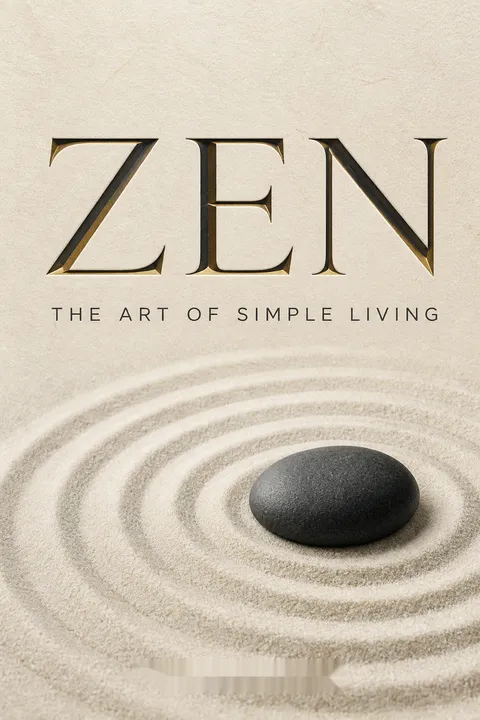


Key Takeaways
Make ordinary routines deliberate, and daily life stops requiring an escape.
Small rituals change the day. Masuno argues that calm need not depend on a temple visit, a mountain climb, or another rare retreat. It can begin with modest choices: rise fifteen minutes earlier, notice the morning air, arrange shoes neatly at the door, or give a meal undivided attention. These acts interrupt automatic rushing and bring attention back to what is happening now.
Create room inside routine. A monk's morning follows a steady sequence of waking, opening the temple, chanting, and eating, yet the air, light, and leaves differ each day. The point is not to make every moment special, but to notice the variations already there. Simple daily practices make ordinary life more vivid without demanding a different life.
What's striking is the shift from seeking occasional relief to changing the texture of ordinary time. Attention research and mindfulness practice both support the broad idea that deliberately noticing present experience can interrupt habitual distraction. Small rituals also provide useful transitions between activities, much as a commute can mark the boundary between work and home. Still, an earlier alarm is not automatically a calmer morning: for someone short on sleep, it may deepen exhaustion. The valuable principle is not waking early at any cost, but protecting a small, repeatable pocket of unhurried attention.
Clear physical clutter before shopping for a better mood.
Make room before adding. When life feels unsatisfactory, the reflex is often to acquire something new. Masuno proposes the reverse: first let go of possessions, assumptions, and attachments that weigh on you. A tidy desk or room is not a cure for every problem, but cleaning can become a practice of restoring order and attention. Simplicity is not the same as cheapness. It means keeping what is useful or genuinely valued, then caring for it well.
Use things imaginatively. Mitate is the practice of seeing an object beyond its original purpose. A worn millstone might become a garden step; a chipped cup might hold a flower. Chisoku means recognizing when what one has is enough. Together, these ideas replace accumulation with resourcefulness and care.
This argument connects personal order with a larger critique of consumption: a new purchase may answer a practical need, but it cannot reliably satisfy an appetite that keeps expanding. Reuse also links simplicity to environmental restraint, while mitate adds an aesthetic dimension: value can come from a changed interpretation, not merely an object's condition or price. The caution is that clutter can reflect disability, caregiving demands, poverty, or limited space, not simply a disordered mind. The practice is most useful as an invitation to reduce friction and waste, not as a judgment of how a home looks.
Use posture, breath, and stillness to interrupt mental momentum.
Settle the body first. Zazen is seated Zen meditation, practiced through an aligned posture, attention to breathing, and a steadier mind. Masuno suggests that even five minutes in a chair can offer a pause during a crowded workday. He also recommends a slow, complete exhale, followed by an unforced inhale. The tanden is the area below the navel where practitioners direct awareness while breathing. A brief standing practice can bring the same attention to a commute.
Thoughts can pass without orders. During zazen, the aim is not to wrestle every thought into silence. Notice thoughts arising, then let attention return to the breath. The practice gives a person a chance to experience a moment without immediately following each worry, irritation, or plan.
The practical strength here is that regulation begins with an observable action: sit upright, breathe, and attend. This resembles modern skills for grounding attention, which can help people create a pause between an emotion and a response. The book's short practices are approachable precisely because they do not require a secluded retreat. Claims that meditation directly treats depression or produces a particular biochemical effect should be treated more cautiously than the simple advice to pause and breathe. Such practices may support well-being, but they are not substitutes for appropriate medical or psychological care.
Treat the task in front of you as training, not an interruption.
Work can be a practice. In Zen, samu means work treated as part of spiritual training rather than as mere drudgery. Monks clean temple grounds and perform repeated daily tasks; the value lies partly in the attention and effort brought to them. Masuno encourages readers to approach even ordinary assignments as opportunities to develop patience, skill, and responsibility, instead of dismissing them as beneath them.
Concentration needs openness. Mushin means a clear mind that is not captured by distracting thoughts or fixed on a single outcome. A swordsman who obsesses over a particular strike becomes mentally stuck; the same can happen to someone working while constantly counting down to a break. Immersion means giving the present task full attention, without turning it into a verdict on one's worth.
This perspective has a useful connection to flow, the state of deep involvement in an activity where attention is absorbed by the work itself. Repetitive tasks can also build competence through practice, even when they lack glamour. But treating every assignment as character-building can be misused to excuse unfair workloads or poor management. Meaningful engagement should not erase questions about pay, safety, or whether a task serves a worthwhile goal. The insight is strongest when it restores agency within work, not when it asks people to romanticize conditions they should be able to change.
When worry multiplies possibilities, take one concrete step in reality.
Bring the fear into view. A Zen story describes the monk Huike asking Bodhidharma to quiet his troubled mind. Bodhidharma asks him to present the anxiety itself. Huike cannot locate it as a solid object, and recognizes how much of his distress exists as thought about what might happen. Masuno uses the story to distinguish an imagined future from the situation actually before a person.
Move from rehearsal to action. Students anxious about job prospects are urged to investigate real opportunities rather than decide in advance that rejection is inevitable. Yet the book also values patience: sometimes the right response is to wait for conditions to ripen. The practical question is whether a next step would clarify reality or whether deliberate waiting is wiser. Either choice is different from endlessly replaying fear.
The distinction between anticipated threat and present fact fits cognitive approaches that help people examine predictions rather than accept them as certainties. Taking a small action can also break avoidance and provide new information. The nuance matters: anxiety is not always baseless, and some dangers are concrete, systemic, or outside an individual's control. Nor is immediate action always wise. A sound application separates what can be checked, what can be influenced, and what must be endured, then chooses a proportionate response instead of confusing mental rehearsal with preparation.
Let change loosen your grip on yesterday's version of life.
Notice what is already changing. Masuno points to cherry blossoms, whose brief flowering makes their beauty inseparable from their passing. Rather than treat change only as loss, he asks readers to observe it directly: a flower opening, a garden altered by rain, or a mood different from the day before. A regular routine can help make these small changes easier to notice.
There is more than one route. Zen itself offers different forms of practice. Rinzai training uses koans, questions that unsettle habitual answers; Soto practice emphasizes shikantaza, or simply sitting without striving for a particular result. Their methods differ, though both direct attention toward a less rigid sense of self. The lesson is not that every answer is equally good, but that one method or perspective need not fit every situation.
The image of seasonal change makes impermanence concrete rather than abstract. Contemporary approaches to psychological flexibility similarly emphasize adapting behavior when circumstances shift instead of insisting that reality conform to a preferred story. The contrast between koan inquiry and simple sitting also models methodological pluralism: different routes can serve a shared purpose. Yet acceptance should not be mistaken for passivity. Some conditions call for resistance, repair, or collective action. A flexible mind can acknowledge what is true while still deciding what can be changed.
Build relationships through attention, timing, and appreciation, not approval-seeking.
Meet people without keeping score. Masuno warns against judging relationships mainly by what another person can provide. He encourages noticing others' strengths, serving them, and accepting that not everyone will like you. The Three Poisons are greed, anger, and ignorance, understood as patterns that cloud judgment and feed suffering. The book suggests noticing these impulses early rather than letting them dictate a response.
Treat encounters as particular. Ichi-go ichi-e means treasuring each meeting as a distinct occasion, not assuming it can simply be repeated. Good timing matters too: Masuno uses the image of a chick and parent bird breaking an eggshell in coordination, each responding to the other's signal. Attention to another person's readiness can make help more supportive and less controlling.
The emphasis on depth over social reach resonates with research and practice focused on responsive listening: people often feel understood when a conversation attends to their actual concerns rather than rushing to judgment or advice. The image of coordinated timing is especially useful in teaching, parenting, and collaboration, where support can become intrusive if offered too soon. Still, harmony should not require tolerating harmful behavior or suppressing legitimate disagreement. Appreciation and nonattachment are most constructive when paired with boundaries, honesty, and the ability to name a problem clearly.
Practice gratitude by noticing how many lives sustain your own.
Receive daily necessities attentively. Zen meals include the Five Reflections: remember the labor behind the food, examine one's own conduct, eat without greed or heedlessness, treat food as nourishment, and receive it as part of a larger path. Masuno recommends pausing between bites and considering the growers, cooks, and others whose work brought a meal to the table. Gratitude becomes more than a polite phrase when it changes how attention is given.
Ordinary days count. A story about the Zen monk Ikkyu describes him answering a request to celebrate a child's birth by writing that family members die in the natural order. The merchant first hears this as bleak, then understands the point: living through the expected course of life is itself a form of good fortune. Masuno extends this attention to family, ancestors, nature, and the unremarkable safety of another day.
This account makes gratitude relational rather than merely upbeat. It directs attention to supply chains, care work, and ecological dependence, forces often hidden behind a meal or a comfortable routine. That perspective can deepen appreciation without pretending that hardship is good or that everyone has the same access to security. Gratitude practices are most credible when they coexist with honest recognition of loss and injustice. The book's emphasis on ordinary days is particularly powerful because it does not require happiness to be dramatic before it can be noticed.
Let mortality sharpen today's choices, not darken them.
Treat time as entrusted. Masuno describes life not as property to hoard, but as something placed in one's care for an unknown length of time. His father continued tending the temple garden close to the end of his life, an example of remaining engaged in ordinary responsibilities rather than waiting for a perfect moment. The point is not to work without rest, but to bring intention to the time actually available.
Prepare before opportunity arrives. A parable contrasts two plum trees: one prepares through winter and can flower when spring comes; the other begins preparing only after the warm wind arrives. Masuno applies the image to long-standing effort and readiness. Contemplating death can clarify what deserves attention now, while preparation makes it more possible to act when circumstances allow.
Mortality can serve as a decision-making lens: imagining limited time can reveal which obligations are chosen, which are inherited, and which have been postponed without good reason. The plum-tree story adds a complementary point: meaningful action often depends on preparation, not just inspiration. There is also a necessary limit. Constantly measuring the present against death can create pressure or guilt, especially for people carrying illness, poverty, or caregiving burdens. The humane version of this lesson is to make room for rest and connection as well as achievement, because both are ways of using a finite life.
Analysis
Masuno's book is organized as one hundred brief practices, grouped around daily energy, confidence, relationships, and attention to the present. Its form is deliberately modular: readers can open almost anywhere and find one small behavior to try. That makes the book easy to approach, but harder to summarize as a conventional argument. The through-line is not a single technique. It is a repeated invitation to make life simpler by attending to what is already here: a breath, a meal, a task, an object, a changing season, or another person.
The author's authority comes from the meeting of two roles. As a Zen priest, he describes ritual and training from within; as a garden designer, he often explains abstraction through placement, restraint, and the perception of ordinary materials. The garden is more than scenery. It models a mind that can see possibility without adding more, and can recognize how distinct elements fit together.
The strongest contribution is practical and ethical at once. Tidying, eating slowly, working attentively, and listening carefully are not sold as productivity tricks alone. They are ways to notice dependence, reduce grasping, and participate more deliberately in daily life. The book also distinguishes simplicity from mere austerity, suggesting that care and appreciation matter more than owning very little.
Its limitations follow from its compact, aphoristic style. Some claims about diet, barefoot habits, and meditation's biological effects are presented with more confidence than the text substantiates. Advice to accept circumstances can also be misapplied if it discourages resistance to preventable harm. Read most usefully, the practices are prompts rather than guarantees: small tools for attention and perspective, not universal cures for distress or difficult social conditions. The book's promise is modest but meaningful: an ordinary day can feel less automatic when a person learns to meet it deliberately.
Review Summary
The Art of Simple Living receives mixed reviews, with many praising its practical Zen-inspired advice for a calmer life. Readers appreciate the book's short chapters and simple wisdom, finding it helpful for reducing anxiety and stress. Some criticize repetitive content and basic advice, while others value the cultural insights into Japanese traditions. The book's physical design and illustrations are widely admired. Many readers recommend it as a gentle reminder to slow down and appreciate life's simple pleasures, though some find it lacking depth or originality.
People Also Read



Glossary
zazen
Seated Zen meditationZazen is the central seated meditation practice described in the book. Practitioners arrange posture, attend to breathing, and allow the mind to settle. Masuno presents it as training in direct awareness rather than as an intellectual exercise, and suggests that brief versions can be practiced at home, at work, or in a public sitting.
tanden
Breath-awareness centerThe tanden is the area below the navel that Zen practitioners use as a focus for breathing and bodily awareness. Masuno recommends directing attention there while exhaling slowly, sitting, or standing. In the book, this focus is a practical cue for grounding attention and encouraging a calmer, more settled posture.
samu
Work as practiceSamu is productive work approached as part of Zen training. In the book, cleaning, tending a garden, and other ordinary tasks are not separate from spiritual practice. Attention and effort matter more than whether a task seems prestigious, and work can teach patience, care, and responsibility.
mushin
Unfixed, clear mindMushin is a state of mind not captured by distracting thoughts, desires, or fixation on a particular outcome. Masuno uses it to describe being fully engaged without becoming mentally stuck on one detail or on the wish to win. It is not simple inattention, but an open quality of focus.
mitate
Seeing new usesMitate is the practice of seeing an object as something other than its original intended form and finding a new use for it. The book gives examples such as turning a worn millstone into a garden step or using a chipped cup as a flower holder. It expresses resourcefulness and an aesthetic of reuse.
ichi-go ichi-e
Each meeting is uniqueIchi-go ichi-e is the idea that each encounter should be treasured as a particular occasion that cannot be perfectly repeated. Masuno applies it to relationships, arguing that the depth and attention given to one meeting matter more than simply expanding the number of acquaintances.
the Three Poisons
Greed, anger, ignoranceThe Three Poisons are greed, anger, and ignorance, understood in Buddhism as mental afflictions that foster suffering and cloud judgment. Masuno describes greed as insatiable wanting, anger as reactive hostility, and ignorance as failure to understand one's nature and circumstances. He recommends noticing these states and settling the mind before acting.
the Five Reflections
Mindful meal reflectionsThe Five Reflections are considerations made before or during a Zen meal: remember the labor behind the food, examine one's conduct, eat without greed or heedlessness, regard food as nourishment, and receive it as part of a harmonious path. The practice frames eating as attention, gratitude, and responsibility rather than consumption alone.
chisoku
Knowing what is enoughChisoku means knowing how much is enough and finding satisfaction in what is already available. Masuno uses the term to address desire for unnecessary possessions. It does not forbid pursuing genuine needs; it asks a person to recognize when those needs have been met and to avoid treating further acquisition as the only route to contentment.
shikantaza
Sitting without strivingShikantaza is the Soto Zen practice of simply sitting, without trying to achieve a specific result such as enlightenment, improved health, or stronger willpower. In Masuno's account, the practitioner attends to sitting itself. It differs in method from Rinzai training with koans, while sharing an aim of bringing attention closer to one's essential nature.
mushiryo
Beyond thinkingMushiryo refers to a state beyond ordinary thinking and deliberate nonthinking, described as retaining nothing in the mind. Masuno connects it with clearing the head and attending to clouds, birds, wind, or other sensory details. The practice is an invitation to experience the surrounding world without continually interpreting or controlling it.
FAQ
What's "Zen: The Art of Simple Living" about?
- Author's Background: The book is written by Shunmyō Masuno, a Zen Buddhist priest and garden designer, who shares insights from his spiritual and professional life.
- Core Theme: It focuses on incorporating Zen principles into daily life to achieve simplicity and peace.
- Practical Advice: The book offers 100 practical tips and exercises to help readers simplify their lives and find tranquility.
- Zen Philosophy: It emphasizes living in the present moment and making subtle shifts in habits and perspectives.
Why should I read "Zen: The Art of Simple Living"?
- Stress Reduction: The book provides techniques to reduce stress and anxiety by simplifying life.
- Mindfulness Practice: It encourages mindfulness and being present, which can enhance overall well-being.
- Practical Tips: Offers actionable advice that can be easily integrated into daily routines.
- Cultural Insight: Provides a glimpse into Zen Buddhism and Japanese culture, enriching the reader's understanding of different lifestyles.
What are the key takeaways of "Zen: The Art of Simple Living"?
- Embrace Simplicity: Simplifying your environment and habits can lead to a more peaceful life.
- Mindful Living: Being present and mindful in everyday activities can enhance your quality of life.
- Letting Go: Discarding unnecessary possessions and mental burdens can refresh your mind.
- Connection with Nature: Engaging with nature can provide a sense of peace and grounding.
How does Shunmyō Masuno suggest we simplify our lives?
- Declutter: Regularly discard items you don't need to create a more organized and peaceful space.
- Mindful Habits: Incorporate small, mindful practices like lining up your shoes or savoring your morning coffee.
- Routine Adjustments: Wake up earlier and make time for solitude to create mental space.
- Nature Engagement: Create a small garden or spend time in nature to connect with the natural world.
What is the significance of "making time for emptiness" in the book?
- Mental Clarity: Taking time to clear your mind helps you reconnect with your true self.
- Daily Practice: Even ten minutes a day of not thinking about anything can be beneficial.
- Present Moment Awareness: It allows you to notice the subtle shifts in nature and life.
- Foundation for Simplicity: This practice is the first step toward living a simpler life.
How does "Zen: The Art of Simple Living" address anxiety and worry?
- Focus on the Present: Encourages focusing on the present moment rather than worrying about the future.
- Breathing Techniques: Suggests deep breathing exercises to calm the mind and reduce anxiety.
- Zazen Practice: Recommends sitting zazen to clear the mind and alleviate stress.
- Perspective Shift: Advises changing your perspective to see challenges as opportunities for growth.
What are some specific Zen practices mentioned in the book?
- Zazen Meditation: Sitting quietly to focus on breathing and clear the mind.
- Gassho: Joining hands together as a gesture of respect and gratitude.
- Mindful Eating: Savoring each bite and expressing gratitude for the food.
- Nature Connection: Creating a small garden or spending time in natural settings.
How does Shunmyō Masuno suggest we deal with interpersonal relationships?
- Serve Others: Focus on serving others to bring about mutual happiness.
- Nonattachment: Practice nonattachment to avoid being swayed by others' opinions.
- Empathy and Understanding: Demonstrate feelings through actions rather than words.
- Deep Connections: Value meaningful relationships over a large number of superficial ones.
What role does nature play in "Zen: The Art of Simple Living"?
- Source of Peace: Nature is seen as a source of tranquility and inspiration.
- Mindfulness Tool: Engaging with nature helps cultivate mindfulness and presence.
- Gardening Practice: Creating a small garden is recommended as a form of meditation and connection.
- Seasonal Awareness: Observing seasonal changes can inspire and ground you in the present.
What are the best quotes from "Zen: The Art of Simple Living" and what do they mean?
- "Make time for emptiness." This quote emphasizes the importance of mental clarity and being present.
- "Discard what you don’t need." It highlights the value of letting go of physical and mental clutter.
- "Be here now." Encourages living in the present moment and appreciating the current experience.
- "Cherish being alive, every single day." Reminds readers to value life and make the most of each day.
How does the book suggest we handle change and uncertainty?
- Embrace Change: View change as an opportunity for growth and new experiences.
- Stay Flexible: Maintain a supple mind to adapt to life's fluctuations.
- Acceptance: Accept reality for what it is and prepare yourself for life's challenges.
- Find Beauty in Change: Recognize the beauty and potential in life's constant changes.
What is the overall message of "Zen: The Art of Simple Living"?
- Live Simply: The book advocates for a life of simplicity and mindfulness.
- Inner Peace: Achieving inner peace is possible through small, consistent changes in habits and perspective.
- Present Focus: Emphasizes the importance of living in the present and appreciating each moment.
- Zen Wisdom: Offers timeless Zen wisdom to navigate modern life's complexities.
About the Author


Download PDF
Download EPUB
.epub digital book format is ideal for reading ebooks on phones, tablets, and e-readers.








