

Key Takeaways
Slow down, because attention decides which world you experience.
Attention selects your world. A Buddhist nun overseeing a temple hall noticed that roof tiles seemed to appear everywhere while she was choosing them, then floors took over her attention. The outside world had not changed; her concerns had changed what stood out. Sunim applies this to busyness, too. His demanding schedule felt overwhelming partly because of how his mind held it, and partly because he chose work that brought him joy. Slowing down creates room to notice that distinction and choose where attention goes.
The book presents a silent observer, a capacity to notice thoughts and feelings without being swallowed by them. Its closing image, the original face, names an awareness beneath the labels and stories attached to the self. The practical invitation is simple: pause, breathe, and look closely at what is here.
What's striking is how this turns attention from a passive spotlight into a practical source of agency. Cognitive science likewise distinguishes incoming information from the limited portion attention selects; what is noticed can shape mood and judgment. That does not mean an overwhelmed person merely needs a better attitude. Workloads, illness, and injustice remain real regardless of perspective. The stronger claim is narrower and more useful: alongside efforts to change circumstances, a pause can reveal which parts of experience are being amplified by attention, and which choices remain available.
Watch a feeling change before you make it your identity.
Observe, do not suppress. Sunim compares an intense emotion to mud clouding a tank: pushing it down only stirs it further. Instead of repeating a label such as anger or jealousy, notice the changing sensations and thoughts beneath it. He suggests observing a low mood quietly for a few minutes, as one might watch a river. The aim is not to pretend the feeling is harmless, but to see that it shifts and is not the whole self.
He calls the witnessing capacity the silent observer: awareness that notices an emotion arise and fade without immediately treating it as a command or identity. If feelings remain overwhelming, he also recommends practical support such as exercise, meditation, or speaking with a trusted mentor.
This account resonates with psychological distancing, the practice of observing an experience rather than fusing with it. Naming an emotion can create enough space to choose a response, while attempts to forcibly suppress thoughts can make them more persistent. The useful distinction is between acceptance and passivity: noticing anger may make a considered conversation possible, but it does not settle whether a boundary or concrete intervention is needed. Observation is a starting point for wise action, not a substitute for it.
Let rest interrupt the spiral before disappointment becomes a verdict.
Pause before interpreting pain. When trust breaks, a relationship ends, or plans collapse, Sunim recommends not demanding an immediate solution. He suggests talking with close friends, allowing tears, seeking music or laughter, taking a trip, or spending quiet time alone. These are not cures that erase loss; they make room for the person experiencing it to recover perspective and tenderness toward themselves.
For everyday stress, he offers a modest technique: write down every task and worry, set the list aside for the night, and return to it the next morning, beginning with manageable items. For major decisions, he advises allowing time and sleep to work on the question instead of forcing an answer in an agitated moment. Rest is a deliberate pause, not a denial that something needs attention.
The advice treats recovery as a condition for judgment, not a reward for finishing every task. That fits research on sleep and cognitive control: fatigue can narrow attention and make emotional reactions harder to regulate. Social support and humor can also interrupt isolation without requiring a polished account of grief. Still, time alone does not resolve every loss, and some decisions cannot be postponed indefinitely. The practical test is whether a pause restores capacity for the next honest step, rather than becoming a way to avoid it.
Match your enthusiasm to what others can actually receive.
Good intentions need calibration. In his first semester teaching meditation, Sunim poured energy into extra assignments, daily practice, journal writing, and outings to religious communities. He assumed students would welcome everything he found valuable. Some became tired and disengaged. When he recognized that his class was only one part of their lives, he adjusted the demands, and students began participating more willingly.
The episode separates effort from effectiveness. A person can be sincere and hardworking while still overlooking the needs or limits of others. Sunim's practical lesson is to judge work by whether it serves its purpose, not by how intense the effort feels. Passion is valuable, but it becomes more useful when paired with attention to the people who must receive, share, or carry it.
This is a sharp account of the difference between intention and impact. In teaching, management, and caregiving, effort can become a form of projection: the giver assumes that what feels meaningful to them must be welcome to everyone else. Good calibration requires feedback and a willingness to revise, rather than interpreting reluctance as ingratitude. There is also a boundary on the lesson: not every worthwhile responsibility can be made comfortable. The point is not to remove challenge, but to ensure that challenge serves learning rather than the giver's need to prove devotion.
Keep relationships warm with both presence and breathing room.
Closeness needs a rhythm. On a trip through Europe, Sunim and a close monastic friend spent a week together until both grew irritable. They agreed to explore separately for a day. Solitude gave each room to enjoy the trip; meeting again that evening made sharing their experiences feel fresh. Their friendship had not failed. It needed space.
Sunim compares maintaining a bond to finding a comfortable distance from a fire: too near for too long can become exhausting, while too much distance leaves people cold. He pairs this with humility and communication. Listen before trying to win, describe hurt without attacking, and say no promptly when a commitment is impossible. Good relationships are not maintained by constant togetherness or silent resentment, but by adjusting distance and speaking honestly.
The travel story captures a useful tension between connection and autonomy. Close relationships often need both reliable availability and room for independent experience; space can protect affection rather than signal rejection. The advice to describe feelings instead of accusing also resembles conflict approaches that lower defensiveness by focusing on specific impact. Yet distance alone cannot repair a harmful dynamic, and directness must be adapted to differences in power and safety. The principle works best as mutual negotiation, not as a demand that one person tolerate whatever distance the other prefers.
Forgive to reclaim your attention, not to excuse the harm.
Release resentment deliberately. Sunim describes forgiveness as a process undertaken for the injured person's freedom, not as a prize the offender has earned. He does not ask readers to skip anger or grief. Instead, notice how those emotions register in the body, allow them to rise and recede, and look beneath anger for fear, shame, or loneliness. He then invites a compassionate view of the person who caused the harm, without denying that harm occurred.
This practice aims to loosen the injured person's continuing mental attachment to the offender. It does not require pretending the betrayal was acceptable, restoring trust, or resuming contact. Sunim also warns that repeatedly rehearsing hatred can shape the person carrying it. Forgiveness, in this account, is a way of making room for one's own life again.
The distinction between forgiveness and reconciliation matters. A person can relinquish the wish to remain consumed by resentment while maintaining distance, seeking accountability, or protecting others from continued harm. This makes the advice more compatible with trauma-informed care than a blanket command to be compassionate. The inward attention to bodily sensations can help identify emotions that anger covers, but it should not be used to rush someone toward empathy for an abuser. Freedom is not measured by restored access; it is measured by whether the injured person can choose their next step without being governed by the injury.
Love people as they are, not as projects to improve.
Care is not control. Sunim recalls an unreturned first love that made ordinary life feel vivid, then became a source of pain when the woman returned to the United States and later married someone else. With time, sorrow gave way to gratitude for what the experience had awakened in him. The story presents love as something that cannot be summoned or managed to fit a preferred outcome.
In daily relationships, that means valuing the other person beyond the satisfaction their attention provides. Sunim distinguishes love from infatuation centered mainly on one's own feelings, and cautions against unsolicited help that makes another person feel incapable. Presence, listening, and allowing room can express more care than gifts, advice, or efforts to reshape someone. Loving someone includes respecting their agency, even when the relationship does not become what was hoped.
The strongest insight here is that care can become possessive while still feeling generous to the person offering it. Respect for another person's agency helps distinguish support from management. The first-love story also shows how an experience can matter without ending in possession or mutual partnership. That does not make every painful attachment beneficial, nor does it mean that persistent one-sided effort is proof of devotion. Healthy love includes reciprocity and limits. Acceptance is not a reason to stay in a relationship that is harmful or chronically unequal.
Stop auditioning for an audience that is mostly occupied with itself.
Loosen the imagined spotlight. Sunim's three liberating insights begin with the recognition that other people usually spend less time thinking about us than self-consciousness suggests. Next, not everyone has to approve: people themselves have preferences and dislikes, so universal acceptance is not a realistic standard. Finally, good intentions can contain self-interest, which is a reason for honesty rather than self-condemnation.
Together, these insights challenge the habit of organizing life around how it looks from outside. Sunim encourages readers to examine what they actually want, make room for private interests, and stop letting imagined criticism make every decision. He also stresses that other people's choices remain outside one's control. The goal is not indifference to everyone, but freedom from treating every opinion as a verdict on one's worth.
This is an effective antidote to the imagined spotlight, the tendency to overestimate how much others notice one's appearance or mistakes. It can free energy for choices guided by interest and principle rather than constant self-monitoring. The final insight, about mixed motives, is useful if treated as an invitation to examine behavior rather than a claim that generosity is secretly selfish in every case. People are capable of both self-interest and genuine concern. A mature account preserves that complexity while asking whether actions respect the other person's needs.
Find your calling by trying real work, not only introspection.
Explore before deciding. Sunim argues that people often struggle to choose a path because they know too few possibilities and have too little direct experience. Reading widely can introduce unfamiliar fields; part-time jobs, internships, and volunteering reveal what work feels like in practice. Relationships and varied settings can also show whether someone thrives under pressure, prefers collaboration, or has strengths they had not recognized.
A story from his childhood shows how encouragement can shape effort. A strict teacher once welcomed him warmly into her home and told him she believed he could become a good student and help others. He took that faith seriously and worked harder. Her words did not guarantee a particular future, but they gave a child confidence to pursue one. Sunim's advice is to begin before feeling perfectly prepared and learn from the attempt.
This approach resembles experiential learning: preferences often become clearer through action, feedback, and reflection, rather than through endless private analysis. It also recognizes that career choice depends partly on opportunity and exposure, not just on discovering a hidden inner passion. The teacher's encouragement illustrates how another person's confidence can alter what seems possible, though praise alone cannot overcome structural barriers or substitute for skills. A useful next step is to treat early work as evidence, not destiny. A poor fit can narrow the search productively without defining a person's ability.
Practice your faith through conduct, and meet other paths with humility.
Shared values outlast labels. At the French monastic community of Taizé, Christian brothers welcomed Sunim and other Buddhist monks with shared meals, prayer, and homemade kimchi. Their traditions differed, yet the visitors recognized familiar commitments to silence, hospitality, and spiritual discipline. The encounter supports Sunim's view that learning about another faith need not weaken one's own.
He distinguishes surface faith, focused on outward symbols and defending boundaries, from in-depth faith, which looks for the ethical and spiritual meanings beneath different forms. He also warns that ritual or belief can become an identity badge unless it changes how people treat one another. His proposed test of spirituality is conduct: humility, compassion, honesty, and the ability to learn. Critical judgment matters too, since reverence without discernment can leave people vulnerable to abusive leaders.
The Taizé encounter makes pluralism concrete: mutual hospitality can reveal kinship without pretending that religions teach identical doctrines. This is a stronger model than either forced agreement or reflexive suspicion. The distinction between symbols and lived values also asks an important question of every tradition: what does practice change in ordinary conduct? At the same time, shared virtues do not erase genuine theological or political disagreements. Respectful learning is most credible when it can acknowledge difference, preserve critical scrutiny, and reject coercion carried out in religion's name.
Analysis
The book's form is part of its argument. Brief counsel sits beside personal essays, so a reader moves between general reflection and lived scenes: a professor learning that enthusiasm can burden students, a friend rediscovering warmth after a day apart, and a child changed by a teacher's confidence. These episodes keep the spiritual advice attached to ordinary choices rather than leaving it as abstract doctrine. The book is not a systematic manual. Its recurring practice is to interrupt automatic reaction, notice what is happening, and respond with more care.
Its most useful tension is between acceptance and agency. Sunim asks readers to stop fighting feelings, other people's opinions, and facts that cannot be changed, while also urging them to speak directly, set limits, explore work, and make decisions. Read carefully, acceptance means seeing clearly before acting, not surrendering to whatever happens. That distinction is essential, especially where hardship has external causes or relationships are unsafe.
The book's Buddhist account of awareness sometimes moves from a practical observation, feelings change, to a metaphysical suggestion, awareness is a deeper and enduring self. Readers can benefit from the first without needing to adopt the second. Observing a thought can create useful distance whether or not a permanent witness exists. Similarly, the suggestion that perception shapes one's world is compelling as psychology, but cannot mean that injustice or material conditions are merely projections.
The book's deepest contribution is therefore not a promise of calm in every circumstance. It is a practice of recovering choice in small intervals: before sending the angry message, while naming grief, when deciding whether to help, or when facing a path that has not yet become clear. Its humane standard for spiritual insight is relational. A quieter mind matters most when it makes a person more honest, less controlling, and more available to others.
Review Summary
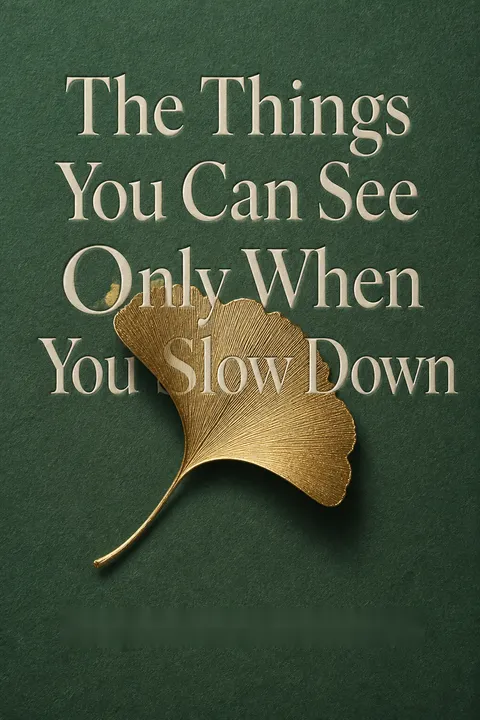
The Things You Can See Only When You Slow Down receives mixed reviews. Many readers find it calming and insightful, praising its simple wisdom and beautiful illustrations. It's seen as a helpful guide for mindfulness and slowing down in a busy world. However, some critics find it repetitive, obvious, or too preachy. The book's format of short essays and quotes is appreciated by some but tedious for others. Overall, it's considered a comforting read for those seeking guidance, especially during difficult times, but may not offer new insights for everyone.
People Also Read




Glossary
Three liberating insights
Three ways to loosen self-consciousnessSunim's name for three reflections that reduce dependence on approval: people usually think about others less than imagined, not everyone will like a person, and actions for others can contain self-interest. Together, the insights encourage honest self-examination without making outside opinion the measure of personal worth.
silent observer
Awareness that notices experienceThe capacity to notice thoughts, sensations, and emotions as they arise without immediately identifying with them or obeying them. Sunim presents this awareness as a still presence that can witness changing mental states. In practical terms, it creates distance between an emotion and the response a person chooses.
original face
Awareness beneath the self-storyA Zen expression Sunim uses for the nature of awareness prior to the labels, memories, and ego-based stories through which people usually describe themselves. The book invites readers to approach it through quiet attention rather than imagining a particular shape or identity. It is presented as a spiritual insight, not a personality description.
surface faith
Faith centered on outward symbolsA mode of religious commitment that treats visible symbols, rituals, or group distinctions as the central measure of faith. Sunim contrasts it with attention to the meaning and ethical practice beneath those forms. In his account, surface faith can encourage disputes over whose symbols are correct instead of changing how people live.
in-depth faith
Faith grounded in deeper meaningA mode of religious commitment that looks beyond outward symbols toward the ethical and spiritual meanings they express. Sunim argues that people with in-depth faith can recognize resonances across traditions without assuming that all religions are identical. Its measure is not appearance alone, but whether practice cultivates humility, compassion, and peace.
Buddha nature
Inherent capacity for awakeningThe Buddhist idea, invoked by Sunim, that people possess an underlying potential for awakening and wisdom, even if they have not recognized it. He uses it to affirm human dignity and resist treating spiritual realization as a quality reserved for a special elite. It is a religious concept, not a claim about social status or conventional success.
FAQ
What's "The Things You Can See Only When You Slow Down" about?
- Author's Background: The book is written by Haemin Sunim, a Zen Buddhist teacher from South Korea, who shares insights on mindfulness and calmness in a fast-paced world.
- Core Message: It emphasizes the importance of slowing down to appreciate life, manage emotions, and improve relationships.
- Structure: The book is divided into eight chapters, each focusing on different aspects of life such as rest, mindfulness, passion, relationships, love, life, the future, and spirituality.
- Practical Advice: It offers practical advice and meditative prompts to help readers cultivate mindfulness and find peace in everyday life.
Why should I read "The Things You Can See Only When You Slow Down"?
- Mindfulness Benefits: The book provides insights into how mindfulness can help manage stress and improve mental well-being.
- Practical Guidance: It offers practical tips and exercises for incorporating mindfulness into daily life.
- Universal Themes: The themes of love, relationships, and self-awareness are universally relatable and applicable.
- Inspirational Stories: Haemin Sunim shares personal anecdotes and stories that inspire reflection and personal growth.
What are the key takeaways of "The Things You Can See Only When You Slow Down"?
- Mind and World Connection: The book highlights the thin boundary between the mind and the world, suggesting that our perception shapes our reality.
- Importance of Rest: It emphasizes the need to rest and reflect to gain clarity and perspective in life.
- Emotional Awareness: The book encourages befriending emotions rather than suppressing them, promoting self-awareness and emotional intelligence.
- Value of Relationships: It stresses the importance of maintaining good relationships and the art of balancing closeness and independence.
How does Haemin Sunim suggest we manage negative emotions?
- Observe Emotions: Sunim advises observing negative emotions without judgment, allowing them to change naturally.
- Separate Energy from Labels: He suggests separating the raw energy of emotions from labels like "anger" or "jealousy" to understand them better.
- Mindful Reflection: By reflecting on emotions mindfully, one can see them as temporary and not a defining part of oneself.
- Compassionate Observation: Observing emotions with compassion can lead to deeper understanding and eventual resolution.
What is the significance of slowing down according to Haemin Sunim?
- Clarity and Insight: Slowing down allows for clearer insight into one's thoughts, emotions, and relationships.
- Mindful Living: It encourages living mindfully, appreciating the present moment, and reducing stress.
- Enhanced Relationships: By slowing down, individuals can improve their relationships by being more present and attentive.
- Inner Peace: It fosters a sense of inner peace and contentment, helping individuals navigate life's challenges more effectively.
What are some of the best quotes from "The Things You Can See Only When You Slow Down" and what do they mean?
- "When your mind rests, the world also rests." This quote emphasizes the power of a calm mind in influencing one's perception of the world.
- "We know the world only through the window of our mind." It highlights the subjective nature of reality and the importance of mental clarity.
- "Love is like an uninvited guest." This suggests that love cannot be forced or controlled; it comes and goes on its own terms.
- "The wise do not fight the world." It encourages acceptance and harmony with the world rather than resistance and conflict.
How does Haemin Sunim address the concept of relationships in the book?
- Balance in Relationships: Sunim compares relationships to sitting by a fireplace, emphasizing the need for balance between closeness and independence.
- Humility and Respect: He advises treating others with humility and respect to avoid conflicts and maintain harmony.
- Understanding Differences: The book encourages understanding and accepting differences in personalities, habits, and values.
- Forgiveness and Letting Go: Sunim discusses the importance of forgiveness for personal freedom and happiness.
What advice does Haemin Sunim give for finding one's calling?
- Explore Widely: He suggests reading broadly and gaining diverse experiences to discover potential career paths.
- Real-Life Experiences: Engaging in various jobs and internships can help uncover one's true interests and talents.
- Self-Awareness: Understanding personal strengths, weaknesses, and preferred work environments is crucial.
- Follow Your Heart: Sunim advises choosing a career based on personal passion rather than external expectations.
How does Haemin Sunim integrate spirituality into everyday life?
- Mindful Practice: He encourages integrating mindfulness and meditation into daily routines to connect with one's spiritual side.
- Interfaith Respect: Sunim promotes understanding and respect for different spiritual paths, recognizing universal truths across religions.
- Inner Peace: Spirituality is presented as a path to inner peace and self-discovery, transcending religious boundaries.
- Compassionate Living: The book emphasizes living with compassion and humility as key aspects of spiritual practice.
What role does mindfulness play in "The Things You Can See Only When You Slow Down"?
- Emotional Regulation: Mindfulness helps in managing emotions by fostering awareness and acceptance.
- Present Moment Awareness: It encourages focusing on the present moment to reduce stress and enhance well-being.
- Improved Relationships: Mindfulness promotes better communication and understanding in relationships.
- Personal Growth: It is a tool for self-reflection and personal development, leading to a more fulfilling life.
How does Haemin Sunim suggest we deal with life's disappointments?
- Pause and Reflect: He advises taking a moment to pause and reflect before reacting to disappointments.
- Seek Support: Surrounding oneself with supportive friends and sharing experiences can aid in healing.
- Find Joy in Small Things: Engaging in activities that bring joy, like watching a movie or listening to music, can uplift the spirit.
- Practice Self-Compassion: Sunim emphasizes the importance of being kind to oneself and allowing time for healing.
What is the overall impact of "The Things You Can See Only When You Slow Down" on readers?
- Increased Mindfulness: Readers gain practical tools for incorporating mindfulness into their daily lives.
- Emotional Insight: The book provides insights into understanding and managing emotions effectively.
- Improved Relationships: It offers guidance on nurturing and maintaining healthy relationships.
- Personal Transformation: Many readers find the book transformative, leading to greater self-awareness and inner peace.
About the Author



Download PDF
Download EPUB
.epub digital book format is ideal for reading ebooks on phones, tablets, and e-readers.








