

Key Takeaways
Train the mind that experiences happiness instead of chasing external prizes
A different source. Gelong Thubten builds his case from a dramatic change in perspective. Before becoming a monk, he was an actor in New York, living intensely and suffering burnout, panic attacks, and a serious heart problem. Years of meditation, including a four-year retreat, convinced him that happiness is not a possession delivered by the right job, relationship, or purchase. It is a mental capacity that can be developed.
Not a denial of pain. The claim is not that circumstances do not matter. Rather, the same event can affect people differently because their thoughts and reactions shape what they experience. Meditation trains attention and awareness so that thoughts and emotions need not dictate every response. For people facing severe hardship, the first task may simply be survival; inner training can offer support when there is room for it.
The book’s central move is to distinguish changing circumstances from changing one’s relationship to them. That distinction has practical value: attention, appraisal, and emotional regulation can alter the felt weight of an experience even when the event remains unchanged. It also prevents happiness from being reduced to a shopping list. Still, the language of choosing happiness can sound too absolute. Poverty, illness, discrimination, and trauma constrain well-being in ways meditation cannot erase. The strongest reading is that mental training can expand agency, not that suffering is a personal failure.
Notice how anticipation can outrun the pleasure you were chasing
The next hit. Thubten describes a culture of seeking quick highs through food, caffeine, shopping, entertainment, and social approval. In his account, dopamine rises in anticipation of a reward, then falls after the reward arrives. The excitement of a coming party, a hoped-for purchase, or a future achievement can therefore feel more compelling than having it. The mind quickly starts searching for another thing that might finally make life feel complete.
A recurring pattern. Social feeds and rapid-fire media can intensify this cycle by supplying a near-constant stream of novelty and comparison. The problem is not pleasure itself, but treating each pleasant sensation as a lasting solution to dissatisfaction. Meditation offers a way to notice the pull of anticipation and return attention to what is actually happening, rather than living perpetually in the next promised moment.
This is a memorable account of why reward-seeking often disappoints: anticipation, acquisition, and lasting satisfaction are not the same experience. Research on reward learning broadly supports the distinction between wanting and liking, although dopamine is not simply a chemical of pleasure, and its role is more complex than the book’s shorthand suggests. That nuance strengthens the practical point. A person need not renounce enjoyable things; noticing how quickly desire renews can prevent a treat, purchase, or notification from being mistaken for a durable answer to unease.
Let thoughts appear without treating each one as an instruction
No blank mind required. Thubten rejects the idea that meditation means stopping thought. Trying to force thoughts away can create a struggle in which each new thought feels like proof of failure. Instead, the practitioner allows mental activity to arise and practices not being pulled into it. A chosen support, often the breath or bodily sensation, gives attention somewhere steady to return.
Build a wider view. The book compares thoughts to changing clouds or waves within a larger field of awareness. The images are meant to show that anger, worry, or a passing thought can be present without defining the whole mind. In practice, a thought about lunch and a painful memory are both events to notice. The training lies in observing them without automatically elaborating, suppressing, or obeying them.
This approach resembles decentering in contemporary psychological therapies: thoughts are experienced as mental events rather than unquestioned facts. That shift can reduce rumination without requiring positive thinking or emotional suppression. The sky and ocean images also offer a useful identity-level reminder that a person is more than the current mood. They should not be read as proof that awareness is untouched by every condition, however. For some people, especially those with trauma or intense anxiety, turning inward can initially increase distress, so gentle pacing and suitable support matter.
Count noticing distraction as practice, not evidence of failure
Three useful moments. Thubten breaks a meditation session into three recurring phases:
1. Staying with a support, such as the breath.
2. Noticing that attention has wandered.
3. Returning attention to the support.
The second phase is easy to misread as failure. In fact, noticing distraction is the moment awareness has returned. Each return practices the ability to disengage from a thought and reorient attention. A beginner whose mind wanders repeatedly is not necessarily meditating badly; the repeated recognition and return are the training itself.
Gentleness matters. The return should be relaxed rather than punitive. Treating every wandering thought as an enemy turns meditation into an inner contest and can add tension. The point is not to achieve uninterrupted concentration, but to become quicker at recognizing when attention has been carried away.
This reframing makes the practice more learnable because it rewards the skill that beginners actually need: detecting attentional drift. In cognitive science, attention is understood as limited and vulnerable to distraction, so a practice that repeatedly restores focus resembles structured training rather than a test of mental purity. The three-phase sequence also offers a useful measure of progress beyond how calm a session feels. However, improved attention in meditation does not automatically transfer to every setting. Everyday application still requires deliberate repetition and realistic expectations.
Carry mindfulness into small daily actions, not just formal sessions
Practice beyond the cushion. A meditation session builds skill, but Thubten argues that daily awareness must carry that skill into ordinary life. He calls these brief returns to the present “micro moments.” Begin by choosing two or three routine actions, such as washing hands, walking, or eating, and notice their physical sensations while doing them. When the mind wanders into commentary, gently return to the activity.
Use what is already there. Thubten recounts standing in a crowded London train, tired and irritable, then paying attention to his feet, the train’s sway, and the weight of his bag. The commute became a chance to practice rather than merely endure. After establishing a few reliable cues, he suggests expanding awareness to other moments throughout the day. There is no need to slow down or stop working.
The method is valuable because it attaches attention practice to actions that already happen, reducing the friction of adding a new routine. It also challenges the idea that mindfulness belongs only in quiet rooms. This resembles implementation intentions, in which a familiar cue helps prompt a desired response. The author’s month-long suggestion can help create consistency, but habit formation varies widely; some people need more time or different cues. The more important principle is repeated, nonjudgmental practice, not a deadline that becomes another reason to feel inadequate.
Trace stress to wanting, resisting, guarding, and fearing loss
Four pressures. Thubten links stress to four recurring forms of grasping: not getting what one wants, encountering what one does not want, trying to protect what one has, and losing what one loves. Each can keep attention locked in struggle. Wanting more can renew itself after a goal is reached; resisting discomfort can make ordinary friction feel intolerable; protecting what matters can become exhausting when change is unavoidable.
Rehearse in small moments. Rather than waiting for a crisis to test mindfulness, Thubten recommends practicing during low-stakes delays: a queue, a red light, a slow website, or an elevator ride. Notice bodily tension, feel the feet or the seat, and allow the moment to be as it is. This does not mean accepting every external condition as fair. It creates enough calm to respond more deliberately.
The four-part map turns a broad feeling of stress into recognizable patterns of approach, avoidance, control, and loss. That makes it easier to ask what is happening in a specific moment instead of concluding that life itself is simply unbearable. The waiting exercise is particularly practical because small frustrations provide frequent rehearsal. Still, internal regulation and external problem-solving are complementary, not competing, tools. A person can accept the feeling of anger while also addressing an unsafe workplace, an unjust policy, or a relationship that needs boundaries.
Study the craving itself before reaching for its usual relief
Look at the urge. Thubten describes addiction as a learned pattern in which a person reaches for something to relieve the discomfort of wanting. The object may initially feel rewarding, but over time the action can become less about pleasure and more about temporary relief. His proposed intervention is to notice craving as it appears: where it is felt, how it changes, and what thoughts accompany it. The urge becomes something to observe rather than an order to follow.
Change the relationship. The book calls its focus “context rather than content.” Instead of repeatedly investigating the story behind every thought, meditation trains how attention holds that story. Returning to the breath, for instance, practices loosening the mental grip. This can create a pause between impulse and action, where a different choice becomes possible. The approach is not a substitute for professional help when addiction is severe.
The pause between urge and action is a powerful point of contact between contemplative practice and evidence-based approaches that teach people to observe cravings without acting on them. It shifts the question from “How do I make this feeling vanish?” to “Can I experience it without immediately reinforcing the habit?” That can restore choice. Yet addiction is not merely a failure of attention or an inner hole. Biology, social conditions, access to care, and learned behavior all matter. Mindfulness can be one tool in recovery, but it should not be presented as a universal treatment.
Treat happiness as shared infrastructure, not a private possession
Life depends on others. Thubten uses “interdependence” for the idea that people and things exist through their relationships with one another. Even breathing connects human life to plants and the wider environment; food and clothing depend on many people’s labor. Recognizing these connections can foster gratitude and a sense of responsibility, rather than the belief that happiness is won by getting ahead of everyone else.
Comparison can travel. The book describes Ladakh after Western advertising and tourism arrived. Young people encountered idealized images of Western life, some began bleaching their skin, and money-based tourism disrupted older patterns of subsistence and community. The story illustrates how consumer comparison can alter what people value and make local life seem deficient. Thubten connects inner contentment with mindful consumption, arguing that restraint is part of caring for the shared world.
Interdependence expands meditation beyond personal calm. It links habits of desire to relationships, economies, and ecological limits, making contentment socially consequential rather than merely private. The Ladakh example vividly shows that images and markets can reshape aspiration, although a single account cannot establish every cause of the region’s social changes. The broader insight remains useful: a culture that measures worth through comparison can export dissatisfaction. Mindfulness can help people consume more deliberately, but collective environmental problems also require institutions and policies, not only better individual attitudes.
Build compassion that can act, not empathy that only overwhelms
Feeling is a beginning. Thubten distinguishes empathy, the experience of resonating with another person’s suffering, from compassion, which includes an intention to help and a willingness to act. Empathy can become distressing when someone feels another’s pain but has no way to respond. Compassion is steadier: it aims to understand suffering without being swallowed by it.
Widen the circle. The book presents compassion as developing through three stages: recognizing others as equally deserving of happiness, giving their needs serious weight, and cultivating a commitment to help carry their burdens. Meditation supports this by encouraging a less reactive relationship to one’s own thoughts and feelings. Thubten recommends setting an intention to practice for the benefit of oneself and others, then translating that orientation into practical acts of kindness.
The distinction helps explain why caring deeply can sometimes lead to withdrawal: emotional contagion may exhaust a person without improving anyone’s situation. Compassion adds perspective and direction, a combination relevant to caregiving, medicine, and civic work. The three stages also make concern less dependent on whether someone is familiar or visibly suffering. A caution is necessary: putting others first can be misused to justify self-neglect. Sustainable care requires boundaries, rest, and attention to the helper’s needs as well as the recipient’s.
Forgive without excusing harm or surrendering necessary boundaries
Separate person from reaction. Thubten asks readers to examine whether the ongoing anger is causing additional suffering, rather than endlessly rehearsing the offense. He suggests that harmful behavior often emerges from confusion, distress, or entrenched habits, though understanding those conditions does not make the behavior acceptable. His forgiveness practice has three steps: recognize the anger and pain, regard the difficult encounter as an opportunity to train, and try to understand the other person’s perspective.
Include yourself. The same approach applies to self-forgiveness. Acknowledge a mistake without collapsing into shame, treat recognition as a chance to learn, and remember that a person is still changing. Forgiveness is not permission for abuse or a requirement to reconcile. The aim is to release the continuing grip of resentment while taking whatever protective or corrective action is needed.
The book’s strongest contribution here is separating forgiveness from endorsement. This distinction allows a person to reduce the emotional cost of resentment without denying wrongdoing or abandoning accountability. Perspective-taking can soften certainty about another person’s motives, but it should not be forced when there is ongoing danger or coercion. In those cases, safety and boundaries come first. Forgiveness is best understood as a possible change in one’s relationship to the injury, not a debt owed to the person who caused it.
Keep practice short, steady, and free from breakthrough hunting
Make it sustainable. For beginners, Thubten recommends starting with roughly ten to fifteen minutes rather than demanding long sessions. Regular, manageable practice is more likely to become part of daily life. He identifies three common obstacles: doubting one’s capacity, postponing practice, and claiming there is no time. Reflecting on the possibility of change, the passage of time, and the effects of repeated habits can help restore motivation.
Choose interest over guilt. Meditation is not a performance that must produce a particular feeling. A restless or sleepy session can still be practice if awareness is maintained and attention is gently returned. Thubten also recommends brief mindful moments when formal sitting feels difficult. Compassionate motivation, including the wish to benefit others, can make practice feel meaningful rather than like another obligation.
This advice resists the productivity trap in which meditation becomes one more task to optimize and measure. Short sessions lower the barrier to starting, while the emphasis on continuing through imperfect days supports consistency. The book also wisely treats motivation as something that fluctuates rather than as a permanent trait. One useful qualification is that discipline should remain adaptive: illness, disability, caregiving, or trauma may require different forms of practice. A sustainable routine is not the longest routine, but one that can be adjusted without turning interruption into shame.
Analysis
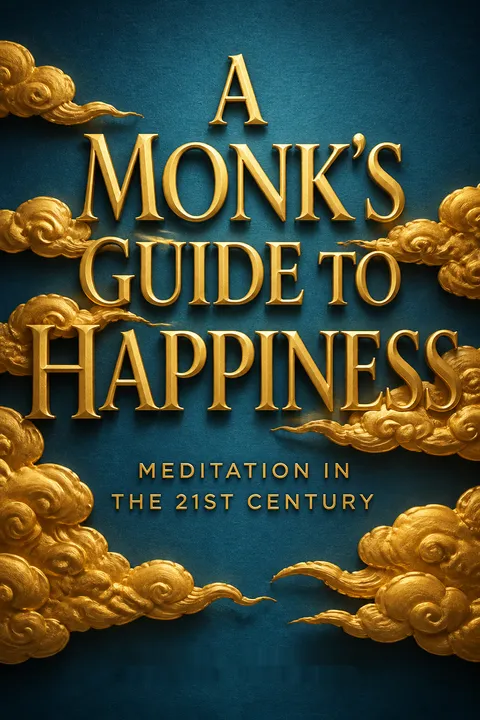
A Monk’s Guide to Happiness is part memoir, practical meditation manual, and Buddhist argument about the origins of dissatisfaction. Its narrative authority comes from a striking contrast: a former actor whose fast life culminated in burnout, and a monk who found that intensive retreat could expose rather than immediately soothe painful mental habits. That story gives the book’s central proposition emotional weight: practice changes how experience is met, not merely how pleasant experience feels.
The book is most useful when it replaces vague self-improvement with an observable exercise. Notice distraction, return to a sensory anchor, and repeat. Carry that move into washing, eating, commuting, and waiting. From this basic training, Thubten builds a larger ethical claim: less reactivity can support forgiveness, compassion, and more responsible relations with other people and the planet. The progression from attention to conduct is one of the book’s strongest features.
Its argument also requires careful boundaries. The claim that happiness is a choice can empower readers who feel trapped by automatic reactions, but it risks understating the force of grief, illness, trauma, poverty, and social injustice. The author acknowledges extreme hardship, yet some readers may still hear an expectation to meditate their way out of conditions that demand material change or clinical support. Similarly, scientific references to dopamine, cortisol, and brain imaging make the book accessible, but occasionally compress complex research into confident generalizations. Those claims are best treated as motivating explanations, not settled proof of every Buddhist conclusion.
The most balanced interpretation is practical rather than metaphysical. Meditation trains attention and tolerance of experience; it does not establish that suffering is unreal, that the self has no independent existence, or that difficult circumstances should be accepted passively. Used alongside relationships, treatment, and action, the practice can make a person less captive to immediate reactions and better able to choose what to do next. That is a modest claim, but also a substantial one.
Review Summary
Readers praise A Monk's Guide to Happiness for its accessible approach to meditation and mindfulness. Many find the author's personal experiences and practical advice inspiring. The book is seen as a clear, jargon-free guide suitable for beginners. Reviewers appreciate the focus on integrating meditation into daily life and the emphasis on finding inner happiness. Some note similarities to other meditation books but still find value in Thubten's perspective. A few readers felt the content was repetitive or lacked originality, but overall reception is positive.
People Also Read





Glossary
Grasping
Clinging or pushing awayThe book’s term for the mind’s tendency to chase what it wants, reject what feels uncomfortable, or cling to what it fears losing. Thubten treats both attraction and aversion as forms of grasping because each can keep attention locked in struggle. He connects this habit to dissatisfaction and to four common sources of stress.
Micro moments
Brief daily awarenessShort periods of mindful attention woven into ordinary activities rather than limited to formal meditation sessions. A person might notice the sensations of walking, washing, eating, or waiting, and return attention when distracted. Thubten recommends starting with a few recurring daily actions, then widening the practice to other moments.
Interdependence
Mutual reliance of lifeA Buddhist idea used in the book to describe how people, objects, and living systems depend on one another. Breathing, food, clothing, and daily life all rely on networks of other beings and conditions. Recognizing this mutual reliance is meant to support gratitude, compassion, and more responsible use of shared resources.
Fully tasking
Focused single-taskingThubten’s phrase for giving one activity wholehearted attention rather than fragmenting it across multiple tasks and inputs. He contrasts it with multitasking, especially in work settings where administrative demands crowd out deeper thought. The practice means attending carefully to one task at a time, then deliberately moving to the next.
Context rather than content
Change how experience is heldThubten’s distinction between investigating the specific content of thoughts and memories, and changing the mind’s habitual relationship to them. Meditation focuses on how attention clings to, elaborates, or resists mental events. The aim is to loosen that grip, rather than assuming every painful thought must first be explained or removed.
Analytical meditation
Contemplation that develops insightA meditation method that uses deliberate reflection on a question or theme to develop understanding. Rather than resting attention only on the breath or another sensory support, the practitioner considers ideas such as compassion, impermanence, or the effects of selfishness. Thubten advises exploring the questions carefully instead of rushing to predetermined answers.
Three levels of compassion
A progression toward altruismA three-stage account of developing compassion: first recognizing that everyone seeks happiness and freedom from suffering, then giving others’ needs greater importance, and finally cultivating a commitment to help carry others’ burdens. Thubten presents this progression as a training supported by meditation, not as a demand for self-erasure or martyrdom.
FAQ
What's "A Monk's Guide to Happiness" about?
- Overview: "A Monk's Guide to Happiness" by Gelong Thubten explores the concept of happiness through the lens of meditation and mindfulness in the 21st century. It provides insights into how meditation can lead to a deeper understanding of happiness.
- Personal Journey: The author shares his personal journey from a life of stress and burnout to becoming a Buddhist monk, highlighting the transformative power of meditation.
- Practical Guidance: The book offers practical advice on how to incorporate meditation into daily life, aiming to help readers find true, lasting happiness.
- Cultural Context: It also discusses the impact of modern technology and societal changes on our perception of happiness and how meditation can be a tool for navigating these challenges.
Why should I read "A Monk's Guide to Happiness"?
- Understanding Happiness: The book provides a unique perspective on happiness, emphasizing that it is a choice and can be cultivated through meditation.
- Practical Techniques: It offers practical meditation techniques and exercises that can be easily integrated into daily life, making it accessible for beginners and experienced practitioners alike.
- Personal Growth: Reading this book can inspire personal growth and self-awareness, helping readers to develop a more compassionate and mindful approach to life.
- Cultural Relevance: It addresses contemporary issues such as stress, technology, and the fast pace of modern life, offering meditation as a solution to these challenges.
What are the key takeaways of "A Monk's Guide to Happiness"?
- Happiness is a Choice: Happiness is not dependent on external circumstances but is a state of mind that can be cultivated through meditation.
- Meditation as a Tool: Regular meditation practice can lead to greater mental clarity, emotional resilience, and a deeper sense of contentment.
- Interdependence and Compassion: Understanding our interconnectedness with others and cultivating compassion are essential for true happiness.
- Mindfulness in Daily Life: Incorporating mindfulness into everyday activities can transform our experience of the world and enhance our well-being.
How does Gelong Thubten define happiness in "A Monk's Guide to Happiness"?
- Internal State: Thubten defines happiness as an internal state that is not reliant on external factors but can be accessed through meditation and mindfulness.
- Freedom from Desire: True happiness involves freedom from desire and conflicting emotions, allowing one to be present and content in the moment.
- Skill and Choice: Happiness is a skill that can be learned and a choice that can be made, rather than a random feeling.
- Compassion and Connection: Happiness is deeply connected to compassion and understanding our interdependence with others.
What meditation techniques are recommended in "A Monk's Guide to Happiness"?
- Breathing Meditation: Focus on the breath as a way to anchor the mind and develop concentration and awareness.
- Body Scan: A practice of moving attention through different parts of the body to cultivate mindfulness and relaxation.
- Sound Meditation: Using natural sounds as a focus to bring the mind into the present moment.
- Compassion Meditation: Visualizing light and sending love and kindness to oneself and others to develop compassion.
How does "A Monk's Guide to Happiness" address stress in the 21st century?
- Modern Challenges: The book discusses how modern life, with its fast pace and technological distractions, contributes to stress and dissatisfaction.
- Meditation as a Solution: Meditation is presented as a powerful tool for managing stress, reducing cortisol levels, and promoting mental clarity.
- Mindful Living: Encourages integrating mindfulness into daily activities to create a more balanced and less stressful life.
- Cultural Critique: Offers a critique of the modern emphasis on instant gratification and sensory stimulation, suggesting meditation as a path to deeper fulfillment.
What role does compassion play in "A Monk's Guide to Happiness"?
- Foundation of Happiness: Compassion is seen as a key component of true happiness, helping to shift focus from self-centered desires to the well-being of others.
- Empathy vs. Compassion: The book distinguishes between empathy, which can lead to emotional fatigue, and compassion, which is more sustainable and action-oriented.
- Training the Heart: Compassion is described as a trainable quality that can be developed through meditation and mindfulness practices.
- Interconnectedness: Emphasizes the importance of recognizing our interconnectedness with others and acting with kindness and understanding.
What are the best quotes from "A Monk's Guide to Happiness" and what do they mean?
- "Happiness is a choice": This quote encapsulates the book's central message that happiness is not dependent on external circumstances but is a state of mind that can be cultivated.
- "Meditation is not about getting rid of thoughts, but changing our relationship with them": Highlights the book's approach to meditation as a way to develop a healthier relationship with one's thoughts and emotions.
- "Compassion is the fastest path to happiness": Emphasizes the transformative power of compassion in achieving true happiness and fulfillment.
- "Freedom is what you do with what's been done to you": Suggests that true freedom and happiness come from how we respond to life's challenges, rather than the challenges themselves.
How does Gelong Thubten suggest building a meditation habit in "A Monk's Guide to Happiness"?
- Start Small: Begin with short meditation sessions, such as ten minutes a day, to build a sustainable habit.
- Consistency is Key: Practice regularly, ideally at the same time each day, to establish a routine.
- Mindful Moments: Incorporate mindfulness into daily activities, such as eating or walking, to reinforce the habit.
- Compassionate Motivation: Set an intention of kindness and compassion for oneself and others to inspire and sustain the practice.
What is the significance of forgiveness in "A Monk's Guide to Happiness"?
- Letting Go of Anger: Forgiveness is essential for releasing anger and resentment, which are obstacles to happiness.
- Understanding Others: Encourages understanding the suffering and confusion that drive others' negative actions, leading to compassion and forgiveness.
- Self-Forgiveness: Highlights the importance of forgiving oneself for past mistakes and recognizing one's inherent goodness.
- Freedom from Burden: Forgiveness is portrayed as a path to freedom from the emotional burdens that hinder happiness.
How does "A Monk's Guide to Happiness" relate to modern technology and social media?
- Impact on Happiness: Discusses how technology and social media contribute to distraction, stress, and a superficial sense of connection.
- Mindful Use: Encourages mindful engagement with technology, using it as a tool rather than allowing it to dominate one's life.
- Digital Detox: Suggests taking breaks from screens and practicing mindfulness to counteract the negative effects of constant connectivity.
- Real Connections: Emphasizes the importance of cultivating genuine, face-to-face connections and being present in the moment.
What are the practical benefits of meditation according to "A Monk's Guide to Happiness"?
- Stress Reduction: Meditation helps lower stress levels and promotes relaxation by reducing the production of cortisol.
- Enhanced Focus: Regular practice improves concentration and mental clarity, making it easier to focus on tasks.
- Emotional Resilience: Meditation builds emotional resilience, helping individuals to better manage their thoughts and emotions.
- Overall Well-being: Leads to a greater sense of contentment, happiness, and fulfillment by fostering a deeper understanding of oneself and one's place in the world.
Download PDF
Download EPUB
.epub digital book format is ideal for reading ebooks on phones, tablets, and e-readers.








