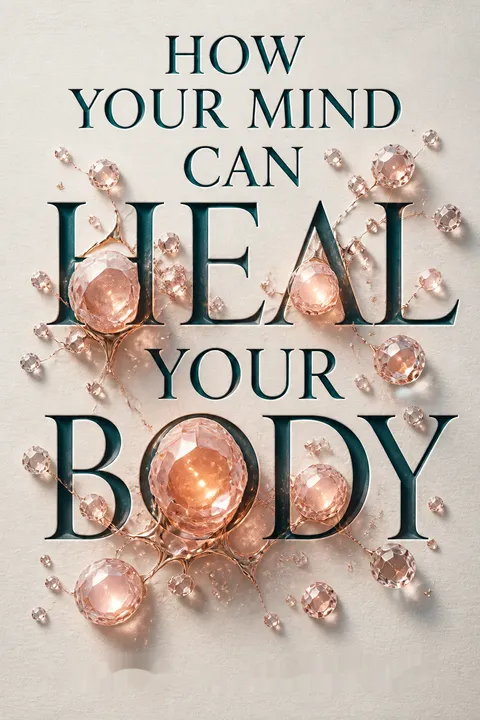


Key Takeaways
Use mental practice to support treatment, never to replace it
An adjunct, not an alternative. Hamilton’s central claim is that thoughts, expectations, and imagery can influence bodily processes, sometimes in useful ways. He explicitly presents visualization as something to use alongside medical advice and treatment, not instead of them. A stroke rehabilitation study illustrates this distinction: patients who added guided movement imagery to physical therapy improved more than patients who received therapy followed by relaxation alone.
Keep the boundary clear. Visualization can offer focus, calm, and a sense of participation in recovery. It is not a reliable substitute for medication, surgery, or professional assessment, and a person’s illness is not evidence that they failed to think positively enough.
The strongest version of this idea treats mental practice as one component of care, much like sleep, rehabilitation, or emotional support. It can help patients engage with treatment without asking them to choose between medicine and mind. That distinction is also ethically important: recovery is shaped by biology, access to care, and chance, not simply attitude. The book’s own safety boundary deserves to be made prominent, especially because vivid stories of recovery can sound more conclusive than they are.
Expectations can trigger biology, but they cannot guarantee recovery
Belief has bodily effects. The placebo effect occurs when a treatment’s expected benefit produces measurable changes, even when the treatment contains no active drug. In pain studies, expectation has been linked to the brain releasing its own opioid painkillers. In Parkinson’s disease studies described by Hamilton, patients given a placebo while expecting medication showed increased dopamine activity and improved movement.
Expectation can harm, too. A nocebo effect is the production or worsening of symptoms through negative expectation. In one asthma experiment, people who inhaled water vapor but were told it contained allergens sometimes developed airway constriction. These findings show that belief can affect symptoms and physiology. They do not show that belief can control every disease or reliably reverse its cause.
Placebo research makes a useful distinction between an experience being psychologically influenced and being imaginary. Pain, nausea, anxiety, and other symptoms are real experiences, and expectations can alter the systems that shape them. The same evidence also resists a simplistic message of mind over matter: effects vary by condition, person, and setting. A biological response to expectation is not evidence that an inert pill cures a disease, nor that patients can will themselves well.
Make the treatment encounter part of the treatment
Context changes response. Hamilton describes evidence that a medicine’s perceived credibility, packaging, and the clinician’s manner can influence how patients respond. In one study of 200 people with minor ailments, 64 percent of patients who received a positive consultation reported improvement after two weeks, compared with 39 percent after a less reassuring consultation. The difference was in how the clinician explained the problem and what the patient could expect.
Trust beats theater. This is not an argument for exaggerating benefits or concealing uncertainty. Honest explanations, warmth, and confidence grounded in evidence can support patients’ expectations while preserving informed choice. The treatment context is part of care, but it should not become a performance that promises what medicine cannot deliver.
A good clinical encounter can reduce uncertainty, help patients feel heard, and make a plan easier to follow. Those effects matter even when they do not directly change the disease process. The practical implication is not that clinicians should “sell” treatments, but that accurate, humane communication is a therapeutic resource. The ethical line is clear: optimism is useful when it is truthful. False certainty can damage trust, particularly when a treatment fails.
Your brain rehearses imagined movement as a form of practice
The brain is adaptable. Neuroplasticity is the brain’s capacity to change its connections and activity with experience and use. Hamilton describes research in which people who imagined practicing a simple finger movement gained measurable strength, although less than people who performed the movement physically. In a reported study, imagined practice improved strength by 35 percent, compared with 53 percent after physical practice.
Mental rehearsal is real practice, but partial practice. Imagining a movement activates brain regions involved in performing it and may help prepare the body for action. This can be useful when injury or disability limits physical practice. It does not make imagined exercise equivalent to actual training, and its value depends on the movement, the person, and the outcome being measured.
Motor imagery offers a striking example of how rehearsal can shape performance without producing the full physical demands of practice. In learning science, mental simulation can strengthen a plan for action, while physical feedback helps correct errors and adapt to changing conditions. The two modes are most compelling as complements. The laboratory strength gains are interesting, but they should not be translated into broad promises about rebuilding muscle or curing injury.
Watch experts before rehearsing skills you do not yet know
Get the movement right. A mental representation is the internal picture or sense of how an action should be performed. Experienced performers may already have a useful one; beginners often do not. Hamilton describes golf studies in which novice players improved when they observed an expert’s putting technique, and combining observation with physical practice proved especially useful.
Model first, imagine second. Watching a skilled action can help a learner form a clearer movement pattern before rehearsing it mentally. Otherwise, repeated imagery may reinforce a faulty technique. The same principle appears in rehabilitation: patients who watched ordinary actions, such as lifting a cup, improved more than comparison patients in one small stroke study. Observation can guide practice, but it does not replace hands-on coaching or rehabilitation.
The useful insight is not simply that watching someone activates the brain. It is that learning depends on the quality of the model. Skilled demonstrations give novices a reference point, while repeated practice supplies feedback about whether the action works. This connects imagery to observational learning and coaching. The limits matter: copying an expert’s visible movement does not guarantee that a learner understands its timing, balance, or physical requirements.
Choose a visualization that feels clear, personal, and repeatable
There is no required mental movie. Hamilton describes people imagining healing through changing, cleaning, repairing, or calming a bodily process. Others use symbolic images, colors, imagined conversations with cells, or simply a clear intention. Scientific anatomical accuracy is not essential to the practice as presented; the image should make sense to the person using it and point toward the desired outcome.
Make it sustainable. People in the book practice for different lengths of time, from brief sessions to longer guided exercises. Hamilton recommends consistency more than a fixed duration and suggests starting with only a few minutes if the practice is unfamiliar. If an image increases anxiety, change it or choose relaxation instead. A practice that creates pressure or guilt is unlikely to be helpful.
Personal imagery can make an abstract intention concrete, which may help attention and motivation. The flexibility also makes the practice accessible to people who do not experience vivid visual pictures. Its best test is not whether an image looks scientifically precise, but whether it supports a calm, constructive routine. Care is needed, however, not to confuse a compelling image with evidence that the pictured biological process is actually happening.
Give stress a safe outlet before it becomes your whole inner climate
Stress has bodily consequences. Hamilton cites a review of 293 studies linking psychological stress with changes in immune function. He also describes research on wound healing and a small study in which people with HIV and higher stress showed poorer responses to medication. These findings suggest that stress can affect health, though they do not make it the sole cause of illness.
Express, settle, reconnect. The book recommends talking with a trusted person, writing about difficult experiences, and practicing meditation or mindful breathing. In one study, medical students who wrote about traumatic experiences later showed a stronger antibody response to hepatitis B vaccination than students who wrote about ordinary topics. These approaches can provide a way to process emotion and reduce strain, not a guarantee of disease control.
The practical value of emotional expression is that it can help people organize difficult experiences instead of carrying them in silence. Mindfulness adds a different skill: noticing a reaction without immediately being driven by it. Neither practice makes social hardship disappear, and stress should not be framed as a personal failure. Chronic strain may require changes in relationships, work, or access to support, not just a better breathing technique.
Build optimism without treating illness as a failure of attitude
Outlook is associated with health. Hamilton reports a 30-year study of 447 people in which optimists had about half the risk of early death compared with pessimists. Another study linked more positive views of aging with roughly seven additional years of life. He also describes research connecting positive emotions with lower rates of respiratory infection after experimental exposure.
Use optimism as a coping stance. A hopeful outlook may help people respond to setbacks, stay engaged, and experience less distress. The findings are associations and do not prove that optimism alone caused longer lives or prevented illness. People can be fearful, angry, or depressed while still doing everything possible for their health. Positivity should be an option, not another demand placed on someone who is sick.
Optimism can matter partly because it shapes behavior, persistence, and interpretation of setbacks. It may also reflect other advantages, including health, resources, and social support, which makes causal claims difficult. A useful approach is flexible hope: the ability to imagine a workable future without denying present difficulty. That avoids the trap of forced positivity, which can silence patients and turn an uncertain medical outcome into a judgment about character.
Make warmth and practical support part of healing
Relationships affect the body. Hamilton describes research linking hostility between married partners with greater coronary artery calcification, while supportive interactions were associated with healthier hearts. He also cites wound-healing research in which hostile couples healed more slowly than less hostile couples. These studies point to the physiological relevance of how people relate, not merely to a pleasant emotional atmosphere.
Support is concrete. Kindness, dependable help, and feeling safe with others may ease stress and help people manage treatment. The book’s closing argument gives love and connection a central place in well-being, but does not need to be read as a claim that affection cures disease. Support can improve a person’s experience of illness even when it cannot change the diagnosis.
Social connection is not just an attitude inside one person. It is a resource distributed through relationships, caregiving, and community. That makes support more than a private wellness exercise: practical help can reduce burdens that meditation cannot. At the same time, one person should not be expected to remain cheerful or loving to protect another person’s health. The most humane reading is reciprocal care, not emotional perfection.
Treat immune imagery as promising support, not cancer therapy
Some studies report measurable changes. In one small study described by Hamilton, volunteers who imagined immune activity had more than twice the rise in secretory immunoglobulin A seen in a group using general relaxation imagery. Cancer studies also reported changes in immune markers and improvements in quality of life or treatment-related symptoms among patients using guided imagery alongside standard care.
Markers are not cures. These findings make visualization a plausible supportive practice, especially when it helps patients relax or cope with treatment. They do not establish that imagery removes cancer, prevents recurrence, or replaces chemotherapy, surgery, or radiotherapy. The dramatic recovery stories in the book are personal accounts, not controlled evidence that visualization caused the outcome.
The evidence is most persuasive when the outcome is modest and directly measured, such as distress, symptom burden, or a biological marker. A change in an immune marker is not automatically a change in survival or tumor control. This distinction protects both scientific accuracy and patients from false hope. Guided imagery can still be valuable without being a cancer treatment: comfort, agency, and better tolerance of care are meaningful outcomes in their own right.
Analysis
The book’s most durable contribution is its insistence that mind and body interact through ordinary biological pathways. Expectations can alter pain and other symptoms; attention and rehearsal can shape motor activity; stress and social context can influence physiology. These mechanisms give visualization a credible place in supportive care, particularly when it helps with rehabilitation, distress, or engagement with treatment.
The evidence does not all support the same level of conclusion. Motor imagery and expectation effects have specific, measurable laboratory outcomes. Guided imagery studies in cancer care often examine quality of life, symptoms, or immune markers. Those are worthwhile outcomes, but they do not establish that visualization controls cancer or reliably changes survival. The book’s many personal recovery stories are vivid illustrations of how people use imagery, but they cannot separate its effect from medical treatment, natural recovery, lifestyle changes, or other factors.
That distinction matters ethically. When a patient improves, crediting visualization may strengthen their sense of agency. When a patient does not improve, the same story can imply that they lacked belief, discipline, or positivity. Hamilton’s advice to use imagery alongside medical care counters that risk, but the book’s stronger claims about healing, genes, and immune control sometimes outrun the evidence it presents.
A careful reader can keep the practical core without accepting every proposed mechanism. Choose imagery that is calming and meaningful, use it to rehearse movement or support coping, and evaluate its effects by outcomes that matter to the patient. Clinicians can help by pairing truthful information with warmth and by presenting mental practice as an option rather than a test of character. The result is neither dismissal nor magical thinking: it is a modest, humane account of how mental life can participate in care.
Review Summary
How Your Mind Can Heal Your Body receives praise for its scientific explanations of mind-body connections, visualization techniques, and placebo effects. Readers appreciate the practical tools, personal stories, and research studies presented. Some find the book repetitive or overly broad, while others consider it life-changing. The visualization exercises and affirmations are highlighted as particularly useful. Critics note the book's length and occasional lack of depth, but most agree it offers valuable insights into the power of positive thinking and mental imagery for healing.
People Also Read




Glossary
Neuroplasticity
Brain change through useNeuroplasticity is the brain’s ability to alter its connections and activity in response to experience, learning, attention, and repeated practice. Hamilton uses it to explain how physical action, imagined movement, observation, and meditation may change brain regions or networks. Such changes support learning and adaptation, but do not by themselves demonstrate that a disease has been cured.
Placebo effect
Benefit shaped by expectationThe placebo effect refers to changes in symptoms or bodily processes associated with the expectation that a treatment will help, even when the treatment lacks the active ingredient being tested. The book describes examples involving pain, Parkinson’s disease, and other conditions. Placebo responses vary widely, and evidence of a response does not mean that every disease can be treated with an inactive substance.
Nocebo effect
Harm shaped by expectationThe nocebo effect is the appearance or worsening of symptoms associated with negative expectations about a treatment or event. Hamilton illustrates it with people who inhaled harmless water vapor after being told it contained allergens, with some experiencing airway constriction. The term describes a genuine mind-body response, not proof that symptoms are imaginary or that expectations explain every illness.
Meaning responses
Effects shaped by treatment meaningMeaning responses are health-related effects influenced by what a treatment signifies to a patient and by the setting in which care occurs. The meaning may come from a clinician’s explanation, a medicine’s appearance, or a familiar ritual. The concept broadens discussion beyond the chemical ingredient alone, while leaving room for the active treatment and the illness itself to matter.
Mental representation
Internal model of an actionA mental representation is a person’s internal sense of how an action, body part, or process is organized and what it should look or feel like. In sport and rehabilitation, a clear representation can guide imagery and practice. Hamilton stresses that beginners may need to observe a skilled model before imagining a movement accurately.
Action observation
Learning by watching movementAction observation is the deliberate watching of another person performing a movement, often to support learning or rehabilitation. The book describes studies in which observing skilled actions helped novices improve performance and stroke patients improve movement. Observation can help form a useful model for practice, but it does not remove the need for physical practice, feedback, or clinical care.
Mirror neurons
Neurons responding to observed actionsMirror neurons are nerve cells discussed in the book in connection with brain activity during both action and observation of action. Hamilton uses the concept to explain why watching a movement may engage systems involved in performing it and may support imitation or learning. The term should not be taken to mean that observed and performed actions are identical in every neural or physical respect.
Open-label placebo
Placebo given without deceptionAn open-label placebo is an inactive pill or treatment given with the patient explicitly told that it is a placebo. Hamilton describes trials reporting symptom improvements in conditions including irritable bowel syndrome and chronic low back pain. These studies suggest that ritual, context, and nonconscious processes may matter, but results in particular conditions do not establish open-label placebos as substitutes for necessary medical treatment.
Mindfulness-based stress reduction
Mindfulness practice for stressMindfulness-based stress reduction, commonly abbreviated MBSR, is a structured program described in the book that uses practices such as mindful attention to breathing and gentle movement to help manage stress. Hamilton cites studies involving cancer patients and people with type 2 diabetes. Reported outcomes include changes in stress, mood, and health measures; MBSR is a supportive practice, not a replacement for medical care.
Placebo Controlled Dose Reduction
Conditioned lower-dose treatmentPlacebo Controlled Dose Reduction, or PCDR, is a research approach in which a treatment is paired with an active drug, then some doses are replaced with placebos. The intended effect is to draw on learned bodily responses while reducing the amount of active medication. Hamilton describes early studies in several conditions; the method requires clinical supervision and is not a basis for changing medication without a prescriber.
The Six Visualization Pathways
Proposed routes for imagery effectsThe Six Visualization Pathways is Hamilton’s organizing model for possible ways visualization may influence health: immune activity, nervous-system changes, neuropeptides, empowerment, positive belief, and focused willpower. The book presents these as potential or overlapping explanations, not as six mechanisms conclusively established for every condition. The framework is intended to explain why imagery may have different effects for different people.
FAQ
What's How Your Mind Can Heal Your Body about?
- Mind-Body Connection: The book delves into the profound connection between the mind and body, showing how thoughts, beliefs, and emotions can impact physical health.
- Visualization Techniques: It offers practical visualization techniques that readers can use to promote healing and improve well-being.
- Scientific Evidence: Author David R. Hamilton presents scientific research supporting the idea that mental practices can lead to physical changes in the body.
Why should I read How Your Mind Can Heal Your Body?
- Empowerment Through Knowledge: The book empowers readers by demonstrating their ability to influence health through thoughts and beliefs.
- Practical Guidance: It provides practical tools and techniques for visualization that are easy to integrate into daily life.
- Inspiring Stories: Includes true stories of individuals who have successfully used visualization to overcome health challenges, offering motivation and hope.
What are the key takeaways of How Your Mind Can Heal Your Body?
- Power of Positive Thinking: A positive mindset can significantly impact health outcomes, with studies linking optimism to better health.
- Visualization for Healing: Visualization is a powerful tool that can enhance recovery by creating mental images of health and wellness.
- Mind's Influence on the Body: The mind can produce physical changes, such as improved immune function, through focused thought and belief.
What are the best quotes from How Your Mind Can Heal Your Body and what do they mean?
- Optimism and Opportunity: “A pessimist sees the difficulty in every opportunity; an optimist sees the opportunity in every difficulty.” This highlights the importance of maintaining a positive outlook.
- Beliefs Shape Reality: “The outer conditions of a person’s life will always be found to reflect their inner beliefs.” This suggests that changing our mindset can lead to positive life changes.
- Power of Imagination: “Imagination is everything. It is the preview of life’s coming attractions.” This underscores the power of visualization in manifesting desired outcomes.
How does visualization work according to How Your Mind Can Heal Your Body?
- Neuroplasticity: Visualization creates physical changes in the brain through neuroplasticity, strengthening neural connections with repeated thoughts and images.
- Chemical Production: The brain produces neurotransmitters and neuropeptides during visualization, influencing bodily functions and promoting healing.
- Empowerment and Belief: Visualization fosters a sense of empowerment and belief in one’s ability to heal, enhancing the healing process.
What specific visualization techniques are recommended in How Your Mind Can Heal Your Body?
- Active Change Visualization: Visualize specific changes, like a tumor shrinking, to actively influence healing.
- Clean and Polish Visualization: Focus on visualizing the cleaning and restoration of cells or organs to promote recovery.
- Symbolic Change Visualization: Visualize symbolic representations of healing, such as turning brokenness into wholeness, to foster healing.
How can I apply the concepts from How Your Mind Can Heal Your Body in my daily life?
- Daily Visualization Practice: Set aside time each day to practice visualization, focusing on specific health goals.
- Positive Affirmations: Use positive affirmations to reinforce a positive mindset and belief in your ability to heal.
- Mindfulness and Meditation: Engage in mindfulness practices to reduce stress and enhance visualization effectiveness.
What role does stress play in healing, according to How Your Mind Can Heal Your Body?
- Negative Impact of Stress: Stress is linked to health issues like weakened immune function and slower healing rates.
- Stress Reduction Techniques: The book emphasizes reducing stress through visualization, meditation, and positive thinking.
- Mind-Body Connection: Understanding this connection helps individuals manage stress proactively, improving health outcomes.
How does the placebo effect relate to the concepts in How Your Mind Can Heal Your Body?
- Belief in Treatment: The placebo effect shows that belief in a treatment can lead to real physiological changes, similar to visualization effects.
- Mind's Influence: Visualization and the placebo effect both demonstrate the mind's significant impact on the body's response to treatment.
- Empirical Evidence: The book provides examples of studies where the placebo effect improved health outcomes, reinforcing the power of belief.
Can visualization be used for specific medical conditions as mentioned in How Your Mind Can Heal Your Body?
- Cancer Treatment: Visualization techniques can help cancer patients by enhancing immune function and reducing side effects.
- Chronic Pain Management: Visualization aids in managing chronic pain by focusing on healing and reducing stress.
- Rehabilitation: Visualization is beneficial in rehabilitation, promoting recovery and improving physical function after strokes or surgeries.
What are some effective visualization techniques mentioned in How Your Mind Can Heal Your Body?
- Healing Light Visualization: Visualize a healing light flowing through the body to promote relaxation and healing.
- Suction Technique: Imagine a suction device removing harmful elements, creating a sense of cleanliness and health.
- Creative Imagery: Use imaginative scenarios, like visualizing immune cells as workers, to make the process engaging and effective.
What role does love play in healing according to How Your Mind Can Heal Your Body?
- Nurturing the Soul: Love nurtures the soul and significantly impacts emotional and physical healing.
- Transforming Perception: Love shifts perception of challenges, making them seem lighter and more manageable.
- Foundation for Healing: Love is essential for healing, with relationships being crucial for a meaningful life.
About the Author
Other books by David R. Hamilton




Download PDF
Download EPUB
.epub digital book format is ideal for reading ebooks on phones, tablets, and e-readers.








