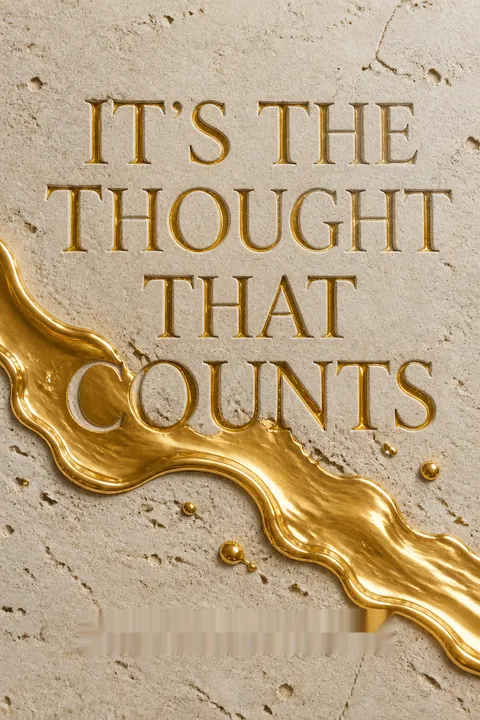


Key Takeaways
Treat thoughts as inputs to biology, not commands that control it
Mind and body interact. The book’s most grounded claim is that feelings and interpretations can influence physical processes, while bodily changes can also affect mood and thought. Stress, for example, activates systems that influence heart rate, hormones, and immune function. A small study described in the book compared people thinking about appreciation with people recalling anger, and found differences in heart-rhythm patterns. Such findings suggest immediate physiological effects, not proof that positive thoughts prevent or cure disease.
The influence has limits. The author uses “bodymind” for this reciprocal relationship between mental and physical processes. It helps explain why a stressful event can feel physical, and why illness can affect a person emotionally. It does not mean that every symptom has a psychological cause, or that people can choose their way out of serious illness.
The useful shift is from treating emotion as a private, immaterial experience to recognizing it as part of the body’s regulatory environment. Modern stress research supports this two-way traffic: appraisal can alter stress responses, and sleep, inflammation, pain, and illness can in turn shape mood. The book’s language sometimes makes these effects sound more total than they are. Biological systems are influenced by thought, but also by pathogens, poverty, medication, genetics, and chance. Agency matters without making health a test of optimism.
Use expectation to support treatment, never to replace it
Belief can change symptoms. A placebo is an inactive treatment presented as though it may help. The book describes research in which people with Parkinson’s disease showed changes in brain activity after receiving a saline injection they believed was medication. It also recounts experiments where volunteers’ breathing changed after inhaling water they thought would constrict or open their airways. Expectation and learned associations can trigger real bodily responses, including pain relief.
Context is not a cure-all. A placebo response may ease symptoms, but it does not establish that an inactive pill treats the underlying disease. The author stresses that effective drugs, medical care, and belief can all contribute to recovery. A practical lesson is to seek care from clinicians and treatments that inspire trust, while continuing appropriate medical treatment rather than substituting faith for it.
Placebo research is valuable partly because it shows that treatment is more than a molecule: explanation, trust, ritual, and prior learning influence what a patient experiences. The strongest evidence is for symptom changes such as pain or nausea, not for replacing disease-directed care. This distinction protects both the power of expectation and the integrity of medicine. Clinicians can use honest reassurance and attentive communication without deceiving patients or implying that a poor outcome reflects insufficient belief.
Lower chronic stress and express pain without blaming yourself
Stress can hinder recovery. Hamilton gathers studies linking psychological strain with slower wound repair and altered immune responses. He also describes expressive-writing research in which people with asthma or rheumatoid arthritis reported improvements after writing about stressful experiences. The practical implication is not that distress creates every illness, but that reducing strain and finding safe ways to process difficult experiences may support well-being.
Do not turn correlation into blame. The book discusses studies associating emotional suppression with disease progression, including cancer, but it does not establish that suppressed feelings cause cancer or that emotional release cures it. Talking with a trusted person, writing, or seeking therapy may help someone cope; none should replace medical care. People differ in how they process emotion, and not everyone needs to disclose painful experiences to heal.
The emphasis on emotional expression is strongest when understood as a route to coping, social support, and reduced stress, rather than as a cancer theory. Research on stress and healing supports biological links, but complex diseases have many interacting causes, and associations between personality and illness can be overstated. A person who is ill has not failed by feeling fear, anger, or grief. The ethical version of this lesson offers tools and support while refusing to make patients responsible for their diagnosis.
Practice can reshape attention, coping, and some gene activity
Experience leaves biological traces. The book introduces “psychosocial genomics,” its term for how experience and psychological states may influence gene expression. Learning, repeated behavior, stress, and supportive care can affect processes involved in brain development and bodily regulation. Research on young rats, for example, found that repeated gentle handling was associated with changes in stress-related measures and later memory performance. These findings point to the body’s responsiveness to its environment, not to thoughts rewriting the DNA sequence at will.
Use imagery as rehearsal. Visualization can make a desired action or recovery easier to imagine and sustain. Hamilton tells of a man who pictured his damaged liver as healthy and later recovered, but this is an anecdote, not evidence that visualization regenerated the organ. The sounder application is to use imagery alongside practical steps, such as rehabilitation, rest, or skill practice.
This section connects naturally with neuroplasticity, the brain’s capacity to change through repeated experience. Mental rehearsal can support performance when paired with actual practice, because it helps organize attention and action. Gene expression is also responsive to environment, but that does not imply that any imagined outcome can switch on a chosen gene or rebuild an organ. The distinction matters: visualization is a plausible aid to behavior and coping, while miraculous biological claims require evidence beyond a compelling personal story.
Make care visible through touch, listening, and emotional support
Relationships affect the body. Hamilton uses studies of maternal touch in rat pups to illustrate how early care can influence stress systems and development. He also describes massage research in which women with breast cancer showed changes in stress hormones and immune-cell measures. A warm interaction may calm someone, strengthen their sense of safety, and encourage behaviors that support health. These effects make kindness more than an abstract virtue.
Care is practical, not magical. Listening without rushing to fix someone, offering appropriate touch, or helping with daily burdens can reduce isolation and stress. The book also stresses asking permission before hands-on healing. These gestures can complement treatment and provide comfort, but they cannot guarantee recovery. Touch should be welcome, culturally appropriate, and responsive to the other person’s needs.
The most persuasive interpretation of healing touch does not require invisible energy: human contact can influence stress, pain, trust, and the willingness to seek or follow care. Social support is also associated with better coping during illness, though its effects vary by person and circumstance. The author’s emphasis on compassion is strongest when it becomes observable behavior. Consent is essential, especially because touch that comforts one person may alarm another. Good care begins by noticing what the recipient actually wants.
Use meditation and music to regulate state, not promise cures
Rituals can shift attention. The book describes meditation studies reporting changes in stress, attention, and brain structure, along with research suggesting that music can affect heart rate, anxiety, and immune markers. Prayer and qigong also appear as practices that focus attention and create a sense of meaning or calm. For readers, the modest, useful claim is that regular practices can help shape emotional state and provide structure during difficult periods.
Match claims to evidence. A reported study of children with ADHD found lower stress and anxiety after a meditation program, while some music studies measured short-term physiological changes. Those results do not establish meditation or music as cures for disease. Claims that prayer heals someone at a distance, or that water stores an intention, are much less secure. These practices can accompany care, but should not displace it.
A ritual can help because it gives attention a repeated anchor, makes a person feel less alone, and may encourage slower breathing or steadier routines. Those pathways are plausible even when a spiritual explanation remains uncertain. This offers a respectful middle ground: people need not abandon prayer or music to meet a scientific standard, but therapeutic claims should be proportional to the evidence. Short-term shifts in mood or physiology are meaningful outcomes, yet they are not interchangeable with curing an underlying condition.
Keep spiritual connectedness as a hypothesis, not established physics
The book reaches beyond the body. Hamilton presents experiments involving distant intention, people supposedly sensing a stare, and random-event generators that appeared to respond to focused attention. He interprets these findings through a universal field connecting minds and matter, drawing on quantum physics and Jung’s idea of a collective unconscious. In this account, thoughts may influence people and events even without ordinary contact.
Separate metaphor from demonstration. These studies are described in the book, but their interpretation is contested, and the evidence does not establish that thought travels through a quantum field or heals someone at a distance. Quantum entanglement does not by itself show that people can send messages or intentions. The idea of connectedness may be meaningful as a spiritual picture, but it should not be presented as settled scientific fact.
The connected-web image captures a genuine intuition: people are shaped by relationships, shared information, and collective behavior. The scientific leap occurs when that social truth is treated as proof of nonlocal mental influence. Quantum theory describes physical systems under precise conditions; it does not license every claim that invokes connectedness. A careful reader can preserve the ethical insight, that actions affect others, while leaving extraordinary mechanisms open to testing. Intellectual humility makes room for wonder without confusing wonder with evidence.
Turn personal kindness into collective change through repeated behavior
Shared moods have consequences. Hamilton argues that individual thoughts contribute to a collective emotional climate, and he points to group meditation and mass-intention studies as evidence. Those studies claim that large gatherings coincide with reduced crime or conflict, or shifts in random-event data. Their causal conclusions remain disputed, but the broader point is practical: emotions spread through interaction, and group norms influence what people do.
Build peace through action. If many people respond to conflict with contempt, they can reinforce hostility in conversation and institutions. If they practice listening, fair dealing, and cooperation, they create different conditions for others. The book’s “tipping point” image suggests that small contributions accumulate. This need not depend on a mysterious field: repeated acts, public norms, and organized help can make collective change visible.
Collective change is most convincing through ordinary mechanisms: people imitate one another, institutions reward some behaviors, and social networks spread norms. A courteous act can influence a conversation; organized cooperation can alter policy or distribute resources. These pathways are measurable and do not diminish the importance of personal intention. By contrast, claims that meditation alone lowers crime or prevents conflict need stronger causal evidence. The practical test is whether a hopeful mindset leads to concrete behavior that improves someone’s actual circumstances.
Practice self-kindness, forgiveness, and care for living systems
Three habits make the book practical. Hamilton closes with three commitments: treat oneself with care, look for good in other people, and extend compassion to nature. He tells of a monkey that holds tightly to food inside a narrow-necked jar and becomes trapped, using the story to show how clinging to blame can keep a person stuck. Forgiveness, in this framing, means releasing the hold of resentment, not excusing harm or abandoning boundaries.
Make the values visible. Self-kindness can mean taking a needed rest rather than adding self-criticism. Seeing another person’s strengths can encourage them to act from those strengths. Caring for nature can be as direct as protecting a small creature or treating plants and animals with consideration. These actions do not require belief in distant energy; they express the love-centered ethic at the heart of the book.
This closing ethic is most durable when translated into behavior rather than metaphysics. Self-compassion can help people recover from mistakes without denying responsibility; forgiveness can loosen rumination without requiring reconciliation with someone unsafe. Attention to other people and the natural world also widens the circle of concern beyond immediate self-interest. The principle needs one guardrail: kindness should not become an obligation to tolerate abuse or ignore injustice. Compassion can coexist with boundaries, accountability, and clear-eyed action.
Analysis
The book’s strongest contribution is its insistence that thought and feeling are embodied. Stress, expectation, attention, social support, and learned behavior can influence physiology and recovery. Its practical advice follows naturally: use treatments you trust, find workable ways to regulate stress, seek supportive relationships, and let compassion shape daily conduct. These claims are more useful when framed as influences, not controls.
The book is less reliable when it moves from mind-body pathways to claims that intention changes water, reaches distant patients, or alters world events through quantum connectedness. Reports of experiments are not equivalent to replicated evidence, and quantum physics does not establish telepathy or healing at a distance. Similarly, personal stories of dramatic recovery can inspire but cannot identify what caused the outcome. The distinction between a plausible mechanism, an intriguing observation, and a demonstrated effect is essential throughout.
That distinction also matters ethically. If thoughts are presented as the decisive cause of illness, people may conclude that patients created or failed to overcome their diseases. Hamilton sometimes cautions against this, yet his stronger claims about belief and gene activity can invite that reading. A balanced interpretation recognizes that mental state can support coping and influence some biological processes while remaining only one factor among many. Genetics, infection, material conditions, clinical care, and chance remain consequential.
The book’s durable message is therefore not that thought can command matter, but that inner life is part of how people inhabit their bodies and treat one another. Its spiritual vision can motivate kindness; its scientific claims should be judged individually. Readers gain most by keeping the humane practices, using evidence-based medicine, and treating extraordinary explanations as possibilities to investigate rather than facts to rely on.
Review Summary
It's the Thought That Counts receives positive reviews for its scientific approach to mind-body connections and healing. Readers appreciate Hamilton's exploration of visualization, placebo effects, and the power of positive thinking. The book covers topics like gene activation, spiritual healing, and the impact of emotions on health. While some find it transformative and informative, others see it as a basic introduction. Overall, reviewers value the blend of scientific research and spiritual concepts, finding the book accessible and thought-provoking.
Glossary
bodymind
mind and body togetherHamilton’s term for the reciprocal relationship between mental and physical processes. Thoughts and emotions can influence bodily responses, while hormones, illness, pain, and other bodily changes can influence mood and thinking. The term emphasizes that these processes interact rather than operate as entirely separate systems.
psychosocial genomics
experience linked to gene expressionA field label used in the book for investigating how psychological and social experiences relate to gene expression and brain development. The central distinction is between influencing which genes are active and changing the underlying DNA sequence. Hamilton extends this idea to intentions and visualization, but those stronger claims should not be confused with established genetic mechanisms.
neuropeptides
chemical signaling moleculesSmall molecules made from chains of amino acids that act as chemical signals in the nervous system and elsewhere in the body. The book emphasizes that they participate in communication among brain, immune, and hormonal systems. Their role helps explain how emotional and physiological processes can interact, although a particular feeling cannot simply be mapped to a single peptide or body part.
feelingization
visualization with emotional engagementHamilton’s term for imagining a desired outcome while actively generating the feelings associated with it. The image supplies a goal, while emotion makes the imagined situation vivid and motivating. It can be understood as a way to strengthen attention and action toward a goal, not as demonstrated evidence that feelings directly create external events or cure disease.
Higher Self
spiritual source of personal purposeA spiritual concept in which a person has a deeper aspect of identity connected to a larger intelligence or divine source. Hamilton proposes that this aspect shapes a person’s life themes and genetic blueprint. This is a metaphysical belief, not a biological entity established by the research discussed in the book.
collective unconscious
shared unconscious mental inheritancePsychologist Carl Jung’s hypothesis that people share deep unconscious patterns and symbolic material. Hamilton extends the idea into a broader network through which information and intentions may pass among people. The Jungian concept is influential in psychology and culture, but the book’s claims of direct information transfer are not established by the concept itself.
distant intentional influence
intention affecting distant targetsThe book’s label for proposed effects in which a person’s focused intention influences someone or something without direct contact. Hamilton describes studies involving people, plants, and biological samples. These findings are disputed and do not establish a reliable clinical treatment or a known physical mechanism; the term identifies a research claim, not a confirmed capability.
qi
vital energy in Eastern traditionsA concept in Chinese traditions describing vital energy or life force that flows through the body. In the book, health is associated with smooth flow, while illness may be described as blockage. Practices such as qigong and acupuncture are presented as ways to influence that flow. Qi is a traditional explanatory concept and should not be mistaken for a measured substance equivalent to blood or a hormone.
About the Author
Other books by David R. Hamilton


Download PDF
Download EPUB
.epub digital book format is ideal for reading ebooks on phones, tablets, and e-readers.








