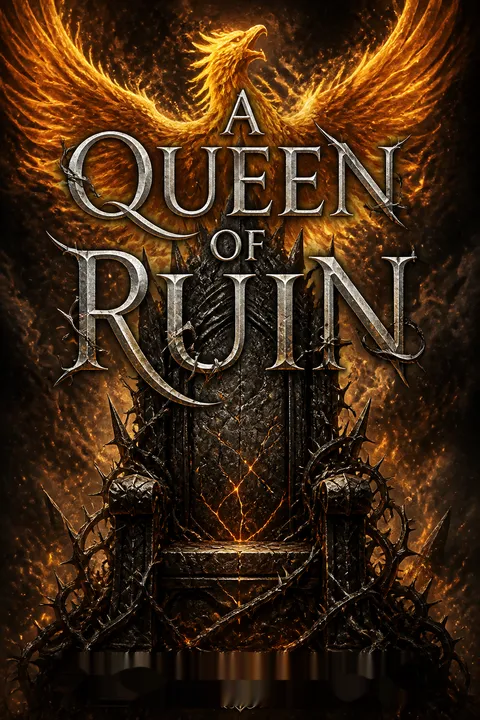


Plot Summary
The Queen Returns
After the demons are driven from Wyvern, Nyfain faces the mother he believed dead. Queen Arleth has survived for sixteen years in a distant dragon village, and her return leaves him torn between longing and suspicion.
Finley, newly reunited with her mate, sees how the revelation unsettles him, while Hadriel notices another fracture opening: the wolves, including his own animal, are drawn to Weston’s unusually powerful pack bond. Nyfain temporarily suspends his mother’s authority until he learns how she escaped the curse.
He publicly recognizes Finley as his acting equal and orders the court to obey her. Finley then asks Weston for wolves to help secure the demons and faeries who aided her escape, signaling that the kingdom’s old dragon-only order is already changing.
The victory over the demons does not restore a stable past. Instead, it exposes the damage that victory cannot settle: Nyfain’s grief, the court’s competing loyalties, and the shifters’ hunger to belong. Finley’s request for wolf support makes political inclusion practical rather than rhetorical. Her authority is established through decisions that solve immediate problems, while Nyfain’s public support distinguishes partnership from the old king’s hierarchy. Arleth’s return intensifies the emotional stakes because the mother Nyfain mourned is also a possible source of renewed distrust.
A Kingdom Still Fractured
Finley escorts the rescued faeries and demons back to the castle, where villagers recoil at the sight of former enemies. She introduces Goavam, leader of the demon defectors, as a potential ally against DoLion, then asks the faerie Calia to examine Nyfain’s damaged scales.
Calia detects demon magic still tangled inside him, beyond her ability to remove. Finley also challenges the assumption that only dragons belong in the court, arguing that wolves and other shifters made the victory possible.
Nyfain puts the demons under guard but accepts a wolf escort at Finley’s request, a small break with tradition. That night, he and Finley turn toward each other for comfort, while his fear about his mother and his damaged dragon form remains unresolved.
The kingdom’s restoration is shown as an institutional problem, not simply a military one. The people who helped win the battle are still treated as outsiders, and Finley’s effort to include them tests the court’s habits in real time. Nyfain’s acceptance of her decisions signals that his rule may differ from the king’s, but he still has to manage suspicion toward Goavam’s group. His lingering demon magic gives the war a physical afterlife: even victory has left something hostile lodged inside the future king.
The Gold Beneath Wyvern
As Finley studies ways to remove the demon magic from Nyfain, she finds Arleth and her former lady-in-waiting, Delaney, working in the everlass shed. Their cooperation is uneasy, but Arleth helps Finley harvest stronger plants. Nyfain later finds the women in a mine near the kingdom’s gold reserve, where Arleth explains that part of her marriage settlement was hidden there and protected by a faerie spell.
She has returned to recover it. Nyfain, already wounded by the secrecy of her survival, hears this as a mother choosing money and departure over him and the kingdom. He offers her the gold and promises an audience, then leaves in dragon form, anger and shame pulling him away before he can hear her full explanation.
The gold functions as both material resource and emotional evidence. To Nyfain, Arleth’s claim initially confirms his fear that she has returned to take something from him, just as the old court took from the people. The mine also compresses the kingdom’s decline into a physical image: wealth exists, but it has been sealed away rather than used for survival. Finley’s willingness to work beside Arleth before trust is settled hints that practical collaboration may precede emotional reconciliation.
A Father Rewritten
At a formal dinner, Arleth recounts how the mad king nearly beat her to death when she tried to escape, and how Delaney and loyal attendants smuggled her away. She admits she failed to contact Nyfain sooner, fearing the king and delaying until she had healed. Then she reveals that the man Nyfain called his father was not his biological father.
Nyfain’s real father was Taerhael, the king’s former commander, who loved Arleth and died protecting her and the child. The mad king knew the truth and used it to torment Nyfain. Finley helps Nyfain absorb the betrayal, then confronts Arleth about the power she still holds. Arleth gives them the spell-breaker for the hidden gold and agrees to stay and help rebuild.
The revelation changes the meaning of Nyfain’s lifelong shame. The king’s comparisons were not proof that Nyfain was inadequate, but a weapon designed to make him feel that way. Arleth’s delay remains a genuine injury, even though her silence began as self-preservation. The scene avoids a clean moral verdict: survival explains her choices without erasing their cost. Finley’s blunt political assessment gives Nyfain a way to act before he can forgive, and Arleth’s decision to remain begins repair through service rather than entitlement.
A Court Rebuilt Together
In the weeks after the battle, Nyfain and Finley visit villages where poor families still live in damaged homes and village leaders resist sharing resources. Nyfain removes leaders who oppose Finley’s reforms, then joins ordinary people in rebuilding stalls and houses.
He asks Finley’s brother Hannon to form an advisory circle representing different kinds of shifters. Weston’s pack bond draws Wyvern’s wolves toward him, forcing Nyfain to decide whether Hadriel can remain with Finley or should join the pack.
Weston explains that his old court used his gifts to seize wolves from other territories; he left rather than keep serving that system. Nyfain and Finley make room for him in Wyvern, while Hannon’s calm judgment helps shape a more inclusive council.
The new government is built through a conflict between inherited prestige and demonstrated usefulness. Nyfain’s willingness to do physical work matters because it reverses the distance that once separated rulers from villagers. Weston’s history complicates the idea of a benevolent pack bond: belonging can be nurtured, but it can also be imposed. Finley and Nyfain’s reforms therefore require safeguards, representation, and consent, not merely a larger alliance. Hannon’s advisory role gives the kingdom’s survival-minded commoners a voice in decisions that once belonged only to dragons.
Scouts at the Border
Nyfain captures a demon scout near Wyvern’s old portals and learns that scouts travel in groups before a larger attack. He has Goavam test the captive’s account while wolves and dragons search the border. DoLion soon sends a large force toward Nyfain’s position, while Finley races between villages to warn their people and call them to defend their homes.
Dragons initially struggle to fight in the woods, but Finley brings them down to the ground, where Weston’s wolves work alongside them. Finley reaches DoLion and wounds his leg, but the demon king escapes. A sword strike tears into Finley’s side, and Nyfain carries her back to the castle. Her injury makes her push harder to cure the demon magic still lodged in his body.
The battle turns political reform into a matter of survival. Finley’s warning system and Weston’s coordinated pack are not abstract improvements; they determine which villages can respond before the demons reach them. The dragons’ reliance on flight proves insufficient in dense woodland, so Finley’s tactical judgment forces a new style of cooperation. Her wound also sharpens the personal cost of leadership: Nyfain must protect the woman who keeps choosing danger, while Finley’s determination to restore his wings comes partly from loving him and partly from refusing to accept limits imposed by the enemy.
The Everlass Remembers
For months, Finley experiments with everlass and remedies while Nyfain waits for his damaged scales and wings to heal. Hannon’s power unexpectedly illuminates several everlass plants after he protects Sable from danger. Finley realizes that the plants damaged by demons, together with Hannon’s power and freely given demon blood, may draw the lingering magic out of Nyfain.
She creates a final elixir using the illuminated leaves and Goavam’s blood, but exhaustion and fear make her unable to watch Nyfain take it. Hannon administers the mixture. When Nyfain shifts, his wings have returned and his scales shine gold again. Finley’s cure restores not only his flight but the part of his identity he had stopped expecting to recover.
Finley’s discovery depends on attention to what others overlook: distressed plants, unexpected changes in their leaves, and the way Hannon’s protective power alters them. The cure is not a triumph of confidence but of patient observation and experimentation. Her fear before the result exposes how deeply her healer identity is tied to being able to help the people she loves. Nyfain’s restored wings matter beyond appearance; they reopen a capacity he had organized his life around losing, and they let him imagine a future that is not defined by damage.
Gold Wings Return
Nyfain and Finley test their restored forms in the sky, chasing and challenging each other until their dragons mate in flight. Nyfain then moves the coronation forward. At the ceremony, Hannon crowns the pair, and Finley wears a burgundy crown to match her dragon rather than the old king’s colors. Nyfain promises her equal authority and announces laws that will give women equal rights to the throne.
Together they leap from the castle balcony, shifting into dragons before they reach the ground. Their public flight gives Wyvern a living image of its new rulers. At the coronation feast, Finley’s heat begins, and the royal couple leave the celebration to follow the instincts their bond has awakened.
The flight and coronation turn private restoration into public legitimacy. Nyfain’s healed body does not erase his scars; instead, he and Finley make their partnership visible through the choice to rule and appear together. The crown’s burgundy color rejects the former king’s imprint on court life, while the change in inheritance law translates their bond into political structure. Their leap from the balcony is both spectacle and proof of trust: the couple risks a fall together, then rises above the crowd as a new image of Wyvern.
Fire on the Water
After weeks of preparations, Nyfain, Finley, and their allies sail to the faerie kingdom. Two demon warships close in, equipped with cannons and magic meant to ground dragons. Calia breaks the flying spell while dragons attack the ships, and the allies burn both vessels before the demons can reach the fleet.
Finley stays behind the first wave because she may be pregnant, though she has not yet confirmed it. Tamara recognizes the euphoric stage of Finley’s heat as a strong sign that conception succeeded. A test later turns green, confirming the pregnancy. Nyfain’s joy is tangled with fear for Finley and the child, while Finley accepts new restrictions on fighting without surrendering her role as a commander.
The sea battle tests the alliance as a working force: Calia’s magic removes the enemy’s aerial advantage, while dragons exploit the opening before the cannons can dominate. Finley’s possible pregnancy changes what courage requires. She cannot simply prove her value by entering every fight; she must also delegate and accept protection. Nyfain’s joy is inseparable from fear because love has given him something he cannot secure by force alone. The confirmed child makes the political future of Wyvern immediate and personal.
The Basilisk’s Secret
During the sea voyage, Hadriel overhears Calia pleading with Dessia to keep her identity secret. Dessia’s magic is that of a basilisk, a creature whose gaze and bite can kill, and she has already been captured and used by people who wanted that power. Hadriel realizes her presence could make Hannon vulnerable, since phoenixes and basilisks are linked as opposing forces.
VeMar also learns enough to warn Hadriel that the pair could be exploited by anyone who discovers them. When the group reaches the faerie court, Nyfain keeps the danger quiet, while Calia’s role as a royal spy wounds Finley’s trust. Their friendship can continue only if they acknowledge that loyalty and political duty overlap.
The secret complicates the book’s language of protection. Dessia is not merely dangerous; she is a person whose survival has depended on concealing what others might weaponize. Hannon’s new identity makes that concealment more precarious, turning a private relationship into a strategic vulnerability. Hadriel’s decision to keep the truth quiet shows loyalty as active judgment rather than obedience. Finley’s discovery that Calia reports to her king similarly forces her to distinguish affection from confidentiality, a difficult lesson for a queen who prefers directness.
The Garden’s Old Claim
At the faerie gardens, Finley finds the everlass neglected and challenges Eris, Nyfain’s former intended, who now works as head gardener. Eris questions Finley’s background and implies Nyfain once belonged with her. Finley loses patience, throws Eris into the air in dragon form, catches her, and drops her back to the ground with a warning to stop claiming Nyfain.
She then turns to the plants, prunes the failing everlass, and offers to restore it in exchange for space to study the faerie garden’s other remedies. The gardeners watch her knowledge and authority transform the confrontation into a practical exchange, while Arleth and Delaney quietly prepare to teach Finley more about court politics.
Finley’s response to Eris is not simply jealousy. The claim touches her instinct to defend her bond, but the neglected everlass is what keeps her attention afterward. She redirects the encounter into work, showing that her authority comes from both force and competence. The scene also lets her remain recognizably herself within a court that prizes decorum. Arleth’s coaching is less about suppressing Finley’s nature than helping her understand when an action will carry political consequences beyond the immediate target.
A Toast Turns Poisoned
At a faerie dinner, Calia drinks wine that causes her throat to close and her body to weaken. Finley recognizes the symptoms as poisoning and orders Hannon to prepare hot water while VeMar retrieves her antidote supplies. Hannon administers a measured dose of crowded-everlass medicine and keeps Calia’s heart working until she begins breathing again.
Nyfain, believing the poisoned glass was intended for Finley, seizes King Starvos and demands to know whether he arranged the attack. Finley holds the room together long enough to save Calia, while Starvos learns his court has a serious breach. The incident pushes the faerie king toward open opposition to DoLion, though he still hesitates to declare war.
The poisoning converts Finley’s specialized knowledge into political power. She can act under pressure because her expertise is embodied, not merely bookish: she judges dosage, symptoms, and timing while others panic. Nyfain’s violent reaction is driven by a plausible fear that the attempt targeted his mate, but Finley’s calm competence prevents his rage from taking over the crisis. The scene also shows the limits of neutrality. Starvos cannot keep treating DoLion’s violence as a distant problem once it reaches his own court.
The Phoenix Returns
Demons infiltrate the faerie castle at night, using succubi to confuse guards and trying to reach Nyfain and Finley. Hannon goes searching for a toy Dash left in the garden and is captured as bait. Finley reaches him as a demon creature slashes his throat and abdomen. She and VeMar carry him to her work tent, where Hannon dies despite her efforts to restart his heart.
At dawn, his body burns inside its bier and a phoenix rises from the ashes, transformed into a powerful healer. The revelation sharpens the danger around Dessia, whose basilisk identity makes her his natural opposite. Hadriel and VeMar urge secrecy, while Finley and Nyfain bring Hannon back into their family and decide to protect them both.
Hannon’s death exposes the cost of making a family into a political target. Finley’s failure to save him is especially devastating because healing has long been the skill through which she understands her own worth. His return does not undo that grief; it reframes his nature and adds new danger. The phoenix’s emergence turns what seemed like an ending into an origin, but the basilisk connection warns that extraordinary power attracts systems eager to control it. Hannon and Dessia become people first and strategic assets second, a distinction their allies must actively defend.
The Council Breaks
At the council gathering, King Xeno of the Red Lupine Kingdom confronts Nyfain over Weston’s departure from his court and accuses Wyvern of taking him. Nyfain reveals that Xeno’s kingdom had used Weston’s pack magic to seize wolves, then warns him to stop interfering. Finley explains how she traded herself into DoLion’s custody and helped prisoners escape, but the steward Porfino repeatedly tries to silence her.
She shoves him aside with her will. When DoLion appears, Nyfain openly promises to reclaim Wyvern’s stolen gold and take the demon king’s head. The other rulers’ fear and hesitation become visible, while Finley’s blunt defiance and Nyfain’s threat make clear that diplomacy has reached its limit.
The council’s formal language is exposed as a structure that can protect wrongdoing by controlling who may speak. Finley’s use of force against Porfino is a refusal to let decorum become a muzzle. Nyfain’s confrontation with Xeno links DoLion’s abuses to a wider pattern of coercion among the kingdoms, so the conflict is not simply demons against dragons. Their open threat carries risk, but it also breaks the appearance of consensus that has allowed the powerful to remain comfortable.
The Fortress Falls
DoLion launches a full attack on the neutral castle, targeting Nyfain’s group while Red Lupine wolves turn against them. Weston forces many wolves into his pack, and the dragons fight on the ground as well as in the air. The allies escape through hidden entrances into DoLion’s fortress, where Goavam guides them through service passages and toward the demon king’s chambers.
Surrounded and exhausted, they are close to being trapped when Hannon finally releases brimfire, cutting through the fortress walls and scattering the defenders. VeMar pins DoLion long enough for Nyfain to break his back and stab him. Finley and Nyfain survive the last assault together, ending the demon king’s rule and the threat that had pursued Wyvern.
The climax rewards the story’s earlier insistence on combined strengths. Dragons provide force, wolves bring coordination, Goavam supplies knowledge of the fortress, and Hannon’s unfamiliar power becomes useful only when the group needs it most. The fight is won not by restoring an old hierarchy but by relying on skills distributed across allies. Nyfain’s final violence is personal, yet it also closes the political structure that kept the kingdoms intimidated. Finley’s presence beside him makes the victory shared rather than a solitary act of kingship.
Epilogue
Five months later, Hannon and Hadriel arrive as Finley goes into labor. Nyfain stays beside her through the long birth, and Arleth helps deliver a healthy daughter, Tabitha, who is immediately welcomed as Wyvern’s first princess with equal claim to the throne.
Hadriel holds the baby and jokes through tears, while Nyfain’s fierce attention settles on his new family. A week later, Finley nurses Tabitha in the garden as Nyfain joins her, content to trade the war’s urgency for their daughter’s small movements. The kingdom is rebuilding, the family is whole, and the book closes on a future shaped by care rather than fear.
The epilogue makes the political reforms tangible in the child they welcome. Tabitha’s birth is not only a private reward for Finley and Nyfain; as a daughter with an equal right to inherit, she embodies a break from the rules that once restricted women’s authority. The scene also gives Hannon, Hadriel, and Arleth a place within a wider family, extending the novel’s idea of kinship beyond blood and title. After battles over who can command, protect, and belong, the closing image is deliberately small: a baby feeding in a garden, held within a home that the characters have chosen to build.
Analysis
A Queen of Ruin asks what kind of power can repair a world built around coercion. Nyfain inherits a throne shaped by his father’s violence, while Finley arrives without court training but with a healer’s practical knowledge and a leader’s instinct for whom a system leaves behind. Their partnership matters because neither is sufficient alone: Nyfain supplies authority and military force, while Finley sees the neglected people, plants, and alliances that keep a kingdom alive. Their reforms are therefore not an ornamental moral lesson. Including wolves changes battle tactics; distributing resources improves village survival; sharing the throne alters who may inherit it.
The novel also treats care as a form of political knowledge. Finley’s attention to everlass lets her notice changes others overlook, and Hannon’s steadiness gives her room to turn intuition into action. Their abilities are valuable precisely because they do not resemble conventional power. Yet the story remains alert to the danger of turning unusual people into tools. Weston’s pack magic can bind as well as shelter; Dessia’s basilisk nature makes her a target; Hannon’s phoenix power invites the kingdoms to claim him. The question is not whether power is good, but who controls it and whether the person wielding it can refuse.
The romance gives this political argument an intimate scale. Nyfain’s possessiveness is not erased, but Finley challenges it whenever protection threatens to become confinement. Her pregnancy sharpens that conflict: she must accept limits without surrendering agency, while Nyfain learns that devotion cannot guarantee safety. Their love becomes credible not because danger ends, but because they share decisions and consequences. The ending offers a fragile alternative to the inherited cycle: a family whose child is welcomed as a future ruler, and a kingdom whose strength comes from people choosing to stand together.
Review Summary
A Queen of Ruin received mixed reviews, with many praising its epic conclusion to the series, engaging characters, and blend of fantasy, romance, and action. Readers appreciated the world-building, humor, and character development. However, some felt the book was too long, with excessive sexual content and pacing issues. The final battle and resolution were generally well-received, though some found the ending abrupt. Despite criticisms, many fans expressed sadness at the series' conclusion and hoped for potential spin-offs featuring beloved side characters.
People Also Read



Characters
Finley
The healer queenFinley is a common-born dragon shifter, healer, and Nyfain’s true mate. Years of caring for her family and village have made her practical, resourceful, and impatient with ceremony that wastes time or protects privilege. She trusts observation and experimentation, especially with everlass, and tends to meet danger by moving toward it before she has worked out the safest plan. Her directness can unsettle people accustomed to courtly indirection, but it also lets her see needs that rank and tradition conceal. Finley wants to earn her place through useful work, even when others already recognize her as a leader. Her central tension is learning to accept help without mistaking dependence for weakness.
Nyfain
The scarred dragon kingNyfain is Wyvern’s heir and Finley’s mate, a powerful dragon whose body and temper bear the marks of years under a cruel king and demon rule. He is disciplined by necessity, protective by instinct, and wary of repeating the violence that shaped his childhood. Though he can command through sheer force, he increasingly trusts Finley’s judgment and wants her to share real authority. His private tenderness sits beside a formidable public presence, sometimes uneasily. Nyfain’s deepest struggle is separating leadership from domination: he wants to protect his people without becoming another ruler who uses fear to keep them obedient.
Hannon
Finley’s steady brotherHannon is Finley’s older brother, a thoughtful caretaker whose patience has helped hold their family together through years of scarcity. He observes before he speaks, tends to others without demanding recognition, and offers Finley both practical help and a clear-eyed understanding of her moods. His calm makes him valuable in crisis, though it can also leave him overlooked beside his more visibly forceful sister. Hannon wants useful work and a place where his judgment matters, not simply a title. His understated presence provides a counterweight to the dragons’ intensity, and his loyalty is rooted in an ethic of care rather than rank.
Hadriel
The irreverent adviserHadriel is Finley’s closest friend and adviser, a former stable hand with a quick tongue and a talent for disarming people through absurdity. Beneath the jokes, he is observant about status, fear, and the ways powerful people test one another. He cares deeply about Finley and chooses proximity to her even when another life might offer him greater security. Hadriel often expresses loyalty through practical interference: gathering information, distracting an audience, or staying beside someone who is frightened. His humor can obscure his seriousness, but it is also a survival skill, giving him room to speak where more deferential people would remain silent.
Arleth
The former queenArleth is Nyfain’s mother and a former queen of Wyvern, experienced in court protocol and skilled at hiding her feelings. She values survival, family, and the possibility of repairing the kingdom, though her past choices have left painful gaps between her and her son. Arleth sees political danger early and helps Finley learn how to maneuver through courts without asking her to become someone else. Her relationship with Nyfain is shaped by love, guilt, and his need to decide what forgiveness means.
Weston
The natural wolf alphaWeston is a wolf alpha whose pack bond inspires loyalty rather than extracting it by force. He is steady, tactically skilled, and attentive to the well-being of those in his care. His experience in a court that treated wolves as resources makes him wary of authority dressed up as generosity. Weston respects Nyfain and Finley because they make room for other kinds of shifters, while his presence challenges the dragons to rethink what leadership can look like.
Goavam
The demon defectorGoavam leads a group of demons who oppose DoLion’s rule. He is pragmatic, guarded, and exceptionally good at reading danger, traits that let him survive among creatures more powerful than himself. Goavam offers the Wyverners useful knowledge but never assumes trust comes automatically. His alliance with Finley and Nyfain rests on a clear exchange: he wants DoLion removed, and they need information from inside the demon world.
Calia
The faerie envoyCalia is a powerful faerie with a talent for detecting and undoing magic. She is confident, politically skilled, and accustomed to working alone in dangerous places. Calia’s obligations to her king complicate her growing affection for Finley and the Wyverners, forcing her to balance personal loyalty with her official role. She is protective of her younger sister and often uses charm to keep difficult conversations manageable.
Dessia
The guarded younger sisterDessia is Calia’s younger sister, quiet and watchful after experiences that have made trust difficult. She often lets Calia speak for her, but her reserve is not the same as weakness. Dessia notices more than she reveals and is protective of the few people who make her feel safe. Her connection with Hannon is complicated by the dangers and secrets both carry.
DoLion
The demon kingDoLion rules the demon kingdom through intimidation, bargains, and calculated cruelty. He treats people as resources to be traded or controlled, and he prefers to operate from a position where others fear the cost of opposing him. His confidence depends on keeping the kingdoms divided and presenting his violence as an unavoidable fact of political life. DoLion is most dangerous when he appears composed, because his courtesy can conceal a willingness to use any weakness he discovers.
King Starvos
The cautious faerie kingStarvos rules a prosperous faerie kingdom that prizes order, beauty, and political neutrality. He is careful with risk and slow to commit his people to conflict, even when reports of wrongdoing trouble him. His caution can preserve stability, but it can also leave others exposed when an aggressor counts on inaction. Starvos respects competence and is attentive to what an alliance might bring to his kingdom.
Queen Ayre
The faerie queenAyre is Starvos’s queen, warm and expressive in contrast to his measured manner. She welcomes guests openly and notices the emotional texture of a room, though her husband often steers formal proceedings. Her presence offers a softer face of the faerie court without removing its strict hierarchy.
VeMar
The flamboyant dragonVeMar is a large, powerful dragon who uses outrageous clothes and humor to unsettle people and keep his own past at a distance. He is more perceptive than his antics suggest, and he repeatedly steps into danger to protect Hadriel and Finley. VeMar’s apparent recklessness is balanced by an instinct for when someone needs a strong ally at their side.
Leala
The whip-toting maidLeala is Finley’s lady’s maid, confidante, and an unexpectedly capable fighter. She moves easily between domestic work and political intelligence gathering, using charm or her whip according to what the situation requires. Leala is loyal without being deferential, and she often sees danger before people focused on royal protocol do.
Tamara
The dragon guardTamara is a skilled dragon shifter and a leader within Finley’s guard. Practical and candid, she understands the customs of shifters and helps Finley learn them without pretending that tradition is always wise. Tamara is protective of her people, but she can also recognize when a risky plan is the only useful one.
Micah
The rival alpha dragonMicah is a powerful dragon alpha who once challenged Nyfain over Finley. He is proud and competitive, but he can also recognize a useful ally and keep his ambitions in check when the kingdom is threatened. His presence gives Nyfain a credible dragon counterpart and shows that leadership can be tested without automatically becoming a fight to the death.
Denksi
Goavam’s secondDenksi serves as Goavam’s second-in-command among the demon defectors. He is observant, practical, and accustomed to surviving by reading the intentions of those around him. His loyalty to Goavam gives the defector group a steadier presence.
Delaney
Arleth’s loyal companionDelaney is Arleth’s longtime companion and former chief lady-in-waiting. Blunt, protective, and difficult to impress, she has a deep loyalty to Arleth and a wary respect for Finley’s competence. Delaney’s practical judgment often tempers Arleth’s courtly instincts.
Eris
The faerie head gardenerEris works as head gardener in the faerie court and has a history with Nyfain. She is proud of her position and sensitive to questions of status and romantic loss. Her investment in her work gives her a concrete role beyond her past connection to Nyfain.
King Caron
The Red Lupine rulerCaron co-rules the Red Lupine Kingdom with Queen Yuna. He is politically cautious and protective of his kingdom’s interests, particularly when another ruler questions how his court treats wolves. His measured manner can look reasonable while concealing reluctance to challenge a stronger power.
Queen Yuna
The measured wolf queenYuna co-rules the Red Lupine Kingdom and shares Caron’s caution. She is observant and politically fluent, but the threat of a larger conflict makes her reluctant to take a clear stand. Her hesitation helps reveal the pressure DoLion exerts on the other kingdoms.
Xavier
The proud court dragonXavier is a dragon of Wyvern’s former court, accustomed to a hierarchy that placed dragons above other shifters. His pride and assumptions make him a source of friction as the kingdom changes, though he remains part of the wider effort to rebuild.
Sable
Finley’s musical sisterSable is Finley’s younger sister, curious and spirited, with a beautiful singing voice that helps others feel at ease. She is close to Hannon and the rest of her family, while still eager to explore the castle and discover what life beyond their village might offer.
Dash
The adventurous youngest siblingDash is Finley and Hannon’s younger brother, clever, impulsive, and prone to exploring places he has been told to avoid. His curiosity gives the family moments of levity, though it can also put him in need of supervision.
Porfino
The council stewardPorfino is the steward who manages the neutral council’s formal proceedings. He is protective of protocol and quick to interrupt speakers he considers disruptive. His authority over procedure becomes a point of conflict when Finley challenges the council’s restraint.
Plot Devices
The Curse of Wyvern
The kingdom's locked pastThe curse isolates Wyvern from the wider world, suppresses shifters’ animal forms and magic, and allows DoLion to exploit the kingdom while its people struggle with illness and deprivation. It explains why Nyfain returns to a place he once abandoned and why the kingdom’s apparent peace is actually a managed collapse. Breaking it restores memory and access to the world, but it does not instantly restore damaged bodies, political institutions, or trust. The curse therefore functions as both the inciting condition and a continuing source of consequences.
The True Mate Bond
Love made politically visibleFinley and Nyfain’s bond links their desire, emotions, and dragon instincts, making separation and danger intensely felt. It supports their intimacy, but it also amplifies possessiveness and forces them to negotiate how protection can coexist with Finley’s independence. Their mutual marks signal a rare connection, while their public devotion becomes part of their political image. The bond is not a substitute for choice: its strongest meaning comes from how they repeatedly choose to trust one another and share authority.
Everlass and Illuminated Leaves
Healing through close observationEverlass is the plant Finley uses to treat illness and counter demon magic. Its effects depend on how it is harvested, prepared, and matched to a particular problem, which gives Finley room to experiment rather than rely on a single formula. Hannon’s protective power changes some leaves, creating an illuminated variety that helps draw the remaining magic from Nyfain and later strengthens remedies. The plant also becomes a source of trade and a measure of whose knowledge is valued, linking healing work to the kingdom’s economic recovery.
Pack Bonds
Unity with a costWeston’s wolf magic creates a strong sense of safety and belonging among wolves, including those from Wyvern. It allows his pack to coordinate efficiently in battle and gives the kingdom a model of leadership based on mutual attachment. Yet Weston’s history shows that pack bonds can be abused to keep people from leaving and to expand another court’s power. The novel distinguishes chosen solidarity from coercive loyalty through Weston’s willingness to release wolves who want to go.
Phoenix and Basilisk
Opposed powers shape dangerHannon’s phoenix nature emerges after a fatal attack and gives him extraordinary healing and fire. Dessia’s hidden basilisk nature carries a lethal opposite force, making her both vulnerable to exploitation and potentially dangerous to him. Their connection recasts two characters who prefer quiet lives as figures others might try to control. The threat does not come only from their abilities, but from the kingdoms’ temptation to treat people as weapons. Their secrecy and the allies’ decision to protect them keep that danger from becoming a simple destiny.
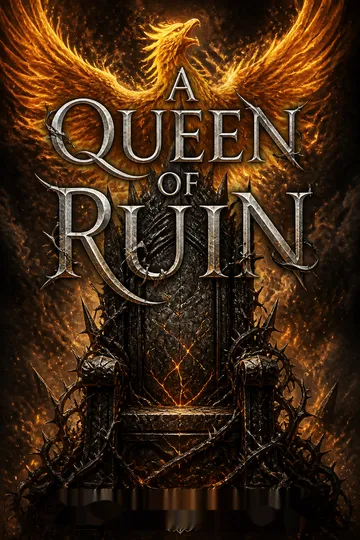
Deliciously Dark Fairytales Series
About the Author
Other books by K.F. Breene







Download PDF
Download EPUB
.epub digital book format is ideal for reading ebooks on phones, tablets, and e-readers.








