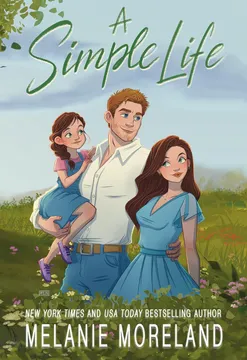


Plot Summary
A Rescue at the Fair
John Elliott has built his life around a 1,700-acre farm, his sister Laura’s family, and the quiet routines that survived his parents’ deaths. Since Thelma, the diner owner who helped him through grief, also died, he resists change, including a new tenant who plans to reopen her diner as Kind of a Big Dill. Laura urges him to stop retreating, so John goes to Richton’s spring fair.
There he finds Quinn Harper surrounded by drunken men and drives them off. He walks her through the midway, wins a pink teddy bear, and feels a pull he has not known in years. When a call alerts Quinn that her daughter is sick, John hears a man’s voice, assumes Quinn is married, and leaves before she can explain.
John’s first act of care is spontaneous, but his withdrawal afterward reveals how quickly he converts uncertainty into a threat. The fair gives him a temporary way out of solitude, and Quinn’s attention lets him rediscover play: walking the midway, watching people, winning a child’s toy. Yet the phone call activates the old injury he has never examined. He treats a fragment of information as proof, just as he has treated grief as a reason to keep life unchanged. The romantic spark matters because it arrives alongside a test of whether he can stay curious instead of retreating.
The Flat-Tire Argument
The next day, John finds Quinn struggling with a flat tire and changes it for her, but his help curdles into accusations about the husband he imagines she has. Quinn tells him she is a single mother and condemns him for assuming she would flirt while married.
Later, John discovers that she and Abby are the family moving into his rental. When he startles Abby by insisting the house is his, her fear makes his carelessness plain. He repairs the dripping kitchen faucet, approves her pink bedroom, and argues with Quinn again at the hardware store over who should pay for paint.
On Sunday, Quinn returns his forgotten toolbox and tries to make peace. The conversation collapses when she reveals she is opening the diner, and John insults her name and judgment.
Both characters mistake self-protection for strength. John’s practical competence lets him help with the tire and the house, but he uses that competence to control the encounter rather than listen. Quinn’s independence is equally understandable: she has escaped a life in which other people made decisions for her, so an offer of help can sound like another demand. Abby’s distress interrupts their sparring with a consequence they cannot dismiss. The early conflict establishes that their attraction will not erase their habits; closeness requires them to recognize when old injuries are writing the script.
A Pickle Wins the Council
At the town council meeting, Quinn explains the pickle recipe behind her diner’s unusual name and asks permission to use it. John could object, but Laura’s reminder of what Thelma would want helps him welcome the new business instead.
He also secures approval for his plan to convert the old schoolhouse into apartments. Once the diner is open, John crosses the street for lunch because he is hungry, not because he wants to see Quinn. Abby joins him, samples his fries and cake, and calls him Farmer John.
Quinn finds them sharing dessert and explains that a sitter’s illness forced her to bring Abby to work. When Quinn slips on spilled water, John catches her; she leans in to kiss his cheek, and he turns so their lips meet. The kiss leaves him rattled, but no longer indifferent.
The council vote is John’s first deliberate choice to support Quinn before he has any claim on her affection. It also marks a change in his relationship to Thelma’s memory: honoring her now means allowing the diner to live, not preserving it as a shrine. Abby then bypasses the adults’ defensive performance. Her comfort with John is earned through ordinary generosity, sharing food and making room for her, rather than grand gestures. The accidental kiss exposes how little their hostility has concealed. Their community sees a business opening; John experiences the more unsettling possibility that change can restore something he thought he had lost.
A Swing Under the Oak
After Laura points out that John keeps finding reasons to be near Quinn, he builds Abby a pink swing and installs it in the oak outside her rental. Quinn thanks him, then explains why a child’s laughter and freedom matter so much: her ex-husband Preston controlled their home, belittled her, and expected Abby to behave like a miniature adult.
When Preston once grabbed and shook Quinn during an argument, she feared he might turn that anger on their daughter. She left, worked at a diner, and moved to Richton after Preston signed away his parental rights.
John listens without trying to manage her choices. Later, a storm knocks out the power at Quinn’s house. He holds Quinn and Abby while Quinn sings to calm them, and the trust between the three deepens.
The swing is more than a gift: John makes a durable place for the kind of childhood Preston tried to suppress. Quinn’s account clarifies that leaving was not a sudden romantic escape but a protective decision made after years of erosion and a frightening physical incident. Her caution around help therefore carries history, not mere stubbornness. During the blackout, John does not take over Quinn’s role as Abby’s mother; he lends his steadiness while Quinn comforts her daughter through song. The scene makes safety a shared practice, created by attention, restraint, and reliable presence.
Two Old Betrayals
After Quinn shares her marriage story, John tells her why he misread the call at the fair. His former partner, Moira Finlay, lived another life elsewhere and chose him as a target for his money; he discovered the deception before she could empty his accounts.
Quinn recognizes that his suspicion has been shaped by betrayal, even as he accepts that it was unfair to place it on her. They decide to pursue the simple life each wants, and John becomes Quinn’s boyfriend. Their closeness turns physical, with John reassuring her after Preston’s criticism had undermined her confidence.
He begins visiting regularly, helps her reconnect the diner with local producers, and brings flowers to make their relationship unmistakable. Quinn finds Thelma’s handwritten cookbook and revives John’s beloved meatloaf as a weekly special, turning his grief into a living part of the diner.
The parallel histories explain their defenses without making them interchangeable. Quinn was diminished by a partner who wanted to dictate her identity; John was deceived by someone who performed intimacy for financial gain. His willingness to disclose his past allows Quinn to distinguish his fear from Preston’s control, while her candor teaches him that vulnerability need not be a trap. Their relationship grows through chosen acts of trust, not a sudden cure for either person’s wounds. The meatloaf special gives romance a civic dimension: Quinn honors John’s memory of Thelma by returning her work to public life.
A Farmhouse Becomes Shelter
As summer heat grows dangerous, the air conditioner at Quinn’s rental fails, and a replacement will take weeks. John insists that Quinn and Abby stay at his farmhouse, where there is room to sleep and swim.
Living together temporarily makes their bond visible in daily routines: John helps at the diner when Quinn’s staff call in sick, and Quinn cooks with him and becomes part of his family gatherings. On the tractor, Abby asks whether John is now her mother’s serious boyfriend and tells him Preston once threatened that she might disappear.
John promises to protect both of them, using the image of field covers to help Abby understand safety. The promise steadies her, but it also forces John to see that Quinn’s past still reaches into their present.
The move begins as a practical answer to heat, yet it tests intimacy more honestly than a planned date could. John’s care appears in concrete labor: making space, transporting Abby, and helping Quinn keep her business running. Quinn contributes through cooking and companionship, rather than being reduced to a grateful recipient. Abby’s disclosure changes the emotional stakes. John’s protective instinct gives her reassurance, but the farming metaphor also makes his promise comprehensible to a child who has learned to scan adults for danger. Their household is becoming a family through repeated acts of reliability, even before anyone names it as one.
A Horse, Then I Love You
John takes Quinn and Abby to a nearby ranch, where Abby rides a horse while Quinn discovers that riding frightens her. John does not pressure her to continue; instead, he tells her he loves her as she is, and Quinn says she loves him too. When Abby reveals that Quinn’s birthday is approaching, John learns she has rarely been celebrated since childhood.
He and Laura plan a day in Toronto that includes the aquarium, lunch at the CN Tower, a harbor cruise, and childcare so Quinn can enjoy dinner with John. At the same time, Quinn’s diner is thriving, and John’s relatives have begun treating her and Abby as part of their circle. For once, Quinn’s birthday is arranged around what she might enjoy, not what someone else expects of her.
The ranch scene separates care from coercion: John offers Quinn a chance to try, then accepts her fear without turning it into a flaw. His declaration of love follows that acceptance, making affection feel like room to be oneself rather than a demand to perform. The birthday plan answers a different deprivation. Quinn learned to make celebrations for Abby while treating her own needs as negligible; John and Laura give her attention without requiring her to earn it. This generosity prepares the coming crisis by establishing what is at stake: Quinn is no longer alone, and a life of belonging has become imaginable.
The Birthday Turns
At the Toronto aquarium and CN Tower, Quinn’s birthday outing is interrupted when she and John meet Preston with his fiancée, Moira, John’s former partner. Preston mocks Quinn’s new life and dismisses John as a rural curiosity.
When he turns his anger on Abby, she defends John and her mother, then punches Preston in the groin after he moves threateningly toward them. John gets Abby away from him, and the family leaves together. At the hotel, Quinn reveals that Preston had struck her once and that Abby recognized the warning signs in his clenched hand.
The encounter explains why Abby acted so quickly, and why Quinn is shaken afterward. Rather than force the celebration onward, John listens as Quinn admits she wants to remain at the farm with him.
The confrontation brings the past into the present in a form neither Quinn nor John can manage through private reassurance. Preston’s contempt repeats the hierarchy he once imposed at home, while Abby’s intervention shows that children notice more than adults may realize. Her punch is not presented as an uncomplicated solution: it is a startling act shaped by fear, memory, and a child’s limited options. Quinn’s later disclosure shifts the scene’s meaning from comic reversal to evidence of lasting vigilance. John’s response matters because he stays with her in the aftermath rather than insisting that a birthday must remain cheerful.
The Family He Chooses
When Quinn says she wants to stay at the farm, John asks her to marry him and adopt Abby, and Quinn accepts. After they return to Richton, he brings her to a glass-roofed wedding venue Laura has found and makes the proposal again with more care: he gives Abby a pumpkin-shaped pendant and Quinn his grandmother’s emerald-and-diamond ring.
Quinn accepts the ring and the future it represents. She and Abby move into the farmhouse, where Abby gets her own room and John’s relatives welcome them as family.
The diner continues to grow, and Quinn begins planning a wedding that suits their small-town life. John’s proposal is not a rescue from Quinn’s past; it is an invitation to build a life in which she and Abby have a home, a voice, and a place that is theirs.
The two proposals distinguish urgency from intention. John’s first request comes from the fear that the family they have found could be lost; the later gesture gives Quinn and Abby a chance to choose that future with ceremony and shared meaning. The heirloom ring links John’s inheritance to a new household, while the pendant acknowledges Abby as a person whose belonging matters in its own right. Moving into the farmhouse completes the practical change that began with a broken air conditioner. Home is no longer an inherited place John guards alone; it becomes a structure the three of them actively inhabit and remake.
Epilogue
A year after their wedding, Quinn runs Kind of a Big Dill and helps operate a popular wedding venue. On their anniversary, John gives her ownership of the diner’s building, and Quinn tells him she is pregnant. A year later, their son James, nicknamed Jimjam, joins the family.
John cares for him during the night while Abby sleeps nearby, and Quinn joins them in the nursery. Their days are still busy, their plans still practical, but the farm now holds the noisy, ordinary life John once kept at a distance. Quinn and John have built the home they wanted through work, affection, and the family they chose.
The epilogue makes the title’s promise concrete through ordinary, repeated acts rather than wealth or escape. Quinn owns the place where her ambition first took root, while John’s farm becomes a home shared across generations. Their son’s nighttime feeding echoes the book’s recurring attention to small forms of care: noticing what a child needs, answering, and staying present. Abby’s place in the household remains secure as the family grows. The ending does not suggest that love erases the past or eliminates labor. Instead, it shows that a simple life can be abundant when each person is allowed to belong without having to disappear.
Analysis
A Simple Life contrasts outward polish with the harder, less visible work of making people feel safe. Quinn’s former marriage prized an immaculate house and a controlled public image, while John’s life is built from soil, repairs, meals, and community obligations. Neither kind of life is automatically virtuous: John’s rural steadiness becomes isolation when grief keeps him from change, and Quinn’s self-reliance can make accepting kindness feel dangerous. Their relationship develops when practical care is offered without taking away choice.
The novel gives care a material vocabulary. John changes a tire, repairs a faucet, builds a swing, shares food, and opens his home; Quinn cooks, rebuilds a diner, and brings local producers into its orbit. These actions are not substitutes for emotional honesty. They become meaningful because each character also tells the other what fear has taught them. The farm and diner, distinct spaces of labor, gradually become parts of one shared community.
Abby makes the adult story accountable to a child’s experience. Her questions expose tensions the adults might conceal, while her ease in play measures the difference between being controlled and being cared for. Her confrontation with Preston is funny in its physical reversal, but the surrounding disclosure keeps it grounded in the fear she has witnessed. The resolution does not claim that one loving partner erases past harm. It gives Quinn and Abby a stable home, a supportive network, and adults who respond when they are needed.
The title’s simplicity is therefore not a retreat from ambition or complexity. Quinn builds a business, John expands his farm, and both participate in the life of their town. What they reject is the idea that money, status, or perfect appearances can stand in for belonging. Their chosen family grows through ordinary acts repeated until trust becomes a place they can live.
Review Summary
A Simple Life is a heartwarming small-town romance featuring John, a grumpy farmer, and Quinn, a single mom starting over. Readers praised the sweet story, likable characters, and low angst. Many enjoyed the chemistry between John and Quinn, as well as John's bond with Quinn's daughter Abby. The book was described as cozy, romantic, and filled with feel-good moments. While some found it too simple or bland, most reviewers appreciated the charming, wholesome love story and Moreland's writing style.
Characters
John Elliott
Guarded farm-hearted protectorJohn is a 34-year-old farmer, landlord, and fixture of Richton. He measures life in seasons, repairs, and obligations kept, and he shows affection most naturally through practical help, especially toward his sister Laura and nephew Cody. The deaths of his parents and the loss of Thelma, who became a mother figure to him, have made him wary of change and inclined to retreat from people. His bluntness can conceal both tenderness and fear, particularly after a former partner damaged his trust. John is not simply a gruff man waiting for romance to soften him; he already knows how to care. His challenge is to let that care reach beyond family duty and make room for a new shared life.
Quinn Harper
Diner owner rebuilding homeQuinn is a resourceful mother and cook who moves from the city to Richton with her young daughter, Abby. She wants a home where laughter, color, and ordinary childhood mess are welcome, and she turns that desire into action by opening Kind of a Big Dill. Years of being belittled have left her alert to control and reluctant to depend on anyone, even when she needs help. Her independence is not a refusal of connection; it is the hard-won ability to choose what connection looks like. Quinn is attentive to Abby’s needs, inventive in the kitchen, and willing to start over without waiting for ideal circumstances. Her developing relationship with John asks her to trust care without surrendering her agency.
Abby Harper
Bright-eyed little truth-tellerAbby is Quinn’s six-year-old daughter, curious, affectionate, and quick to make sense of the people around her. She loves stuffed animals, swimming, food, and the freedom to play without being corrected into silence. Her questions often reveal what adults have avoided saying, and she is keenly observant of her mother’s moods and the behavior of others. Abby’s humor and confidence grow in Richton as adults listen to her rather than treating her like a prop. She is not merely the bridge between Quinn and John; she forms her own attachment to John and measures safety through his dependable actions. Her child’s perspective brings both lightness and emotional clarity to the family’s changing shape.
Laura Elliott
John’s clear-eyed sisterLaura is John’s sister, an accountant and real estate agent who manages his rental properties. Married to Bob and mother to Cody, she understands both John’s generous nature and the grief that has narrowed his world. She challenges his resistance without abandoning affection, and her practical support helps Quinn settle into Richton. Laura often sees the connection between John and Quinn before either is ready to name it.
Bob
Steady brother-in-lawBob is Laura’s husband and Cody’s father, running Richton’s hardware store. He is a dependable friend to John, helping with repairs and family needs while teasing him when his gruff manner gives way to tenderness. Bob’s steadiness reflects the cooperative nature of the town.
Cody
John’s beloved nephewCody is Laura and Bob’s son, a thoughtful boy who saves money, loves his uncle, and enjoys his new bike. His affectionate bond with John reveals the patient, generous side John rarely shows to strangers. Cody also helps Quinn and Abby enter the family’s easy, welcoming orbit.
Preston Dutton
Quinn’s status-minded exPreston is Quinn’s former husband, a finance professional invested in status, appearances, and control. His preferences once shaped the household Quinn and Abby lived in, leaving Quinn to work out which parts of herself she had set aside. He is distant from the everyday needs of fatherhood and stands in sharp contrast to the attentive life Quinn wants for her daughter.
Moira Finlay
John’s polished former partnerMoira is John’s former partner, a traveling sales representative whose polished, self-assured manner once made her seem compatible with his life. Her history contributes to his guardedness and his tendency to suspect that attraction may conceal an agenda. She connects John’s private romantic past to the book’s larger contrast between appearances and trustworthy care.
Thelma Hopkins
Richton’s remembered cookThelma was the longtime owner of Richton’s diner and a close friend of John’s mother. She became a maternal presence to John after his parents died, offering food, advice, and a place where he could speak freely. Her old recipes and the empty diner keep her influence present in the town.
Cathy Rawlings
Quinn’s longtime friendCathy is Quinn’s friend from childhood summers near Richton. She alerts Quinn to the diner opportunity and gives her a practical route toward a fresh start. Her friendship offers continuity between Quinn’s earlier life and the community she chooses.
Tammy Becker
Diner’s trusted waitressTammy works at Quinn’s diner and becomes one of its reliable early employees. Her familiarity with the regulars helps Quinn’s new business feel rooted in the town rather than merely transplanted into it.
Plot Devices
Kind of a Big Dill
A diner revives town memoryQuinn’s restaurant gives her a livelihood built from the cooking she had been discouraged from pursuing. Its pickle-centered name initially tests John’s loyalty to the old diner, but its success lets him separate honoring Thelma from keeping her building frozen in time. The restaurant also creates repeated, natural contact between Quinn and John, and it links her work to local farmers and makers. Later, Quinn’s use of Thelma’s handwritten recipes turns the business into a place where memory can be shared, adapted, and carried forward.
The Farmhouse and Fields
Work becomes a language of careJohn’s farm represents both his independence and his rootedness in the community. Its crops, animals, swimming hole, and family gathering places show the practical world he trusts. As Quinn and Abby enter that world, the farm becomes more than John’s refuge: it offers shelter during the heat, room for play, and a setting where John can share responsibility. The land does not symbolize a fantasy of effortless rural living; it demands daily labor. That labor helps make John’s care legible, while Quinn’s presence changes the farmhouse from a quiet workspace into a lived-in home.
The Pink Swing
A child’s joy builds trustJohn makes Abby a pink swing for the oak outside her rental after hearing that Quinn wants a place where her daughter can play. Its careful construction, safety checks, and bright decoration show John’s attentiveness before he and Quinn have established a relationship. Abby’s delight gives them a shared point of connection, while the swing’s permanence contrasts with the instability Quinn and Abby have left behind. It becomes a small, visible sign that John is willing to make space for them without taking over Quinn’s decisions.
The Heirloom Ring
Inheritance becomes chosen belongingJohn’s grandmother’s ring connects his family history to the future he wants with Quinn. He first asks her to marry him in the emotional aftermath of their Toronto birthday trip, then offers the ring during a more deliberate proposal at the wedding venue. Its emeralds and diamonds make the commitment tangible, but its deeper function is relational: John shares something inherited rather than guarding it as a private possession. By including Abby in the proposal, he makes clear that his imagined family includes both mother and daughter.
About the Author
Other books by Melanie Moreland


Download PDF
Download EPUB
.epub digital book format is ideal for reading ebooks on phones, tablets, and e-readers.








