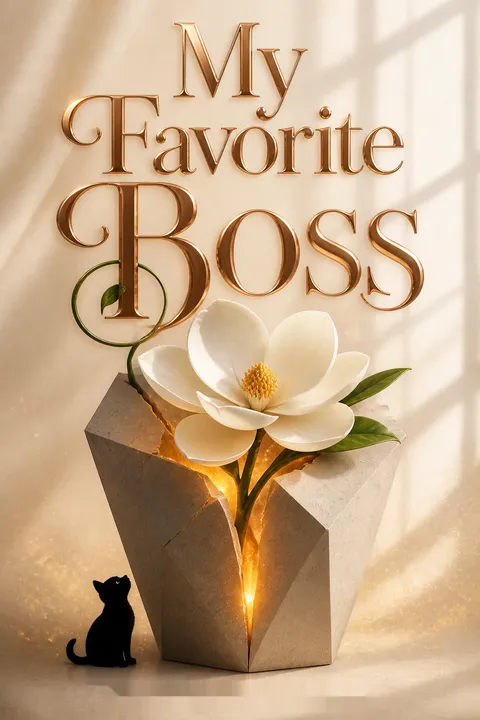


Plot Summary
The Interview Collision
Balanced Designs’ landscape architect Alexander Bane has fired six assistants in two months, and HR director Laura challenges him to hire someone who can last. He rejects candidate after candidate, insisting his assistant must anticipate his needs and tolerate his punishing schedule.
When Magnolia Myers finally arrives, she has missed her bus, broken a heel, and run up ten flights of stairs. Their first meeting ends with both of them on the floor after she crashes into him. Bane nearly dismisses her for being late, but gives her ten minutes.
Magnolia spots errors in a budget and spreadsheet that other applicants missed, then confidently accepts the job. Bane hires her despite recognizing that her warmth and wit may unsettle the rules he has built around himself.
The collision gives the hiring plot its literal and psychological shape: Bane has made control a job requirement, while Magnolia enters through a sequence of mishaps that cannot be managed in advance. Yet her lateness is not incompetence. Her quick reading of numbers shows that Bane’s narrow ideal of a useful assistant misses actual intelligence. The wager with Laura externalizes his defensiveness as a contest, but the interview already reveals the deeper problem: he treats emotional distance as professionalism and expects others to accommodate it.
Coffee, Calendars, Boundaries
On her first morning, Magnolia arrives early, brings Bane an artful coffee, and begins repairing the calendar and filing system left in disorder by previous assistants. She syncs his phone, routes calls through her desk, and screens his estranged mother, Mrs. Johnstone, whose interruptions Bane has struggled to manage.
She notices that his coffee goes cold and buys a warmer, while her homemade sandwich replaces his usual deli order. Bane grumbles at her suggestions, yet keeps drinking the coffee he claims not to like.
Magnolia also befriends Rylee Jenkins in IT and learns that a clique of assistants has made the office unpleasant for her. Bane invites Magnolia to a staff meeting, where his partners announce that his landscape design has earned an award nomination.
Magnolia’s care is practical rather than sentimental: she changes the phone routing, repairs the calendar, and solves small problems before Bane notices them. That competence gives intimacy a credible foundation, because Bane first experiences her as someone who makes his work and body less neglected. His reluctance to thank her, and his habit of ignoring his mother’s calls rather than setting boundaries directly, reveal a man who delegates logistics more readily than emotional responsibility. Magnolia’s friendship with Rylee also establishes that her attention extends beyond the powerful people whose approval shapes office life.
A Lie for His Mother
When Mrs. Johnstone confronts Bane at work, Magnolia invents a business trip so he can escape the argument. She then refuses to let his mother reclaim access to his private phone line, insisting she follows her employer’s instructions.
Bane takes refuge at his private club, and Magnolia spends the afternoon reorganizing his files and making the outer office welcoming. At the weekend, she twists her ankle while walking in a park. Bane recognizes her, carries her home, and wraps the injury despite her protests.
Inside her basement apartment, he finds paintings she has made and learns that she studied art but works to support herself and help pay for her father’s care. The discovery makes his assistant seem less like a distraction and more like a whole person.
Magnolia’s improvised lie is comic, but its function is serious: she gives Bane temporary protection from a relationship he has not learned to manage. She does not merely obey him; she interprets what he needs and accepts the risk of displeasing his mother. The ankle injury reverses their workplace roles, placing Bane in the position of caregiver and letting him see the private life behind her office clothes. Her paintings introduce an ambition constrained by caregiving and money, while his curiosity marks an early departure from his usual habit of keeping other people’s inner lives at a distance.
The Banquet’s Cruel Table
At the company awards banquet, Magnolia wears a green dress and sits with Rylee, while Verity and Rhonda use the evening to mock her appearance, clothes, and closeness to Bane. Magnolia has already overheard the pair reducing her to her body and suggesting she will soon be fired.
Bane notices her retreat into silence, learns from Rylee what she endured, and wins the landscape design award. During his acceptance, he publicly credits Magnolia for making his office run exceptionally well.
The recognition leaves the bullies speechless and gives Magnolia back some of the confidence they tried to strip away. The next day, Bane announces a mandatory anti-bullying program and leads a new committee, making the company address conduct that management had previously allowed to remain private.
The banquet converts private cruelty into a visible institutional problem. Verity’s insults target Magnolia’s body and clothing, but they also police who is entitled to occupy professional space. Bane’s public praise matters because he uses the authority that once enabled his brusqueness to counter the group’s attempt to diminish her. More consequentially, he does not stop at a romantic gesture: the anti-bullying protocol changes workplace procedure. The story distinguishes personal protection from structural accountability, even as Bane’s emotional investment in Magnolia is what finally makes him act.
The First Kiss Breaks Cover
After the anti-bullying announcement, Bane admits to Magnolia that he is sorry for being difficult and that he cares when people make her feel small. Their joking intimacy deepens into a kiss in his office, but a sound in the hallway forces him to stop.
The next morning, Magnolia comes in to help finish a resort model. She reveals that she makes Bane’s sandwiches herself, using roasted meat because her father’s doctor warned her about processed food.
As they work, she asks for his opinion on the landscaping and helps him see that a sloped corner needs shade trees, flowers, and a place to sit. Bane opens up about his late father, his mother’s contempt for his career, and the pressure to become a lawyer. The conversation ends with their first private sexual encounter.
The kiss follows Bane’s public decision to oppose bullying, but the more intimate shift comes when Magnolia listens without trying to repair his history for him. His family story explains why he confuses self-protection with independence: after losing his father, he remained exposed to a mother who treated his chosen vocation as failure. Magnolia’s landscape suggestion is also significant. She contributes through preference and perception, not credentials, and Bane accepts her visual judgment. Their relationship begins to loosen the hierarchy between boss and assistant, though that hierarchy remains an unresolved source of risk.
A Dangerous Condom
Their first sexual encounter grows into a private relationship, but it nearly ends in an emergency when Magnolia uses a novelty condom from a bridal shower. Bane is allergic to latex and spermicide, and the condom causes painful swelling.
He refuses an ambulance because he fears office gossip, then calls his doctor friend Sam for treatment. His sharp dismissal of Magnolia leaves her worried and hurt. The next morning, he apologizes and explains what happened; she brings him an edible fruit arrangement and a teasing card.
Their working partnership strengthens as Bane’s resort clients approve his model and award him their next project. Bane also begins to acknowledge that Magnolia’s food, attention, and humor matter to him beyond their usefulness at work.
The allergic reaction turns sexual confidence into physical vulnerability, exposing how little Bane has communicated about his needs. His instinct to control the story and avoid embarrassment makes Magnolia bear the emotional cost of a danger she could not have anticipated. Repair becomes possible only when he names his mistake rather than treating her as another problem to manage. The fruit arrangement and joke let Magnolia restore play without minimizing the scare. Their growing intimacy therefore depends not simply on desire, but on Bane learning that apology and disclosure are forms of care.
Hedge Chooses Bane
After rescuing an abandoned kitten outside his condo, Bane insists it is only staying overnight, while Magnolia immediately buys food and bedding. The kitten follows Bane, cries when left alone, and eventually sleeps beside him.
Bane takes him to a shelter, but seeing the crowded cages and feeling the kitten tremble, he brings him back. He names the cat Hedge, short for Hedgehog Hedgefund, and agrees that he and Magnolia will care for him together. The kitten accompanies them to visit Magnolia’s father, Dan, who enjoys stroking him and welcomes Bane warmly.
Later, at dinner, Bane’s stepbrother Terry insults his work and treats Magnolia as a disposable affair. Bane defends her, and the encounter clarifies how deeply he resents his family’s status games.
Hedge gives Bane a low-stakes but revealing test of attachment. He begins by framing responsibility as an inconvenience, then cannot abandon the frightened animal once he has recognized its dependence. This mirrors his emerging relationship with Magnolia, whose care he has also received before he knows how to reciprocate it. Dan’s gentle welcome offers Bane an alternative model of masculinity and family, while Terry’s contempt reproduces the values Bane has spent his life resisting. The kitten is not a substitute child or a cure, but a concrete occasion for Bane to practice staying.
A Return He Hurries Toward
Before leaving on a business trip, Bane and Magnolia agree to keep their private relationship discreet at work. During the trip, he finds his hotel room hollow without her, misses her efficiency and humor, and changes his flight to return early.
At home, Magnolia has waited up with Hedge, but Bane carries her to bed instead of pursuing the reunion he had imagined, choosing tenderness over urgency. Their time together deepens, though Magnolia is wary of moving into his condo because she fears losing her home and job if the relationship fails.
Bane promises not to punish her professionally, but accepts that she needs caution. Soon afterward, Magnolia learns her landlords are moving and the new owners will reclaim her basement apartment, giving her three months to find somewhere else.
The trip makes absence legible to Bane: he discovers that Magnolia is not merely an efficient feature of his workday but the person who makes return feel meaningful. His choice to carry her to bed rather than wake her for sex signals a new capacity to prioritize her comfort. Yet Magnolia’s hesitation about cohabitation is materially grounded. She would bear the greater cost if their romance collapsed, so Bane’s reassurance cannot erase the imbalance of their employment and housing positions. The approaching eviction intensifies the temptation to treat marriage as a practical solution.
The Proposal as Paperwork
When Bane’s mother unexpectedly finds him helping Magnolia under his desk, he calls Magnolia his fiancée to end the confrontation. Later, with her housing situation worsening, he proposes marriage as a way to solve practical problems: she could live with him, stop working if she wished, and escape her mother’s matchmaking schemes.
Magnolia hears the offer as a business arrangement and refuses, recognizing that convenience is not the same as being loved. Hurt, she cleans the neglected supply room rather than continue the argument.
Bane follows, apologizes, and admits that she makes him feel more human, then pulls her into a kiss. They become trapped in the room when its faulty lock jams. When HR arrives and discovers them disheveled, Magnolia blurts out that they are getting married.
Bane’s proposal exposes the limits of his emotional vocabulary. He can calculate housing, employment, and family pressure, but initially presents marriage as a package of benefits rather than a declaration of mutual commitment. Magnolia’s refusal protects her from being absorbed into his life on terms that leave her emotionally unrecognized. Their reunion in the supply room does not resolve that imbalance; the accidental announcement instead makes their private uncertainty public. Comedy softens the embarrassment, but the scene raises a real question about consent and power: Bane must learn that providing security is not a substitute for naming love.
Magnolia Faces the Johnstones
Bane’s mother and stepbrother arrive at his condo to stop the engagement. Terry calls Magnolia a gold digger, and Mrs. Johnstone dismisses her as socially unworthy. Magnolia answers by defending Bane’s talent, integrity, and environmental work, then condemns the family’s fixation on status. Bane sends them away and tells Magnolia that he cannot love her, though he can offer care, desire, protection, and a stable life.
Magnolia explains that she wants the possibility of children and a husband who loves her, not merely security. The next morning, Bane again asks her to marry him, and she says yes while making clear that her deeper hopes remain. The decision is real, but their emotional terms are not yet fully settled.
Magnolia’s defense of Bane is not a bid for his wealth or approval. She identifies the values his family refuses to see, giving him a witness who recognizes his vocation and character. His response, however, shows that being defended does not instantly undo his learned fear of attachment. He offers what he believes he can guarantee and withholds what he thinks he cannot give. Magnolia’s acceptance is therefore both hopeful and precarious. Her desire for children and reciprocal love keeps the conflict alive beneath the engagement, preventing the marriage plot from being mistaken for a simple triumph.
A Ring, A Father’s Blessing
Bane begins trying to court Magnolia as she has asked, even attempting to train Hedge to walk on a leash and bringing her breakfast with flowers. Magnolia visits her father and then meets Rylee for coffee, where she admits Bane has proposed. Rylee’s excitement is interrupted when Bane arrives with Sam, his longtime doctor friend, and Sam and Rylee quickly find an interest in each other.
Bane later buys Magnolia a ring through Sam’s jeweler friend and visits Dan to ask for his blessing. Dan recognizes him and agrees. In the morning, Bane places the ring on Magnolia’s finger and asks her again with a promise to be the best husband he can. Magnolia accepts, moved that he sought her father’s blessing while Dan was still able to give it.
The ring changes the proposal from an improvised solution into a deliberate act, while the visit to Dan connects Bane’s commitment to Magnolia’s most important bond. He cannot repair her father’s illness, but he can honor the relationship rather than treat it as an obstacle to their future. His attempts at romance are awkward, especially the leash training, yet their awkwardness matters: he is practicing attentiveness outside the workplace where he once relied on command. Sam and Rylee’s meeting extends the story’s pattern of connection beyond the central couple, suggesting that intimacy can widen a social world rather than merely pair two people off.
The Hospital Changes Everything
During a difficult client project, Magnolia receives a call that Dan has fallen and is in hospital with a concussion, broken arm, and dislocated shoulder. While waiting for him, she sees her doctor, who checks her anemia and discovers that Magnolia is pregnant.
Magnolia is already grieving her father’s decline and fears Bane will reject a child because he has said he does not want one. She cannot reach him before her phone dies. Bane learns where she is from HR, leaves work, and holds her while she explains Dan’s injuries.
He takes her to visit her father, who briefly recognizes him and asks whether he will look after Magnolia. Bane promises he will. That night, Dan dies peacefully in his sleep, and Bane stays beside Magnolia through her grief.
The hospital converges the story’s two forms of vulnerability: Magnolia may lose her father, and she is carrying a child whose future she believes she must protect alone. Her silence is not coyness but a rational response to Bane’s earlier certainty that he cannot parent or love. Bane’s arrival demonstrates a change in practice before he has the words for it: he leaves a meeting, takes responsibility for practical arrangements, and remains through bereavement. Dan’s lucid question about Magnolia’s care gives Bane a final measure of responsibility, even as the pregnancy remains an unspoken crisis between them.
The Flowers Were His
After Dan’s death, Magnolia returns to work but grows pale, exhausted, and withdrawn. Bane worries that she is pushing him away; while talking with Sam, he realizes that his fear of loving her has become love, then recognizes the prenatal vitamins in a photo of her medication.
At Magnolia’s apartment, he asks if she is pregnant. She confirms it, expecting rejection, but Bane embraces her and tells her he loves her and wants their child. He admits he had sent the weekly flowers, signing them with initials meant to mean thank you, and confesses that he prolonged the mystery because her delight mattered to him.
He invites Magnolia to move in, promises to attend her medical appointments, and begins planning their life together. She agrees, relieved that his care has become a spoken commitment.
The revelation about the flowers recasts a recurring comic mystery as evidence of Bane’s gradual, imperfect emotional education. He could express gratitude through a weekly ritual long before he could call it love; the initials let him offer devotion while preserving plausible distance. Pregnancy removes that distance’s protective illusion. Faced with Magnolia’s fear and their child’s reality, Bane discovers that he is not incapable of attachment but has mistaken inherited fear for a fixed limitation. His declaration matters because it answers the exact insecurity established earlier: Magnolia needs not only material security but a partner willing to name and share emotional responsibility.
Epilogue
Magnolia’s pregnancy advances until Bane takes her to the hospital, where she gives birth to their son, Jensen Daniel Bane. Bane is overwhelmed but stays close, naming the boy in honor of Dan and telling Magnolia that he loves them both. Four years later, the couple has a daughter, Ciara, and Magnolia is expecting another child.
Bane still worries over Jensen at the playground, but he now understands family as the center of his life rather than a threat to his independence. He refuses reconciliation with his mother and Terry after their continued contempt, choosing the home he and Magnolia built instead.
The epilogue tests Bane’s transformation in ordinary time. He has not become a different temperament: he remains protective, anxious, and occasionally overbearing, but those traits now serve people he loves rather than defend him from intimacy. Naming Jensen after Dan joins Magnolia’s past to the family they create, while the later pregnancy signals a future Bane once refused to imagine. His continued distance from his mother and Terry is not framed as triumph through revenge. It is a boundary that protects the reciprocal household he has chosen, replacing inherited status with daily care.
Analysis
My Favorite Boss makes care legible through workaday acts before its characters can speak about love. Magnolia repairs Bane’s calendar, warms his coffee, feeds him, and protects him from unwanted calls; Bane’s first response is to classify these gestures as useful service. Their romance develops as he learns that being cared for is not the same as being controlled. Magnolia, meanwhile, must distinguish genuine devotion from dependence. Her job, housing, and responsibility for Dan create practical stakes that Bane’s money cannot simply erase. His early marriage proposal fails because it offers solutions without emotional reciprocity.
The book’s workplace plot makes this imbalance especially visible. Bane has authority over Magnolia, and the office clique’s insults exploit her insecurity about fitting into the firm. His public praise and anti-bullying initiative matter because he uses institutional power to change conditions, not merely to claim her privately. Still, the romance repeatedly tests professional boundaries, and the story acknowledges that attraction does not cancel the unequal risks Magnolia faces.
Family inheritance shapes both protagonists in opposing ways. Bane inherits emotional inhibition from a mother who equates status with worth; Magnolia inherits a practice of care from her father and grandmother, while shouldering the costs of caregiving. Dan’s decline and death make love inseparable from loss, while the unexpected pregnancy forces Bane to confront the belief that he cannot become a loving parent. His eventual confession is persuasive because it follows action: he shows up at the hospital, stays through grief, and accepts responsibility before claiming emotional certainty.
The flowers condense the novel’s central movement. Bane first sends them because he cannot yet say thank you openly, then keeps sending them because Magnolia’s happiness matters to him. What begins as a concealed gesture becomes a language he can finally translate. The ending does not cure grief or erase family conflict; it gives Bane and Magnolia a chosen household in which care is spoken, shared, and made durable.
Review Summary
People Also Read

Characters
Magnolia Myers
The irrepressible assistantMagnolia is a capable assistant with a quick eye for budgets, a talent for organization, and a habit of meeting Bane’s severity with humor. Her vintage-inspired clothes, baking, sewing, knitting, and painting express a life shaped by affection for her late grandmother and devotion to her father. She works to support herself and contribute to his care, so her warmth should not be mistaken for naïveté or limitless availability. Magnolia values mutual respect and emotional honesty; she can tease, challenge, and care for others without surrendering her own judgment. Her social ease also leads her to notice people whom a status-conscious workplace overlooks. She seeks connection, but she knows that love without security or reciprocity can leave her vulnerable.
Alexander Bane
The guarded design bossAlexander Bane is a gifted landscape architect and majority owner of Balanced Designs, known at work for demanding standards, abrupt instructions, and emotional reserve. His identity is bound to his profession, which his mother dismisses as beneath the family’s legal prestige. He avoids dependence and keeps his personal life sparse, interpreting distance as protection from disappointment. Beneath that control, he is observant, funny, and capable of practical tenderness, though he initially expresses care through fixing problems rather than naming feelings. Magnolia unsettles his routines because she sees both his competence and his loneliness. His central tension is not whether he can care, but whether he can trust care enough to let it change the terms of his life.
Dan Myers
Magnolia’s beloved fatherDan is Magnolia’s father, a gentle man whose memories are increasingly affected by dementia. He once shared a close, affectionate life with his daughter and remains important to her even when he mistakes her identity or slips into memories of the past. Magnolia’s visits, sandwiches, and efforts to preserve his comfort show how caregiving shapes her choices. Dan is not only a source of sadness: his warmth and humor offer a contrast to Bane’s strained family history and help establish what attentive fatherhood can look like.
Mrs. Johnstone
Bane’s status-minded motherBane’s mother remarried and now uses the Johnstone name, but she remains invested in the Bane family reputation and in her son’s conformity to her expectations. She values prestige, social alliances, and the appearance of success, and regards Bane’s landscape architecture career as inadequate beside the legal careers around her. Her repeated attempts to direct his relationships and choices expose the cost of treating a child as an extension of family image. She is rigid in manner and quick to interpret boundaries as disrespect.
Terry
The entitled stepbrotherTerry is Bane’s stepbrother, a lawyer who enjoys attention, status, and the privileges of his mother’s approval. He treats Bane’s career as a joke and speaks about women in ways that reveal his entitlement. Their relationship is distant and adversarial, shaped by years of comparison and competing ideas of what makes a person successful. Terry’s polished social presentation masks a lack of respect for people he considers beneath him.
Rylee Jenkins
The sharp-minded IT friendRylee works in IT and is known for strong technical skill, especially in programming and security. She becomes Magnolia’s friend after recognizing her kindness and her willingness to challenge the office clique. Rylee has endured appearance-based criticism herself, but she maintains a clear sense of self and speaks up when others are targeted. Her friendship gives Magnolia a confidante outside Bane’s authority and brings a second, quieter story of connection into the workplace.
Sam
Bane’s teasing doctor friendSam is Bane’s longtime friend and a physician who treats him after the condom allergy. His dry humor allows him to challenge Bane without becoming another adversary, and he recognizes patterns Bane cannot yet name. Sam gives practical medical advice while refusing to let his friend hide behind his usual self-certainty. His social ease also brings him into Rylee’s orbit.
Laura
The blunt HR directorLaura leads HR at Balanced Designs and is one of the few people willing to tell Bane that his own behavior is driving assistants away. She begins the hiring wager that forces him to take responsibility for the pattern. Laura is direct, perceptive, and committed to professional standards, while still sharing enough rapport with Bane to spar with him rather than simply defer to his power.
Jessica Aldridge
The observant HR managerJessica works in HR and repeatedly arrives at moments when Bane and Magnolia’s workplace boundaries have become difficult to explain. She is married to Bane’s partner Anderson but keeps her maiden name at work. Her composure and humor help her navigate the couple’s mishaps without losing sight of the company’s policies.
Verity
The office clique’s ringleaderVerity works in the assistant pool and wants access to Bane’s position, believing her company experience makes her a better candidate than Magnolia. She hides resentment behind professional politeness, then uses gossip and appearance-based insults when she thinks the target cannot respond. Her conduct exposes the way workplace competition can disguise personal entitlement as merit.
Rhonda
Verity’s sharp-tongued allyRhonda is part of Verity’s assistant clique and helps turn private resentment into public humiliation. She uses sexualized insults to diminish Magnolia and Bane, reinforcing the group’s cruelty rather than challenging it.
Lawson and Anderson
Bane’s business partnersLawson and Anderson are Bane’s partners at Balanced Designs, responsible for the firm’s architecture and shared business decisions. They respect Bane’s design talent and work alongside him on major projects. Their willingness to support the anti-bullying policy and respond to his relationship disclosure gives the romance a credible professional context.
Hedge
The rescued office kittenHedge is a scruffy ginger kitten who climbs onto Bane outside his condo and refuses to be left behind. His need for food, safety, and company draws Bane into an unfamiliar routine of care. Magnolia names him Hedgehog Hedgefund, and Bane’s eventual attachment becomes a small but revealing test of his willingness to stay responsible for another living creature.
Darryl
Bane’s trusted driverDarryl drives Bane to work, meetings, and trips, and becomes a discreet practical support to both Bane and Magnolia. His reliability allows Bane to respond quickly when Magnolia needs help.
Hannah Wilson
Magnolia’s longtime physicianDr. Wilson has treated Magnolia for years and recognizes when her pallor may signal a return of anemia. She is attentive and firm about testing, nutrition, and follow-up care, providing medical guidance during a family crisis.
Grant and Lily
Magnolia’s former landlordsGrant and Lily own the house where Magnolia rents the basement apartment. They offer her a stable, affordable home after she sells the family house to fund her father’s care, but their move eventually forces her to find new housing.
Plot Devices
The assistant wager
Turns hiring into a testLaura’s wager gives Bane a deadline and makes his repeated assistant failures visible as a pattern rather than a series of isolated bad hires. Bane believes the problem is HR’s candidate pool, so he interviews applicants himself and expects to prove his standards are justified. Magnolia’s late arrival and strong practical performance overturn that assumption. The wager also sets up the professional question running through their romance: can Bane recognize value without demanding that another person conform to his preferences?
Coffee and sandwiches
Make care materially visibleMagnolia’s foamy coffee, mug warmer, and homemade sandwiches recur as concrete signs that she notices Bane’s needs. Food gives her a way to care without asking him to discuss his feelings, while Bane’s gradual acceptance shows affection developing through routine. The meals also have a personal history: she prepares them for her father and makes them with his health in mind. Their shared food therefore links work, family caregiving, and romance. It makes Bane’s neglect of himself visible and gives him a chance to learn that receiving care need not be a loss of control.
The weekly flowers
Hide gratitude in plain sightA weekly bouquet arrives for Magnolia under the unexplained signature T.Y., leaving her to wonder who sent it and why. Bane acts irritated and encourages her to treat the flowers as a harmless mystery, while privately enjoying her delight. The recurring bouquets track his growing attachment through their changing scale and her increasingly personal importance to him. Their eventual explanation reveals that the initials were meant to convey gratitude. This device is a spoiler because the sender and meaning are revealed near the resolution.
Hedge the kitten
Practise staying responsibleThe abandoned kitten who climbs onto Bane gives him a responsibility he cannot delegate away. He initially plans to take Hedge to a shelter, but the animal’s fear and dependence make him reconsider. Caring for Hedge with Magnolia forces Bane to act tenderly without relying on professional authority or financial status. The kitten also becomes a bridge between the couple and Dan, who enjoys meeting him. Hedge’s presence tests Bane’s stated belief that he is unsuited to family life, without making one pet a magical solution to that fear.
The office hierarchy
Complicates private desireBane’s role as Magnolia’s boss makes every flirtation carry a professional consequence. Their choice to keep the relationship discreet reflects both their attraction and Magnolia’s concern that colleagues could dismiss her success as favoritism. The bullying complaints and new anti-bullying policy put workplace power under scrutiny, while their repeated office encounters test the boundaries they set. The hierarchy prevents the romance from functioning as a purely private affair: Magnolia’s employment and housing vulnerability make Bane’s promises of care meaningful only if he respects her agency and professional standing.
My Favorite Series


Download PDF
Download EPUB
.epub digital book format is ideal for reading ebooks on phones, tablets, and e-readers.








