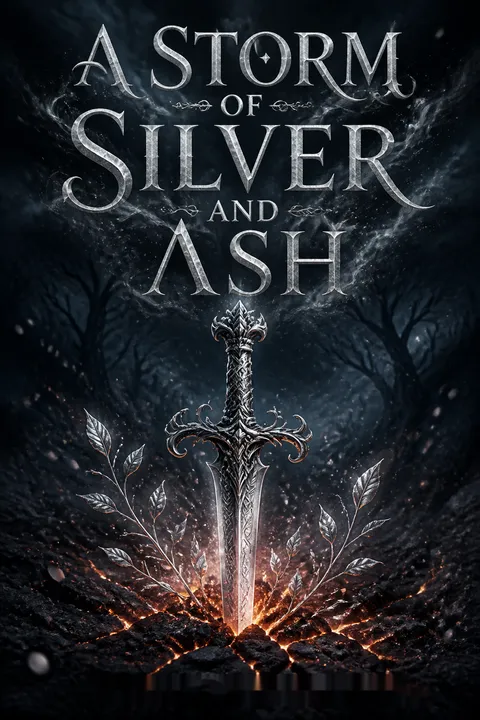


Plot Summary
The Guild Names Storm
On Keutunan’s rooftops, Storm, an orphaned thief known for leaving targets empty, catches her friend Liam sneaking up behind her. Their news is darker than his usual mischief: King Adrian has raised taxes, executed scribes, and now plans an assault on the elves, a people most citizens believe are only a royal invention.
At a Thieves’ Guild meeting, the masters warn that a rogue has been stealing on their territory and order Storm to bring him in. She had spent the day preparing a major burglary, but guild commands are not optional. Guild Master Caleb later tells her the young thief is hiding in the Bowels, so Storm postpones her own plans and sets out to find him.
Storm’s competence initially looks like a form of self-sufficiency: she studies guard schedules, controls space, and treats every problem as manageable if she can plan it. Yet the guild meeting shows the limits of that private system. The king’s violence is no longer distant political noise, and the masters can redirect her labor with a sentence. Liam’s sympathy for the people harmed by taxes contrasts with Storm’s hard distinction between upper and underworld troubles. The novel begins by placing her familiar survival code beside a wider crisis, suggesting that refusing responsibility beyond one’s circle may become impossible when power starts reaching into every corner of the city.
The Midnight Star Job
Storm tracks the rogue to a Bowels tavern, where she first fights off a man who mistakes her for an easy target, then forces the young thief to a meeting with the guild masters. When he protests that he did not know the guild would object to his robberies, the masters make the terms unmistakable: he can earn membership by stealing the Midnight Star, a sapphire owned by the feared Admiral.
Storm warns him that the jewel is dangerously protected, but the boy has nowhere else to go. Later, she finds Liam bruised after a dockworker attacked him for showing kindness to a woman. Storm tracks the assailant and kills him, then cannot explain to Liam why violence comes so easily to her.
The two encounters expose the difference between Storm’s practiced force and Liam’s gentleness. She can turn fear into a tool, and when Liam is hurt, she turns anger into lethal action before considering its cost. Yet the scene does not present violence as uncomplicated strength: Liam’s shock and Storm’s evasion leave a fracture between them. The rogue’s impossible assignment also introduces a city where guild belonging is protection as much as status. The boy must risk his life to gain a place, while Storm’s warning reveals an impulse to protect that she has not yet acknowledged as her own.
The Thief in Mercer Street
After the dockworker’s death, Liam asks why Storm chose the Thieves’ Guild rather than the more prestigious Assassins’ Guild. She admits only that she likes stealing, leaving the old wound behind her skill untouched. Soon a forged note, written to look like Liam’s, draws her unarmed to Mercer Street.
A black-haired fighter defeats her, pins a sword to her throat, and demands information about Lord Eberbach’s mansion, the target Storm has spent weeks studying. He uses her intelligence to rob it first, then leaves her locked in a cellar with her weapons and a key conveniently within reach. When Storm returns to the guild, she learns the rival thief has beaten her to the job, leaving her angry, embarrassed, and unsure why he spared her.
The Mercer Street ambush strips Storm of the advantage she trusts most: preparation. Her opponent succeeds because he knows how to weaponize her pride and her knowledge, not because she lacks skill. His restraint complicates the simple categories through which she understands the Underworld. He harms her enough to achieve his aim, but does not abandon her helpless or take her weapons permanently. Storm cannot yet call this honor; she can only resent the loss and wonder at the mercy. The defeat also turns her professional identity into a vulnerable one. If she is not always the best thief in the room, she must discover what else makes her worth trusting.
Shade’s Debt of Honor
Weeks later, Storm spots the same black-haired thief surrounded by four armed men sent by the Admiral. Before she can decide what he deserves, her throwing knives have already killed his attackers. He asks why she intervened; she leaves without an answer, then faces a dozen red-cloaked assassins who bring her back to the question.
The mysterious thief reveals himself as Shade, master of the Assassins’ Guild, and explains that he investigated the massacre Storm survived as a child. One victim lived and told him what happened. The guild chose not to black-mark Storm because of the circumstances, but Shade warns that the leniency is not a license to kill freely. He sends her back toward Liam, exposing how closely he has watched her life.
Storm’s rescue is an action before it is a moral decision. Her conscious explanation arrives later: Shade showed restraint when he had power over her, and she refuses to let that rare quality disappear. This is a significant shift from her earlier claim that only her own survival matters. The revelation about the childhood massacre makes her reputation feel less like a chosen identity than a public consequence of trauma. Shade’s warning also complicates the guild hierarchy: justice is discretionary, shaped by motive and political judgment rather than a clean rule. Storm has been spared, but she remains subject to power she cannot fully see.
The King’s Cellar Door
Silver Cloaks ambush Storm near the Thieves’ Guild and drag her to King Adrian, who demands that she perform a job for him. She answers his threats with defiance, so his guards beat and whip her while he tries to force her to beg. Left in a cell, Storm frees herself with lockpicks hidden in her belt and overhears Adrian arguing with his son, Crown Prince Edward.
The king plans war against the elves and speaks of killing his wife, though his disjointed remarks suggest he means the Elf Queen. Edward finds Storm in the corridor but does not raise the alarm. Instead, he guides her through the Keep and points out a tree she can climb over the garden wall, allowing her to escape.
Storm’s escape depends on skills built for theft, but her encounter with Edward introduces a different kind of resistance: he refuses to obey cruelty simply because it is sanctioned by his father. The king’s violence is both personal and political. He uses pain to demand submission, while his obsession with the elves turns his insecurity into a public war. Storm hears only fragments, so the danger remains confusing rather than fully legible. Edward’s quiet assistance matters precisely because he does not make a speech or ask for trust; he risks himself through a practical choice. In a world organized around coercion, a small act of disobedience becomes a credible beginning of alliance.
A Queen for a Hostage
A royal letter summons Storm to the Assassins’ Guild, where she accuses Shade of betraying her to the king and endangering Liam. Shade denies the charge, but Storm’s fear for her friend sends her back to Adrian, who has Liam seized and forces Storm to beg for his life. In private, the king clarifies the assignment: she must find and kill the Elf Queen.
His spy, Rogue, appears as Frederick, the seemingly harmless novice who joined the Thieves’ Guild. He has been feeding the king information and will monitor Storm’s mission. Adrian keeps Liam as a hostage and gives Storm only vague directions into the forest. With no safe way to rescue Liam or refuse, Storm leaves Keutunan on a mission she believes is suicidal.
The hostage bargain converts Storm’s loyalty into an instrument of state power. Adrian does not need to convince her that his cause is right; he only needs to make Liam’s survival depend on obedience. Storm’s decision to return to the Keep is therefore less surrender than triage. The revelation of Rogue’s identity also forces her to revise every earlier impression of him, including his apparent vulnerability and enthusiasm. Her own skill at deception has made her proud, but now she discovers what it feels like to be read and manipulated by someone else. The king’s vague instructions leave her with a mission and no meaningful agency, while the forest represents the unknown cost of escaping that trap.
Lost Beyond West Gate
Storm enters the forest with food, water, and little knowledge of either. A mysterious wanderer points her toward ash trees, but she misreads the directions, eats poisonous journeyberries, and hallucinates a dragon and Rain, the childhood friend whose death she has never explained.
When she wakes dehydrated and lost, five elves find her. Storm claims she has come to discuss trade, and they carry her blindfolded to Tkeideru, the hidden city built among immense ash trees.
Elaran, an archer who distrusts humans, orders her confined, but his companions bring her food and let her recover. Storm arrives expecting monsters and magic. Instead she finds a bustling community, a warm tavern, and people whose ordinary routines unsettle everything she was taught to believe.
The forest makes Storm’s city-bred competence briefly useless. She can read a roofline or a guard rotation, but cannot identify trees, prepare food, or judge a berry. That vulnerability opens a space for the unprocessed past to surface in her hallucination of Rain. The elves’ first response is cautious custody, not the monstrous hostility Keutunan’s stories promised, while their hospitality makes the distinction between suspicion and cruelty visible. Tkeideru is not merely a new setting; it is an alternative social arrangement that Storm has no vocabulary for. Her survival instincts remain active, but they now operate alongside curiosity, embarrassment, and the possibility that her inherited history is false.
The Queen at the Pond
Storm studies Tkeideru while guarded by Elaran and slowly builds trust with Faye, Keya, and the twins, Haela and Haemir. After Elaran baits her into a fight by provoking her to touch his bow, Storm wins through timing and dirty tactics rather than strength.
Faye later teaches her archery, and that evening Storm is brought to a secluded clearing to meet the Queen. The crown and moonlight reveal Faye herself. Storm has one knife hidden in her sleeve and every reason to use it, since Liam remains Adrian’s hostage.
But she cannot kill someone she has come to like. She confesses that the king sent her to murder Faye. Instead of having Storm executed, Faye calls the encounter a test of character and takes her into a meeting about the threat to both cities.
The duel with Elaran and the meeting with Faye expose two versions of Storm’s central strategy. Against Elaran, she survives by refusing the rules that favor his strength. Against Faye, she must decide whether survival is worth violating her own emerging sense of connection. Her confession is the first time she chooses honesty before force can compel it. Faye’s test is not a demand for purity; she has already suspected the danger and gives Storm room to choose. The Queen’s concealed identity also unsettles Storm’s assumptions about authority, especially the idea that leadership must look distant, ceremonial, or male. Her refusal to kill marks the moment a private bond outweighs the king’s threat.
The Shield Costs Years
Storm tells Faye’s council that Adrian is preparing an attack, and the elves reveal a history unlike Keutunan’s official account. Humans struck first in the Great War, killing many elves and driving survivors to hide behind a magical shield.
The shield conceals Tkeideru, but maintaining it consumes the lifespan of its people; magic beyond that protection is forbidden for the same reason. Storm agrees to help stop Adrian, though she insists Liam’s rescue comes first.
Back in Keutunan, she asks Shade to free Liam in exchange for arranging a meeting with Faye. Shade agrees because he wants Edward on the throne without implicating the Assassins’ Guild. After Liam is rescued, Storm kills Rogue with the guild masters’ permission, then brings her friend back to the elves.
The history reversal changes the moral geometry of the conflict without making either society innocent in the present. Keutunan’s heroic origin story concealed an act of preemptive violence; Tkeideru’s survival depends on a spell that exacts a daily bodily price. Magic here is not a limitless advantage but a collective bargain with mortality. Storm’s new alliance therefore rests on more than sympathy: she has learned that the mission she was sent to complete would preserve the king’s power at the expense of people already paying for human aggression. Yet she does not abandon Liam for the cause. Her priorities remain intimate, and the alliance becomes credible because it makes room for that loyalty rather than demanding its sacrifice.
A Pact Before the Storm
In a forest cabin, Crown Prince Edward meets Faye and confirms that he wants to stop his father’s war and lead Keutunan toward trade and exploration. He explains that Adrian’s descent began after an older brother was killed and the queen was emotionally shattered, but says grief no longer excuses the king’s tyranny.
The leaders agree to target Adrian before armies collide, limiting casualties and sparing the elves from another invasion. Storm argues that the elves should use their forest knowledge instead of fighting the humans on open ground, and even Elaran concedes the point.
Before the operation, Storm finally tells Liam and the elves how Rain died and why she buried her guilt beneath violence. The group shares its private regrets, then prepares to infiltrate the royal camp.
The meeting turns political change into a problem of legitimacy, not simply removing a bad ruler. Edward wants the throne, but rejects the stagnation and inherited fear that define his father’s rule; Faye needs a future in which her people no longer pay for concealment with their lives. Storm’s tactical advice carries the practical knowledge of someone accustomed to surviving asymmetrical fights, while her confession about Rain reveals the emotional source of that pragmatism. Her old vow against involvement grew from guilt, not indifference. Sharing the story does not erase the loss, but it lets her friends understand why she both protects others and distrusts that impulse. The alliance now has strategy, shared history, and personal stakes.
The King’s Last Camp
Storm, Shade, Faye, Elaran, Faelar, and the twins slip into the royal camp during rain and pour journeyberry juice into the soldiers’ food and ale. The plan works on most of the army, but the king’s war council is already inside his pavilion, a detail Shade has concealed. He appears to betray the group by presenting Faye to Adrian, then cuts the king’s throat before the soldiers can act.
As the guards lower their weapons, a gunshot shatters the apparent surrender. Liam pushes Faye away from danger and takes the bullet himself. Storm sees him collapse, then the darkness she has long feared overwhelms her. She pursues the fleeing soldiers through the forest and kills them in a frenzy, losing control before Liam’s fate is clear.
The operation converts Storm’s improvisational knowledge into a plan, but its partial success cannot control the political violence already waiting inside the king’s tent. Shade’s apparent betrayal is another trial of trust, and his sudden killing of Adrian breaks the old command structure without resolving its consequences. Liam’s choice to protect Faye reverses his earlier habit of fleeing fights: he acts because some dangers implicate other people. Storm’s answer to his wound is not courage but dissociation. The old darkness arrives as a survival mechanism that has outgrown its original purpose, directing her away from the person she most wants to save. The climax thus makes the cost of her self-protective violence immediate and intimate.
A Life Given Back
Storm wakes in Tkeideru convinced Liam died while she was lost in her killing frenzy. Elaran takes her to a healing room, where Liam is alive and recovering from the gunshot. He remembers fading into darkness, then feeling a strange spark as he returned to consciousness.
Faye explains what happened: Elaran used elven magic to save him, sacrificing years of his own life despite a law forbidding magic except to maintain the city’s shield. Rather than banish him, Faye changes the law so magic may be used to save someone worthy. Elaran’s choice transforms his hatred of humans into a costly act of care, while Storm’s reunion with Liam gives her relief without erasing the guilt of losing control.
The rescue answers Storm’s deepest fear while refusing to make survival free. Liam returns, but Elaran has paid with part of his future, and the Queen must confront a law that turns preservation into a moral boundary. Her decree makes governance responsive rather than merely traditional: the rule changes because its application would punish compassion and contradict the community’s values. Elaran’s action is especially consequential because he once saw humans chiefly through inherited injury. His willingness to save Liam does not erase the past; it shows that memory need not dictate every future choice. Storm, meanwhile, is given a second chance at connection, but the lingering guilt keeps the emotional resolution honest.
Epilogue
At Edward’s coronation, Storm and Shade watch from a ceiling beam as the former prince becomes king. The treaty with Tkeideru holds, and the new ruler’s first public appearance suggests that Keutunan may finally turn outward rather than toward war. Later, Storm and Liam leave through West Gate with packs on their shoulders and the city behind them.
Liam wants to visit the elves first, partly to challenge Elaran to a drinking contest. Storm welcomes the plan. She has spent her life surviving within familiar walls; now she and Liam set out to discover what lies beyond the forest and the southern sea.
The coronation resolves the immediate political crisis, but the final departure refuses to equate peace with stillness. Storm and Liam leave not because they are exiled or fleeing, but because safety has made curiosity possible. That distinction completes Storm’s movement from a life organized around threats to one that can include chosen risk and desire. The new treaty gives the journey a political foundation: exploration no longer means trespassing into an enemy’s world. Her willingness to return to Tkeideru also shows that home has expanded rather than been replaced. The ending turns the unknown from a source of danger into an invitation shared with the person who first made trust feel survivable.
Analysis
The novel treats identity as something forged under pressure but not permanently fixed by it. Storm’s name, reputation, and fighting style all describe a survival strategy: become feared before anyone can exploit vulnerability. Yet the story repeatedly places that strategy beside forms of relationship it cannot explain, from Liam’s patience to Shade’s restraint and the elves’ ordinary hospitality. Storm’s change is not a rejection of competence or anger. It is the discovery that these capacities can serve chosen loyalties rather than only self-defense.
Political history is similarly unstable. Keutunan’s account casts the elves as conquerors, but Storm learns that human fear preceded the war and that the elves’ present safety has been purchased with their own lifespans. The revelation does not create a simple reversal in which one people is entirely good and the other entirely guilty. Instead, it shows how states preserve power by arranging memory into a story that makes violence seem necessary. Adrian’s rule depends on that story, while Edward’s interest in trade and exploration offers a future not organized by inherited fear.
The book also sets two kinds of power against each other. Adrian uses coercion, the Assassins’ Guild works through secrecy and leverage, and the elves rely on magic that extracts time from those who use it. Each system has a cost, though some authorities conceal theirs better than others. Elaran’s choice to save Liam makes that cost personal, and Faye’s change to the law shows how institutions can respond when a rule contradicts the values it claims to protect.
Ultimately, the story argues that loyalty is not obedience. Storm’s most consequential choices involve refusing orders that would make her complicit in someone else’s violence, while Edward and Shade seek political change without making the elves pay for it. The closing journey matters because peace is presented not as a final resting place, but as the condition that lets people imagine futures beyond survival.
Review Summary
A Storm of Silver and Ash received mixed reviews, with ratings ranging from 1 to 5 stars. Readers praised the action-packed plot, witty dialogue, and complex world-building. Many enjoyed the sassy protagonist, Storm, comparing her to characters from popular fantasy series. However, some found the writing style inconsistent and the character development lacking. Critics noted issues with pacing, predictability, and cultural insensitivity. Despite its flaws, many readers found the book entertaining and looked forward to continuing the series.
Characters
Storm
Knife-wise guild prodigyAn orphan raised in Keutunan’s Underworld, Storm survives through theft, keen observation, and a formidable command of knives. Her plain appearance helps her disappear in crowds, while her temper makes people remember her when she does not. She trusts competence more readily than kindness and treats emotional distance as protection, though her fierce attachment to Liam repeatedly tests that defense. Storm’s humor is sharp, her social instincts uneven, and her attention to power unusually practical. Beneath the reputation of the Oncoming Storm is someone who wants to keep others safe but fears that caring will make her responsible for their pain. Her central tension is between self-preservation and the obligations created by genuine connection.
Liam
Storm’s bright-eyed anchorLiam is Storm’s closest friend and the rare person who meets her severity with patience rather than fear. Cheerful, sociable, and instinctively considerate, he can make a home out of a tavern table and a conversation. His warmth is not ignorance: he notices Storm’s evasions and worries about what her talent for violence is doing to her. Liam avoids fighting, partly because his history has taught him how much a quarrel can cost, but his gentleness should not be confused with a lack of conviction. He represents the kind of care Storm does not believe she deserves, and his persistent presence helps her imagine loyalty as something other than possession or debt.
Shade
Black-clad master strategistA highly skilled assassin whose intelligence is matched by his ability to conceal his intentions, Shade is difficult for Storm to classify. He can defeat her in a fight, exploit her knowledge, and still choose restraint when he has complete control. His calm manner and watchful black eyes make him seem unreadable, but he respects competence and recognizes political problems beneath individual conflicts. Shade’s loyalties are complicated by the Assassins’ Guild’s obligations to the crown and by his belief that Keutunan needs a different future. He operates through leverage and carefully managed risk, making trust with him less a feeling than a wager that must be repeatedly assessed.
Faye
Silver-haired elf leaderFaye is a spirited, silver-haired elf who combines warmth with a leader’s firm sense of responsibility. She spends time among her people, listens to advice, and expects others to participate rather than defer to ceremony. Her humor makes Storm feel welcome, but Faye is also politically alert and willing to test what a newcomer truly intends. She carries the burden of protecting a community whose safety has depended on a costly magical shield. Her decisions balance immediate danger against the long-term well-being of her people. Faye’s openness is not naivete: she can extend trust while still demanding honesty and preparing for the possibility that someone may betray it.
Elaran
Wounded forest rangerElaran is a skilled archer and ranger whose suspicion of humans grows from profound personal loss. He is disciplined, blunt, and easily irritated by Storm’s improvisation, yet his severity comes from a protective instinct rather than simple cruelty. He knows the forest intimately and expects those in his care to contribute to the community. Elaran’s pride is bound to honor, skill, and loyalty to Tkeideru, which makes Storm’s willingness to fight unfairly a constant provocation. Beneath his scowl, he is capable of humor and tenderness, though he rarely offers either easily. He embodies the difficulty of honoring grief without letting it dictate every judgment.
King Adrian
Fear-driven monarchAdrian rules Keutunan through taxes, threats, and public punishment, convinced that visible force is the surest way to preserve authority. His fixation on the elves turns political insecurity into military aggression, while his treatment of Storm and Liam shows how readily he uses private vulnerability as leverage. He can appear weary and almost human in private, but that glimpse does not soften the harm he chooses to inflict. Adrian’s rule is shaped by grief and fear, yet he converts those experiences into a demand for obedience rather than reflection. He is both a personal antagonist and the embodiment of a stagnant political order that mistakes control for stability.
Edward
Thoughtful crown princeEdward is Adrian’s son, a young prince who appears uncomfortable with his father’s cruelty and willing to act on his own judgment. He helps Storm escape from the Silver Keep rather than treating the law as an excuse to abandon her. Edward is thoughtful about the practical needs of his city and understands that fear cannot sustain a society indefinitely. His manners reflect his royal upbringing, but his willingness to regard others as equals sets him apart from the court’s hierarchy. He is cautious rather than reckless, aware that political change can endanger the people it aims to protect.
Rogue
Blond guild newcomerRogue enters the Thieves’ Guild as an eager, blue-eyed teenager who seems fascinated by its customs and by Storm’s reputation. He is sociable, curious, and quick to ask questions, qualities that make him easy to underestimate. His confidence sits awkwardly beside his apparent inexperience, while his talent for imitation suggests a more calculating mind than his friendly manner initially reveals. As a new arrival, he reflects the precarious position of young people seeking safety and status in the Underworld. The guild’s willingness to test him makes his ambitions inseparable from the risks of belonging.
Keya
Diplomatic elven scholarKeya is a composed elf with a scholar’s curiosity and a diplomat’s attentiveness to how people are treated. She first approaches Storm with practical courtesy, asking before searching her and helping translate unfamiliar customs without humiliating her. Keya cares about history and the details that official accounts leave out, making her an important counterweight to inherited assumptions. Her calm manner does not mean passivity; she speaks up when others are being dismissed and remains committed to the decisions of her community. She bridges Storm’s outsider status and Tkeideru’s social world through patience, precision, and quiet courage.
Haela
Fearless archer twinHaela is an energetic, talented archer whose humor makes her one of Storm’s easiest elven companions. She enjoys teasing her twin brother and brings enthusiasm to activities that others approach with solemnity. Beneath that playfulness is a capable fighter who understands the risks facing her people and is willing to take part in difficult plans. Haela’s confidence comes from skill and belonging rather than from making others afraid of her, offering Storm a different model of strength. Her affection for her brother and friends is direct, open, and unembarrassed.
Haemir
Protective archer twinHaemir is Haela’s twin brother, an archer who balances his sister’s exuberance with a more cautious temperament. He works hard to improve his craft and is attentive to the danger around him, often thinking through practical consequences before acting. His protectiveness is expressed through preparation and vigilance, especially where Haela is concerned. He jokes with his sister but does not dismiss the seriousness of their responsibilities. Haemir’s mix of loyalty and apprehension makes him a steady presence in the group.
Laena
Wise elven advisorLaena is a thoughtful advisor whose knowledge of history and political judgment make her a trusted presence in Tkeideru. She resists hasty decisions, insisting that the elves need reliable information before choosing how to respond to Keutunan’s threat. Her patience is not indecision; she understands that a poorly planned act of defense could repeat the devastation of the past. Laena’s relationship with Faye is deeply personal as well as political, and she offers the Queen a source of steadiness beyond formal counsel.
Faelar
Quiet elven bowmanFaelar is a skilled, reserved archer and Elaran’s close companion. He speaks sparingly and tends to watch before acting, but his silence does not mean indifference. His loyalty is visible in the way he supports Elaran and joins the group’s defense of Tkeideru. Faelar’s dry humor and private hopes emerge slowly, revealing a more vulnerable person beneath his stern exterior.
Bones
Steadfast guild gatekeeperBones guards the Thieves’ Guild entrance and serves as a quiet link between the Underworld and the city beyond it. His strength is obvious, but his defining quality is discretion: he listens without prying and takes responsibility for the guild’s safety. Storm trusts him because he offers help without demanding an explanation. His steady presence makes the guild feel less like a gathering of criminals and more like a home held together by mutual obligations.
Rain
Storm’s lost childhood sisterRain is the girl Storm meets as a child and chooses as family. Fearless, lively, and drawn to joy even in miserable circumstances, she complements Storm’s stealth with open courage. The two girls train and survive together, sharing the hopes that shape Storm’s early life. Rain becomes the measure against which Storm understands loyalty, guilt, and the danger of hesitation. Her memory remains vivid because Storm’s sense of self was built around their bond.
Guild Masters
Thieves’ Guild authorityKillian, Caleb, and Eliot lead the Thieves’ Guild through discipline, hierarchy, and a practical code of loyalty. They assign Storm dangerous work, enforce boundaries between guild territories, and weigh the consequences of acting on incomplete information.
Barrel and Hilda
Tavern keepersThe married proprietors of the Mad Archer feed and shelter the Thieves’ Guild without treating its members as disposable. Their tavern offers Storm and Liam a rare place for warmth, routine, and companionship.
Plot Devices
The Underworld honor code
A fragile measure of trustKeutunan’s criminal guilds follow rules about territory, hierarchy, and relations between members, but the code is applied unevenly. Storm’s loyalty to her own guild makes her obey its masters even when their orders disrupt her plans. Shade’s restraint when he captures her becomes the rare quality that later motivates her to save him. The code therefore functions as more than background worldbuilding: it gives Storm a vocabulary for recognizing trust in a society where kindness is scarce. It also exposes the gulf between the Underworld and King Adrian, who assumes that threats and pain are the only language its people understand.
Journeyberries
A disorienting weaponThe purple berries cause Storm to hallucinate, lose her sense of time, and collapse into an unfamiliar part of the forest. Later, their juice becomes a way to incapacitate the soldiers in Adrian’s camp without starting a battle. Their double use makes Storm’s embarrassing mistake strategically valuable: experience she gained through accidental poisoning becomes the foundation of the group’s plan. The berries do not simply make a convenient trick possible. They let a thief’s practical knowledge shape a military operation, though the plan remains vulnerable to hidden guards and information that the group does not possess.
The elven shield
Safety paid in yearsA magical cloak makes Tkeideru invisible and prevents humans from entering unless an elf allows them through. The shield has protected the city since the Great War, but sustaining it consumes the lifespan of the elves who maintain it. This cost changes the apparent balance of power: the hidden city is not effortlessly protected, and its people are gradually paying for refuge. The device also ties political history to bodily consequence. If peace becomes possible, ending the shield could free the elves from a slow sacrifice; if war returns, they may have to keep paying for the safety of their homes.
Liam as hostage
Love turned into leverageKing Adrian imprisons Liam to force Storm to find and kill the Elf Queen. The threat works because Liam is not merely a friend but the person who helped Storm recover a capacity for connection after years of emotional hardening. The hostage device gives the political conflict a personal cost and explains why Storm initially obeys a mission she believes is suicidal. It also exposes Adrian’s method of rule: he turns relationships into pressure points, assuming that every person can be controlled through fear. Storm’s efforts to free Liam eventually make her confront whether she can protect him without surrendering everyone else to the king’s violence.
About the Author
Other books by Marion Blackwood



Download PDF
Download EPUB
.epub digital book format is ideal for reading ebooks on phones, tablets, and e-readers.








