


Plot Summary
The Siege at Grant’s
Audrey Sable, a poison mage, and Callan Blackwell, a force mage and her lover, are fighting their way back to Eldar after recruiting Levi Arden in Malgrave. Chancellor Godric Quill has declared war on dark mages, whose refusal to surrender their magic threatens his authority. A constable patrol ambushes Audrey and Callan on the road; they kill the attackers, but their horses bolt, forcing them to continue on foot.
They are trying to reach Harvey Grant’s mansion, where their friends Henry, Paige, and Sam have taken shelter. From a ridge, the couple discovers Quill’s forces have surrounded the mansion’s enchanted gardens. The siege blocks their route to their allies and makes reaching Grant’s home urgent.
The opening establishes that Audrey and Callan’s violence is not incidental spectacle but their chosen instrument of survival. They answer an ambush with lethal force, yet their immediate concern is not conquest: they need to reach friends who may be cut off. This gives their villainy a social center. Their loyalty is real, though expressed through the same ruthless logic they apply to enemies. The siege also clarifies the political conflict: Eldar’s authorities call forced redistribution of magic equality, while dark mages experience it as bodily dispossession. The story begins with competing claims to justice already armed.
A Hostage and a Bluff
With daylight fading and Quill’s patrol closing in, Audrey and Callan hide in a grove with Callan’s ally, the force mage Callan has found nearby. They seize a chance when Chancellor Quill rides past with his young fighters, including Lance Carmichael and Lance’s girlfriend Jessica.
Audrey poisons Jessica just enough to make her a hostage, forcing Quill’s party to withdraw while she and Callan seek the hidden route into Grant’s gardens. Quill boasts that only a handful of dark mages remain, so Callan invents a worldwalker who could bring an unseen army into the mansion.
The threat unsettles Quill, but Audrey must keep intensifying the poison to prevent him from attacking. Once the party retreats, she releases Jessica and questions her briefly before letting her run free.
Audrey’s hostage-taking shows her ability to treat fear as a practical resource, not a moral catastrophe. She calibrates the poison to control Quill’s choices, then releases Jessica when further interrogation offers little value. The worldwalker story is a calculated bluff built on the Chancellor’s ignorance, and its success exposes an asymmetry: Quill has institutional power but does not understand the people he is fighting. Jessica, meanwhile, is more than leverage. Her fear and attachment to Lance reveal the cost of making young people instruments of a political campaign. Audrey notices that vulnerability but does not confuse it with innocence.
Grant’s Garden Bites
Audrey and Callan locate a coded escape tunnel and emerge halfway through Grant’s immense gardens, where emotion-infused plants turn the route into a trap. Glittering flowers drag Audrey through childhood memories of being measured against her more admired sister, Jenny.
Other growths summon murderous terror and overpowering desire, nearly making the couple abandon their mission. They survive by recognizing that the feelings are being manipulated and by holding on to each other.
Grant finds them after the lustful plants leave them exposed and demands blood oaths protecting his mansion’s secrets before he shields them from the garden. Once they swear, he leads them inside. There they reunite with Henry, Paige, Sam, Malcolm, and Sienna, who have been sheltering with him.
Grant’s garden externalizes a problem that runs through the romance: intense feeling is not automatically trustworthy. The plants turn Audrey’s old family wound into an environmental hazard, while lust magnifies a genuine bond until it threatens their judgment. Callan and Audrey endure the effects not by suppressing emotion altogether, but by recognizing the manipulation and choosing deliberate trust. Grant’s oath demand reinforces that intimacy and alliance are never unconditional among these characters. Protection is negotiated, power is openly used, and privacy has a price. Their reunion with the others converts a private ordeal into a coalition’s next problem.
Poisoned Provisions
Grant explains that the gardens can withstand Quill’s army, but the others cannot simply wait for rescue. Audrey proposes a night raid on the camp’s food wagons. Paige insists on joining the planning, arguing that years as a forger in Eldar’s criminal underworld have taught her how to move unseen; Henry volunteers to watch over her.
Under Malcolm’s concealing shadows, the dark mages kill guards, and Grant enchants food supplies with emotion magic. They steal a constable’s uniform for Paige, then Sienna burns several wagons to provoke alarm and disguise the missing provisions.
The next day, Paige confirms the soldiers have eaten the enchanted food. Callan and the others launch coordinated attacks while the affected troops behave erratically, giving the outnumbered dark mages a brief advantage.
This operation establishes the group’s most reliable advantage: not superior numbers, but an ability to coordinate distinct powers around a precise objective. Paige refuses the protective role others would assign her and converts her expertise into tactical intelligence. Henry’s choice to accompany her signals a growing attentiveness that he rarely displays elsewhere. The poisoned provisions are ethically ugly, but the book does not present war as a clean contest between honorable sides. These characters deliberately target food and perception because open combat would favor Quill. Their method is cruel, efficient, and consistent with their refusal to accept rules imposed by their enemies.
The Weapons Tent Trap
Paige learns that Quill has concentrated guards around a replacement food shipment, so Audrey chooses the less-defended weapons store as the next target. Callan, Audrey, Malcolm, and Grant clear a path while Sienna approaches with instructions to keep her fire contained.
Henry calms her long enough for her to reach the tent, but a hidden force of constables erupts from inside and blasts her off her feet. The group fights back, then Sienna unleashes a torrent that destroys the weapons and surrounding tents.
As they flee, Quill and Lance’s friends block the route to Grant’s gardens. Callan is struck by lightning, and the army traps the group against a flattened hillside. Before Callan can sacrifice himself to buy time, Levi arrives with a hundred dark mages and forces Quill’s troops to retreat.
The ambush exposes the limits of cleverness when the enemy can anticipate a pattern. Quill understands that the dark mages will target whichever camp resource appears least protected, and he turns their confidence into a trap. Sienna’s destructive power saves them from immediate capture, but it also makes clear how difficult she is to direct. Callan’s instinct to give himself up arises from new attachment, not tactical calculation, and Audrey’s refusal to accept that choice is already taking shape. Levi’s arrival changes the balance of force, yet rescue immediately introduces another problem: this alliance is built from people who distrust one another.
Grant Demands Blood
Back inside the gardens, Grant insists that Levi and every member of his army swear blood oaths never to reveal or exploit the mansion’s defenses. Levi treats the demand as an insult and starts to leave, threatening to abandon the bargain.
Callan blocks his path and reminds him that Audrey and Callan have already fulfilled their side of their agreement. Grant briefly withdraws his magical protection from Levi’s people; the garden’s emotional effects hit them at once, demonstrating how vulnerable they are without it.
Levi relents, swears the oath, and orders his followers to do likewise. With immediate danger contained, Malcolm postpones strategic planning until morning, reasoning that the exhausted, furious allies are more likely to kill one another than make a useful plan.
The blood oath scene makes consent complicated rather than sentimental. Grant’s demand is coercive, but so is the political order the dark mages are resisting; the difference lies in whether the coercion is limited, named, and negotiated. Levi’s authority depends on never appearing to yield, so accepting the oath costs him more than signing a form. Callan’s intervention matters because it translates a personal debt into an enforceable alliance. Malcolm, meanwhile, shows a cooler form of leadership by recognizing that anger can destroy cooperation faster than an enemy can. Survival now depends on managing the allies as carefully as the opposing army.
A House in Eldar
At the next council, the group agrees that open battle would waste lives and that the Blade of Equilibrium, a weapon capable of threatening dark mages, must be destroyed by Levi. Audrey proposes splitting the alliance: she, Callan, Paige, Henry, and Levi will enter Eldar and obtain the blade, while Malcolm leads the force defending Grant’s base.
Levi leaves his hundred fighters under Malcolm’s command, a surprising concession that steadies the alliance. The city team slips through a smugglers’ tunnel, but Levi reacts with panic and nearly puts a knife to Callan’s throat when he sees the cramped entrance.
They reach a house Audrey and Callan bought in secret. Its history belongs to their violent courtship, and the purchase makes clear that they imagine a shared life beyond the war.
The plan changes the group from a collection of dangerous individuals into a temporary institution, with assigned roles and delegated authority. Levi’s decision to place his soldiers under Malcolm signals that competence can override pride when the stakes are high. The tunnel episode complicates the King of Metal’s imposing image by revealing a fear he cannot command away. The house, meanwhile, is a quiet counterweight to military planning. Audrey and Callan have purchased a future before they know whether they can reach it. Their romance is not an escape from violence; it is the fragile private structure they hope to preserve inside it.
The Charity Party Trap
Paige uses her underworld contacts to identify the people each parliament member cares about most. The team captures Carl Dawson, a well-connected citizen, and forces his wife Elise to host a charity gathering attended by those relatives and friends.
Levi converts metal from a garden shed into handcuffs, while Callan and Audrey prepare the ambush. At the party, they surround the guests, poison the crowd enough to suppress resistance, and bind thirty-five people linked to the parliament. They leave the Dawsons alive because the couple obeyed.
The hostages are moved in small groups to an abandoned athletics hall, where their captors provide food and water. The strategy is brutal, but Audrey and Callan intend to exchange the prisoners for the blade and an end to compulsory magic-sharing laws.
The hostage plan is the clearest expression of the protagonists’ willingness to instrumentalize intimacy. They identify love as a pressure point and turn it into a weapon against the officials who claim to defend equality. Yet their treatment of the captives is calculated rather than sadistic: they provide necessities and promise release if the exchange succeeds. This distinction does not absolve them, but it complicates the moral picture. Paige’s network makes the plan possible, while Levi’s crafted restraints convert an improvised scheme into logistics. The operation also plants a strategic vulnerability: if Quill refuses negotiation, the captives become burdens that the dark mages must protect.
Quill’s Family Ambush
Quill arrives for the exchange with his parliament, Lance, and Lance’s friends, but he also brings Audrey’s family and Callan’s mother to unsettle the dark mages. The relatives condemn them, and Audrey’s focus falters just as Quill’s forces attack.
He has also sent academy students into the fight. Audrey refuses to kill the younger students, so the group abandons its hostages and escapes by blasting through the abandoned athletics hall. She is briefly alone, hides in a tavern, and kills a pursuing constable before poisoning the room to cover her flight.
Callan, Henry, and Levi separately evade the returning army. At their house, they reunite, then Paige finds Malcolm, Sienna, Grant, and Sam near the smugglers’ tunnel. Quill has recovered his people without surrendering the blade.
Quill’s counterattack succeeds because he understands that political pressure can be personal. Audrey’s family reactivates an old need for approval, disrupting the composure she relies on in battle. The students then force a harder choice: she can secure the exchange only by treating young opponents as expendable, or she can withdraw and lose leverage. She chooses retreat, revealing that her moral limits are selective but consequential. Callan’s fear for Audrey and Henry underscores how love has changed his risk calculus. The failed negotiation is not simply a tactical loss; it exposes the cost of refusing to become exactly as indiscriminate as the enemy.
The Blade Changes Hands
The allies regroup and recruit disgruntled former mages through Paige’s tavern contacts, using their resentment toward compulsory magic-sharing to build a larger force. Audrey and Paige encounter Lance and Jessica on a rare evening out.
Lance is exhausted by the war and unsettled by Audrey’s refusal to kill the students, but he still cannot abandon his side. Meanwhile, the team spreads a false plan to attack the academy, hoping Quill will move the Blade of Equilibrium to a more accessible location.
Paige’s sources later confirm that he has transferred it to the parliament building. The decision gives the dark mages a new target, though it also means they must penetrate the seat of Eldar’s government. Callan and Audrey accept that the next assault will decide whether their campaign can succeed.
This section shifts the conflict from retaliation toward political mobilization. The former mages are not merely extra bodies; their exclusion gives the dark mages a constituency among people who have experienced the same system from another angle. Lance’s chance meeting with Audrey clarifies his internal fracture without resolving it. He recognizes the contradiction in fighting to distribute magic by force, yet remains embedded in a heroic role others have assigned him. The fake academy plan shows that information itself has become a battlefield. The parliament’s decision to move the blade is a defensive response, but it also brings the object within reach of the opposition.
The Hill Gives Them Away
The alliance launches its attack on the parliament hill while Quill’s main force is supposedly distracted by the academy. Instead, the constables are waiting in overwhelming numbers. The surprise was compromised because Sienna had warned nearby residents to evacuate their pets before the fighting, inadvertently alerting Quill.
During the retreat, Audrey meets Jenny, who pretends to appeal to her but is buying time for constables to arrive. Audrey defeats Jenny and several soldiers, but one constable cuts her side with a sword.
She reaches the rendezvous barely able to stand, and Sam heals her while Callan, Paige, and Henry fear she may die. Sienna explains that protecting animals was her own line in the war. Once Audrey confirms Jenny revealed the blade remains in the parliament building, the group turns its attention to blocking the next wave of soldiers.
The failed assault gives the alliance a costly lesson in unintended consequences. Sienna’s warning is compassionate by her own moral code, but secrecy makes even a humane act strategically dangerous. Her fierce distinction between human and animal suffering also exposes how each character draws a personal boundary rather than sharing a unified ethic. Jenny’s attempted intervention reopens Audrey’s family wound, but Audrey no longer seeks her sister’s approval; she treats the encounter as a threat to survive. The injury then reverses the usual dynamic between the couple: Callan must endure helplessness while Sam repairs the damage. Their campaign continues, but now with trust strained and their bodies carrying the price.
The Burning Street Barrier
Grant proposes exploiting Sienna’s warning by setting fire to the empty houses around the hill, creating a barrier against the reinforcements approaching from the academy. Sienna’s flames consume the buildings while Levi’s forces hold the surviving constables back.
Audrey then devises a second deception: Paige forges evidence of a direct assault, drawing Quill’s troops into a dense formation on the main path. Levi encases several explosion mages inside a huge metal box, which he pushes uphill while Callan shields it.
When the constables swarm the apparent target, Levi drops the metal walls and the mages detonate their explosives. The blast devastates the packed ranks and breaks the defenders’ confidence. The surviving constables flee, allowing the dark mages to reach the parliament building’s plateau.
The counterattack turns the failure of secrecy into an opportunity. The burned houses are not random destruction but a deliberately shaped boundary, and the metal box makes the enemy’s assumption about where danger lies fatal. Audrey’s plan depends on Quill’s forces believing that the dark mages are hiding inside the obvious target. This is a victory through attention management: the alliance cannot outnumber the defenders, so it decides what they will look at and when. Yet the plan exacts a visceral cost. Paige vomits after the blast, reminding the group that effectiveness does not erase horror, even for people accustomed to violence.
The Silver Hall Collapses
After the remaining constables flee, Audrey, Callan, Malcolm, Sienna, Grant, and Sam enter the parliament building. The Silver Hall appears empty until academy students pour from adjoining rooms, led by Leoni, Lance, Jessica, and Darren.
Their numbers and dark-mage-level power force the allies into close combat. Lance nearly seals Callan’s magic, but Levi, Henry, Paige, and other Malgrave fighters burst through the windows and turn the tide. Leoni’s group then brings part of the ceiling down, trapping fighters beneath stone and metal.
Henry has thrown himself over Paige and takes a pipe through his chest. Sam removes the pipe and heals him while Callan and Paige refuse to let him give up. When Henry survives, Paige kisses him, making her feelings unmistakable before the group advances toward the Inner Chamber.
The battle strips away the comfort of planning and returns the story to bodily vulnerability. The students are not abstract obstacles; some are young people who have been recruited into a conflict they barely understand. The allies survive only because the broader coalition finally arrives, but victory is purchased through Henry’s near death. His instinct to shield Paige confirms a bond he has not known how to name, while Paige’s kiss converts long-running flirtation into direct commitment. Callan’s insistence that Henry live reveals found family as a real obligation, not a sentimental label. The group reaches the chamber with its relationships altered and its remaining strength badly tested.
Lance Turns the Blade
Inside the Inner Chamber, the allies find Quill, Lance, the parliament, constables, and students defending the blade. Rather than force a costly battle, Audrey and Callan offer the same terms: surrender the weapon and end compulsory magic-sharing, and the killing stops.
After Jessica is struck by Leoni’s lightning while protecting Audrey, Sam heals her, proving that the dark mages can spare an enemy. Parliament members vote to accept the offer, but Quill vetoes them and orders a final fight.
Lance, exhausted by the deaths and contradictions of the war, drives the Blade of Equilibrium into Quill’s neck. He accepts the deal, cuts the binding magic from his own hands, and gives up the blade. Levi melts it into inert metal. The constables, students, and parliament are allowed to leave alive.
The climax resolves the conflict through a decision rather than a contest of magical strength. The parliament’s vote demonstrates that Quill’s authority has become the obstacle to the very democratic process he claims to protect. Jessica’s injury and Sam’s healing interrupt the expected logic of enemy bodies as disposable assets; mercy becomes visible evidence that negotiation is possible. Lance’s action is morally compromised, since he kills the Chancellor, but it is also a refusal to keep sacrificing people for a system he can no longer defend. His surrender of binding power makes that refusal costly and personal. Destroying the blade removes the instrument that made forced redistribution enforceable.
A Vow Above Eldar
With Quill dead and the blade destroyed, Levi ends his part in the alliance and returns toward Malgrave, while Malcolm, Grant, Sienna, Sam, Henry, and Paige agree to preserve their cooperation.
The city below is still burning, and the group must face the consequences of its assault, but Eldar’s parliament is now under the dark mages’ influence. Callan and Audrey remain on the hill together. They exchange blood oaths promising love, protection, and fidelity, then call each other husband and wife.
Their commitment answers the fear that ruthless people cannot build a lasting private life. They do not leave the violence behind or pretend the city has been conquered cleanly. Instead, they look down at the damaged place they have won and begin imagining a future in it together.
The ending grants its villains a future without cleansing their methods. Audrey and Callan do not become morally conventional, nor does victory repair the damage to Eldar. Their blood oath mirrors the political oaths and bargains that have governed the plot, but its meaning is intimate: mutual protection freely chosen rather than imposed by law. Their relationship has moved from attempted murder to reciprocal commitment without losing its appetite for danger. The alliance among the other dark mages similarly suggests that trust can be built from negotiated self-interest, not purity. The city’s burning view makes the happy ending deliberately uneasy. They have secured a home, but it is also a conquest.
Analysis
The novel’s central conflict is not a simple contest between freedom and oppression, because both sides claim the language of justice while using coercive means. Eldar’s parliament calls compelled magic-sharing equality; the dark mages call it theft. The book makes that disagreement legible through bodies and choices rather than abstract debate: Audrey poisons opponents, Quill sends students into battle, and both camps treat loved ones as leverage. Their conduct prevents an easy moral verdict while still distinguishing intention, scale, and willingness to stop.
Audrey and Callan’s romance develops inside this political violence, not outside it. They do not heal by renouncing their identities as villains. Instead, they learn to recognize attachment as a form of vulnerability that can coexist with agency. Callan’s impulse to sacrifice himself exposes how unfamiliar care is to him; Audrey’s anger forces him to share fear instead of disguising it as strategy. Their eventual blood oath turns commitment into a chosen bond rather than another imposed rule.
The supporting relationships broaden that argument. Paige’s expertise challenges the assumption that battlefield power is the only meaningful power. Henry’s loyalty becomes visible through action, while Sam’s healing repeatedly interrupts the group’s belief that violence is irreversible. Levi and Malcolm show that cooperation can emerge from competence and negotiated interests even when affection is scarce. Sienna’s personal boundary around animals demonstrates that these characters possess ethics, but not a common moral system.
The resolution is deliberately compromised. Quill’s death, the blade’s destruction, and the end of the immediate battle create room for a different political order, but the city is left damaged and the dark mages intend to rule through influence. Their victory is not a clean liberation. It is a transfer of power made possible by a coalition that has learned to coordinate its ruthlessness. The final image of Audrey and Callan promising a life together above a burning Eldar gives them a genuine happy ending while refusing to disguise its cost.
Review Summary
Characters
Audrey Sable
Poison mage and strategistAudrey is a lethal poison mage who approaches danger with tactical clarity and little concern for conventional respectability. Her sharpness masks a history of being overshadowed by her sister Jenny and judged through other people’s expectations. She values chosen loyalty, especially her friendship with Paige and her intense partnership with Callan, but resists being treated as someone who needs protection. Her emotional reserve is not an absence of feeling; it is a defense built around the fear that affection can be withheld or used to control her. Audrey’s defining tension is between an appetite for power and a stubborn, personally chosen sense of limits. She trusts action more readily than reassurance.
Callan Blackwell
Force mage and devoted partnerCallan is a force mage, seasoned fighter, and Audrey’s lover. He has spent years surviving through calculation and violence, first as Levi’s subordinate and later as a dark mage pursuing his own ambitions. He is confident in combat but inexperienced with attachment, which makes his care for Audrey and Henry both powerful and frightening to him. Rather than becoming gentler in a conventional sense, Callan learns that loyalty creates vulnerability and accepts that risk anyway. His humor and swagger often conceal how deeply he fears losing the small circle he now calls family. With Audrey, affection is inseparable from challenge: they provoke, test, and protect each other as equals.
Henry
Protective wind mageHenry is Callan’s longtime ally, a towering wind mage whose quiet steadiness often makes him seem more reserved than he is. He watches carefully, intervenes when danger threatens his people, and rarely seeks attention for himself. His friendship with Callan rests on years of shared survival, while his growing closeness to Paige draws out humor, embarrassment, and tenderness he usually keeps hidden. Henry’s loyalty is practical: he stands beside the people he cares about and acts before he has found the words to explain why. He is not merely muscle or backup. His restraint makes his decisive moments matter, and his instinct to protect others reveals both courage and a tendency to place himself last.
Paige
Forger and underworld guidePaige is Audrey’s closest friend, an accomplished forger with deep connections throughout Eldar’s criminal underworld. Warm, funny, and stubborn, she refuses to be treated as a fragile civilian simply because she is not a dark mage built for open battle. Her knowledge of people, documents, and hidden routes repeatedly gives the group options that raw magical power cannot provide. Paige’s confidence comes from competence earned over years of working illegally without being caught. She supports Audrey without demanding that her friend become less ruthless, while also pushing the people around her into emotional honesty. Her flirtation with Henry is playful, but it grows from a genuine appreciation for his steadiness and his protective nature.
Levi Arden
Metal mage and Malgrave kingLevi is a powerful metal mage who rules through force, reputation, and a strict expectation that promises will be honored. He once employed Callan and still feels the sting of Callan’s departure, even as he recognizes the reasons behind it. Proud and quick to threaten, Levi is not incapable of loyalty; he simply expresses it through debts, bargains, and competence rather than warmth. His authority depends on control, so moments that expose fear or require compromise unsettle him. He respects people who stand their ground and understand the cost of a deal. His uneasy cooperation with the Eldar dark mages reveals a leader able to delegate when the cause demands it, even if he dislikes the vulnerability that comes with trust.
Harvey Grant
Emotion mage and hidden hostHarvey Grant is a reclusive emotion mage whose enchanted gardens protect his mansion and punish unwelcome visitors. He values privacy, comfort, and control over his own domain more than public influence. His genial manner can make others underestimate him, but he knows how to turn hospitality into leverage and demands a blood oath before sharing his home’s secrets. Grant is cautious rather than cowardly, and his skill with emotion magic makes him a valuable strategist. He is willing to assist the dark mages, provided they respect the boundaries he sets.
Malcolm Griffith
Shadow mage and tacticianMalcolm is a shadow mage with a polished manner, a sharp strategic mind, and a habit of sounding more detached than he is. He values planning because it limits unnecessary risk, though his dry observations often provoke the very arguments he hopes to control. Malcolm recognizes that cooperation among dark mages requires structure, clear leadership, and a willingness to postpone decisions when tempers are high. His relationship with Sienna is especially combustible, but he understands how her power can serve a plan. He approaches trust as a calculation that can become real through repeated action.
Sienna Hall
Unpredictable fire mageSienna is a fire mage of extraordinary destructive force whose moods can shift as quickly as her flames. Restless and impulsive, she hates confinement, prolonged planning, and anyone who assumes they can command her. Her volatility makes her dangerous even to allies, yet she follows a private moral code that can surprise those who mistake her for pure chaos. Sienna is fiercely capable and unwilling to apologize for being difficult. She needs people who can speak to her without trying to tame her, and her presence forces the group to plan around both her power and her unpredictability.
Sam Foster
Healer among killersSam is a healer whose power makes him indispensable to people who routinely enter battles they may not survive. He is kind without being passive and repeatedly insists on participating rather than being kept safely behind the action. His practical focus cuts through arguments: injuries must be treated, and the group must remember that healing has limits. Sam’s place among dark mages gives him an unusual form of security, since the others value him and do not see his gentleness as weakness. He represents care as skilled labor, not sentiment alone.
Lance Carmichael
Young Binder and uncertain idealistLance is a young Binder, able to interfere with other mages’ powers, and a prominent student aligned with Chancellor Quill. He has been shaped by a heroic ideal of protecting equality, but direct contact with dark mages complicates the simple division between good citizens and wicked outsiders. His attachment to Jessica and loyalty to his friends keep his choices personal even when he is caught in public causes. Lance is earnest rather than cruel, and his growing doubts come from witnessing what policies and battles do to actual people. He wants a way to stop the violence without betraying everyone who depends on him.
Godric Quill
Chancellor and hardlinerGodric Quill leads Eldar’s parliament and presents compulsory magic-sharing as a defense of equality. Born without magic and raised in poverty, he sees his rise to office as proof that the city’s system can overcome disadvantage. That history sharpens his resentment toward dark mages, especially those he believes had privilege before choosing to keep their powers. Quill is politically intelligent and understands how to exploit family ties, public opinion, and military pressure. His conviction is sincere, but it leaves little room for listening to people who experience his policies as coercion.
Jessica
Water mage and Lance’s partnerJessica is a water mage and Lance’s girlfriend, part of the young circle that fights alongside Chancellor Quill. She is exposed to the war not as an abstract debate but as a danger to the people she loves. Her confidence is strongest among friends, while direct confrontation with Audrey reveals fear beneath the public certainty. Jessica’s choices show that allegiance and compassion can pull in different directions. She is not a simple emblem of Quill’s cause; she is a young person trying to understand what loyalty requires when the people around her begin making morally difficult choices.
Leoni
Lightning mage and loyal friendLeoni is a powerful lightning mage and one of Lance’s closest friends. Fiercely committed to Quill’s campaign, she interprets dark mages’ violence as proof that they cannot be trusted. Her certainty makes her an effective fighter and a volatile presence in negotiations. Leoni’s loyalty to her friends is genuine, but it can harden into a refusal to question the political cause they serve. She embodies the danger of moral confidence when it prevents someone from noticing that their side also uses people as instruments.
Darren
Wind mage and student fighterDarren is a wind mage and a close friend of Lance, Jessica, and Leoni. He is trained to fight alongside them and follows their group into dangerous confrontations. His role reflects the pressure placed on young people to treat political conflict as a test of loyalty.
Jenny Sable
Audrey’s accomplished sisterJenny is Audrey’s older sister, admired for her academic and athletic accomplishments. Their parents repeatedly use Jenny as the standard Audrey is expected to meet, leaving Audrey with a deep sense of being second-best within her own family. Jenny’s confidence and investment in doing what she considers right put her at odds with Audrey’s choices. She represents the family life Audrey left behind, including both the affection she wanted and the judgment she could not escape.
Elise Dawson
Socialite under pressureElise is a well-connected socialite whose access to Eldar’s elite circles makes her useful to Audrey and Callan. She maintains composure under threat and understands how to organize a public gathering that draws the right people. Her social influence becomes a liability when the dark mages decide to use it.
Carl Dawson
Elise’s influential husbandCarl is Elise’s husband and a citizen with ties to the city’s political elite. His prior cooperation with authorities makes him vulnerable to Callan and Audrey’s retaliation, while his social position gives them leverage over the people who govern Eldar.
Audrey’s parents
Family shaped by comparisonAudrey’s parents favor Jenny’s achievements and measure Audrey against her sister, helping form the insecurity Audrey carries into adulthood. They represent the approval Audrey once wanted and the judgment she learned to resist.
Callan’s mother
A source of old rejectionCallan’s mother is emotionally distant and fails to recognize the adult son who stands before her. Her judgment carries little power over him now, but it reflects the neglect that helped shape his early independence.
Marjorie
Pragmatic parliament memberMarjorie is a member of Eldar’s parliament who is willing to question Quill’s refusal to negotiate. She represents the possibility of dissent within the institution, especially when its leaders’ decisions threaten the city itself.
Plot Devices
The Great Current
Shared magic under lawThe Great Current is the magical system used by Eldar’s ordinary mages and constables, who can access several kinds of magic through a shared source. The government claims that this arrangement distributes power fairly, while dark mages see compulsory participation as the forced surrender of something bound to their identities. The conflict over the Current gives the war its political foundation and makes the Blade of Equilibrium a consequential target. It also creates a practical difference in battle: dark mages wield unusually potent individual abilities, while constables coordinate varied forms of magic. The device therefore functions as both a combat system and the contested law at the heart of the plot.
The Blade of Equilibrium
A weapon with political weightThe Blade of Equilibrium is a powerful magical object kept under the protection of Eldar’s authorities. The dark mages believe it can be used against them and make destroying it a central condition of peace. Because it is first held at the academy and later moved to the parliament building, the blade determines the alliance’s changing objectives and routes. Its importance is not only mechanical: each side treats control of it as a claim to define what fairness means. Its final role in the conflict is a major plot revelation.
Grant’s Emotion Garden
Defense through altered feelingHarvey Grant’s magical gardens defend his mansion by manipulating visitors’ emotions through plants, flowers, and fruit. The effects amplify or isolate feelings, turning fear, bitterness, and desire into dangers that can derail judgment. Audrey and Callan must recognize that some reactions are being induced rather than freely chosen, then cooperate closely enough to cross the grounds. Grant can also protect allies from the garden’s effects, giving his help tangible value. The gardens embody the story’s suspicion of supposedly private emotion: feelings may be genuine in origin yet dangerously distorted by power.
Blood Oaths
Promises made enforceableBlood oaths bind a promise to the speaker’s blood and magical power. Grant uses one to protect his mansion’s secrets before admitting the returning allies, and he requires Levi’s army to make the same commitment. The device makes trust concrete in a society where betrayal is expected and conventional assurances mean little. It also reveals the coercive texture of the characters’ alliances: an oath can secure cooperation, but it cannot create affection or erase resentment. The story later echoes this mechanism in the intimate vows Audrey and Callan choose to make to one another.
Underworld Intelligence
Information becomes a weaponPaige’s network of forgers and criminal contacts supplies the alliance with names, rumors, access, and intelligence that formal institutions overlook. She helps identify which loved ones could pressure parliament members, arranges the charity gathering, and spreads false information to draw Quill toward the wrong target. The same network later tracks the Blade of Equilibrium after it is moved. This device lets the protagonists compensate for their small numbers by shaping what their enemy believes. Its effectiveness depends on trust, secrecy, and Paige’s hard-earned knowledge of how Eldar actually operates beyond official channels.
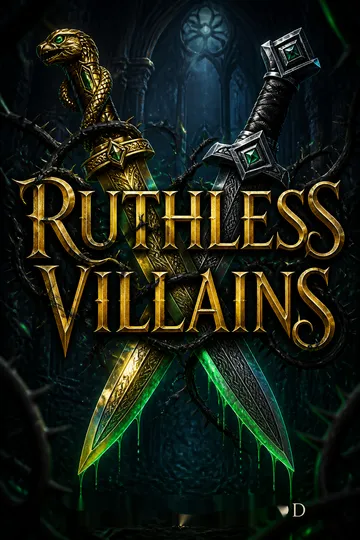
Ruthless Villains Series
About the Author
Other books by Marion Blackwood




Download PDF
Download EPUB
.epub digital book format is ideal for reading ebooks on phones, tablets, and e-readers.








