

Plot Summary
Baker Street Bargain
Watson opens his record as a confession from a doomed future, insisting that Warlock Holmes was not the true architect of disaster. His account begins in a cheaper crisis: shot in Afghanistan, ravaged by fever, and nearly penniless in London.
Stamford introduces him to Holmes, a tall, unnerving lodger who studies corpses and seems to know Watson's history by magic. Holmes offers him rooms at 221B Baker Street for one sovereign, with the strange condition that Watson enter backwards at midnight. Watson agrees because the alternative is destitution.
Inside, he discovers Holmes's crowded little bedroom, erratic moods, unexplained visitors, and fierce preference for darkness. The doctor's practical need has carried him into a household where reason will soon have to make room for the impossible.
The bargain is made under material pressure, not romantic fascination. Watson needs shelter, while Holmes needs a companion who will remain despite the warning signs. Their arrangement therefore begins as a transaction and quietly becomes mutual dependence. Watson's medical habits give him a framework for approaching the uncanny, but his first response is also denial: he accepts the cheap rent while postponing the meaning of bleeding walls, violent visitors, and Holmes's uncanny deductions. The novel sets its central comic tension here. Watson wants the supernatural to submit to observation, while Holmes performs it and calls it ordinary.
The Blood-Written Rache
Holmes's seizure-like prophecy names a messenger and points him toward a murder at Lauriston Gardens. Watson accompanies him, where police inspectors Torg Grogsson, an immense ogre, and Vladislav Lestrade, a vampire, reveal the supernatural company Holmes keeps.
The dead American, Enoch Drebber, has no wounds, but Watson suspects poison from the bitter odor and notices blood on the floor. A brittle St. Louis bakery wrapper is lodged in Drebber's mouth. Holmes dismisses a German word written in blood as irrelevant, then collapses after delivering a cryptic account linking Drebber to Joseph Strangerson.
Watson traces the clue to the constable who found the body. His account of a distraught cabdriver searching for the wrapper, combined with its American origin and Drebber's habits, gives Watson the first credible profile of the killer.
Watson's arrival among Grogsson and Lestrade turns the supernatural from a private suspicion into a social fact. Yet the case does not reward spectacle by itself. Holmes's visions provide fragments, while Watson builds a causal explanation from smell, blood, paper, and a witness's imperfect memory. The comic police work also complicates the familiar hierarchy of reason: the monstrous inspectors hold official authority, but Watson's ordinary medical attention proves more useful than their strength or appetite. His curiosity has crossed a threshold. He is no longer merely tolerating Holmes's strange world; he is actively investigating it.
The Donut's Long Shadow
Holmes advertises the wrapper's recovery at Watson's rooms, unknowingly making the doctor bait. Jefferson Hope arrives disguised as an old woman, takes the paper, and nearly kills Watson before escaping in his own cab. A crowd of deformed rats, Holmes's Baker Street Irregulars, later helps locate him.
Grogsson meanwhile arrests Arthur Charpontier on a flimsy motive, and Lestrade finds Strangerson murdered with the same wrapper in his mouth. At Grogsson's house, the detectives lure Hope with a rock-filled trunk.
He escapes the first trap, but Watson's shot disables his cab and Grogsson captures him. Hope explains that Drebber and Strangerson stole his beloved donut, Lucy, then abandoned him in the desert. He pursued them across continents for ten years, killing them in London. His story complete, Hope dies in his cell.
The absurd pastry is not merely a comic clue; it gives Hope's revenge a painfully human scale. His life is consumed by betrayal, but the object he mourns is trivial to everyone else, which makes his grief both ridiculous and recognizable. Watson's inference identifies the killer, while the capture depends on Holmes's resources and Grogsson's force. The case thus resists a clean division between rational detective and supernatural helper. Hope's death also makes narrative itself a force in the story: he believes his life must end when its account is finished, and the book treats that belief as physically consequential.
The Soldier Turns Gold
After the case, Watson reflects on the soldier he might have become if Afghanistan had not left him wounded and ill. Holmes, meanwhile, develops an unlikely passion for penny dreadfuls, filling his days with cheap adventure novels. Watson finally gives Holmes the sovereign he owes for his lodging.
Holmes takes the lead toy soldier Watson bought before leaving for India and changes it into gold, releasing blood and sulfurous smoke as he does so. He tells Watson that the doctor is welcome on their side of the coming struggle.
Watson stays, no longer only because he lacks money or because a mystery has caught his attention. His old military identity remains a source of doubt, but the small golden figure gives him a new emblem: he has chosen to remain beside Holmes in a world that keeps breaking his former assumptions.
This quiet interval gives Watson's commitment a deliberate shape. He is not simply swept from case to case; he pays what he owes and accepts the consequences of staying. The lead soldier links his abandoned military future to the identity he is forming beside Holmes. Its transformation is not a neat cure for Watson's uncertainty. Instead, it suggests that value can change without erasing what came before. Holmes's welcome is warm but ominous, since the gift arrives amid supernatural cost. The domestic act of settling rent becomes an initiation into a conflict larger than either man's private life.
The Two Pandora Boxes
Percy Trevelyan asks Holmes to investigate his wealthy patron, Blessington, after two supposed trapeze experts distract him while someone searches Blessington's rooms. Blessington barricades the stairs and fires a Gatling gun when Holmes arrives, but Holmes subdues him.
Watson discovers that Blessington's real name is Henry Moffat, a former member of the Worthingdon Bank Gang. Holmes recognizes the plain cashbox as one of a pair: anything placed in one appears in its twin, while a creature in the dangerous box can attack through the other.
Watson realizes Blessington has kept Trevelyan at home as a possible sacrifice, positioning the box beneath his bed. The clue turns a burglary inquiry into a race. Holmes and Watson return, but Sebastian Moran and his accomplices have already reached Moffat's house, seeking the box.
The case's domestic arrangement is revealed as a technology of expendability. Trevelyan believes he is a dependent artist; Moffat has made his presence useful as a human shield. Holmes's explanation of the paired boxes gives magical mechanics a criminal application, but Watson supplies the moral insight by asking why a patron would insist that his lodger remain home at night. The episode makes shelter itself suspect: a room can be generous on its surface and murderous in its design. Moran's arrival also connects a local theft to the broader criminal network surrounding Holmes.
Time Leaves the Box
Before they return, Holmes gives Watson a grotesque protective amulet made from the doctor's rent sovereign, earwax, and tiny bones. At Moffat's house, Moran's men have stabbed Moffat and let his blood drip into the dangerous box.
The creature emerges in Trevelyan's room, a shape that breaks Watson's sense of space and carries him through the history of the universe. Holmes has pushed him inside, trusting the amulet to protect him. It absorbs the creature's assault and binds the beast, though time itself remains part of reality and will still wear down all things.
Watson wakes with the ability to breathe and move again. Trevelyan leaves with money to begin elsewhere, while Holmes leaves the emptied boxes behind for Moran. Watson keeps the amulet's chain, a small remnant of a night that has changed his understanding of existence.
The climax makes Holmes's care inseparable from his willingness to gamble with Watson's life. The amulet is an intimate, invasive gift, assembled from Watson's own body and property, and its protection succeeds only after the doctor experiences his apparent erasure. The monster embodies time not as a villain with a plan, but as an impersonal law of decay. Binding it cannot abolish mortality; it only prevents its concentrated violence from bursting through a box. Watson's survival therefore offers no mastery over the universe, only a narrow, hard-won limit on what can happen next.
The Box of Two Left Ears
A package containing two left ears appears at Susan Cushing's door, and Inspector Lanner accuses Grogsson, who has fled. Watson finds a betting sheet inside the wrapping and questions Susan about her estranged sister Sarah, married to sailor Jim Browner.
The tarred string and ship names point away from Grogsson and toward Browner, while the ears belong to men who fought the giant in illegal dockside matches. Holmes helps Watson make the case, and Lanner withdraws the warrant.
The three investigators find Grogsson in a warehouse ring, challenging sailors to fight him with any weapon and promising they can win. He has taken Susan's rebuke as proof that he has no home. Watson persuades him to leave the ring and stay with him and Holmes, though Grogsson cannot bring himself to face Susan again.
The mystery turns on the danger of reading a person through appearances. Grogsson looks capable of the violence Lanner imagines, and his flight seems to confirm it; Watson instead reconstructs the package's route through its materials and Susan's family history. Yet the truth does not make Grogsson innocent of every injury. He has torn ears from opponents, but as trophies from fights, not as murders or courtship gifts. Watson's rescue succeeds by recognizing the wound beneath the spectacle. Grogsson's power cannot protect him from rejection, and the episode makes emotional vulnerability more consequential than physical danger.
Effie's Yellow Secret
Grant Munro seeks Holmes after his devoted wife, Effie, begins secretly giving money to new neighbors and defending a strange face at their cottage. Watson suspects her first husband, Octavius Hebron, is alive, since the death certificate's account of his death in childbirth makes no medical sense.
At the cottage, however, Effie throws Watson across a field with inhuman strength. She admits that a witch midwife brought her daughter back from America, and that the yellow-skinned child has been raised by a coven.
Effie hid the child to protect her marriage, but Grant refuses to make her choose between them. He offers the girl his name and welcomes her as his daughter, Amber. The family leaves the cottage together, while Watson accepts that Holmes's supernatural explanation has again outpaced his own tidy deductions.
Watson's reasoning is sharp but overconfident: he correctly identifies a false death record and an old attachment, then mistakes the attachment's nature. The error matters because he approaches Effie's secret as a puzzle to solve rather than a relationship she is trying to preserve. Grant's response changes the stakes. Instead of demanding that Effie prove loyalty by abandoning her child, he expands the family bond to include the frightening stranger. The ending does not make the child ordinary or erase the danger of prejudice. It shows acceptance as an action taken before full understanding, not a reward granted after difference has been explained away.
The Hand in the Vent
Helen Stoner fears she will die as her twin Julia did, after an engagement threatens the inheritance controlled by their violent stepfather, Dr. Grimesby Roylott. Watson notices that Julia's bed is bolted beneath a useless bell pull and a new vent leading to Roylott's room.
The doctor has returned from India with dangerous animals and a secret laboratory, and Holmes identifies his bodily contortions as the work of a fakir. At night, Roylott sends a spotted, elongated arm through the vent, holding a needle that dissolves whatever it touches.
Watson catches the arm in Holmes's handcuffs. Roylott's spell fails before they can find the key, and his body is dragged through the vent and killed. Helen survives and leaves Stoke Moran, while Watson later admits he failed to consider who might inherit the house and its occult workshop.
Watson's investigation succeeds because he attends to architecture: the fixed bed, false bell pull, and connecting vent form a mechanism aimed at whoever sleeps below. His medical knowledge can identify a threat without fully explaining the means, but Holmes's supernatural reading fills that gap. The accidental death exposes the cost of improvisation, especially when Watson secures the arm without first securing a key. More consequentially, Watson's later regret reframes the case as a failure of aftermath. Saving Helen is not enough if the dangerous house and its tools remain available to someone else.
Milverton Raises the Price
Lady Eva Blackwell asks Holmes to stop Charles Augustus Milverton from ruining her engagement unless she pays seven thousand pounds. Holmes recognizes Milverton as a dangerous former associate of Moriarty and warns that he can alter the bonds connecting people's destinies.
At their midnight meeting, Milverton raises Eva's price whenever Watson or Holmes offends him, eventually demanding far more than she can afford. Watson learns that Milverton bought a lock of Eva's hair from her maid, giving him a personal token through which to work.
Holmes sees a chance to break Milverton's influence and disguises himself as an Irish laborer to infiltrate the household. Instead, he becomes engaged to the elderly housekeeper, Agatha, and returns without learning how Milverton uses the hair. With negotiation and disguise exhausted, Watson proposes burglary.
Milverton makes coercion sound like professional expertise. He does not need to expose a secret if he can convince his victims that their futures are already under his control. Eva's wealth and status offer little protection because the threat works through social possibility, not simply evidence. Watson's discovery of the hair creates a plausible route to resistance, while Holmes's failed disguise reveals how easily his confidence can be diverted by spectacle and sentiment. Their shift to burglary is not a triumph of moral purity; it is an acknowledgment that conventional bargaining has been structured to benefit the blackmailer.
The Woman's Gunfire
Watson and Holmes break into Milverton's house to search his safe for the tokens behind his power. While they hide in the study, a woman arrives disguised as a timid servant, then reveals that Milverton once betrayed her and shoots him.
Holmes rushes from concealment to save a man who has repeatedly threatened him. Watson raises his pistol but lets the woman escape as Milverton dies. Purple strands of destiny become visible in the room: Milverton's death loosens the bindings tangled through Holmes, releasing a trapped blue flame that brands itself onto Holmes's forehead before he collapses.
Household staff converge, so Watson starts a fire to cover their flight and drags the incapacitated Holmes over a wall. Lestrade meets them outside Baker Street, recognizes their involvement, and agrees to leave the crime unsolved.
The woman's arrival disrupts the expected roles of victim, criminal, and rescuer. She is both a killer and someone Milverton has harmed, while Holmes's attempt to save the blackmailer suggests that his fear is tied to more than immediate danger. Watson's choice to let her go is a moral decision made under threat, followed by practical complicity: he burns evidence and escapes with Holmes. The visible destiny strands turn an abstract system of influence into a bodily image. Milverton's death does not simply end a case; it changes the structure of Holmes himself.
Moriarty Takes the Chair
Back at 221B, Holmes moves as if he has forgotten how to use his own limbs. Watson notices that he calls him Doctor rather than Watson, favors his right hand, and drinks tea in a manner unlike his usual habits. When Watson asks who is present, the man identifies himself as Professor James Moriarty.
He extinguishes the lamps and gathers their flames into a burning sphere above his palm. The identity overturns Watson's assumption that Moriarty exists only as a voice of prophecy and confirms that the blue flame released from Holmes's tangled destiny has changed who occupies the body.
Moriarty then claims Watson's service. The book closes not with the mysteries settled, but with Watson facing the danger he has been chronicling and a familiar home made suddenly hostile.
The ending converts the detective's central method into a survival skill. Watson recognizes the change not through an occult vision but through small behavioral discrepancies: a form of address, handedness, and the way a cup is held. Those details expose the failure of appearance as evidence of identity. The reversal also recontextualizes the book's recurring prophecies and Holmes's relationship to Moriarty without resolving the danger they imply. Watson has become an unusually capable observer, yet observation gives him knowledge, not control. The final threat is intimate: the person beside him looks like his friend and speaks as his enemy.
Analysis
The book uses the machinery of detective fiction to test what counts as evidence when the world itself is unstable. Watson trusts observation, but observation does not always settle meaning: he correctly notices a false death certificate, yet misreads what Effie's secret concerns; he identifies the signs around Roylott's room, yet cannot fully account for the violence of the method. His errors are not proof that reason is useless. They show that reason works best when it remains corrigible, willing to revise its explanation as new facts arrive.
The comic supernaturalism also has a moral edge. The characters who look most monstrous are not automatically the most cruel, and the ordinary structures of respectability can hide exploitation. Blessington's patronage makes Trevelyan a potential sacrifice. Milverton turns social shame into a market. Lanner's institutional authority makes suspicion dangerous when it outruns evidence. Against these structures, Watson's humane attention becomes a form of competence: he listens to witnesses, notices grief, and distinguishes guilt from a frightening appearance.
At the center is the question of agency. Hope's revenge gives his life direction but also consumes it. Effie and Grant face a secret that can either divide a marriage or enlarge a family. Holmes's power protects people, yet every favor or magical act risks strengthening forces that threaten the human world. Watson's continuing choice is not between science and magic, but between certainty and inquiry. His medical training remains valuable precisely because he can admit when it is incomplete. The final identity shift makes that discipline urgent: in a world where a familiar body may no longer contain a familiar person, careful attention is not merely a method of solving crimes. It is how Watson knows whom he is facing.
Review Summary
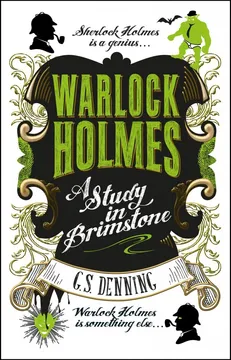
Reviews for A Study in Brimstone are largely positive, averaging 3.71/5. Fans of Sherlock Holmes particularly enjoy the clever role reversal, with Watson as the true detective and Holmes as a bumbling warlock. Humor is frequently praised, though some find it forced or miss the mark entirely. The supernatural reimaginings of Lestrade as a vampire and Grogsson as an ogre are crowd favorites. Readers unfamiliar with the original Doyle stories or those who dislike absurdist humor tend to enjoy it less.
People Also Read

Characters
John Watson
The recovering army doctorWatson is a physician and former army doctor whose wounds and fever leave him broke, physically weak, and uncertain about the life he expected to lead. He approaches mysteries through medical habits: observe symptoms, compare evidence, and infer a cause. That method makes him an effective investigator, though his confidence sometimes outruns the facts. He is also compassionate in practical ways, tending injured people and recognizing distress that stronger or more supernatural companions overlook. His relationship with Holmes begins as a desperate lodging arrangement, then becomes an intellectual and emotional partnership. Watson's enduring tension is between his professional obligation to preserve life and the increasingly dangerous world he chooses to enter.
Warlock Holmes
The occult consulting detectiveHolmes is a tall, eccentric warlock who investigates crimes for a small circle of Scotland Yard officers. He is powerful but socially awkward, prone to sudden moods, peculiar food habits, and dangerous private visitors. He often hides supernatural knowledge behind clumsy claims of observation, yet his actions show genuine loyalty to Watson and a deep fear of being abandoned or exposed. Holmes's gifts make him formidable, but every use of them carries a cost for the world around him. Watson's presence gives him a companion capable of challenging his explanations and sharing the work. Beneath his comic evasions, Holmes is a wary and lonely man trying to restrain forces that would gladly act through him.
Moriarty
Holmes's occult nemesisMoriarty is introduced as a voice associated with Holmes's prophetic episodes and with crimes involving dangerous magical objects. He has a history of intelligence, strategic patience, and influence exercised through other people rather than direct confrontation. Holmes regards him with unusual hostility, suggesting a personal entanglement more complicated than a standard contest between detective and criminal. Moriarty's interventions provide warnings, but their usefulness never makes them feel safe. He represents a form of power that works through networks, bargains, and hidden dependencies, making it difficult to know where his influence ends or what price a favor carries.
Torg Grogsson
The enormous police inspectorGrogsson is a towering, hairy Scotland Yard inspector whose immense strength often overwhelms both furniture and procedure. He is blunt, proud, and deeply attached to honor, even when his understanding of evidence or police work falls short. His size makes him frightening to strangers, but his private life reveals an appetite for beauty and a loneliness he has trouble expressing. He is one of Holmes's few dependable allies, and his friendship with Lestrade is built on trust despite their very different natures. Grogsson's vulnerability is not hidden by his physical power; it is made more poignant by the fact that he has so little practice showing it.
Vladislav Lestrade
The vampire inspectorLestrade is a Romanian vampire and Scotland Yard inspector who prefers darkness, dry wit, and professional competence to social warmth. He is usually sour, yet he is fiercely loyal to Holmes and Grogsson, and he can read the emotional consequences of a situation more accurately than his friends. His vampirism shapes his attention to blood and his relationship with human society, but he is also a working detective with a clear sense of institutional politics. Lestrade's bleak worldview is not mere grumpiness: he believes existence itself produces suffering. Even so, his repeated care for his companions suggests that attachment persists in him against his own philosophy.
Jefferson Hope
The relentless avengerHope is an American cabdriver whose life is governed by a private code of loyalty and revenge. His pursuit of Drebber and Strangerson begins with a betrayal that others would dismiss as absurd, but he treats the loss as sacred and spends years learning trades and languages to follow them. Hope's capacity for patience is matched by his willingness to kill, leaving him difficult to classify as either a sympathetic victim or a simple villain. His story forces Watson to consider how grief can turn a small injury into an entire life's purpose. Hope is also a figure whose sense of fate shapes his choices as strongly as any detective's evidence.
Mrs. Hudson
The watchful landladyMrs. Hudson is the sharp-eyed landlady of 221B Baker Street, feared by Watson and Holmes for her scowls, strict habits, and unexpected interruptions. She takes little interest in their explanations and is often more practically aware of their household than either lodger. Her private reading and hopes for romance complicate her severe exterior, though the men rarely understand her motives correctly. She is a recurring source of comic friction and a reminder that the supernatural does not suspend ordinary domestic inconvenience.
Stamford
The reluctant matchmakerStamford is Watson's former colleague at St. Bartholomew's Hospital. He introduces the destitute doctor to Holmes, partly to escape a promise he regrets making. His intervention creates the partnership that shapes Watson's new life.
Wiggles
The shape-changing street scoutWiggles is a young street urchin who can take the form of a rat and organize the Baker Street Irregulars. He brings Holmes information from London's streets and treats the work as a practical job. His presence gives Holmes access to a community and a network beyond official police channels.
Percy Trevelyan
The dependent trapeze artistTrevelyan is a trapeze performer whose artistic ambitions have led him into an unusual financial arrangement with a wealthy patron. He is eager to learn from the masters of his craft and slow to recognize the danger hidden in his living situation. His disciplined physical art contrasts with the uncertainty of his domestic life.
Henry Moffat
The guarded benefactorMoffat, who uses the name Blessington, is a wealthy and secretive patron who houses Trevelyan while keeping most of his own life shut away. He distrusts banks and guards his home with disproportionate anxiety. His money and apparent generosity make him difficult to read, while his fear suggests that his past has not stayed buried.
Sebastian Moran
The disciplined criminal officerMoran is a compact, militarily precise man who approaches danger without visible hesitation. He serves as a trusted operative in the criminal world surrounding Moriarty and treats loyalty as a matter of personal honor. His controlled manner makes him more unsettling than open aggression, and his attention to Holmes signals a rivalry with consequences beyond ordinary police work.
Grant Munro
The devoted hop merchantMunro is a hop merchant who loves his wife with unusual openness and takes her comfort seriously. When Effie's behavior becomes secretive, his fear comes less from wounded pride than from the prospect of losing their intimacy. He is not a trained investigator, but he is willing to risk humiliation and danger for an honest understanding of the person he loves.
Effie Munro
The burdened second wifeEffie is an American widow who has married Grant Munro and built a life around mutual tenderness. Her past contains obligations she struggles to reconcile with the happiness she has found. She is athletic, capable, and protective, but secrecy places strain on the trust she values. Effie's central conflict is not simply between two men; it is between loyalty to a history she cannot erase and the life she hopes to preserve.
Susan Cushing
The grieving neighborSusan Cushing is a kind, reserved woman whose family history provides crucial context in a police inquiry. She is willing to describe painful relationships, but her sense of propriety makes her reluctant to accuse others without certainty. Her response to Grogsson is shaped by both compassion and discomfort, showing how a single encounter can wound someone whose intentions were never cruel.
Jim Browner
The sailor with a grievanceBrowner is a sailor whose marriage has been damaged by his wife's infidelity and his own volatile temperament. His work keeps him moving between ports, while anger and humiliation shape his decisions on shore. He becomes important to Watson's investigation because the details of a package point toward maritime life rather than the obvious suspect.
Helen Stoner
The endangered twinHelen Stoner is a young woman living under the authority of her stepfather, Grimesby Roylott. She fears that the strange circumstances surrounding her twin sister's death may soon reach her. Helen is cautious and frightened, but she has enough resolve to seek help beyond her household. Her story exposes how dependence on family authority can become dangerous when no one outside the home knows what is happening.
Grimesby Roylott
The violent country doctorRoylott is a physician with a fearsome reputation, a violent temper, and a history shaped by his years in India. He maintains a decaying family estate and surrounds himself with dangerous animals and private experiments. His imposing strength makes open resistance difficult, while his secrecy gives others little chance to understand his methods before they are at risk.
Lady Eva Blackwell
The threatened society brideLady Eva is a socially admired young woman whose engagement is threatened by a blackmailer's demand. She is graceful without being passive and seeks help despite the shame and pressure attached to her situation. Her problem reveals how reputation can be used as leverage against people who have done nothing to deserve public ruin.
Charles Augustus Milverton
The destiny blackmailerMilverton is a polished extortionist who turns fear of future disgrace into a business. He claims the ability to see and manipulate the ties that connect people's lives. His manner is deliberately courteous, but every courtesy conceals a calculation about how to make resistance more expensive. Holmes's history with him gives their encounters a personal charge.
Inspector Lanner
The ambitious rival inspectorLanner is a young Scotland Yard inspector who resents the success Holmes and his unusual colleagues enjoy. He is ambitious and eager to prove their methods illegitimate, but his certainty can outrun the evidence. His rivalry with Lestrade and Grogsson influences how he interprets a crime.
The Woman
The masked avengerThe Woman is an elusive, capable figure who enters Holmes's world with a disguise, a weapon, and her own history of injury. She is difficult to intimidate and difficult to categorize, appearing at once composed and dangerous. Her presence leaves Watson with questions about justice, complicity, and the people whose stories intersect with Holmes's.
Plot Devices
The brimstone thread
The seam between worldsHolmes describes reality as a fabric touched by influences from outside the human world. Powerful beings can grant favors, and each favor makes their presence more deeply felt in ordinary life. The thread helps explain why supernatural events gather around Holmes and why using his powers carries a cost beyond the immediate case. It also gives Watson a way to think about apparently ordinary cruelty and social behavior as patterns shaped by forces not always visible to human observers.
Holmes's prophetic episodes
Clues delivered through possessionHolmes sometimes stiffens, glows, and speaks in an altered voice, delivering information he does not seem to control. These episodes point the detectives toward witnesses, suspects, and future danger, but the messages are cryptic enough to require Watson's interpretation. The prophecies also establish a troubling connection between Holmes and Moriarty, making each useful clue a reminder that Holmes may be vulnerable to forces speaking through him.
The paired boxes
A portal with a predatorTwo wooden boxes are linked so that an object placed in one can be retrieved from the other, regardless of distance. One box contains a creature associated with the destructive force of time. When blood reaches the dangerous box, the creature can emerge through its counterpart and attack. The mechanism turns an occult object into a tool for bank robbery, then makes Trevelyan's bedroom a concealed site of risk. Its danger is not simply the creature, but the way people can use another person's presence as protection.
Watson's protective amulet
A bodily shield against timeHolmes makes the amulet from Watson's rent sovereign, earwax, and small bones associated with hearing. Its protection is personal and limited, but it gives Watson a chance to survive contact with the creature from the paired boxes. Holmes's method is intrusive, comic, and affectionate at once: he has been gathering the material without Watson's knowledge because he feared the doctor could not defend himself. The amulet turns domestic belongings and bodily residue into a serious magical safeguard.
Milverton's destiny knots
Personal tokens bind futuresMilverton claims to perceive the ties connecting people's lives and to tighten or separate them. He uses a lock of Lady Eva's hair as a personal token, suggesting that his power depends on a physical link to the target. His influence over Holmes appears as a tangled web of destiny, and the consequences of Milverton's death become visible when some of those strands loosen. The device makes blackmail more than a threat to reputation: it gives the extortionist a supernatural means of shaping relationships and identity.
Download PDF
Download EPUB
.epub digital book format is ideal for reading ebooks on phones, tablets, and e-readers.








