


Plot Summary
The Hacker Comes Back
Aloysius MacBharrais, a Glasgow sigil agent whose twin curses have estranged him from loved ones, welcomes back Saxon Codpiece, now hiding under the name Norman Pøøts. Norman brings evidence against a network of human traffickers and warns that victims include men and children as well as women.
Their meeting turns violent when a trafficker enters the pub with women and hired guards. Al knocks the man unconscious with his cane, then uses sigils to prevent the guards from retaliating.
He leaves with Norman’s dossier, intending to pass it discreetly to police. Meanwhile, Al’s accountant Nadia and his hobgoblin servant Buck are preparing a robbery to fund Roxanne, a goddess trying to establish a mortal life. The weekend’s crimes and favors are already colliding.
Al’s first instinct is to turn evidence into protection for people the law has failed, but his intervention in the pub shows how easily justice becomes personal when he recognizes a predator. Norman’s dossier gives the plot a practical human cost, while the heist complicates Al’s moral position: he wants victims rescued, yet his allies fund a goddess through theft. Buck’s escalating pranks and drinking add a quieter danger. Al can manage supernatural treaties, but he cannot simply command another person into recovery.
The Empty Reception Desk
On Monday, Al arrives at his printshop expecting Gladys Who Has Seen Some Shite, the receptionist whose authority even gods seem to respect. She is absent and unreachable, while Ogma, an Irish god who recently tried to kill the Iron Druid, waits in the lobby to face judgment.
Detective Inspector Munro also visits, investigating the weekend bank heist after cameras captured Buck inside vaults and Nadia’s distinctive van nearby. Al’s Saturday work at the shop supplies a convincing alibi, but Munro leaves him under scrutiny.
Gladys returns the next morning with Granuaile, a Druid, and orders Ogma to spend a year and a day repairing the damage he caused by working under Brighid’s direction. Her power remains unexplained, and Al’s questions about her only earn a promise that she will reveal nothing yet.
The empty desk makes Gladys’s importance legible through absence: without her, the office becomes a waiting room for divine grievance and police suspicion. Al’s insistence on keeping his business ordinary, even through a temporary receptionist and pastry, is a small defense against a world that continually breaches his routines. Gladys’s punishment of Ogma is not revenge but enforced repair. Her authority rests on making the powerful bear the labor their destructive choices leave behind.
Gold Beneath Papua
Granuaile explains why Gladys missed work. In Papua, mining explosions killed workers and opened a path into a vast cavern where a dragon goddess had slept for ages above a mountain of coins. The miners’ drilling woke her; frightened and hungry, she caused further collapses.
Granuaile and Gladys communicate with the nameless deity, then move her to safety while Granuaile disables the mine’s machinery to prevent the company from reaching the hoard. They cannot find the goddess’s vanished people, so she chooses a new name, Thalia, and a hidden home in Vietnam’s Hang Son Doong cave, where she can reach the sky and hunt water buffalo.
Back in Glasgow, Gladys also assigns Ogma to Brighid’s infrastructure project. Nadia, meanwhile, admits that her growing demigoddess power unsettles her because she refuses to accept a destiny chosen by gods.
Thalia’s story mirrors the novel’s larger concern with inherited purpose. She was created to guard a passage for the dead, yet the people whose beliefs sustained that duty disappeared without telling her the work was over. The rescuers do not force her into a replacement pantheon; they protect her resources and let her choose a name and habitat. Nadia’s resistance to divine destiny belongs to the same moral argument. Power may explain what someone can do, but it does not settle what they should become.
Yachts in the Minch
A government official, Percy Tempest Vane, summons Al to London after a yacht carrying Conservative politicians and business leaders sinks in the Minch. The old treaty between Britain and the Blue Men protects commercial, military, and sailing vessels, but not motor yachts.
Al learns that the captain ignored the Blue Men’s poetic challenge, then warns Percy that attacking them could close a vital shipping lane. At their hidden settlement, the Blue Men’s leader, Mudgeon MacGill, explains that yachts foul their waters and sometimes carry trafficked people.
He agrees to report trafficking vessels to authorities if the government actually intervenes, creating a path toward treaty negotiations. Mudge cannot identify Al’s curse, but points him toward a mysterious seer called Nancy. Al also sends Buck to find the seer and a Manchester investor exploiting her predictions.
The treaty’s literal language protects vessels according to a world that no longer exists, making law both a restraint on violence and an instrument of accidental injustice. Al refuses Percy’s demand for simple retaliation because the consequences would fall on ordinary shipping, not just the wealthy. Mudge’s proposal turns cooperation into a testable exchange: information must lead to arrests, and arrests must lead to trust. The meeting also shows Al’s method at its best, using patience and hospitality to negotiate where force would make the problem larger.
Nine Tracks to Nancy
Buck’s search for Nancy nearly starts a feud among hobgoblin families. To learn her location, he steals the Snothouse family’s magical paragon, then gives it to them after using it to extract information from Browning Fullbritches. He also steals the Fullbritches paragon and returns it to their rivals, leaving three families furious.
At home, Buck finally admits that he drinks to avoid grief over leaving his family and a father who wanted to provoke a clan war. Al travels to Brooklyn, rides all nine tracks into Broadway Junction, and meets Nancy, who reveals she is Nanshe, an ancient Sumerian goddess of prophecy.
Her power now comes from the effort people spend seeking her. She cannot name Al’s curser, but gives him a truth-compelling candle and identifies Gladys as Gaia’s avatar. She asks him to stop a Manchester man who keeps finding her for stock tips.
Nancy’s altered source of power gives the book a striking model of religious change: she remains supernatural, but the seeker’s sustained effort replaces passive worship. Her survival depends on a relationship rather than an institution. Buck’s confession is less magical but equally important. He has turned a family rupture into a private burden, then numbed it instead of examining it. Al recognizes the difference between protecting Buck and controlling him, and begins to push him toward choices that might build a future rather than merely conceal a past.
The Sirens Tell the Truth
Before confronting the sirens, Al visits Connor Molloy, the Iron Druid, and tests Nancy’s candle against Connor’s cold iron protection. The candle still compels a truthful answer, so Al brings Buck and Nadia to Capri with cold iron, ear protection, and combat sigils.
On the Faraglioni rocks, the three sirens’ voices drive nearby boaters into the sea, but the candle forces them to name the gods behind Al’s twin curses: Phobos and Deimos acted for their father, Ares, because Al had blocked Ares from meddling in Syria. The candle goes out before the sirens can be restrained, and they attack. Al is stabbed and badly injured; Buck and Nadia get him away while the Italian authorities treat him for blood loss and a severe concussion.
The truth arrives only after Al accepts a risk that cannot be managed by careful paperwork. His safeguards work long enough to expose the cause of his suffering, but not long enough to protect him from its authors. The scene makes knowledge costly rather than liberating by itself: Al leaves with the answer and a damaged body, while the sirens remain dangerous. His dependence on Nadia and Buck is also exposed. The agent who usually manages everyone else’s survival must now trust them to carry him out.
The Gob Takes Shape
After a week in an Italian hospital, Al wakes to learn that Nadia and Buck have spent his coma writing The Gob of Lhurnog and registering a church around their invented, man-eating deity. They propose whisky and cheese offerings, a welcoming community, and punishment for the violent.
Al is alarmed that their worship might make Lhurnog real, but the idea is already gaining momentum. Once recovered, Al learns from the sirens’ answers that Ares ordered Phobos and Deimos to curse him.
He also finds himself entangled in Munro’s bank-heist investigation and creates a false Inverness hospital record to explain his absence. At the same time, he helps Roxanne acquire identification and a city residence as she prepares to leave the Morrigan’s ancient identity behind and experience ordinary human life.
The church begins as a practical joke and tax strategy, but its authors have written beliefs, rituals, and an afterlife into a form that can attract real devotion. Al’s horror is grounded in his professional knowledge: faith is not merely private comfort in this world, it can produce beings with physical power. Meanwhile, the hospital reverses his usual role. Nadia and Buck make consequential decisions while he is helpless, forcing him to confront how little of the supernatural world can be kept safely under one person’s control.
Roxanne’s First Dates
Roxanne changes her appearance, secures legal papers, and asks Nadia and Al to help her navigate dating. Her first blind date, with Calvin Brodie, collapses when his bitter politics and contempt for her work turn dinner into a threat; Roxanne frightens him away, while Nadia teaches her to leave unsuitable men without killing them.
At a Rangers match, Roxanne meets Gary Carmichael, who initially seems kinder. When he follows her into a women’s restroom and ignores repeated refusals, she snaps his neck, changes into a crow, and eats his eyes as she once did as the Morrigan.
A witness finds the body. Al and Nadia leave the stadium separately enough to protect themselves, then help Roxanne plan how to evade police identification. Roxanne fears the killing proves she cannot become someone new.
Roxanne’s experiment is not a clean conversion from goddess to mortal. She wants consent, companionship, and a self not dictated by ancient worship, but under threat she reaches for the violence that once made her powerful. The story does not treat Gary’s assault as a harmless dating mishap; his refusal to recognize her no is the cause of the killing. Yet Roxanne’s response also exposes the danger of replacing human justice with divine force. Her distress afterward matters because she is capable of judging her own actions, not merely repeating them.
Buck Faces His Father
Munro questions Al and Nadia about Gary’s death, while Al’s concussion and the continuing investigation leave him feeling cornered. Buck’s fear of reprisals from the Fullbritches, Snothouses, and his own Badhump family drives him back to drink.
Al persuades him to return to Tir na nÓg with a new whisky bottling branded for the Badhumps, hoping to repair his family’s standing. A second yacht sinks, this time leaving trafficked women and children alive, and Percy reveals its owner, Chase Digges, a Manchester billionaire with political influence.
Buck’s hobgoblin contacts confirm Digges is tied to trafficking and has powerful protection. Al later confronts Buck’s father, Softwood, who accuses his son of plotting to replace him. Al sees how deeply Buck’s family rejection shapes his self-sabotage, even as Buck begins trying to make amends.
Buck’s conflict is not simply a feud over magical heirlooms. He wants the family that rejected him to acknowledge that he prevented a war, but each effort to earn recognition exposes him to renewed blame. Al’s advice is useful, yet his attempts to solve Buck’s emotional pain through a strategic whisky delivery show the limits of managerial care. The larger plot echoes this private conflict: Digges has converted money, political access, and fear into a shield against accountability. Both men mistake control for security, though only one is willing to change.
A Church and a Vigilante
Nadia’s first service for Lhurnog draws a friendly crowd to a hall full of whisky, cheese, and a polished devotional text. Al fears the prayers may summon the god, but the congregation returns in greater numbers. Roxanne, meanwhile, adopts the name Red Roxanne and begins terrifying men into confessing crimes against sex workers.
She claims that those who refuse human justice may face her own. Munro asks Al about the reports but receives no help. When trafficker Ratimir Kovalenko attacks the printshop with armed guards, Nadia disarms him and Al’s defensive sigil prevents a bullet from penetrating.
Al plants evidence linking Kovalenko to the bank heist, while Buck stages a pursuit ending in an apparent drowning, diverting the police from Al and Nadia. Buck’s intelligence also links Digges to dark magic and the exploitation of Nancy.
The church and Red Roxanne develop as opposite answers to violence. Nadia builds a community around hospitality and a prohibition on harm, while Roxanne coerces wrongdoers through fear and reserves lethal judgment for herself. Neither is a simple fantasy of power: Nadia’s welcoming theology may create a god she cannot easily govern, and Roxanne’s apparent victories risk turning justice into unreviewable punishment. Al’s deception of the police is similarly compromised. He protects his allies and helps free trafficking victims, but he also manipulates evidence because he no longer trusts institutions to act in time.
A Vampire in Sacramento
Sigil agent Eli Robicheaux asks Al to investigate three Sacramento werewolves killed with a silver knife. Al joins Eli and a volunteer werewolf, Pedro Arellano, to watch for the killer. They spot a vampire stalking Pedro, but Nadia’s warning gives them time to prepare.
When the vampire returns, Al identifies him as Zbigniew Szczygiel, a Polish vampire violating treaties by hunting west of the Mississippi. Owen Kennedy, a Druid, brings wooden stakes and joins the hunt with Pedro’s pack. Szczygiel escapes through an Old Way into Tir na nÓg, where he has gathered five vampire allies.
The vampires ambush the pursuers. Owen shifts into a black bear and tears through the attackers, while Al and the other survivors use sigils and Druidic magic to stabilize the wounded werewolves. Abe survives, though the pack is badly hurt.
This detour tests whether the novel’s network of treaties can protect people when an offender moves across borders faster than institutions can respond. Szczygiel’s access to an Old Way turns a route meant for cooperation into an escape path, widening the danger beyond California. The fight also makes the costs of solidarity physical. The werewolves join despite being told to stay safe, and several nearly die for it. Al’s role is not to win alone, but to coordinate different kinds of power quickly enough to keep the wounded alive.
Buck Builds a Clan
After Al returns from California, Buck admits that he and Elegiac Thunderpoot want to marry and form a new hobgoblin clan. Al requires Elegiac to find a legitimate contract and the pair to secure housing before he will approve their plans.
She proves herself by stealing a gold bar from police custody and returning it to Norman. At their wedding in the Fae Court, the Snothouses and Fullbritches reconcile and support Buck’s new clan, while several hobgoblins join. Softwood forbids the Badhumps from joining and insults Buck with his abandoned birth name.
When Softwood attacks Maladroit, Buck challenges his father and defeats him in a public duel. The new clan, called the Eroticas, gains members and a powerful paragon. Buck then announces that they will help Al confront Chase Digges.
Buck’s growth becomes visible in actions that once seemed impossible for him: he stops drinking long enough to plan, accepts a relationship without treating it as a distraction, and builds a clan rather than begging to be restored to his old one. The duel does not repair his father’s heart, but it breaks Softwood’s monopoly over the family’s future. Buck’s victory is therefore less about physical dominance than permission. He can honor what he came from without allowing his father to define every life that follows.
The Mirror Opens
With Brighid authorizing a mission to neutralize Digges’s magic, Al and Buck recruit a small team of hobgoblins and use Norman’s research to enter Digges’s Kuala Lumpur estate. A hidden passage behind a bedroom mirror leads to a basement filled with grimoires, stolen artifacts, sacrificial equipment, and a djinn imprisoned in a bottle.
Unforgettable touches a cursed bottle and dies before Al can stop her. The team photographs the evidence and steals Digges’s laptop. When Digges returns, the hobgoblins knock him unconscious, but he has summoned an ifrit to kill them.
Al destroys it with a forceful sigil that tears apart part of the house. He takes Digges into custody, gives his devices to Norman to expose the trafficking network, and entrusts the site and the djinn’s release to other sigil agents.
The raid’s apparent success is punctured by Unforgettable’s death, a consequence that no clever plan can reverse. Digges’s wealth has hidden more than criminal records: his house contains enslaved supernatural beings and the material evidence of years of ritual violence. Al’s destruction of the ifrit is necessary containment, but it leaves collateral damage and emergency services at the door. The decision to expose Digges publicly rather than rely on compromised authorities reflects a hard-earned skepticism. Accountability must be built through witnesses and evidence, not assumed from a badge.
Lhurnog Eats Olympus
Al brings Buck, Nadia, and Gladys before the Olympians to prove Ares ordered Phobos and Deimos to curse him. Before Al can present his evidence, Ares attacks. Buck goads the war god with a face full of vanilla yogurt, while Nadia blocks his sword with armor given to her by Roxanne.
Their congregation’s prayers summon Lhurnog, who seizes Ares, then eats Apollo and Poseidon when they attack him. Al uses Nancy’s candle to make Phobos and Deimos confess. Zeus agrees that their curses violated the treaty and destroys them with thunderbolts.
Their deaths lift Al’s curses, restoring his voice and ending the danger to future apprentices. Gladys, delighted by what she has witnessed, resigns. Nadia’s anger at Al was the curse speaking, and she can finally embrace him as a friend.
The climax turns a carefully planned legal hearing into a crisis of competing powers. Lhurnog’s arrival saves Al, but it also proves that Nadia and Buck’s faith has made an unpredictable god real. The Olympians’ violence confirms the danger Al feared, while Zeus’s enforcement of the treaty shows that law can still matter when the powerful choose to honor it. Al’s freedom arrives through accountability, not a private cure: the curse-makers are confronted, their actions named, and the treaty applied. The emotional payoff is equally concrete. Nadia’s hostility vanishes, and Al can speak without losing her.
A World Called Celethon
Hermes escorts the group to Tir na nÓg, where Lhurnog’s first visit produces a heap of molten gold after he digests the Olympians. Brighid welcomes the newborn god but insists that his power on Earth must be governed by treaty, especially because his victims would not return as the Olympians do.
Lhurnog agrees to discuss limits. He then leads Al, Nadia, Buck, and Coriander to Celethon, his newly formed plane, where a Scottish landscape surrounds feasting pavilions, an immense library, and animals drawn from across the world.
Nadia sees that her worshippers have helped create a peaceful community, and tells Al she has found her purpose: helping people leave violence behind, with Lhurnog serving as a check on those who refuse. Al warns her to act carefully until the god’s treaty is settled, but he recognizes her choice as her own.
Celethon gives physical form to Nadia’s theology, turning fellowship, books, food, and animal companionship into an afterlife rather than a threat of punishment. The plane is appealing because it reflects the community she has gathered, but its existence also increases the stakes of her decisions. Brighid’s treaty proposal distinguishes purpose from permission: Lhurnog may serve Nadia’s vision, yet his interventions cannot be allowed to destabilize the world. Nadia’s self-understanding changes through creating something with others, not through discovering a hidden divine parent or accepting a predetermined role.
Al Chooses His Successor
Back in Glasgow, Al tells receptionist Lizzie MacLeish enough about his hidden work to let her choose how much she wants to know; she stays, and he gives her a raise. He then invites Duncan Ettrick, a law student whose calligraphy and ink knowledge impressed him at the church, to become his apprentice.
Duncan sees a sigil disable his phone’s camera, travels through the Fae planes, and accepts that the work can coexist with his ambition to represent people against powerful institutions.
With a successor in training, Al visits his estranged son Dougal at the bar where he works. The curse has left both men unable to remember the original cause of their anger. Al apologizes, Dougal reciprocates, and they agree to rebuild their relationship and reconnect him with his grandchildren.
Al’s liberation is incomplete until he risks returning to ordinary relationships. The curse’s disappearance removes the supernatural barrier, but it does not erase lost years or guarantee that his family will welcome him back. He chooses to approach Dougal without demanding an account of who was at fault, making repair more important than vindication. Duncan’s apprenticeship offers a different kind of future: Al can transfer responsibility rather than cling to a role that has consumed his life. Both choices require him to imagine continuity beyond duty.
Epilogue
After the curses lift, Al visits Millie MacRae, the librarian who has helped him research the gods. He explains that he can speak normally again and invites her to tea. Their conversation turns to their late spouses, Josephine and Frank, and Al suggests that making room for new happiness does not diminish the love they still carry.
Millie accepts the invitation and asks him to call her by her first name. She also mentions hearing women describe Red Roxanne as a benevolent goddess and men fear her as a demon. Al confirms that Roxanne is real and capable of both, then admits that her capacity to change gives him hope for his own approaching retirement.
The epilogue returns the story from gods and treaties to the quieter risk of intimacy. Al does not treat his late wife as an obstacle to future love; he imagines grief as a lasting place within life, not the whole of it. Millie’s response makes that idea reciprocal, since she too must preserve Frank’s memory without refusing every future possibility. Red Roxanne becomes a final measure of change: her contradictory reputation reflects the fact that transformation does not erase a person’s capacity for harm, but can make room for new choices. Al’s hopeful future begins with an invitation, not certainty.
Analysis
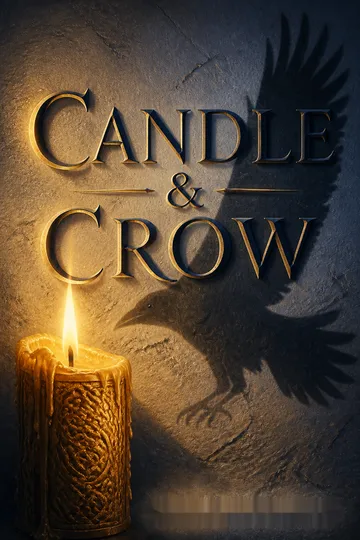
Candle & Crow treats identity as something shaped by both history and practice. Roxanne’s old role as the Morrigan is not a costume she can simply remove; her habits of power reappear under pressure. Buck’s family name carries a similar weight, but his new clan lets him build belonging through deliberate action rather than waiting for his father’s approval. Nadia’s church makes the book’s most literal claim about identity: a community’s repeated beliefs can create a god, then force its creators to negotiate with what they have made.
Al’s professional life is built around boundaries. Treaties, sigils, hidden routes, and carefully worded agreements allow the vulnerable to survive encounters with beings far more powerful than themselves. Yet the novel repeatedly shows that rules are imperfect. The Minch treaty protects old kinds of vessels but not modern yachts; the law cannot easily reach traffickers protected by money; and Al’s own curses turn ordinary speech into a threat to the people he loves. His response is not to abandon rules but to revise them, gather evidence, and make powerful actors answer for what they do.
The book also distinguishes accountability from vengeance without pretending the distinction is easy. The Blue Men seek cooperation before retaliation. Gladys assigns restorative labor. Al’s manipulations of police protect allies and free victims, but also compromise the legal process. Roxanne’s vigilante campaign confronts real violence while threatening to replace justice with fear. Lhurnog’s appetite offers a tempting shortcut: remove violent people, and peace might follow. The novel leaves that shortcut under treaty because good intentions do not neutralize the damage of unchecked power.
Al’s personal resolution is quieter than his supernatural victories. The curse’s removal does not restore lost time with his son or guarantee a welcome, and his apprenticeship does not erase the dangers of the work. Instead, Al chooses to risk conversation, teach someone else, and imagine a future beyond constant crisis. The book’s hope rests in that kind of renewal: not becoming untouched by grief or history, but making room for relationships and responsibilities that can still change.
Review Summary
Candle & Crow receives mostly positive reviews, with an average rating of 4.36/5. Readers praise the satisfying conclusion to the trilogy, engaging characters, and humor. Some criticize pacing issues and political overtones. The book wraps up various plotlines, including Al's curses and encounters with supernatural beings. Many appreciate the cameos from the Iron Druid series and Luke Daniels' narration. While some find it scattered, most enjoy the mix of action, magic, and character development.
Characters
Aloysius MacBharrais
Treaty-keeping sigil agentAl is a meticulous Glasgow printshop owner whose real work is enforcing agreements between humanity and supernatural powers. He uses handmade magical inks and sigils, a cane, and a dry sense of humor to compensate for age and physical vulnerability. Widowed and estranged from his son, he has learned to live around twin curses that punish his voice and kill his apprentices. His instinct is to contain danger through rules, research, and negotiation, but the people around him continually force him to accept uncertainty. Beneath the formal clothes and careful habits is a generous man who wants the vulnerable protected and, eventually, a life not governed entirely by emergencies.
Nadia Padmanabhan
Accountant with battle sightNadia manages Al’s printshop and supernatural logistics with equal competence. A battle seer, she can anticipate violence and act before opponents understand what is happening. Her wit, gothic style, and practical mind can make her seem irreverent, but she is loyal to Al and attentive to the people around her. She is also a demigoddess whose unknown parentage and growing power make her wary of divine expectations. Nadia values self-determination and resists being reduced to a weapon, an accountant, or a future deity. She tends to convert ideas into organized action, which is useful until her plans begin to have consequences larger than she intended.
Buck Foi
Contract-bound hobgoblinBuck is Al’s teleporting hobgoblin servant, a gifted thief whose contractual duties include taking the piss out of his employer. He treats mischief as an art and wants to become a legend among hobgoblins, but his ambition is tangled with shame about his family and fear that he has no future beyond service. Alcohol and capsaicin give him ways to avoid those feelings, while his loyalty to Al gives him reasons to confront them. Buck’s affection often arrives disguised as jokes, stunts, and noisy bravado. Underneath, he is observant about injustice and more principled than his appetite for trouble first suggests.
Roxanne
Goddess remaking herselfRoxanne is the current incarnation of the Morrigan, inhabiting an Australian woman’s body after that woman’s death. She has immense power and centuries of experience, yet she is dissatisfied with being worshipped as a fixed mythic role. Seeking a life beyond the Morrigan, she asks Al and Nadia for practical help with housing, identification, friendship, and dating. Her curiosity about ordinary affection sits beside instincts shaped by violence and divine authority. She can be charming, frightening, or painfully unsure, sometimes within the same encounter. Roxanne’s wish to change is sincere, but her struggle is learning that a new name alone cannot make every old reflex disappear.
Gladys Who Has Seen Some Shite
The receptionist with authorityGladys appears to be a warm, eccentric receptionist with a Canadian accent and an inexhaustible supply of pastries. Her presence makes gods and other powerful beings behave with unusual respect, and she can assign consequences to those who cause harm. She enjoys witnessing extraordinary events but refuses to explain her own nature or purpose before she is ready. Gladys is playful without being frivolous, and her judgments favor accountability and useful repair over humiliation. Her affection for Al is genuine, though she keeps him guessing about what she expects to see next.
Norman Pøøts
Hacker and criminal allyNorman, formerly known as Saxon Codpiece, is Al’s freelance hacker and an unapologetic career criminal who specializes in information, money, and elaborate hiding places. He adopts new identities and businesses as readily as he builds secure underground workspaces. His technical skill helps Al expose traffickers and investigate powerful people, though Norman’s methods are illegal and his ambitions remain self-interested. He is funny, theatrical, and capable of real compassion toward victims, especially when evidence can help free them. His alliance with Al works because each understands the other’s boundaries without pretending they share the same ethics.
Granuaile MacTiernan
Druid of the eastern hemisphereGranuaile is an experienced Druid who works across the eastern hemisphere and travels widely to study languages, magic, and martial arts. She is direct, socially confident, and comfortable challenging gods who behave badly. Her relationship with the Iron Druid has changed into a respectful friendship, and she is building a life shaped by her own interests. When a crisis in Papua requires her help, she combines practical knowledge with empathy for a stranded divine being.
Thalia
The newly awakened dragonThalia is a dragon-shaped goddess who wakes in an underground cavern after the last of her ancient worshippers has vanished. Her world has been a lonely duty of guarding a passage and its vast store of coins. Without a name or clear memory of her people, she must decide what she wants from a life she never expected to begin. She likes water buffalo, caves, and open sky, and responds to kindness while retaining her own preferences.
Mudgeon MacGill
Leader of the Blue MenMudgeon, usually called Mudge, leads the Blue Men of the Minch from a hidden settlement beneath Lewis Castle. He is old, sociable, and proud of the treaty he personally signed with humanity. His people resent yachts for the pollution and exploitation they bring into their waters, but Mudge is willing to consider cooperation when human authorities demonstrate good faith. He values courtesy without mistaking it for weakness.
Nancy
A goddess of prophecyNancy is the name adopted by Nanshe, an ancient Sumerian goddess of prophecy who has reshaped her life around seekers rather than traditional worship. Finding her requires a ritual journey through nine subway tracks at Brooklyn’s Broadway Junction. She answers one question, expects the effort behind the visit to matter, and sustains herself through the faith people place in that search. Her warm manner and unusual goose make her seem approachable, but her power is substantial.
Connor Molloy
The Iron DruidConnor, once known as Atticus O’Sullivan, is an ancient Druid living in Tasmania with his partner Rose and his dogs. He has accepted a life with one arm and diminished power, and approaches that change with hard-won peace. He is generous with Al, sharing knowledge about the sirens and lending him a cold iron talisman. His experience makes him a useful guide, but his most important influence is the example of someone who has endured a profound loss without letting it define every remaining choice.
Detective Inspector Munro
Relentless police investigatorMunro investigates the Glasgow bank heists and later examines deaths and criminal networks connected to Al’s circle. She is persistent, sharp-eyed, and suspicious of explanations that arrive too neatly. Her work puts her in conflict with Al, who often conceals information for reasons she cannot know. She wants evidence and answers, but her determination can become personal, especially when she believes Al is manipulating her.
Percy Tempest Vane
Government intermediaryPercy works in the home secretary’s office and initially treats Al as an inconvenient official summoned to explain a maritime disaster. He is proud, status-conscious, and easily provoked when challenged. Yet pressure from the Blue Men and the exposure of powerful criminal interests force him to consider solutions beyond public retaliation. Percy’s role shows how bureaucracies can obstruct reform while also providing channels through which practical agreements may take effect.
Chase Digges
Protected billionaire warlockDigges is a wealthy industrialist from Manchester whose polished public image masks a network of political influence and supernatural dealings. He owns businesses across several sectors and understands how to keep his private activities hidden behind security, wealth, and intermediaries. His power comes not only from magic but from the ordinary systems that reward money and protect people who can purchase access. He represents the kind of threat Al cannot resolve through a treaty meeting alone.
Lhurnog
God of fellowship and appetiteLhurnog begins as a deity Nadia and Buck invent for a church centered on hospitality, whisky, cheese, and opposition to violence. Their prayers and rituals give that idea a physical existence. He welcomes fellowship and scholarship but consumes those defined by violence, making him both a comforting figure and a potentially dangerous force. As a new god, he has not yet learned the boundaries that older pantheons enforce through treaties.
Brighid
First among the FaeBrighid is an Irish goddess and the leading authority among the Fae. She oversees infrastructure projects that connect the planes and assigns work intended to repair harm. She treats treaties as necessary protections for both humanity and the supernatural world, and she expects new powers to accept limits rather than act unchecked. Her decisions can authorize Al’s missions, but her authority also carries responsibility for maintaining a workable balance.
Eli Robicheaux
Sigil agent in PhiladelphiaEli is a fellow sigil agent whose territory includes the eastern United States. He is a family man, a capable investigator, and a practical ally when a supernatural problem exceeds his resources. His request for Al’s help with the Sacramento murders brings Al into a dangerous conflict involving werewolves and vampires. Eli’s loyalty to his family and apprentices gives him a protective streak that shapes how he handles risk.
Dougal MacBharrais
Al’s estranged sonDougal is Al’s adult son and works as a bartender in Glasgow. The twin curse has left a long silence between them, and even he cannot clearly remember what first made him angry with his father. He is capable of warmth but has had to build a life without Al’s presence. Their relationship matters because it is personal rather than professional, and repairing it cannot be accomplished by a sigil or treaty.
Millie MacRae
Librarian and new companionMillie works in the Mitchell Library and helps Al research mythology and the occult. She is thoughtful, warm, and attentive to color, books, and the emotional subtext of conversation. She still grieves her late husband, Frank, and understands that affection for the dead need not rule out future companionship. Her connection with Al begins in shared conversation and mutual respect rather than supernatural obligation.
Duncan Ettrick
Law student and calligrapherDuncan is a law student with a gift for careful handwriting and a fascination with fountain pens and ink. He is drawn to work that helps less powerful people challenge corporations and institutions. His interest in Nadia’s church brings him into Al’s orbit, where he encounters a form of justice that reaches beyond ordinary law. He is curious but not credulous, and wants enough evidence to make an informed choice.
Plot Devices
Magical sigils and inks
Ink turns marks into magicAl creates specific inks and draws matching sigils to produce effects such as enhanced strength, healing, concealment, camera disruption, or influence over attention. Their usefulness depends on preparation, line of sight, and the correct ingredients, so they do not solve every danger. The devices connect Al’s magical practice to his legitimate printshop and reward his habits of study and craftsmanship. In the final chapters, Al demonstrates a camera-disabling sigil to Duncan, revealing that the hidden trade can be taught and passed on.
Treaties between worlds
Law restrains supernatural powerSigil agents negotiate and enforce agreements between human authorities and supernatural beings. The treaties define boundaries, protections, and punishments, but their old language can fail when technology or society changes. The Minch treaty leaves motor yachts unprotected, while the Olympian treaty forbids retaliation against sigil agents. Al uses these documents as both shield and leverage, persuading the Blue Men to cooperate and later demanding consequences for the gods who cursed him.
Nancy’s nine-track ritual
A search becomes an offeringTo find Nancy at Broadway Junction, Al must travel into the station by all nine available tracks and perform ritual evocations. The time and effort of the search sustain Nancy’s power, allowing Nanshe to live without conventional worship. Her single-answer rule makes the meeting consequential: Al must choose what to ask, and cannot use the encounter as an ordinary consultation. Nancy cannot identify the source of his curses but gives him a truth-compelling candle as a way to reach the answer.
The Old Ways
Hidden paths connect distant placesOld Ways are routes through the Fae planes that let travelers move between locations far faster than ordinary transport allows. They help Al reach London, California, Italy, and other destinations, and hobgoblins can use them to move people or objects through unexpected entrances. Their convenience creates vulnerability when a vampire learns a route and escapes into Tir na nÓg. The expanding network also reflects Brighid’s effort to improve access and reduce the need for a herald to escort every traveler.
Faith made tangible
Ritual gives a god a bodyNadia and Buck write a scripture and establish rituals for Lhurnog, expecting a church that can offer fellowship and perhaps financial advantages. Their growing congregation turns those repeated practices into belief powerful enough to manifest the deity. Lhurnog’s appearance changes the scale of the conflict with Olympus and creates a new obligation to negotiate a treaty. The device links religious community to supernatural consequence: shared belief can create something real, but its creators cannot assume they will control it.
Ink & Sigil Series


About the Author
Other books by Kevin Hearne



Download PDF
Download EPUB
.epub digital book format is ideal for reading ebooks on phones, tablets, and e-readers.








