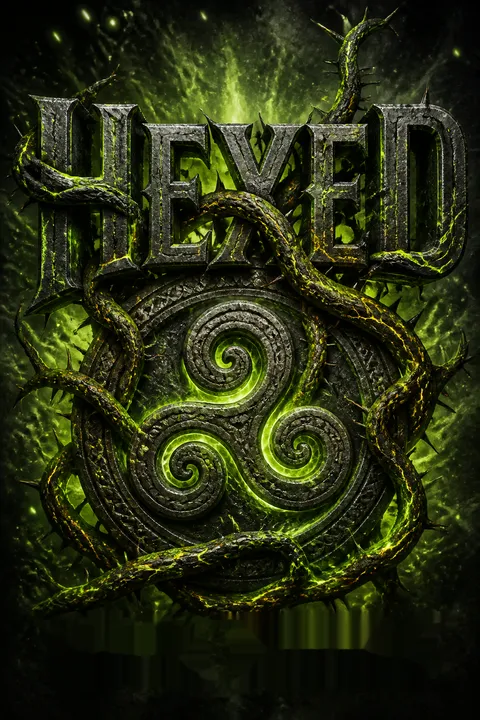


Plot Summary
Thor's Shadow at the Door
After killing two Irish gods, the ancient Druid Atticus O’Sullivan has become a target of divine recruiters, all eager to point him at their rivals. His vampire lawyer, Leif Helgarson, asks him to help kill Thor, driven by a hatred he will not yet explain. Atticus refuses: Thor is too dangerous, and surviving his earlier victories has not made him eager for another.
Before Leif can persuade him, Atticus’s cold-iron amulet heats against his chest. A distant spell is trying to burn him alive. The attack ends, but the scorched amulet and his injured skin leave a sharper question behind: someone nearby has decided that Atticus’s survival is a problem.
The opening frames power as an invitation others mistake for obligation. Atticus’s reputation after killing gods gives him leverage, but it also makes other beings treat his life as a tool in their feuds. His refusal of Leif’s proposal is not cowardice so much as hard-won risk assessment: he knows survival depends on declining fights that are not his. The sudden magical assault collapses that careful boundary. Atticus is no longer choosing whether to enter conflict; someone has already chosen him as its target.
The Demon in the Street
As Atticus cools the amulet and heals its burn, he suspects Malina Sokolowski, leader of a local Polish witches’ coven, but cannot yet prove her involvement. His wolfhound, Oberon, spots something more immediate: their nosy neighbor smells faintly of demons. A huge black wheel bug pursues them home, where Atticus’s earth wards and mesquite tree hold it long enough for a Sonoran Desert elemental to rise as a living saguaro and smash it apart.
The neighbor sees the impossible fight and faints. When Atticus phones Malina, she reacts with alarm rather than guilt, saying other witches have been attacked and one is dead. The danger is wider than a failed assassination, and the demon is only one loose remnant of an earlier breach of hell.
Atticus’s power is practical but not effortless: he survives by reading terrain, using wards he prepared earlier, and accepting help from a force larger than himself. The elemental’s intervention makes his bond with the land concrete, not merely mystical. Oberon’s nose also functions as a check on Atticus’s assumptions. He is quick to suspect Malina, yet the neighbor’s demonic scent and Malina’s alarm show that certainty would be premature. The scene turns domestic space into contested ground and establishes the novel’s recurring tension between private safety and public responsibility.
Coyote Names the Debt
A Native American trickster deity called Coyote arrives on Atticus’s porch with sausages for Oberon and news of a demon hunting children at Skyline High School. Coyote says the creature has killed a Diné girl, then presses Atticus to deal with it because the demon came through the portal Atticus helped close. He threatens to return with other Coyote figures if Atticus refuses.
Atticus agrees to go the next morning, though he plans to use a bow rather than risk another close fight. He also recruits the faith of his elderly neighbor, Mrs. MacDonagh, hoping her prayer will bring a divine blessing to the arrows. For the first time, the threat is not just to Atticus or the witches: it reaches into an ordinary school.
Coyote’s demand is morally pointed because he makes responsibility specific. Atticus did not summon the demon, but the breach happened in a conflict centered on him, and people beyond his circle are paying for it. The trickster’s threat is both coercion and a refusal to accept Atticus’s preferred distance from consequences. Atticus responds pragmatically, bargaining for time and weapons rather than claiming heroic certainty. Mrs. MacDonagh’s involvement adds another kind of agency: her faith is treated not as private comfort but as a force capable of changing events.
Mary Arms the Hunt
Mrs. MacDonagh’s prayer brings the Virgin Mary to Apache Boulevard, where she is helping people in a neglected neighborhood. Mary blesses Atticus and Coyote’s arrows, then names their target as Basasael, a fallen angel trapped in the East Valley by the binding that followed his escape from hell. At Skyline High, Atticus and Coyote find Basasael eating another student.
Their blessed arrows wound him but do not stop him. As the angel attacks Atticus, Coyote distracts him, giving Atticus time to use Cold Fire, a dangerous spell that drains his strength. The arrows and spell finally destroy Basasael. Afterward, Coyote admits that no Diné student had died; he invented the claim to force Atticus to act before anyone did.
The rescue turns belief into a collaborative technology. Mrs. MacDonagh does not fight, yet her picture of Mary gives the Druid and trickster the means to injure an enemy ordinary weapons cannot touch. The victory also exposes the cost of Coyote’s manipulation. His lie is ethically troubling, but his real motive, protecting students before the danger grows, is not frivolous. Atticus has to absorb both truths at once: Coyote used him, and the intervention still prevented further harm. The scene resists a clean division between deception and care.
Waclawa's Ashes
Atticus visits Malina after her call and learns that Waclawa, one of her fellow witches, has been reduced to ashes by an old infernal hex. Malina confirms that neither she nor her coven attacked Atticus; both targets were struck together by die Töchter des dritten Hauses, a German coven capable of working the lethal spell with demonic help.
The Polish witches are now too depleted to protect their territory or leave their guarded condo floor safely. Malina says the attackers have also weakened the East Valley’s magical defenses, while a group of Bacchants is expected to arrive soon. Atticus offers aid in avenging Waclawa, but he remains wary of Malina’s motives and refuses to treat the coven’s broader problems as automatically his own.
The dead witch changes the scale of the conflict. Atticus’s danger is connected to a territorial vacuum, and Malina’s explanation makes clear that the coven’s influence is not only self-serving: it has been restraining other supernatural threats. Yet her account also carries a political request, whether she intends it that way or not. Atticus resists being drafted into someone else’s hierarchy, while his offer to avenge Waclawa acknowledges a more personal obligation. The scene asks whether responsibility can be limited to the people one knows when one’s choices affect an entire place.
A Witch's Price
Malina’s warning about the Bacchants forces Atticus to seek help from Laksha Kulasekaran, an Indian witch now living in the body of Selai, a woman who had been in a coma. Laksha agrees to kill the Bacchants, but demands payment beyond money: one of Idunn’s golden apples from Asgard, which she hopes will let her keep her new body young.
Granuaile objects that killing them is murder, while Atticus argues that the Bacchants’ frenzy spreads uncontrollably and turns its victims into killers. Laksha accepts the bargain: she will kill twelve, and Atticus will bring her an apple before New Year’s Day. The promise commits him to a dangerous journey into Norse territory, even as he is still trying to contain threats at home.
The bargain converts a local emergency into a future obligation with a potentially enormous cost. Laksha’s desire to preserve her body is not simple vanity: after repeatedly changing bodies, she wants continuity and control over her own existence. Granuaile’s protest, meanwhile, marks her as a moral participant rather than a passive apprentice. Atticus must defend lethal action without pretending the choice is painless or legally uncomplicated. Their disagreement reveals a key difference between them: he judges threats by likely consequences, while she insists that victimhood cannot be erased merely because a person has become dangerous.
The Club Runs Red
At Scottsdale’s Satyrn nightclub, Atticus finds the Bacchants have already turned the crowd into a frenzy. Laksha leaves her body vulnerable while she enters the minds of twelve Bacchants and stops their hearts, then returns to find three more still attacking people. Atticus kills two with wooden bats, which can harm creatures resistant to iron, but the third recognizes him as a Druid and escapes to report to Bacchus.
Police officers enter the club and are killed; civilians die as well. Atticus, wounded and out of magic, is arrested beside a body before he can flee. A newspaper later reports twenty-five dead, and the surviving Bacchant means the violence may bring a far larger retaliation.
The nightclub exposes the limits of a carefully negotiated plan. Laksha fulfills the number she promised, but the danger does not respect the contract’s boundary. Atticus’s attempt to prevent mass harm becomes a public catastrophe, complicated by police deaths and his own visible presence. His willingness to kill the Bacchants is tested not in theory but in the sight of bodies and the knowledge that one escaped. The episode also shows the danger of treating supernatural crises as controllable through ordinary institutions: police procedure cannot recognize the threat, and intervention arrives too late to protect those inside.
The Morrigan's Iron
After the club battle, the Morrigan visits Atticus and uses sex magic to restore the ear a demon tore away in an earlier fight. She also admits she has been occupied by a civil war in Tír na nÓg and asks him to teach her how to make a cold-iron amulet. Atticus explains how the iron can interfere with hostile magic when bound to an aura, a defense that saved him from the German witches’ burning hex.
The Morrigan later returns with three additional amulets forged by Goibhniu. Atticus turns them into protections for Oberon, Granuaile, and Mrs. MacDonagh, tailoring each against likely magical threats. He is no longer defending only himself; his circle now carries the danger he draws.
The amulet is both a defense and a model of care. Atticus’s protection depends on patient craft, precise limits, and knowledge of how magic attacks, not on an invulnerable shield. Sharing that protection with Oberon, Granuaile, and Mrs. MacDonagh marks a psychological shift: his old habit of staying hidden has become inadequate now that his friends are exposed. The Morrigan’s request also complicates their bond. She is a goddess of death learning a technique that resists death, and Atticus’s instruction asks her to cultivate patience and cooperation rather than rely on force.
Brighid's Burning Offer
Brighid arrives at Atticus’s home and offers him the role of her consort, a position that would place him beside her in Tír na nÓg. Atticus declines to decide immediately, and Brighid discovers his fresh injuries from the Morrigan. Assuming he belongs to her rival, she attacks him with fire. His amulet redirects the flames but burns his skin, and he uses Fragarach to immobilize Brighid and compel honest answers.
She admits she wants his amulet’s secret and hopes to frustrate the Morrigan’s political ambitions. Atticus points out that she has treated him as a useful asset rather than a faithful worshipper. Brighid eventually apologizes and agrees not to harm him or Oberon, but Atticus refuses her offer.
Brighid’s proposal looks like intimacy but functions as political recruitment. Atticus recognizes that the apparent romance conceals a struggle for power, and his refusal protects his independence from becoming a divine officeholder. Yet his confrontation is not simply a triumph over a goddess: he must use a sword’s coercive truth spell to make her acknowledge the breach she has committed. His disappointment comes from the collapse of a long-held religious ideal, not merely from personal danger. The episode asks whether devotion can survive when a god behaves like a rival politician.
The Hammers Come Calling
Police investigate the nightclub massacre and search Atticus’s home, while Detective Kyle Geffert begins to suspect his cheerful, incompetent act is a disguise. Soon Father Gregory Fletcher and Rabbi Yosef Bialik return to Atticus’s shop, seeking access to his rare magical books.
When Hal Hauk, Atticus’s werewolf lawyer, enters, Yosef throws a magically charged knife at him. Atticus binds both visitors’ clothes and legs, preventing the attack and disabling their spell.
He learns that the pair belong to a militant religious network that considers werewolves, vampires, witches, and Druids enemies. After they leave, Atticus expands his shop and home wards to recognize Kabbalistic magic, then escapes the shop as a camouflaged owl to avoid being followed.
The Hammers of God are dangerous partly because they reduce moral complexity to a target list. Yosef sees Hal’s nature before he sees his conduct, and that certainty makes violence feel righteous to him. Atticus’s response is notably measured: he prevents a killing, studies the magic, and warns the men away rather than immediately escalating. But the encounter also exposes a vulnerability in his defenses. His existing wards were built around familiar threats, so survival requires learning from an enemy whose worldview he finds repellent.
The Hair in His Talons
The Morrigan’s divination warns Atticus of danger to friends, so he gives Granuaile an amulet and shows her how its protection appears through his magical sight. A German witch attacks them before the lesson ends, knocking Granuaile down while Atticus’s amulet absorbs the curse.
Atticus chases the attacker as an owl and tears out a lock of her hair, but the witch’s spell knocks him from the sky. Two witches pursue him to Mrs. MacDonagh’s house, where he protects the widow with the last amulet and drives the attackers back using a towel and quick bindings.
Hal arrives after they flee and reveals that Perry, Atticus’s longtime shop employee, has been killed in a simultaneous attack. The witches have turned Atticus’s friends into targets, and Perry’s death makes the conflict personal.
The attack converts Atticus’s abstract warning into an intimate failure of protection. His talismans blunt the hex, but they cannot prevent Granuaile from being physically struck or Perry from being killed elsewhere. The lock of hair he takes is a tactical gain, yet it comes at the cost of exposing how vulnerable the people around him have become. Mrs. MacDonagh’s trust and Granuaile’s emerging competence both matter, but Atticus cannot be everywhere. Perry’s death breaks through his habit of compartmentalizing danger, giving the coming retaliation a grief that strategy alone cannot contain.
Blood Treaty, Old War
After Perry’s death, Atticus signs a blood-bound nonaggression treaty with Malina and the remaining Sisters of the Three Auroras. His captured lock of hair lets the coven locate the German witches. As they prepare to strike, Malina explains that her coven first encountered the hexen during World War Two.
The German witches had influenced Hitler’s ambition to invade Russia and killed Bulgaria’s King Boris when he refused to send troops, hoping to clear the way for an attack on Soviet witch hunters.
Atticus then recounts how the hexen ambushed him while he escorted a Jewish family through France; their curse killed the family, but a Kabbalist’s wards saved him. The history explains their hatred and gives the allies a shared enemy, though it cannot undo the losses already suffered.
The treaty is a deliberate surrender of Atticus’s solitary habits. Signing in blood means accepting magical accountability, while the witches accept the same obligation to live beside him without treachery. The wartime account makes their alliance more than convenience: Atticus and Malina’s coven have each opposed the hexen at personal cost, though neither has known the full story. The revelation also keeps history morally specific. The German witches exploited human ambition, but the Polish witches do not claim that supernatural influence explains every atrocity. Their restraint prevents the story from using magic to absolve human responsibility.
Leif Trades for Thor
Atticus calls Leif back into cooperation by agreeing to scout Asgard before the New Year and plan a later attack on Thor. In return, Leif brings his vampire allies to help fight the German witches.
Atticus also discovers that Mr. Semerdjian’s garage contains grenades, rocket-propelled weapons, and other illegal arms, supplied to people smuggling migrants across the border. He takes two rocket launchers and grenades for the raid, while a werewolf helps him retrieve his hidden swords.
The Polish witches drive to a vacant building in Gilbert where the hexen are based. Malina warns that the enemy may soon begin a ritual capable of burning their coven alive. Atticus and Leif therefore move toward the building knowing that speed matters more than caution.
Atticus’s promise to Leif is neither a sincere conversion to revenge nor a casual lie. It is a costly bargain made to secure help for an immediate threat, and the future obligation remains dangerous even after the current crisis. His use of Semerdjian’s weapons adds another layer of compromise: tools built for human violence become instruments against supernatural killers. The scene marks Atticus’s transition from reluctant defender to organizer. He coordinates witches, a vampire, and werewolves, yet each alliance carries its own limits and debts.
The Empty Tower Burns
Atticus and Leif fire rockets into the vacant Gilbert building, then use grenades to disrupt the hexen’s defenses. Two enchanted basalt golems block their path; Atticus recognizes the Kabbalistic magic animating them and shuts it down with his warded touch.
On the next floor, they fight demon rams bound to guard the ritual. Atticus and Leif kill them and push upward, but German witches open fire and wound Atticus, taking his ear. He kills the witch responsible and joins Leif against the remaining guards.
When Atticus interrupts a ritual, two witches die in the flames they meant to summon, freeing a giant demon ram. Malina catches and destroys it outside. The remaining hexen gain demonic strength, but Atticus and Klaudia fight through them and kill the coven.
The tower battle is a collision of systems Atticus has learned to read: his own earth-based bindings, the Kabbalistic wards he recently studied, and the hexen’s infernal rituals. Knowledge is not ornamental here; recognizing the golems’ spell is what lets the attackers advance. The destruction of the ritual also produces an unintended release, so interrupting evil does not instantly make the world safe. Atticus’s missing ear becomes a bodily record of the cost, while Malina and Klaudia demonstrate that the Polish coven is not merely a group waiting to be rescued. Their combined action, not individual heroism, wins the floor.
The Hammers Face Malina
Outside the building, Rabbi Yosef’s magically animated beard strangles Bogumila while he attacks Malina. Atticus pins Yosef with Fragarach’s truth spell and learns that he belongs to the Hammers of God, a network with at least twenty trained fighters.
Malina wants to kill him, but Atticus persuades her to take his hair, bind his life to hers, and punish him without provoking a wider war. The group forces Yosef to leave and warns him that the East Valley is under their protection.
Leif, badly burned after leaping from the building to reach earth, is found alive and taken home for recovery. Atticus has won the fight but lost another ally; he ends exhausted, grieving, and still responsible for healing the land damaged by the earlier hell breach.
The aftermath tests whether victory means annihilation or restraint. Malina has a credible reason to kill Yosef, but Atticus weighs that act against the danger of twenty more hunters arriving to avenge him. His compromise is not forgiveness: the hair and binding ensure Yosef cannot mistake mercy for weakness. Bogumila’s death makes the cost of restraint visible, while Leif’s survival offers a smaller relief. Atticus’s exhaustion also redirects attention beyond the battle. The territory is not healed simply because its enemies are gone; the land itself remains a long-term responsibility.
Epilogue
Atticus returns to the blighted land around Tony Cabin with Granuaile and Oberon, hauling topsoil to a dead zone miles across. They dig a trench from living ground into the lifeless soil, spread compost, and plant a single blue agave with a little water.
The small patch barely changes the view, but it gives the work a beginning. Atticus admits that the earth cannot answer him until life returns. Oberon offers the companionship that the ruined land cannot yet provide, and Atticus accepts that restoring it will take years.
The epilogue refuses the easy comfort of a healed landscape. Atticus cannot repair the damage with one grand spell because the conditions for life have been stripped away; recovery must begin with soil, organisms, water, and repeated labor. The lonely agave is therefore not a symbolic substitute for action but its first material result. This ending also reframes the novel’s scale. Atticus can kill gods and demons, yet the work that gives his life direction is slow ecological repair. Oberon’s steady presence answers a different need: when the land is silent, relationship keeps Atticus from facing that silence alone.
Analysis
Hexed asks what responsibility follows from power when no one can make the powerful person act. Atticus has spent centuries surviving by refusing other people’s wars, but the novel keeps narrowing the distance between his private choices and public consequences. A demon escapes through a breach connected to his earlier conflict. A German coven targets him and the local witches. Bacchants turn a nightclub into a massacre. Each crisis makes his chosen community less separable from the supernatural world around it.
The book resists a simple heroic ethic. Atticus sometimes acts quickly and saves lives, as at Skyline High, but Coyote’s lie complicates that victory. Laksha’s bargain secures help while turning rescue into debt. Atticus argues for lethal force against the Bacchants, and Granuaile makes him justify it rather than allowing experience to function as moral authority. His choices are often defensible, but they are not clean. The novel treats consequence, not purity, as the ground on which ethical judgment has to stand.
Its alliances are similarly conditional. Malina’s coven protects territory, but its members also manipulate and negotiate. Leif’s friendship is entangled with revenge. The Morrigan’s protection comes with intimacy and instruction, while Brighid’s offer of status conceals political self-interest. Even the Hammers of God, who oppose genuine demonic threats, become dangerous because they mistake categories for evidence. Cooperation becomes possible only when characters accept that loyalty does not require surrendering judgment.
The final movement from battle to ecological repair gives the story its clearest measure of responsibility. Killing the hexen cannot restore the land damaged by the earlier portal. Atticus’s work begins with soil and one plant, not a victory speech. His power is most meaningful when it supports the conditions that let life return, and his companions matter because no one can sustain that work alone.
Review Summary
Hexed is the second book in the Iron Druid Chronicles series. Reviews are mixed, with many enjoying the humor, action, and character development, particularly praising Oberon the dog. Some criticize the portrayal of female characters and find the plot less engaging than the first book. Readers appreciate the mythological elements and pop culture references. The book is generally considered a fun, fast-paced urban fantasy read, though some feel it lacks depth compared to similar series. Overall, fans of the first book will likely enjoy this installment.
People Also Read
Characters
Atticus O’Sullivan
Last working DruidAn ancient Druid who has survived by changing names, keeping his abilities quiet, and refusing fights he does not need to take. He owns a bookstore and apothecary in Tempe, where his ordinary routines coexist with gods, witches, and demons. Atticus is witty, technically inventive, and deeply attached to the land, but his instinct to stay uninvolved is increasingly at odds with his power and the danger surrounding his friends. He approaches morality as a question of consequences rather than purity, which lets him make hard choices but also leaves him vulnerable to guilt. His apprenticeship with Granuaile and his bonds with Oberon and Mrs. MacDonagh challenge the solitude that once kept him safe.
Granuaile
Apprentice with questionsAtticus’s new apprentice, a sharp-minded former bartender studying philosophy and beginning the demanding work of becoming a Druid. Granuaile is curious, practical, and willing to question her teacher, especially when his arguments about violence or duty seem too convenient. Her education is not limited to spells: she learns how to protect herself, interpret magical sight, and plan for the legal and social consequences of supernatural events. Her independence is a counterweight to Atticus’s centuries of habit, and their relationship grows through mutual trust, teasing, and careful boundaries. She wants to learn without surrendering her own judgment.
Oberon
Druid's irreverent wolfhoundAtticus’s telepathic Irish wolfhound is his closest companion, a keen-nosed observer, and a source of comic relief that never becomes merely decorative. Oberon catches clues Atticus misses, especially scents, and his blunt observations often expose the gap between Atticus’s confidence and the facts. He loves food, stories, and attention, but his devotion is steady when danger arrives. Their bond gives Atticus a form of intimacy that does not depend on human customs or political bargains. Oberon’s companionship also makes Atticus’s long life emotionally costly: he knows his hound’s breed is short-lived, even as magic has prolonged Oberon’s vitality.
Leif Helgarson
Vampire lawyer with vengeanceAn Icelandic vampire who serves as Atticus’s lawyer, sparring partner, and occasional ally. Leif is intelligent, formal, and proud of his age, but his antique speech and difficulty blending into modern life make him both imposing and faintly comic. He drinks Atticus’s blood as payment and values their association, yet his hatred of Thor gives him a private agenda that can strain their friendship. Leif wants revenge, not merely an abstract change in divine politics. His persistence forces Atticus to confront the difference between declining an unnecessary battle and abandoning someone he cares about.
Malina Sokolowski
Polish coven's wary leaderThe leader of the Sisters of the Three Auroras, a Polish witches’ coven that shares the East Valley with Atticus. Malina is glamorous, strategic, and skilled at turning conversation into negotiation. She treats magic, territory, and trust as matters requiring clear terms, a manner that makes her difficult to read but also capable of practical cooperation. She believes her coven protects the region from more destructive supernatural forces, though Atticus questions how much of that claim serves its own interests. Her guarded relationship with him depends on both parties recognizing that peace is useful only when it is mutual.
Coyote
Native trickster allyA shape-shifting Native American deity who speaks for a network of Coyote figures and acts according to his own judgment. Coyote uses humor, appetite, and deception as readily as threats. He can be generous, dangerous, and impossible to predict, yet his concern for people in his community is genuine. He knows how to provoke Atticus into acting when the Druid would rather wait for a safer moment. Their connection is built on mutual amusement and mutual distrust, a partnership in which neither mistakes the other for a tame ally.
Laksha Kulasekaran
Karmic witch in borrowed bodyAn Indian witch whose spirit inhabits Selai Chamkanni’s body after Selai, once in a coma, willingly yielded it. Laksha is formidable, controlled, and sharply attentive to the debts created by her magic. Her concern with karma shapes the services she will perform and the payment she demands. She approaches bodily autonomy and survival with the perspective of someone who has repeatedly had to negotiate for both. Her dry humor can make a serious bargain sound like a joke, but she is exact about what she expects in return.
The Morrigan
Death goddess and protectorAn Irish goddess associated with death and battle, and one of Atticus’s oldest divine connections. The Morrigan is physically direct, emotionally difficult to read, and accustomed to wielding authority without apology. She has a complex bond with Atticus that combines desire, protection, and political calculation. Though she can be frightening, she is capable of curiosity and even kindness, especially when someone offers her a path toward a new skill. Her interest in Atticus’s cold-iron defense brings their relationship into a more reciprocal, instructional form.
Brighid
Forge goddess and patronThe Irish goddess of poetry, fire, and the forge, and a deity Atticus has honored for centuries. Brighid is charismatic and powerful, accustomed to being treated as both sacred and desirable. Her attention to Atticus is entangled with the politics of Tír na nÓg and her rivalry with the Morrigan. She can inspire devotion, but her pride makes it difficult for her to recognize when authority has become entitlement. Her relationship with Atticus tests whether long-standing worship can survive the exposure of a god’s ordinary ambitions.
Hal Hauk
Werewolf attorney and friendAtticus’s daytime lawyer and a member of the Tempe Pack. Hal is physically imposing, perceptive, and more practical than his client when legal danger is approaching. He tries to keep Atticus out of jail without becoming a supernatural mercenary, a boundary shaped by the Pack’s losses and politics. His loyalty is real, but it does not mean automatic obedience to Atticus’s plans. Hal’s ability to move between legal counsel and personal friendship makes him an important anchor in a world where nearly every alliance carries a supernatural price.
Perry Thomas
Bookshop's gentle GothAtticus’s longtime employee at Third Eye Books and Herbs, a cheerful Goth who is reliable with the bookstore but less suited to the technical demands of the apothecary. Perry is kind, unassuming, and comfortable among books and customers. His ordinary goodness matters in a story crowded with ancient beings and spectacular violence: he represents the everyday life Atticus has built and wants to protect. Perry’s place in the shop also connects the supernatural plot to the human routines that make Atticus’s chosen home feel like a home.
Mrs. MacDonagh
Faithful neighborhood confidanteAn elderly Irish widow who lives near Atticus and treats him with warmth, teasing, and practical hospitality. Mrs. MacDonagh knows more about the supernatural world than most people around her, but her faith remains personal and generous rather than dogmatic. She can take extraordinary claims in stride and still care about ordinary needs, from a lawn that needs mowing to people in trouble nearby. Her ability to imagine the Virgin Mary with compassion gives her an unexpected influence over events, while her friendship offers Atticus a rare connection to everyday human kindness.
Klaudia
Witch with hidden combat skillA member of Malina’s coven, Klaudia presents herself as languid and fashion-conscious, but she is far more capable in a fight than her appearance suggests. Her calm can conceal sharp timing and physical skill. She is also adept at enchantment, making her difficult to assess by surface impressions alone. Klaudia’s role in the coven shows that its members do not fit the passive or ornamental image others might assign to them. She is both an ally and a reminder that cooperation does not erase the need for caution.
Bogumila
Witch of the Three AurorasA member of Malina’s Polish coven, known publicly as Mila. Bogumila is reserved and observant, often allowing others to speak before she does. Her place among the Sisters of the Three Auroras reflects the coven’s shared allegiance and its distinct members’ temperaments. She is part of the group’s protective magic and its effort to hold territory without exposing the hidden world to ordinary people.
Berta
Coven's warm-hearted storytellerA member of Malina’s coven, Berta is sociable, candid, and fond of food and stories. Her unpolished warmth contrasts with the coven’s more formal and guarded members. She helps make the witches feel like a community rather than a single political unit, and her eagerness to hear Atticus’s wartime account shows how shared memory can create trust between groups that have previously been wary of one another.
Rabbi Yosef Bialik
Kabbalist hunter of monstersA Russian-speaking Kabbalist associated with the Hammers of God, a militant order that hunts beings it considers unnatural or infernal. Yosef is forceful, suspicious, and convinced that religious certainty authorizes violence. His skill with protective and offensive magic makes him dangerous, while his narrow moral categories prevent him from distinguishing individual conduct from a creature’s nature. He functions as a human antagonist whose conviction, rather than simple cruelty, drives his actions.
Father Gregory Fletcher
Cleric front for occult huntersA British Catholic priest who accompanies Rabbi Yosef in approaching Atticus’s rare-book collection. Gregory is more courteous and conciliatory than Yosef, serving as the public-facing voice of their shared organization. His politeness does not make him harmless, but it suggests that he recognizes the value of negotiation even when his cause is hostile.
Detective Kyle Geffert
Persistent police investigatorA Tempe detective investigating violence connected to Atticus and his shop. Geffert is observant enough to notice inconsistencies in Atticus’s performance, and he presses for explanations without immediately assuming he understands the strange evidence before him. His investigation represents the ordinary legal world trying to make sense of events whose causes remain outside its framework.
Gunnar Magnusson
Tempe Pack alphaThe alpha of the Tempe werewolf Pack and a senior figure at the law firm that represents Atticus. Gunnar is protective of his people and unwilling to treat them as hired supernatural muscle. His caution reflects grief and responsibility within the Pack, as well as frustration with Atticus’s tendency to bring danger close to them.
Mr. Semerdjian
Suspicious neighbor and arms dealerAtticus’s older Lebanese neighbor is loud, suspicious, and habitually watchful. He dislikes Atticus and Oberon, though his curiosity repeatedly brings him close to events he cannot explain. His home conceals a dangerous second life, and his presence adds an ordinary neighborhood texture to Atticus’s supernatural world.
Plot Devices
Cold-iron amulet
Deflects hostile magicAtticus’s cold-iron amulet resists spells by carrying iron’s opposition to magic into his aura. It can redirect attacks, though the protection is not painless: a powerful spell can heat the amulet enough to burn the skin beneath it. The principle later allows Atticus to make simpler talismans for friends, each tuned to specific threats rather than imagined as protection against everything. The device turns defensive magic into a practical craft that requires judgment, maintenance, and knowledge of the attacker.
Fragarach
Compels truthful answersThe ancient Irish sword Fragarach is more than a weapon. Its enchantment can immobilize a person and compel an answer to a direct question, making it a tool of interrogation as well as defense. Atticus uses it when he must establish whether someone intends to harm him, and later when he needs clear information from an enemy. Its power is limited: it compels answers, but does not force people to cooperate or behave kindly. This makes the sword dangerous in a dispute but not a substitute for judgment.
Druidic earth bindings
Turns relationships into toolsAtticus perceives bonds among living things and can manipulate them through Druidic magic. He draws strength from the earth, alters plants, binds objects together, camouflages himself, and changes into animal forms. These abilities depend on context: he is stronger in contact with living ground and weaker in artificial environments, while some spells drain him severely. The system makes observation essential. Atticus must understand what materials, creatures, or places are connected before he can use them, and his environment can be as important as his weapon.
Sympathetic magic
Makes personal traces dangerousHair, blood, and other pieces of a person can serve as links for distant spells. Malina’s coven uses enchantments to collect visitors’ hair, while Atticus binds his own hair and skin against capture. Later, he steals a German witch’s lock of hair so the Polish coven can locate the enemy. The mechanism makes intimacy and physical evidence strategically charged: a small trace can expose a person to attack or reveal where an enemy is hiding. It also explains why Atticus is so careful about wounds, fingerprints, and anything left behind.
Faith-made manifestation
Turns prayer into interventionIn the novel’s supernatural world, strong belief can help shape the form in which a deity appears. Atticus asks Mrs. MacDonagh to imagine the Virgin Mary as a compassionate modern visitor, and her prayer helps bring Mary to Apache Boulevard. Mary then blesses the arrows Atticus and Coyote need against Basasael. Faith is not presented as a universal weapon that anyone can summon on demand. It depends on the believer’s conviction, the deity’s willingness, and the specific need at hand, connecting private religious imagination to a concrete public act.
The Iron Druid Chronicles Series
About the Author
Other books by Kevin Hearne
Download PDF
Download EPUB
.epub digital book format is ideal for reading ebooks on phones, tablets, and e-readers.








