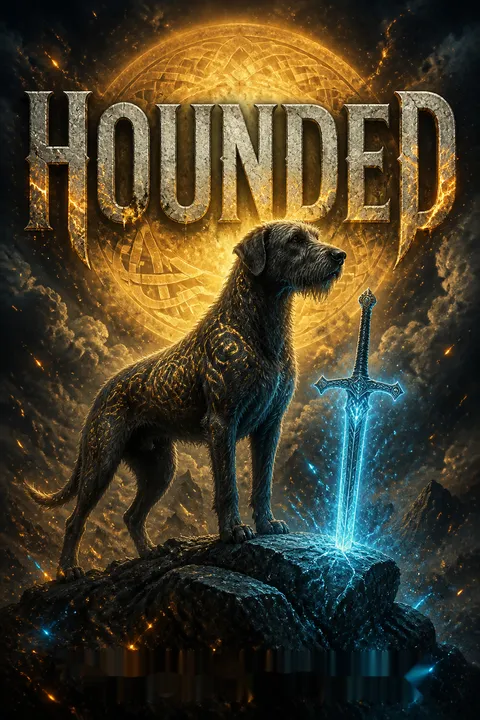


Plot Summary
The Bookshop Ambush
Atticus O’Sullivan has spent years passing as a twenty-one-year-old bookseller in Tempe, concealing his Druidic identity and extraordinary age. During a lunch break, five Fae attack outside Third Eye Books, demanding Fragarach, an ancient sword he stole long ago. Glamoured as runners with harmless-looking weapons, they underestimate his iron amulet and fighting skill.
Atticus kills three himself, then summons an iron elemental, whose shop bars become jaws and consume the last two. The ambush proves his latest identity has been found through public records: he used a recognizable version of his Irish surname. Fragarach is no longer merely a buried relic. Aenghus Óg’s agents know where Atticus lives, and his quiet life has become a siege.
The attack makes concealment feel less like a disguise than a fragile civic arrangement. Atticus survives because he has learned to translate ancient danger into modern habits: public records matter as much as divination, and a storefront can double as a fortified position. His violence is practical rather than triumphant. He kills only after the attackers force the issue, yet the elemental’s grotesque intervention also shows how thoroughly the ordinary world can be bent to his defense. The sword’s importance remains unanswered, but the attackers’ certainty gives the hidden object a political gravity that his comfortable life had kept out of view.
Wands Against the Yew
The Morrigan arrives at Atticus’s shop in the form of a crow and warns that Aenghus Óg has found him and may come in person. Her Ogham casting names a warrior surrounded by ordeals, fear, surprise, and death. Atticus argues that the prediction may concern someone else, but he also understands that running would mean another century of flight.
He bargains with the death goddess: he will teach her the protective magic built into his iron amulet and charms, and she will never claim his life. The deal does not make him invulnerable, only exempt from her hand. Before leaving, the Morrigan reveals that a human found him online and that Fir Bolgs are coming to confirm his identity.
Atticus meets prophecy with interpretation rather than surrender. His attempt to distinguish himself from the foretold warrior is a familiar survival tactic, but the bargain shows he knows cleverness cannot erase mortality. Instead, he converts knowledge into leverage, trading centuries of hard-won craft for a boundary around death. The bargain is psychologically revealing: he wants safety, but also the right to remain where he has built a life. The Morrigan’s warning about the Internet sharpens the book’s central collision between old powers and modern systems. Ancient beings can now find one another through searchable records, not only sacred trees or visions.
Flidais Spoils the Hunt
At home, Atticus finds Flidais, the goddess of the hunt, who has come to warn him that Aenghus Óg’s envoys are approaching and that Bres follows them. She and Atticus take Oberon, his Irish wolfhound, to hunt desert bighorn sheep in Papago Park. Flidais’s power overwhelms Atticus when he changes into a hound, and she drives both dogs toward her prey.
A ranger surprises them; after Flidais is shot, Oberon kills him under her command, then recoils in horror when his own thoughts return. Atticus finds a magical earring on the corpse and recognizes Tuatha Dé Danann control. The police sirens that follow confirm the death was meant to draw authorities onto Atticus and Oberon.
The hunt begins as a rare promise of novelty for Flidais and companionship for Oberon, then exposes the violence hidden inside divine authority. Flidais does not merely pursue prey; she commandeers the minds of animals and treats a human death as a manageable inconvenience. Oberon’s confusion afterward matters because it separates action from consent: his teeth caused the fatal wound, but his will was taken from him. Atticus recognizes the same violation in the enchanted earring. The episode turns a supernatural skirmish into a moral and legal crisis, while showing that Aenghus can manipulate ordinary institutions by arranging events that look like accidents.
The Tea Turns Treacherous
A young witch named Emily visits Third Eye Books seeking a tea that will make one particular man unattracted to her. Her coven’s leader, Radomila, pledges future favor, and Atticus demands a large fee because the request sounds dangerous. Emily drinks the first dose, then reveals that the man is Aenghus Óg.
Atticus realizes the arrangement is designed to make him responsible for humiliating his enemy and give Aenghus a reason to attack. When Emily tries to slap him, Atticus strikes first to prevent her from taking his blood or skin for a spell. He collects a drop of her blood and binds a ward that turns her next magical assault back on her. The contract remains in force, but trust is gone.
The scene turns hospitality into a trap without making Atticus wholly innocent. He accepts the contract for money and political advantage, then learns too late that the client has hidden the central fact. His quick violence is defensible within the rules he knows, but it also reveals how thoroughly centuries of ambush have trained him to treat an outstretched hand as a weapon. Emily’s scheme targets more than Aenghus’s body; it aims to provoke the personal confrontation he has avoided. Atticus’s blood ward reverses the attack, yet the maneuver deepens the feud and shows how easily protection can become escalation.
Bres at the Widow’s
Before leaving for work, Atticus uncovers Fragarach beneath the herb boxes in his backyard and straps it across his back. That evening Bres appears at the home of Katie MacDonagh, Atticus’s elderly neighbor, demanding the sword on Aenghus’s behalf. Atticus refuses to surrender it. Bres uses a glamour to conceal his real position, but Atticus sees through the illusion and directs Oberon to trip him.
When Bres swings, Atticus disarms him, knocks him down, and drives Fragarach through his armor before cutting off his head. Katie witnesses the fight, then accepts Atticus’s account that Bres was an old enemy of his father. The Morrigan takes the body away, warning that Brighid will hear of her husband’s death.
Atticus’s choice to retrieve the sword marks a shift from passive concealment to deliberate readiness. Yet the confrontation is not a clean heroic duel. He survives because he reads Bres’s deception, uses Oberon tactically, and refuses the ceremonial fairness that would favor a stronger opponent. Katie’s presence places intimate domestic life beside ancient violence, while her loyalty gives Atticus a rare human refuge. His fabricated story about his father is a compromise between truth and protection. The Morrigan’s final warning reveals that killing Bres has consequences beyond self-defense: Atticus has stepped into a family and political conflict that cannot be hidden beneath the lawn.
Nine Giants at Home
As Atticus washes Bres’s blood from the street, Oberon hears heavy footsteps approaching. Nine Fir Bolgs, giant warriors hidden by glamour, pursue Atticus to his house. Leif Helgarson, Atticus’s vampire lawyer, arrives just in time to fight beside him, while Oberon attacks the giants’ legs. Atticus uses earth bindings and Fragarach, but the Fir Bolgs wound his shoulder, abdomen, and back before he kills them.
Leif feeds on several attackers, and the two men camouflage the bodies and blood before police arrive. Leif calls ghouls to remove the corpses. The first officers leave without discovering the hidden dead, but the newspaper soon reports that a canine killed the ranger, putting Oberon at risk.
The attack transforms Atticus’s private defenses into a neighborhood-scale crisis. His magic is powerful, but it does not spare him pain or prevent collateral evidence; survival requires a network of practical alliances, including a lawyer who can fight and a vampire who can arrange discreet cleanup. Oberon’s participation is affectionate and dangerous at once, since the ranger’s death has already made his loyalty legally incriminating. The scene’s humor around lawyers, food, and ghouls does not erase the bodily cost. Instead, it shows Atticus using wit to keep fear from taking over while his modern community becomes the infrastructure that lets an ancient man endure.
Evidence Follows the Blood
A newspaper report links the park ranger’s wounds to a large dog, and detectives Carlos Jimenez and Darren Fagles visit Atticus’s house to ask about Oberon. Atticus claims the wolfhound ran away and refuses a search. At his shop, Emily returns with Malina Sokolowski, a senior witch who forces Emily to apologize before asking Atticus about the sword and his recent contact with the gods.
Malina’s questions reveal that she knows more about the conflict than she admits, but she refuses to identify which coven members are helping Aenghus. Atticus suspects her entire group. After Malina leaves, the Morrigan warns that Brighid is on her way. The police investigation and the coven’s evasions now converge on the same hidden weapon.
Two forms of scrutiny close around Atticus: police evidence and magical intelligence. His lie about Oberon is not a general rejection of law so much as an attempt to protect a companion from a system that cannot recognize coercion or supernatural context. Malina complicates his instinctive distrust. Her civility and discipline contrast with Emily’s impulsiveness, but her refusal to answer the crucial question leaves Atticus unable to separate caution from complicity. The episode therefore makes trust a problem of evidence. Atticus has learned to survive by withholding information, yet that same habit prevents him from discerning which potential allies are acting in good faith.
Brighid Names the Coup
Brighid arrives at Atticus’s shop to ask about Bres’s death. Once he recounts the fight, she explains that her husband had commissioned armor from her at Aenghus’s urging, and that Aenghus is gathering enchanted weapons to challenge her rule among the Tuatha Dé Danann. The attack on the ranger, the coven’s tea scheme, and the approaching Fir Bolgs all serve Aenghus’s larger plan.
He has also recruited Fomorians, Fae, and forces from hell. Brighid asks Atticus to oppose him, and he agrees. She grants him Cold Fire, a costly power that destroys demons from within, but his iron amulet prevents the gift until he removes it. Brighid’s revelation turns Atticus’s personal feud into a defense of the earth and a threatened realm.
Brighid’s visit reorganizes the scattered incidents into a political design. The ranger, the witches, and the Fir Bolgs were not separate misfortunes but instruments for controlling Atticus and recovering Fragarach. The revelation also complicates the moral map: Brighid wants to prevent her brother’s coup, but she has relied on Flidais and others to steer events toward her own interests. Atticus accepts the alliance because Aenghus’s plan threatens both his life and the land that sustains his magic. Cold Fire makes that alliance bodily consequential. To receive divine help, he must briefly remove the very protection that has kept him alive.
The Badge Turns Hostile
Police return to Third Eye Books with a warrant, while Hal Hauk, Atticus’s werewolf lawyer, insists that they search only for a dog. Detective Fagles can see Fragarach through its magical concealment because Aenghus has given him a specific binding.
Atticus breaks the binding, triggering a magical backlash that knocks Fagles and Hal off balance. Fagles draws his gun and shoots Atticus in the chest. The binding then releases Fagles, who realizes he was being controlled, but his fellow officers kill him when he threatens them.
Hal carries Atticus outside, where he draws power from the earth and begins healing. A pack doctor removes blood from his lung, and Atticus escapes the hospital to recover in a park, deciding that flight is no longer an option.
The shooting is the point at which supernatural coercion becomes indistinguishable from public violence. Fagles is both the immediate threat and a victim of Aenghus’s control, a distinction Atticus recognizes even while bleeding. His later decision to donate any lawsuit proceeds to Fagles’s family makes that recognition ethically active rather than merely sympathetic. The scene also tests the limits of Atticus’s accumulated craft: he can break a spell, but not without triggering its hidden consequence. Recovery depends on the earth, medical allies, and legal strategy. When he chooses to fight rather than disappear, the decision grows from exhaustion and responsibility, not a sudden appetite for vengeance.
The Bartender Has a Guest
On Monday, Atticus meets Granuaile, the red-haired bartender he has long wondered about, and learns that an ancient Indian sorceress named Laksha is sharing her mind. Laksha explains that she once used other people’s bodies to survive and now wants her ruby necklace back, along with a new host she can enter ethically.
The necklace was the object Atticus retrieved from the sea for Radomila, who then used it to cloak Fragarach. Laksha offers to remove the cloak and help Atticus against Radomila.
Granuaile, meanwhile, asks to become Atticus’s apprentice because she wants knowledge and earth-based magic rather than the darker practices she has encountered. Atticus warns her that Druid training demands years of study and painful initiation, then agrees to consider her request.
Granuaile’s request gives Atticus a future-facing problem just as his old life is collapsing. He has spent centuries avoiding students because teaching creates attachments and vulnerabilities, especially when he must keep moving. Her motives challenge that refusal: she seeks not quick power but a disciplined relationship with knowledge and the land. Laksha offers a contrasting model. Her remorse may be sincere, but her past body-taking and demon-derived magic make trust conditional. Atticus responds by negotiating boundaries, including Laksha’s future distance from Arizona. The scene frames apprenticeship as more than transferring skills. It asks whether Atticus can build continuity without turning another person into a tool for survival.
The Pack Runs East
At the pub, Gunnar Magnusson reveals that Emily has kidnapped Hal and Oberon and demands Fragarach in exchange for them. Atticus calls her, confirms they are alive, and learns they are bound in the Superstition Mountains.
He recruits Granuaile, formally accepting her as an apprentice if she will help, and brings the Tempe Pack to the widow’s yard before heading east. Laksha removes Radomila’s cloak from Fragarach, while Atticus retrieves the coven leader’s blood as leverage. Malina phones to say the coven has split and that six witches remain with Aenghus.
Near Tony Cabin, Flidais stops the Pack and reveals silver traps around the site. She says the attackers expect the werewolves to arrive from every direction, and that one group will have to draw the trap so the others can pass.
The hostage demand converts Atticus’s loyalties into the mechanism of his enemies’ plan. He cannot protect Oberon and Hal by retreating, so his choice to accept Granuaile as an apprentice happens under pressure, but it is not merely tactical: he makes room for her at the moment his own survival is most uncertain. The coven’s division and Malina’s warning prevent the conflict from becoming a simple story of witches against Druids. Flidais’s intelligence is useful, yet her history of coercing Oberon makes her aid morally compromised. The approaching battle is therefore shaped by alliances that are necessary but never entirely safe.
Hell Opens at Tony Cabin
At Tony Cabin, the Pack attacks and silver traps injure several werewolves while they fight through the witches. Aenghus opens a fiery gate and releases a horde of demons. Atticus uses Brighid’s Cold Fire, destroying many attackers but draining his strength so completely that he collapses. While he lies helpless, Laksha uses Radomila’s blood to kill her from afar.
The Morrigan, angered by Aenghus’s destruction of the land, lends Atticus enough power to rise. He retrieves Fragarach and faces Aenghus, who wields Moralltach, a sword whose first solid strike can kill. Atticus breaks Aenghus’s arm with an unfamiliar sword technique, then cuts off his head. Death carries the god and his severed head through the gate to hell, ending the pursuit.
The climax makes victory depend on costly cooperation rather than a single champion’s strength. Atticus’s Cold Fire works exactly as promised, but its success nearly leaves him helpless; Laksha’s blood magic removes Radomila, while the Morrigan’s aid restores the capacity to fight. Each power has a price or a history that complicates its use. The dead land is what finally distinguishes Aenghus from a merely ambitious rival. Atticus fights not only to retain a sword or settle an ancient grievance, but because Aenghus has violated the relationship between Druid and earth. The final duel answers that violation with skill, restraint, and decisive force.
A Price for Staying
After Aenghus falls, Atticus frees Hal and Oberon while the Pack pursues Emily and returns with her head. Flidais heals the wounded, then admits that Brighid ordered her to arrange the kidnapping so Atticus would not flee the fight.
Atticus gives Laksha her recovered necklace and money to find an acceptable new host, while Granuaile prepares to travel east and begin her studies. Malina, now separated from Radomila’s faction, proposes a blood-signed nonaggression treaty instead of revenge.
Atticus agrees to negotiate, recognizing that her coven has protected Tempe from other supernatural threats. He returns home badly depleted from Cold Fire, and the Morrigan takes back the power she lent him, leaving him weak for days. Victory has ended one pursuit but exposed how many allies used him.
The resolution refuses to equate survival with control. Atticus has defeated Aenghus, but Brighid, Flidais, and the Morrigan have each shaped events without giving him full knowledge. His anger at being used coexists with gratitude for the people who saved him, a tension that keeps the victory from feeling clean. Choosing negotiation with Malina marks a development in his habitual suspicion: he does not abandon caution, but he sees that coexistence can protect the place he calls home better than another cycle of retaliation. Granuaile’s departure begins a different kind of legacy. Atticus may have spent centuries preserving himself, yet now he is preparing to pass knowledge on.
Epilogue
Atticus and Oberon spend several days hunting mule deer and javelina in the Chiricahua Mountains, enjoying a rare stretch of peace beside a stream. Back in Tempe, Atticus surprises Oberon with five black French poodles in the yard.
Oberon is delighted by the gift, then pauses at the small size of his new canine court. Even after gods, demons, and a dead land, his attention returns to the uncomplicated pleasures that make life worth keeping.
The epilogue lowers the scale from pantheonic conflict to a hound counting poodles. That shift is not a denial of the violence that came before; it is the reason the ending feels earned. Atticus’s survival has always depended on noticing small comforts, especially Oberon’s appetite for companionship and play. The mountains offer a brief landscape untouched by the recent battle, while the return to Tempe confirms that home still matters despite its dangers. The comic final surprise restores their ordinary rhythm and gently undercuts heroic solemnity. Atticus has won a reprieve, not a permanent paradise, and the book closes by measuring happiness in days outdoors and an absurdly small harem.
Analysis
Hounded places an ancient survivor inside a distinctly modern problem: Atticus can outlast empires, but not public records, DNA evidence, search warrants, or the people who share his neighborhood. The novel’s humor does not make those systems trivial. It shows how Atticus translates between worlds, using a lawyer against the police, a bookstore against the Fae, and a wolfhound’s loyalty against powers that treat bodies as instruments.
The central conflict is about agency. Aenghus controls humans and supernatural allies through charm, coercion, and promises of future reward. Flidais can turn animals into tools, while Laksha’s history makes possession a literal ethical problem. Atticus’s own magic can also bind and command, so the distinction between good and evil is not simply who has power. It depends on whether those affected retain choice, and whether power acknowledges obligations to the lives and land it uses. The death of the ranger, especially, makes the cost of divine manipulation visible through Oberon’s bewilderment and Atticus’s fear of what the law will do to him.
Atticus’s emotional movement is from weary evasion toward committed, if imperfect, responsibility. He wants to remain in Tempe because ordinary bonds have become precious after centuries of loss. By choosing Brighid’s side, accepting Granuaile as an apprentice, and negotiating with Malina rather than automatically seeking revenge, he begins to imagine continuity beyond his own survival. Yet the ending refuses an easy redemption. Gods have manipulated him, allies have withheld the truth, and victory leaves him injured, depleted, and politically exposed. What remains is not mastery over the world but a capacity to keep choosing care within it: for Oberon, for a threatened patch of earth, and for the next person willing to learn.
Review Summary
Hounded receives mixed reviews, with many praising its humor, fast-paced action, and unique protagonist Atticus O'Sullivan. Readers enjoy the blend of Celtic mythology and modern urban fantasy. The witty dialogue and Atticus' relationship with his dog Oberon are highlights. However, some criticize the character's immaturity and lack of depth given his age. Others find the portrayal of women problematic. Despite flaws, many readers find it an entertaining start to the series and compare it favorably to Jim Butcher's Dresden Files.
People Also Read

Characters
Atticus O’Sullivan
Last living DruidA two-thousand-year-old Irish Druid hiding in modern Tempe under the name Atticus, he runs a bookstore and apothecary while working hard to seem like an ordinary young American. His longevity has made him perceptive, resourceful, and deeply wary of anyone who wants his blood, his knowledge, or his allegiance. Humor helps him manage danger, but it also lets him dodge grief and intimacy. He draws power from the earth, relies on a custom iron amulet, and prefers to avoid fights he cannot control. His deepest attachment is to Oberon, whose uncomplicated loyalty anchors him in the present. Atticus is shaped by a tension between self-preservation and responsibility: he wants to disappear, yet cannot ignore threats to people or land he has come to love.
Oberon
Talking wolfhoundAtticus’s enormous Irish wolfhound is his closest companion and a participant in their mental bond. Oberon is affectionate, curious, and cheerfully preoccupied with food, hunting, and the possibility of a canine romance. His humor gives Atticus a way back from fear, while his keen nose and courage make him a useful ally in danger. Oberon is not simply a pet or a weapon: he has preferences, questions, and a strong sense of fairness, even when his ideas about history come from Atticus’s bedtime stories. His trusting nature exposes him to manipulation, but it also models a form of loyalty that does not depend on bargaining or power.
Aenghus Óg
Ambitious love godAn ancient member of the Tuatha Dé Danann, Aenghus is associated with love and beauty but behaves as a calculating, self-serving political force. He prefers networks of favors, enchanted agents, and manipulated loyalties to exposing himself to direct risk. His long pursuit of Atticus began with an old dispute over Fragarach, but his ambitions extend beyond recovering a weapon. Aenghus understands that institutions and relationships can be turned into instruments, whether he is using a witch, a police detective, or a divine ally. His charm is part of his power, not evidence of kindness. He embodies the danger of treating other people and the natural world as material for personal ascent.
The Morrigan
Battle crow of deathThe Celtic goddess who chooses the slain, the Morrigan moves between a battle crow and a commanding human form. She has a long, complicated connection to Atticus, whom she has repeatedly warned and whose survival frustrates Aenghus. Her concern is real but never gentle: she tests his weaknesses, bargains hard, and expects him to accept the risks of his choices. She is politically alert, fiercely independent, and unwilling to be treated as anyone’s subordinate. Her presence places death close to ordinary decisions, while her dry amusement keeps intimacy at arm’s length. Atticus knows that her help is valuable precisely because it is never the same thing as friendship.
Brighid
Forge and fire goddessA powerful goddess of poetry, fire, and the forge, Brighid occupies a position of authority among the Tuatha Dé Danann. She is Aenghus’s sister and Bres’s wife, and her decisions have consequences across both divine politics and mortal lives. Brighid is dignified and direct, capable of warmth but not naïve about the use of power. She wants to preserve her rule and prevent dangerous forces from reshaping her realm, yet she is willing to steer others toward a confrontation that serves those ends. Her relationship with Atticus begins with the question of Bres’s death and grows into a political alliance. She values craft, challenge, and competence, especially when they unsettle assumptions about what magic can do.
Flidais
Goddess of the huntFlidais is a red-haired goddess whose identity is bound to hunting, animals, and the thrill of pursuing unfamiliar prey. She is curious about modern pleasures, quick to anger when slighted, and guided by an older moral code that does not always distinguish justice from personal satisfaction. Her power over animals is formidable, and she treats that power as a natural extension of her authority. Flidais can be generous company, especially when sharing a hunt, but her friendliness does not make her safe. She serves interests larger than her own without surrendering her independence, which makes her loyalties difficult for Atticus to read.
Granuaile
Ambitious Druid initiateA young bartender at Rúla Búla, Granuaile is observant, intelligent, and far more interested in learning than in the flirtation Atticus initially mistakes for the whole of her attention. She has a philosophy degree and a clear dissatisfaction with a life limited to serving drinks. Her exposure to supernatural knowledge makes her curious without making her careless; she asks what kind of power she would be choosing and what ethical costs it carries. Granuaile is drawn to Druidry because its bond with the earth seems different from magic that depends on domination. She understands that training will take years and still wants to begin. Her ambition is intellectual and moral as much as magical.
Laksha Kulasekaran
Ancient Indian sorceressLaksha is an Indian sorceress whose long life has depended on powerful, morally troubling magic. She has spent years reflecting on the harm caused by taking other people’s bodies, and she now claims to seek a less predatory path. Her knowledge is formidable, especially in spirit transfer and blood-based workings, but Atticus has good reason to distrust the methods she learned from demons. Laksha is proud, strategic, and capable of negotiating rather than simply demanding obedience. Her connection with Granuaile offers her companionship, while her wish for a new body and recovered necklace gives her an urgent personal agenda. She forces Atticus to distinguish sincere remorse from reliable safety.
Radomila
Coven leaderRadomila leads the Sisters of the Three Auroras, a coven of experienced Polish witches based in the Tempe area. She is powerful enough to create an unusually effective magical cloak and careful enough to conceal the full extent of her plans. Her relationship with Atticus has included professional favors, which makes their shifting trust especially consequential. She values influence and the safety of her coven, but those priorities can place her at odds with people outside it.
Malina Sokolowski
Coven mediatorMalina is a poised Polish witch, older and more disciplined than Emily. She often acts as a mediator and takes responsibility for how her coven presents itself to outsiders. Her courtesy is genuine but does not erase her caution; she asks carefully framed questions and shares information only when she believes she can stand behind it. Malina values honor and the survival of her community, even when those commitments place her between former allies.
Emily
Reckless young witchThe youngest member of Radomila’s coven, Emily is impulsive, proud, and accustomed to using appearance and attitude to control a room. Her youth does not mean she lacks magical ability, but she often mistakes boldness for security. She is willing to make dangerous bargains to achieve her aims and resents being corrected by older witches. Her relationship with Malina reflects a persistent conflict between her appetite for independence and the discipline her coven expects.
Leif Helgarson
Vampire sword lawyerAn ancient Icelandic vampire, Leif is one of Atticus’s lawyers and a skilled swordsman. His formal manners and predatory nature are difficult to hide, but he has a practical loyalty to Atticus and a strong professional sense of what a crisis requires. He often treats danger as a transaction, including payment for his help, yet he repeatedly puts himself in the path of violence when Atticus needs him. His hatred of Thor remains a private wound that shapes his ambitions.
Hallbjörn Hauk
Werewolf attorneyKnown as Hal in everyday life, Hauk is Atticus’s daytime lawyer and a member of the Tempe werewolf Pack. He is polished, quick with legal strategy, and comfortable navigating the divide between supernatural danger and ordinary law. His loyalty is practical rather than sentimental, but he repeatedly risks himself for Atticus and Oberon. As a werewolf, he also understands the demands and hierarchy of pack life.
Gunnar Magnusson
Tempe Pack alphaGunnar leads the Tempe werewolves and measures threats through the responsibilities of an alpha. He is proud, forceful, and protective of his Pack, whose safety can outweigh individual caution. His relationship with Atticus rests on a negotiated respect that allows them to cooperate without pretending they share the same hierarchy. Gunnar’s self-control is hard won, especially when his Pack is provoked.
Bres
Disgraced Fae rulerBres is a former leader of the Tuatha Dé Danann and husband to Brighid. A god associated with agriculture, he carries old political grievances and a reputation for poor judgment. He tends to rely on status, deception, and the force of others rather than earning loyalty through wisdom. His alliance with Aenghus places him within a larger struggle for power.
Katie MacDonagh
Loyal Irish neighborThe elderly widow who lives near Atticus, Katie is sociable, sharp-tongued, and fond of Irish stories, whiskey, and watching him tend her yard. Her memories of life in Northern Ireland have left her with a blunt understanding of violence and loyalty. She values Atticus as a friend and trusts him even when the world he inhabits becomes impossible to explain.
Perry Thomas
Goth bookstore clerkPerry is Atticus’s young bookstore employee, a self-conscious Goth with a dry sense of humor. He is dependable when the shop becomes dangerous and follows Atticus’s instructions without demanding a full explanation.
Darren Fagles
Controlled detectiveA Tempe police detective assigned to the investigation around Oberon, Fagles is confrontational and eager to establish authority. His confidence makes him vulnerable to manipulation by forces he cannot see.
Carlos Jimenez
Persistent investigatorA Phoenix detective investigating the park ranger’s death, Jimenez is persistent and observant. He tries to pursue evidence without immediately resorting to intimidation, even when Atticus gives him little help.
Snorri Jodursson
Pack physicianA physician connected to the Tempe Pack, Snorri treats supernatural injuries discreetly and without wasting time on impossible explanations. His medical skill gives Atticus a path through an ordinary hospital system that cannot account for rapid healing.
Plot Devices
Fragarach
The sword that answersFragarach is an ancient magical sword Atticus took during a battle in Ireland and concealed for centuries. Its blade can cut through armor that would stop an ordinary weapon, and it carries powers beyond its edge, including control of the wind and the ability to compel truthful answers when held at someone’s throat. Its contested ownership draws Aenghus’s agents to Atticus and makes the sword a symbol of authority in Tuatha Dé Danann politics. Radomila’s magical cloak hides its power, while the sword’s eventual use forces Atticus to stop treating the conflict as a threat he can outlast.
Cold iron amulet
A ward against magicAtticus’s necklace is built around a cold iron amulet bound directly to his aura. Iron disrupts magic, especially the power of the Fae, and the amulet makes it dangerous for many supernatural beings to touch or enchant him. It also protects him from forms of magical coercion that would otherwise exploit desire or bodily material. The necklace contains charms that provide other defenses and abilities, but the iron creates a limitation: it can prevent helpful magic from reaching him too. The amulet is an expression of Atticus’s defining strategy, centuries of painstaking preparation compressed into something he can wear beneath his shirt.
Druidic earth bond
Power drawn from the landAtticus’s tattoos bind him to the earth and allow him to draw energy from the living world. Through that connection he can heal, change into several animal forms, communicate with natural beings, and shape simple bindings that alter the movement of soil, plants, and other elements. His power is strongest where he can touch the ground, so concrete, distance, and damaged land can become tactical problems. The bond is reciprocal rather than merely extractive: Atticus sees himself as responsible to the earth that sustains him. When Aenghus drains the land around Tony Cabin, Atticus loses access to the source of his strength and must depend on allies.
Ogham divination
A forecast shaped by choiceThe Morrigan casts marked wands associated with Irish trees to read the dangers gathering around Atticus. Their positions and meanings suggest a warrior facing ordeals, fear, surprise, and death. The casting does not mechanically dictate the future; Atticus questions whether its focus could include Aenghus or another fighter, using interpretation to find a possible path through it. The warning keeps death in view even when he refuses to flee. Its value lies less in supplying an exact tactical plan than in making Atticus confront the cost of staying in Tempe and the possibility that survival may require a deliberate choice to fight.
Cold Fire
A weapon against demonsBrighid grants Atticus Cold Fire to use against the demons Aenghus may unleash. The power burns hellspawn from within and can destroy several foes at once, but it consumes the wielder’s strength even when he draws energy from the earth. Atticus must remove his iron amulet before Brighid can give him the magic, temporarily lowering his defenses. In the final confrontation, Cold Fire proves effective but leaves him physically unable to move, making the ability both a weapon and a vulnerability. Its cost ensures that defeating a supernatural army is not simply a matter of discovering a stronger spell.
FAQ
0. Synopsis & Basic Details
What is Hounded about?
- Ancient Druid's Modern Life: Hounded introduces Atticus O'Sullivan, the last living Druid, a 2,100-year-old immortal hiding in plain sight as a young, tattooed Irishman running an occult bookstore in Tempe, Arizona. His peaceful, anachronistic existence is built on avoiding the wrath of Aenghus Óg, a powerful Celtic god who covets Fragarach, Atticus's legendary magical sword.
- Escalating Divine Conflict: The story quickly plunges Atticus into a series of escalating confrontations as Aenghus Óg finally tracks him down. Atticus must navigate attacks from faeries, giants, and a treacherous coven of witches, all while dealing with mundane police investigations and the complex, often self-serving, interventions of other Celtic deities like The Morrigan, Flidais, and Brighid.
- Survival, Wit, and Loyalty: At its core, Hounded is a tale of survival, blending ancient mythology with urban fantasy. Atticus relies on his centuries of wisdom, sharp wit, Druidic magic, and the unwavering loyalty of his telepathic Irish wolfhound, Oberon, to protect himself, his friends, and the delicate balance between the mortal and supernatural worlds.
Why should I read Hounded?
- Unique Blend of Humor and Action: Readers seeking a fresh take on urban fantasy will love Atticus's snarky first-person narration, which seamlessly blends ancient wisdom with modern pop culture references. The book offers a compelling mix of fast-paced action sequences and genuinely funny dialogue, making for an entertaining and engaging read.
- Rich Mythological Tapestry: Kevin Hearne masterfully weaves together Celtic mythology with a contemporary setting, introducing a pantheon of gods, witches, and werewolves that feel both ancient and refreshingly new. It's a fantastic entry point for those curious about Druid lore and Irish legends, presented with a modern, accessible twist.
- Deeply Relatable Characters: Despite his immense age and power, Atticus is a surprisingly relatable protagonist, grappling with themes of loneliness, loyalty, and the burden of immortality. His bond with Oberon, his loyal wolfhound, is a highlight, offering heartwarming moments amidst the supernatural chaos and providing a strong emotional core to the story.
What is the background of Hounded?
- Celtic Mythology Foundation: The world of Hounded is deeply rooted in Celtic mythology, particularly Irish lore. Atticus O'Sullivan is a Druid, a practitioner of ancient Celtic magic tied to the earth. The primary antagonists and supporting deities—Aenghus Óg, The Morrigan, Flidais, Brighid—are all figures from the Tuatha Dé Danann, the mythological race of gods and heroes in Irish tradition.
- Urban Fantasy Setting: The story is set in modern-day Tempe, Arizona, a stark contrast to the ancient European forests typically associated with Druids. This urban environment, with its "low god density" and lack of Fae-friendly trees, serves as Atticus's chosen hiding place, highlighting the clash between ancient magic and contemporary life.
- Historical & Cultural Allusions: Atticus's 2,100-year lifespan allows for rich historical context, with references to Roman times, Genghis Khan, Shakespeare, and various cultural shifts. The narrative also subtly explores the decline of traditional magic with the advent of the Iron Age and the rise of monotheistic religions, framing Atticus as a relic in a rapidly changing world.
What are the most memorable quotes in Hounded?
- "There are many perks to living for twenty-one centuries, and foremost among them is bearing witness to the rare birth of genius." (Chapter 1): This opening line immediately establishes Atticus's ancient perspective and dry wit, setting the tone for his unique observations on humanity and history. It encapsulates his detached yet appreciative view of mortal achievements, a core aspect of his character.
- "Being honorable is an excellent way to get yourself killed." (Chapter 5): Atticus's pragmatic philosophy, born from millennia of survival, is starkly revealed in this quote. It underscores his willingness to employ cunning and unconventional tactics, contrasting with traditional heroic ideals and explaining his long-lived success against powerful foes.
- "The universe is exactly the size that your soul can encompass. Some people live in extremely small worlds, and some live in a world of infinite possibility." (Chapter 21): Spoken to the Widow MacDonagh, this profound statement encapsulates a central theme of Hounded: the expansion of one's worldview beyond the mundane. It highlights Atticus's role as a keeper of forgotten truths and challenges readers to consider the vastness of reality.
What writing style, narrative choices, and literary techniques does Kevin Hearne use?
- First-Person, Conversational Narrative: Hearne employs a highly engaging first-person perspective, narrated by Atticus O'Sullivan. This choice allows for a witty, conversational tone, filled with Atticus's internal monologues, sarcastic asides, and pop culture references, making the ancient Druid feel remarkably contemporary and relatable.
- Seamless Blend of Ancient and Modern: A key technique is the juxtaposition of ancient mythological elements with modern-day settings and sensibilities. Atticus's internal thoughts often jump from Roman history to Starbucks, or from Celtic gods to Monty Python, creating a unique narrative voice that is both informative and humorous.
- Foreshadowing and Subversion of Tropes: Hearne subtly weaves in foreshadowing through prophecies (like The Morrigan's Ogham wands) and character interactions, building suspense. He also frequently subverts fantasy tropes, presenting gods with very human flaws and challenging traditional notions of heroism and villainy, adding depth and unpredictability to the plot.
1. Hidden Details & Subtle Connections
What are some minor details that add significant meaning?
- Ogham Wand Prophecy Details: The specific Ogham wands drawn by The Morrigan—Fearn (warrior), Tinne (challenges), Ngetal (fear), Ura (surprises), Idho (death)—are not just generic bad omens. Their precise arrangement, with "The Yew crossed the Alder," explicitly foretells the warrior's (Atticus's) death, adding a layer of fatalism to his journey and raising the stakes for his confrontation with Aenghus Óg.
- Mr. Semerdjian's Recurring Role: Atticus's Lebanese neighbor, Mr. Semerdjian, initially appears as a source of mundane annoyance (complaining about Oberon's poop). However, his repeated false 911 calls and general suspicion become a subtle motif for how Atticus's supernatural life constantly brushes against and complicates the ordinary world, forcing him to maintain his disguise even in the face of petty human grievances.
- Radomila's Cloak on Fragarach: The magical cloak placed on Fragarach by Radomila is more than just an invisibility spell; it contains a hidden tracer. This subtle detail is crucial, as it allows Aenghus Óg to attune Fagles to the sword's presence, revealing the depth of the witches' betrayal and forcing Atticus to remove the cloak, thereby changing his strategic approach to the conflict.
What are some subtle foreshadowing and callbacks?
- Flidais's "Revenge" as Brighid's Manipulation: Flidais's initial claim of seeking revenge on Aenghus Óg for ruining her hunt (Chapter 6) is later revealed to be a calculated move orchestrated by Brighid (Chapter 25). This callback subtly foreshadows the deeper, more complex political machinations among the Tuatha Dé Danann, showing Atticus is a pawn in a larger divine game, even when he thinks he's acting independently.
- The Morrigan's Self-Serving Bargain: The Morrigan's early agreement to grant Atticus immortality (Chapter 2) is later revealed to have a hidden clause: she told Aenghus Óg about it, knowing he would summon Death to claim Atticus, thus ensuring Aenghus's eternal torment in hell if Atticus won (Chapter 25). This callback highlights The Morrigan's cunning and self-interest, reinforcing that her "friendship" is purely transactional and strategic.
- Atticus's "Flesh Wound": Atticus's repeated assertion that his gunshot wound is "just a flesh wound" (Chapter 17), a direct callback to Monty Python, humorously downplays his severe injury. However, it subtly foreshadows the true extent of his healing abilities and resilience, which are far beyond mortal comprehension, and his determination to recover quickly for the impending battle.
What are some unexpected character connections?
- Leif Helgarson's Hatred for Thor: While Leif is Atticus's vampire lawyer, his intense, unspoken hatred for Thor is a recurring, subtle thread. This connection, hinted at through his fangs popping out at the mention of Thor (Chapter 5) and his desire for Atticus to kill him (Epilogue), reveals a deeper, personal history that transcends his professional duties and sets up future conflicts in the series.
- Granuaile's Possession by Laksha: The seemingly innocent barmaid Granuaile is revealed to be a vessel for Laksha, an ancient Indian witch (Chapter 19). This unexpected connection transforms Granuaile from a potential love interest into a crucial magical ally and apprentice, highlighting the hidden depths of seemingly minor characters and the interweaving of diverse mythologies.
- The Tempe Pack's Alliance with Atticus: The werewolf pack, led by Gunnar Magnusson and including Hal Hauk and Snorri Jodursson, forms an unlikely but powerful alliance with Atticus. Their shared enmity for Thor (Chapter 5) and their loyalty to Hal, who is kidnapped alongside Oberon, solidifies their bond, demonstrating that common enemies can forge strong, cross-species alliances in the supernatural world.
Who are the most significant supporting characters?
- Oberon, the Telepathic Wolfhound: Beyond being a loyal pet, Oberon serves as Atticus's emotional anchor and moral compass, often providing comic relief and insightful observations that cut through Atticus's cynicism. His unique telepathic bond with Atticus (Chapter 3) is central to Atticus's character development, revealing his softer, more vulnerable side and highlighting the profound importance of companionship in an immortal life.
- Hal Hauk, the Pragmatic Werewolf Lawyer: Hal Hauk is more than just legal counsel; he represents Atticus's connection to the broader supernatural community and provides a grounded, strategic perspective on both magical and mundane problems. His unwavering loyalty and legal acumen (Chapter 8) are crucial for navigating police scrutiny and protecting Atticus's interests, showcasing the necessity of practical allies in a world of gods.
- The Morrigan, the Ambiguous Death Goddess: The Morrigan's role transcends simple ally or antagonist; she is a force of nature whose interventions are always self-serving but often benefit Atticus. Her complex motivations and willingness to manipulate events (Chapter 25) underscore the moral ambiguity of the divine world and force Atticus to constantly question allegiances, adding a layer of unpredictable tension to his survival.
2. Psychological, Emotional, & Relational Analysis
What are some unspoken motivations of the characters?
- Atticus's Deep-Seated Loneliness: Despite his outward bravado and wit, Atticus's long life has left him with a profound, unspoken loneliness. His deep affection for Oberon (Chapter 12) and his willingness to connect with mortals like the Widow MacDonagh (Chapter 18) reveal a yearning for companionship and stability, a quiet counterpoint to his constant need for vigilance and escape.
- Brighid's Strategic Self-Preservation: Brighid's decision to ally with Atticus and even orchestrate the kidnapping of Oberon and Hal (Chapter 25) is driven by a desire to maintain her power and position among the Tuatha Dé Danann. Her "distaste" for direct conflict with Aenghus Óg (Chapter 14) is less about moral qualms and more about avoiding personal risk, revealing a pragmatic, self-serving aspect beneath her benevolent facade.
- Aenghus Óg's Insecurity and Narcissism: Aenghus Óg's relentless pursuit of Fragarach and his desire to kill Atticus stem from a deep-seated insecurity and wounded pride, rather than just a lust for power. His humiliation by The Morrigan centuries ago (Chapter 5) and his inability to personally defeat Atticus fuel a vindictive narcissism, making his actions intensely personal and irrational for a god of love.
What psychological complexities do the characters exhibit?
- Atticus's Ancient Pragmatism vs. Modern Empathy: Atticus embodies a complex duality: his ancient Druidic training instilled a pragmatic, often ruthless, approach to survival ("Being honorable is an excellent way to get yourself killed," Chapter 5), yet his long exposure to humanity has cultivated a surprising empathy and protectiveness towards his friends and even the earth itself. This internal conflict drives many of his decisions, such as his disgust at the witches' body-snatching (Chapter 20) and his ultimate decision to fight Aenghus for the land (Chapter 23).
- Oberon's Anthropomorphic Innocence: Oberon, despite being a powerful wolfhound, exhibits a charming psychological innocence, often interpreting complex human and magical situations through a simple, anthropomorphic lens (e.g., his desire for French poodles, his pop culture references, Chapter 12). This innocence provides crucial comic relief and a moral anchor for Atticus, highlighting the purity of their bond against the backdrop of divine treachery.
- The Gods' Human-like Flaws: The Tuatha Dé Danann, despite their immense power, display strikingly human psychological flaws. Aenghus Óg's petty vindictiveness, Brighid's calculated manipulation, and The Morrigan's self-serving capriciousness (Chapter 25) reveal that even divine beings are susceptible to pride, jealousy, and self-interest, making them complex and often unpredictable forces in Atticus's life.
What are the major emotional turning points?
- Oberon's "Murder" of the Park Ranger: The moment Oberon, under Flidais's magical compulsion, kills the park ranger (Chapter 6) is a major emotional turning point for Atticus. It forces him to confront the collateral damage of divine interference and the vulnerability of his beloved companion, solidifying his resolve to protect Oberon at all costs and leading to his decision to stop running.
- Atticus's Betrayal by the Witches: Emily's revelation that the witch coven is allied with Aenghus Óg and that the "impotence tea" was a trap (Chapter 9) is a significant emotional blow. It shatters Atticus's cautious trust and ignites a deep-seated anger, pushing him from defensive maneuvering to a more aggressive stance against his enemies, fueled by a sense of personal affront and betrayal.
- Atticus's Decision to "Fight Like Hell": After being shot and manipulated by multiple deities, Atticus's internal monologue in Chapter 17 marks a pivotal emotional shift. He explicitly rejects running ("Running wasn't attractive to me anymore") and embraces a proactive, confrontational approach ("Bring it, muthafuckas. Bring it."), signaling his transformation from a weary survivor to a determined warrior ready to end the millennia-long chase.
How do relationship dynamics evolve?
- Atticus and The Morrigan: A Transactional Alliance: Their relationship evolves from a wary understanding to a more explicit, albeit still self-serving, alliance. Initially, The Morrigan warns Atticus out of a desire to vex Aenghus Óg (Chapter 3). By the end, she actively lends him power (Chapter 24) in exchange for Aenghus's eternal torment, solidifying a transactional bond where mutual benefit, not affection, drives their interactions.
- Atticus and Brighid: From Worship to Strategic Partnership: Atticus initially views Brighid with reverence, a goddess he worshipped in his youth. However, their dynamic shifts to a strategic partnership when Brighid reveals her own political struggles with Aenghus Óg (Chapter 14). Her manipulation, including orchestrating the kidnapping of Oberon and Hal, reveals a pragmatic side that Atticus must navigate, transforming his worship into a more cautious, yet necessary, alliance.
- Atticus and the Sisters of the Three Auroras: From Distrust to Non-Aggression: Atticus's inherent distrust of witches is confirmed by Emily and Radomila's betrayal. However, the coven's split and Malina's subsequent call (Chapter 25) open the door for a new, albeit fragile, relationship. This evolves into a proposed non-aggression treaty, demonstrating Atticus's willingness to seek pragmatic peace even with former adversaries, rather than pursuing endless conflict.
4. Interpretation & Debate
Which parts of the story remain ambiguous or open-ended?
- The Morrigan's Long-Term Intentions: While The Morrigan aids Atticus in defeating Aenghus Óg, her ultimate goals and allegiance remain ambiguous. Her delight in Aenghus's eternal torment (Chapter 25) and her immediate demand for her borrowed power back suggest a self-serving nature that could easily turn against Atticus in the future, leaving her role as a perpetual wild card.
- The Future of the Split Witch Coven: Malina Sokolowski's new coven, formed after Radomila's death, promises a "mutual nonaggression" treaty with Atticus (Chapter 25). However, the long-term stability and trustworthiness of this new alliance are uncertain, especially given Atticus's deep-seated distrust of witches and the potential for new power dynamics to emerge within the coven.
- **Atticus's
4. Interpretation & Debate
Which parts of the story remain ambiguous or open-ended?
- The Morrigan's Long-Term Intentions: While The Morrigan aids Atticus in defeating Aenghus Óg, her ultimate goals and allegiance remain ambiguous. Her delight in Aenghus's eternal torment (Chapter 25) and her immediate demand for her borrowed power back suggest a self-serving nature that could easily turn against Atticus in the future, leaving her role as a perpetual wild card.
- The Future of the Split Witch Coven: Malina Sokolowski's new coven, formed after Radomila's death, promises a "mutual nonaggression" treaty with Atticus (Chapter 25). However, the long-term stability and trustworthiness of this new alliance are uncertain, especially given Atticus's deep-seated distrust of witches and the potential for new power dynamics to emerge within the coven.
- Atticus's Future in Tempe: With Aenghus Óg defeated and his cover potentially compromised, Atticus's long-term plans for staying in Tempe remain unclear. The increased attention from both supernatural and mortal authorities could force him to relocate, leaving the fate of his bookstore and local relationships uncertain.
What are some possible interpretations of the story's themes?
- The Price of Immortality: Atticus's long life can be seen as both a blessing and a curse. His vast knowledge and power come at the cost of constant vigilance, loneliness, and the burden of witnessing countless human lifetimes. This theme raises questions about the true nature of immortality and whether eternal life is truly desirable.
- The Complexity of Divine Morality: The gods in Hounded are portrayed as deeply flawed and often self-serving entities, challenging traditional notions of divine benevolence. This portrayal can be interpreted as a commentary on the nature of power and the corrupting
The Iron Druid Chronicles Series
About the Author
Other books by Kevin Hearne
Download PDF
Download EPUB
.epub digital book format is ideal for reading ebooks on phones, tablets, and e-readers.








