

Plot Summary
The Raisin Scone
Al MacBharrais, an aging Glasgow sigil agent who trains successors in magical contracts, arrives at apprentice Gordie Graham's flat after Gordie chokes to death. The police believe it was an accident, but Al finds a study screened by active sigils and discovers a hobgoblin locked in a cage.
The creature says Gordie planned to sell him that night, and points to an empty cage where a pixie had been held. Al also notices sigils and ink recipes Gordie should not know. As the weakened wards fail, the hobgoblin escapes, injures two officers, and flees. Al is left with a dead apprentice, a stolen collection of magical materials, and evidence that the betrayal reaches beyond one man's greed.
The absurd cause of death initially invites comedy, but the discovery in Gordie's study changes the moral temperature. Al's professional grief is complicated by evidence that his teaching has been turned toward exploitation. The cage also makes the breach tangible: this is not an abstract violation of treaty or trust, but a captive being kept for sale. Al's familiar habit of cleaning up after apprentices now requires him to question what his mentorship has enabled.
Six Offshore Accounts
Al calls Nadia, his sharp-edged manager, to secure Gordie's inks and records before the police return, then takes the electronics to Saxon Codpiece, a discreet hacker he pays in magical sigils.
Saxon opens Gordie's password vault and finds six offshore accounts, each recently funded with roughly one hundred thousand pounds. An email account used for a single correspondent reveals timed exchanges of Fae for money. The buyer calls himself Bastille and claims the captives are intended for lifesaving science, but the accounts and secrecy suggest otherwise.
Saxon suspects the Fae are being treated as experimental subjects rather than ordinary trafficking victims. Al now has a buyer's alias, financial evidence, and a larger question: who is bringing the Fae to Glasgow?
The password vault translates an old-fashioned crime into the language of contemporary finance. Gordie's handwritten craft and carefully mixed inks have become part of a transactional pipeline, with offshore accounts concealing the scale of the trade. Saxon's explanation of how trafficking can hide inside apparently ordinary arrangements sharpens Al's understanding of complicity: the customer and the intermediary may not see the whole system, but their demand sustains it. The case widens from a bad apprentice to an organized market.
A Hobgoblin Without Shelter
The escaped hobgoblin, who calls himself Buck Foi, turns up outside Al's printshop with nowhere safe to go. Buck says banshees and Clíodhna, queen of the bean sídhe, promised him legitimate domestic work on earth, then Gordie used a sigil to imprison him. Gordie took the permits, leaving Buck unable to prove the offer was fraudulent.
Al believes him, draws up a proper service agreement, and offers him employment with clear limits and protection from iron. Buck accepts, partly because returning to Faerie may get him killed. A text from Saxon confirms that a buyer still expects a delivery at Renfrew Ferry that evening. Al and Buck go there together, hoping to intercept the next handoff.
Buck's recruitment puts the story's concern with trafficking inside Al's own household. The forged contract exploited Buck's desire for lawful freedom, using the appearance of consent to conceal a trap. Al answers not with rescue alone but with a better agreement, making fair terms part of his practical magic. His willingness to employ Buck also raises the stakes: protection becomes a continuing obligation, not a single act of decency.
Renfrew Ferry Beating
At the isolated ferry landing, Al and Buck meet three hooded figures sent to collect the hobgoblin: a drunken clurichaun, a leprechaun, and a troll. Al boosts his strength and speed with prepared sigils, while Buck attacks the clurichaun. The leprechaun fights with startling force, and the troll's blow breaks Al's ribs despite his protective ward.
Buck blinds the troll in one eye, but the attackers work together with an unusual discipline, and Al cannot keep them from closing in. When the troll trips him and charges, Buck teleports them both to an alley. They survive, injured and shaken, but learn that the Fae involved are stronger and more coordinated than they should be.
The failed handoff turns Al's investigation into a physical emergency and gives the threat a distinctive shape. The Fae are not merely hostile; their heightened strength and coordination suggest somebody is changing them. Al's sigils offer a temporary advantage, not mastery, and Buck's teleportation saves them only after their plan collapses. The encounter also shifts their relationship from employer and frightened recruit toward partners who have already risked their lives for one another.
The Leak Among Agents
After reaching the printshop, Al introduces Buck to Nadia and convenes the other sigil agents. He admits Gordie knew techniques and possessed ingredients Al had never supplied, but each colleague denies teaching him.
The questions anger them, and Al realizes his failure as a mentor has made even trusted allies doubt him. Detective Inspector Tessa Munro also remembers seeing Al at Gordie's flat, though Al's sigils and Nadia's doctored security footage help him evade scrutiny.
Searching Gordie's papers, Al finds a handwritten recipe for Manannan's ink, a serious breach of the agents' oral tradition. Separately, a message from Faerie reports banshees wailing without intelligible names. Someone is sharing secret knowledge and distorting the normal order of the Fae.
Al's investigation damages two kinds of trust at once: the police suspect his secrecy, while his colleagues resent being treated as suspects. His apology to them is not enough to erase the fact that Gordie learned under his supervision. The written ink recipe makes the breach concrete and dangerous because the agents' secrecy is a form of containment. The banshees' broken warnings add an unsettling clue, suggesting the crisis has altered not only bodies but the systems that recognize them.
Seven Accidents Were Murder
At their meeting in Glasgow, Brighid, First among the Fae, examines Al and discovers two subtle curses woven into his aura. One makes people he speaks with grow to hate him; the other turns the deaths of his seven former apprentices into apparently random accidents. She cannot remove either curse, but believes the caster must still be alive.
Al is crushed by the knowledge that every apprentice died because of a danger he could not see. He later visits his son Dougal's pub and watches from a distance, unable to restore the relationship the speech curse destroyed. At the meeting, Buck's obscene alteration of Al's poem embarrasses him, but Brighid laughs and accepts the joke as a rare gift.
The revelation converts Al's history of bereavement into a pattern without absolving him of grief. Brighid distinguishes moral responsibility from causal involvement: Al did not choose the deaths, yet his role as mentor makes the loss feel personal and preventable. His silent visit to Dougal gives the curse an intimate cost beyond professional isolation. The altered poem briefly lets embarrassment become connection, showing how humor can interrupt despair without pretending to cure it.
Three Barghests Break In
A pack of three barghests slips through an open bathroom window and traps Al and Buck in the flat. The hounds are under contract to hunt Buck, so Al cannot simply order them away. He coats steel knives and his cane with Iron Gall, which magnifies iron's harm to Fae, while Buck draws the hounds out of the bathroom by teleporting around the living room.
Their plan nearly fails when Buck cannot teleport the iron knives with him. Al and Buck fight from opposite sides of the kitchen island, stabbing and striking as the hounds attack. All three finally crumble under the sigil's effect, but both men are badly wounded. They survive, and Al understands that whoever wants Buck will pay dearly to keep pursuing him.
The attack makes Al's new responsibility for Buck physically costly. Their improvised defense depends on cooperation, but it also exposes how easily a clever plan can fail when the rules of magic are misunderstood. Al's care for the barghests does not prevent him from killing them once they threaten Buck. That distinction matters: compassion in this world cannot mean refusing force, but it does require recognizing the cost of using it.
A Spy Named Bastille
Al traces a call from Gordie's phone to northern Virginia, then hires Saxon to identify visitors who flew between Washington and Glasgow. Detective Munro secretly plants a listening device on Al, confirming that the police investigation is tightening. Saxon names CIA officer Simon Hatcher as the likely buyer, while Nadia reports that banshees cannot identify a hobgoblin whose name has changed.
Soon an ogre named Durf arrives at the printshop to reclaim Buck, claiming his family is being held as leverage. Nadia uses her combat foresight and an Iron Gall razor to kill Durf before he can take Buck. His death proves that the threat reaches beyond the original trafficking ring, and Al heads to America to confront Hatcher.
This stretch shows how surveillance and coercion mirror one another. Munro's bug makes Al an object of observation, while Durf's threatened family makes him an unwilling instrument of someone else's power. Nadia can act decisively because she reads an opponent's intentions, but Durf's death is not a clean victory: he was trapped by threats against people he loved. The revelation of Hatcher gives the investigation a human institutional face, without making the Fae collaborators disappear.
Hatcher's Virginia House
Al and fellow sigil agent Eli Robicheaux travel with Buck to Simon Hatcher's expensive Virginia home. A troll guards the property, and the three agents defeat it after Buck blinds it and Eli drives iron daggers into its neck. Hatcher wounds Al with a gun, but Buck steals the weapon and Eli restrains the CIA officer.
Under a Sigil of Reckoning Truth, Hatcher admits that Gordie and Clíodhna helped supply Fae for experiments that remove their vulnerability to iron. He says the altered creatures are being used against Russian intelligence targets. The sigil fades before Hatcher can reveal where the experiments take place. Al and Eli erase his memory of the encounter, leaving with proof of the project but no location for its hidden laboratory.
The American operation exposes a modern state's appetite for supernatural advantage. Hatcher treats the altered Fae as assets in a covert contest, reducing living beings to strategic equipment. The experiment's purpose, immunity to iron, also strikes at the treaty system that has kept Fae and humans apart. Yet the interrogation's limited window leaves a crucial gap. Knowledge can expose wrongdoing, but it does not automatically supply the means to stop it.
The Queen's Retreat
Back in Glasgow, Al meets Clíodhna with Coriander present as a witness. He lays out the evidence connecting her to the false contracts, the ink recipes, and Hatcher, but she denies responsibility and points out that the proof is incomplete. Rather than force an accusation he cannot sustain, Al offers a way for the unnamed mastermind to withdraw without facing Brighid's intervention.
In return, Buck must be left unharmed. Clíodhna agrees, without admitting that she directed the scheme. Outside the bar, Al asks whether the effort to defeat iron is driven by grief for the Fae's lost freedom before iron dominated the world. Clíodhna acknowledges the longing but insists the past cannot be restored.
Al wins a narrow, ethically compromised success. He protects Buck by offering Clíodhna a face-saving exit rather than a public confrontation he cannot prove. The negotiation recognizes that justice in a world of gods depends on leverage as much as truth. Their private exchange about the old Fae world also complicates the antagonist's motive: longing for lost sovereignty is understandable, but it does not excuse trafficking or the killing of humans.
The Hill Above Gargunnock
Al, Nadia, and Buck use a barghest to track the captive pixie's scent from Gordie's empty cage to a wooded rise near Gargunnock. The pixie, Cowslip, says CIA staff are holding her in a laboratory hidden behind a rock face. She describes injections that made her immune to iron but left her in pain, dependent on further doses, and increasingly angry.
She also confirms that Clíodhna herself promised her lawful service before she was trapped. As Cowslip explains the operation, two snipers open fire from the hillside, targeting the group and the pixie. Al recognizes that negotiation is no longer possible. He breaks open a long-unused Sigil of Unchained Destruction and aims it at the concealed entrance.
Cowslip gives the plot its clearest account of trafficking as a cycle of deception, bodily harm, and manufactured dependence. Her testimony turns the suspected laboratory into a place with victims who have distinct needs, not merely evidence to retrieve. The snipers' attack confirms that the human operators will kill witnesses to protect the project. Al's decision to use his most destructive sigil is therefore defensive, but it marks a threshold from investigation to open combat.
A Painted Army Descends
Al's ancient sigil tears open the hillside, killing the snipers and exposing the underground facility. The banshees arrive, their unintelligible cries signaling that the altered Fae are dying.
Buck animates painted metal miniatures stolen from Hatcher's house and sends them into the bunker, where they disable guards and seize weapons. Nadia and Al enter after the humans are restrained, then descend to confront the undine. It attacks with a blade of water, wounds Al, and nearly reaches his throat before Nadia kills it with her sword.
They find the experiment's doctor dead on the stairs and burn the medical rooms, records, and remaining corrupted Fae with Cleansing Fire. The surviving agents are left alive but stripped of their memories of Al and his team.
The climax brings together the story's competing forms of power: Al's sigils, Nadia's foresight, Buck's improvisation, and ordinary weapons. The miniature army is comic in appearance but frightening in effect, underscoring how tools acquire their meaning from the goals imposed on them. The laboratory's destruction stops this operation, not the larger political desire behind it. Al's choice to erase memories rather than execute the surviving agents preserves a distinction between stopping a crime and becoming its mirror.
A Safer Place, Still Uncertain
Al arranges for Mei-ling, a fellow sigil agent, to shelter Cowslip and attempt to ease her withdrawal; if the pixie survives, Mei-ling will offer her a lawful service contract. Hatcher is later demoted after the destroyed laboratory triggers an international incident, and his altered Fae squad is gone.
The immediate trafficking operation has ended, but Clíodhna has not confessed, the laboratory could be rebuilt, and Al still does not know who cursed him. At the Mitchell Library, he asks librarian Millie MacRae for books about divine curses and begins considering whether he was collateral damage in a conflict aimed at Brighid. His Thursday visits, his hope of reconnecting with Dougal, and Buck's safety all depend on solving that mystery.
The resolution is deliberately provisional. Cowslip receives a chance at safety, but her survival and recovery remain uncertain; Hatcher loses power, but not every resource or motive behind the project. Al's return to research echoes the opening's investigative impulse while changing its object. He now understands that the case is entangled with his own history, and that protecting Buck may require confronting a curse whose author remains unknown.
Epilogue
Nadia and Al arrange a whisky heist to give Buck a barrel for his own label, Buck Foi's Best Boosted Spirits, which honors the legendary hobgoblin Holga Thunderpoot. They secretly prepare compensation for the distillery using money Al has recovered from Gordie's trafficking accounts, so the theft does not leave the makers with the loss.
Buck bottles the first dram, weeps with happiness, and shares a toast with his employers. The celebration has a shadow: Al intends to tell Buck that the curse on him may make his life dangerously short. For one night, though, Buck has his own whisky, a tribute to a hero, and people who take his dream seriously.
The heist turns Buck's habit of stealing into a chosen project with limits, compensation, and a communal purpose. Rather than simply indulging him, Al and Nadia help him build an identity around craft and remembrance, with Holga's legacy printed on every bottle. The recovered trafficking money is redirected toward repair, though money cannot undo the violence that produced it. Their toast is genuinely joyful, but Al's withheld warning keeps the ending honest: affection creates obligations, and protecting Buck means telling him what he may not want to hear.
Analysis
Ink & Sigil makes administration a form of fantasy heroism. Al does not rule through brute strength or prophetic certainty; he prepares inks, audits agreements, follows bank records, and tries to make a contract fair enough that the weaker party can actually consent. That work becomes urgent when Gordie turns sigil knowledge into a trafficking business and a CIA officer treats altered Fae as military assets. The novel links supernatural exploitation to recognizable human systems: false promises, hidden money, coercive dependence, and the comforting fiction that someone else is responsible.
Al's personal losses deepen the case without making him its sole victim. The curses explain his estrangement from Dougal and the deaths of his apprentices, but the revelation does not free him from guilt. He knows that he did not choose those deaths, yet he still feels the weight of having been responsible for students whose danger went unnoticed. His impulse to protect Buck therefore contains tenderness and fear. Their relationship improves because Al offers fair terms and Buck accepts responsibility in return, not because either man becomes easy to live with.
The story's humor is not a retreat from violence. Buck's pranks, Nadia's van, and the salsa episode coexist with captivity, murder, and coercive experimentation. That contrast keeps the characters recognizably alive while refusing to soften the damage. Nadia's skill, Buck's resourcefulness, and Al's legal craft each solve a different part of the crisis, suggesting that ethical action depends on cooperation rather than a single exceptional hero.
The operation ends, but the underlying tensions remain. Clíodhna withdraws without confessing, Hatcher loses command without losing every resource, and Al still has no name for the person who cursed him. The novel's resolution is therefore practical rather than complete: a victim is given a chance at safety, an experiment is destroyed, and a fragile household becomes a little more real. Its final warning is that care creates duties, including the painful duty to tell the truth.
Review Summary
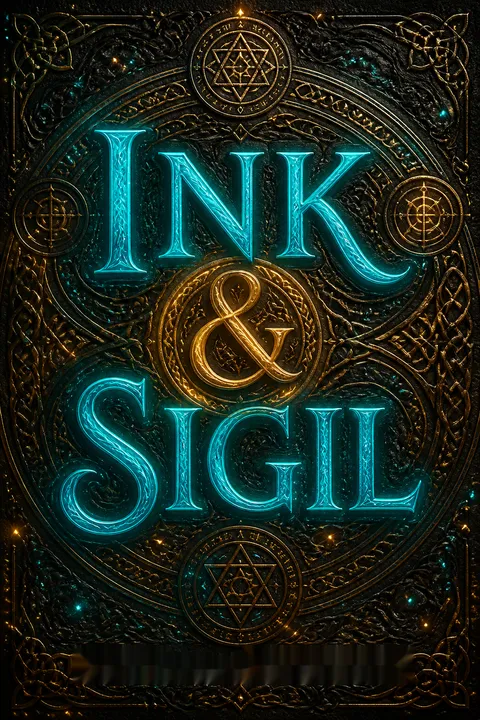
Ink & Sigil follows Al MacBharrais, a sixty-something Scottish sigil agent who creates magic through special inks and symbols. Cursed so his voice inspires hatred, he communicates via text and speech apps. When his seventh apprentice dies suspiciously, Al discovers a fae trafficking operation. Reviews praise the unique older protagonist, fresh magic system, and humor, though some find the Scottish dialect challenging and the mystery weak. The hobgoblin sidekick Buck Foi divides readers. Many appreciate connections to the Iron Druid universe while noting newcomers can enjoy it independently. Ratings average 4.14/5 stars.
People Also Read
Characters
Aloysius MacBharrais
The ink-bound agentAl is a Glasgow printshop owner and sigil agent who uses specialized inks to enforce agreements between humans and supernatural beings. He is observant, meticulous, and more comfortable preparing a contract than speaking about grief. A mysterious affliction makes him rely heavily on typed speech, while the deaths of his apprentices and estrangement from his son have made him wary of intimacy. He tries to treat employees and Fae fairly, yet his protective instincts can draw him into danger before he has a complete plan. His dry humor and rituals of food, drink, and research keep him moving through a life shaped by loss.
Buck Foi
The troublesome hobgoblinBuck is a pink, two-foot-tall hobgoblin with a sharp tongue, a taste for stolen whisky, and a talent for short-distance teleportation. He distrusts authority because he has learned how easily a contract can disguise exploitation, but he is curious about the human world and quick to form attachments when treated with respect. His pranks often create fresh problems, yet his agility, nerve, and willingness to act make him a valuable ally. Buck wants freedom to explore and a life that belongs to him, not one dictated by a master or a false promise.
Nadia
The battle-seer managerNadia manages Al's printshop finances and handles the physical dangers his work attracts. A goth with a razor, a fierce sense of boundaries, and a history as an underground fighter, she is practical where Al is contemplative. Her uncanny ability to anticipate opponents makes her formidable, but she also thinks carefully about fairness, loyalty, and the people caught in systems they did not choose. She is devoted to her partner, Dhanya, and protective of Al despite speaking to him with affectionate hostility. Nadia's confidence is not a lack of vulnerability; it is a way of insisting that others respect her agency.
Clíodhna
The Queen of BansheesClíodhna is a powerful Irish goddess and queen of the bean sídhe, accustomed to negotiating from a position of immense authority. She is elegant, strategic, and skilled at exploiting gaps between the literal wording and the moral intent of an accusation. Her attention is fixed on Fae sovereignty and the balance of power between worlds. She can be witty and unexpectedly candid, but her composure makes it difficult to tell where candor ends and political maneuvering begins.
Brighid
First among the FaeBrighid is the goddess of poetry, fire, and the forge, and the authority behind the sigil system Al serves. She combines immense power with a preference for direct truth, and she is willing to examine Al's troubles without offering false reassurance. Her affection for poetry is personal rather than ceremonial, and she appreciates humor even when it arrives at someone else's expense. Brighid's responsibility to multiple pantheons limits how freely she can intervene, so her support often takes the form of insight, warning, or carefully chosen aid.
Coriander
The Fae court heraldCoriander is the Herald Extraordinary of the Nine Fae Planes and Al's reliable channel to the Fae court. Beautiful, calm, and precise, he carries messages, investigates disappearances, and helps enforce agreements between worlds. His measured manner contrasts with the violence he sometimes has to direct, and he understands that even a seemingly straightforward contract can carry serious risk. Coriander respects Al's work while reminding him that divine power has its own rules and obligations.
Saxon Codpiece
The underground hackerSaxon is a Glasgow hacker who runs his work from a hidden basement beneath a hydroponic greenhouse. He is irreverent, technically gifted, and more perceptive about human systems than his outrageous persona suggests. He helps Al penetrate phones, accounts, and digital records, then uses his knowledge of trafficking to explain how exploitation can hide behind ordinary business arrangements. Saxon's own work online gives him a strong sense of the difference between chosen labor and coercion. His caution is real, even when he disguises it with jokes.
Eli Robicheaux
The Philadelphia agentEli is a sigil agent based in Philadelphia, a capable fighter with a warm family life and a quick, teasing manner. He helps Al investigate Simon Hatcher and brings a directness that cuts through Al's self-reproach. Eli values his colleagues but is not afraid to tell Al when he has been unfair or careless. His work requires him to balance dangerous supernatural duties with his responsibilities to his wife, children, and apprentice.
Cowslip
The captive pixieCowslip is a tiny Irish pixie whose practical intelligence survives even when fear and pain wear her down. She is skeptical of promises after being deceived into service and then subjected to forced experimentation. Her dislike of the other altered Fae does not make her self-righteous; she is trying to hold on to her own identity and preferences under coercion. Cowslip's account gives Al crucial knowledge, but she also asks for help on her own terms.
Tessa Munro
The relentless detectiveDetective Inspector Tessa Munro is a sharp Glasgow investigator who notices gaps in memory and evidence that others might dismiss. She pursues Al because his connection to Gordie's death and the string of apprentice fatalities does not make sense to her. Munro is skeptical without being foolish, and her persistence forces Al to reckon with the cost of manipulating police investigations. She wants answers, not easy reassurances.
Gordie Graham
Al's apprenticeGordie is Al's seventh apprentice, a capable sigil-maker whose private ambitions and choices remain concealed from his mentor. His flat contains carefully prepared inks, unexplained ingredients, and evidence of a life Al did not understand. The gap between his role as a student and what he does in secret drives the book's central investigation.
Dougal MacBharrais
Al's estranged sonDougal is Al's son and a bartender who has built a life beyond his father's reach. Al watches him from a distance, hoping to learn how he is doing without forcing contact. Their relationship carries the ache of a once-close family bond that Al cannot repair through ordinary effort.
Millie MacRae
The bereaved librarianMillie is a librarian at Glasgow's Mitchell Library who helps Al find research on trafficking and curses. Like Al, she has lost a spouse and understands the loneliness that can persist after grief becomes part of daily life. Her warmth is quiet, expressed through useful assistance and a weekly ritual of checking in.
Plot Devices
Ink-and-sigil magic
Written power with limitsAl writes magical symbols with inks made from specialized ingredients. Different sigils can compel compliance, strengthen the body, heal wounds, conceal people from cameras, or enforce contracts. Their effects are temporary and specific, and some can be abused when shown to an unsuspecting person. The system makes literacy, craft, and preparation forms of power, while the ingredients and oral teaching traditions restrict who can use that power. In the story, sigils help Al investigate and survive, but they cannot substitute for judgment or eliminate the risks of conflict.
Interplanar contracts
Law between worldsSigil agents negotiate and enforce agreements that regulate visits between humans, Fae, and other supernatural powers. A properly sealed contract can authorize work on earth or punish a breach, but its wording matters, and a fraudulent agreement can disguise coercion as consent. Al's work depends on reading the terms carefully and accounting for who has power to enforce them. The device links the fantasy plot to questions of labor, responsibility, and legal protection, especially when beings from another world are unfamiliar with the rules governing their employment.
Al's hidden curses
Grief turned into a trapTwo subtle curses shape Al's relationships and professional history. One affects the way people respond to his spoken words, while another makes danger around his apprentices appear like unrelated bad luck. Their effects are difficult to detect because they are woven into his aura rather than visibly imposed. The curses explain why Al has lost loved ones and why his life feels increasingly solitary, but identifying them does not reveal who cast them or how to undo them. Their greatest consequence is the risk they pose to anyone who becomes dependent on him.
Bound trees and Old Ways
Hidden routes between planesOld Ways and bound trees allow Fae and other beings to travel between Glasgow, Tír na nÓg, and distant locations without ordinary roads or flights. Their use explains how supernatural visitors can appear in the human world and move between regions without leaving conventional travel records. The routes also create vulnerabilities: a tree can become a point of observation or a pathway into a hidden facility. They make geography part of the magic, while reminding Al that control of a passage can be as consequential as control of a border.
Ink & Sigil Series
About the Author
Other books by Kevin Hearne
Download PDF
Download EPUB
.epub digital book format is ideal for reading ebooks on phones, tablets, and e-readers.








