

Plot Summary
A Daughter in the Dark
Harry Dresden, a wizard and private investigator in Chicago, is stunned when Susan Rodriguez, his former lover, calls with news that their daughter has been abducted. He has not seen Susan in years, and until this moment he did not know the child existed. At Mac's pub, he struggles to contain the rage gathering inside him.
Magic magnifies a wizard's emotions, and Harry knows that uncontrolled anger could harm bystanders as easily as enemies. He remembers being an orphan who waited for a rescuer and was instead taken in by a monster. That memory hardens into a promise: he will not leave his daughter alone in danger, whatever the cost.
The call makes parenthood arrive as both revelation and obligation. Harry has no lived relationship with his daughter, yet his childhood gives him an immediate emotional vocabulary for her peril: the terror of needing help and not knowing whether it will come. His fear of his own anger complicates the rescue impulse. The qualities that make him powerful are also the qualities that could make him dangerous, so the first test is not simply whether he can find the child, but whether he can remain a protector while furious.
The Secret Maggie
Susan arrives with Martin, a reserved member of the Fellowship of St. Giles, a network of half-vampire fighters resisting the Red Court. She confirms that the child, Maggie, is Harry's daughter, and explains that she concealed the pregnancy because life on the run would have endangered a baby.
She placed Maggie with a family she trusted, but Duchess Arianna of the Red Court discovered the child and had her taken. Harry is furious that Susan made the decision without him, yet postpones that reckoning to focus on Maggie. He and Susan agree to work together, reject paying the vampires for the child's return, and begin searching for a Red Court outpost in Chicago.
Susan's decision is protective and injurious at once. She has tried to keep Maggie safe by narrowing the circle of people who know about her, but that safety strategy also denies Harry the chance to choose fatherhood. Their argument exposes a conflict between two forms of care: reducing danger through secrecy and accepting danger through shared responsibility. Harry's decision to defer blame is not forgiveness. It is a temporary discipline, a recognition that the rescue has a deadline and that emotional justice cannot help a child still held by enemies.
Fire in Harry's Office
The first lead points to a data company operating in the building where Harry keeps his office. While Susan and Martin break in for records, Harry stays outside because his magic disrupts electronics. He spots Red Court vampires entering the building and follows them upstairs, attacking with fire. The fight triggers sprinklers, alarms, and gunfire; Harry learns that explosives have been planted around his office.
He, Susan, and Martin escape moments before the building is demolished. The blast destroys the records they hoped to find and may have killed innocent night workers. By morning, police and federal agents are investigating Harry, while the Red Court has turned his own workplace into a public crime scene.
The explosion converts a private rescue into a public crisis. Harry's anger helps him defeat the vampires, but his force also destroys the evidence the group came to retrieve and places civilians at risk. The consequence is not a simple victory or defeat: the team survives, but loses time, information, and Harry's professional home. This is the novel's first demonstration that retaliatory violence can be tactically useful while still narrowing the protagonist's options. The shattered office externalizes the way the kidnapping is already dismantling the life Harry had before the call.
Allies and an Empty Council
Chicago police detective Karrin Murphy visits Harry after the explosion and learns about Maggie. Though the investigation could cost her badge, she joins the search because Harry is her friend and the child needs help. Harry's apprentice, Molly Carpenter, also chooses to assist, and the two travel with him to the White Council headquarters in Edinburgh.
There they find most of the wizards gathered to welcome Duchess Arianna, who claims the Red Court wants peace. Harry recognizes the timing as a trap: Arianna's diplomatic visit could prevent the Council from rescuing Maggie. Molly helps stop him from storming the gathering in rage, while Captain Anastasia Luccio leads him away before he can provoke a disastrous confrontation.
The scene places intimate loyalty beside institutional calculation. Murphy and Molly accept personal risk because they see a child in danger; the Council sees a possible end to a war that has cost countless lives. Harry's impulse to confront Arianna is emotionally understandable but strategically reckless, and Molly's intervention shows that care can mean restraining someone rather than following him into danger. The Council's public performance of peace also creates a credibility problem: diplomacy may be sincere, but its timing conveniently isolates the person most likely to challenge it.
The Council Chooses War
In a private meeting, the Merlin, Arthur Langtry, reveals that the Council suspects the Red Court is preparing an attack behind its peace offer. The wizards plan to let the vampires commit themselves, then strike decisively.
Langtry orders Harry to stop pursuing Arianna, arguing that one child's life cannot outweigh the people a successful counterattack might save. Harry refuses to accept that arithmetic and leaves Edinburgh without Council backing.
Back in Chicago, records recovered from the Red Court's data center show that ritual objects were shipped from a secure Nevada facility shortly after Maggie's abduction. Harry asks Bob, the spirit housed in a skull, to identify their purpose. Bob recognizes the objects as tools for destructive magic requiring the sacrifice of an innocent.
The Council's choice is not presented as mere cowardice. Langtry is making a consequentialist calculation under the threat of mass slaughter, but his logic becomes morally unstable when it treats an individual child as an acceptable unit of loss. Harry rejects the calculation without claiming that he can save everyone. That distinction matters: he is not offering a better policy for the war, but refusing to let abstract scale erase a concrete person. The ritual discovery sharpens the conflict, turning suspicion into a deadline and giving Harry evidence that his refusal is not only personal desperation.
The Garden Beyond Home
Federal agents arrive with a warrant, pushed toward Harry by Rudolph, a hostile Chicago officer. To avoid arrest and the discovery of weapons and magical materials in his apartment, Harry opens a passage into the Nevernever, the spirit world.
A giant centipede attacks him there; he survives by cutting the creature apart, burying his equipment, and forcing his way back into the real world, where agents arrest him. FBI agent Tilly releases him after deciding he is not the bomber, but an unseen shooter attacks Harry outside the bureau.
Molly finds him, and they return to his damaged apartment, where the Leanansidhe, Harry's faerie godmother, has captured Susan and Martin. She releases them and offers Harry a ruby containing his mother's knowledge of hidden routes through the Nevernever.
The escape sequence strips Harry of the illusion that competence guarantees control. He can cross worlds, fight a monstrous guardian, and evade one legal trap, yet each solution produces another vulnerability. The ruby is a powerful inheritance, but it arrives through a relationship defined by bargains rather than uncomplicated affection. The Leanansidhe's protection complicates Harry's understanding of abandonment: unseen guardians may have kept him alive, but they have not spared him from fear or loss. The episode makes knowledge itself a form of inheritance, one that can rescue Maggie while exposing Harry to new dangers.
Nevada's Missing Shipment
Harry uses the ruby's route knowledge to reach the Nevada storage facility where the Red Court's ritual objects were kept. With Susan and Martin, he slips past guards by disabling cameras, creating a vehicle fire as a distraction, and entering through the opened loading bay. The facility's records have been erased, so the original shipment remains untraceable.
In a cargo truck, however, they find ceremonial clothing and equipment prepared for a later shipment. Its bill of lading points toward Mexico, suggesting that the Red Court sent the ritual focus items there and followed with the remaining materials. The theft does not stop the ceremony, but Harry now has a likely destination and reason to believe time is short.
The failed search becomes useful because the team reads absence as evidence. The erased files show that someone anticipated scrutiny; the later shipment supplies a surviving trace that the attackers did not fully remove. Harry's practical improvisation matters more than a clean intelligence victory. He does not uncover the whole plan, but narrows the field enough to act. The episode also establishes the limits of sabotage: destroying props may delay a ritual, yet the people performing it remain the essential instruments. Material disruption can buy time without resolving the underlying threat.
The Oracle's Warning
The White Council's internal crisis deepens, and Harry learns that senior Wardens and Captain Luccio have gone missing or been detained. With institutions failing, he seeks help from Chicago crime lord John Marcone, whose business interests are also threatened by the Red Court.
Marcone directs him to Donar Vadderung, the powerful head of Monoc Securities. Vadderung identifies Chichen Itza as the ritual site and explains that the Red Court plans a bloodline curse: Maggie's sacrifice would kill her relatives upward through the family line.
Harry realizes the spell threatens him and his half-brother Thomas as well. Thomas, a vampire of the White Court, agrees to gather intelligence and help if needed, making the rescue a matter of family survival as well as rescue.
Vadderung's revelation changes the scale of the danger without changing Harry's priority. Maggie is not merely a hostage whose death would hurt him; her blood would become the mechanism that carries violence through a family tree. The curse literalizes inherited consequence, connecting present choices to ancestors and descendants. Marcone's aid is useful precisely because it is not sentimental: shared opposition creates a temporary alliance between people who do not trust each other. Thomas's arrival makes Harry's concealed family life part of the stakes, though the brothers' different supernatural inheritances complicate what family protection can mean.
The Eebs Offer Terms
Harry and Molly stake out Rudolph's home, hoping to identify whoever is manipulating him. Thomas arrives and learns for the first time that he has a niece. A huge black creature bursts from the house and attacks; Thomas, Mouse, and Molly distract it long enough for Harry to survive, but the Red Court vampires Esteban and Esmerelda abduct him.
The pair offer choices: Harry can die, become a Red Court vampire, or surrender Maggie to their king. He refuses. Mouse and the others reach him before the Eebs can finish their attack, but the rescue costs Harry his car and leaves him badly injured. Their presence confirms that the Red Court is tracking the group and that the search has become a direct contest.
The Eebs try to make surrender sound like a rational bargain, offering survival and protection in exchange for Harry's complicity. Their options expose the central danger of coercion: a choice can be formally offered while every available path violates the chooser's values. Harry refuses to treat his daughter's life as negotiable property. Yet the rescue also reveals the cost of his insistence. Thomas and Molly must risk themselves, while Harry's declining physical condition makes future heroics less sustainable. Family expands here, from Maggie to the brother who has just learned she exists.
A House in Flames
After the Eebs' attack, Harry's injuries and exhaustion leave him vulnerable. Thomas nearly loses control of his White Court hunger around Molly, and Mouse stops him before he can harm her. Harry takes Molly toward safety, but the Eebs firebomb his apartment building. He climbs through the burning structure to warn his elderly landlady and rescue his neighbors, then falls and damages his spine.
Sanya, a Knight of the Cross, arrives in time to help bring the trapped residents out. At St. Mary's church, Harry discovers he cannot feel his legs. Angel Uriel confirms the injury is severe and that Maggie is alive, but refuses to heal him, leaving Harry to choose his next source of power.
Harry's rescue ethic extends beyond the mission: when fire threatens his neighbors, he spends his damaged body to get them out. The act is courageous, but it also exposes the difference between moral clarity and physical capacity. His refusal to abandon others creates the injury that may prevent him from reaching Maggie. Uriel's restraint frustrates Harry, yet it preserves the story's insistence that aid cannot simply erase consequence. The angel offers knowledge but not a miracle, forcing Harry to confront the possibility that protecting his daughter will require a choice he cannot undo.
Mab's Price
With no Council support and no usable body, Harry calls Queen Mab, ruler of Winter, who has long sought to make him her Knight. Mab agrees to restore him and lend him enough power to challenge the Red Court, but demands a binding service in return. To prove his commitment, Harry must kill Lloyd Slate, the broken former Winter Knight.
Harry sees the murder for what it is and chooses it anyway, convinced that Maggie's survival outweighs the cost to his own conscience. Mab claims him as her Knight and heals his body, then leaves him with supernatural strength and a deadline. Harry has made himself capable of reaching his daughter, but has surrendered control over a dangerous part of his future.
The bargain is a crisis of agency disguised as empowerment. Harry gains the physical means to act, but the price is not merely service to a powerful patron; it is a deliberate killing that he cannot recast as self-defense. His choice is neither cleanly heroic nor a simple fall into evil. He recognizes the moral weight and refuses to lie to himself about it. The novel therefore treats parental love as a force capable of inspiring sacrifice and distorting judgment. Harry chooses Maggie, knowing that the choice may change what kind of man can return to her.
The FBI Under Siege
After Mab restores him, Harry wakes during an attempt to revive his stopped heart, then defeats a gunman sent into the church. He recruits the tiny faerie Toot-toot and his followers, who use Harry's photograph to find Susan at the FBI building. Harry enters openly, frees her from interrogation, and discovers that the Red Court has attacked the bureau to retrieve its captive.
Rather than flee and leave the agents to be slaughtered, Harry and Susan draw the vampires away. He opens a passage into the Nevernever, and they leap through with the pursuing creatures close behind. They land in the Erlking's hall, where goblins capture the Red Court attackers. The Erlking then demands that Harry and Susan prove their claim in combat.
Harry's new power does not simplify his ethics. Even while moving toward Maggie, he refuses to make the FBI agents expendable, and that decision sends him into a danger he cannot fully control. Toot's search shows how a small community can provide intelligence beyond the reach of formal institutions. The accidental arrival in the Erlking's hall turns a desperate escape into a test governed by unfamiliar rules. Harry survives not by overpowering the supernatural host, but by recognizing that courtesy, wording, and obligations can matter as much as force.
The Erlking's Trial
Harry invokes the Erlking's obligation to protect his guests, but the goblin king refuses to release them without a trial. He pits Harry and Susan against Esteban, Esmerelda, and the devourer that previously wounded Harry.
Harry uses force to trip the creature and fire to weaken it; Susan burns a vampire in the Erlking's green boundary flames. Together they cripple the devourer, and the Erlking's goblins seize the surviving Red Court party. The contest secures their release, but time behaves differently in the Nevernever.
Harry and Susan emerge in a sporting-goods store hours later than they expected, leaving little margin before the ritual. The Leanansidhe retrieves them, supplies enchanted armor and concealment for Susan, and rushes them toward their allies.
The trial rewards adaptability rather than raw dominance. Harry and Susan survive because they turn their enemies' momentum against them and use the host's own rules to secure a fair contest. Yet victory is costly in a form neither can fight: time. The Nevernever's distorted clock makes the realm itself an antagonist, showing that success in one system can still produce failure in another. The Leanansidhe's gifts restore momentum, but their limited duration underscores the difference between borrowed power and durable skill. Every advantage arrives with a boundary.
Four Ways to Chichen Itza
At St. Mary's, Harry gathers Murphy, Molly, Thomas, Martin, Sanya, Mouse, and the Leanansidhe. He entrusts the three Swords of the Cross to Murphy, Susan, and Sanya, relying on their judgment to use them against supernatural evil. The group travels through several dangerous Ways, including a freezing underwater passage, and the Leanansidhe transforms them into hounds to cross the jungle quickly.
Near Chichen Itza, Harry divides the team: some will free the human prisoners and create a diversion, while he, Susan, Martin, and the Leanansidhe approach the temple. A vampire discovers them before the plan begins and raises the alarm. With the Red Court mobilizing around them, Harry abandons stealth and prepares to meet the attack head-on.
The preparations make trust a practical resource. Harry delegates weapons, routes, and risks because he cannot be everywhere, and each ally brings a distinct form of competence. The Swords do not erase danger; they place moral responsibility in the hands of people who must decide whether to wield them. The journey also makes Harry's mother's knowledge tangible, turning a private inheritance into a route through the world. When a vampire exposes the team, the planned diversion collapses. Their response depends on whether preparation can bend without breaking.
Red Court's Last Night
Harry reaches the temple and sees Maggie beside the blood-soaked altar. He kills Arianna in a magical duel, but the Red King refuses to surrender the child and orders her sacrifice. The Grey Council arrives, while Murphy and Sanya fight through the Red Court's forces. Harry discovers that Martin has secretly served the Red King for generations and has exposed the Fellowship.
Martin takes Susan hostage, but Susan kills him and begins to succumb to her vampire nature. Harry realizes the curse can be redirected through another victim. As Susan asks him to save Maggie, Harry places Susan on the altar and kills her with the ritual knife. The bloodline spell rebounds through the Red Court, annihilating the vampires and ending the war.
The climax makes victory morally inseparable from loss. Harry defeats Arianna but cannot secure Maggie through force or treaty, and Martin's betrayal turns the apparent rescue team into a final arena of choice. Susan's sacrifice is not a clean redemption: her death saves Maggie and destroys the Red Court, but Harry must become the agent of that death. The curse's redirection makes kinship both the weapon and the wound. The scene asks whether an act can be necessary without becoming innocent. Harry's answer is not a defense; it is grief and a plea for forgiveness.
A Bullet After Dawn
The Red Court's destruction frees the human captives and cures many half-vampires, though some rapidly age after losing the magic that sustained them. Harry sits with Maggie until she sleeps, then asks Murphy to take her to Father Forthill and keep her location secret from him.
He believes his new Winter service makes him unsafe as a father. The allies scatter: Molly leaves with Thomas and Mouse, while Harry goes to Thomas's boat and waits alone.
Murphy visits, and their old affection briefly becomes a possible new beginning, but a hidden shooter fires before they can leave together. Harry falls into Lake Michigan, hears the curse that he will die alone, and then hears an approaching train as darkness closes in. His fate remains unresolved.
The aftermath refuses to equate a successful mission with a repaired life. Maggie is alive, but Harry immediately separates himself from her, believing that distance is the only protection he can offer. That decision repeats Susan's earlier logic in altered form: each parent tries to create safety by withholding relationship. Murphy's visit offers a fragile counterweight, a chance for connection after catastrophe, but the shooting cuts it short. The novel ends with survival uncertain, making the victory feel provisional and exposing how little control Harry has gained despite changing the supernatural world.
Analysis
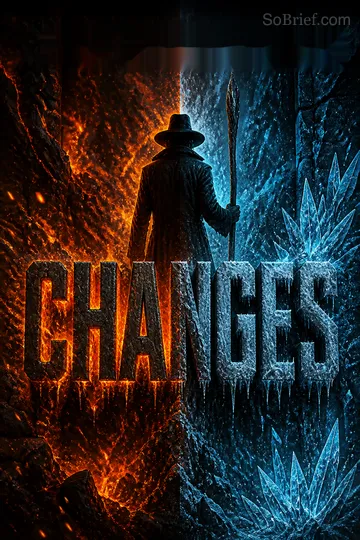
Changes tests whether personal love can survive systems that treat people as strategic units. Harry confronts this logic in the White Council, which is willing to risk Maggie to destroy the Red Court, and in the Red Court itself, which treats children as instruments of power. He refuses the Council's arithmetic, but the novel does not present his alternative as morally uncomplicated. The rescue requires bargains, killing, and finally the death of Susan, the person whose choices first placed Maggie beyond Harry's reach.
The story also examines inheritance as both resource and liability. Harry receives his mother's knowledge, discovers that his family history reaches into the Council's hidden politics, and learns that Maggie's blood makes ancestral conflict physically dangerous. Family is not merely emotional background; it is a channel through which power, secrecy, and violence move. Harry's decision to keep Maggie's location from himself repeats the protective logic Susan used, suggesting that love can reproduce the very distance it hopes to prevent.
Institutions fail in distinct ways. The Council protects a strategic plan, the FBI follows compromised leads, and the Fellowship is vulnerable to a long infiltration. In contrast, the rescue coalition is assembled through particular relationships: Murphy's loyalty, Molly's skill, Thomas's kinship, Sanya's faith, Mouse's vigilance, and even the Little Folk's reciprocal bond with Harry. Their cooperation does not make the mission safe, but it gives Harry forms of support that hierarchy cannot provide.
The ending refuses triumph as emotional repair. The Red Court is destroyed and Maggie survives, yet Harry cannot simply resume fatherhood or sleep without fear. He gives Maggie to Murphy for protection, then faces an apparent assassination. The novel's bleakest insight is that choosing the right action does not guarantee a livable aftermath. Its counterclaim is narrower and more durable: people remain responsible for choosing, even when every available choice carries damage.
Review Summary
Changes receives overwhelmingly positive reviews, with readers praising its intense action, emotional depth, and game-changing plot developments. Many consider it the best book in the Dresden Files series so far. Fans appreciate the high stakes, character growth, and unexpected twists. The ending leaves readers shocked and eager for the next installment. Some note that while the book maintains the series' trademark humor and wit, it takes a darker turn that pushes Harry Dresden to his limits. Overall, Changes lives up to its title, dramatically altering the trajectory of the series.
People Also Read


Characters
Harry Dresden
Wizard detective and fatherHarry is a Chicago wizard who works as a private investigator and routinely places himself between ordinary people and supernatural threats. He is stubbornly protective, quick to act, and more comfortable taking responsibility than asking others to share it. That self-reliance has a cost: his magic responds to emotion, so anger can amplify both his courage and his capacity for destruction. His history as an orphan makes the idea of a child left helpless especially difficult for him to bear. Harry's deepest conflict is not whether he will risk himself, but how much of himself he can surrender while still believing he is acting freely.
Susan Rodriguez
Reporter and half-vampire motherSusan is a journalist who learned that the supernatural world was real and became involved with Harry before the Red Court infected her with its vampiric nature. She is intelligent, physically capable, and practiced at living under pressure as a member of the Fellowship of St. Giles. Her independence is both a strength and a defense: she makes hard decisions alone when she believes others would be endangered by knowing too much. The struggle between her human attachments and predatory instincts shapes how she approaches intimacy, danger, and motherhood. She remains fiercely committed to Maggie's safety even when the cost of that commitment is painful.
Maggie
Harry and Susan's daughterMaggie is the eight-year-old daughter Harry did not know he had. Susan placed her with a family she trusted, hoping to give her a stable childhood outside the violence surrounding the supernatural world. Maggie is young enough to experience the conflict chiefly as fear, separation, and uncertainty, rather than as the political struggle adults see around her. Her vulnerability gives the story's vast institutions and ancient powers a human scale. She is not a symbol to herself; she is a child who needs safety, comfort, and adults willing to make difficult choices on her behalf.
Karrin Murphy
Harry's steadfast police allyMurphy is a detective in Chicago Police Special Investigations, the division that handles cases ordinary officers cannot explain. Small in stature but disciplined and formidable, she has survived repeated encounters with supernatural beings by combining training, nerve, and clear judgment. Her friendship with Harry is built on candor rather than blind agreement; she challenges him when emotion distorts his thinking, then stands beside him when the danger is real. Murphy's professional identity matters deeply to her, but she does not let institutional rules decide what her loyalties must be. She is at once practical, compassionate, and unwilling to be treated as someone who needs permission to choose her risks.
Molly Carpenter
Harry's young apprenticeMolly is Harry's apprentice, a talented young wizard whose strengths include concealment, illusion, and manipulating what people perceive. She is eager to prove that her training has made her useful, but her confidence can outpace her experience. Harry's instinct is to protect her from danger, while his understanding of personal choice leads him to let her decide whether to participate. Their relationship carries the tensions of teaching: care can become control, and encouragement can expose a student to risks she does not yet understand. Molly is perceptive about other people's emotions, though she is still learning how to distinguish empathy from safe judgment.
Thomas Raith
Harry's White Court half-brotherThomas is Harry's half-brother and a member of the White Court, whose vampires feed on life force rather than blood. He is handsome, physically capable, and accustomed to using charm as both social currency and armor. His relationship with his own hunger is a continuing struggle, one that makes intimacy dangerous and self-control an active discipline rather than an assumption. Thomas and Harry share a family bond that they have had to keep hidden from powerful supernatural institutions. Beneath his polished exterior, Thomas is loyal and protective, though his loyalties must contend with the demands of his own nature and family.
Martin
Susan's measured field partnerMartin is a long-serving member of the Fellowship of St. Giles and Susan's partner in its dangerous work against the Red Court. He is methodical, difficult to read, and unusually calm during a crisis. His preference for planning and controlled action often contrasts with Harry's improvisation. Martin treats the Fellowship's mission as a serious obligation and expects emotion to be contained when it threatens operational judgment. His reserve makes him hard to know, but it also allows him to function in situations where other people would be overwhelmed.
Ebenezar McCoy
Harry's formidable wizard mentorEbenezar is an elder wizard, a powerful combatant, and Harry's mentor. He has taught Harry both magical technique and the harsher responsibilities that come with power. His blunt advice is shaped by a long life spent confronting threats that cannot always be solved without sacrifice. Ebenezar can be stern, but his concern for Harry is unmistakable, even when he believes Harry is making an unwise choice. He represents experience without perfect certainty: he knows that large-scale dangers demand attention, yet he also understands that personal obligations can be impossible to set aside.
The Leanansidhe
Harry's dangerous faerie godmotherThe Leanansidhe, often called Lea, is a powerful Winter faerie bound to Harry by an old bargain involving his mother. She is elegant, mercurial, and precise about the obligations created by words and promises. Her affection for Harry is real by faerie standards, but it does not make her harmless or easy to trust. Lea sees protection as a matter of strength, preparation, and the willingness to impose costs. Her shifting balance of menace and care forces Harry to recognize that help from the supernatural world rarely arrives without history, conditions, or consequences.
Queen Mab
Ruler of Winter's faeriesMab is the Queen of Winter, an ancient power whose influence reaches across the supernatural world. She is controlled, strategic, and patient, preferring arrangements that bind future choices rather than relying on immediate force. Mab views emotion as something that can be studied and used, especially when love makes a person vulnerable to sacrifice. Her attention to Harry reflects his usefulness as much as any personal interest. She does not need to lie openly to be dangerous; she can offer a bargain whose terms are plain while leaving its long-term effects difficult to grasp.
The Red King
Ruler of the Red CourtThe Red King is the ancient sovereign of the Red Court, surrounded by powerful nobles and treated by his followers as a god. His authority rests on fear, blood ritual, and the Court's capacity for coordinated violence. Behind that public power, his relationship with bloodlust makes control a central political issue. He embodies the Red Court's belief that other beings exist to be used, not treated as equals. His presence is unnerving because it makes Harry feel how small a mortal life can seem to a creature that has ruled for centuries.
Duchess Arianna
Red Court diplomat and enemyArianna is a senior Red Court vampire, the widow of Duke Paolo Ortega and an experienced political operator. Her beauty is a weapon she can use to conceal the predatory nature beneath it. She understands diplomacy as a way to shape an opponent's choices, not necessarily as a promise of peace. Personal grievance and ambition both influence her conduct, making her more dangerous than a simple battlefield enemy. Arianna is patient enough to build plans across generations, but her hatred gives those plans a deeply personal edge.
Sanya
Knight of the SwordSanya is a Russian Knight of the Cross who carries the Sword of Hope. He is large, battle-tested, and quietly funny, with a practical faith that does not depend on certainty about the supernatural. Sanya is comfortable using both spiritual weapons and ordinary firearms, and he meets danger with a steadiness that helps other people keep moving. His humor is not denial; it is a way of remaining human in situations designed to make fear overwhelming. He respects courage while remaining alert to the difference between bravery and a foolish plan.
Mouse
Harry's watchful guardian dogMouse is Harry's enormous, intelligent dog, whose quiet vigilance repeatedly detects danger before the humans around him do. He is gentle with friends and uncompromising when he senses a threat. His devotion is practical: he watches doors, tracks people, and intervenes when someone is in immediate danger. Mouse's presence offers Harry companionship without the complications of speech or negotiation. He understands more than he lets on, and his calm behavior provides a useful measure of whether a situation is truly safe.
Arthur Langtry
The White Council's MerlinLangtry is the Merlin, leader of the White Council and one of the most powerful wizards alive. He is disciplined, politically skilled, and willing to make decisions on a scale that can seem merciless to individuals caught in them. His distrust of the Red Court is genuine, even as he believes strategic victory may demand terrible costs. Langtry's conflict with Harry is not simply personal dislike. It reflects two different forms of responsibility: governing for the many and refusing to treat any one life as disposable.
Donar Vadderung
Powerful supernatural adviserVadderung is the head of Monoc Securities, a formidable organization with military, commercial, and supernatural reach. He is composed, perceptive, and careful about how much help he offers. Rather than solving Harry's problem directly, he supplies information that makes the danger legible and forces Harry to understand its scale. Vadderung's authority is unmistakable, but he treats Harry as someone who must make his own choices. His combination of businesslike presentation and ancient power makes him difficult to categorize or predict.
Bob
The spirit in Harry's skullBob is a spirit of intellect housed in an enchanted human skull in Harry's laboratory. He has accumulated centuries of magical knowledge and can recall information with extraordinary precision. Bob's wit is irreverent, and he often uses humor to puncture Harry's self-importance or panic. Although he is not a conventional fighter, his knowledge helps identify magical objects and interpret threats. His usefulness depends on trust and permission, because Bob's intelligence is valuable but his own interests and freedoms matter too.
Toot-toot
Captain of Harry's faerie guardToot-toot is a tiny faerie who commands a growing band of the Little Folk and expects regular pizza in return for assistance. He is excitable, proud of his rank, and more capable than his size encourages outsiders to assume. Toot's followers can gather information quickly across a city, making them an unlikely but effective intelligence network. His loyalty is rooted in an exchange Harry has treated consistently and fairly. He brings comic energy to frightening situations without making his contribution any less consequential.
Uriel
Restrained angelic adviserUriel is an archangel who can offer Harry limited knowledge but cannot simply override human choice. He is patient, guarded, and attentive to the consequences of interfering in mortal decisions. His refusal to heal Harry frustrates the wizard, yet Uriel does not abandon him; he clarifies what Harry must face and offers reassurance where he is permitted to do so. Uriel represents a form of help that respects agency even when that restraint looks cruel from the perspective of someone desperate.
Agent Tilly
Skeptical FBI investigatorTilly is an FBI agent assigned to the investigation surrounding Harry's demolished office. He is observant, skeptical, and more interested in evidence than in satisfying the loudest person in the room. His willingness to reconsider his assumptions distinguishes him from officials who treat suspicion as proof. Tilly's experience with Murphy gives him a reason to listen, even when the supernatural explanation strains his understanding. He remains a law enforcement officer trying to make sense of events that do not fit ordinary procedures.
Anastasia Luccio
Captain of the WardensLuccio leads the Wardens, the White Council's enforcement arm, and has years of experience managing both magical threats and political conflict. She is direct, perceptive, and able to challenge Harry without reducing him to his reputation. Her judgment balances the urgency of action against the institutional consequences of a mistake. Luccio understands that Harry's anger is real but also knows it can be manipulated. She offers strategic help when open support would put others at risk.
John Marcone
Chicago's calculating crime lordMarcone is Chicago's most powerful crime boss, a disciplined businessman who understands that information can be more useful than violence. He and Harry are adversaries by principle, but they sometimes cooperate when their interests overlap. Marcone is dangerous because he combines patience with a strict personal code, especially where children are concerned. He does not offer help out of sentiment, and he expects every exchange to have a price. Harry distrusts him while recognizing that Marcone's competence can be valuable.
The Erlking
King of the goblinsThe Erlking rules the goblins of Faerie and presides over a realm organized around hunting, strength, and ancient custom. He is a formidable host who values cleverness but dislikes being manipulated. His courtesy is unusual enough to matter, and its obligations can protect visitors while also becoming a trap. The Erlking's power is both political and physical: his people respond instantly to his authority, and his domain gives him a home-field advantage over intruders.
Plot Devices
The Nevernever Ways
Shortcuts between worldsThe Nevernever is a spirit world that touches the mortal world at places with related qualities or magical resonances. Wizards can use established routes called Ways to travel great distances through relatively short passages. Harry's mother's knowledge, stored in a ruby, gives him access to routes he has not personally explored. The Ways make it possible to reach the Nevada facility and later travel toward Mexico, but they are not safe roads: their conditions can include dangerous terrain, hostile creatures, strange physical rules, and time passing at a different rate. They turn geography into both an advantage and a risk.
Margaret's Ruby
A map hidden in memoryHarry's mother left the Leanansidhe a ruby containing her knowledge of the Nevernever's routes. The gem is not simply a map of current passages; it holds Margaret's careful observations about where Ways connect and how they may shift. Harry accepts it because the knowledge could let him reach Maggie, despite the danger Lea associates with inheriting it. The ruby links the rescue plot to Harry's absent mother and gives him a practical form of legacy. Its value comes with a psychological burden: inherited knowledge can create freedom while also exposing its user to risks the previous generation understood.
The Bloodline Curse
A sacrifice turned against its makersThe Red Court's ritual stores power through the killing of human victims, then uses the blood of a final sacrifice to carry that force through the victim's family line. Maggie is chosen because her death would reach her relatives, including Harry and Thomas. The ritual operates like a prepared weapon: the earlier killings load its power, while the final death determines the bloodline targeted. This mechanism makes kinship materially consequential and creates the possibility of redirecting the curse by changing who dies on the altar. Its use in the climax transforms the Red Court's own method into the means of its destruction.
The Winter Knight Bargain
Power purchased with serviceQueen Mab offers Harry physical restoration and the power to confront the Red Court in exchange for becoming her Winter Knight. The bargain gives him capabilities he cannot gain quickly enough through ordinary wizardry, but binds him to a dangerous supernatural sovereign after the immediate rescue. Mab makes the price explicit rather than concealing it, forcing Harry to choose with open eyes under extreme pressure. His acceptance enables him to continue the mission, while raising a lasting question about whether a person can use power borrowed from a dark institution without being remade by it.
The Three Swords
Faith given fighting formThe Swords of the Cross are sacred weapons that resist supernatural evil, but their use depends on the bearer acting in good faith. Harry entrusts them to Murphy, Susan, and Sanya for the assault, treating guardianship as a responsibility to choose capable people rather than hoard power. Their light alters the balance of the battle, especially against vampires and beings using overwhelming supernatural force. The Swords are not simple weapons that guarantee victory; they demand moral judgment from their wielders and expose them to danger. Their presence makes belief an action expressed through restraint, courage, and protection.
The Dresden Files Series


About the Author

Download PDF
Download EPUB
.epub digital book format is ideal for reading ebooks on phones, tablets, and e-readers.








