

Plot Summary
Morgan at the Door
Harry Dresden is fighting a debilitating migraine when Donald Morgan, a senior Warden of the White Council, collapses bleeding on his doorstep. Morgan once served as Harry’s probation officer and could have executed him for breaking a Law of Magic, so helping him risks Harry’s own standing with the Council. Harry brings in Waldo Butters, a medical examiner and trusted friend, who patches Morgan up in secret.
Butters questions why Harry would save a man who repeatedly threatened him. Harry answers through action: Morgan has always enforced the Council’s laws, even at terrible personal cost, and Harry knows what it means to be hunted for a crime he did not commit. Morgan is unconscious, and Harry has inherited a dangerous secret.
The opening turns old antagonism into an ethical test with immediate bodily stakes. Harry does not forgive Morgan or pretend their history is harmless; he refuses to let resentment substitute for evidence. Butters’s improvised surgery makes that choice costly and physical, while the migraine quietly signals that Harry’s body is already under strain. Their relationship begins not with reconciliation but with a decision about what a person deserves before the facts are known.
A Murder With a Frame
When Morgan wakes, he explains that Aleron LaFortier, one of the White Council’s seven leaders, is dead. Morgan says he awoke beside LaFortier’s body with the murder weapon in his hand, after someone struck him unconscious.
Investigators also found millions of dollars in an account bearing Morgan’s name and records linking him to a Red Court operative. He escaped custody after realizing the evidence would condemn him before anyone seriously tested it.
Harry believes him, though Morgan has no proof, and recognizes that an execution would leave the real traitor free to strike again. The Council’s tracking spells can hide Morgan for only about two days. Harry commits to finding the killer before that protection expires, even though the Council may treat him as an accomplice.
The mystery is designed to make institutional certainty look like proof: the weapon, the body, the money, and the contact records all converge too neatly. Harry’s belief in Morgan is not sentimental trust so much as a judgment about character tested over years. Yet the case asks whether character can outweigh material evidence when the institution is frightened and under pressure. The deadline converts that abstract conflict into action, narrowing the space in which Harry can investigate without attracting the Council’s attention.
The Sight's Horrible Gift
Harry turns to his half brother Thomas, a White Court vampire, for medical supplies and intelligence from the supernatural world. On the drive home, he senses a tail and opens his wizard’s Sight, which reveals a nightmare creature racing across the rooftops.
The vision overwhelms him so badly that he abandons his car and reaches his friends Billy and Georgia on foot. Their werewolf group gathers, but the shapeshifter attacks before they can understand it. Harry and the Alphas drive it off, yet Kirby dies with his throat torn open and Andi is left gravely injured.
Harry identifies the creature as a skinwalker, an ancient predator strengthened by fear. The attack turns his investigation into a personal hunt and leaves him carrying responsibility for friends who joined his defense.
The Sight is both an investigative instrument and a psychological injury: Harry gains information, but the knowledge remains painfully vivid and cannot simply be put away. His effort to master the memory at Billy and Georgia’s home parallels the larger case, where fear itself gives the enemy leverage. Kirby’s death and Andi’s injuries also expose the cost of Harry’s habit of protecting allies by deciding what they should know. The survivors are no longer abstract backup; they have paid for his incomplete understanding.
Zero's Family Visit
After Murphy retrieves Harry’s wrecked car and hears the outline of the case, Thomas takes him to Zero, an exclusive club tied to the White Court. There, Harry meets Justine, Thomas’s beloved, whose protective suit keeps her from burning him with the force of their mutual love.
Justine shares a wanted notice offering money and favors for Morgan, evidence that the hunt has escaped Council control. Their meeting is interrupted by Madeline Raith, Thomas’s predatory cousin, who threatens Justine.
Thomas pins Madeline down, and Justine burns her by kissing her, punishing the attempted attack without killing her. Outside, Anastasia Luccio, Captain of the Wardens and Harry’s partner, warns that Morgan may suspect Harry of being the traitor. Harry returns home knowing that every faction may be watching him.
Zero makes appetite visible as a social system: bodies are arranged for consumption, while Thomas and Justine’s careful, painful closeness becomes a refusal of the club’s logic. Madeline’s threat reveals how quickly desire can become coercion in the White Court. Harry’s joke-driven defiance masks his unease, but Luccio’s warning breaks through it: even a sincere act of help can look like conspiracy when trust has already collapsed. The scene binds erotic danger to political danger without treating either as harmless spectacle.
The Bolt Hole
Back at Harry’s apartment, his apprentice Molly Carpenter arrives to prepare a potion and finds Morgan hidden in the bedroom. Morgan needles her about her past violation of a Law of Magic until she nearly attacks him; Harry restrains her and makes her regain control before anger turns into another offense.
He then tells Molly enough to implicate her in Morgan’s escape, so she joins the effort rather than being left exposed. With Thomas’s help, they move Morgan in a wheelchair to a concealed storage unit protected by layered wards and a passage into the Nevernever.
Harry leaves Molly with Morgan and travels to Edinburgh to inspect the Council’s evidence. The temporary refuge buys them time, but it also gathers Harry’s apprentice, brother, and former enemy into one fragile chain of trust.
The storage refuge translates Harry’s protective instinct into architecture: wards, supplies, and an escape route attempt to make care operational. But Morgan’s deliberate provocation shows that protection cannot substitute for discipline, especially for Molly, whose magical vulnerability is tied to a real past offense. Harry’s choice to bring her in both honors her agency and increases her exposure. The bolt hole is therefore not a safe solution; it is a temporary structure built around unresolved danger and unequal trust.
The Council's Closed Door
At the White Council’s Edinburgh headquarters, Harry speaks with his former mentor, Ebenezar McCoy, who refuses to put him on the team hunting Morgan but admits the evidence looks persuasive. Harry inspects LaFortier’s preserved murder scene with Listens-to-Wind, the Council’s healer and investigator.
The room’s wards may allow them to reconstruct the magical residue, but Listens-to-Wind warns that political fallout could matter more than the result. LaFortier had represented less powerful Council members from outside the West; blaming Morgan, the Merlin’s trusted Warden, could fracture the Council.
Harry confronts the Merlin and secures the official case file, promising to find both Morgan’s real position and the traitor. He leaves with access to evidence, but no guarantee that truth will change the verdict.
The headquarters turns investigation into a question of governance. Listens-to-Wind’s dilemma is not simple cowardice: he fears that a truthful outcome could trigger a civil conflict that leaves ordinary people unprotected. Harry, however, sees how easily that calculation can become permission to sacrifice an individual. The crime scene’s painstaking reconstruction contrasts with the Council’s political shortcuts. Facts are being collected, but the institution has already begun deciding which facts it can afford to accept.
The Missing Spell
Back in Chicago, Harry and Murphy review the Council’s file and photographs of LaFortier’s room. Murphy notices that the evidence describes a physical struggle but no spellcasting, and asks why neither powerful wizard used magic or why LaFortier failed to cast a death curse.
Harry agrees the absence matters, though he cannot yet explain it. Murphy also advises him to follow the money behind Morgan’s suspicious account, but a foreign bank will not yield records quickly.
Before they can pursue the lead, Thomas calls from the storage unit and says trouble has arrived. Harry and Murphy rush there, abandoning the paper investigation for an immediate rescue. The unexplained silence of the murder remains a clue, while the attackers force the case into open combat.
Murphy’s forensic attention gives the case a different method from wizardly intuition: she treats what did not happen as evidence. The absence of magic complicates the story the Council has accepted, but does not yet identify an alternative culprit. This distinction matters because a good clue is not the same as a complete explanation. The sudden emergency interrupts methodical inquiry and demonstrates how the antagonists exploit urgency, repeatedly forcing Harry to choose between protecting people now and understanding the larger pattern.
Binder's Grey Army
At the storage park, Harry and Murphy find identical grey-suited beings searching the units. They are summoned spirits, and Murphy shoots the two nearest before the rest swarm them. Harry draws a quick protective circle that keeps the beings out, but their summoner, Binder, threatens to break it unless Harry reveals Morgan’s location.
As police sirens approach, Harry stalls him. Morgan appears behind Binder in his wheelchair with a shotgun, while Molly drops her veil and completes a second circle around the grey beings, cutting them off from the energy holding them together.
They dissolve into ectoplasm. Murphy tackles and arrests Binder, but Thomas is missing. Harry takes Morgan and Molly through the hidden Way, leaving the police to handle the scene and his brother’s fate uncertain.
The encounter pits improvisation against specialized power. Binder’s strength lies not in personal combat but in controlling a disposable crowd; Harry answers with a circle, while Molly uses the same magical principle offensively. Her competence is earned through the very lessons Morgan’s cruelty challenged. Yet the apparent victory has a hole in it: Thomas’s disappearance means the group has escaped one trap without understanding the next. The scene makes teamwork real, but never equivalent to safety.
A Lawyer's Locked Mind
Harry returns to his apartment and uses the tiny faerie Toot-toot to locate the private investigator watching him. Vince Graver refuses to betray his client, but Molly persuades him to leave a business card that points to attorney Evelyn Derek.
At her office, Harry’s magical intimidation reveals that someone has blocked Derek from naming her employer. A soulgaze shows the residue of a White Court vampire’s influence, including a flash of silver eyes. Harry confronts Lara Raith, Thomas’s powerful half sister, and demands answers.
Before Lara can resolve the accusation, her estate’s alarms fail and the skinwalker breaks into the house. The detective trail has uncovered a new faction in the conspiracy, but the immediate attack prevents Harry from learning who directed it.
Graver’s refusal to sell information gives the investigation a moral counterweight: professional loyalty need not mean complicity, and Molly finds a way to respect that boundary while still uncovering a lead. Harry’s treatment of Evelyn Derek is more ethically compromised. He frightens her, then recognizes that her silence is not voluntary and uses the soulgaze to see what she cannot safely disclose. The scene distinguishes coercion from consent while showing how Harry’s own methods can approach the pressure he opposes.
The Chateau Under Siege
Lara, Harry, and Luccio form a temporary alliance when the skinwalker attacks the Raith estate. It slips through vents, changes shape, and injures Justine and Luccio before escaping through the house.
The creature returns, smashes through floors, and nearly kills Harry, while Lara’s guards die trying to stop it. Lara’s relatives are badly hurt, and the skinwalker finally appears long enough to reveal that it has Thomas and wants Morgan in exchange. It threatens to return at sundown the next day if Harry refuses.
Lara agrees to help investigate because the attack has endangered her family and reputation. Harry now has two urgent problems: prove Morgan innocent and recover Thomas before the deadline, while facing an enemy too powerful to meet on ordinary terms.
The siege changes the skinwalker from a pursuing horror into a negotiator who treats people as leverage. Its threat works because it has already demonstrated its ability to cross defenses and inflict lasting harm. Lara’s alliance with Harry is strategic rather than sentimental, yet their shared interest is sufficient to interrupt old rivalries. Justine’s injuries sharpen the cost of Thomas’s capture, while Harry’s near helplessness exposes the limits of courage when an enemy controls the conditions of engagement.
The Past in the Rolls
On the ride from the Raith estate, Luccio tells Harry that his mother, Margaret LeFay, challenged the White Council’s narrow focus on magical prohibitions and had unusually close ties to Faerie. She also reveals that Thomas is the son of the White King, making him Harry’s half brother through their mother. Harry insists that the Council must not exploit Thomas’s parentage.
At the apartment, they find Morgan with a sword-cane at Molly’s throat and Mouse holding Luccio down. Molly admits that she used magic to blind Luccio because she feared she would report Morgan. Morgan had intervened when Molly tried to probe Luccio’s mind. Harry stops the standoff, but the household’s fragile trust has been badly damaged.
The family revelation enlarges Harry’s personal stakes without resolving them: Thomas is not simply a brother by affection but a politically valuable connection between supernatural powers. Luccio’s account of Margaret also introduces a dispute about whether law should restrain only magical techniques or broader abuses of power. In the apartment, Molly and Morgan respond to fear with force, each convinced that the other may cause catastrophe. Harry’s hospitality can end the immediate threat, but it cannot erase what their choices have disclosed.
A Bullet and a Choice
Molly explains that she suspected someone had subtly altered Luccio’s judgment and had tried to inspect her mind while she slept. Morgan fired a hidden pistol during the confrontation, intending to stop Molly, but the bullet struck Mouse.
Harry makes Molly remove the bullet and stitch the dog’s wound, turning remorse into a concrete responsibility rather than an escape into self-pity. She then describes a plausible method for nudging older wizards toward anger or political opportunism without openly controlling them.
Harry recognizes the idea could fit the Council’s escalating paranoia. He gives Molly the choice to flee or stay and face the danger and possible punishment. She chooses to remain. Harry decides that ordinary investigation is no longer enough and prepares a dangerous ritual to claim the island of Demonreach.
The wound makes Molly’s ethical failure tangible: Mouse absorbs the consequence of a conflict she helped create, and Harry refuses to let her reduce accountability to shame. Her theory of subtle influence is frightening precisely because it works through existing motives rather than replacing them. The choice to stay is not a clean redemption; Molly accepts risk while remaining implicated. Harry’s decision to attempt the ritual follows the same logic, converting uncertain insight into a gamble that may impose new costs.
Demonreach Answers
With Murphy’s help, Harry takes Morgan and Molly to the uncharted island in Lake Michigan, where a powerful ley source feeds a hostile spirit. At the ruined lighthouse, he performs a sanctum invocation using his blood and the angelic Soulfire that Uriel once gave him. The island answers by manifesting a towering figure, and Harry names it Demonreach.
The encounter leaves him with a bond to the place and a startling form of local knowledge: he can sense paths, animals, and dangers across the island. Morgan identifies the gift as a limited intellectus belonging to the island’s spirit, not Harry himself. The island may provide a strategic advantage, but its deep source of power remains dangerous and beyond Harry’s control.
The ritual is an act of negotiated belonging, not simple conquest. Harry survives by offering blood and meeting the island’s hostility as an equal, but the resulting bond expands his responsibility as much as his power. The limited intellectus is especially important: knowledge depends on asking the right question, so it does not abolish uncertainty or judgment. Demonreach gives Harry a terrain advantage, while the spirit’s alien nature prevents him from mistaking access for mastery.
An Island Full of Enemies
Harry returns to Chicago, recruits Lara’s help, and tells the White Council that a witness will identify LaFortier’s killer at Demonreach. He has no witness; the announcement is bait intended to draw the hidden culprit out.
He also arranges a meeting with the skinwalker, claiming he will exchange Morgan for Thomas, while planning to use the island’s terrain and his new bond. The Gatekeeper, Rashid, arrives first and warns that the Council may still kill Morgan even if Harry exposes the traitor.
At dusk, the Senior Council and Wardens arrive, followed by Lara and her sisters. Before negotiations can settle, supernatural forces begin appearing around the island. Harry senses that the conspirators have brought enough fighters to surround both groups.
Harry’s plan is a wager on adversarial psychology: the false witness is meant to make a hidden operator fear exposure more than a confrontation. The Gatekeeper’s warning adds a second danger, since proving innocence may not repair the political damage already done. Harry’s control is therefore partial by design. He can choose the ground and manipulate expectations, but he cannot dictate how the Council, Lara, or the conspirators will respond once the island fills with armed forces.
Fireworks in the Woods
As the attackers close from opposite sides, Harry convinces the Council and Lara’s people to charge before they are encircled. He uses Toot-toot and the newly recruited faerie militia to ignite waterproof fireworks, exposing Binder’s grey spirits in the dark.
The Wardens unleash combat magic while Lara and her sisters fire into the attackers, and Harry’s awareness of Demonreach helps him direct the counterattack. He and Lara pursue Binder and Madeline, but Madeline’s grenade knocks them down.
The Alphas wound Madeline while Harry shoots Binder; Lara catches Madeline and kills her in a savage feeding. Binder survives with a damaged leg and admits little about his employer, but gives Harry Madeline’s phone. The battle breaks the immediate assault, not the conspiracy.
The improvised fireworks turn spectacle into battlefield information: the faeries do not overpower the attackers, but make them visible long enough for others to act. Harry’s coalition depends on radically different forms of competence, from Warden magic to vampire speed to werewolf coordination. Lara’s killing of Madeline shows how quickly alliance can return to predation once the shared threat weakens. Binder’s surrender yields a useful object, but not the identity of the person directing the violence.
Morgan's Last Defense
The skinwalker reaches the cottage carrying Thomas and tries to seize Morgan and Molly. Demonreach’s protective markings keep it from entering, giving Harry time to launch Thomas through the doorway with a carefully aimed force spell.
The impact may have injured Thomas further, but it separates him from the creature. Harry then fights alone, using the island’s power, Soulfire, stored kinetic force, lightning, and a binding spell. The skinwalker escapes the binding and nearly kills him.
Toot-toot briefly distracts it, then Listens-to-Wind arrives and shifts into a huge bear, changing forms until he drives the creature off the island. Harry collapses from his injuries. Thomas is recovered, but the skinwalker survives, and the battle has left the Council and White Court badly battered.
Harry’s victory is deliberately narrow: he does not defeat the skinwalker, but changes the immediate objective from winning a duel to moving Thomas into sanctuary. The choice reflects a hierarchy of care that can look irrational to political strategists, especially when the Council’s stability is also at stake. Listens-to-Wind’s shapeshifting answers the ancient predator on its own terms, while Toot-toot’s small intervention shows that courage is not proportional to size. Survival here is collective, improvised, and incomplete.
The Traitor's Final Ink
At Morgan’s trial in Edinburgh, Harry presents photographs of everyone who used the Chicago Way after he announced the false witness. Mouse recognizes Samuel Peabody, the Council administrator, as the man whose scent he tracked.
Ebenezar and Ramirez have also found alchemical substances in Peabody’s signature ink, evidence that he used paperwork to influence Council minds. Peabody releases a mordite mist and flees. Harry pursues him through the headquarters, but Peabody wounds a young Warden and opens a Way.
Morgan, despite his injuries, follows and shoots Peabody before he can kill Harry. Morgan admits that Luccio, mentally manipulated by Peabody, held the murder weapon; he took the blame to protect her. He dies after telling Harry why he trusted him.
The solution joins two kinds of evidence: Harry’s trap identifies who came from Edinburgh, while chemical testing explains how Peabody reached into the Council’s decision-making. The administrator’s weapon is not merely a spell but the institution’s own paperwork, making bureaucratic order a channel for covert coercion. Morgan’s final action completes the relationship begun at Harry’s door. He protects Harry as Harry once protected him, and his confession reveals that duty can be both a shield for another person and a fatal burden.
What Survives the Cover-Up
The Council publicly claims Morgan conspired with Peabody, preserving an image of strength while concealing the truth. Lara later supplies evidence against those who framed Morgan and offers the tainted money back, but Peabody’s influence has left the Council suspicious and divided.
Luccio learns that her feelings for Harry were partly imposed by psychic manipulation; they part with affection but without a future they can trust. Thomas, recovering from the skinwalker’s torture, tells Harry that repeated forced killings have made feeding feel like his true nature.
Harry cannot persuade him otherwise, but insists their brotherhood remains. Weeks later, Harry brings Butters to the Alphas’ gaming night in Kirby’s place. Andi is still recovering, but the group gathers again, making room for grief without surrendering its routines.
The resolution refuses to equate exposure with repair. Peabody is dead, yet the Council protects its authority by falsifying the public story, and its members must live with uncertainty about their own choices. Harry’s private relationships bear parallel damage: Luccio cannot separate affection from coercion, and Thomas interprets trauma as proof of an essential predatory self. The gaming night offers no cure for loss. Its modest return matters because the survivors choose to continue a shared practice while remembering the person who is missing.
Analysis
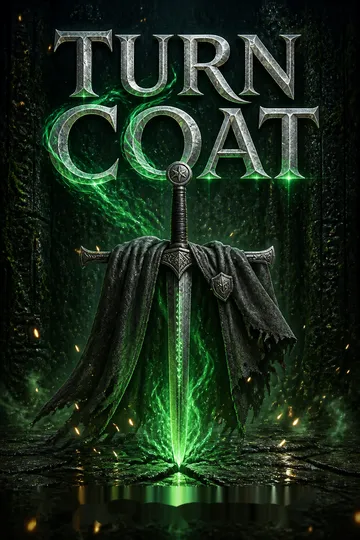
Turn Coat treats justice as a problem of institutional design rather than a simple contest between good and evil. The White Council has real reasons to enforce its Laws: black magic can corrupt practitioners, and supernatural enemies exploit disunity. Yet the same machinery that protects the wider world makes it easy to convict Morgan before testing the evidence. The story’s central question is therefore not whether institutions need rules, but what happens when preserving their authority becomes more urgent than discovering what is true.
Harry’s investigation repeatedly contrasts visible force with quieter forms of power. The skinwalker uses fear and bodily violence; Binder uses summoned labor; Peabody uses administrative access and psychic influence. Each threat succeeds because it exploits an existing vulnerability. The Council’s distrust, its political factions, and its reliance on procedure create openings that no single spell could have made. Peabody’s ink is especially apt: control travels through the ordinary channels people have learned not to question.
The novel also resists the idea that good intentions guarantee ethical action. Harry protects people but sometimes decides what they may know. Molly’s attempt to inspect Luccio’s mind begins in concern and crosses a boundary all the same. Morgan’s loyalty saves others while consuming his own life. Thomas’s traumatic experience makes him interpret appetite as identity, showing how repeated behavior can feel like proof of an unchangeable self. These characters are not absolved by motive; they are judged by what they choose to do with it.
The ending offers neither clean vindication nor a restored community. The Council lies to preserve its image, Thomas remains wounded, and Harry’s relationship with Luccio cannot be separated from coercion. What survives is smaller but meaningful: a brotherhood Harry continues to claim, a circle of friends returning to a game, and a decision to keep acting despite incomplete victories. The book’s moral claim is practical rather than triumphant. Failure does not become virtue, but neither does it excuse surrender.
Review Summary
Turn Coat receives high praise from readers, with many considering it one of the best entries in the Dresden Files series. Reviewers appreciate the intricate plot, character development, and emotional depth. The book is noted for its darker tone and significant implications for future installments. Fans enjoy the exploration of White Council politics and the introduction of new magical elements. While some find the reveal of the traitor predictable, most agree that the overall story and its consequences for Harry Dresden and other characters are compelling and well-executed.
People Also Read


Characters
Harry Dresden
Stubborn wizard investigatorHarry is a Chicago wizard, private investigator, and Warden who repeatedly places personal responsibility ahead of institutional approval. His past with Morgan gives him ample reason to refuse help, yet he recognizes the danger of letting grievance replace judgment. Harry’s humor is a working defense against fear, not evidence that he feels little; the deaths and injuries around him accumulate even when he keeps moving. He is also a teacher to Molly and a fiercely loyal brother to Thomas. His central psychological tension is between self-reliance and the obligations created by caring for other people. He wants to protect others without controlling them, a distinction he does not always manage.
Donald Morgan
Hard-line WardenMorgan is an old, battle-tested Warden whose severe manner reflects a lifetime spent enforcing the White Council’s laws. He has treated Harry as a danger for years, and his rigidity makes kindness difficult to recognize when it is offered. Morgan’s sense of duty is not merely obedience: he believes the Council’s survival protects people who cannot defend themselves against supernatural threats. That conviction makes him formidable, but it also narrows his emotional life and can turn suspicion into reflex. His relationship with Harry is shaped by their shared experience of judgment, though they understand that experience very differently.
Molly Carpenter
Restless young apprenticeMolly is Harry’s apprentice, a talented young practitioner learning to control magic as well as the emotions that can drive it. Her past violation of a Law of Magic leaves her sensitive to being treated as irredeemable, and Morgan’s contempt strikes directly at that fear. Molly is brave, perceptive, and capable of improvisation, but her desire to protect people can become intrusive when she believes she knows what they need. Harry’s teaching asks her to distinguish feeling from action and care from control. Her growth depends less on becoming fearless than on accepting responsibility for choices made under fear.
Thomas Raith
Vampire brother in conflictThomas is Harry’s half brother and a White Court vampire, a predator whose supernatural hunger feeds on human emotion and life. His beauty, wit, and polished public persona conceal the effort required to resist the hunger inside him. Thomas’s love for Justine gives that struggle an intimate focus: their closeness is dangerous precisely because it is genuine. He is protective of her and loyal to Harry, yet he fears that his nature may eventually overrule his intentions. His character explores the unstable boundary between inherited appetite and chosen conduct, without suggesting that either one can be dismissed by willpower alone.
Karrin Murphy
Clear-eyed Chicago copMurphy is a police sergeant in Chicago’s Special Investigations unit, accustomed to cases that official channels would rather call impossible. She combines practical observation with courage and does not mistake loyalty for blind agreement. Her questions about the murder scene help Harry notice what magical investigators overlook, especially the absence of spellcasting. Murphy understands her physical limits without accepting that those limits make her useless. Her friendship with Harry is emotionally candid, shaped by shared danger and a willingness to challenge his self-destructive habits. She acts as both investigator and stabilizing presence, often giving Harry a clearer view of the choices he is avoiding.
Anastasia Luccio
Captain of the WardensLuccio leads the White Council’s Wardens, bringing centuries of experience to an organization under pressure. She is disciplined, capable, and accustomed to treating emotional attachment as a vulnerability. Her relationship with Harry unsettles that self-protective structure, while her history with Morgan gives her another complicated bond within the same institution. Luccio values duty but is not incapable of tenderness; rather, she has learned to conceal it behind command and procedure. Her character raises the question of how much of a person’s inner life can be trusted when magic can alter perception and emotion.
Lara Raith
Strategic White Court rulerLara is a leading figure of the White Court and Thomas’s older half sister. She is intelligent, politically alert, and skilled at making desire serve as leverage. Lara’s civility is real as a tactic, but it does not make her harmless; she views loyalty through the obligations of family, House, and power. Her care for Thomas coexists with a willingness to use people who stand outside her family. Harry recognizes her competence even as he distrusts her motives. Their alliance depends on mutual interest, and that uneasy arrangement reveals how effectively Lara can turn attraction, threat, and negotiation into parts of one strategy.
Ebenezar McCoy
Harry's formidable mentorEbenezar is Harry’s former mentor and a powerful senior wizard, practical in manner and deeply aware of political consequences. He cares for Harry, but that affection does not stop him from questioning Harry’s judgment. His experience makes him wary of idealistic solutions that could destabilize the Council, while his personal loyalty sometimes leads him to resist its demands. Ebenezar represents a form of institutional knowledge that is neither wholly cynical nor wholly trustworthy: he understands why the rules exist, but also sees how they can be used to protect authority.
Listens-to-Wind
Healer and spirit callerListens-to-Wind is a senior Council wizard, accomplished physician, healer, and practitioner of Native American spiritual traditions. He is calm and observant, but his restraint comes from painful historical experience rather than indifference. He weighs individual justice against the survival of a larger community and knows that either choice can carry a human cost. His healing practice and shapeshifting abilities reflect a relationship with the natural world that differs sharply from the Council’s legal and bureaucratic habits.
The Merlin, Arthur Langtry
White Council's political chiefLangtry leads the White Council with formidable magical ability and a disciplined public manner. He treats political stability as a practical necessity, especially while the Council faces external enemies and internal distrust. His suspicion of Harry is longstanding, but he is capable of recognizing that Harry’s antagonism can make his findings more credible. Langtry’s decisions reveal the burden and danger of governing a powerful institution: he must consider not only what is true, but what the Council can survive acknowledging.
Ancient Mai
Unyielding Council elderAncient Mai is a senior Council leader whose composure and attention to protocol make her difficult to read. She believes the Council must project strength to deter enemies, even when that requires painful compromises. Her political instincts are sharp, and she quickly recognizes the risks in Harry’s approach. Mai is not presented as casually cruel; she reasons from a hard calculation about collective survival, one that can leave little room for an individual’s claim to justice.
Justine
Thomas's resilient belovedJustine is Thomas’s beloved and an aide within the White Court, positioned to hear information that outsiders cannot easily reach. She has survived a dangerous relationship with a vampire’s hunger and rebuilt her independence with patience and resolve. Her love for Thomas is both a source of strength and a physical danger to him, so intimacy requires deliberate care. Justine is gentle without being passive; when threatened, she can act decisively and accept the consequences.
Madeline Raith
Predatory White Court cousinMadeline is a member of the Raith family whose sensual presence conceals an appetite for domination. She uses charm to unsettle people and treats vulnerability as an invitation rather than a boundary. Her rivalry with Thomas is sharpened by his refusal to conform to the family’s predatory norms. Madeline’s impulsiveness makes her dangerous in person and potentially useful to more calculating players.
The skinwalker
Ancient shapeshifting predatorThe skinwalker is an ancient, powerful shapeshifter who can veil itself, alter its body, and exploit fear. It treats pursuit as a form of entertainment, choosing to frighten and injure rather than simply kill when that serves its purpose. Its age makes it adaptable, and its magic is strong enough to challenge both Harry and experienced supernatural fighters. The creature’s most effective weapon is not strength alone, but its ability to make other people feel that resistance is futile.
Binder
Mercenary summonerBinder is a hired practitioner whose particular talent allows him to summon and command beings from the Nevernever. He avoids openly breaking the White Council’s Laws, which lets him operate as a mercenary despite the harm his work causes. He is cynical, opportunistic, and more cunning than his rough manner suggests. Binder values money and survival, but understands that a contract can become dangerous when its employer’s plans begin to collapse.
Samuel Peabody
Meticulous Council administratorPeabody is a precise administrator who handles Council records, approvals, and organizational details. He is efficient, fastidious, and respected for work that keeps a sprawling institution functioning. His understated position places him near decisions made by far more visible wizards. Peabody’s careful habits can appear harmless, even reassuring, in an organization where dramatic power often attracts more attention than quiet procedure.
Billy Borden, called Will
Werewolf pack leaderBilly, whom Harry thinks of as Will, leads Chicago’s group of werewolves, the Alphas. He is a capable engineer and a careful partner to Georgia, but his experience with supernatural danger has largely come through practical defense of his friends and neighborhood. He values loyalty and accepts risk for people he loves. As the threats around Harry grow, Will insists that protecting his pack requires more knowledge, not merely more courage.
Georgia
Steady werewolf protectorGeorgia is a werewolf and a member of the Alphas, as well as Will’s partner. She is perceptive, organized, and able to remain steady during emergencies, postponing her grief until those around her are safe. Her strength is not only physical: she helps the group coordinate and recognizes when emotional composure is a temporary necessity rather than an absence of feeling.
Mouse
Protective temple dogMouse is Harry’s enormous, unusually intelligent dog, whose quiet presence often prevents a dangerous situation from becoming worse. He watches over injured people, intervenes when tempers rise, and reads the emotional temperature of a room with uncanny accuracy. Mouse’s loyalty is active rather than ornamental: he makes choices, protects others, and sometimes understands a threat before the humans do.
Waldo Butters
Resourceful medical examinerButters is a medical examiner and Harry’s friend, a small, intelligent man whose practical expertise repeatedly helps people outside ordinary medical channels. He is honest about the limits of his training, but he acts when someone’s life depends on it. His skepticism and concern for Harry’s health provide a grounded counterpoint to the escalating magical danger.
Toot-toot
Faerie captain with a swordToot-toot is a tiny faerie who leads a band of the Wee Folk and considers pizza a worthy reward for service. His theatrical confidence disguises real loyalty and surprising initiative. He takes Harry’s requests seriously, even when the task places him far beyond his apparent weight class.
Vince Graver
Principled private investigatorGraver is a recently established private investigator with a background in police work. He is careful, observant, and reluctant to betray a client merely because a better offer appears. His professional code has limits, but he reassesses his obligations when he realizes that people may be in danger.
Aleron LaFortier
Senior Council powerbrokerLaFortier is a senior member of the White Council, a political hard-liner with influence among practitioners beyond the Western nations. His position places him at the center of Council policy and gives his decisions consequences far beyond his private chambers.
Kevin Aramis
White Court finance managerAramis manages funds for Lara Raith’s corporate interests and has authority over substantial accounts. His administrative access places him at a vulnerable junction between money, trust, and political maneuvering.
Plot Devices
The Wizard's Sight
Perception with a lasting costHarry’s Sight lets him perceive supernatural beings and forces beneath their ordinary appearances. It is not a harmless investigative instrument: what he sees remains in memory with exceptional clarity, so a terrifying image can impair him long after the immediate danger passes. The ability exposes the skinwalker’s presence and later helps Harry recognize the nature of other supernatural threats. Its recurring function is to make knowledge consequential. Seeing more gives Harry an advantage, but it also gives the enemy a route into his fear and attention.
Ways Through the Nevernever
Shortcuts with dangerous thresholdsThe Nevernever exists alongside the mortal world, and places where the two meet can connect distant locations through magical passages called Ways. Harry uses these routes to travel between Chicago and Edinburgh, hide Morgan, and reach Demonreach. Each shortcut carries its own hazards, from hostile faerie territory to the risk of revealing a route to pursuers. The Ways also make movement itself part of the mystery: watching who enters or leaves a passage can identify people who could not have arrived by ordinary means.
Circles of Power
Boundaries that isolate magicA properly drawn circle separates the area within it from magical energies outside. Harry uses a rough circle to keep Binder’s summoned spirits at bay, while Molly creates a larger one that cuts the spirits off from the power sustaining their forms. The device is simple enough for an apprentice to learn, but its effect depends on placement, timing, and understanding what the circle is meant to contain. Throughout the story, circles turn abstract magical rules into usable tactical boundaries, allowing clever preparation to counter superior numbers.
Demonreach's Intellectus
Local knowledge without omniscienceAfter Harry forms a bond with the spirit of the Lake Michigan island, he gains access to its awareness of events and features within its bounds. This knowledge helps him navigate the terrain, track incoming forces, and position allies during the final confrontation. It does not answer every question automatically; Harry has to focus on a subject and ask the right question. The limitation preserves uncertainty and makes the bond a tool rather than an effortless solution. Demonreach’s awareness also remains distinct from Harry’s own understanding, keeping the island powerful and alien.
Peabody's Signature Ink
Bureaucracy as covert influenceThe Council’s routine paperwork becomes a means of reaching its leaders. Chemical and alchemical substances in Peabody’s ink help him influence the judgment of people who sign official documents, allowing subtle pressure to hide inside administrative procedure. This device recasts the Council’s records as both evidence and vulnerability: the same forms that keep a scattered organization coordinated can be manipulated by someone with access to its workflow. It also explains why the conspiracy is difficult to detect, since influence can reinforce existing suspicions rather than produce obvious mind control.
The Dresden Files Series


About the Author

Download PDF
Download EPUB
.epub digital book format is ideal for reading ebooks on phones, tablets, and e-readers.








